Reviewed · UNITED KINGDOM
Pembrokeshire: Coasteering Adventure at Stackpole Quay
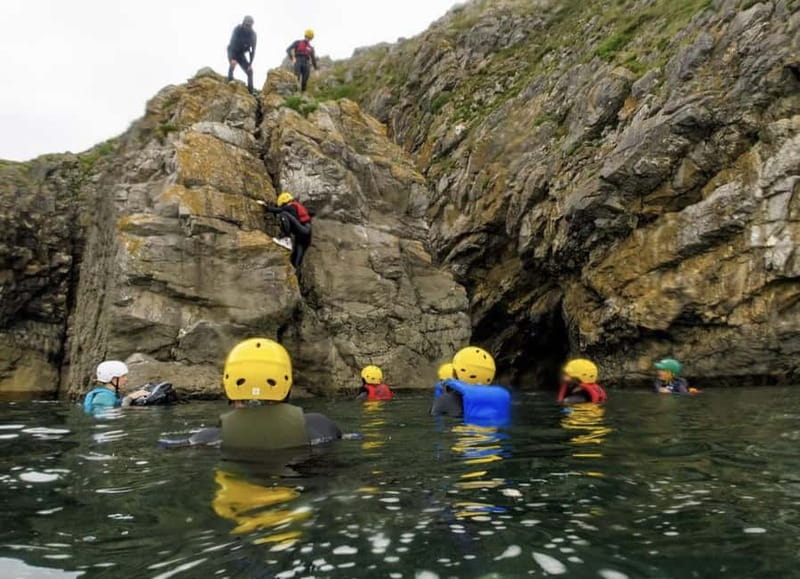
Jumping off Pembrokeshire rocks never gets old. This coasteering adventure from Stackpole Quay pairs big-moment sea jumps with hands-on coastal scrambling, including cave spots and water-level passages. I love the mix of action and coaching, especially the stepped approach that helps you get confident fast. I also love how much coastline you cover in just 2.5 hours, from Lydstep’s jump points toward the Barafundle area.
The trade-off is simple: this is not a sit-and-watch activity. If you are a weak swimmer, you feel uncomfortable in cold water, or you have any health limits listed as not suitable, you should skip this and choose something calmer.
In This Review
- Key things I’d bet on
- Why coasteering from Stackpole Quay feels so real
- The 2.5 hours: how the session typically unfolds
- Meeting at the National Trust car park and gear-up
- Coaching and stepped entry
- Lydstep jumps, including options up to 30 feet
- Traverse along the water edge, with rock climbing and cave time
- Wild swimming toward Barafundle
- Jumps up to 30 feet: how to mentally prep without overthinking
- Gear and clothing: what to pack so you stay comfortable
- Price and value: what $61 buys you in Pembrokeshire
- Who should book Outer Reef coasteering, and who should not
- Getting to Stackpole Quay without stress
- Safety is real here, and that’s why it’s enjoyable
- The coastline stops you’ll feel, not just see
- Stackpole Quay as the launch
- Lydstep for the big jump energy
- Barafundle for the wild swimming payoff
- Should you book this Pembrokeshire coasteering adventure?
- FAQ
- How long is the coasteering session?
- When do sessions run?
- How much does it cost?
- Where do I meet the instructors?
- What gear is included?
- What should I bring with me?
- Is it suitable for non-swimmers?
- Are there age limits for this activity?
- What if I need to cancel?
- What languages are available for instruction?
Key things I’d bet on
- Up to 30 feet jump options at Lydstep, where the session’s biggest thrills happen
- Caves, gullies, and whirlpools along the water edge, not just a straight swim
- Rock climbing moves using the coastline in a supervised, training-first way
- Safety gear included (wetsuit, buoyancy aid, helmet, and safety equipment)
- Wild swimming time toward Barafundle, so you get real sea immersion without long transfers
Why coasteering from Stackpole Quay feels so real
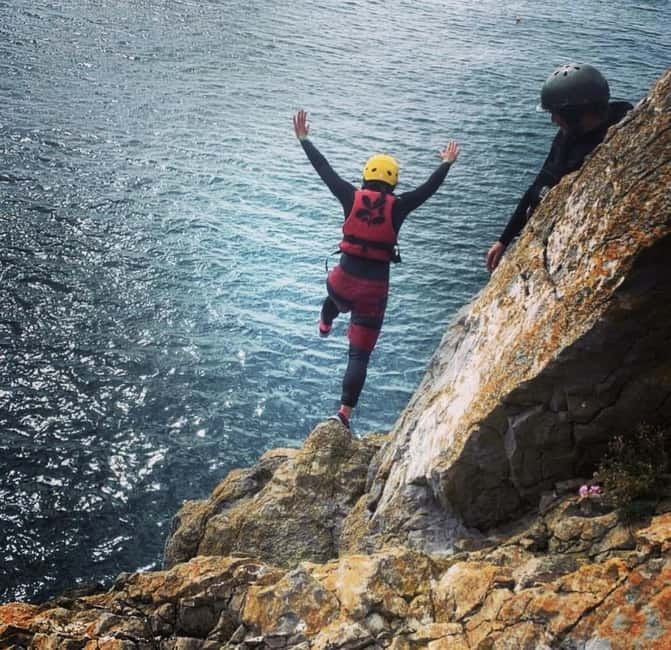
Pembrokeshire’s coast is the kind of place where the land doesn’t politely end at the tide line. It keeps going, rougher and more interesting than most beaches, with rock faces, coves, and pockets of water you can only reach by getting close, moving sideways, and yes, jumping in. That is why coasteering works so well here. You are not just seeing the coastline, you are using it.
Starting at Stackpole Quay also helps. It’s a practical launch point for a compact adventure that still feels like you got somewhere. And the session time is manageable, with tours running throughout the day from 9:00 AM to 4:00 PM, so you can usually slot it in without wrecking your whole itinerary.
I’m especially impressed by how many active parts are packed in. You jump. You scramble. You swim. You explore caves. It stays varied, which matters because coasteering asks you to stay alert and move well in a changing environment.
More sea-level scrambles round the headland:
- Newquay: Coasteering
★ 4.9 · 21 reviews - Torquay: Coasteering 5* Geopark Tour in Torquay
★ 5.0 · 5 reviews - North Wales: Extreme Coasteering with Cliff Climbing & Jumps
★ 5.0 · 2 reviews
The 2.5 hours: how the session typically unfolds
Your total time in the water and on the rock stretches is about 2.5 hours, and the operator runs multiple sessions across the day. Since you start at Stackpole Quay and the route includes Lydstep and Barafundle, here is how that usually translates into what you’ll do.
Meeting at the National Trust car park and gear-up
You park at the National Trust Car Park, then look for the Outer Reef van and your instructor(s). Phone signal is very bad at Stackpole Quay, so don’t rely on last-minute map magic. Give yourself a little time to locate the group and settle in.
Once you’re with your instructor, you’ll get the included safety kit: wetsuit, buoyancy aid, and helmet, plus safety equipment. The value here is that you don’t have to hunt down specialist gear before your trip. It also means you can focus on preparing physically, which is the real make-or-break factor.
Coaching and stepped entry
Before anyone starts throwing themselves off higher rocks, you get an introduction and stepped-training approach. That’s a big deal. One of the stand-out themes from the experience is that instructors don’t just say good luck. They guide you through the sequence so you know what to do with your body in the water and on the rock edge.
This is also where your swimming fitness shows up. Coasteering can be challenging, so you’ll want to feel comfortable swimming, treading, and handling cold water for stretches. The training is there to help you succeed, but it’s not a substitute for basic ability.
A page further on, still in London:
- London: The London Eye Entry Ticket★ 4.6 · 35,875 reviews
- From London: Harry Potter Warner Bros Studio Tour★ 4.7 · 26,588 reviews
- London: Westminster to Greenwich River Thames Cruise★ 4.5 · 22,836 reviews
- Magical London: Harry Potter Guided Walking Tour★ 4.7 · 22,044 reviews
Lydstep jumps, including options up to 30 feet
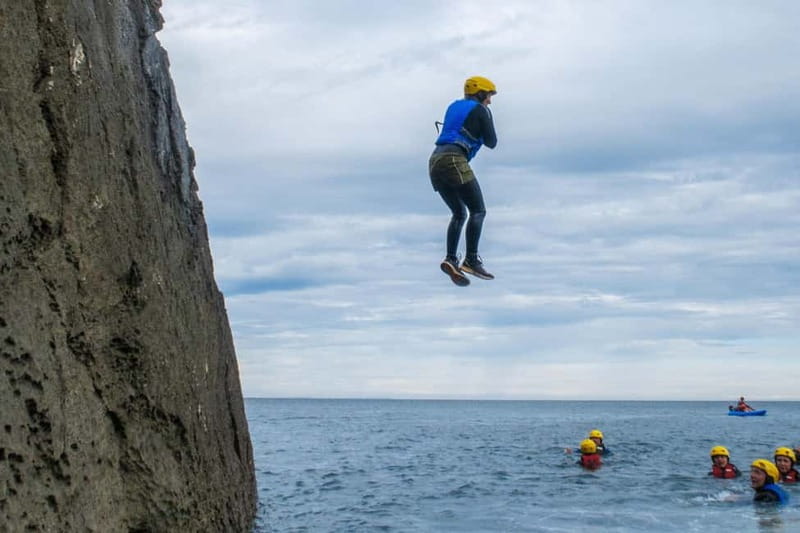
The session’s thrill anchor is the deep water jumps at Lydstep, with heights up to 30 feet. That’s the point where your brain says, Are you sure? Your instructor helps you manage that moment, including how to judge the drop and how to enter the water safely.
If you’re nervous, focus on process, not hype. Follow what you’re taught for body position and entry. Then repeat it in your head like a checklist. One key thing I like is that the session includes training, so the jumps are not treated as a random dare.
Traverse along the water edge, with rock climbing and cave time
After the higher jump moment, the fun stays moving. You’ll traverse along the water’s edge, with segments that involve rock climbing. This is where coasteering feels different from a typical sea swim. Your route is shaped by rock, ledges, and how the water interacts with the coastline.
You also get caves, and the route can include features like whirlpools and gullies. The point is not sightseeing in a casual way. It’s action-based exploration, so you’re learning the coastline by negotiating it, not just looking at it from shore.
Wild swimming toward Barafundle
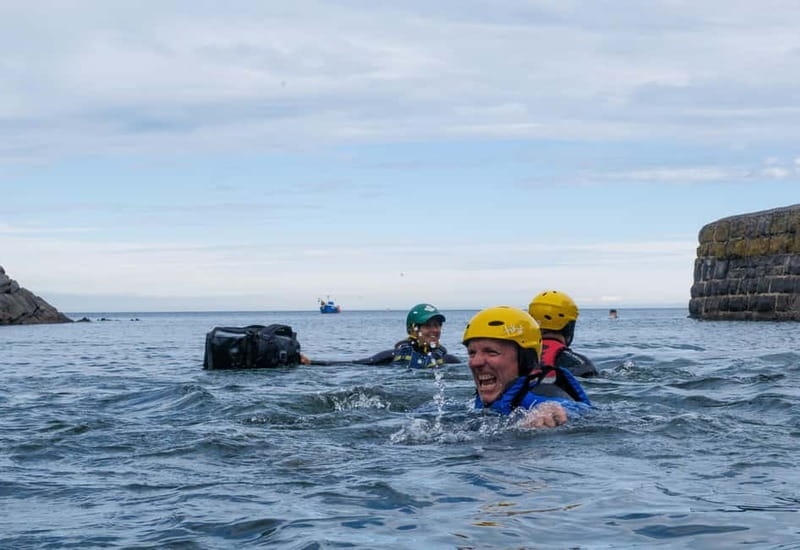
The session finishes with more water time, including wild swimming to Barafundle. This is a great payoff if you like the idea of being in the sea beyond a ticketed beach. You’ll get real-time exposure to the coast, with swimming that is part of the adventure route rather than a separate activity.
Barafundle is known for being a special corner of Pembrokeshire, and having that name attached to the swimming part makes the session feel like it’s heading somewhere meaningful, not looping in the same spot.
Jumps up to 30 feet: how to mentally prep without overthinking
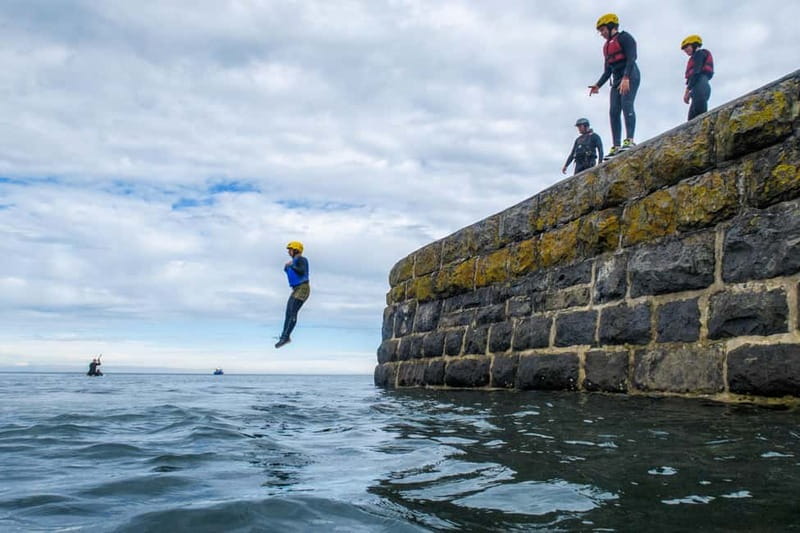
Let’s be honest. High jumps are scary. Even if you’re fit, your body reacts to height and open water. The trick is to avoid turning fear into drama.
Here’s what works based on how the session is run:
- Accept that you will be coached. The best part is stepped-training and clear instructions, not guessing.
- Treat jumping as technique, not courage points. Your job is to execute the taught entry.
- Bring a swimming mindset. You are not just leaping away from the rock. You’re also committing to what comes next.
I also recommend you scale your expectations. If you’re new to coasteering, aim to do the movements well, not to prove your toughness. Your instructor(s) are there to help you get the most out of it, and you’ll enjoy it more when you’re focused on doing each step correctly.
Gear and clothing: what to pack so you stay comfortable
You get the core safety gear included: wetsuit, buoyancy aid, helmet, and safety equipment. That’s a win for value and for convenience. But you still need the right personal items.
Bring:
- Swimwear
- A towel
- Snacks
- Water
- Water shoes
You’ll also want to remember that shorts and swimwear are not included, so plan for your own basics. If you show up in the wrong footwear, you’ll feel it on the rocks.
A practical tip: pack a little like you’re going to get wet and stay wet. You will want something dry after. Even if you feel fine during the session, the post-part chill is real.
Price and value: what $61 buys you in Pembrokeshire
At $61 per person for a 2.5-hour adventure, the value comes from two places.
First, the included kit is not a token gesture. You receive a wetsuit, buoyancy aid, helmet, and safety equipment. That’s the expensive, hard-to-replicate part for a lot of visitors. It also helps you actually do the activity safely and comfortably.
Second, the time is efficient. You start at Stackpole Quay, with the route taking in Lydstep and Barafundle plus coastal traverses, cave exploration, and wild swimming. You’re not buying a short jump and calling it done.
What costs extra or requires your planning:
- Transportation to and from the activity location
- Food and water during the session
- Transport and car park fees
- Swimwear, towel, and trainers
If you’re already in Pembrokeshire and can handle your own parking and transport, this price is easier to justify. If you’re traveling far without a car, factor that in early.
Who should book Outer Reef coasteering, and who should not
This is an active, sea-based experience. It is best for people who:
- Can swim confidently
- Feel comfortable in cold, salty water
- Want a hands-on way to experience Pembrokeshire’s coastline
- Like the idea of caves, jumps, and rock scrambling, not just a view from land
Based on the safety rules, it is not suitable for:
- Children under 8 years
- Pregnant women
- People with heart problems
- Non-swimmers
That’s not just legal fine print. Coasteering involves deep water entry and moving on rock, so safety has to be the priority.
If you’re physically strong but nervous about water, don’t automatically rule it out. The coaching and stepped-training approach helps. But if you don’t meet the swimming requirement, you should not gamble on courage.
Getting to Stackpole Quay without stress
The meeting plan is straightforward but needs a little forethought.
- Park at the National Trust Car Park
- Bring coins to pay for parking or consider having a National Trust Membership
- Look for the Outer Reef van and your instructor(s)
Also, phone signal is very bad at Stackpole Quay. So don’t count on a live signal to guide you in the last minute. Plan your arrival time, then follow the on-site meeting instructions.
This matters more than people think. When signal drops, it gets harder to fix mistakes quickly. The more calm you are at check-in, the more time you have to focus on the fun.
Safety is real here, and that’s why it’s enjoyable
You can tell a lot about a coasteering operator by how they treat safety. In this case, it’s built into the gear and the instruction style.
You’re given:
- Wetsuit
- Buoyancy aid
- Helmet
- Safety equipment
Then you get training with an introduction and stepped progression. That approach shows up in how people describe the experience: friendly instructors, a proper introduction, and a focus on making the activity doable while still keeping it adventurous.
One more practical thought: when you’re wearing a wetsuit and buoyancy aid, you move differently than on land. Embrace that new feel during the coaching. The more you listen, the more likely you are to enjoy every part of the session, from the first sea entry to the higher jumps at Lydstep.
The coastline stops you’ll feel, not just see
This adventure uses three big anchors on the Pembrokeshire coast.
Stackpole Quay as the launch
Stackpole Quay sets the tone. It’s where you gear up and get oriented. Since phone signal is poor, the on-site meeting matters, and the Outer Reef van gives you something simple to find.
Lydstep for the big jump energy
If you want height and the thrill of deep water jumps, Lydstep is the headline. Heights up to 30 feet are part of the experience, and the coaching is designed to help you work up to it in an organized way.
Barafundle for the wild swimming payoff
Barafundle is the other emotional highlight. The phrase wild swimming is more than marketing. It signals you’ll get into the sea with purpose, while still being part of a guided route along the coast.
Should you book this Pembrokeshire coasteering adventure?
If you want a short, high-energy way to experience Pembrokeshire’s coastline, this is a strong choice. The included safety gear and the stepped-training approach make it feel structured, not reckless. If you’re fit, you can swim, and you want jumps plus caves plus sea time, you’ll likely have a memorable morning or afternoon.
I’d skip it if you’re coming for a gentle stroll, if you have medical reasons you should avoid intense physical activity, or if you cannot swim. Coasteering is supposed to be adventurous, not stressful, and the rules are there to keep the fun on track.
If you book, do one thing that makes the biggest difference: bring proper water shoes and plan to show up ready to move. You’ll thank yourself when the rocks get real and your body is already prepared.
FAQ
How long is the coasteering session?
The duration is 2.5 hours.
When do sessions run?
Sessions can start anytime between 9:00 AM and 4:00 PM.
How much does it cost?
It costs $61 per person.
Where do I meet the instructors?
You meet at the National Trust Car Park. Look for the Outer Reef van and your instructor(s) in the car park.
What gear is included?
You get a wetsuit, buoyancy aid, helmet, and safety equipment.
What should I bring with me?
Bring swimwear, a towel, snacks, water, and water shoes. Shorts and swimwear are not included.
Is it suitable for non-swimmers?
No. It is not suitable for non-swimmers.
Are there age limits for this activity?
Yes. It is not suitable for children under 8 years old.
What if I need to cancel?
You can cancel up to 24 hours in advance for a full refund.
What languages are available for instruction?
Instructors speak English.