Reviewed · UNITED KINGDOM
Newquay: Coasteering
Cornwall’s coast turns into your playground. This Newquay coasteering experience mixes cave exploration with coaching that focuses on doing each move the right way, not just “send it.”
What I really like is the hands-on teaching, including proper technique for traversing, jumping, and water entry and exits, with instructors who take the time to show you what to do.
You’ll also be kitted out from the start with wetsuits, buoyancy aids, and helmets, plus insurance, so the session feels more “ready to go” and less like a gear hunt. A small group (up to 8) keeps the pace active and the attention personal.
One consideration: this is more demanding than a lot of first-time people expect, especially if you thought it would be mostly sightseeing.
In This Review
- Key points I’d plan around
- Coasteering Basics in Newquay: what a 2-hour session really feels like
- Gear and Safety Gear Check: wetsuits, helmets, insurance, and a real briefing
- The Route Flow: caves, crystal-water gully jumps, and sea tunnels
- 1) Starting with the cave and its natural features
- 2) Big jumps into the crystal-clear deep-water gully
- 3) Strenuous traverses and horizontal climbing
- 4) Scrambling into sea tunnels without getting hurt
- 5) Crossing sluices, natural rapids, and wash troughs
- 6) Wildlife info along the route
- 7) The end: back to hot showers
- Skills you actually take home: wild swimming, climbing, and smart technique
- Instructors and group energy: small team, big coaching attention
- Facilities and comfort: heated changing rooms and hot showers (with one caveat)
- Price and value at about $74 per person
- Who should book Newquay coasteering, and who should skip it
- Should you book this coasteering session?
- FAQ
- How long is the Newquay coasteering experience?
- What is included in the price?
- Is food and drink included?
- How big is the group?
- What age is the activity suitable for?
- Is it suitable for people with mobility impairments?
- What is the cancellation and payment policy?
Key points I’d plan around
- Technique-first coaching for traversing, jumping, and safe water entry and exits
- Safety gear included with wetsuits, buoyancy aids, helmets, and insurance
- Cave and sea-tunnel route with big jumps into a crystal-clear deep-water gully
- Horizontal climbing and scrambles plus learning how to move through tricky water features
- Wildlife info along the way, with a real chance of seeing seals on the route
- A no-pressure mindset, where you can miss a section or a jump without being pressured
Coasteering Basics in Newquay: what a 2-hour session really feels like
Newquay coasteering is basically a coastal skills course dressed as adventure. In two hours, you’re not just looking at cliffs, you’re learning how to travel across them, through them, and into the water in a controlled way.
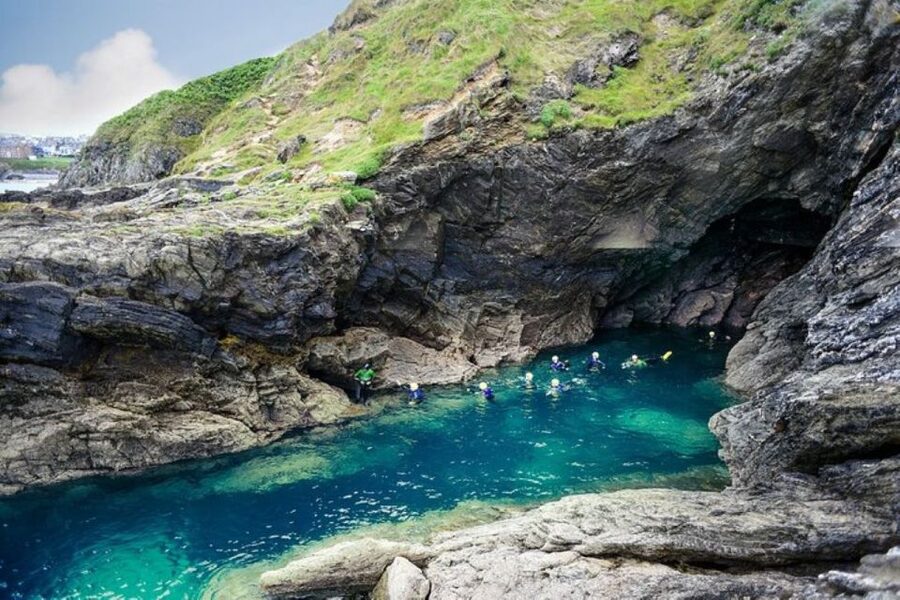
The big hook is the variety. You’ll cover cave sections with natural features, then work up to bigger water jumps into a deep-water gully that’s known for crystal-clear visibility. After that, you’ll switch gears into strenuous but fun traverses, including horizontal climbing, and then practice scrambling into sea tunnels without getting hurt.
If you want a simple checklist, here it is: suit up, get taught, move constantly, and learn how to handle the coast when it turns slippery, uneven, and wet.
More sea-level scrambles round the headland:
- Pembrokeshire: Coasteering Adventure at Stackpole Quay
★ 5.0 · 6 reviews - Torquay: Coasteering 5* Geopark Tour in Torquay
★ 5.0 · 5 reviews - North Wales: Extreme Coasteering with Cliff Climbing & Jumps
★ 5.0 · 2 reviews
Gear and Safety Gear Check: wetsuits, helmets, insurance, and a real briefing
This is one of those activities where the “included” list matters a lot, because it changes how confident you feel from minute one. You get wetsuits, buoyancy aids, helmets, and insurance, plus a lock box for valuables and clothes storage.
That setup is what lets the instructors focus on technique instead of spending time figuring out who brought the wrong size jacket. Heated changing rooms and hot showers at the brand new centre are a huge quality-of-life upgrade too, because coasteering leaves you cold and salty no matter how tough you feel beforehand.
Before you start, you’ll get a full safety briefing and instruction on correct techniques for traversing, jumping, and water entry and exits. The coaching style is clearly geared to helping you make smart choices, not forcing you into things you are not ready for.
If you get nervous about the word jump, relax. The tour is built around learning safe ways to do it, and it’s explicitly a no-pressure environment, where missing a section or a jump is totally allowed.
The Route Flow: caves, crystal-water gully jumps, and sea tunnels
The session is designed like a sequence of lessons, with each segment teaching a new kind of movement.
1) Starting with the cave and its natural features
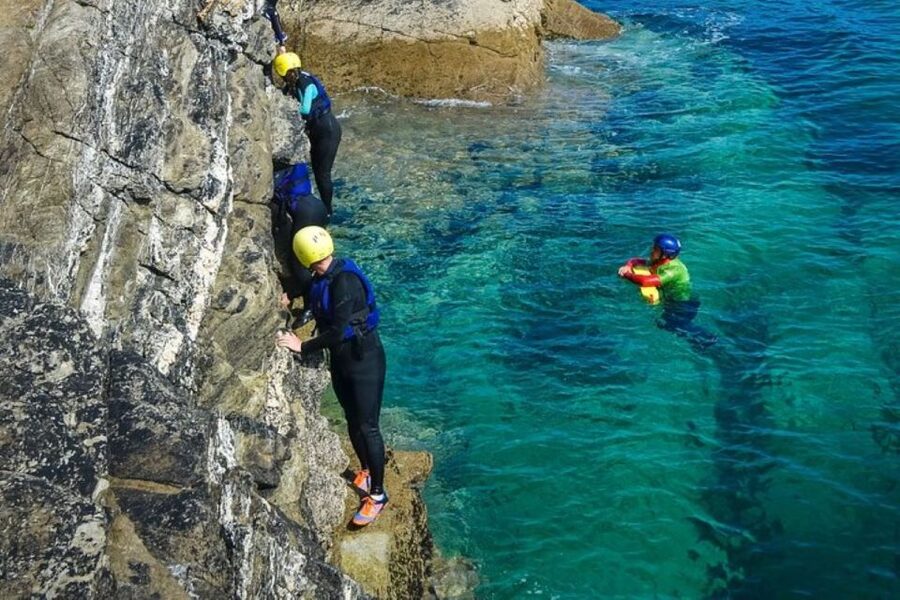
Early on, you’ll encounter a fantastic cave with exciting natural features. Caves are a great teacher here because they force you to slow down, pay attention to footing, and learn how to move around uneven surfaces. It’s also where you get your first taste of the “scramble and navigate” mindset.
This part is good for first-timers who need structure. You see how the group moves, you learn what safe looks like, and you build confidence before you go into bigger water moments.
A page further on, still in London:
- London: The London Eye Entry Ticket★ 4.6 · 35,875 reviews
- From London: Harry Potter Warner Bros Studio Tour★ 4.7 · 26,588 reviews
- London: Westminster to Greenwich River Thames Cruise★ 4.5 · 22,836 reviews
- Magical London: Harry Potter Guided Walking Tour★ 4.7 · 22,044 reviews
2) Big jumps into the crystal-clear deep-water gully
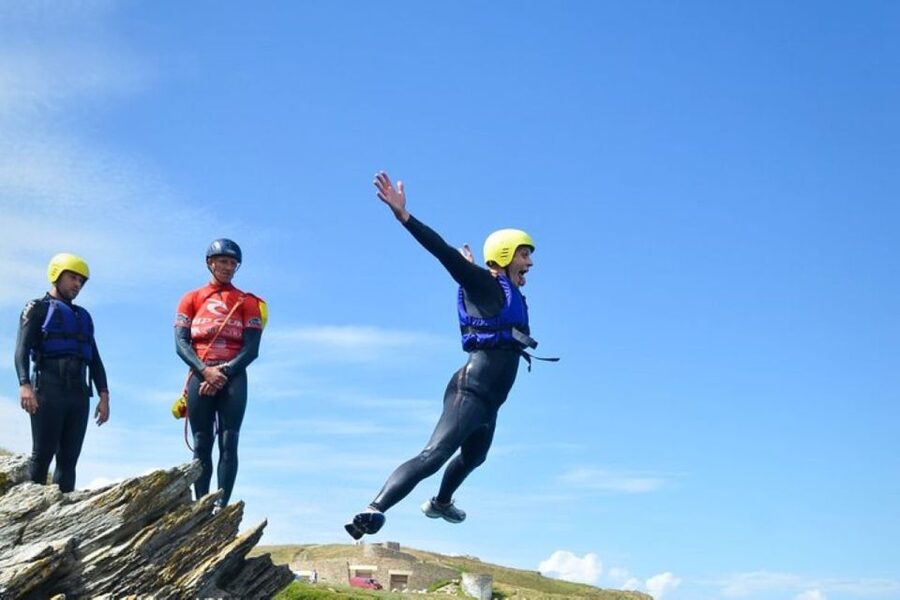
Next come the larger jumps. Expect big jumps into the renowned crystal-clear deep-water gully. This is the adrenaline part, but it’s also the moment where technique matters most, because the goal is a safe, controlled water entry.
You’ll learn how to handle water entry and exits correctly, so you’re not just dropping into the sea and hoping for the best. One key benefit of having instruction here is that you understand what you’re trying to do with your body position and timing.
3) Strenuous traverses and horizontal climbing
After the jumps, you shift into strenuous but enjoyable traverses and horizontal climbing. In plain terms, this is the part where you move sideways along the coast rather than up or down.
Horizontal movement is tricky because you are managing balance, grip, and route choices all at once. The coaching is meant to help you move efficiently and safely, so you spend less time freezing on a ledge wondering how to proceed.
4) Scrambling into sea tunnels without getting hurt
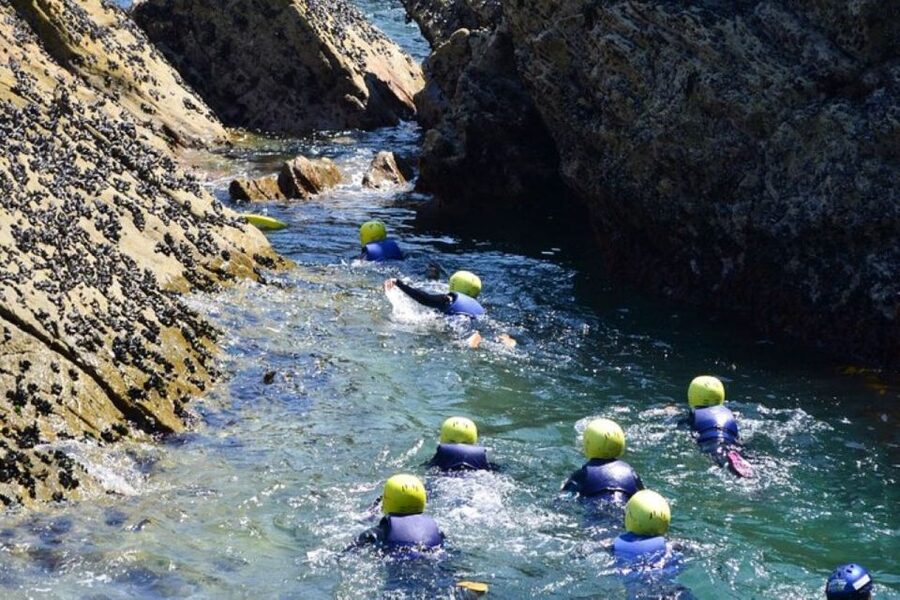
Then you’ll learn how to swim, climb, and scramble into sea tunnels. That combination matters because sea tunnels are not just a pretty spot to visit. They are part of how you travel across the coastline, so you need to know how to transition between water and rock.
In practice, you’ll be taught the mechanics of moving from one situation to the next, which is where a lot of people feel most “new” and most impressed by what they can learn in such a short time.
5) Crossing sluices, natural rapids, and wash troughs
You’ll also cross sluices, natural rapids, and large gully wash troughs. These are exactly the features that scare people before they understand them. The tour’s value is that you don’t just see these hazards, you learn how to cross them in an instructed way.
That’s also where you learn technical navigating as part of the route, not as a separate “lecture.” You learn while moving, which is the fastest way to improve.
6) Wildlife info along the route
Marine animals are part of the journey. Your teachers share wildlife and coastal heritage information as you go, which turns the route from pure adrenaline into something you remember for more than just the jumps.
One review specifically mentioned meeting seals, which tells me wildlife spotting is not just an afterthought.
7) The end: back to hot showers
After the final sections, you wrap back at the centre with heated changing rooms and hot showers. That matters because coasteering can leave you wet enough that “quick rinse” would be a mistake.
Skills you actually take home: wild swimming, climbing, and smart technique
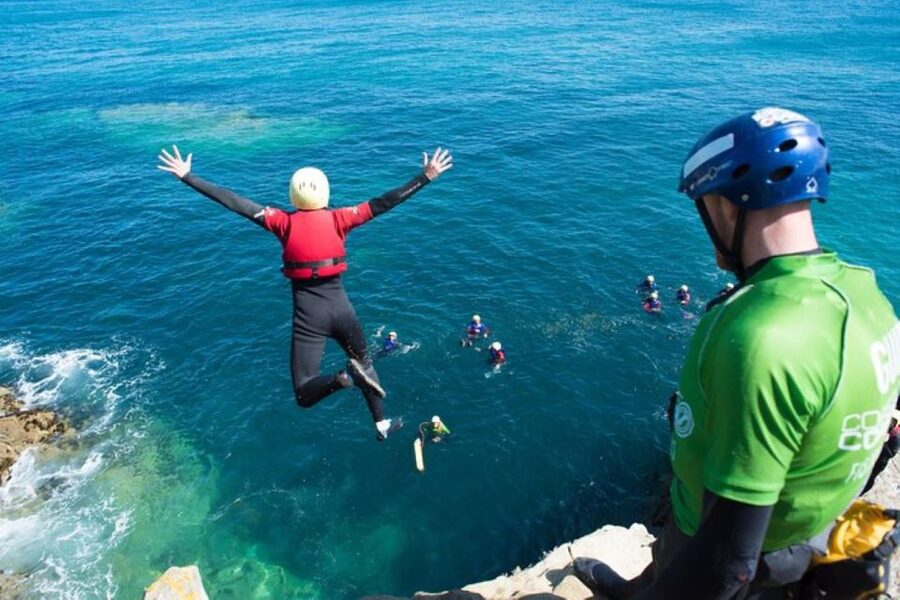
The best part of this experience is that it teaches skills, not just thrills. Yes, you get coastal exploration and adventure, but the lesson is built to make you better at moving on real coast terrain.
Here are the abilities you’ll pick up during the session:
- Wild swimming basics in a guided setting
- Technical navigating, meaning how to choose a safe line as conditions change
- How to swim, climb, and scramble into sea tunnels without getting hurt
- How to cross sluices, natural rapids, and gully wash troughs
I like that the focus includes both the athletic side and the decision-making side. You don’t just learn how to jump. You learn how to approach the jump, how to enter the water, and how to exit safely.
And because it’s a small group capped at 8, you’re more likely to get individual corrections when you need them.
Instructors and group energy: small team, big coaching attention
The tour is run by coasteer instructors described as industry-leading, and the vibe comes across as friendly, active teaching. You may be led by instructors like Rosie and Harrison, who have been praised as super nice and competent.
That matters because coasteering has two emotional modes. You need confidence to jump, and you need patience to scramble carefully. A good instructor helps you switch between those moods without making it feel awkward.
The small group size also affects the pace. With up to 8 participants, it stays dynamic but not chaotic, which is exactly what you want when you are learning technique and moving through narrow or technical sections.
Also, the route is set up as a no-pressure environment. If you’d rather miss a section or a jump, you can. That can make the experience feel safer and more enjoyable, because you’re not trapped in an ego challenge.
Facilities and comfort: heated changing rooms and hot showers (with one caveat)
Practical stuff matters on coasteering day. You get heated changing rooms, hot showers, male and female toilets, and a lock box for valuables and clothes storage. It’s also a brand new centre, so the setup is built to handle people getting soaked.
There is one possible downside to keep in mind: because the group is small but changing rooms and shower areas still get busy, you might find the facilities feel tight at peak moments. If you are sensitive to cramped spaces, plan your post-activity routine calmly and give yourself a little buffer.
Overall, having a warm reset with showers is one of the reasons this activity feels more civilized than people expect. You don’t just “survive the water,” you recover properly.
Price and value at about $74 per person
At roughly $74 per person for a 2-hour experience, the value depends on what you would otherwise pay for a guided activity plus equipment.
Here’s what you get that normally costs extra if you DIY:
- Instructor coaching with safety briefing and technique instruction
- Wetsuit, buoyancy aid, helmet
- Insurance
- Heated changing rooms, hot showers, toilets
- Lock box for valuables and storage
On top of that, there are activity perks that extend the value if you plan to stay in Newquay for more than just one outing. You get a 10% discount off further Newquay Activity Centre activities, plus a discount card for apres coasteer food and drink at local bars and cafes. There’s also a 15% discount at Newquay’s Rip Curl store.
If you hate paying for add-ons, this setup is friendly. The pricing feels focused on getting you into the water with the right gear and the right guidance, not on upselling extras.
One more point on value: a lot of people consider coasteering a once-in-a-while adrenaline hit. But because you’re learning real movement technique, it can feel more like a skill session that happens to be on the coast. That makes it easier to justify the price.
Who should book Newquay coasteering, and who should skip it
This is best for people who are comfortable with active movement and water. You’ll be doing wild swimming, climbing, scrambling, and crossing technical coastal features. If that sounds like your kind of challenge, you’ll probably love how quickly you learn.
It’s also a good pick if you like structured risk. The route is exciting, but it’s taught with safety briefing and technique coaching. The no-pressure approach also helps people who need to move at their own comfort level.
It’s not suitable for:
- People with mobility impairments
- Children under 8 years
And if you tend to overestimate what “fun swimming” means, take the “more demanding than expected” factor seriously. You do not need to be an athlete, but you do need to be ready for physical scrambling and water-based effort.
If you want an easy, sit-and-look tour, this is not it. This is a hands-on coast workout with a safety net.
Should you book this coasteering session?
Book Newquay coasteering if you want a short, high-impact experience where you come away with technique, not just photos. The combination of included gear, full safety briefing, and a small group up to 8 makes it feel like you get real teaching time. If wildlife spotting is a plus for you, the chance to see animals like seals adds extra satisfaction.
Skip it if you want a relaxed sightseeing day, or if mobility and movement constraints are a concern. Also, if you are easily spooked by jumps, remember you can miss sections, but you still should expect the session to be physically demanding.
If you are on the fence, here’s my decision rule: if you can handle a coached, water-heavy adventure for two hours, and you’re excited to learn how to scramble, swim, and move through sea tunnels, then this is a strong match.
FAQ
How long is the Newquay coasteering experience?
It lasts 2 hours.
What is included in the price?
The price includes industry-leading coasteer instructors, wetsuits, buoyancy aids, helmets, insurance, a lock box for valuables and clothes storage, heated changing rooms, hot showers, male and female toilets, a full safety briefing, and instruction on correct techniques. It also includes coastal and wildlife information along the route and discounts for other activities and local purchases.
Is food and drink included?
No. Food and drinks are not included.
How big is the group?
The group is limited to 8 participants.
What age is the activity suitable for?
It is not suitable for children under 8 years.
Is it suitable for people with mobility impairments?
No, it is not suitable for people with mobility impairments.
What is the cancellation and payment policy?
There is free cancellation up to 24 hours in advance for a full refund, and you can reserve now and pay later.