
Reviewed · NORTH WALES TOURS & EXPERIENCES
North Wales: Extreme Coasteering with Cliff Climbing & Jumps
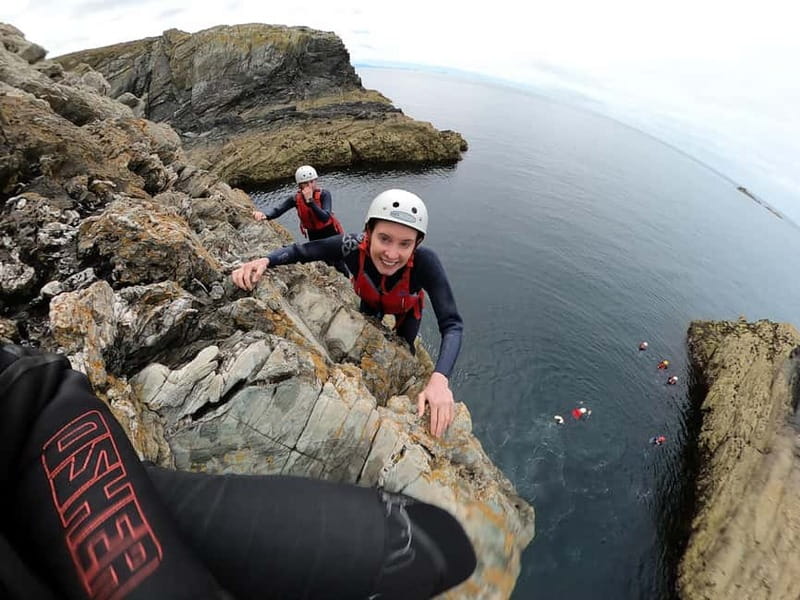
Salt air, rock underfoot, then the jump. This North Wales coasteering trip along Anglesey is interesting because you get coached through sea-cliff climbing and you finish with heart-pounding jumps into the sea. I especially like that it is structured so you build comfort step by step, not all at once.
What I like most is the focus on doing the right moves in the right order, with gear that helps you stay afloat and a guide who keeps you moving. One potential drawback to think about first is the weather dependence. If conditions are rough, the route and timing can change or the activity can be canceled for safety.
In the small-group setup, you feel the difference. In one 5-star review, Sue highlighted that Matt, the guide, was both funny and reassuring, and she said she is not the best swimmer but still had a great time because she felt safe the whole way.
In This Review
- Key Things That Make This Coasteering Adventure Worth Your Time
- Trearddur Bay Hotel Meet-Up and the Short Ride to the Coast
- What’s Included for $122, and Why It Feels Like Good Value
- Gear Up: Wetsuit, Buoyancy Aid, Helmet, and the Comfort Trade-Off
- The Safety Briefing That Actually Matters (And Takes About 10 Minutes)
- Your First Water Practice: Open Water Swimming at Porth Ruffydd
- A small tip for your mindset
- The Short Walks and Sightseeing Stops That Break Up the Work
- Sea Cliff Climbing and Rock Traverses, From Stepping to Scrambling
- The Cliff Jumps: How You Earn the Biggest Moments
- Who might feel nervous
- The 3.5-Hour Rhythm: What You’ll Do in Each Phase
- Who This Coasteering Trip Is For, and Who Should Skip It
- Price vs. What You Actually Get: The Real Value Check
- Packing List for a Wet Day on Anglesey
- Weather, Rescheduling, and Timing in North Wales
- Should You Book This North Wales Extreme Coasteering Tour?
- FAQ
- Where do you meet for North Wales coasteering?
- How long is the coasteering experience?
- What is included in the price?
- What should I bring with me?
- Do I need to be a strong swimmer?
- What age is this suitable for?
- What languages do the instructors speak?
- Is the activity affected by weather?
- What is the cancellation policy?
Key Things That Make This Coasteering Adventure Worth Your Time
- Built-in progression, from first water practice to bigger climbs and the cliff jump
- All the key safety gear included: wetsuit, buoyancy aid, and helmet
- Coaching for real confidence, not just instructions before you go
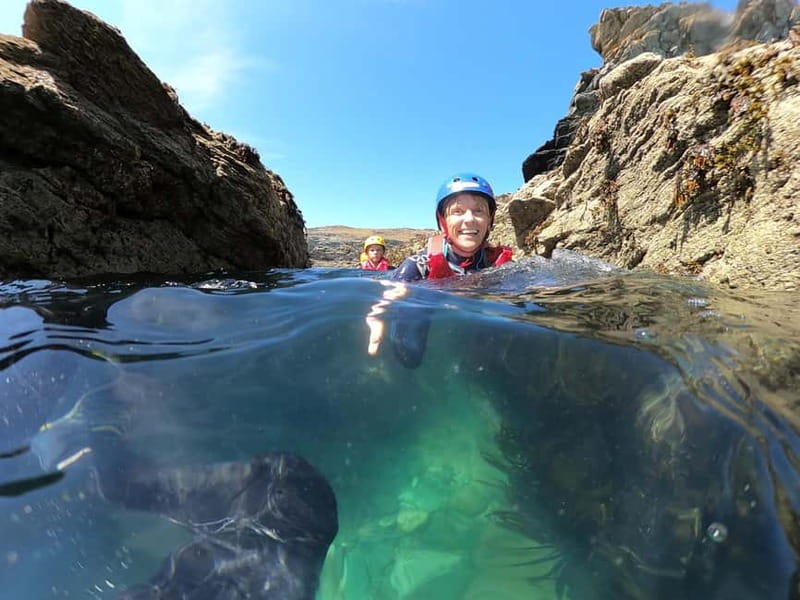
- Anglesey coastline with caves and rock traverses, so you are moving and exploring all session
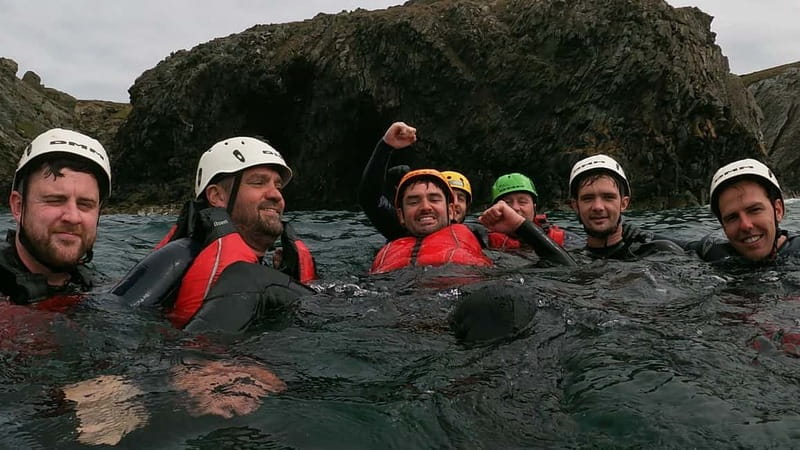
- Small-group feel, so you get personalized instruction and support
- Breathtaking coastal views between climbs, swims, and short breaks
Trearddur Bay Hotel Meet-Up and the Short Ride to the Coast
You meet at the main car parking area of the Trearddur Bay Hotel on Anglesey. The trip uses a short car transfer to the actual coasteering venue, so you do not have to worry about finding the exact spot on foot.
This little logistics detail matters more than it sounds. Coasteering is weather and tide dependent, and operators often need to adjust where they work. Using a nearby base makes it easier to keep the plan flexible, while still starting on time.
The meeting point also helps you arrive without stress. You can park, meet your guide, get your wetsuit prep sorted, and then focus on the real goal: moving along a rugged coastline safely.
More sea-level scrambles round the headland:
- Newquay: Coasteering
★ 4.9 · 21 reviews - Pembrokeshire: Coasteering Adventure at Stackpole Quay
★ 5.0 · 6 reviews - Torquay: Coasteering 5* Geopark Tour in Torquay
★ 5.0 · 5 reviews
What’s Included for $122, and Why It Feels Like Good Value
At about $122 per person for a 3.5-hour session, you are paying for more than just access to the coast. You are buying a package of equipment plus professional supervision, which is a big deal when you are mixing swimming, climbing, and jumps.
What is included:
- Experienced guides and a full safety briefing
- Wetsuit, buoyancy aid, and helmet
- Open water swimming practice
- Cliff climbing and rock traversing
- Cave exploration and cliff leaps
- Personalized instruction and support
You also avoid several common hidden costs. You do not need to rent the wetsuit or buy flotation gear. And guides are not just there for supervision, they are actively teaching you how to move, where to place your body, and how to handle the water component.
What you still handle yourself:
- Swimwear, shorts to wear over the wetsuit, and wet-ready trainers
- Food and drinks, personal expenses, and transport to and from the start
If you compare this to paying separately for instruction plus gear, the math usually works out better when everything is bundled. In plain terms, you get a half-day of guided risk-management and adrenaline.
Gear Up: Wetsuit, Buoyancy Aid, Helmet, and the Comfort Trade-Off
The first practical thing you do is get your kit on. The wetsuit, buoyancy aid, and helmet are part of why this experience is doable for the right participants. Even if you are anxious about the cold, that gear makes the sea environment far more manageable.
A wetsuit also gives you a baseline confidence. When you are stepping onto slick rocks and moving between swims, you want to know you are protected and supported. The buoyancy aid adds that extra layer of help in open water, which is especially reassuring if swimming is not your strongest skill.
You should still expect to get wet and salty. This is not a dry activity. Wear swimwear you are comfortable being soaked in, and bring shorts to go over the wetsuit as instructed. Wet trainers are a must too, because your feet will spend time on rock and sand.
The Safety Briefing That Actually Matters (And Takes About 10 Minutes)
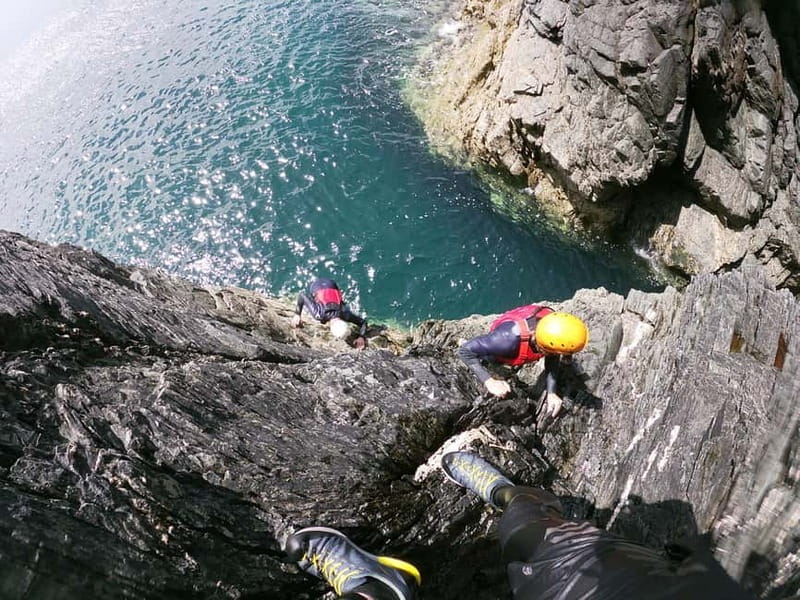
Before you start climbing or leaping, you get a safety briefing for around 10 minutes. This is where the guide sets expectations and explains technique. It typically covers how you will move, how the group will manage jumps, and what to do if you feel off-balance.
Then you get the real-world version of safety: technique in the actual conditions. Coasteering is not a playground. It is physical and it is dynamic, so the briefing plus guided coaching is what turns risky-looking stuff into controlled movement.
In one highlight from a 5-star review, Sue said she felt safe throughout the tour. That matches what you should look for in a good operator, clear instruction, and a guide who stays close enough to intervene.
More rungs and ropes off the ground:
- London: O2 Arena Rooftop Climbing Experience★ 4.8 · 3,308 reviews
- Gripped London: Zip Line, High Ropes & Freefall Adventure★ 3.4 · 4 reviews
- North Devon: Indoor Climbing Taster Session★ 4.7 · 2 reviews
Your First Water Practice: Open Water Swimming at Porth Ruffydd
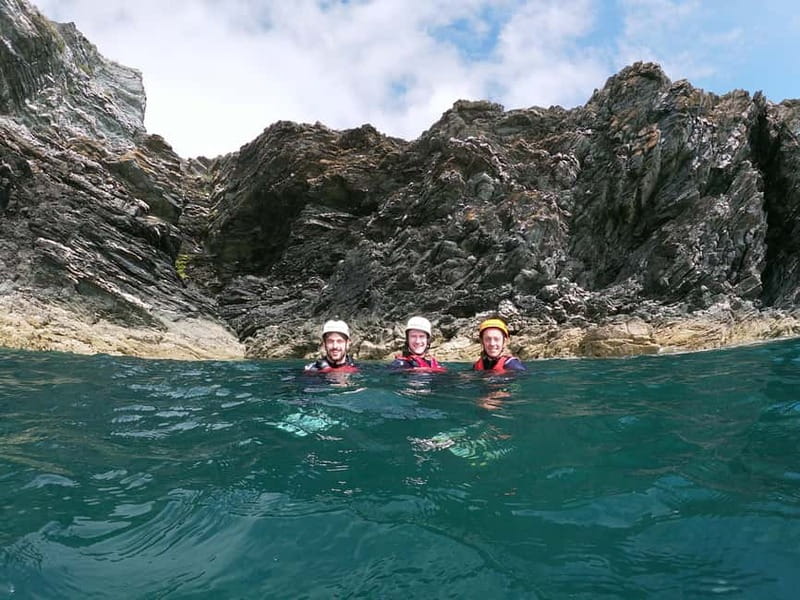
After the quick orientation, the action shifts toward the sea. You will enter the water for an initial swim block of about 20 minutes at a secret stop in the plan.
This is where you learn how your body behaves in open water. Waves, currents, and buoyancy change how you feel compared to swimming in a pool. The guide will help you with pacing and positioning so you can keep moving without fighting the ocean.
If you are not the best swimmer, you can still get a lot from this stage, provided you follow instruction and you are willing to work. One review specifically mentioned that a participant who is not a strong swimmer still had a fantastic time, mainly because she felt supported and safe.
A small tip for your mindset
Think of the first swim as a skill session, not a test. The whole trip is built to prepare you for the later climbs and cliff jumps.
The Short Walks and Sightseeing Stops That Break Up the Work
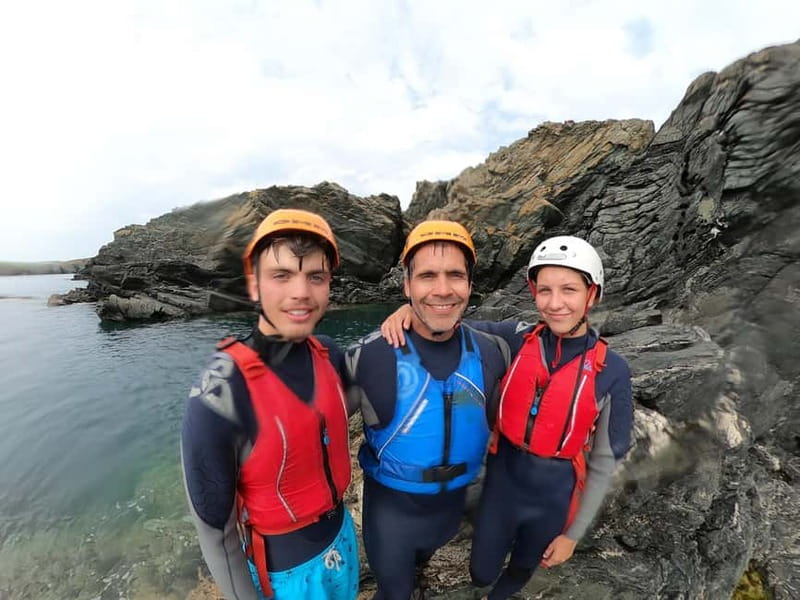
Between swims and climbs, the itinerary includes short sections on land, each adding time for hiking, changing locations, and keeping the body from freezing in one position.
You get a brief sightseeing stop around 10 minutes, plus additional hiking periods that total several segments throughout the 3.5-hour session. These land transitions are not filler. They are how you move between different rock faces and take breaks from continuous sea time.
One other planned break is about 5 minutes after an early view point. That break helps you catch your breath, adjust to the cold, and listen for the next instructions. The session also includes a longer free time period of around 20 minutes toward the end, when you likely have a chance to reset and rehydrate with whatever you brought for yourself if you have it available.
Sea Cliff Climbing and Rock Traverses, From Stepping to Scrambling
The heart of the adventure is the sequence of sea cliff climbs and traverses. You will tackle multiple segments, each with increasing difficulty, guided the whole time.
The plan includes repeated cycles of:
- brief hikes over rough ground
- short swims to relocate and build comfort in the water
- climbing and traversing rocky sections
This matters because coasteering is not one big stunt. It is a chain of moves. Rock traverses teach balance and foot placement. Cliff climbs teach pacing and staying calm when you are dealing with height, wet surfaces, and salt spray.
The caves portion also fits into this pattern. You explore cave areas as part of the route, which means you are not just doing steep climbing, you are moving through varied coastal terrain.
If you want the adrenaline, you get it. If you want the skill development, you get that too.
The Cliff Jumps: How You Earn the Biggest Moments
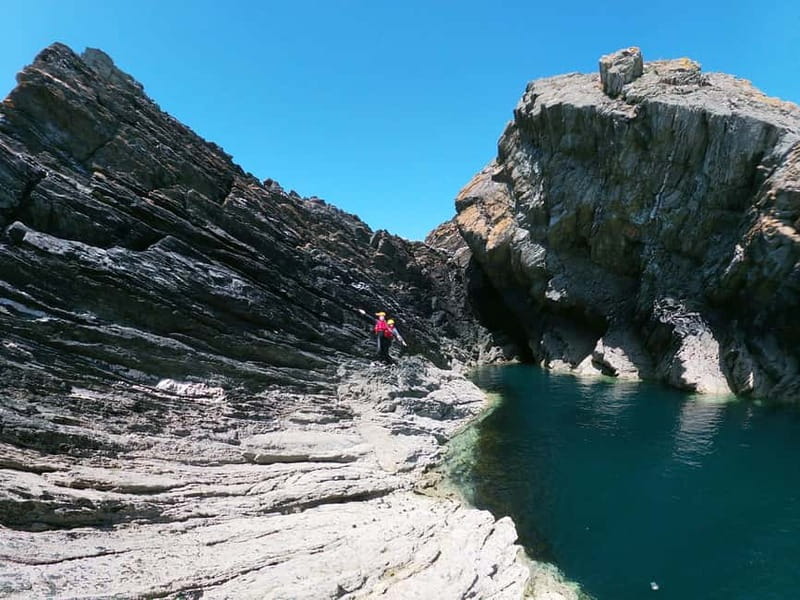
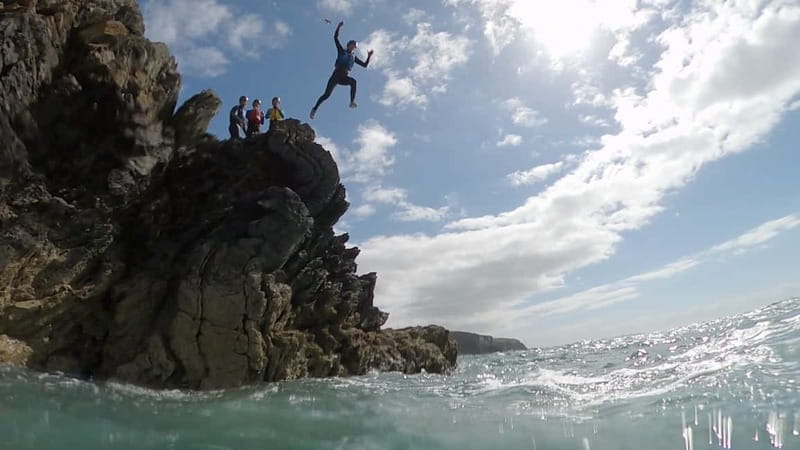
The main event is the progressively built cliff leap into the sea. You do not just get dropped at the edge. You prepare through the earlier swims and smaller climbing sections, so by the time you reach the jump, you have learned how to handle the water, how to follow group timing, and how to commit without panic.
This is the part most people talk about, and for good reason. The jump is part fear, part technique. In the right hands, it becomes a confidence builder instead of a scary gamble.
The operator includes heart-pounding cliff leaps as a highlight, and the structure of the session is built around it. Early on, you practice being comfortable on wet rock and in open water. Later, the guide has you do the jump when you have the right cues in your head and the right readiness in your body.
Who might feel nervous
If you are worried about jumping, focus on listening and timing. Your safest move is to do what the guide tells you for entry and for group coordination.
The 3.5-Hour Rhythm: What You’ll Do in Each Phase
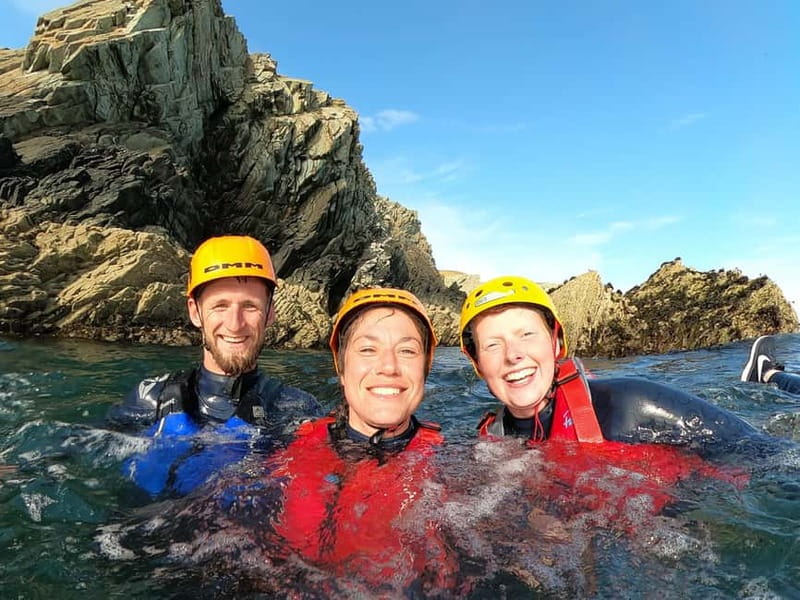
Here is how the day feels in order, using the trip flow you can expect:
First you start at the meeting point near Trearddur Bay Hotel, then move to the venue. There is a quick safety briefing for about 10 minutes.
You then get a short sightseeing stop of around 10 minutes in a traditional village area. This is a breather and a bit of context, but it also keeps the group organized before you start your first water time.
Next comes hiking for about 10 minutes, then the first main swim block for about 20 minutes. After that you get a short break of around 5 minutes at a view point.
Then you repeat the pattern: a hike segment, another swim segment, more hiking, and more swimming. The swim blocks are staggered, including around 15 minutes and another 20 minutes later in the route.
Toward the end, there is a longer break and a free time period of about 20 minutes, which is your chance to cool down a bit and regroup before finishing at the return point back at LL65 2UN.
A practical takeaway: this is not an all-out sprint the whole time. You will work hard, but the sequence of swims, climbs, and short breaks makes it possible to finish strong instead of crashing early.
Who This Coasteering Trip Is For, and Who Should Skip It
This coasteering experience is listed as suitable for active youths and adults, but it has clear limits.
Not suitable for:
- children under 12
- pregnant women
- wheelchair users
You should also be honest about physical fitness. The activity includes hiking, climbing, and swimming. You do not need to be a sea athlete, but you should be comfortable with getting your heart rate up, moving on uneven ground, and doing multiple short water sections.
Swimming ability matters, but this is not a pure test of speed. One 5-star review pointed out that even someone who is not a strong swimmer had a fantastic experience. That suggests the guides help you adapt, not just watch you struggle. Still, if swimming is a true fear for you, talk to the operator before booking.
Price vs. What You Actually Get: The Real Value Check
At $122 per person, you are paying for:
- professional guidance during climbing, swimming, and jumps
- safety briefing and ongoing coaching
- full protective gear, wetsuit, buoyancy aid, helmet
- access to a curated coastline route with caves and jump opportunities
So the value comes from risk reduction and skill coaching. You are not just paying to be on dramatic rocks. You are paying for the people and the safety system that make the experience possible.
You also get small-group attention and personalized support, which helps if you have nerves or if you are still learning where to place yourself on rock.
If you already own a wetsuit and know sea swimming techniques, it might not feel like a bargain. But if you want a guided day that combines the full set of activities in one structured half day, this price is in the fair zone.
Packing List for a Wet Day on Anglesey
The tour gives you the safety gear. You provide the rest.
Bring:
- swimwear
- shorts to wear over the wetsuit
- sports shoes or trainers that can get wet
Practical note: wet trainers get heavy and uncomfortable if you keep them on longer than needed. Plan to wear what you can tolerate getting soaked and potentially muddy.
Also think about personal comfort. If you get cold easily, keep your outer layer plan realistic since you will be in the sea for multiple segments.
Weather, Rescheduling, and Timing in North Wales
Coasteering is weather dependent. That means you should expect the day to be influenced by wind, sea conditions, and safety assessments.
If extreme weather conditions happen, the activity may be rescheduled or canceled for safety reasons. This is not a small thing. Water-based activities are genuinely different when conditions change.
For the best experience, pick a booking window with flexibility and a mindset ready for plan adjustments. The operator offers free cancellation up to 24 hours in advance for a full refund, which is helpful if you are tracking forecasts.
Should You Book This North Wales Extreme Coasteering Tour?
Book it if you want a half-day that mixes sea-cliff climbing, cave exploring, and cliff jumps with real coaching. The small-group format and gear included make it a strong choice if you want adrenaline without having to figure everything out yourself.
Consider skipping or checking first if:
- you are not comfortable with open water swimming, even if you are willing to try
- you have any condition that makes physical climbing or sea exposure risky
- you are under 12, pregnant, or need wheelchair access
If you read the reviews and care about safety, this one earns trust. Sue’s note about guide Matt being amazing, funny, and safety focused is exactly what you want in a trip that includes climbing and jumping.
If you can handle the basics, you will likely leave with a rare mix of confidence and coastal memories from Anglesey.
FAQ
Where do you meet for North Wales coasteering?
You meet in the main car parking area of the Trearddur Bay Hotel, Anglesey, North Wales. The activity uses its own transport to drive a short distance to the venue.
How long is the coasteering experience?
The experience is listed as 3.5 hours, with a 3-hour adventure session.
What is included in the price?
Included are experienced professional guides, a full safety briefing, wetsuit, buoyancy aid, and helmet, open water swimming, cliff climbing and traversing, exploration of caves, and cliff leaps, plus instruction and support.
What should I bring with me?
Bring swimwear, shorts to wear over the wetsuit, and trainers that can get wet. Food and drinks are not included.
Do I need to be a strong swimmer?
It is described as perfect for strong swimmers, and you should be comfortable with swimming in open water. One review mentioned a participant who is not the best swimmer still had a fantastic experience with support, but you should still be prepared to follow safety guidance.
What age is this suitable for?
Children under 12 are not suitable. The activity is suitable for active youths and adults.
What languages do the instructors speak?
The instructor speaks English and Welsh.
Is the activity affected by weather?
Yes. It is weather dependent, and in extreme conditions it may be rescheduled or canceled for safety.
What is the cancellation policy?
Free cancellation is available up to 24 hours in advance for a full refund. You can also reserve now and pay later.
Newest entries under North Wales

North Wales Tours & Experiences, compared.
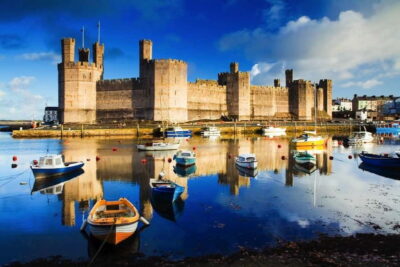
From Llandudno: Portmeirion, Snowdonia and Castles Tour
Read our review →From Llandudno: Snowdonia National Park & Three Castles Tour
Read our review →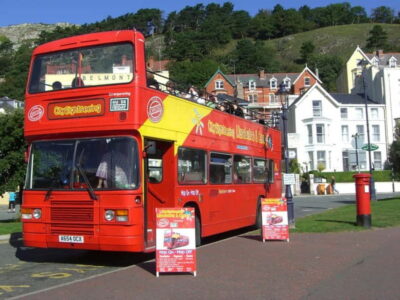
Llandudno: City Sightseeing Hop-On Hop-Off Bus Tour
Read our review →
From Holyhead: North Wales Sightseeing Tour Shore Excursion
Read our review →
Best of Snowdonia Day Trip: Tour from Llandudno & Conwy
Read our review →Browse the lists this tour appears in