
Reviewed · WORKSHOPS
Woolf & Dickens: London Literary Tour & Writing Workshop
Virginia Woolf meets practical writing coaching in London. This 1.5-hour literary workshop turns real street views and landmark interiors into prompts, with you actually writing, not just listening. I especially like the hands-on exercises that meet you where you are, and I also like the welcoming, safe tone set by the guide, Joseph, for both new writers and people who write already. One thing to consider: you will want a pen and a notebook, and the focus is on creating text, so it is not the best fit if you only want quiet sightseeing.
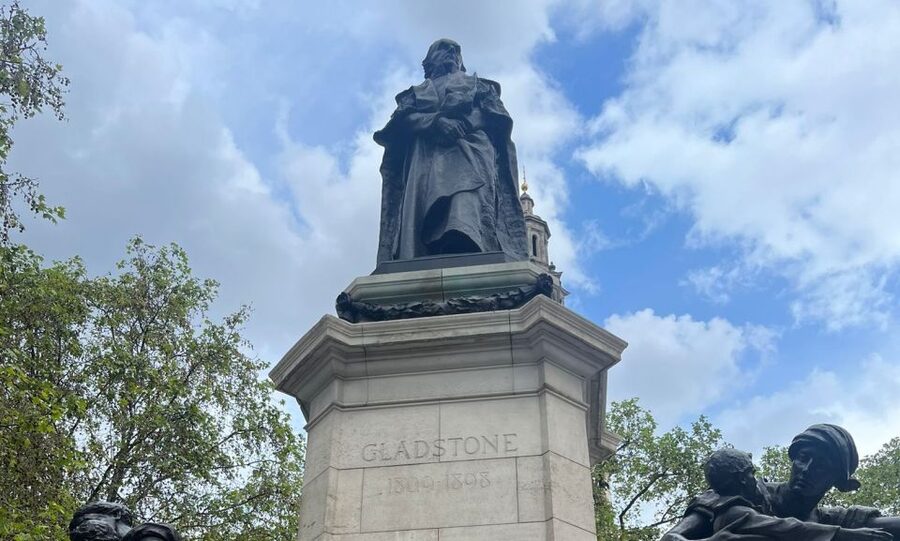
The stops feel tightly connected to authors and ideas, not random tourism. You start near Waterloo Bridge and Somerset House, then move through prompts shaped by time, politics, truth, and language at places like St Mary Le Strand, the Gladstone statue, and Doctor Johnson’s house. The only real drawback is the short duration, so you may leave with fresh writing energy, but not a finished piece ready to publish.
In This Review
- Key reasons this workshop is worth your time
- Woolf and Dickens in real London locations, not worksheets
- Joseph’s teaching style: a safe writing space with smart prompts
- Starting at Waterloo Bridge, then training your eyes like Woolf
- Somerset House: mindful writing that still feels like London
- Aldwych time echoes, then St Mary Le Strand for your ekphrasis
- Gladstone, Dickens, and turning politics into personal facts
- Doctor Johnson’s house: dictionary language and identity
- How the workshop fits beginners and experienced writers
- Practical details that affect your comfort and results
- Price and value: why $101 can feel fair for a writing coach
- Who should book this London literary tour and workshop
- Should you book this writing tour?
- FAQ
- How long is the Woolf & Dickens London Literary Tour and Writing Workshop?
- Where do I meet the guide?
- Is the tour suitable if I am new to writing?
- What should I bring?
- Do I need to buy entry tickets for stops?
- Is it wheelchair accessible?
Key reasons this workshop is worth your time
- Woolf to Waterloo Bridge: you turn a real view into a biographical-style sketch prompt.
- Somerset House mindful exercise: a gentle way to slow down and write with attention.
- St Mary Le Strand ekphrasis: you respond to the church interior through a writing exercise, not a lecture.
- Eliot’s time, visible on the way: the theme shows up in practical details like the timeline element you encounter nearby at Aldwych.
- Politics and truth through objects: Gladstone, Dickens, and Johnson get used as writing springboards.
- Joseph runs it like a writing room: questions are inviting, and prompts leave room for your own voice.
Woolf and Dickens in real London locations, not worksheets
This tour is built around the idea that London is already writing material. You are not handed a list of famous names and sent on your way. Instead, you stand in specific spots, look, listen, and then produce short writing in response to what you notice and what the guide frames for you.
The guide, Joseph, is an award-winning novelist type of presence, with a PhD in Creative Writing behind the teaching. That matters because you can feel the difference between someone who knows literature and someone who knows how to teach writing. The tone stays kind and inclusive, so if you are nervous about writing in public, you are in the right place.
Also, it is not a one-size-fits-all program. The prompts are designed to work from beginner up to novelist level, with you choosing how deep to go. That flexibility is a major value driver, especially at a price point like $101 per person for 1.5 hours.
Also inked in under London
- London: East End Street Art Tour and Spray Painting Workshop
★ 4.8 · 297 reviews - London: Half-Day Street Art Tour and Workshop
★ 4.9 · 172 reviews - London: Traditional Scone Making Workshop
★ 4.7 · 129 reviews
Joseph’s teaching style: a safe writing space with smart prompts
The most praised part of this experience is the way it feels like a safe place to learn. Joseph sets up a welcoming, non-judgmental environment where you can try something new without feeling put on the spot. You get relevant readings paired with thoughtful questions, so you are not just staring at a blank page.
I like that Joseph uses prompts that leave room to make them yours. If you have a writing routine already, you can push the exercise into your own style. If you are starting from scratch, the guide gives enough structure to help you get going fast.
One more practical point: the writing prompts are tied to what you are seeing around you. That keeps the experience grounded. You are not asked to invent a scene from nowhere. London gives you material, and the author connection gives you a direction.
Starting at Waterloo Bridge, then training your eyes like Woolf
You meet at the north end of Waterloo Bridge. The meeting spot is a slope on the right that goes behind Somerset House. It is an easy place to find because it is right at one of the big, obvious landmarks.
From there, the tour uses Virginia Woolf as the opening key. The guide brings in Woolf’s wistful reflections tied to the view from Waterloo Bridge. Then you do something useful with that inspiration. You create a biographical sketch prompt based on what you see, and how a moving city can shape thought.
What I like about this start is that it turns a view into an exercise in attention. You are not just sightseeing. You are noticing details in a writerly way, then translating that into sentences. Even if you write slowly, the prompt format helps you produce something in the time you have.
Somerset House: mindful writing that still feels like London
Somerset House is the next “write” moment. The program includes a mindful writing experiment here, built to help you settle your focus before the more idea-heavy stops.
This is a useful skill, even if you are not a formal writer. Mindful writing in a city setting means you are less likely to rush. You look longer. You notice how your body reacts to the space, and you put that into words. The result is writing that feels personal but not random.
You are also learning a technique you can use later. Many writing prompts fail because they are either too vague or too stiff. Here, the guide uses the location itself as the structure, which gives your words traction.
A page further on, still in London:
- London: The London Eye Entry Ticket★ 4.6 · 35,875 reviews
- From London: Harry Potter Warner Bros Studio Tour★ 4.7 · 26,588 reviews
- London: Westminster to Greenwich River Thames Cruise★ 4.5 · 22,836 reviews
- Magical London: Harry Potter Guided Walking Tour★ 4.7 · 22,044 reviews
Aldwych time echoes, then St Mary Le Strand for your ekphrasis
A big theme in the tour is time. You pick up the author connection with T.S. Eliot through reflections that get mirrored in a timeline you encounter on the walls at Aldwych. It is the kind of detail that makes a theme feel physical, not abstract.
Then you go to St Mary Le Strand, which is where the exercise gets very concrete. You respond to Eliot’s study of time in the context of the church interior. After that, you practice ekphrasis, a writing exercise inspired by what you see in front of you.
Ekphrasis can sound intimidating until you understand the goal: you describe something, but your description becomes interpretation. At St Mary Le Strand, you are using the church’s grand interior as a prompt for how time and meaning feel in the body. The writing is not about getting it correct. It is about making the space speak through your language.
If you love settings where atmosphere matters, this is likely your favorite stop. If you struggle with introspective writing, the ekphrasis structure gives you a doorway in. You can start with observation, then let the thoughts come after.
Gladstone, Dickens, and turning politics into personal facts
Next comes a shift into politics and truth. The tour uses a statue of Gladstone as a prompt, and it directly connects to how politics, truth, and history can change depending on your perspective.
This section also ties in Dickens and the idea of truth as something argued over, not simply stated. The writing exercise here is practical and oddly satisfying. You write a list of facts, then blend personal history with what is around you.
That blending is the trick. Facts become more than data when you attach them to your own experience. You start asking questions like, which facts feel stable, and which ones change depending on context. It is a quick method to make abstract themes personal without turning the writing into a full autobiography.
Also, this is one of those moments where the tour’s tone matters. Politics can get heavy fast. Joseph keeps the writing prompts grounded in observation and reflection, so you can engage without feeling pressured to take a side.
Doctor Johnson’s house: dictionary language and identity
At Doctor Johnson’s house, the writing prompt turns toward language itself. You read from his dictionary, then connect it to the way structures like religion, politics, art, and language shape who we become.
This stop works because it gives you something concrete to work with. A dictionary is a reminder that words do not float in space. They are organized, defined, and used within systems. When you pair that with Johnson’s place, the theme becomes tangible.
You end this portion thinking about identity as something made through language and institutions. It is not a lecture ending. It is a writing moment that asks you to consider the “how” behind what you say and how you decide what matters.
If you enjoy word craft, you will probably leave with extra energy for your own drafts. Even if you do not write often, this section helps you see language as a tool for shaping thought.
How the workshop fits beginners and experienced writers
A common worry with writing tours is whether you need to be good already. Here, you do not. The program is designed for all levels, from novice to novelist, because the prompts can be handled in different depths.
For beginners, the key is that the guide gives you a clear entry point. You are not expected to write a masterpiece on demand. You can produce a short, honest piece in the time given.
For experienced writers, the structure still helps. The prompts are designed to nudge you into choices you might not make alone. Joseph asks questions that open doors, not questions that shut you down. You can use the exercises as warm-ups, or you can mine them for lines and images to reuse later.
Either way, the format is active. You are writing the whole time, not waiting for a big final assignment.
Practical details that affect your comfort and results
Bring a pen and a notebook. You will want water, too. An umbrella is recommended just in case, because London weather has opinions.
Also, the tour information includes internet access as a suggested item. The safest way to plan is to have your phone charged and ready, even if you are not sure how it will be used during the exercises.
In terms of timing, you get 1.5 hours. That is long enough to write several short pieces, but short enough that you should be ready to move at a writing pace, not a “linger all day” pace.
The tour is in English and is wheelchair accessible. It is offered as a private group, which usually means the experience can stay closer to a workshop format instead of a crowd.
One last practical note: no entry tickets are needed. That keeps the experience smoother if you want to avoid ticket lines and just focus on the writing.
Price and value: why $101 can feel fair for a writing coach
At $101 per person for 1.5 hours, this is not a low-cost sightseeing-only option. You are paying for the writing workshop component: the prompts, the readings, and Joseph’s facilitation.
The value comes from three places.
First, you are using multiple literary themes, Woolf through Johnson, mapped to real locations in a tight time window. That is more teaching and more writing opportunities than a standard walk-and-talk.
Second, it is interactive. If you only listen, you will miss the point. But if you actually write, you leave with text you created and ideas you can carry forward.
Third, it avoids entry-ticket friction. That is one less thing to plan, and it keeps the flow focused on the prompts.
If your goal is passive culture consumption, you might feel the price mismatch. If your goal is writing momentum and learning techniques you can repeat, the structure makes the cost easier to justify.
Who should book this London literary tour and workshop
I think this tour is a great match if you want London to do more than entertain you. You want to use the city as material, and you like guided creativity instead of unguided brainstorming.
It is especially good for:
- People who enjoy literature but want a practical output, not just facts
- Writers looking for a structured prompt format that works in short bursts
- Readers who like to connect themes like time, truth, and politics to how they feel on the ground
- Anyone who likes small, supportive learning energy
If you dislike writing in public settings, this might be uncomfortable, even though the environment is designed to be kind. The tour is explicitly a workshop, so you should want to write.
Should you book this writing tour?
If you are curious about Woolf, Eliot, Dickens, or Johnson, and you also want a workshop where you create something in the moment, I would book it. The guided, inclusive atmosphere paired with location-based prompts makes the experience feel like a real writing session, not a scripted museum walk.
Skip it if you want a purely visual London tour with minimal participation. You will get plenty of atmosphere, but you will also do the writing part, and that is the main event here.
FAQ
How long is the Woolf & Dickens London Literary Tour and Writing Workshop?
It lasts 1.5 hours.
Where do I meet the guide?
Meet at the north end of Waterloo Bridge, at the slope on the right that goes behind Somerset House.
Is the tour suitable if I am new to writing?
Yes. The workshop is designed to suit all levels, from novice to novelist.
What should I bring?
Bring a pen and a notebook, plus water. Internet access is also listed as something to have.
Do I need to buy entry tickets for stops?
No entry tickets are needed.
Is it wheelchair accessible?
Yes, the experience is wheelchair accessible.
Newest entries under London




Workshops, compared.

Chocolate Bar Making Workshop at York Cocoa Works
Read our review →
East End Street Art Tour and Spray Painting Workshop
Read our review →





Browse the lists this tour appears in