
Reviewed · WORKSHOPS
Covent Garden: Drawing Class with a Professional Artist
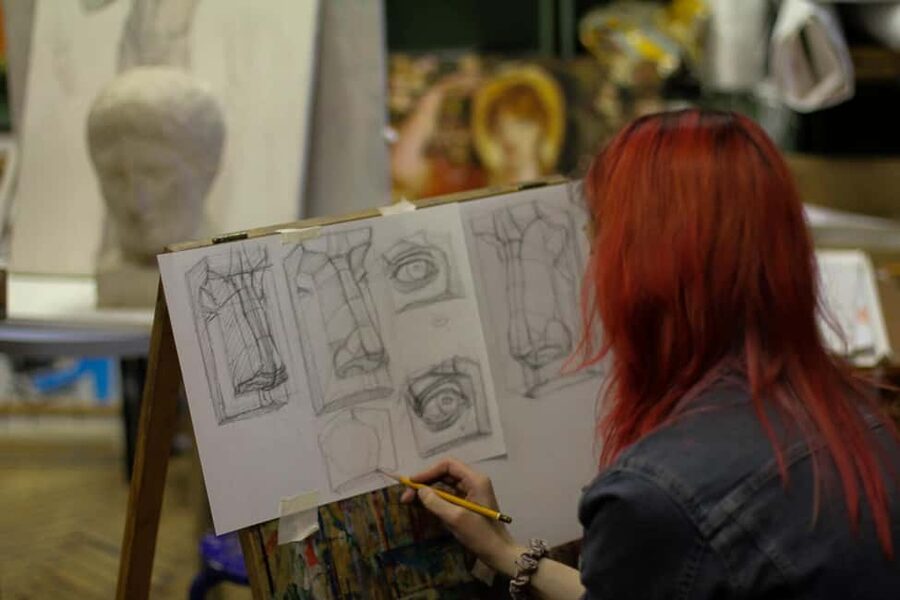
Good drawing starts with seeing better. In this 2-hour Covent Garden class, you practice the basics with a professional artist in a small group of no more than 10. The focus is simple and practical: learn how to observe what’s in front of you, then build depth with light and shadow.
I really like the way the tutor gives personalized guidance while you work on something you choose. You get quick demonstrations, then plenty of time to apply the ideas to your own subject, not just copy what you’re shown.
The only drawback to plan for is that this class is not suitable for children under 16 or wheelchair users, and the space has rules like no baby strollers and no alcohol or drugs.
In This Review
- Key highlights at a glance
- A 2-hour drawing class in Covent Garden that actually teaches you how to see
- Sunny Art Academy, a small group, and a tutor who works one-on-one
- What happens during the class, step by step
- 1) The taster drawing start
- 2) Observing shapes accurately
- 3) Measuring proportions, without overthinking
- 4) Light and shadow for depth
- 5) Work on your subject of choice, with ongoing tips
- Choosing your subject is the secret to finishing with momentum
- Why the one-on-one support matters more than extra theory
- The meeting point: the black gate with plants and the steps down
- Materials included, so you can focus on technique
- Who this drawing session suits best
- Price and value: what $80 gets you in two hours
- Practical tips to get more out of your session
- Should you book this Covent Garden drawing class?
- FAQ
- How long is the drawing class?
- What is the price per person?
- Is the class a small group?
- What skill level is it suitable for?
- Will I get materials, or do I need to bring supplies?
- Can I choose what I draw?
- Is the instruction in English?
- Where is the meeting point?
- Is it suitable for children or wheelchair users?
- Are there restrictions on what I can bring or do?
Key highlights at a glance
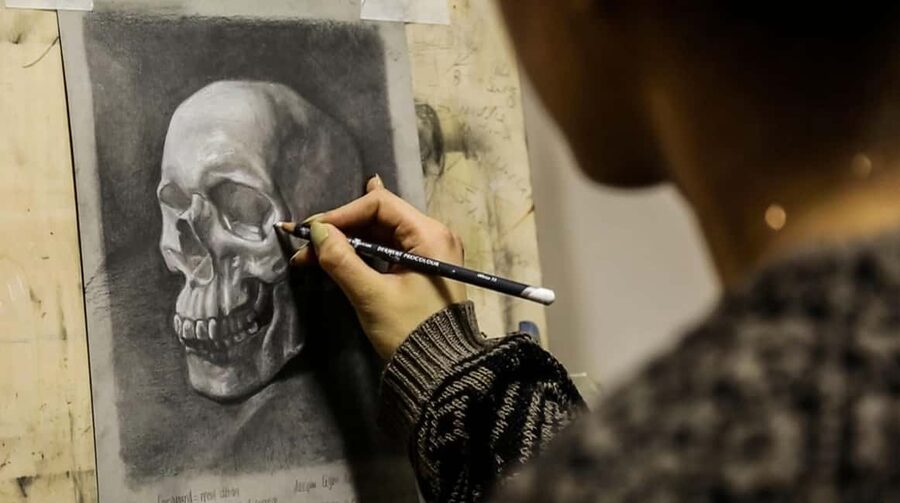
- Foundations that click fast: shapes, proportions, and light/shadow basics taught in plain steps
- Small group attention: max 10 participants means more direct feedback
- Your subject, your pace: work on a subject of your choice with tutor support
- Materials included: you can show up without hunting down supplies
- Tutors with serious training: teaching links to Central Saint Martins, the Royal Academy of Arts, and ateliers in Florence and Paris
A 2-hour drawing class in Covent Garden that actually teaches you how to see
This isn’t a sit-and-watch art lecture. It’s a working session built around the essentials of drawing, the stuff that helps your sketches look right, even if your style is still developing. In just two hours, you’ll go from vague outlines to a more confident way of judging size, placement, and value (how light or dark something appears).
You’ll start with a taster format, then move into foundational instruction. You’re not expected to already know the right lines. Instead, you learn how to observe shapes accurately, measure proportions, and use light and shadow to create depth. The tutor keeps it relaxed, but the teaching is focused.
And because it’s limited to 10 students, your attention doesn’t get diluted. You can ask questions when you get stuck, and the tutor can steer you back on track.
Also inked in under London
- London: East End Street Art Tour and Spray Painting Workshop
★ 4.8 · 297 reviews - London: Half-Day Street Art Tour and Workshop
★ 4.9 · 172 reviews - London: Traditional Scone Making Workshop
★ 4.7 · 129 reviews
Sunny Art Academy, a small group, and a tutor who works one-on-one
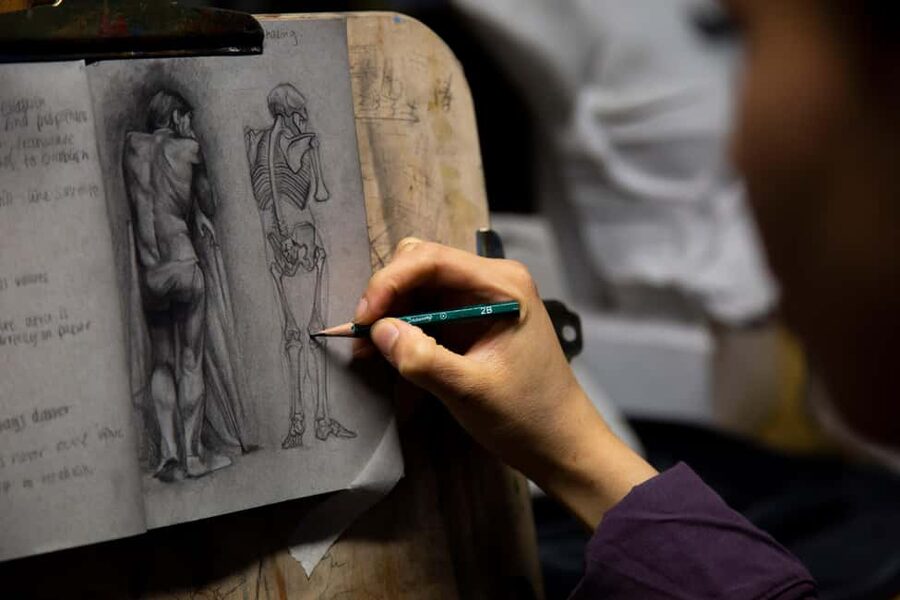
The experience is run by Sunny Art Academy, with instruction in English. The class size is capped at a maximum of 10 participants, which matters more than it sounds. In bigger classes, you might only get a quick glance or a generic tip. Here, you get more actual help while you draw.
The tutor is described as coming from respected art schools and studios, including Central Saint Martins and the Royal Academy of Arts, plus traditional ateliers in Florence and Paris. You feel that in the teaching approach. It’s practical, not mystical. The tutor explains what to look for, then shows you how to translate that into pencil marks you can use immediately.
Also, all materials are included. That means you can spend your energy on drawing instead of budgeting for supplies or wondering if you brought the right thing.
What happens during the class, step by step
This drawing class runs for two hours, and the flow is built around a simple cycle: learn a tool, then apply it right away.
1) The taster drawing start
You begin with a short taster drawing session. Think of this as a baseline. You’ll start drawing, and the tutor can quickly see what your current approach looks like. That helps them tailor tips for your level, whether you’re a total beginner or you’ve returned to drawing after a break.
This first phase is useful because it lowers the pressure. You’re not trying to produce a perfect final piece right away. You’re setting up good habits from the start.
A page further on, still in London:
- London: The London Eye Entry Ticket★ 4.6 · 35,875 reviews
- From London: Harry Potter Warner Bros Studio Tour★ 4.7 · 26,588 reviews
- London: Westminster to Greenwich River Thames Cruise★ 4.5 · 22,836 reviews
- Magical London: Harry Potter Guided Walking Tour★ 4.7 · 22,044 reviews
2) Observing shapes accurately
Next, you work on observing shapes accurately. This is one of those lessons that sounds obvious until you try it. The tutor guides you to stop treating the subject as a single outline and start breaking it into simpler shapes.
You’ll learn to look for the actual geometry of what you see. Even if your final drawing is loose, this structure is what makes it look believable.
3) Measuring proportions, without overthinking
Then comes proportions. The class covers how to measure proportions so your drawing doesn’t drift out of place. The tutor’s guidance helps you check relationships between parts, like how wide something is compared to something else.
This is where you’ll likely notice the biggest improvement. A sketch can be messy and still look right if the proportions are handled carefully.
4) Light and shadow for depth
After shapes and proportions, you move into light and shadow. The goal is depth, not shading for its own sake. You learn how to use value so your subject looks like it has form.
If you’ve ever drawn something that looks flat, this is the fix. The tutor helps you see what’s actually happening with light, then gives you guidance on how to represent it on paper.
5) Work on your subject of choice, with ongoing tips
A major part of the class is that you work on a subject of your choice. While you’re drawing, you get personalized tips, demonstrations, and one-on-one support. That means you’re not stuck doing one standard assignment the whole time.
You can pick what you’d enjoy practicing, and the tutor helps you apply the foundations to your specific choice. This is also a smart way to keep motivation up. You’ll finish two hours later with more than notes. You’ll have work that’s connected to your interests.
Choosing your subject is the secret to finishing with momentum
Most drawing classes give you the same subject for everyone. Here, you choose your own subject to work on. For many people, that’s the difference between leaving inspired and leaving frustrated.
When you get to draw what you picked, you naturally pay closer attention. You start asking better questions like, Where is the darkest area? What shape is actually forming that curve? How does the edge change near the light?
It’s also practical. If you’re interested in portraits, you can lean that direction. If you want still life or something simpler, you can. The tutor still keeps the fundamentals in view, so you’re not just free sketching.
Why the one-on-one support matters more than extra theory
A lot of art instruction talks about technique. This class helps you use technique. Personalized tips and demonstrations are paired with one-on-one support, and that changes how fast you improve.
When you’re drawing, small errors stack up. A slightly wrong proportion can ruin the whole piece. Light and shadow can look off if you don’t decide what areas should read as lighter or darker. Having a tutor check your work and suggest specific corrections means you learn faster and you correct in real time.
The tutor’s background links to top institutions and studios, but the key value for you is teaching skill. The instruction is meant to help you understand what to do with your pencil marks, not just know art vocabulary.
The meeting point: the black gate with plants and the steps down
Getting there should be straightforward, as long as you know what to look for. Your meeting point is at a location you can identify by a black gate with plants either side. There are metal steps down to the front door.
This detail is worth remembering because it’s the kind of thing that can slow you down if you arrive without reading it twice. Plan to give yourself a few extra minutes so you can find the entrance calmly.
Materials included, so you can focus on technique
The class includes all materials, so you don’t need to source paper or supplies ahead of time. That’s a real value perk, especially if you’re just getting started.
When materials are provided, you can also avoid the common beginner trap of using the wrong kind of tool for the job. You’ll be drawing under the same setup the tutor expects, which makes it easier for you to follow along and for the tutor to give useful feedback.
Who this drawing session suits best
This workshop is suitable for beginners and for people returning to drawing after a break. That broad fit matters because drawing lessons often split into either beginner-only or more advanced training.
If you’re nervous about drawing, you’ll like the relaxed class style. The session is built around foundations, so you’re not thrown into something too advanced too soon.
If you’re rusty, the taster start and structured teaching can help you rebuild confidence fast. You’re not being judged on past skill. You’re being coached on the basics again with better tools and reminders.
The class is not suitable for children under 16, and it’s not designed for wheelchair users.
Price and value: what $80 gets you in two hours
At $80 per person for a two-hour session, you’re paying for instruction, tutor time, and a small group size. That’s the heart of the value here.
You get:
- Foundations taught around observation and proportion
- Light and shadow guidance for depth
- Personalized tips and demonstrations
- One-on-one support
- Materials included
- A small group capped at 10 people
If you’ve done group workshops before, you know the risk: sometimes the price is high but the attention is low. Here, the group size is part of the product. With max 10 students, your chance of getting meaningful correction goes up.
Two hours can sound short, but for drawing basics, it’s often long enough to make progress because the session is hands-on. You learn a concept, then apply it immediately to your own drawing.
Practical tips to get more out of your session
You’ll get the best results if you show up ready to draw and to ask questions.
First, choose your subject thoughtfully before the class starts. Since you work on a subject of your choice, picking something you actually care about will help you stick with the process when you hit a tricky area.
Second, wear comfortable clothes. You’ll be drawing for the full session, and you’ll want to move easily if you’re sketching from different angles or adjusting your page.
Third, don’t try to make a finished masterpiece in two hours. The class is built around learning the fundamentals: proportions, light and shadow, and how to observe shapes accurately. If you focus on those, your drawing will improve even if it’s not perfect.
Finally, bring your curiosity. If something feels off, ask. The tutor is there to guide you with personalized tips and one-on-one support.
Should you book this Covent Garden drawing class?
I’d book it if you want structured drawing instruction without a huge class size. It’s especially good if you’re a beginner or returning to drawing and you need a clear starting point. You’ll leave with foundations you can reuse, plus a drawing that reflects your own subject choice.
You might skip it if you’re looking for a kid-friendly activity, if you need wheelchair accessibility, or if you prefer long-form drawing practice. This is a targeted two-hour fundamentals session, so it works best as a skill-building block, not a full art course.
If your goal is to learn how to see shapes, measure proportions, and add depth with light and shadow, this is a sensible way to spend $80.
FAQ
How long is the drawing class?
The class lasts 2 hours.
What is the price per person?
The price is $80 per person.
Is the class a small group?
Yes. It’s limited to a small group with no more than 10 participants.
What skill level is it suitable for?
It’s suitable for beginners and for people returning to drawing after a break.
Will I get materials, or do I need to bring supplies?
All materials are included.
Can I choose what I draw?
Yes. You work on a subject of your choice and get guidance throughout the session.
Is the instruction in English?
Yes, the instructor is English.
Where is the meeting point?
Look for the black gate with plants either side, and there are metal steps down to the front door.
Is it suitable for children or wheelchair users?
It is not suitable for children under 16, and wheelchair users are not suitable.
Are there restrictions on what I can bring or do?
Baby strollers are not allowed. Alcohol and drugs are not allowed, and party groups are not allowed.
Newest entries under London






Workshops, compared.

Chocolate Bar Making Workshop at York Cocoa Works
Read our review →
East End Street Art Tour and Spray Painting Workshop
Read our review →




Browse the lists this tour appears in