
Reviewed · WALKING TOURS
Canterbury: Walking Tour with Green Badge Guide
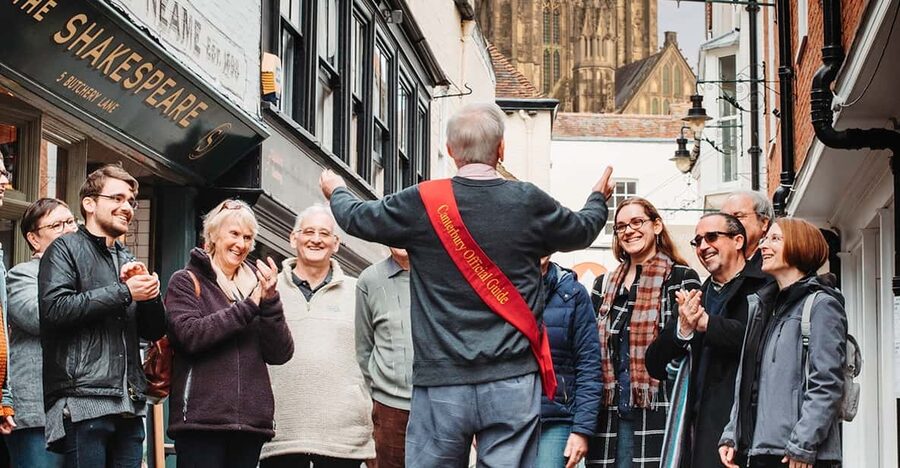
Canterbury hits different on foot. This 90-minute walk mixes medieval lanes with Cathedral precincts, guided by Green Badge locals who know what to point at and why it matters. I especially like the way the tour brings the city’s famous places down to human scale, from pilgrim-era corners to street details you’d miss alone.
My second favorite part is the story-led route, the kind where you end up smiling at phrases, odd objects, and characters. One thing to plan around: the tour does not enter the Cathedral itself, and access to the precincts can change.
In This Review
- Key highlights worth waking up for
- Getting your bearings at the Buttermarket, then walking into pilgrim Canterbury
- Following the cobbled lanes to timber-framed oddities and real street-level history
- Eastbridge Hospital since 1190, and why pilgrims mattered so much
- Seeing Marlowe Theatre and modern Canterbury without losing the plot
- The Cathedral from the outside: precinct walk, monastery traces, and King’s School grounds
- How the Green Badge guides keep stories clear, fun, and on pace
- Value at about $20: what you get in 90 minutes
- Weather-proofing and walking comfort on narrow, uneven streets
- Is this the right tour for you?
- Should you book it?
- FAQ
- Where is the meeting point for the Canterbury walking tour?
- How long is the tour?
- Does the tour include entry into the Cathedral?
- What’s included in the price?
- Is the tour wheelchair accessible?
- Can I record video during the tour?
- Is a dog allowed?
Key highlights worth waking up for
- Green Badge City Guides with local stories, often delivered with humor and clear pacing
- Cathedral Precincts access to see the Cathedral up close, without going inside
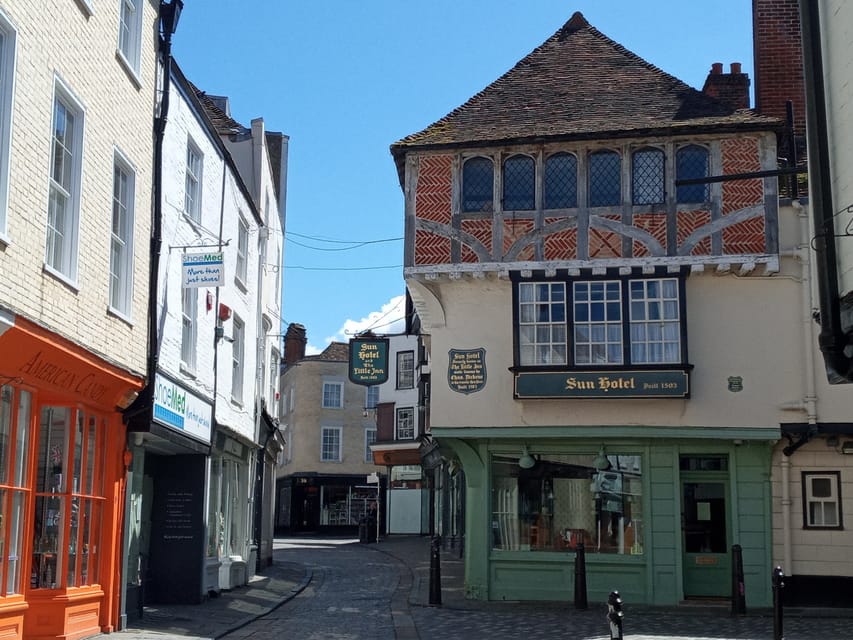
- Timber-framed lanes and landmarks like the Crooked House and Old Weavers’ House
- Pilgrim-era stops such as Eastbridge Hospital, linked with hospitality since 1190
- Big mix of old and newer Canterbury, including views tied to the Marlowe Theatre area
- 90 minutes that fit a day plan, with a route that can flex based on access
Getting your bearings at the Buttermarket, then walking into pilgrim Canterbury
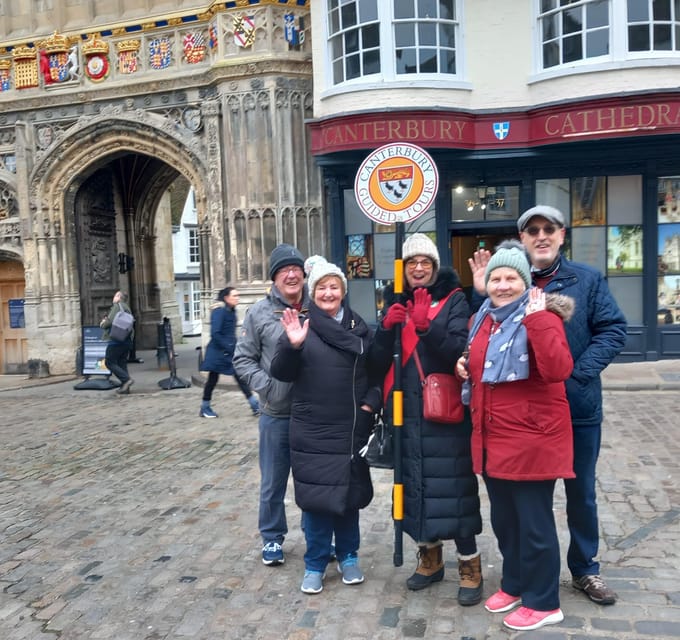
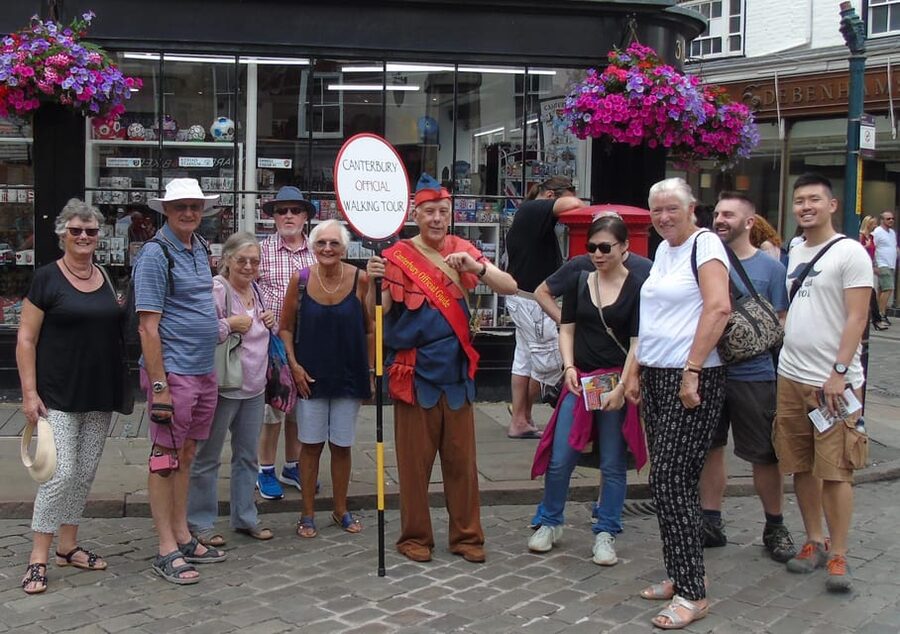
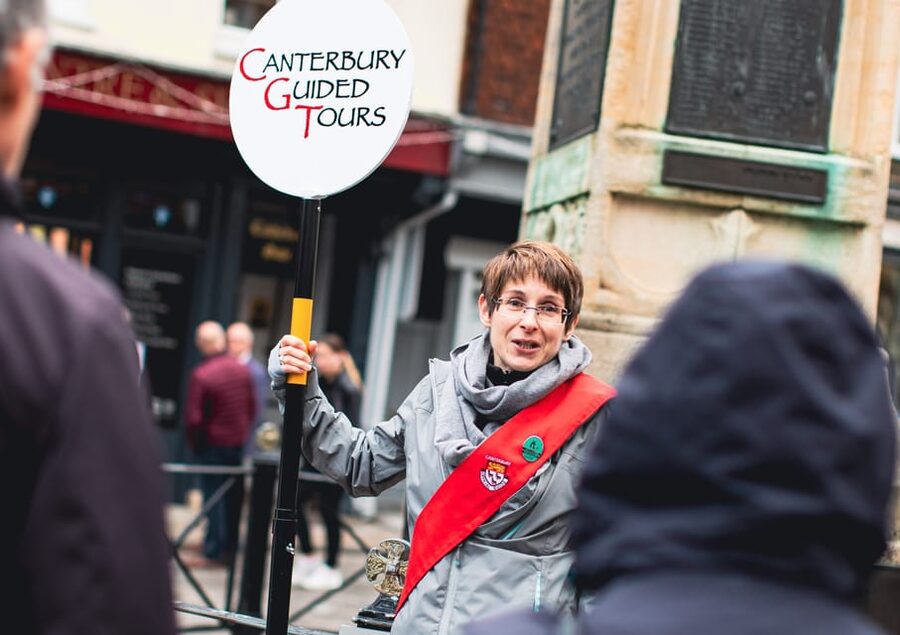
I start the tour at the Buttermarket, right by the main Cathedral area. Your guide meets you outside the main Cathedral Gate, wearing a red sash and holding a placard, so it’s usually easy to spot them quickly. I like that the meeting point is central, which means less pre-walk wandering and more time learning.
From there, you head out on narrow, cobbled streets. Expect that classic Canterbury look right away: older buildings, tight lane widths, and viewpoints that suddenly frame the Cathedral. It’s a smart way to learn the city, because you’re not just reading about it later, you’re walking the same corridors that shaped pilgrim movement.
Two practical notes shape the whole experience. First, the tour is designed for walking, and while it avoids hills and steps, many pavements are narrow and uneven. Second, it runs in all weather, so you’re dressing for rain, wind, sun, or even snow, not just a pleasant forecast. That matters for your comfort, and it also affects photo chances and where you pause for stories.
More British streets at boot pace:
- Canterbury: Private Guided Walking Tour with Official Guide
★ 5.0 · 15 reviews - Magical London: Harry Potter Guided Walking Tour
★ 4.7 · 22,044 reviews - London: The Original Jack the Ripper Walking Tour
★ 4.7 · 7,833 reviews
Following the cobbled lanes to timber-framed oddities and real street-level history
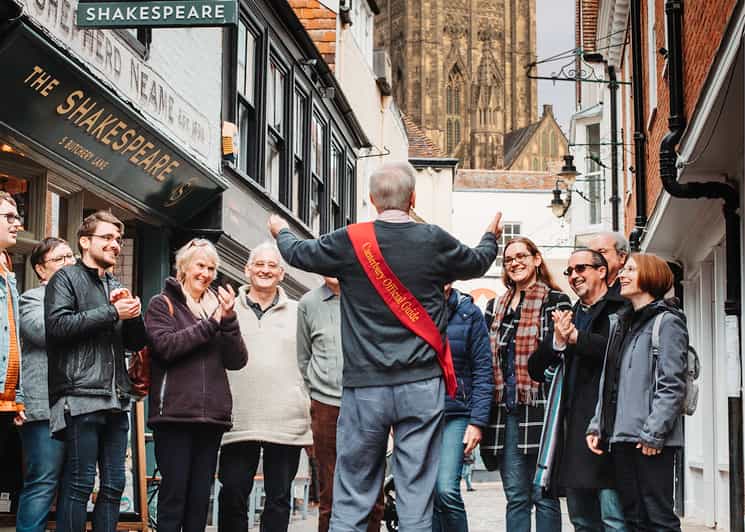
Once the walk gets going, the route leans hard into Canterbury’s older lanes. I like this part because it’s where the city feels most lived-in, with old timber-framed buildings and little sightlines that make you stop without being asked.
You’ll move through areas that include the Crooked House and the Old Weavers’ House. These are the kinds of buildings that are visually distinctive at first glance, but the real value is hearing what your guide ties to them. A good guide will connect architecture to everyday life, so the crooked angles or historic façades turn from trivia into context.
You’ll also hear about the infamous ducking stool. I won’t pretend it’s a cheerful topic, but that’s exactly why it works on a walking tour: it takes you from postcard Canterbury to what people actually did and feared in earlier centuries. And because you’re in the street environment around it, the story lands with much more impact.
If you’re traveling with kids, this portion usually feels like the payoff. Many guides are practiced at pitching the facts in plain language, and you can pick up a children’s activity sheet and history trail from the start. Even if your kids are just tagging along, having something to do helps them stay focused through the cobbles.
Eastbridge Hospital since 1190, and why pilgrims mattered so much
One of the more meaningful stops is Eastbridge Hospital, a place tied to hospitality for pilgrims since 1190. This is where the tour’s tone often shifts from quick-fire landmarks to something more reflective. I like it because it explains why Canterbury was so important beyond being pretty.
This stop also helps you understand the Cathedral precincts in a deeper way. When you learn that hospitality infrastructure existed to support people on spiritual journeys, the later Cathedral-area scenes feel less like a sightseeing checklist and more like the center of a whole system. You’re essentially tracing how people moved, rested, and worshipped.
Expect your guide to sprinkle in small facts and anecdotes that connect daily life to big events. Some guides also clear up myths along the way, which I genuinely value. Myth-busting is useful on a short tour, because it prevents you from carrying wrong ideas into the rest of your day.
There’s also a rhythm to how guides handle groups. In feedback tied to many guides, the best ones kept people together even when the weather turned nasty. If rain slows you down, it’s easy for a group to stretch. I’d pick a tour like this specifically because the guiding style is designed to keep you moving and still make time for each stop.
Seeing Marlowe Theatre and modern Canterbury without losing the plot
Canterbury isn’t only medieval. You’ll pass views linked to the Marlowe Theatre and its moving statue, which gives you a surprising contrast. I like this because it keeps the tour from turning into a one-note time machine.
The trick is how your guide uses modern landmarks to frame change. You might notice the same area of city life, just with different purposes over time. That’s where the stories matter most. Without that guidance, modern architecture can feel unrelated. With it, you start seeing continuity, the way a city keeps adapting around older bones.
This is also a good moment to catch your breath if you’ve been standing still too long. Because the lanes are tight and the pace is steady, moving between viewpoints gives your legs a short break while still learning something new.
The Cathedral from the outside: precinct walk, monastery traces, and King’s School grounds
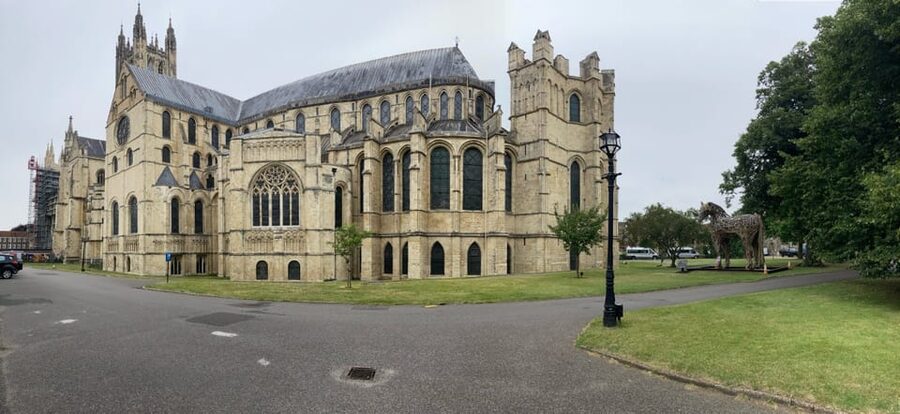
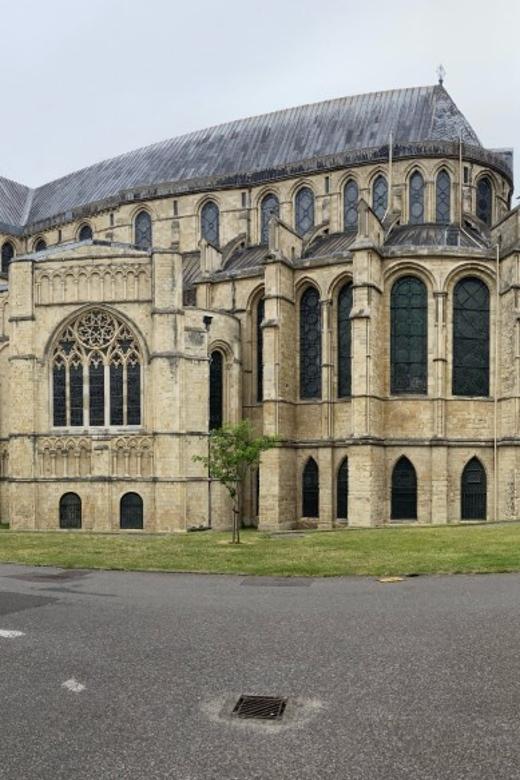
Here’s the key point to get straight before you go: the tour does not go inside the Cathedral. Instead, you get access into the Cathedral grounds and precincts to see the Cathedral up close and explore the surrounding area. Access to the precincts is subject to change, so you’re planning for a best case and being flexible.
Even with that limitation, this part is often the tour’s emotional center. You’re not rushing past the Cathedral; you’re circling it from outside with guidance that helps you notice what belongs to different eras. When you hear what once stood nearby, the building becomes more than a single stop.
Your guide will also aim to show you where possible the ruins of the old monastery and the grounds of the historic King’s School. These pieces do two jobs at once. They add texture to the precinct scene, and they explain how education, religion, and civic life stayed intertwined around the Cathedral.
A small drawback to know in advance: because precinct access can change, you may not see every element every day. That’s not usually a deal-breaker. The tour still functions as a “Catalyst tour,” helping you orient before you spend more time on your own.
How the Green Badge guides keep stories clear, fun, and on pace
The biggest reason this tour works is the guide standard. All guides are professionally qualified Green Badge City Guides, and they’re local. You can feel it in the way they steer attention, explain what you’re seeing in plain terms, and connect details to a bigger narrative.
I also like the personality range. Guides named in feedback include Claire, Dave, Bob, Ian, Naomi, Alex, Colin, and many more. What ties them together is how they deliver the stories: clear enough to hear over street noise, engaging enough to keep you interested through 90 minutes, and organized enough to manage the group while still stopping when someone spots something worth asking about.
Pace is part of the value here. The tour lasts about 1.5 hours, which is long enough to go beyond the quick photo loop but short enough to keep your energy for the rest of Canterbury. In rain, a well-led group feels like it’s moving on rails. In better weather, it still feels purposeful, not rushed.
A final detail I’d pay attention to is humor. Many guides use a light touch, and that helps when you’re hearing about darker or stranger parts of city life. It keeps the tone human, not lecture-style. That’s also why the tour feels like a conversation with the city rather than a checklist read aloud.
Value at about $20: what you get in 90 minutes
At around $20 per person for a 1.5-hour guided walk, this tour is priced in the range where you should expect a decent payback in time saved and confusion avoided. You’re not paying for an all-day commitment or separate attraction tickets. You’re paying for orientation, context, and the jump from seeing a building to understanding what it represents.
Here’s the practical math. You’ll get a guided walk through the central lanes and the Cathedral precincts, plus the guide’s expertise and a children’s activity sheet with a history trail. Entry to attractions is not included, and entry into the Cathedral is also not included, so you’re not buying access to everything.
But that limitation is also part of the value. You get the close-up Cathedral atmosphere plus the medieval lane logic that explains why Canterbury looks the way it does. If you want to go inside the Cathedral later, you can do that on your own schedule with the context this tour gives you.
If you’re the kind of visitor who likes to understand before you photograph, this is the right match. If you only want the biggest sites with no story, you might feel the tour is a little heavy on narration. But for most people, the mix of landmarks, stories, and walkable duration hits a sweet spot.
Weather-proofing and walking comfort on narrow, uneven streets
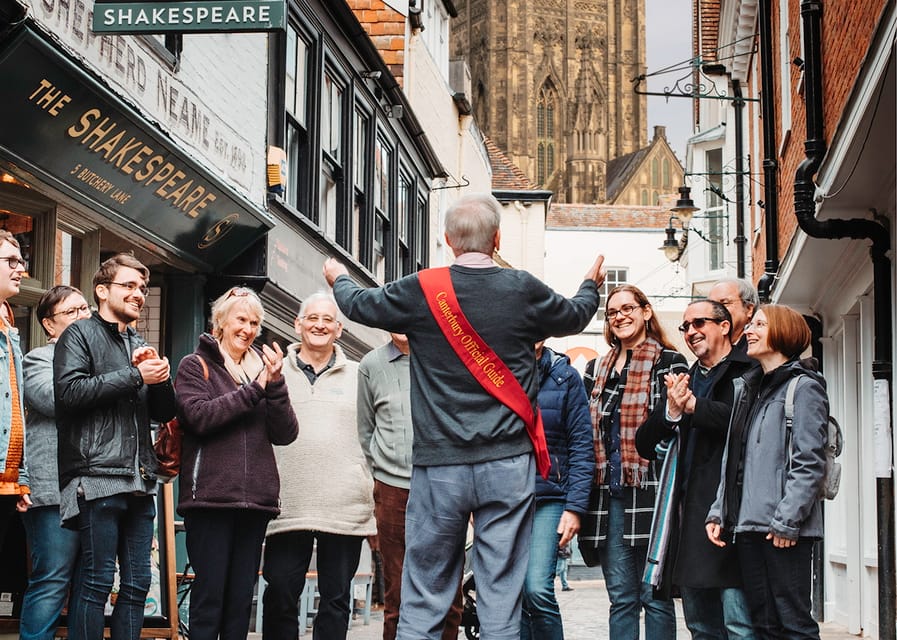
I recommend you treat weather as the main variable, because the tour runs in all conditions unless there’s an official warning to stay indoors. That means you’ll be standing in wind or dealing with rain slickness at times, especially on cobbles.
You don’t need perfect shoes for a hiking trip, but you do need something with grip and comfort for uneven surfaces. The tour notes say there are no steps or hills, which helps, but it also warns that pavements are narrow and uneven.
If you’re sensitive to cold, bring layers. If you’re sensitive to heat, plan for sunny pauses because many moments are standing and listening. In past feedback, some people wished they could take more photos, which usually comes down to pace and time spent on storytelling. If photos matter a lot, aim to take fewer, better shots and use the guide’s stop points strategically.
Is this the right tour for you?
This tour is a great fit if you want a fast orientation in Canterbury that doesn’t just skim the Cathedral. You’ll enjoy it if you like story-driven walking tours where you learn why buildings and odd objects matter, and you like guides who keep the group together without turning the walk into a long march.
It’s also a strong option if you’re traveling with family. The included children’s activity sheet and history trail can keep youngsters engaged, and guides tend to handle mixed ages with a steady pace.
I’d consider another option if you specifically want to go inside the Cathedral during the tour window. This one keeps you in the precincts, and access there can change. Also, if you hate uneven cobbles, you may find the walking parts more tiring than you expected.
Should you book it?
Yes, if you want Canterbury with context in just 1.5 hours. The price-to-time ratio is solid, and the biggest payoff is that you get the lane-level details plus a close-up Cathedral precinct experience guided by Green Badge locals.
If you’re unsure, here’s how I’d decide. Book it if you plan to spend the rest of the day wandering on your own, because this tour helps you pick a route with better instincts. Skip it if your priority is only Cathedral interiors or you’re looking for a low-story, high-photo sightseeing sprint.
If you do book, wear grippy shoes, bring a rain layer, and give yourself permission to pause. That’s when the stories start clicking into place, and Canterbury stops feeling like a list and starts feeling like a place with a pulse.
FAQ
Where is the meeting point for the Canterbury walking tour?
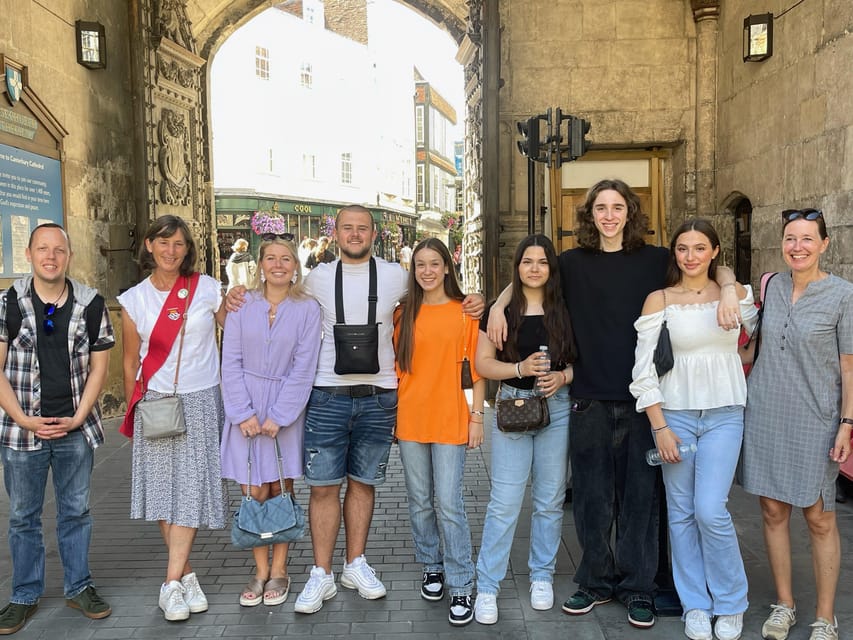
Please meet your guide in the historic Buttermarket, outside the main Cathedral Gate. Guides wear a red sash and hold a placard. Arrive a few minutes before the tour start time.
How long is the tour?
The tour lasts about 1.5 hours, so plan for roughly a 90-minute walking experience.
Does the tour include entry into the Cathedral?
No. The tour does not go inside the Cathedral. It visits the Cathedral grounds and the surrounding precincts, and access to the precincts can change.
What’s included in the price?
You get the central city lane walk and Cathedral precincts (grounds), a Green Badge city guide, and a children’s activity sheet and history trail (ask your guide on arrival). Entry to attractions and entry into the Cathedral are not included.
Is the tour wheelchair accessible?
Yes, it is wheelchair accessible. The tour notes say there are no steps or hills, but some pavements are narrow and uneven.
Can I record video during the tour?
No. Video recording is not allowed.
Is a dog allowed?
At the guide’s discretion, you can bring a well-behaved dog on a short lead.
Newest entries under Canterbury



Walking Tours, compared.

Magical London: Harry Potter Guided Walking Tour
Read our review →

University and City Walking Tour with Alumni Guide
Read our review →
Harry Potter Movies Walking Tour (Kids Go Free)
Read our review →
The Great British Rock and Roll Music Walking Tour
Read our review →


Harry Potter Walking Tour Including New College
Read our review →Browse the lists this tour appears in