
Reviewed · WALKING TOURS
Canterbury: Private Guided Walking Tour with Official Guide
Canterbury feels different on foot. This private walking tour ties together Thomas Becket, Chaucer’s pilgrims, and centuries of royal power, while keeping you moving through the city’s tight, story-filled streets. You also get real access beyond the usual sightseeing loop, including the Canterbury Cathedral Precincts (the grounds).
I especially like two parts. First, the focus on Canterbury Cathedral surroundings, with cathedral precincts included as part of the tour, plus time around the King’s Mile corridor. Second, the guide setup is built for you, not for a one-size-fits-all script, so you can ask for a slower pace, more architecture talk, or kid-friendly anecdotes if that matters. In past departures, guides such as Karen (German speaking), Lenny, and Pauline (French speaking) have been praised for keeping energy high and turning Canterbury into something you can actually picture, not just memorize.
One heads-up: it is a walking tour on narrow, uneven pavements, and it is outdoors and limited in what you enter. The big cathedral moment is mostly around the precincts and outside views, so if you want to go inside the cathedral, plan a separate stop or expectation.
In This Review
- Why This Canterbury Tour Works (and What You Get for Your Time)
- The Meeting Point: Buttermarket, Red Sash, Ready to Walk
- Butchery Lane and Mercery Lane Photo Stops: Small Streets, Big Clues
- Canterbury Cathedral Precincts: The Big Included Moment
- The King’s Mile: Pilgrims, Power, and the Streets That Carry the Stories
- Quirky Canterbury Stops: Crooked House, Weavers, and That Famous Stool
- The Marlowe Theatre Area: Medieval Lanes Meet Modern Canterbury
- High Street Finish: Wrap It Up with What You Now Understand
- Your Tour Can Be Tailored, Including Pace and Interests
- Guide Quality: Official Green Badge, Real Local Context
- Languages, Group Size, and How Private Changes the Feel
- Accessibility and Terrain: Wheelchair Accessible, But Expect Narrow Pavements
- What Is Included, What Is Not, and How to Plan Around It
- Weather and Timing Reality: It Runs in All Conditions
- Is This the Right Tour for You?
- Should You Book It?
Why This Canterbury Tour Works (and What You Get for Your Time)
A 1.5-hour private tour in Canterbury sounds straightforward, but the smart part is how it is structured. The route is short enough that you do not feel dragged between spots, yet it still covers the places that shape Canterbury’s identity: pilgrim lanes, famous stone landmarks, and the cathedral complex as the gravity point of the whole city.
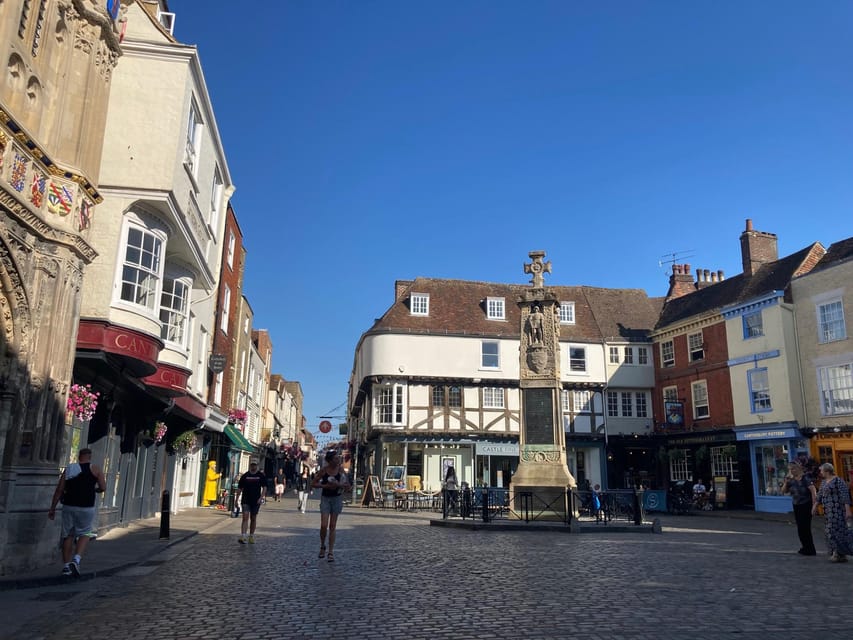
You start at the Buttermarket, which is the perfect “warm-up” location. It sits right at the meeting point of everyday street life and historic movement. From there, the tour threads into lanes and precinct areas that tell the story of pilgrimage, power, and conflict in layers you can feel when you’re walking instead of reading.
And since it is private, the guide can pace the route around your group. That matters in Canterbury, where you can easily spend the whole day just “trying to see things,” or you can actually understand what you’re looking at as you go.
The Meeting Point: Buttermarket, Red Sash, Ready to Walk
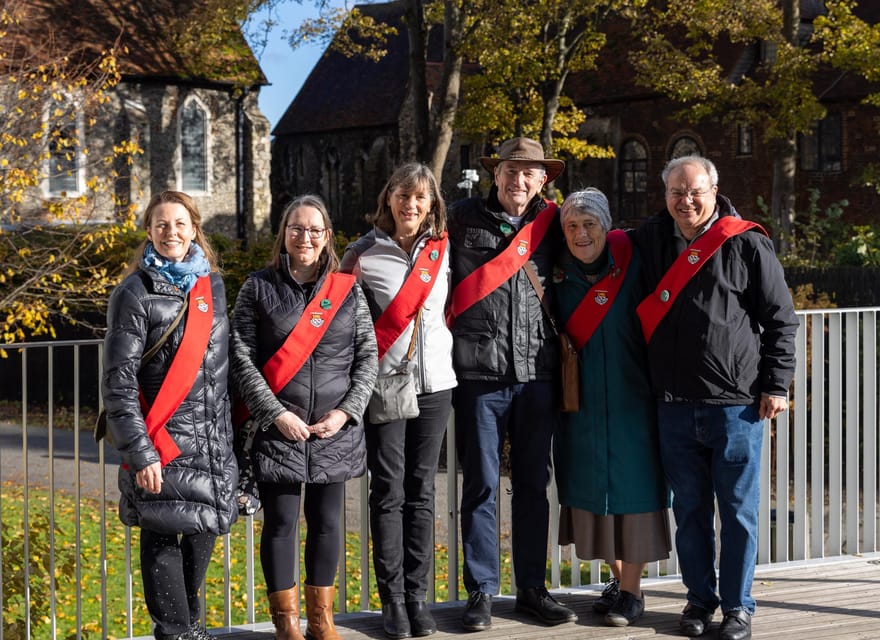
You meet at Buttermarket, and your guide will be wearing a bright red sash. Show your booking on arrival. It is a simple setup, but it helps you start on time and reduces the usual stress of “Which entrance?” or “Where exactly is the guide?”
This also matters because the route begins immediately with historic context. Instead of saving the story for later, you start getting the background while you’re still fresh, which makes the rest of the walk click faster.
More British streets at boot pace:
- Canterbury: Walking Tour with Green Badge Guide
★ 4.8 · 709 reviews - Magical London: Harry Potter Guided Walking Tour
★ 4.7 · 22,044 reviews - London: The Original Jack the Ripper Walking Tour
★ 4.7 · 7,833 reviews
Butchery Lane and Mercery Lane Photo Stops: Small Streets, Big Clues
Right after Buttermarket, the tour moves to Butchery Lane for a photo stop and guided walk time. Then it repeats a similar pattern at Mercery Lane. These pauses are not just for pictures. They act like punctuation marks, letting you absorb details without rushing.
What you’re looking for here is the medieval street texture: narrow passages, old-facing facades, and the sense that the city is built in layers. Even if you know Canterbury mostly from famous names, these lanes are where the place starts to feel real. You also get time to ask questions while you’re still close to the start point.
Canterbury Cathedral Precincts: The Big Included Moment
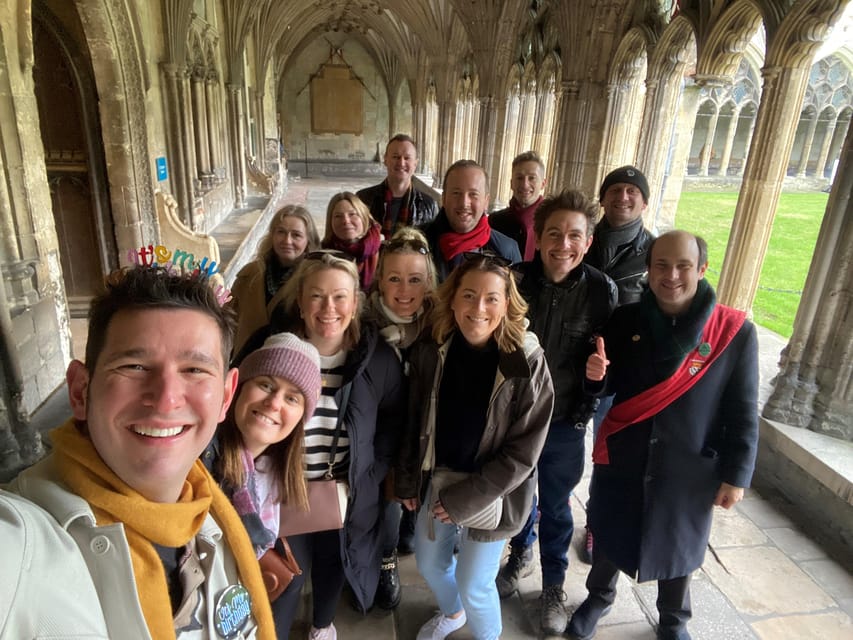
The tour’s largest time block is at The Precincts, with about 30 minutes focused here. This is the standout value, because access to the cathedral grounds is included on this tour.
You’ll learn how the cathedral precincts shaped life for pilgrims and how Canterbury’s medieval layout influenced movement. You also get a guided way to think about Thomas Becket’s story without turning it into a dry history lecture. The cathedral precincts are the right stage for those ideas, because everything you see outside and around the grounds supports the narrative.
Toward the end of your tour, you also get time around the outside of Canterbury Cathedral, with views of ruins of the old monastery and/or cloisters when possible. If you enjoy architecture and symbolism, this is the part where Canterbury turns from “a stop” into a place with meaning.
The King’s Mile: Pilgrims, Power, and the Streets That Carry the Stories
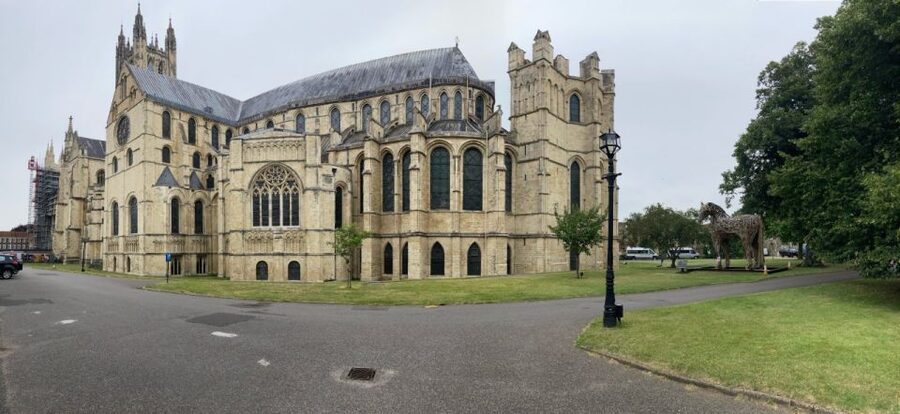
Next up is the King’s Mile, with a longer photo stop and guided time in this area. This stretch is where the city’s pilgrim story becomes easier to follow. You’re walking a corridor connected to the cathedral’s pull, and your guide ties in the human side of the Middle Ages: who moved through these streets, why they came, and what the city needed to do to serve them.
This part of Canterbury also makes for great listening. The guide’s local knowledge helps turn famous names into a map you can remember. If you like historical storytelling that feels grounded, this is where the tour can feel most “alive.”
Quirky Canterbury Stops: Crooked House, Weavers, and That Famous Stool
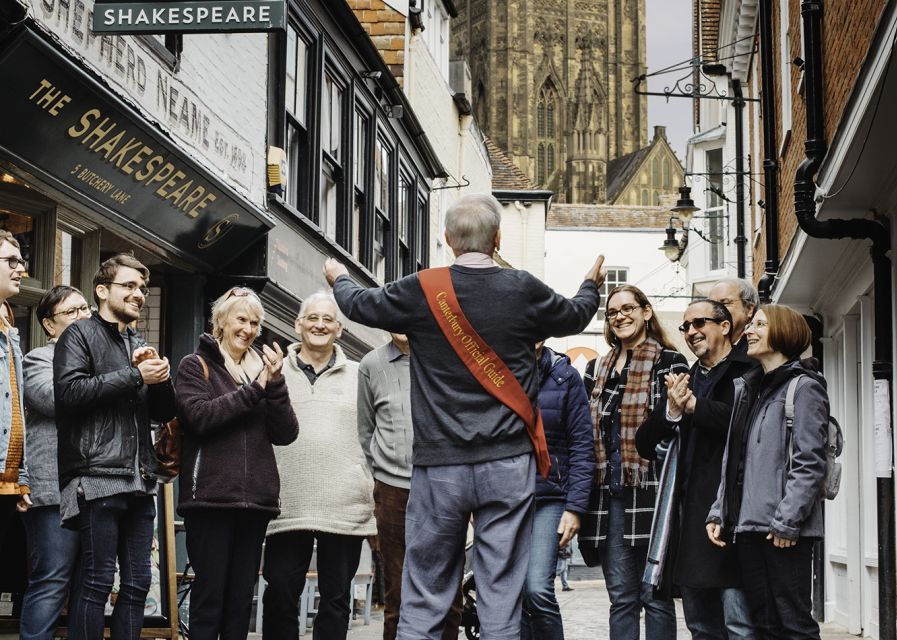
The tour route also includes the chance to spot several quirky, recognizable landmarks, such as The Crooked House and the Old Weavers House. Depending on access and the exact walking path, you may also hear about the ducking stool and see references to Eastbridge Hospital, a place of hospitality for pilgrims since 1190.
These are important because they do not just decorate the city. They show how daily life sat next to big events. Pilgrimage was not only prayer and politics, it was also lodging, routines, and the practical messiness of feeding and housing people who arrived from far away.
If you’re the type of traveler who loves oddball details, ask your guide about these stops. They can usually explain what you are looking at in plain language, not in museum-speak.
The Marlowe Theatre Area: Medieval Lanes Meet Modern Canterbury
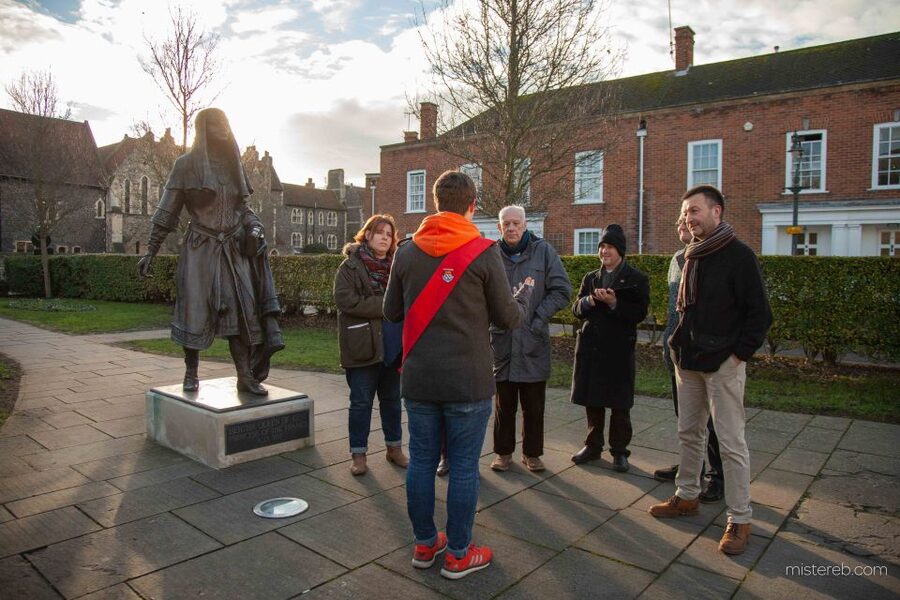
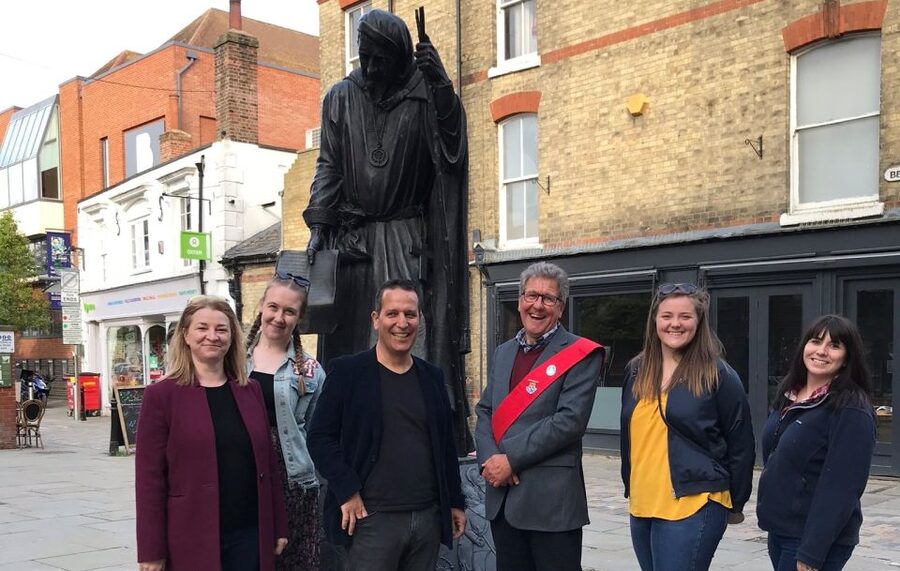
After the King’s Mile, the walk continues toward The Marlowe area, again with a photo stop and guided time. You get a look at modern architecture here, including the Marlowe Theatre and even a moving statue linked to the site.
This contrast works better than it sounds. Canterbury is a living city, not a preserved set. So when you see modern design enter the frame, it helps you understand that the cathedral story is not frozen in time. It kept shaping how people built, worked, and gathered as centuries moved forward.
High Street Finish: Wrap It Up with What You Now Understand
You finish at High Street. At this point, you’ll have a much clearer “mental picture” of Canterbury: how the lanes connect to the cathedral precincts, why the King’s Mile matters, and where the quirky landmarks fit in the broader story.
It is a good way to end because High Street is where you can transition smoothly into independent exploring, lunch, or one last look back toward the cathedral area.
Your Tour Can Be Tailored, Including Pace and Interests
One of the most practical perks here is customization. You can tell your guide about your group and personal interests beforehand. They can adjust the pacing and the focus, including options for a young family, a slower route, or more attention to specific themes like architecture or gardens.
You’ll also want to do this if anyone in your group has a strong preference. If your group loves literature, this is a natural fit because Chaucer is part of the stories you’ll hear. If your group is more into dramatic medieval events, Thomas Becket’s murder is another key thread you’ll discuss. Your guide should be able to balance those themes to match your energy level.
Guide Quality: Official Green Badge, Real Local Context
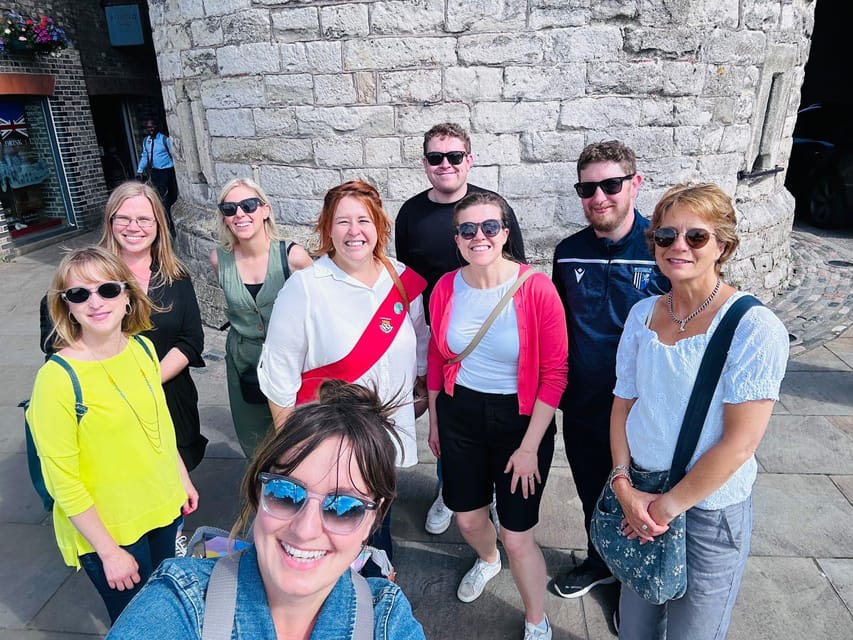
This tour uses fully qualified, accredited guides (Green Badge City Guides) who know Canterbury beyond the basics. That sounds like marketing, but the results are easy to spot in how people describe their guides in different languages.
In past departures, German speaking Karen has been praised for connecting history to Kent in a way that feels engaging. French speaking Pauline has been noted for adapting anecdotes for teens, which tells me the guides can read a room, not just deliver facts. And Lenny is repeatedly praised for making the walk fun while staying knowledgeable.
If you’re deciding between a generic walking tour and one that aims for official standards, this setup is a strong reason to lean in. In Canterbury, good guiding makes the difference between “I saw buildings” and “I understood what those buildings are doing.”
Languages, Group Size, and How Private Changes the Feel
This is a private group tour priced per group, for up to 10 people. That setup can be great value if you’re traveling as a small family or a group of friends who want flexibility. It also means you can ask questions without feeling like you’re slowing down a big crowd.
Tour languages include German, French, and English. If language comfort matters for your group, this is helpful, because you can match your guide to your ability to follow details without strain.
Duration is about 1.5 hours, so it fits nicely into a day that includes cathedral-related stops, train schedules, or lunch plans.
Accessibility and Terrain: Wheelchair Accessible, But Expect Narrow Pavements
The tour is listed as wheelchair accessible, which is reassuring. Still, there is an important practical detail: there are no steps or hills, but many pavements are narrow and uneven.
So if your group needs smooth surfaces, plan for extra caution and consider arriving early enough to get the route details from your guide. Because routes can vary at short notice due to access restrictions, your guide may adjust the walking path to work with what’s open that day.
What Is Included, What Is Not, and How to Plan Around It
Included highlights:
- Private tour tailored to your requirements
- Fully qualified Green Badge City Guide
- Access to Canterbury Cathedral Precincts (grounds), and this is described as the only tour in Canterbury to include this
Not included:
- Entrance to attractions
- Entrance inside Canterbury Cathedral
That last part matters. You can absolutely appreciate the cathedral from the precincts and outside viewpoints, but you should not treat this as a full cathedral interior visit. If you care about seeing the interior up close, pair this tour with a separate time slot for cathedral entry.
Weather and Timing Reality: It Runs in All Conditions
This tour runs in all weather conditions. That can be good news because it means you are not gambling on sunshine to get your guided walk. Bring a rain layer, and if it is cold, expect blustery moments while you’re near open precinct areas.
Also, the tour duration can be shortened for very late arrivals, so plan buffer time. Canterbury streets are busy, and “just a quick walk” can take longer than you think.
Is This the Right Tour for You?
I’d point you toward this tour if you want:
- A focused 1.5-hour walk that makes Canterbury make sense
- Cathedral precinct access without doing everything independently
- Strong storytelling that connects Thomas Becket and Chaucer to real streets
- A guide who can tailor pacing for kids or for your group’s interests
I would hesitate if:
- Your main goal is seeing inside Canterbury Cathedral and you do not want to schedule anything else
- Your group struggles with narrow, uneven pavements, even though the tour is wheelchair accessible
Should You Book It?
Yes, if you want the best use of a short time window in Canterbury and you care about understanding what you’re seeing. The value is in the combination: official guiding, included access to cathedral precinct grounds, and a route that mixes medieval lanes, standout landmarks, and modern Canterbury in one coherent walk.
If you tell the guide what you care about before you meet, this tour can feel like you’re walking with a local friend who knows where every story sits on the map.
Newest entries under Canterbury



Walking Tours, compared.

Magical London: Harry Potter Guided Walking Tour
Read our review →

University and City Walking Tour with Alumni Guide
Read our review →
Harry Potter Movies Walking Tour (Kids Go Free)
Read our review →
The Great British Rock and Roll Music Walking Tour
Read our review →

Harry Potter Walking Tour Including New College
Read our review →Browse the lists this tour appears in