
Reviewed · WALKING TOURS
Canterbury Private Guided Walking Tour
Canterbury is small enough to walk, big enough to surprise. This private 1.5-hour guided walking tour threads together Canterbury’s earliest roots, an Anglo-Saxon-shaped community, and the shockwave of the Dissolution of the Monasteries, all while you move through the medieval lanes inside ancient Roman walls. I like that the story is built for your pace, and I like that the focus stays on specific sites you can actually point at. One thing to consider: it is short, so if you want lots of inside time, you will likely need extra hours on your own since entrance fees are not included.
The guide experience is the other big reason this works. With your group only, a local professional guide can explain how Christianity, politics, and everyday life collided in Canterbury, and one past guest highlighted Alex for making the bigger historical connections feel clear and usable. Still, if you are hoping for a long, stop-and-take-photos marathon, the 90 minutes will feel like a strong sampler, not a full museum day.
In This Review
- Key points before you go
- Why Canterbury rewards a guided walk in 90 minutes
- Meeting at Canterbury War Memorial, then learning the city’s logic
- Roman walls and medieval lanes: what to watch for while you walk
- Canterbury Cathedral context: the pilgrimage gravity of the city
- St. Augustine’s Abbey: where the early English story takes form
- St. Martin’s Church: smaller stop, strong clues about continuity
- Canterbury Castle: power, protection, and why it’s part of the same story
- From prehistory to the Celts: reading the earliest clues
- Anglo-Saxon secrets and the Dissolution: the hard turns in the story
- Price and value: why $324 per group can be a smart deal
- Who this private walking tour is best for
- Quick planning tips so the 1.5 hours feels worth it
- Should you book this Canterbury Private Guided Walking Tour?
- FAQ
- How long is the Canterbury Private Guided Walking Tour?
- Where do we meet for the tour?
- Is this a private tour?
- What is included in the tour price?
- Are entrance fees included?
- What language is the live guide?
- What is the cancellation policy?
Key points before you go
- Private with your group only, so you get real conversation instead of group herding.
- Roman walls to medieval lanes, giving you instant physical context for the history.
- Major landmarks included: St. Augustine’s Abbey, St. Martin’s Church, and Canterbury Castle in the World Heritage Site area.
- Big timeline in a short walk, from prehistory and Celtic settlement to Anglo-Saxon clues and the Dissolution.
- Customizing on the spot with your guide if you want to steer toward your interests.
- Entrance fees not included, so plan for paid stops only if you choose to go inside.
Why Canterbury rewards a guided walk in 90 minutes
Canterbury can feel like one of those places where you could wander for hours and still miss the point. A good guide changes that fast. On this tour, you get a tight timeline, plus the location cues that make the centuries stick.
What I like is the way the tour treats history as something you can read on the street level. Roman defenses, medieval alleyways, church sites that shaped national faith, and later political shakeups all connect. You are not just hearing dates. You are learning what to look for as you move.
The other advantage is practical: a private group means the pacing stays human. If a question pops up, you can ask it right then, instead of waiting for a pause where everyone has to reassemble.
More British streets at boot pace:
- Canterbury: Walking Tour with Green Badge Guide
★ 4.8 · 709 reviews - Canterbury: Private Guided Walking Tour with Official Guide
★ 5.0 · 15 reviews - Canterbury Walking Tour with a Local
★ 1.8 · 3 reviews
Meeting at Canterbury War Memorial, then learning the city’s logic
Your tour starts at the Canterbury War Memorial in the Butter Market area (12-13 Sun St, Canterbury CT1 2HX). Starting in the city center matters because Canterbury’s old core is compact. That makes the walking portion efficient, and it reduces the “how far is it really?” anxiety.
From the first minutes, your guide can set expectations for what you are about to see. Think of it as your mental map being drawn on the move. You begin to understand why the medieval town formed where it did, how the walls helped define the center, and how major religious buildings pulled people in.
If you are arriving by foot or on foot from your lodging, use this as a checkpoint. Get yourself oriented early, so the rest of the walk feels like a guided route, not a hunt for the next landmark.
Roman walls and medieval lanes: what to watch for while you walk
Canterbury’s medieval center is enclosed by city walls that have Roman roots. You will get to explore ancient walls built by the Romans that encircle the medieval center, plus the narrow lanes that make the area feel wonderfully lived-in. These streets are not just pretty. They explain how a town functioned when travel was slow and movement inside the walls mattered.
Here is what I would pay attention to as you walk:
- How the walls shape your sense of scale. Even if you do not climb anything, you feel the boundary.
- How the lane width and street turns affect sightlines, so you experience the town like a medieval pedestrian.
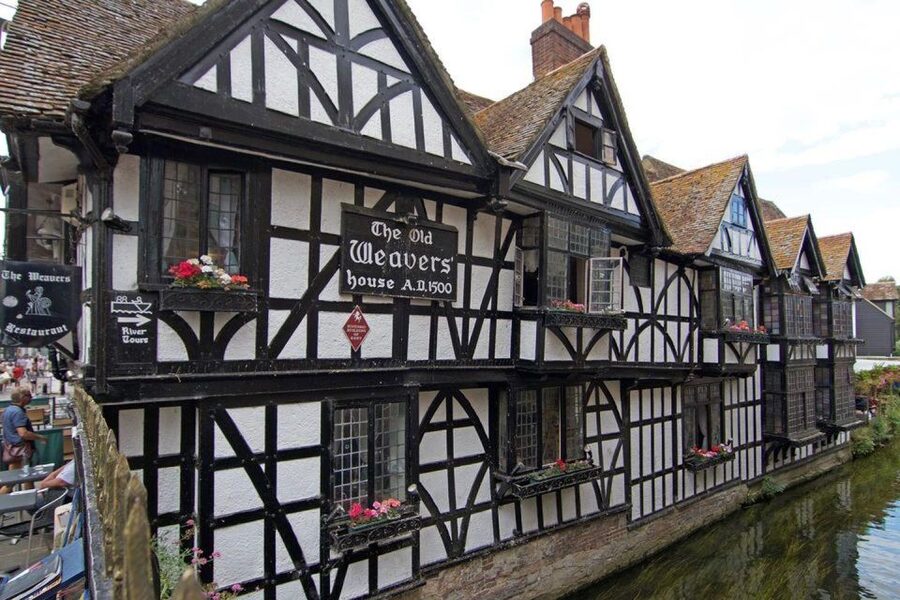
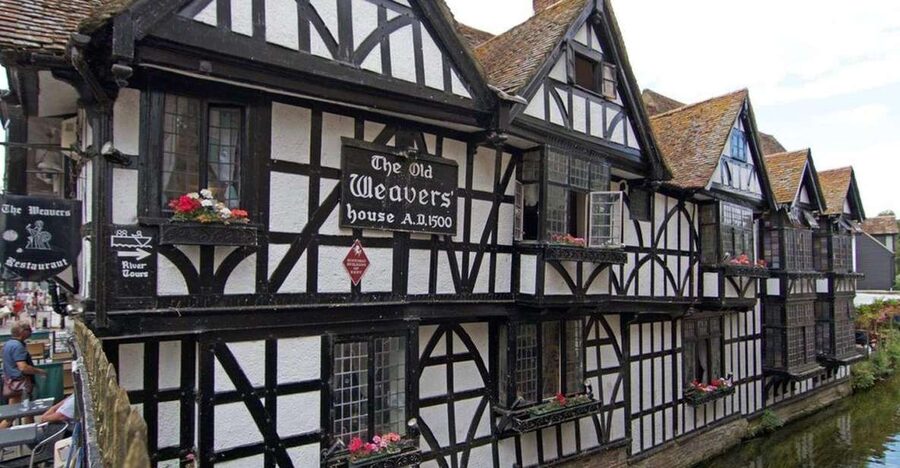
- How timber-framed houses and riverside gardens help you picture everyday life around the big religious sites.
A drawback for some people: Canterbury is a real city, so the walk can include moments where you are sharing space with foot traffic and street activity. The upside is you are not stuck behind barriers, and you get a more authentic sense of what the old and new coexist looks like.
Canterbury Cathedral context: the pilgrimage gravity of the city
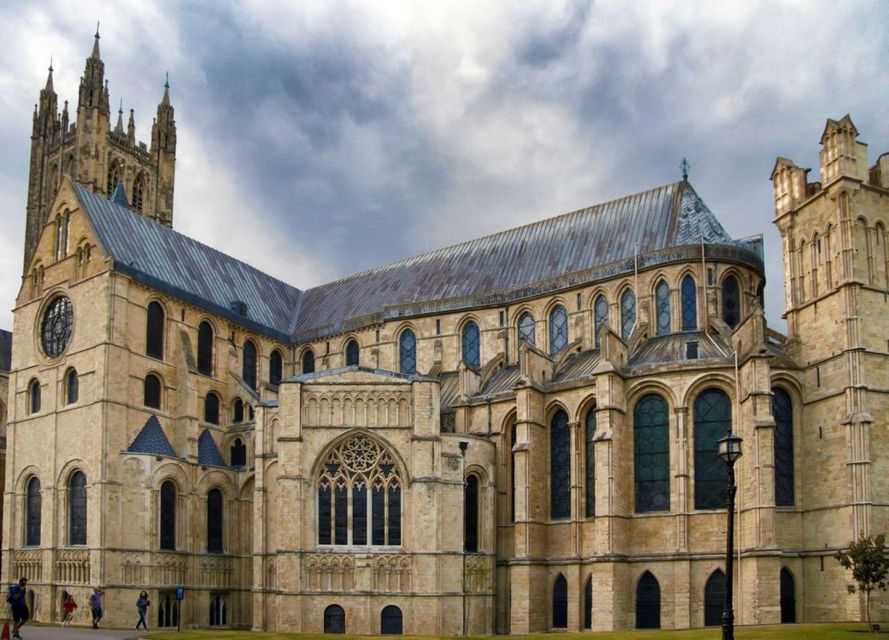
Canterbury Cathedral is described as the headquarters of the Church of England, with Gothic and Romanesque architecture. Even if you do not spend a long time inside, this context is the backbone of why Canterbury became a pilgrimage magnet.
On this tour, you connect that cathedral role to the broader story: faith, national identity, and the pull of religious authority. That matters because many of Canterbury’s famous medieval buildings exist in a world where major religious sites were political power centers, not just places of worship.
If you are visiting expecting “churches only,” this is where your expectations get recalibrated. You see how religion and governance were tied together, and how the town’s importance shaped what got built, protected, and eventually targeted during later upheavals.
Also inked in under Canterbury
- Canterbury Cathedral: Entry Ticket with Audio Guide★ 4.6 · 266 reviews
- Canterbury: Yoga with Goats and Sheep★ 5.0 · 9 reviews
- From Brighton: Leeds Castle & Canterbury Full-Day Trip★ 4.9 · 8 reviews
- Canterbury: City & Cathedral Private Guided Tour★ 5.0 · 5 reviews
St. Augustine’s Abbey: where the early English story takes form
St. Augustine’s Abbey is one of the headline stops. It is also singled out as world-famous and tied to the World Heritage Site context, so it is the kind of place that rewards having someone explain why it mattered.
A key theme your guide is likely to bring into this stop is the transformation of England’s religious landscape. This is where Anglo-Saxon connections and early Christian influence start to feel more concrete. You are not just looking at old stone. You are tracing how faith structures helped shape the town’s long-term importance.
One practical note: since entrance fees are not included, you may have a choice during the walk about how much you want to go in versus how much you want to focus on exterior views and guided interpretation. Either way, the guide’s job is to give you the “why” behind what you see, so your time stays meaningful.
St. Martin’s Church: smaller stop, strong clues about continuity
St. Martin’s Church is included too, which is a smart choice for your route. When you only focus on the biggest headline attractions, you miss the feel of continuity in a working town. Church sites like this often help explain what kept going even when eras shifted.
On a short tour, St. Martin’s works like a historical hinge. It adds another layer to the story of community life around major religious centers. Your guide can connect it to Canterbury’s longer arc, from early roots through the medieval period and into later change.
If you are the type who enjoys noticing differences in architecture and placement, this stop can be especially satisfying. It gives you a chance to compare how different church sites relate to the bigger pilgrimage gravity without turning the whole walk into one giant single-site visit.
Canterbury Castle: power, protection, and why it’s part of the same story
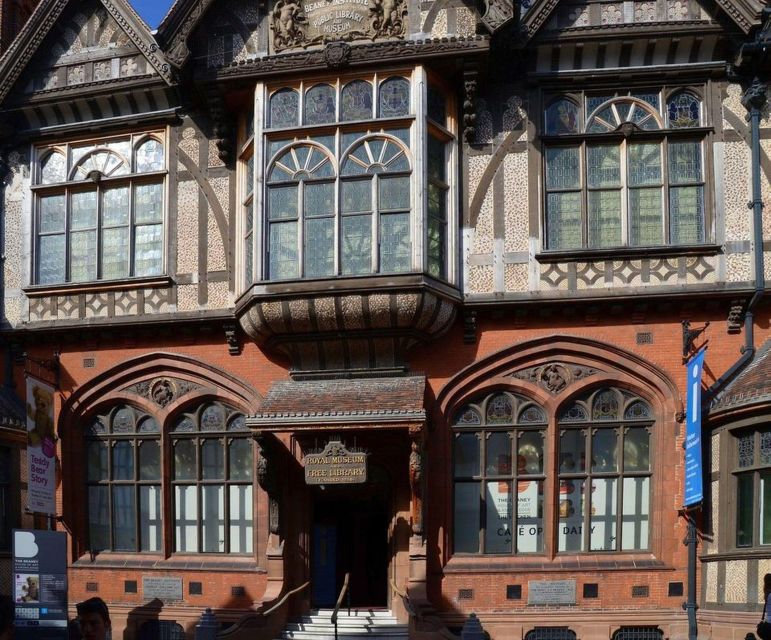
Canterbury Castle rounds out the set of included World Heritage Site landmarks. Castles in England are rarely just about walls for show. They tend to represent power, protection, and shifts in who controlled space and authority.
On your walk, think of the castle stop as the “politics meets stone” moment. You are connecting the earlier religious importance of Canterbury with later layers of control and conflict. The tour’s timeline includes everything from Celtic settlement clues and Anglo-Saxon secrets to the disruptive Dissolution, and the castle fits naturally as a physical reminder that authority changed over time.
If you like history that explains cause and effect, this is a good stop to listen closely. Your guide can connect the castle’s presence to the broader idea that Canterbury did not just evolve peacefully. It adapted, resisted, and reorganized as power shifted.
From prehistory to the Celts: reading the earliest clues
One of the more fun parts of the tour concept is that it starts before written records. The highlights mention exploring ancient roots in prehistory, tracing a Celtic tribe’s main settlement. That might sound vague until you remember how guides work: they point out the kinds of places where settlement patterns tend to cluster and how later towns often grew on earlier ground.
In practical terms, this is where you start building a “deep time” mindset. You are learning that Canterbury’s later fame did not appear out of nowhere. It grew on older human patterns, and your guide can help you understand why the location stayed important.
For some people, prehistory is hard to visualize. The best way to make it click is to listen for how your guide bridges from early settlement logic to the later medieval layout you can physically see while walking.
Anglo-Saxon secrets and the Dissolution: the hard turns in the story
The tour highlights Anglo-Saxon secrets and the Dissolution of the Monasteries, which is where Canterbury’s story takes on real tension. This is not just a “pretty old town” narrative. It is about institutional power, religious change, and the lasting scars those shifts leave behind.
When you reach this part of the walk, you are effectively moving through three ideas:
- Early English identity formed through religious institutions.
- Canterbury’s spiritual status drew people and attention.
- Later reforms and political decisions upended what monasteries and religious houses could be.
The Dissolution stop is particularly valuable because it explains why ruins, missing functions, and changed buildings show up in places like Canterbury. It gives the town’s uneven survival a reason. And that helps you see the difference between age and damage, between time passing and history being forced to change.
Price and value: why $324 per group can be a smart deal
This tour is priced at $324 per group up to 15 for 1.5 hours. That pricing structure is important, because it changes how you should evaluate value.
If you are traveling solo or as a couple, private tours can look expensive until you compare what you get: a dedicated English-speaking local guide for your group only, plus a route that hits major included landmarks. For a group, the cost per person drops fast, and then the private format becomes the best part.
What you are paying for:
- A guide who stays with your group only
- Tight interpretation across key sites tied to Canterbury’s World Heritage area
- Possible customizing on the spot, which can save you from regretting what you picked
The one cost caveat is entrance fees. Since those are not included, your total day cost depends on how many sites you choose to enter. If you are mostly there for guided orientation and exterior stops, you may keep extra spending low.
Who this private walking tour is best for
I think this is a strong match for:
- Couples and small groups who want a focused “can’t-miss” Canterbury route
- History-minded visitors who like timelines, not just isolated facts
- Travelers who prefer conversation and questions during the walk
- Anyone who wants the Christianity and British history connections explained in plain language
It may feel less perfect if you:
- Want a full day of museum-level interior time
- Need a lot of wheelchair accessible routes or fully specified step-by-step logistics beyond what is provided here
- Prefer independent exploring with no guide at all
Quick planning tips so the 1.5 hours feels worth it
Even with a private guide, your experience improves when you come ready.
- Wear comfortable walking shoes. Canterbury’s medieval center includes narrow lanes, and you will cover ground on foot.
- Have one or two priorities in mind before you start. For example, prehistory and Celts, Anglo-Saxon period, or the Dissolution era.
- If you care about interiors, ask your guide how they recommend you spend time, since entrance fees are not included.
Also, be ready to think like a historian for a bit. The best part of this tour is not memorizing dates. It is learning how one era sets up the next, so the town’s “survival and change” story makes emotional sense as you walk.
Should you book this Canterbury Private Guided Walking Tour?
If you want a smart, guided way to understand why Canterbury became a center of pilgrimage and later political and religious change, this is a solid choice. The tour hits major included landmarks like St. Augustine’s Abbey, St Martin’s Church, and Canterbury Castle, and it links them to bigger themes from Celtic settlement clues to the Dissolution. With your group only and the option to customize on the spot, you get a tour that feels responsive instead of scripted.
I would book it when you only have a short window and you want your time to translate into real understanding. If you have a lot of free time and love long independent wandering, you might add extra self-guided time after the tour to get the inside views you want.
FAQ
How long is the Canterbury Private Guided Walking Tour?
The tour lasts 1.5 hours.
Where do we meet for the tour?
You meet at the Canterbury War Memorial, Butter Market, 12-13 Sun St, Canterbury CT1 2HX, United Kingdom.
Is this a private tour?
Yes. It is a private group tour, and the guide will be with your group only.
What is included in the tour price?
A local professional guide is included, and there may be possible customizing on the spot with your local guide.
Are entrance fees included?
No. Entrance fees are not included.
What language is the live guide?
The live tour guide is in English.
What is the cancellation policy?
Free cancellation is available up to 24 hours in advance for a full refund.
Newest entries under Canterbury





Walking Tours, compared.

Magical London: Harry Potter Guided Walking Tour
Read our review →

University and City Walking Tour with Alumni Guide
Read our review →
Harry Potter Movies Walking Tour (Kids Go Free)
Read our review →
The Great British Rock and Roll Music Walking Tour
Read our review →

Harry Potter Walking Tour Including New College
Read our review →Browse the lists this tour appears in