
Reviewed · WORKSHOPS
Blake & Defoe’s London: Literary Tour & Writing Workshop
William Blake has a way of changing your angle. This 90-minute literary writing workshop links his grave to Daniel Defoe’s Moll Flanders, then pushes you to answer the city with your own words. I especially like the active writing prompts tied to real places, and I really like how the route stays quiet and focused, even while you’re in the middle of a modern city.
You start in Bunhill Fields, then move through spots that feel meaningful for writers, and end at St Giles’ Cripplegate where you pull your pieces together. The one thing to consider: this is not a sit-and-listen tour, so if you prefer pure sightseeing with zero writing, you might find the workshop portion a bit demanding.
In This Review
- Key moments you will feel (not just see)
- Entering Bunhill Fields, where Blake’s words start the pen
- William Blake’s grave prompt: a first exercise that feels doable
- The Barbican: finding street poetry and writing back
- Moll Flanders near Smithfields: turning criminal fiction into real clues
- St Giles’ Cripplegate: assembling your exercises into a final piece
- Price and value: $101 for a 90-minute writing day in London
- Who this workshop suits best
- Practical tips so your page stays busy
- FAQ
- How long is the Blake & Defoe’s London literary tour and writing workshop?
- Where do we meet?
- Is an entry ticket required?
- What should I bring?
- Is the tour guided in English?
- Is the tour wheelchair accessible?
- What is the price per person?
- Should you book this London writing workshop?
Key moments you will feel (not just see)
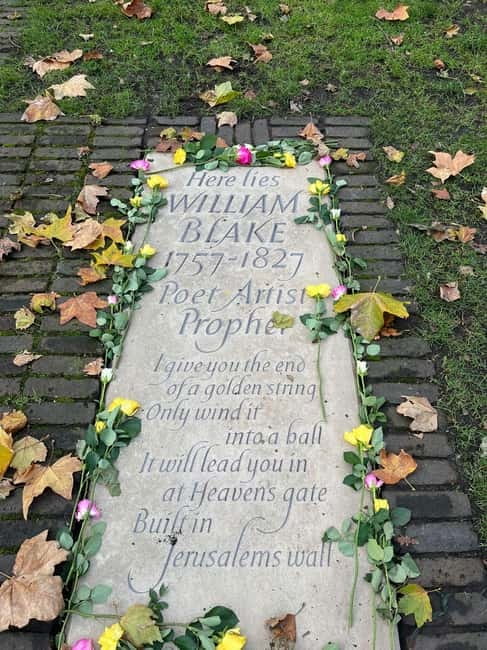
- William Blake’s grave as a writing trigger, using his visionary words to start fresh on the page
- The Barbican street poetry stop, where you spot modern lines and respond in your own style
- A cafe share and critique moment, designed for encouragement, not performance
- Moll Flanders and Smithfields, tying criminal fiction to London streets and atmosphere
- St Giles’ Cripplegate as the final writing setting, turning scattered exercises into one closing piece
Entering Bunhill Fields, where Blake’s words start the pen
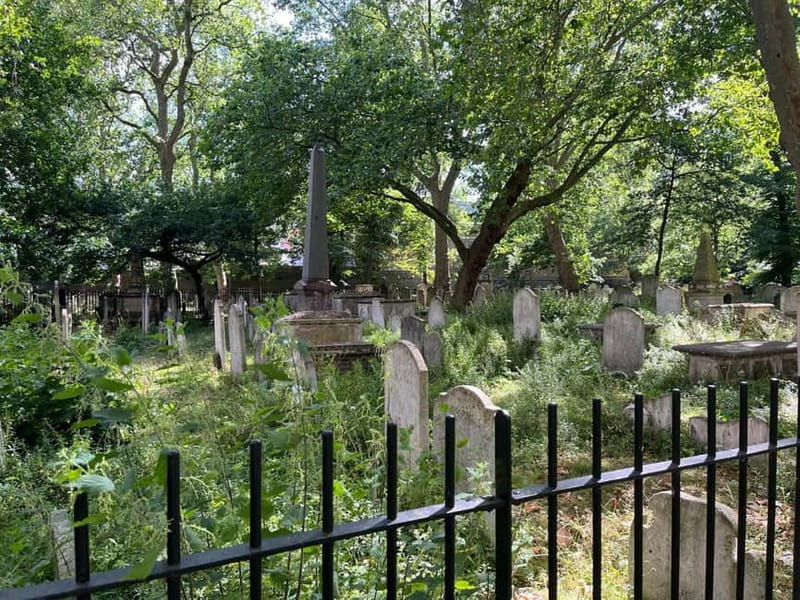
The tour begins at Bunhill Fields Burial Ground, at the green in the center. It is an easy meet-up from Old Street Underground, about a 3 minute walk, or from Liverpool Street, about a 10 minute walk. For a 1.5 hour experience, this location choice is smart, because you get into the literary mood fast without long transit.
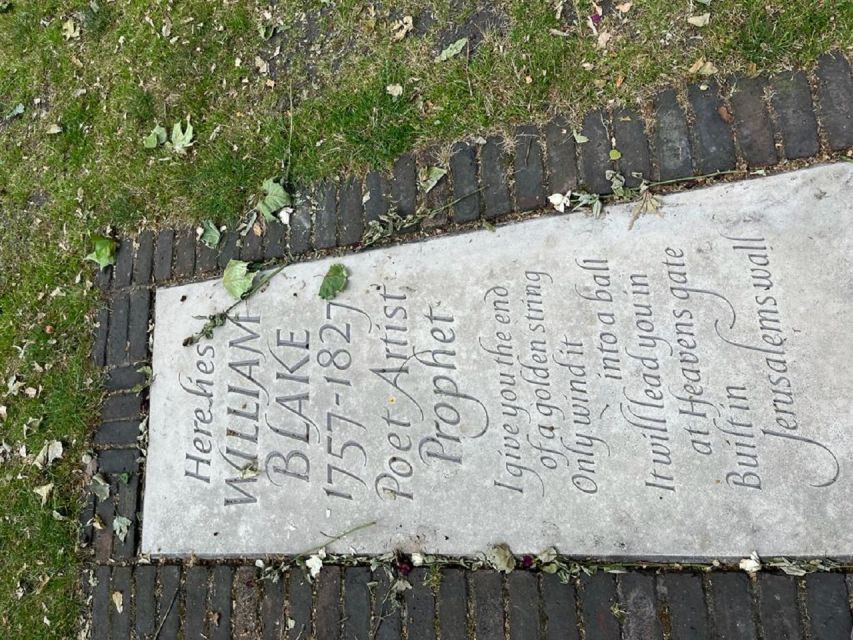
Bunhill Fields has a calm, grounded feel that matches the tone of the workshop. You meet at the start, get oriented, and then you go straight to William Blake’s grave. This is where the experience becomes more than “literary history.” Blake’s poetry is used as your first writing prompt, so you are not just learning what he wrote, you are trying out a similar kind of attention, on the spot.
I like the way this creates a clean creative entry point. You do not have to figure out what to write first, the place and the text give you a starting engine. And because it is a writing exercise, you can be a total beginner or a serious writer, and still participate fully.
One practical note, because it actually matters here: bring a pen and a notebook. The activity is built around responding in real time, and you do not want to improvise supplies while everyone is getting set.
Also inked in under London
- London: East End Street Art Tour and Spray Painting Workshop
★ 4.8 · 297 reviews - London: Half-Day Street Art Tour and Workshop
★ 4.9 · 172 reviews - London: Traditional Scone Making Workshop
★ 4.7 · 129 reviews
William Blake’s grave prompt: a first exercise that feels doable
William Blake is not presented here as a distant figure behind a glass case. Standing at his grave, you use his visionary poetry as a prompt for your first writing exercise. The idea is simple and writer friendly: read, focus, then answer with your own poetic response.
This kind of prompt works especially well if you often freeze when you sit down to write. Blake’s language gives you permission to be strange, sincere, and image-driven, without forcing you to write like a professional on day one. You are responding to a real author, but you are also responding to London itself, because that is what the workshop keeps returning to.
You are also in a cemetery setting, which changes your breathing. Even if you are not a big fan of writing in quiet places, you can probably feel your attention sharpen here. That matters, because later stops ask you to do the same thing again, just with different inspiration.
The tour includes no entry tickets, which keeps the focus where it belongs. You spend your time with the words, not in queues or ticket lines.
The Barbican: finding street poetry and writing back
After the first stop, the workshop moves to The Barbican. This is where the tour shifts from a classic literary anchor to the living, modern layer of language that’s happening right now on the city’s surfaces.
You discover street poetry around the area, and then you craft a poetic response to what you find. This part is one of the most practical takeaways for your own writing life. You learn how to treat everyday text as source material. That means you can practice looking at the city the way a writer would, not just as scenery.
The format stays interactive. There’s a cafe stop afterward where you share and critique your work. The tone is described as kindness and inclusivity, and that changes everything about writing exercises. A supportive critique lets you take risks. It also helps you avoid the usual writing workshop trap, where feedback can feel harsh or overly technical.
You will want your notebook for sure. And since the activity data specifically calls for internet access, it is smart to bring your phone charged. You might use it during the workshop portion, so you are not caught without what you need.
If you like the idea of “writing in public,” this is the sweet spot. It is still structured, but you are not trapped in a classroom. You are writing in a real neighborhood, then talking about the results with the group.
Moll Flanders near Smithfields: turning criminal fiction into real clues
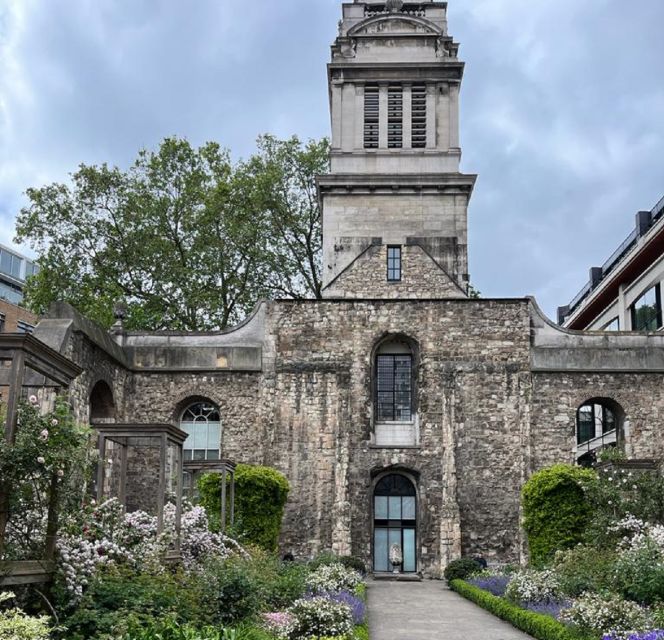
Next comes the Daniel Defoe connection. You follow in the footsteps of his criminal heroine, Moll Flanders, with reading about her adventures in and around Smithfields.
This stop is less about a single iconic spot and more about momentum. Defoe’s London is a city of movement, pressure, and opportunity, and the workshop uses that energy to keep your attention active as you walk. Instead of only learning a plot summary, you get literary context tied to streets and neighborhoods.
I like this approach because it gives the fiction a sense of physical location. You start to see how authors build worlds from everyday places. That can be a big confidence boost if you write fiction yourself, because it shows a method: observe your environment, then translate it into narrative choices.
There is also a useful contrast between stops. You go from Blake’s visionary voice to street poetry to Moll Flanders. That variety matters for writers. It trains you to switch gears, so you do not get stuck trying to produce one fixed style.
And since this is still the same short 1.5 hour session, the pacing keeps your brain awake. It is “history,” yes, but it is history as stimulus, not history as a lecture.
A page further on, still in London:
- London: The London Eye Entry Ticket★ 4.6 · 35,875 reviews
- From London: Harry Potter Warner Bros Studio Tour★ 4.7 · 26,588 reviews
- London: Westminster to Greenwich River Thames Cruise★ 4.5 · 22,836 reviews
- Magical London: Harry Potter Guided Walking Tour★ 4.7 · 22,044 reviews
St Giles’ Cripplegate: assembling your exercises into a final piece
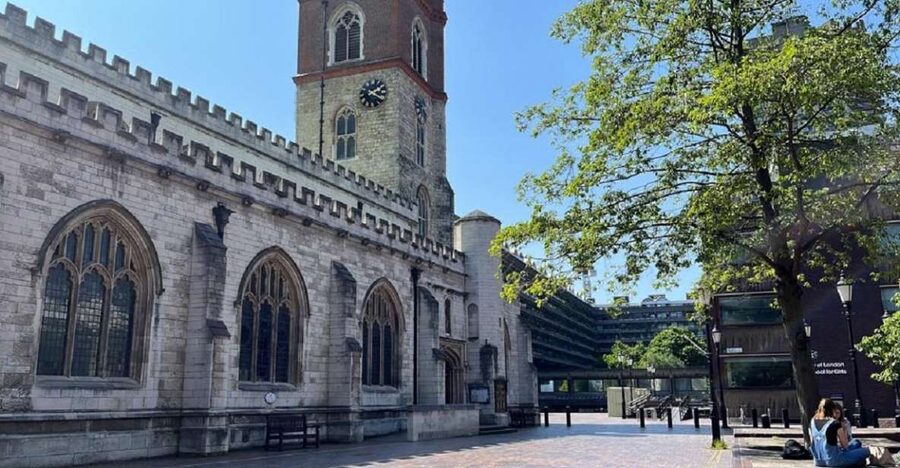
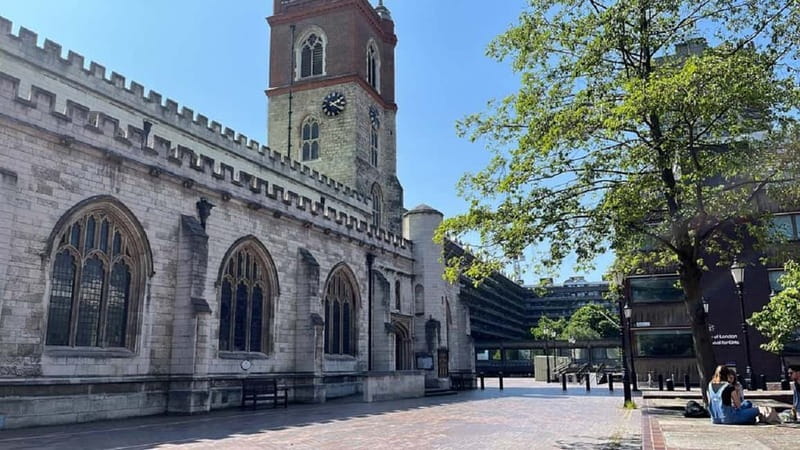
The tour ends at St Giles’ Cripplegate. This is where your earlier writing work comes together for a final piece, in the unusual and memorable surroundings of the church.
Ending in a church setting does something subtle to writing. It encourages you to slow down, pay attention to sound, and take yourself seriously for a few minutes. Not in a heavy way, but in a way that helps your writing feel finished instead of temporary notes.
You are not starting from scratch here. You are bringing together exercises, which is a very smart workshop design. If you have ever written a few paragraphs and then felt lost, you know why this helps. The tour format gives you intermediate steps, so the final piece becomes a completion task, not a blank-page disaster.
This is also the moment where you get to feel the arc of the whole experience. It started with Blake as prompt, then moved through street poetry and Moll Flanders reading, then landed in a church where you shape it into something whole.
Price and value: $101 for a 90-minute writing day in London
At $101 per person for a 1.5 hour experience, the price is best understood as a pay for creative coaching session plus a curated route. This is not a long guided history walk where you mostly observe. You are writing, sharing, and getting critique.
Value here comes from three things that you do not get in a typical walking tour:
- Multiple writing prompts tied to specific London locations
- A structured share and critique moment in a cafe setting
- No entry tickets needed, so you do not lose time or budget on add-ons
If you usually spend time on writing alone, this format can feel efficient. It gives you external inspiration and a reason to finish something within the time window. For people who want to improve as writers, the workshop element is the core value proposition.
Also, the tour is wheelchair accessible and the group is private. Even though private does not automatically mean you get endless customization, it usually helps the atmosphere stay controlled and supportive.
Who this workshop suits best
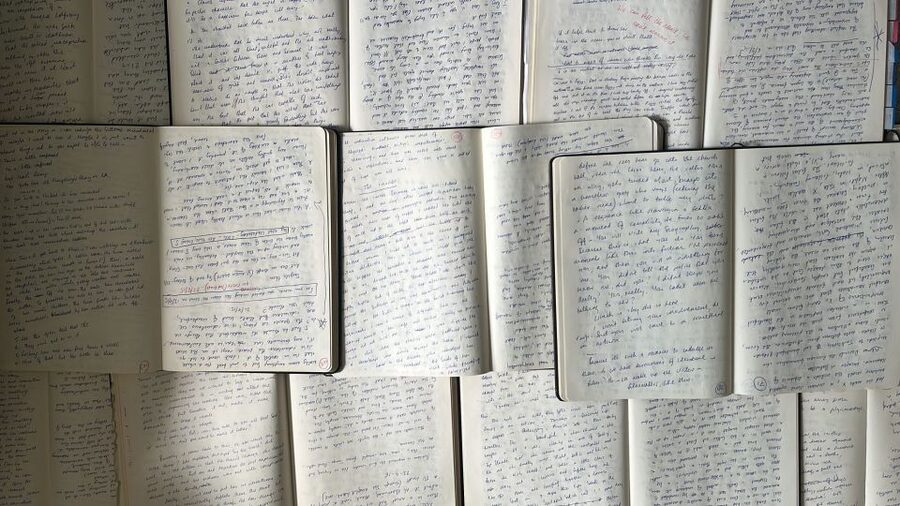
This is ideal for you if you want literature that touches your own writing, not literature that stays in your head. It also suits you if you enjoy London walks but want a quieter, more focused pace than the usual large-group tours.
It is also a good fit for writers at any stage, from novice to novelist. The point is not to test skill. It is to practice seeing and responding, using prompts and feedback to keep you moving.
If you are traveling solo and want interaction, the cafe share and critique helps you connect without needing to plan extra meet-ups. If you are traveling with a writing friend, a workshop format like this can be a fun shared activity because you both get tangible outputs.
On the flip side, if you strongly dislike writing in public or you only want sightseeing and facts, you might feel restless. The best way to enjoy it is to treat it like a creative workshop first, and a literary walk second.
Practical tips so your page stays busy
Bring a notebook and pens, plus an umbrella. Even if the day looks fine, you will be walking between places and writing at stops where weather can catch you off guard. A charged phone helps too, since the experience calls for internet access.
Wear comfortable shoes. The tour is short, but it still includes walking between Bunhill Fields, The Barbican area, Smithfields context, and then onward to St Giles’ Cripplegate. You do not want sore feet when it’s time to focus on your final piece.
If you feel self-conscious about writing, loosen your standard a bit. Your goal is participation and a real response to prompts, not literary perfection. The tone is built around kindness and inclusivity, which is exactly what you want when you are making your first attempt at something new.
FAQ
How long is the Blake & Defoe’s London literary tour and writing workshop?
It runs for 1.5 hours.
Where do we meet?
You meet on the green in the center of Bunhill Fields Burial Ground.
Is an entry ticket required?
No entry tickets are needed.
What should I bring?
Bring an umbrella, a pen, and a notebook. Internet access is also recommended.
Is the tour guided in English?
Yes, the live tour guide language is English.
Is the tour wheelchair accessible?
Yes, it is wheelchair accessible.
What is the price per person?
The price is $101 per person.
Should you book this London writing workshop?
Yes, if you want a short, guided literary day that turns into actual writing, not just listening. You get a thoughtful route that moves from William Blake to street poetry to Moll Flanders, then ends with a final assembled piece at St Giles’ Cripplegate.
You should skip it only if writing exercises sound like a hassle. Otherwise, this is a great way to connect literature with the city you are standing in, and leave with words you made yourself.
Newest entries under London


Workshops, compared.

Chocolate Bar Making Workshop at York Cocoa Works
Read our review →
East End Street Art Tour and Spray Painting Workshop
Read our review →





Browse the lists this tour appears in