
Reviewed · MUSEUMS
Unveil the Rosetta Stone, Parthenon at British Museum
Five artifacts, one world-class museum. This guided highlight run is a smart way to connect the dots across Egypt, Greece, Assyria, and early England, without getting lost in the museum’s sheer size. I like that you start with the airy Great Court view and finish with objects that feel unusually big for a 2-hour slot.
I also like the contrast in the lineup. First you hit the Rosetta Stone, then you face the Parthenon Sculptures controversy with context, not just opinions. And you end up in the Anglo-Saxon and Assyrian rooms, where the Sutton Hoo helmet and the winged guardian bulls give you a different kind of awe.
One drawback to plan for: the museum can be noisy, and it may be hard to hear every word if there is no comms setup. Bring patience, and position yourself well when the guide speaks near the group.
In This Review
- Key highlights you will actually feel
- Entering the British Museum through security and the Norman Foster roof
- Rosetta Stone: the artifact that turns hieroglyphs from symbols into language
- Parthenon Sculptures and the Elgin Marbles debate you can make sense of
- Egyptian mummies: burial practices explained without the spooky movie vibe
- Sutton Hoo helmet: Anglo-Saxon treasure with a clear connection to real people
- Khorsabad winged bulls from Assyria’s palace gate
- How the 2-hour format works inside a museum that never ends
- Price and value: what you get for $82 per person
- Small practical details that help you enjoy the guide’s voice
- Should you book this British Museum highlights tour?
- FAQ
- How much does the tour cost?
- How long is the guided tour?
- Where do I meet the guide?
- What should I bring with me?
- Is food and drinks included?
- Is hotel pickup included?
- What language is the tour guide?
- Is this tour suitable for wheelchair users?
- What is the cancellation policy?
Key highlights you will actually feel
- Rosetta Stone as a decoding moment, not just a famous object you glance at
- Parthenon Sculptures context that explains why Elgin Marbles still sparks debate
- Egyptian mummies and burial beliefs, presented in human terms
- Sutton Hoo helmet craftsmanship, a striking 7th-century signal from early England
- Khorsabad winged bulls that show Assyria’s power right at the palace entrance
- Licensed, live English guidance that keeps the walk focused
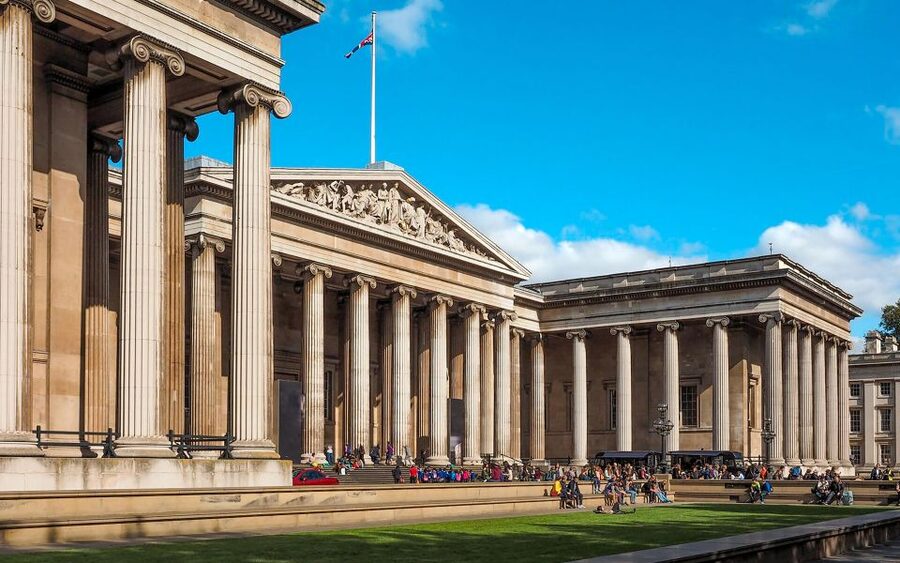
Entering the British Museum through security and the Norman Foster roof

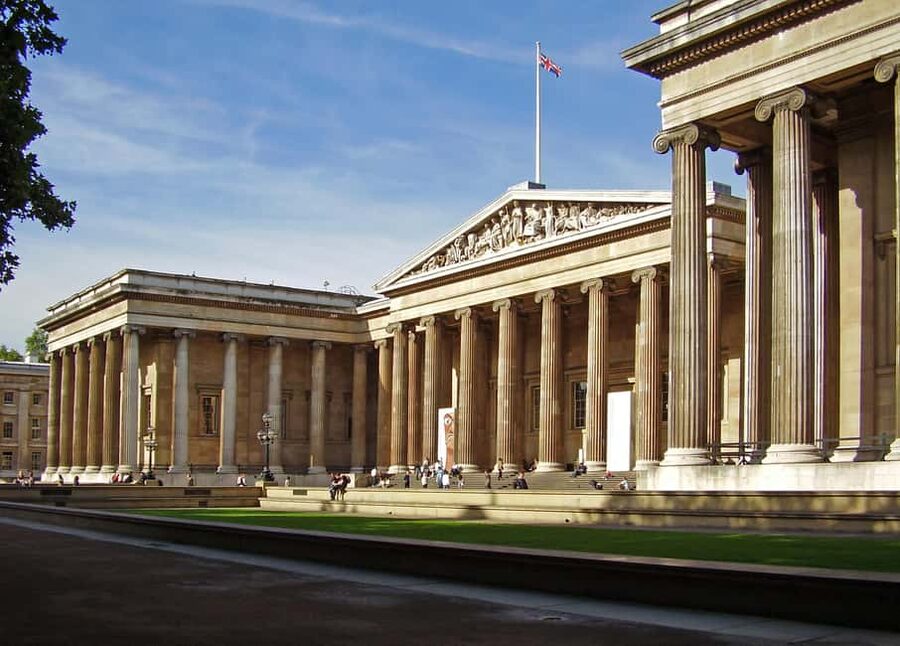
Meeting is simple. You meet your guide on the stairs at the main entrance, after security checks, and you should arrive at least 15 minutes early so you do not feel rushed. The British Museum is huge, so even good planning does not erase the walking.
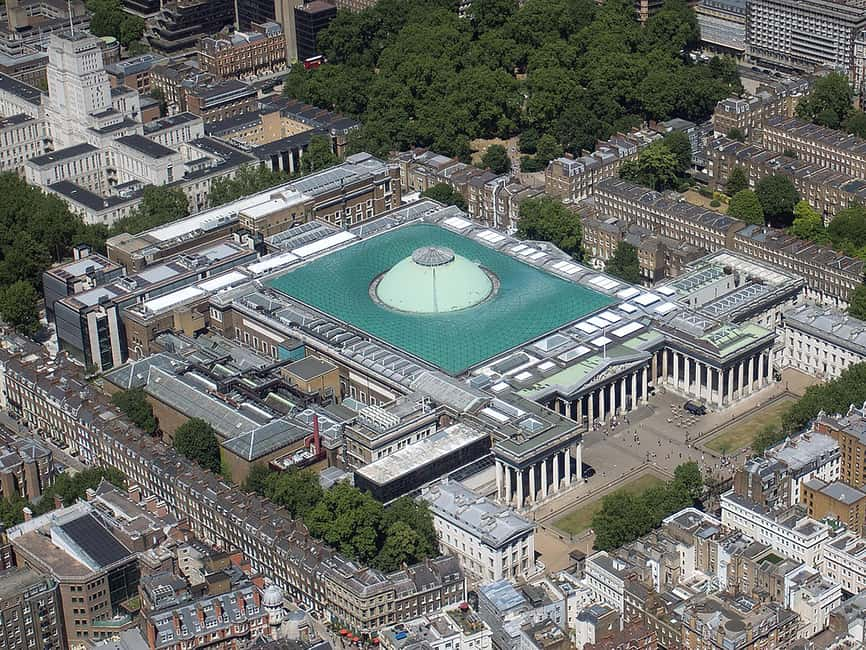
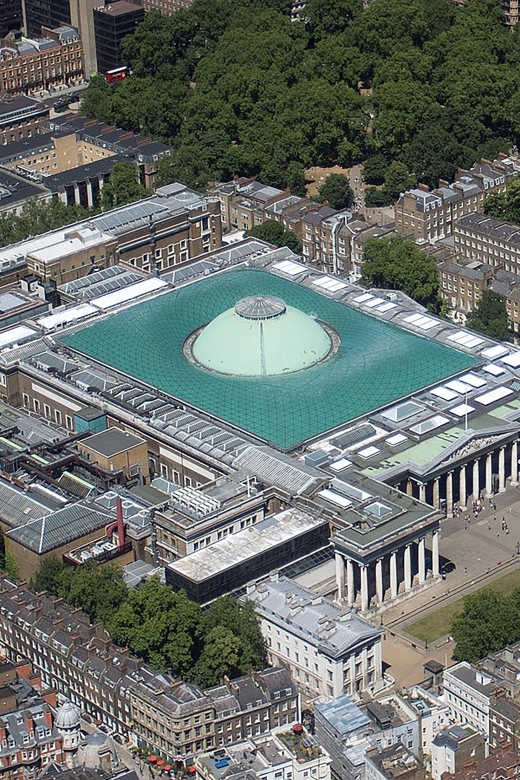
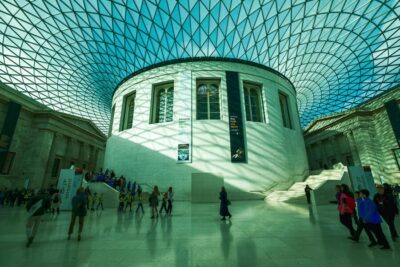
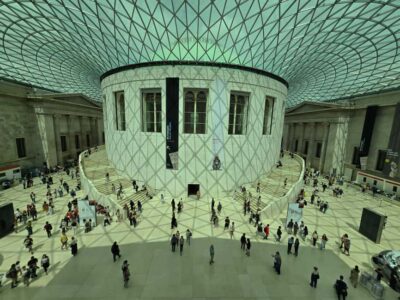
I love that the tour starts with orientation instead of immediately marching you into a single gallery. You get that first big look at the museum ceiling, then step into the Great Court, where the glass roof by Norman Foster brings in natural light. It makes the whole place feel less like an endless maze and more like a set of connected neighborhoods.
Also, this tour is on foot. Comfortable shoes are not optional here. If you are prone to sore feet, plan for a second wind at the end and do not stack back-to-back tours the same day.
More Museum Tours in London
- London: Chelsea Football Club Stadium and Museum Tour
★ 4.8 · 4,576 reviews - London: British Museum Guided Tour
★ 4.3 · 1,182 reviews - London: British Museum Guided Tour with Entrance Tickets
★ 4.9 · 748 reviews
Rosetta Stone: the artifact that turns hieroglyphs from symbols into language
The Rosetta Stone stop is the kind of moment you understand fast, even if you know nothing about Egyptian writing. It was discovered in 1799, and it became the key to deciphering Egyptian hieroglyphs, unlocking how a long-lost language could be read.
What I like is that the guide’s explanation gives the Stone a job, not just a fame badge. You learn why a single object can change scholarship, and how translation work can move from guesswork to understanding. Even if you are not a text person, you can feel the importance because the guide keeps pointing back to the practical question: what made it the key?
Practical tip: stand close enough to see details, but give space to others. The Rosetta Stone is one of those objects where everyone wants the same vantage point, so take your time but do not camp in a way that blocks people behind you.
Parthenon Sculptures and the Elgin Marbles debate you can make sense of
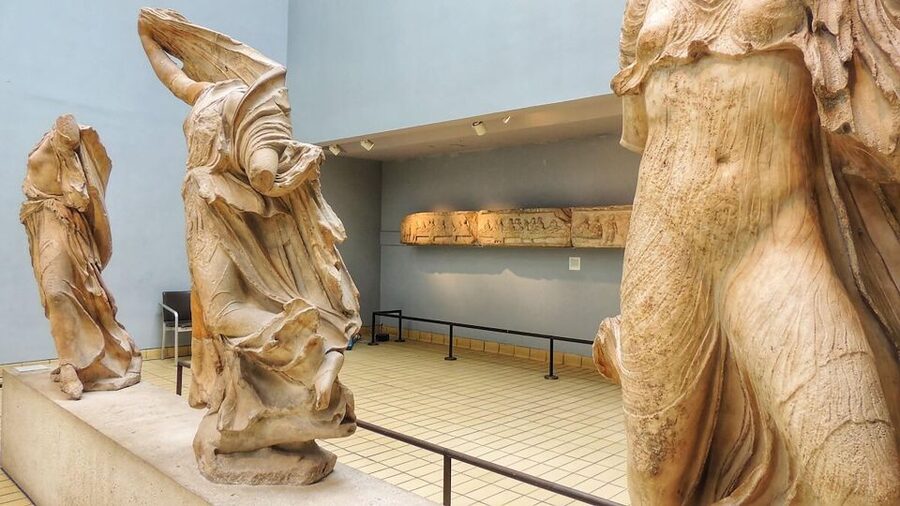
Next comes a stop that feels more complicated, because the objects carry an ongoing ethical argument. You will see the Parthenon Sculptures, also known as the Elgin Marbles. These were part of the Parthenon in Athens and were brought to Britain by Lord Elgin, when he was the British ambassador to the Ottoman Empire.
Here is why this matters for your experience. The guide does not treat it as a trivia stop. You get a balanced look at cultural heritage and repatriation, so you can understand what people mean when they argue about ownership, responsibility, and history.
You do not have to walk away with a single fixed opinion to benefit. You do need enough context to argue thoughtfully, and the tour’s structure gives you that baseline before you move on. It also helps if you already love ancient Greek art, because you see the sculptures as more than museum pieces, they are fragments of a specific original context.
Small consideration: if you strongly prefer one clear viewpoint on heritage issues, this stop may feel uncomfortable. The value is in the fairness of the framing, not in pushing one side.
Egyptian mummies: burial practices explained without the spooky movie vibe
Then the tour shifts to Ancient Egypt, where the galleries are full of objects that feel both intimate and foreign. One of the big draws here is the collection of Egyptian mummies. You learn about burial practices and beliefs, which is the difference between seeing bodies and understanding a system of meaning.
I like this section because it slows the pace emotionally. Even when you are rushing through museum highlights, a guided explanation helps you connect what you see to why it was made and what it was supposed to do. Instead of treating mummies like spectacle, the tour frames them in the context of ancient burial traditions.
Practical tip: take a breath before you enter. This is one of those areas where it helps to reset your expectations. You may not see a single “scene,” but you get the big picture when the guide links items to the same burial logic.
More gallery rooms between showers:
- London: Tour of the British Museum★ 4.1 · 678 reviews
- Afternoon Tea at the British Museum★ 4.2 · 511 reviews
- London: Paradox Museum Entry Ticket★ 3.9 · 441 reviews
- London: National Gallery Guided Tour with Art Expert Guide★ 4.7 · 440 reviews
Sutton Hoo helmet: Anglo-Saxon treasure with a clear connection to real people
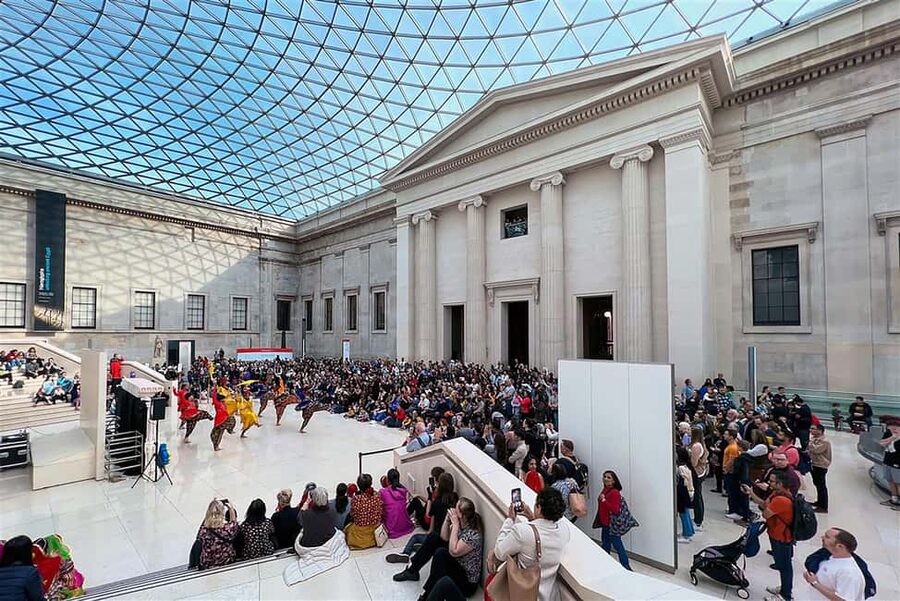
Next you will see Sutton Hoo, an Anglo-Saxon site tied to a 7th-century burial ship. The focus is on the Sutton Hoo helmet, which stands out for craftsmanship and symbolism.
What I appreciate is the way this stop broadens your timeline. Many people start in Greece or Egypt and forget that Britain also has deep layers of history before the medieval period people usually remember. The helmet makes early England feel concrete because it is a working object made by real hands, not a distant name on a map.
Look closely at what stands out visually, then listen for what the guide points out about construction and meaning. A helmet might seem like a simple war artifact until you learn how it fits a burial setting and what it was meant to communicate.
If you have kids or teens, this is usually the part where attention clicks. The helmet is visually strong, and the guide can connect the dots in a way that is easy to follow without turning it into a lecture.
Khorsabad winged bulls from Assyria’s palace gate
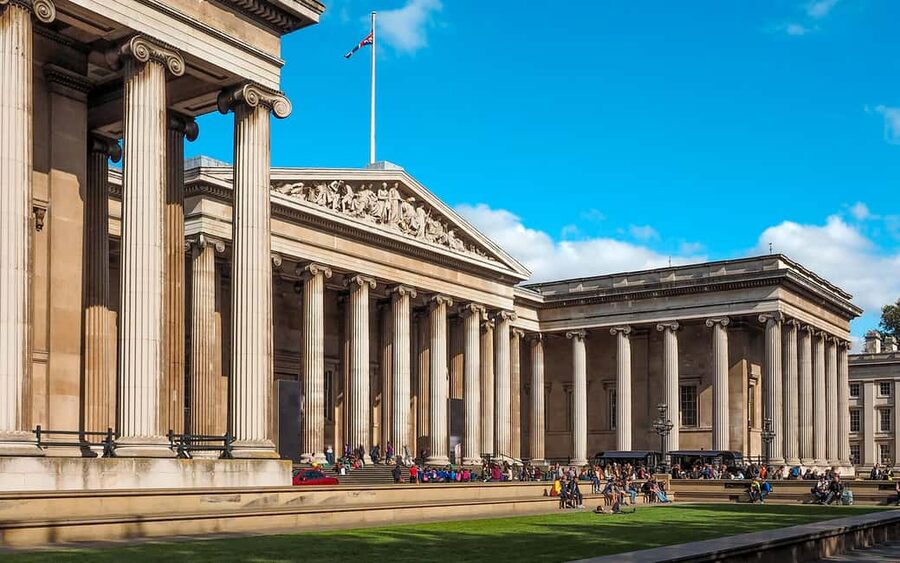
The final wow factor in this lineup is the winged bulls from Khorsabad. These colossal guardian statues once guarded the entrance to the palace of Assyrian king Sargon II.
This stop works because scale does the first round of explaining for you. The bulls are not polite. They are meant to stop you and make you feel the authority of a royal space. The guide then adds the story of where they were placed and why such guardians mattered.
Practical tip: if you want photos, plan for the crowd. People will circle to find angles, so be ready for a little waiting. Also, do not rush this stop. It is the best place in the tour to just stand and absorb.
How the 2-hour format works inside a museum that never ends
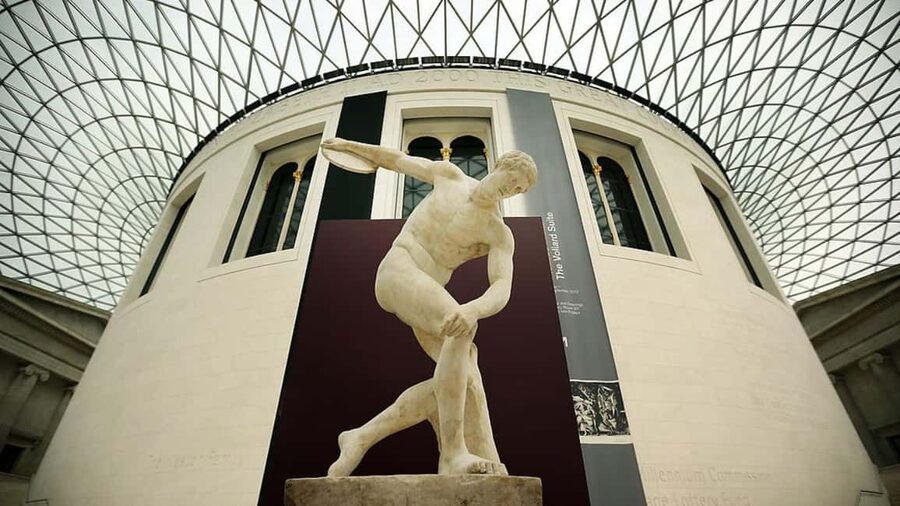
This tour lasts 2 hours, and that is the key to how it feels. You are not meant to see everything in the British Museum. You are meant to hit a curated set of iconic works and leave with a mental map.
Because it is not private, you will be in a group with other people. That is not a bad thing. It keeps the timing tight, and it can help if you like learning alongside others. The tradeoff is you cannot linger forever at every object, so your best move is to pick one or two stops where you want extra time and let the rest be guided context.
Also keep in mind that consecutive bookings are not a great idea. The museum is huge, and walking fatigue piles up fast.
Price and value: what you get for $82 per person
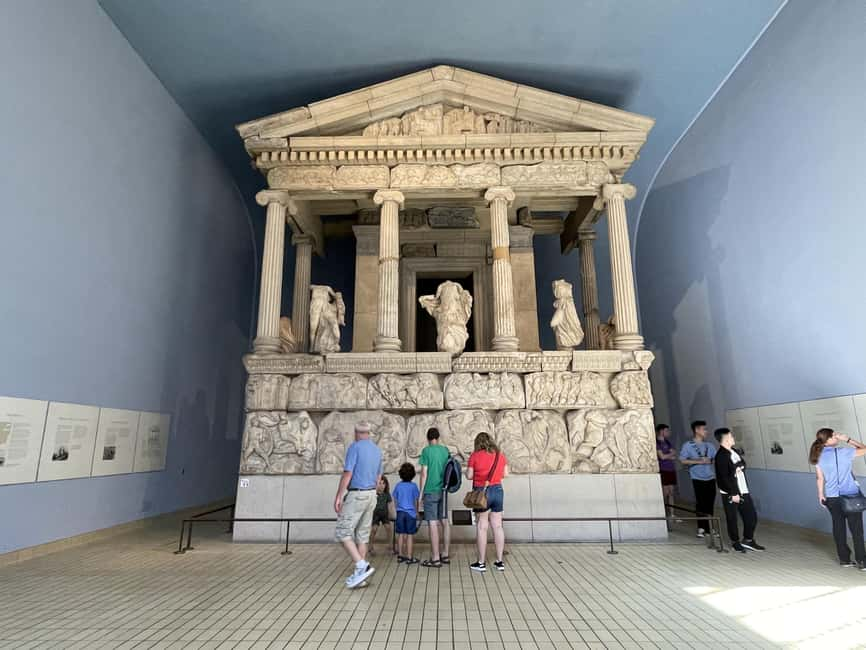
The price is listed as $82 per person for a 2-hour guided experience. For that amount, you are buying three things: a live English guide, focused time with major artifacts, and a path through the museum that saves you from playing guesswork.
Food and drinks are not included, and there is no hotel pickup. That is normal for a city museum tour, but it affects your planning. You should budget time to eat near the museum on your own, and you should plan to arrive at the meeting point under your own steam.
One more value point: there is online support at the time of boarding the tour. That matters more than it sounds. It helps when you need quick clarity right before you go in.
If you have a ticket option that includes Skip the Line, it means you use a faster priority queue instead of the normal long line. That can protect your 2-hour window, especially in a busy museum.
Small practical details that help you enjoy the guide’s voice
A few basics will improve your experience a lot.
Bring a passport or ID card, since you will go through entry checks before meeting the guide. Wear shoes that can handle a lot of walking, because the museum demands it. The tour language is English, and it is live.
Hearing can be an issue. The museum can be noisy, and you might struggle to catch every word if you are farther back. If there is an option for a comms device, take it. If not, stand nearer the guide when explanations start.
Also note the tour is not suitable for wheelchair users. If mobility is a concern, this is one to rethink.
Should you book this British Museum highlights tour?
Book it if you want a fast, guided hit list that connects major world cultures in just two hours. I think it is especially worth it for a first visit, for history lovers who want the big names with context, and for anyone who prefers interpretation over wandering alone.
Skip or consider alternatives if you need full independence, if you use a wheelchair, or if you want a slower experience where you can read every label without a group pace. This is a highlights tour, so you will leave with clarity, not with exhaustive museum coverage.
FAQ
How much does the tour cost?
The price is listed as $82 per person.
How long is the guided tour?
The duration is 2 hours.
Where do I meet the guide?
Meet your guide on the stairs at the main entrance, after security checks.
What should I bring with me?
Bring your passport or an ID card.
Is food and drinks included?
No, food and drinks are not included.
Is hotel pickup included?
No, pick up from hotel is not included.
What language is the tour guide?
The live tour guide speaks English.
Is this tour suitable for wheelchair users?
No, the tour is not suitable for wheelchair users.
What is the cancellation policy?
Free cancellation is available up to 24 hours in advance for a full refund.
Newest entries under London






Museums, compared.
Tower of London and Crown Jewels Exhibition Ticket
Read our review →
Liverpool Football Club Museum and Stadium Tour
Read our review →
Chelsea Football Club Stadium and Museum Tour
Read our review →

British Museum Guided Tour with Entrance Tickets
Read our review →Browse the lists this tour appears in