
Reviewed · MUSEUMS
London: Paradox Museum Entry Ticket
A funhouse that makes you question your own senses. With a Paradox Museum entry ticket, you move room to room through interactive visual and tactile illusions designed for instant laughs and strong photo moments.
I like that it is built for families and solo visitors, so you can enjoy the science side without feeling talked down to.
One thing to plan around, though, is that some rooms can be closed for refurbishment or you may hit small bottlenecks where popular effects need a turn.
In This Review
- Key things to know before you go
- Paradox Museum London: what this ticket really buys
- Where it is, and how to fit it into a London day
- The self-guided flow: how the rooms connect
- Camouflage Room: where you learn to blend and how to pose
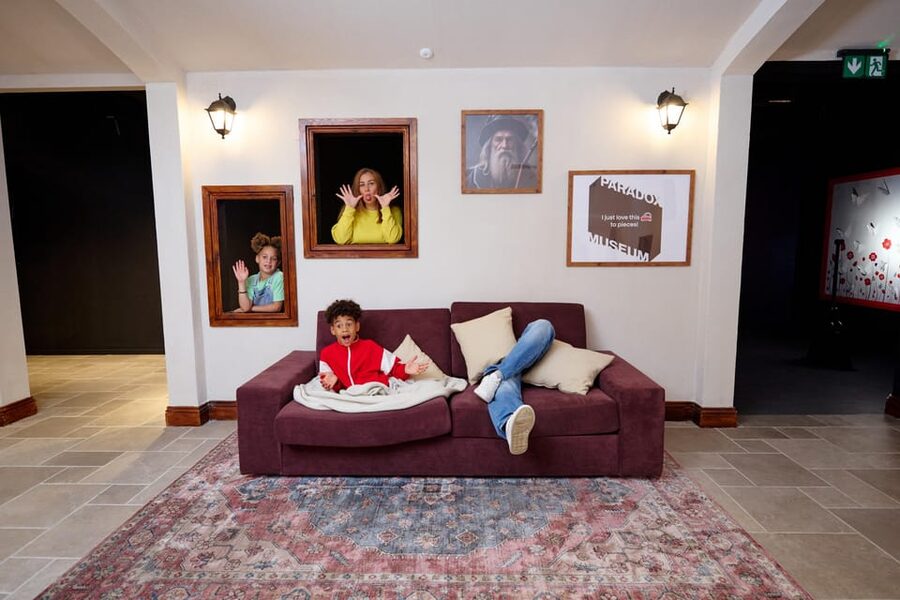
- Castle Room, tricky hallways, and the Paradox Sofa
- Throne Room: feeling like a giant monarch
- Tube station ceiling and the tube tunnel: the camera will do the rest
- The sensor tricks: why this museum feels different than other attractions
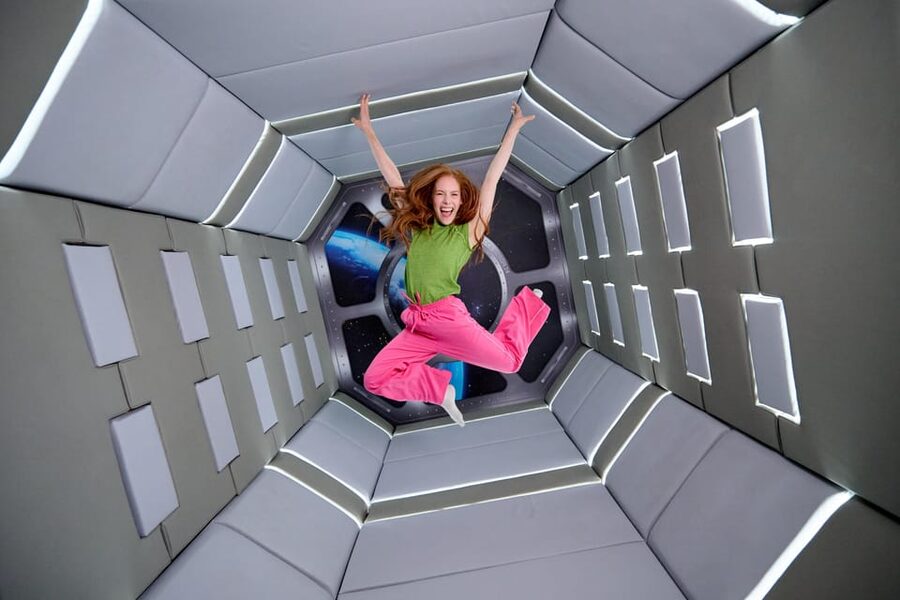
- Zero Gravity Room add-on: worth it, or skip it?
- Staff help, photos, and the human side
- Timing, pacing, and crowds: how to avoid the hassle
- Price and value: does $36 make sense?
- Who should book Paradox Museum London?
- Quick checklist before you go
- Should you book? My practical take
Key things to know before you go
- 50+ interactive exhibits mean you are doing things, not just reading.
- Camouflage Room, Castle Room, and Throne Room are made for playful posing and optical surprises.
- Tube station ceiling and tube tunnel illusions are standout photo moments.
- You can engage more than sight, the museum actively plays with touch and perception.
- The optional Zero Gravity Room is not included in the base ticket.
- Your visit may run shorter than the ticket suggests, since you can move quickly between rooms.
Paradox Museum London: what this ticket really buys
The Paradox Museum in Knightsbridge is an entry ticket to a hands-on set of rooms that mess with how your brain interprets what your eyes and body are telling you. The core idea is simple: you think you are seeing things one way, then the setup proves you wrong. It is light on lectures and heavy on trying, posing, and repeating until the illusion clicks.
You are paying for access, not a guided tour. That matters. When you arrive, you are mostly self-directed through the exhibits, with staff on hand to help you get unstuck, and to support photo-taking at certain moments. If you like “learn by doing,” this place fits your style.
At about $36 per person for roughly 1.5 hours, the value depends on what you want. If you want one big wow, quick photos, and playful science, it can feel like a smart buy. If you want a slow, deeply explained museum experience with staff-led instruction in every room, you might wish you had more guidance available.
More Museum Tours in London
- London: Chelsea Football Club Stadium and Museum Tour
★ 4.8 · 4,576 reviews - London: British Museum Guided Tour
★ 4.3 · 1,182 reviews - London: British Museum Guided Tour with Entrance Tickets
★ 4.9 · 748 reviews
Where it is, and how to fit it into a London day
Paradox Museum is at 90 Brompton Road, Knightsbridge, opposite Harrods. That is a convenient pocket of London if you are already planning shopping, museum time, or afternoon wander time around Knightsbridge.
Here is my practical tip: time it so you are not rushed. Even though the ticket duration is 1.5 hours, some visitors move fast and finish closer to 30 minutes to under an hour. If you want breathing room for photos, and you do not want to feel like you are speedrunning the rooms, aim for enough time to take turns and re-take shots.
Also, expect the experience to feel more crowded at peak times. Some interactive stations require a turn, and queuing can interrupt your flow if there are not enough staff directing foot traffic.
The self-guided flow: how the rooms connect
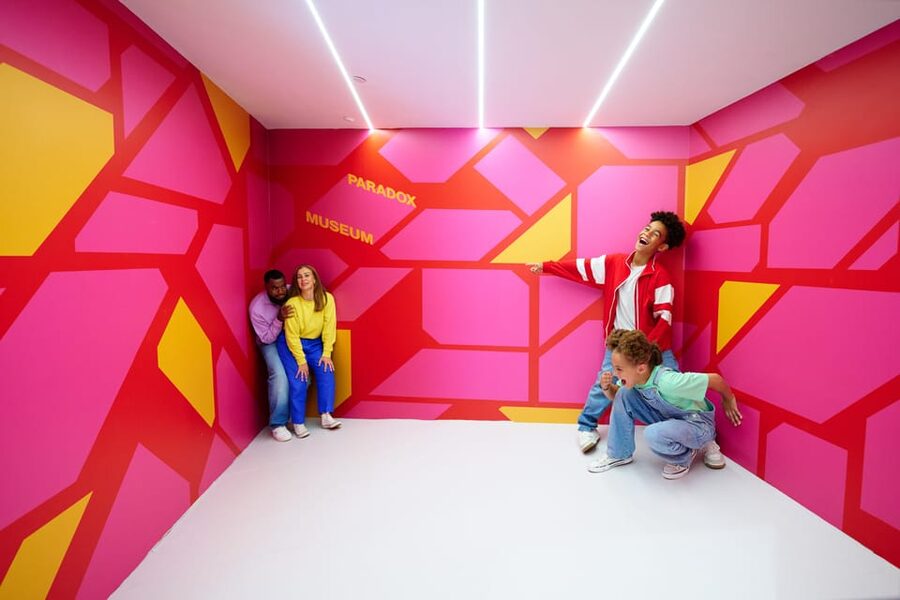
The museum is designed as a circuit. You start entering a sequence of spaces that each target a different kind of misdirection. Some rooms focus on how a pattern makes your eyes “read” depth wrong. Others use tactile tricks so your hands react to something that is not behaving the way you expect.
The best part is that the interaction is built into the space. You do not need to be a science nerd. You just need to be willing to try and laugh when it goes wrong.
Also, go in with the mindset that you will likely get better photos after a couple tries. Many of the most dramatic images come from repeating the pose once you understand where the illusion is “working.”
Camouflage Room: where you learn to blend and how to pose
The Camouflage Room is exactly what it sounds like: you become part of the trick. This kind of exhibit is fun because it is active. You stand where you are told, look where you are supposed to look, and then see what your brain does when the environment is engineered to hide you.
Why I like it: it is one of the best places to turn the experience into a game with your group. You can swap who goes first, try different angles, and capture photos that look impossible from the outside.
A drawback to consider: camouflage-style illusions often work best when the room is not too crowded. If people are packed in, it can get hard to set up clean shots without stepping into someone else’s space. If you care about photos, try to keep an eye on timing and take your shot when the area clears.
More gallery rooms between showers:
- London: Tour of the British Museum★ 4.1 · 678 reviews
- Afternoon Tea at the British Museum★ 4.2 · 511 reviews
- London: National Gallery Guided Tour with Art Expert Guide★ 4.7 · 440 reviews
- London: Tickets for Moco Modern & Contemporary Art Museum★ 4.7 · 391 reviews
Castle Room, tricky hallways, and the Paradox Sofa
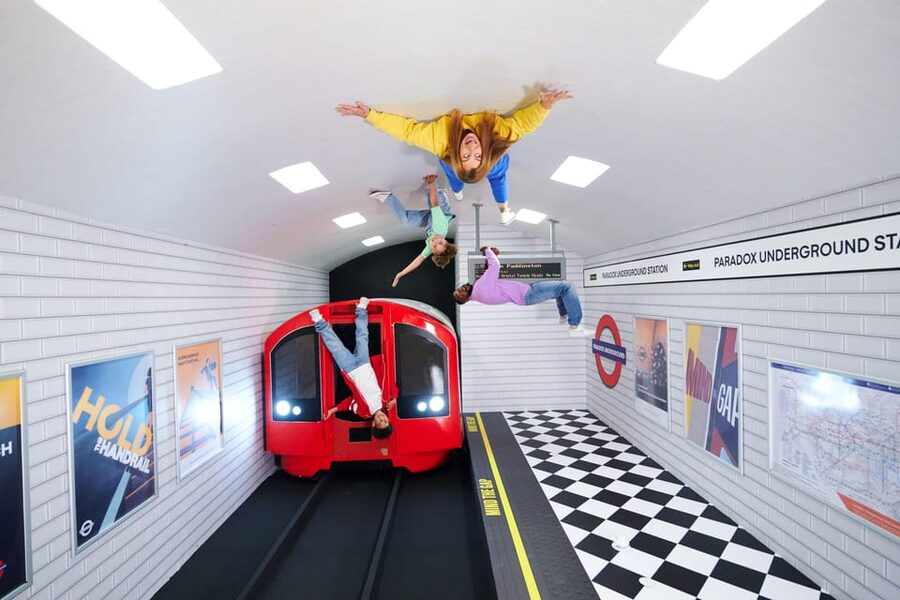
The Castle Room is where the museum leans into “mind-bending” design. Expect tricky hallways and at least one iconic spot where perspective plays tricks on your sense of where you are and how you fit into the scene.
Then there is the Paradox Sofa. This type of exhibit is all about forced perception: you look, you sit/pose, and your brain tries to interpret scale and position based on what it sees in that moment. The result is usually a lot of wow photos, because the scene is designed so you can appear distorted, stretched, or “wrong” in a way that camera framing catches perfectly.
Practical photo tip: treat these rooms like sets. Stand where the effect seems to “lock in,” then use the same framing for a couple shots. If you move too far away, the illusion can fade. If you keep reusing the same spot, you get a stronger hit rate.
One more thing: some rooms may be under refurbishment. If a space in this zone is closed, you might feel the circuit is less complete, so try to stay flexible and enjoy the remaining rooms without expecting every single illusion to be running perfectly.
Throne Room: feeling like a giant monarch

The Throne Room is one of the places where the museum turns you into the subject of the joke. It is a classic scale illusion setup: you pose like you rule the space, while the room design makes it look like you are bigger, taller, or more powerful than you really are.
Why this works for almost everyone: it is easy. You do not have to understand the science to enjoy it. You just sit or stand in the right spot and let the design do the magic.
And it is a great “group memory” moment. If you are visiting with kids or relatives, the throne pose is a natural anchor point for photos everyone agrees on.
Tube station ceiling and the tube tunnel: the camera will do the rest
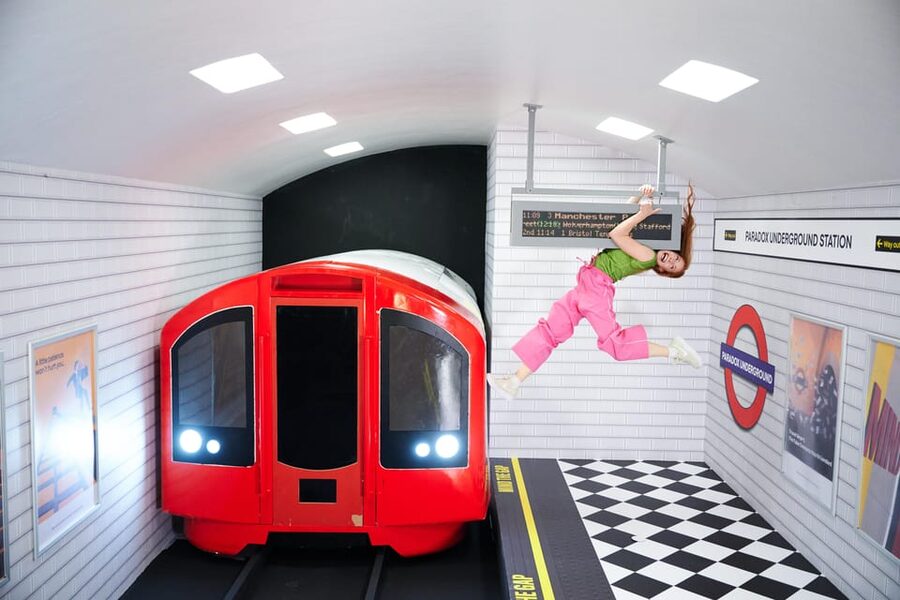
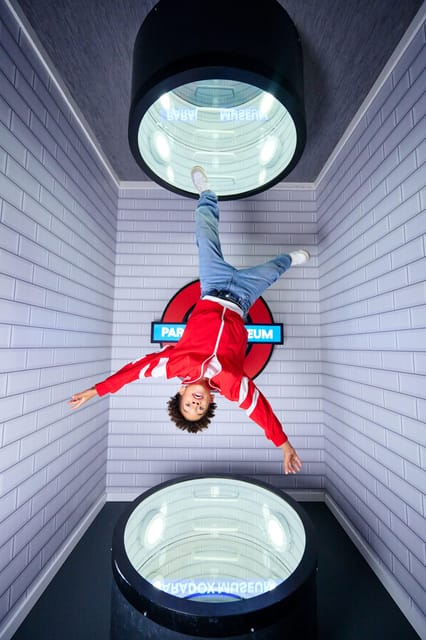
Two highlights are built around London-flavored settings: the museum includes a tube station ceiling scene where you can create a gravity-defying style photo, and a tube tunnel setup where walking straight can feel impossible.
This is where the museum earns its reputation as a photo-first attraction. The ceiling scene is made for families and groups because you can coordinate poses quickly. The tunnel illusion is good because it adds movement, not just still shots.
What to watch for: if you get stuck in a queue, you might lose the momentum of the experience. In this kind of setup, patience helps. If the line is long at one illusion point, go to the next room first. Come back when the crowd thins, and you will feel less annoyed and more playful.
The sensor tricks: why this museum feels different than other attractions
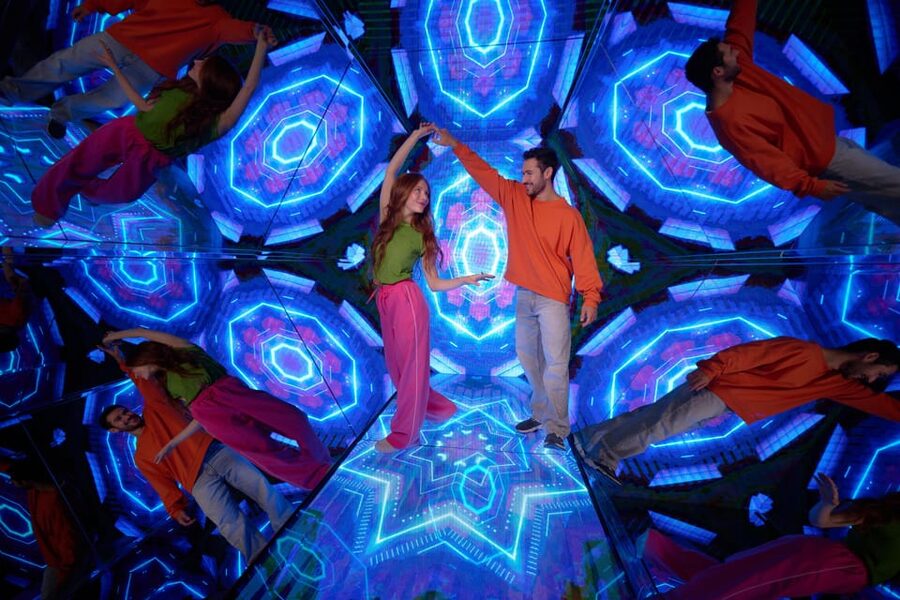
A big selling point here is that it is not only about what you see. The exhibits are designed to trick your brain and senses using visual and tactile stimulation. That is part of why it feels “active” and memorable.
You can walk in and have fun fast, but there is also a learning layer. The museum is educational in a casual way, focused on how perception works and how quickly your mind fills in gaps. It is science you can feel, not science that lives in a textbook.
If you like the idea of explaining perception to your kids, you will have fun turning each room into a mini question like: why did my eyes think that, and what did my body feel that surprised me?
Zero Gravity Room add-on: worth it, or skip it?

The base ticket includes Paradox Museum entry, but the Zero Gravity Room is an optional add-on on site.
Here is how to think about it:
- If you really want the weightless-style illusion, plan for the add-on and budget for it.
- If you just want the core museum circuit, you can still have a solid experience without it.
One review notes that the weightless add-on felt overpriced at £3.50 extra. Another person was disappointed they could not access it because it was full on the day, and they said it was a main reason for their visit. Translation: if the Zero Gravity Room is your priority, do not treat it as an afterthought. If it is unavailable when you want it, you might leave feeling like the visit lacked one key moment.
Staff help, photos, and the human side
The museum has staff who do real “make the experience work” support. Several visitors specifically mention friendly help and staff who assist with family photo-taking. That matters because these rooms are designed for posing, and you sometimes need a quick nudge on where to stand or how to reset a shot.
There are also comments about staff being kind and attentive in practical situations, including first aid for a minor injury. That is the kind of reassurance that makes this feel safer and more welcoming for families.
Not every staff interaction is guaranteed to match your expectations. One review complained about a staff member at the Zero Gravity Room being unhappy, which can affect the tone of that specific moment. Still, the overall impression from the set of notes is that staff tend to be helpful.
Timing, pacing, and crowds: how to avoid the hassle
Plan your visit around two realities:
- The museum may take less than the official 1.5 hours for some people.
- Some interactive stations can get crowded, and you may queue for turns.
If you want to avoid frustration, I suggest this approach:
- Start strong with the rooms that look most photo-friendly.
- If you see a line forming, move on instead of waiting immediately.
- Return later for the stations with the longest draw.
Also, if you notice anything not functioning due to refurbishment, do not let it sour your mood. It is usually better to adapt and treat it as bonus time in the working rooms.
Price and value: does $36 make sense?
For $36 per person, you are getting access to an interactive set of rooms with 50+ exhibits. That can be excellent value if you want a playful afternoon and you like taking pictures that look like they came from a movie set.
But I would be honest about the tradeoff. The experience is not presented as a full guide-led walkthrough where every exhibit is explained in depth. Some visitors wished for more guidance at certain spots. So you get value when you bring your curiosity and your willingness to figure things out from the setup itself.
If you love photography, the museum has a built-in advantage. The optical effects are camera-friendly, and you will likely have fun experimenting with angles and distance to get the “impossible” look.
Who should book Paradox Museum London?
This is a good fit if:
- You want hands-on fun with optical illusions and sensory experiments.
- You are traveling with kids, teens, or a mixed group that enjoys interactive attractions.
- You care about photo moments and want lots of chances to pose.
- You enjoy light science that you can explain to others on the way out.
You might want to reconsider if:
- You need a heavily guided, step-by-step learning experience.
- You are only interested in one specific effect, especially the Zero Gravity Room, and you cannot tolerate the possibility of it being full or closed.
Quick checklist before you go
- Bring a camera or phone with enough space. These rooms are built for pictures.
- Wear comfortable shoes. Some illusions involve walking and repositioning.
- If Zero Gravity is a must, plan for it early rather than late.
- Keep expectations flexible for refurbishments or occasional downtime in some exhibits.
Should you book? My practical take
Book this ticket if you want a fun, photo-friendly afternoon where you actively test your perception. For $36, the combination of 50+ interactive exhibits and major “wow” rooms like Camouflage, Castle, Paradox Sofa, Throne, the tube station ceiling, and the tube tunnel gives you plenty to do in a short London time window.
Skip the add-on only if you are fine with the core circuit, because the Zero Gravity Room is the most common missing piece when people feel the visit did not fully land. If you are visiting at a peak time and that room is central to your plans, you should treat the add-on as priority rather than optional fluff.
If you want a light, hands-on break from London’s more traditional sightseeing, Paradox Museum is a strong choice.
Newest entries under London



Museums, compared.
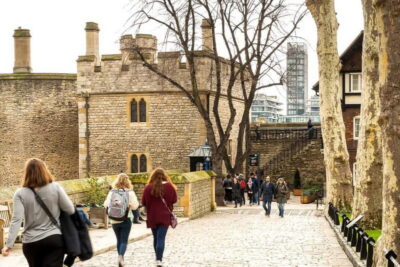
Tower of London and Crown Jewels Exhibition Ticket
Read our review →
Liverpool Football Club Museum and Stadium Tour
Read our review →
Chelsea Football Club Stadium and Museum Tour
Read our review →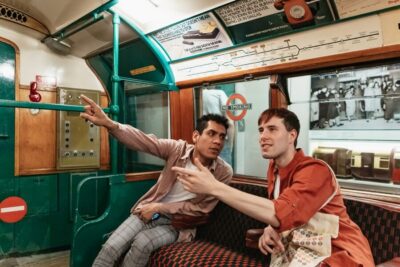

British Museum Guided Tour with Entrance Tickets
Read our review →Browse the lists this tour appears in