
Reviewed · BRISTOL TOURS & EXPERIENCES
St Mary Redcliffe Church Bristol: Guided Tour
Medieval secrets are still tucked inside this Bristol church. I love how this St Mary Redcliffe guided tour gets you into usually closed areas, and I also love the way you spot medieval graffiti and carvings that most people miss.
One tradeoff: the best hidden stop, the Chatterton Room, is up a spiral staircase with 75 steps, so it is not suitable if you cannot climb stairs.
In This Review
- Key things I think you will enjoy most
- Entering the Hexagonal North Porch, Bristol’s Medieval Front Door
- Outside the North Porch: Stone Carvings and the Tower-SPIRE View
- Inside the Main Church: Maritime Clues and John Cabot’s Whalebone
- St John’s Chapel: C14th Stained Glass That Actually Changes the Mood
- West End Views: Roof Bosses, Perpendicular Gothic, and the Power of High Ceilings
- The North Transept Effigy: A Medieval Knight Whose Identity Still Teases
- Lady Chapel in the C14th: Gothic Screen and Harry Stammers Stained Glass
- South Transept Merchant Power: William Canynges II and Joan’s Tomb
- Medieval Walls Up Close: Graffiti, Marks, and What They Mean
- The Chatterton Room Above the North Porch: 75 Steps, Big Payoff
- Organ Moments and Personal Details That Make It Feel Human
- Price and Value: Why $8 Feels Fair for What You Get
- Who Should Book This Tour, and Who Might Want Another Plan
- Should You Book St Mary Redcliffe’s Guided Tour?
- FAQ
- How long is the St Mary Redcliffe guided tour?
- How much does the tour cost?
- Where do I meet the guide?
- What language is the tour guide?
- What hidden space is included in the tour?
- Is the Chatterton Room accessible for people who cannot climb stairs?
- Is the rest of the church accessible?
- What will I see inside the church?
- Are medieval graffiti and merchant marks part of the tour?
- Can I cancel or change plans?
Key things I think you will enjoy most
- Hexagonal North Porch: once the main chapel, now your starting point for big church drama
- Medieval carvings and merchant marks: stone details plus wall markings that lived through centuries
- Stained glass dating to the C14th: especially in St John’s Chapel
- Perpendicular Gothic at the west end: 1,200-plus roof bosses, pillars, and a huge vaulted ceiling
- The South Transept tomb of William Canynges II: merchant power made stone
- Chatterton Room above the North Porch: a hidden space tied to Thomas Chatterton
Entering the Hexagonal North Porch, Bristol’s Medieval Front Door
Your tour starts inside St Mary Redcliffe near the main entrance, then moves right away to the church’s standout first stop, the hexagonal North Porch. Dating from the C12th to C13th, this porch once served as the church’s main chapel and included a shrine to the Virgin Mary. It sets the tone fast: this is not just a pretty building, it is a working archive of faith, art, and Bristol’s trade world.
From this point, you get a clear sense of scale and layout before you start moving around. That matters, because St Mary Redcliffe is big, and if you arrive cold, it is easy to get lost in the wow-factor and miss the story beats. Here, you learn where to look, what to notice, and why each section matters.
If you happen to be with a guide like Bryan Anderson, you may also get extra musical context or demonstrations, which adds a nice layer to the church atmosphere. He is an organist, so the building does not feel like a silent museum.
Also inked in under Bristol
- Bristol: Blackbeard to Banksy Guided Walking Tour
★ 4.9 · 1,422 reviews - From Bristol: Stonehenge and Cotswold Villages Day Tour
★ 4.8 · 717 reviews - Bristol: Air Raid Shelter & St. Nicholas Market Walking Tour
★ 4.8 · 320 reviews
Outside the North Porch: Stone Carvings and the Tower-SPIRE View
After the porch intro, you step outside to view the stone carvings on the exterior. These details can feel oddly personal once you know what you are hunting for, because they include the kind of symbolic work medieval builders liked to hide in plain sight. Your guide also points out the exterior design choices that connect back to the church’s long build timeline.
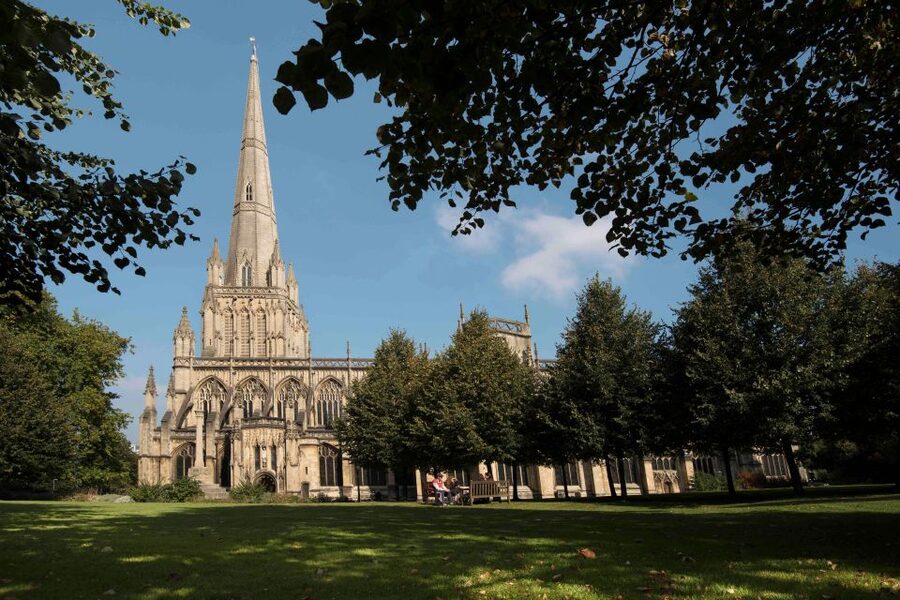
Then you get your chance to study the famous tower and spire from the outside. St Mary Redcliffe is one of those Bristol landmarks where you have probably seen it in the background of photos, but up close it changes. You start seeing the church as a crafted skyline object, not just a religious building.
This outside segment is short, but it works. It gives your eyes a reset before you go back in and deal with the interior’s dense layers of stonework and stained glass.
Inside the Main Church: Maritime Clues and John Cabot’s Whalebone
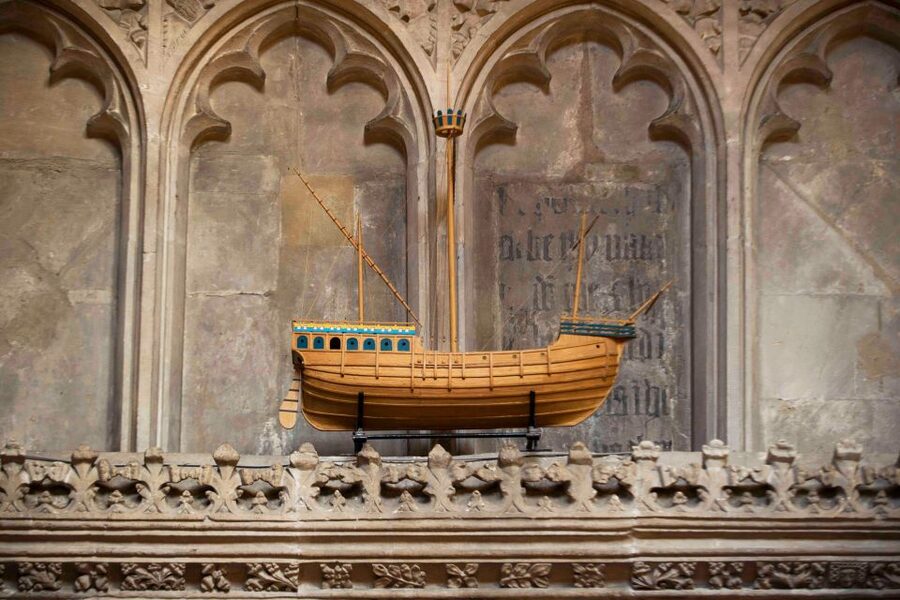
When you re-enter, one of the first big surprises is the church’s strong sea connection. St Mary Redcliffe ties itself to maritime Bristol, and you see that story in an object linked to John Cabot’s 1497 voyage.
Cabot’s whalebone is displayed, tied to his ship The Matthew, and there is also a model shown above the main entrance. It is a clever way to connect global exploration to a local place of worship. Even if you are not a history person, you will appreciate how objects like this make big events feel tangible.
This stop is also where the tour’s pacing helps you. Instead of rushing from feature to feature, you get a sense of how the church developed over centuries and why certain references stayed or resurfaced.
St John’s Chapel: C14th Stained Glass That Actually Changes the Mood
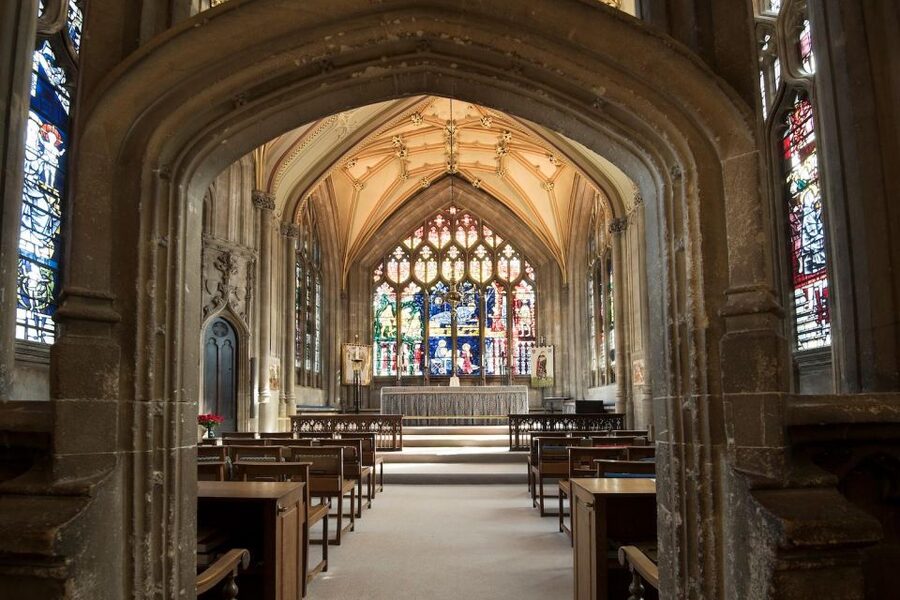
Next comes St John’s Chapel, where you focus on the church’s medieval artistry through its remaining stained glass, dating to the C14th. Stained glass like this is not just decoration. It is a visual language, and your guide helps you read the ideas, symbols, and craftsmanship rather than just admire the color.
One practical tip: look from different angles. Even in normal church light, medieval glass can shift as you move, and you will start noticing details you missed from straight-on.
If you love art, this is one of the most rewarding sections because it is concentrated. You get a clear, guided way to compare themes and understand how the chapel’s design supports worship space, not just aesthetics.
A page further on, still in Bristol:
- From Bristol: Oxford and the Cotswolds Full-Day Tour★ 4.7 · 244 reviews
- Bristol: Guided Ghost Tour★ 4.8 · 193 reviews
- Bristol: Wake The Tiger Amazement Park Entry Ticket★ 4.3 · 156 reviews
- Bristol: Self-Guided Sightseeing Audio Tour★ 4.4 · 151 reviews
West End Views: Roof Bosses, Perpendicular Gothic, and the Power of High Ceilings
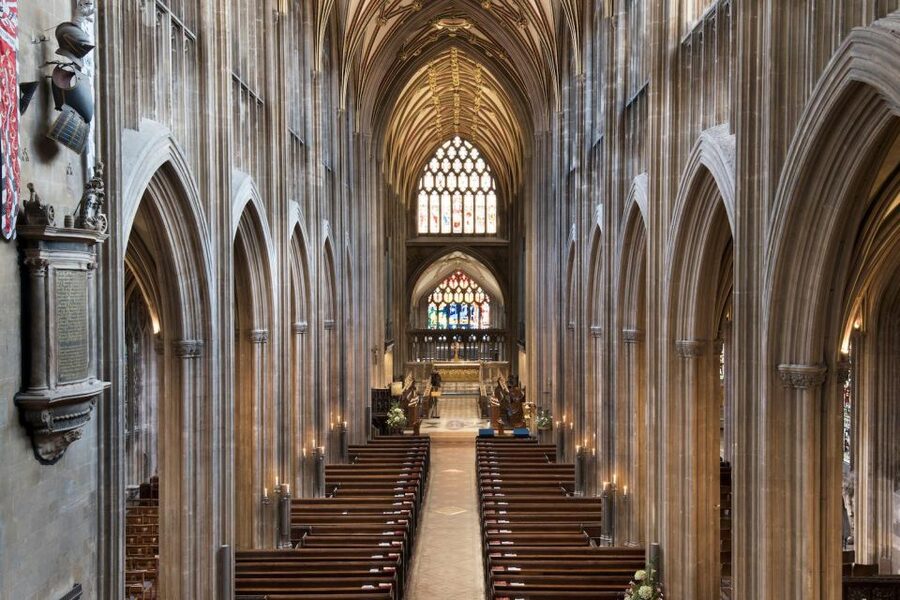
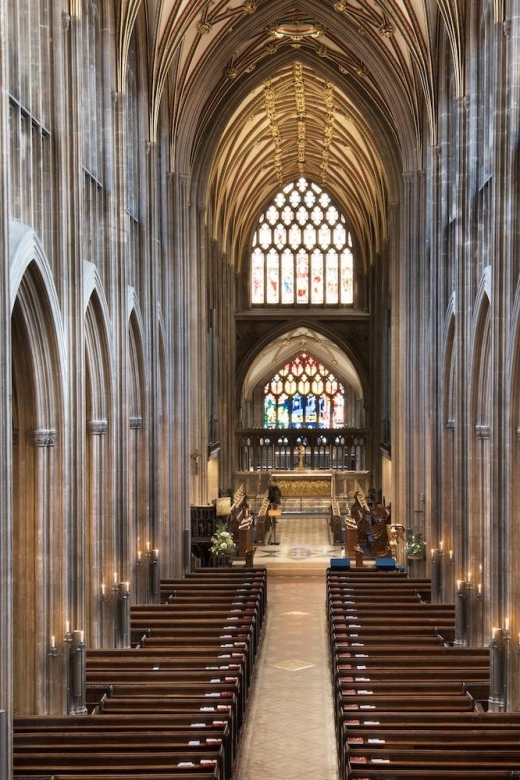
At the west end, the tour becomes a view game. Stand to take in the line of sight toward the chancel and altar, then look up at the vaulted ceiling. One of the tour’s headline facts is the ceiling’s over 1,200 individual roof bosses, which are decorative carved groin stones.
It is hard to describe how different this feels from typical church sightseeing. The ceiling is so intricate that you stop thinking of the church as one room and start thinking of it as a collection of micro-masterpieces, each one repeating the same theme of stone precision.
Then you look at the towering pillars and the church’s Perpendicular Gothic architecture. The guide helps you understand what makes this style distinct, so you are not just counting details for the sake of counting them.
This is also a good time to slow down and take in the overall geometry. If you only remember one thing from the tour, remember this sense of structure and scale.
The North Transept Effigy: A Medieval Knight Whose Identity Still Teases
In the North Transept, you meet a mystery. There is an effigy of an early medieval knight, linked in local association to Robert de Berkeley, who helped with a water supply in 1190. The catch is that nobody truly knows who the effigy represents, and the figure is likely older than the church building itself.
That uncertainty is exactly why this stop works. It trains your attention on something more interesting than certainty: how medieval communities preserved memory, then later generations tried to interpret it. You are looking at how history gets interpreted at the same time you are seeing the physical object.
Spend a moment absorbing the presence of the effigy. In stone, time often feels fixed. But with something like this, the story stays open, which makes the church feel alive.
Lady Chapel in the C14th: Gothic Screen and Harry Stammers Stained Glass
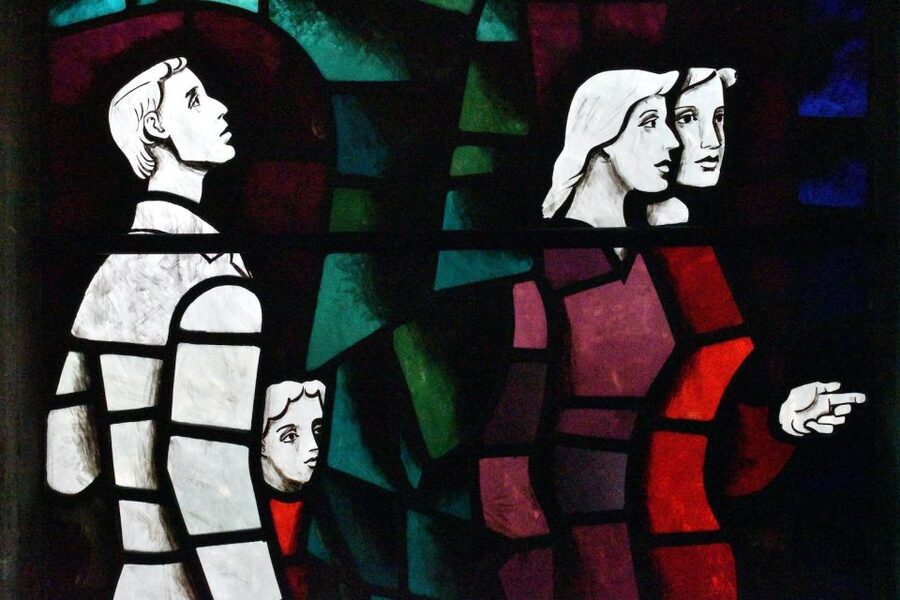
Next is the C14th Lady Chapel, a calmer, more intimate-feeling section. Here you focus on the gothic screen and stained glass windows. One of the most specific details is that the stained glass was designed by artist Harry Stammers in the early 1960s.
This combination matters. You are not only seeing medieval design. You are also seeing a later commitment to the space, where modern artistry was used to keep the chapel’s spiritual mood coherent. It is a good reminder that historic churches are not frozen. They keep receiving care, and that care shows up in the art.
If you like design, pay attention to the way the screen shapes movement and sightlines. It changes what you feel as you stand there, because it forces a slower look.
South Transept Merchant Power: William Canynges II and Joan’s Tomb
In the South Transept, your attention shifts to wealth and civic influence through the tomb of William Canynges II and his wife Joan. The altar tomb is polychrome stone, and it is a strong visual statement of status.
William Canynges II was both an MP and Mayor of Bristol. He is also credited with rebuilding the church in the C15th after a lightning strike collapsed the spire and destroyed parts of the nave. So this is not only a memorial. It is also a story about restoration after catastrophe, which is a theme most cities understand deeply.
This stop gives you a practical way to connect church architecture to Bristol’s economic history. The money, the rebuilding, and the artistic choices were all tied to merchant power.
Medieval Walls Up Close: Graffiti, Marks, and What They Mean
As you walk around, your guide draws your attention to the church’s artwork, carvings, effigies, and monuments. This is where the tour turns from facts into pattern recognition. You start seeing recurring motifs and learning how symbols helped medieval worshippers feel oriented, informed, and included.
A standout topic is the medieval graffiti and merchant marks that have adorned the walls for centuries, now being rediscovered. These are not the same as modern vandalism in your mind. They are evidence of human presence, small acts of inscription, and the practical habits of tradespeople and builders.
One thing I really like here is that the guide treats these marks with respect. Instead of dismissing them as clutter, they become part of the church’s voice.
The Chatterton Room Above the North Porch: 75 Steps, Big Payoff
The tour ends with one of its main surprises: a hidden space high above the North Porch called the Chatterton Room. It is associated with Bristol’s boy poet Thomas Chatterton (1752 to 1770), often called the father of English Romantic Literature.
How you reach it matters. You must climb a spiral staircase with 75 steps, so it is not accessible if stairs are a no-go for you. Most of the tour takes place in the main body of the church, which you can access via the south entrance and on a level.
This is the right moment to plan realistically. If you cannot climb, ask to join the main part of the tour without the Chatterton Room. You will still get the medieval and architectural highlights.
If you can go up, this stop feels like the payoff for paying attention. Being higher above the main interior changes how you sense the church’s scale, and the association with Chatterton adds a literary thread to the building’s long story.
Organ Moments and Personal Details That Make It Feel Human
The church has plenty to look at, but what makes the experience memorable is how your guide can bring the space to life. In the real world, that can mean extra context, careful pacing, and specific moments of interpretation.
Some guides bring music into the tour. For instance, Bryan Anderson has been known to include an organ demonstration, which is especially fitting in a church where design was made for worship and sound. If your guide offers it, take it. It is one of those rare times when architecture, craft, and music connect in a single visit.
You might also hear little personal stories tied to church details. One example from a tour experience is being shown the grave of Tom the cat, a fun moment if you love oddball local lore.
Price and Value: Why $8 Feels Fair for What You Get
At about $8 per person for a 90-minute guided tour, you get an efficient hit of history, art, and access. The key value point is not just the talking, it is the access to hidden spaces normally closed to the public, especially the Chatterton Room.
If you are comparing this to doing the church on your own, the guided format gives you direction. You do not just walk past roof bosses and stained glass. You learn what they are and why they matter, which makes your time inside feel far less random.
The other value piece is guide quality. The tour experiences you provided include multiple mentions of guides like Bryan Anderson and Paul, with praise for pacing and the ability to answer questions. That kind of delivery is the difference between a checklist and a meaningful visit.
Who Should Book This Tour, and Who Might Want Another Plan
This tour is perfect for you if you like medieval churches but get tired of vague sightseeing. You will appreciate the structured route, the focus on stained glass and tombs, and the way the guide connects architecture to Bristol life, from merchants to exploration.
You might also enjoy it if you love details, because there is a lot to spot: roof bosses, carvings, effigies, monuments, and marks on the walls.
If stairs are a dealbreaker, you should still consider booking, because the main church area is accessible via the south entrance and on a level. Just know that the Chatterton Room itself requires the staircase, and you will have to skip that portion.
Should You Book St Mary Redcliffe’s Guided Tour?
Yes, you should book if you want more than a quick look at a famous church. This is a smart value plan for getting into the church’s layers, from the hexagonal North Porch to medieval stained glass, and then up to a hidden room tied to Thomas Chatterton.
If you are physically able to climb 75 steps and you enjoy detailed stops, the Chatterton Room makes the tour extra special. If you are not, you can still enjoy a large portion of the experience and skip that final stair climb with no loss of the bigger medieval highlights.
FAQ
How long is the St Mary Redcliffe guided tour?
The tour lasts 90 minutes.
How much does the tour cost?
The price is $8 per person.
Where do I meet the guide?
Meet inside the church near the main entrance by the visitor’s desk.
What language is the tour guide?
The tour is guided in English.
What hidden space is included in the tour?
The tour includes access to the Chatterton Room, located high above the North Porch.
Is the Chatterton Room accessible for people who cannot climb stairs?
No. The Chatterton Room is accessible only via a flight of stairs, a 75 step spiral staircase.
Is the rest of the church accessible?
Most of the tour takes place in the main body of the church, which is accessible via the south entrance and on a level.
What will I see inside the church?
You will see medieval artwork and monuments, stained glass including C14th glass in St John’s Chapel, plus areas like the west end with the vaulted ceiling and roof bosses, and the Lady Chapel and transepts.
Are medieval graffiti and merchant marks part of the tour?
Yes. The tour includes finding medieval graffiti and merchants marks on the walls.
Can I cancel or change plans?
Free cancellation is available up to 24 hours in advance for a full refund, and you can reserve now and pay later.
Newest entries under Bristol






Bristol Tours & Experiences, compared.

Air Raid Shelter & St. Nicholas Market Walking Tour
Read our review →

Browse the lists this tour appears in