
Reviewed · WALKING TOURS
Newcastle: City Highlights Walking Tour
Newcastle works best on foot. This 3-hour city highlights walking tour stitches together medieval leftovers, grand civic squares, and the seven bridges over the River Tyne, so you get the feel of the city without jumping on and off buses. I particularly like the way guide Martin Stait ties place names to real people, and I also like the small group setup, which keeps the pace friendly and the questions welcome.
One consideration: this tour runs rain or shine, and you will go down about 200 steps to reach the riverside. If your legs do not love stairs, that section can be a deal-breaker, but if you can handle it, the payoff is huge.
In This Review
- Key points to look for
- A 3-hour highlights loop for first timers and history fans
- Meeting at the Ever Changing Sculpture, then on to Blackfriars
- Blackfriars and Chinatown: 1239 to the Chinese Arch
- Eldon Square, Grainger Town, and the Earl Grey and John Scott monuments
- Central Arcade, Grainger Market, and the St Nicholas Cathedral quick visit
- Theatre Royal, High Bridge, and Bigg Market links you can actually picture
- Stephenson Quarter, the Station area, and the Litt and Phil electricity story
- Castle, guildhall, Besse Surtees House, and the shift toward the quayside
- Seven bridges along River Tyne, with 200 steps to earn the views
- Sage Gateshead, The Baltic, and redevelopment along the waterfront
- Is $40 good value for a 3-hour guided loop?
- Who should book this tour, and who should skip it
- Should you book the Newcastle City Highlights Walking Tour?
- FAQ
- How long is the Newcastle City Highlights Walking Tour?
- How much does the tour cost?
- Where do I meet the tour guide?
- Where does the tour finish?
- Is there a live guide, and what language is it in?
- How large is the group?
- Does the tour run in bad weather?
- What should I bring for the walk?
- Is the tour suitable for people with mobility impairments?
- What is included, and is food or drinks provided?
Key points to look for
- Blackfriars Friary roots in 1239, with a live sense of how the area evolved
- Chinatown and its Chinese Arch, a noticeable culture shift right inside the city center
- Eldon Square, Earl Grey Monument, and John Scott connections, where politics becomes public art
- The River Tyne circuit and its seven bridges, great for quick photos and orientation
- Stephenson Quarter, Mining Institute, and Litt and Phil, plus the electricity story
- Modern quayside stops, including the Sage Gateshead and the Baltic
A 3-hour highlights loop for first timers and history fans
This is the kind of walk that helps you stop guessing. You start in central Newcastle, move through the classic sights, and end at the waterfront with enough context to understand what you are looking at. At $40 per person for about 3 hours, you are paying for a guided route that hits both landmarks and the in-between streets, not just a checklist of famous buildings.
The best part is how the tour blends eras. You get medieval references like Blackfriars Friary, you get 18th and 19th century civic monuments, and then you get right into the city’s later reinvention along the river. That mix makes it more fun than a single-theme tour, especially if it is your first time in Newcastle.
More British streets at boot pace:
- Best of Newcastle Highlights Walking Tour
★ 4.8 · 51 reviews - Newcastle: History and Highlights Guided Walking Tour
★ 5.0 · 18 reviews - Magical London: Harry Potter Guided Walking Tour
★ 4.7 · 22,044 reviews
Meeting at the Ever Changing Sculpture, then on to Blackfriars
You meet at the Ever Changing Sculpture on Westgate Road, directly opposite Tilleys Bar. That is a handy meet spot because it is easy to find, and it also signals the tour’s character: Newcastle here is not frozen in one time period.
From there, you get moving quickly into the city core. The early minutes focus on setting the stage, including a short safety briefing before you start linking the dots between streets, buildings, and the people they are associated with.
Blackfriars and Chinatown: 1239 to the Chinese Arch
The Blackfriars stop is the first big “wait, really?” moment. You will learn about Blackfriars Friary as it was occupied by Dominican Friars in 1239, and that medieval detail gives you a base layer for what comes next. When you hear that timeframe out loud, the city feels older and more human, not just like a modern shopping-and-street scene.
Then the tour shifts toward Chinatown and the Chinese Arch. This is one of those contrasts that makes Newcastle feel like a real working city. You are not hopping across town to see a cultural pocket. Instead, it pops up inside the same walk, which makes it a good way to understand how neighborhoods overlap.
If you like architecture and small street cues, watch for the way the guide points out building angles, public spaces, and what is visible from where you are standing. It helps you “read” the city instead of just passing by it.
Eldon Square, Grainger Town, and the Earl Grey and John Scott monuments
As you head into Eldon Square, you get a strong central-civic vibe. This is where the tour leans into people stories. You will hear about John Scott, Lord Chanceller, and you will also see how public monuments were used to project identity and values.
From there, the walk connects to Grainger Town and the Earl Grey Monument, including the lifetime of Charles Earl Grey. That matters because Earl Grey is one of those names you might recognize from school, tea, or politics, but here the context is local. You learn how national history and local decisions can echo for generations in the streets you walk every day.
You also get practical orientation landmarks like Grainger Market and nearby shopping corridors. Even if you are not stopping to buy anything, the guide’s explanation turns these spaces into more than just places to pass through.
Also inked in under Newcastle
- Northumberland: Full-Day Tour of Vera Filming Locations★ 4.7 · 49 reviews
- Newcastle: Junkyard Golf Tickets for 9 or 18 Holes★ 4.3 · 42 reviews
- Newcastle: Private Vera Half Day TV Locations Tour★ 4.6 · 41 reviews
Central Arcade, Grainger Market, and the St Nicholas Cathedral quick visit
This tour gives you market energy without requiring you to plan your day around lunch. You get a break at Grainger Market, then you move on with the same group momentum. If you want to snack, this is where you would typically do it, but remember food and drinks are not included, so come with your own plan.
The route also includes quick religious and civic stops. You will visit the Cathedral Church of St Nicholas and you will get views related to St James Park and St Andrews Church. These are not long museum-style visits. They work as “snapshots” that help you understand why this city grew where it did and how landmarks signal local pride.
One reason I like these short stops is that they prevent the tour from dragging. You get context and then you move. By the end, the city feels mapped in your mind.
Theatre Royal, High Bridge, and Bigg Market links you can actually picture
Next comes a stretch where the city’s identity shows up in culture and bridges. You will have a view of the Theatre Royal, and you will hear about the area around major venues, including Tyne Theatre and Opera House referenced as part of the city’s changing skyline.
Then you hit the river-linked storylines. You will stop near High Bridge, which has connections to Charles I. It is the kind of detail a normal walk would never offer, and once you know the link, you start noticing bridge features as historical objects instead of just traffic crossings.
After that, you move through Bigg Market, including its link to Blaydon Races. The neat trick here is that the guide does not treat these references like trivia. They become clues about how Newcastle people celebrated themselves, organized communities, and kept traditions alive.
Stephenson Quarter, the Station area, and the Litt and Phil electricity story
If you like science and industry, this portion is a standout. The tour moves into the Stephenson Quarter, with stops around the Station, the Mining Institute, and the famous Litt and Phil buildings.
The key theme you will take away here is how Newcastle developed electricity, and how those institutions helped drive practical innovation. It is a refreshing counterpoint to all the stone monuments. You see that the story of Newcastle is not only about rulers and dates. It is also about engineers, organizations, and people who built tools that changed daily life.
This is also where Martin’s style really pays off. In past walks, his storytelling has included personal touches, like anecdotal family connections and how everyday local life connects back to bigger historical threads. That approach makes technical topics feel approachable, even if you are not a “history first” traveler.
Castle, guildhall, Besse Surtees House, and the shift toward the quayside
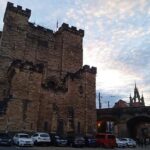
As you continue, you will cover civic architecture and the city’s sense of authority. You will see the Castle, and you will also pass the guildhall and Besse Surtees House. These stops matter because they show Newcastle’s self-image at different points in time, when the city needed visible institutions to organize public life.
As you move closer to the river, the mood changes slightly. The buildings feel more spread out, and the walkway starts to hint at the view-based highlights coming next. That transition is useful. It prepares you for the big visual moment at the waterfront instead of throwing you there too fast.
Seven bridges along River Tyne, with 200 steps to earn the views
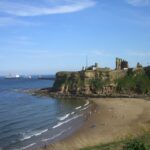
This is the centerpiece, the part that gives you orientation and photos. The tour includes the River Tyne and highlights the seven bridges crossing it. You will get photo stops as you make your way along the riverside, and the bridges become a visual timeline, each one a different marker of design choices and eras.
Be ready for the physical part. The tour notes that you go down 200 steps to reach the riverside. This is not a problem if you are comfortable with stairs, but it is absolutely worth taking seriously. If you are someone who avoids steep climbs, this is the moment you should reassess.
Tip: plan your shoes like you are walking on a slightly slippery, uneven surface if the weather turns. Even on dry days, your feet do the work here.
Sage Gateshead, The Baltic, and redevelopment along the waterfront
Once you are at the water, the tour leans into Newcastle’s modern identity. You will see the redevelopment of the riverside, including Sage Gateshead and The Baltic, with artwork that reflects the area’s recent transformation.
This part is valuable because it answers the question, So what is Newcastle doing now? The riverfront redevelopment is not just about nicer views. It is about changing how people use the city center, how they meet, and what kind of cultural energy Newcastle wants in the present.
If you like cities where old industry and newer cultural spaces share the same breathing room, this section will land well. You get the “before and after” feel in one continuous walk.
Is $40 good value for a 3-hour guided loop?
I think the value is strong if you are a first-time visitor or a limited-time visitor. For $40 per person, you are getting:
- a live English guide
- a small group limited to 10 participants
- a structured 3-hour route from the Ever Changing Sculpture area to the River Tyne and back out toward the finish
What you are not getting is also clear, and that matters for expectations. Food and drinks are not included, so you should bring your own plans. And you are walking, not riding, so comfort and stamina matter more than guessing whether you will have plenty of sitting time.
The “value” also comes from the guide’s approach. Multiple bookings highlight Martin’s mix of entertaining delivery and strong local context. That is the difference between watching landmarks scroll past and actually understanding why those names appear where they do.
Who should book this tour, and who should skip it
You should book if you want a guided orientation walk that connects history, civic life, industry, and modern redevelopment. This is ideal for solo travelers who like meeting friendly groups, and it is a good choice for couples or small groups who want a shared sense of discovery.
You might skip it if stairs and steep step counts are not your thing. The tour specifically notes the 200-step descent to reach the riverside and says it is not suitable for people with mobility impairments. If you fall into that category, you will likely have a rough time with the route design.
If you do book, wear rain gear since the tour runs in bad weather too, and keep your phone ready for bridge photos. The seven-bridge views are a big reason to do it this way, rather than trying to piece the sights together on your own.
Should you book the Newcastle City Highlights Walking Tour?
Yes, I would book it if you like guided walking routes that explain names, monuments, and neighborhoods in plain language. The combination of Blackfriars Friary context, Chinatown’s Chinese Arch, civic anchors like Eldon Square, and the seven bridges along the Tyne makes this feel like a real local circuit, not a rushed drive-by.
The only hard “maybe” is the 200-step riverside descent. If you can handle stairs and you are okay walking a full 3 hours, this is a smart use of time in Newcastle.
FAQ
How long is the Newcastle City Highlights Walking Tour?
The tour lasts 3 hours.
How much does the tour cost?
It costs $40 per person.
Where do I meet the tour guide?
You meet at the Ever Changing Sculpture opposite Tilleys Bar.
Where does the tour finish?
The tour finishes at Pitcher & Piano Newcastle.
Is there a live guide, and what language is it in?
Yes, there is a live tour guide, and the tour is in English.
How large is the group?
It is a small group, limited to 10 participants.
Does the tour run in bad weather?
Yes, it takes place rain or shine.
What should I bring for the walk?
Bring rain gear, since the tour is outdoors in all weather.
Is the tour suitable for people with mobility impairments?
No, it is not suitable for people with mobility impairments. The tour also includes going down about 200 steps to reach the riverside.
What is included, and is food or drinks provided?
The included part is the guided walking tour from the Ever Changing Sculpture on Westgate Road, opposite Tilleys Bar to the River Tyne. Food and drinks are not included.
Newest entries under Newcastle



Walking Tours, compared.
Magical London: Harry Potter Guided Walking Tour
Read our review →
University and City Walking Tour with Alumni Guide
Read our review →
Harry Potter Movies Walking Tour (Kids Go Free)
Read our review →
The Great British Rock and Roll Music Walking Tour
Read our review →
Harry Potter Walking Tour Including New College
Read our review →Browse the lists this tour appears in