
Reviewed · MUSEUMS
London: Tours of National Portrait Gallery
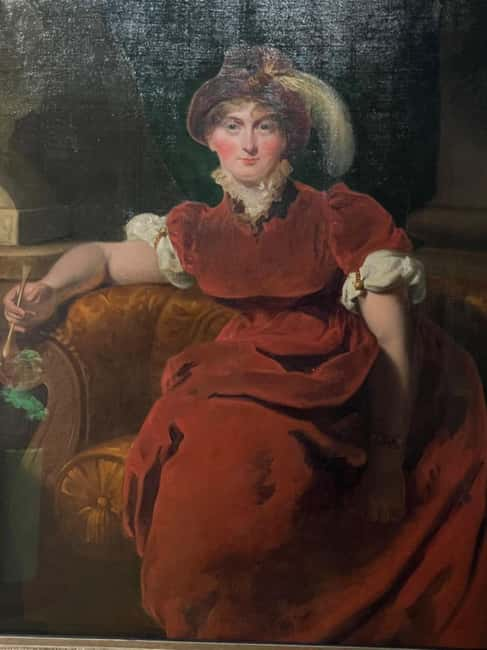
A portrait can be a time machine. This 90-minute National Portrait Gallery tour turns famous faces into real stories, from Tudor cruelty to the Suffragettes. I love that you focus on 10 iconic portraits, not random wandering, and I really like how the guide brings out the human details behind power, invention, and reform. One thing to consider: the tour is indoors, so if you dislike any museum crowd energy, pick a quieter time slot.
You meet at the main entrance on Ross Place, outside the Henry Irving statue, then go in and line up by the busts right after security. The guide, Marie, has a clear way of explaining what you’re looking at, with a good sense of humour and lots of respect for older guests too. If you’re curious about how Britain changed across centuries, this is a solid use of an afternoon (or evening).
In This Review
- Key highlights that make this tour worth it
- Why National Portrait Gallery portraits feel like stories, not museum wallpaper
- Meeting at Ross Place: start points that keep your first hour easy
- Your 90 minutes inside: how the tour moves from Tudor power to women voting rights
- The 10-portrait walkthrough, stop by stop
- Option 2: the women-only tour, fighters, spies, queens, and innovators
- What the guide approach gets right, especially with art you can actually read
- Price and value: $24 for 10 portraits, plus no museum entry fee
- When to go: indoor comfort, but pick your moment
- Who this tour fits best, and who might want a different format
- Should you book this National Portrait Gallery portrait tour?
- FAQ
- How long is the tour?
- How much does the tour cost?
- How many portraits does the tour cover?
- Where do I meet the guide?
- Does the National Portrait Gallery have an entry fee included?
- Is the tour indoors?
- What language is the tour guide speaking?
- Is there an option focused on women?
- Do I need to bring anything?
- Is it wheelchair accessible?
Key highlights that make this tour worth it
- 10 portraits as your timeline, stretching about 500 years of British history
- Stories that connect public power to private lives, including betrayal, imprisonment, and beheadings
- A special option featuring great women who changed history (fighters, spies, queens, innovators)
- The tour treats art like the main course, with the subjects front and centre
- Marie’s selections help you understand why these portraits mattered, not just who they were
Why National Portrait Gallery portraits feel like stories, not museum wallpaper
The National Portrait Gallery is an easy place to get stuck doing the quick scan. You know the routine: you drift, you read a label, you move on. This tour changes the pace. Instead of treating the gallery like a list of names, you treat each portrait like a chapter.
What I liked most is how the tour uses the portraits to explain cause and effect. A monarch’s image is never just about fashion. It’s about control. An inventor’s presence is not just cleverness. It’s about influence. Even when the subject is someone you barely learned about in school, the guide helps you understand why that person mattered.
And because you’re moving through only 10 stops in about 1.5 hours, you get time to look, not just pass through. That pacing matters. It’s the difference between seeing art and actually noticing what’s on the canvas.
More Museum Tours in London
- London: Chelsea Football Club Stadium and Museum Tour
★ 4.8 · 4,576 reviews - London: British Museum Guided Tour
★ 4.3 · 1,182 reviews - London: British Museum Guided Tour with Entrance Tickets
★ 4.9 · 748 reviews
Meeting at Ross Place: start points that keep your first hour easy
Logistics are simple, and that is a big deal in London. You meet at the main entrance on Ross Place, with the statue of Henry Irving outside as your landmark. Then you go inside and meet on the left, but only after security.
Right in front of you, you’ll spot a series of busts on plinths. Your meeting spot is in front of those busts.
This matters because it reduces that awkward early scramble. If you arrive a little early, you can orient yourself, get out of the street flow, and be ready when your group gathers.
Comfort tip: wear comfortable shoes. The tour is short, but it’s still a walking route through indoor gallery space.
Your 90 minutes inside: how the tour moves from Tudor power to women voting rights
This is a guided walking tour inside the National Portrait Gallery, and it runs for about one hour and thirty minutes. That timing is perfect for a gallery that can otherwise swallow your whole day.
The tour covers a broad arc of British history. It starts with a Tudor king linked to the beheading of two wives. (That’s Henry VIII.) It ends with the early twentieth-century fight for votes for women by the Suffragettes.
Between those ends, you get a chain of portraits representing big shifts: monarchs and regimes, inventors and innovators, revolutionaries, and people who fought for social justice. The guide doesn’t just give dates. You learn how these figures lived, what they risked, and what it cost them when their choices angered the powerful.
The 10-portrait walkthrough, stop by stop
You’ll be guided through 10 iconic portraits, and each stop comes with a story that connects the artwork to real lives. Since the specific portraits vary by the exact set chosen, think of these as the tour’s “type” of stop, in the order the story arc presents them.
- The opening Tudor portrait, where power turns brutal
You begin with that Henry VIII turning point. The focus is on how royal authority showed up in portraits, and how personal life and politics became tangled. The emotional hook here is the harsh consequences, not just the name.
- A monarch or court figure, where image is control
Next you spend time with another figure from the world of rule and status. The guide helps you see what the portrait is trying to communicate: rank, legitimacy, and the performance of authority.
If you’re the type who thinks portrait paintings are stiff, this stop helps. You start to notice details that signal status, alliances, and risk.
- An inventor or innovator, where ideas become influence
Then the tour shifts toward creative power. You learn how invention and practical change shaped the story of Britain, and why a portrait can serve as an argument: I matter because what I make changes the world.
- A revolutionary, where public image meets private danger
This section focuses on people who pushed against the system. You hear about adversity and the kind of pressure that follows radical ideas, especially when leaders and institutions decide you are a threat.
- A fighter for social justice, where the mission costs
Here the stories move from ambition to action. The portrait becomes a window into courage, sacrifice, and how movements grow when people refuse to accept the status quo.
The guide’s approach keeps this from becoming dry. You get a sense of what the person faced, not just what they achieved.
- A figure marked by imprisonment or punishment
You’ll hit a portrait connected to capture or long-term consequences. The point is clear: art can preserve reputation even when life goes badly.
- A portrait with betrayal or broken alliances
Another stop leans into the messy side of history. You hear about betrayal and how relationships shaped outcomes. It’s often the quickest way to make centuries feel less distant.
- A powerful woman or reformer moment, where private life becomes policy
Even on the general tour, the selection is designed to highlight the human side of history makers. This is where you often catch the “wait, this was personal” feeling, because the guide connects relationships and circumstances to larger change.
- A later-era shift toward bigger social change
As you approach the twentieth century, you get the sense that history is speeding up. You’re watching older structures strain under new ideas, and the portraits reflect that tension.
- The Suffragettes, where the story becomes a fight for votes
The ending is all about political pressure and collective action. You finish with the early twentieth-century fight for women’s votes and how resistance took shape. The portrait stops feeling like a final image, and starts feeling like a last chapter that explains why change happened when it did.
More gallery rooms between showers:
- London: Tour of the British Museum★ 4.1 · 678 reviews
- Afternoon Tea at the British Museum★ 4.2 · 511 reviews
- London: Paradox Museum Entry Ticket★ 3.9 · 441 reviews
- London: National Gallery Guided Tour with Art Expert Guide★ 4.7 · 440 reviews
Option 2: the women-only tour, fighters, spies, queens, and innovators
If you choose the women-focused option, the structure stays the same, but the emotional tone changes. This is not a side theme. It’s the whole route.
The tour’s women-only theme includes fighters, spies, queens, and innovators, with stories that highlight how these figures changed history. The guide also brings in specific kinds of adversity that shaped their lives, including child marriages, betrayal, imprisonment, and beheadings.
What makes this option especially rewarding is the way the tour treats women as decision-makers, not supporting characters. The portraits become evidence, showing how women operated within constraints and still pushed history forward.
If your schedule allows, this is the option I’d steer you toward if:
- you want the gallery’s art to focus on agency
- you like personal stories with real stakes
- you’d rather not spend the whole tour hearing about crowns without balancing it with resistance and invention
What the guide approach gets right, especially with art you can actually read
The tour works because Marie does a few practical things well.
She talks clearly about each portrait so you can connect what you see to what you’re hearing. That matters in a gallery, where your brain can otherwise separate the art from the lecture. Here, they stay linked.
She also keeps the pace respectful. In the experiences I’ve seen with small-group tours, older guests sometimes get left behind. This one clearly makes space, with help and patience that feel natural, not forced.
And yes, the humour is real enough to keep the stories moving. It helps when topics include imprisonment, betrayal, and execution. You still learn, but you don’t feel like you’re stuck in heavy mode the whole time.
Price and value: $24 for 10 portraits, plus no museum entry fee
At about $24 per person for 90 minutes, this is fairly priced for a guided museum tour in central London. The key value is that you’re not paying just for someone to point at paintings.
You’re getting:
- a guided route focused on 10 portraits
- stories that connect those portraits to personal lives and achievements
- and importantly, there’s no entry fee for the National Portrait Gallery included with the tour cost
So you’re effectively paying for interpretation and guidance, not admission. In London, that distinction matters.
If you’re trying to get real “use” out of a museum visit, this is the kind of add-on that pays back quickly because you leave with context, not just photos.
When to go: indoor comfort, but pick your moment
The tour is indoors, so you can plan it for a rainy day without guilt. That’s a genuine advantage in London.
Timing is also a strategy. One of the best tips here is to consider an evening slot if it’s available. The gallery can feel calmer then, which makes the art easier to take in. Even though the tour is short, the difference between packed and relaxed can be noticeable.
If you tend to visit museums early, you can still do that. But if you hate crowds, start by checking evening availability first.
Who this tour fits best, and who might want a different format
This tour fits you if you:
- like guided stories attached to art
- want a clear historical storyline in a compact time window
- enjoy portraits more when you know the backstory behind the subject
- want a women-focused route option
You might want a different format if:
- you hate walking even short indoor distances
- you prefer totally self-guided museum time with no set number of stops
- you want deep academic detail without any storytelling arc
That said, the structure of 10 portraits in 90 minutes is designed for exactly the kind of people who want history with forward momentum.
Should you book this National Portrait Gallery portrait tour?
Book it if you want a smarter way to see the National Portrait Gallery. For $24, you get a story route through about 500 years, anchored by 10 portraits, with the guide Marie using personal lives and achievements to make the images click.
Pick Option 2 if women’s stories are your priority, because the women-only theme includes fighters, spies, queens, and innovators, with adversity woven into the explanation.
The only reason to hesitate is simple: you’ll be on a set guided route for about 90 minutes. If your ideal museum visit is free-form wandering with no structure, you may prefer doing the gallery on your own first.
FAQ
How long is the tour?
The tour lasts about 1.5 hours.
How much does the tour cost?
The price is listed as $24 per person.
How many portraits does the tour cover?
The guided tour focuses on 10 iconic portraits.
Where do I meet the guide?
You meet at the main entrance on Ross Place, with the statue of Henry Irving outside. After security, you meet on the left in front of the busts on plinths.
Does the National Portrait Gallery have an entry fee included?
No entry fee to the National Portrait Gallery is included.
Is the tour indoors?
Yes, it takes place indoors, which makes it suitable for cold or wet weather.
What language is the tour guide speaking?
The live tour guide is English.
Is there an option focused on women?
Yes. There is an option featuring the gallery’s great women who changed history.
Do I need to bring anything?
Wear comfortable shoes.
Is it wheelchair accessible?
Yes, the tour is wheelchair accessible.
Newest entries under London





Museums, compared.
Tower of London and Crown Jewels Exhibition Ticket
Read our review →
Liverpool Football Club Museum and Stadium Tour
Read our review →
Chelsea Football Club Stadium and Museum Tour
Read our review →


British Museum Guided Tour with Entrance Tickets
Read our review →Browse the lists this tour appears in