
Reviewed · WESTMINSTER & BIG BEN WALKING TOURS
London: The English Civil War, Charles II and Westminster
London’s kings left more clues than you’d guess. This 3-hour outdoor walking tour connects Charles II, the Royal Parks, and the Westminster power centers where the English Civil War and the Restoration still feel close. You move through places tied to births, executions, and public health, all without waiting in ticket lines.
I love the way the guide turns landmarks into cause-and-effect stories, from Charles II’s life to the politics that followed his father’s fall. I also like that you get the big-picture frame, including the Royal Banqueting Hall healing rituals and the rumor-fueled Popish Plot, not just dates and names.
One thing to plan for: it is a lot of walking and it is not set up for wheelchair users or people with mobility impairments. Wear good shoes, bring water, and keep your expectations focused on outside views and street-level history.
In This Review
- Key things I found most interesting
- Charles II Meets Westminster: Why This Walking Tour Hooks You
- Green Park to Buckingham Palace: Royal Parks With Leper-Burial Origins
- St James’s Palace: A Birthplace, a Final Night, and a Commonwealth Twist
- Whitehall and the Royal Banqueting Hall: Healing Rituals and Power in Public
- Whitehall Palace and the End of Charles II: Sudden Death, No Heir, More Turmoil
- Where the Popish Plot Fits: Rumor as a Political Weapon
- Price and Value: What $26 Buys You in Westminster
- Practical Tips That Make the Walk Work
- Who Should Book This Charles II, Civil War, and Westminster Tour?
- Should You Book This Charles II and Westminster Walking Tour?
- FAQ
- Is this tour an outdoor walking tour?
- Does the price include entrance fees?
- Where is the meeting point?
- How long does the tour last?
- What should I bring?
- Is it suitable for wheelchair users or people with mobility impairments?
Key things I found most interesting

- Starts by the Diana fountain, so you get oriented fast before the story of Charles II begins
- Green Park has a surprising backstory, including a link to St James’ hospital and burial ground origins
- St James’s Palace is framed across regimes, from Henrietta Maria’s birthing scene to Cromwell-era barracks use
- The Royal Banqueting Hall healing ceremonies show how royal authority mixed with medicine and belief
- The Popish Plot is part of the walk’s narrative, so hysteria and power politics are never far away
- You end near a Churchill landmark, which makes it easy to keep exploring after the tour
Charles II Meets Westminster: Why This Walking Tour Hooks You
Charles II is often treated like a charming footnote, the so-called Merry Monarch who liked comfort, culture, and the good life. This tour does something better. It shows you how his personality and his court were shaped by a country that had just been through civil war, regicide, and political punishment on a massive scale.
What makes the route satisfying is the mix of royal routine and public drama. You’re not stuck staring at a single building. You walk through Royal Parks where kings planned their days, then into the Whitehall orbit where England’s big decisions got made, argued, and sometimes enforced at sword point.
And yes, you’ll hear some stories that sound like gossip until the history around them clicks into place. The Popish Plot part, for example, ties rumor to real consequences. It helps you understand why people in that era were so ready to believe the worst.
More bells counted along Whitehall:
- London: Westminster to Greenwich River Thames Cruise
★ 4.5 · 22,836 reviews - London: Westminster to Tower Bridge River Thames Cruise
★ 4.5 · 6,127 reviews - London: Westminster Abbey, Big Ben & Buckingham Guided Tour
★ 4.8 · 3,240 reviews
Green Park to Buckingham Palace: Royal Parks With Leper-Burial Origins
The tour begins right next to the Constance Fund fountain of Diana, just as you step out of Green Park underground into the park. That matters because you get a walking tempo right away. You’re not staring at a museum entrance. You’re learning how the city’s landscape became a royal backdrop.
In Green Park, you start with the idea that this land was not always polite and manicured. You’ll hear how the area was tied to a swampy burial ground for lepers associated with nearby St James’ hospital. That’s a jolt, because it flips your mental map from royal pleasure to survival and stigma. Then the guide brings it forward in time.
Next comes Henry VIII and the hunting-ground phase. Parks in London were often practical property before they became leisure. By the time Charles II enters the story, the narrative gets more specific and hands-on: you hear that the parks were acquired for royal use, and that Charles II later bought them.
A couple of details make this stop memorable. You’ll learn that Charles II laid out main roads in the park, and that he commissioned what is described as Britain’s first ice house. I like this kind of story because it’s not just about power. It shows how rulers engineered everyday life, including how food and cooling worked before modern refrigeration.
You then move into the wider royal park view area around Buckingham Palace and St James’s Park. Even if you are not going inside, it’s useful. Westminster geography is tricky at first. Seeing how the palaces, parks, and government buildings line up helps you understand why Charles II could operate in comfort while England still felt politically on edge.
St James’s Palace: A Birthplace, a Final Night, and a Commonwealth Twist
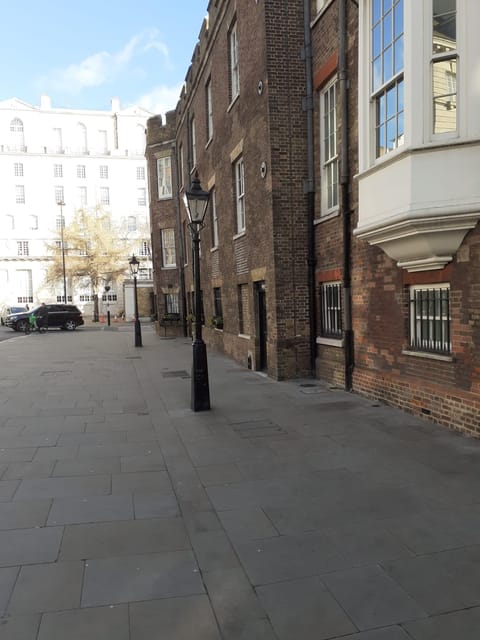
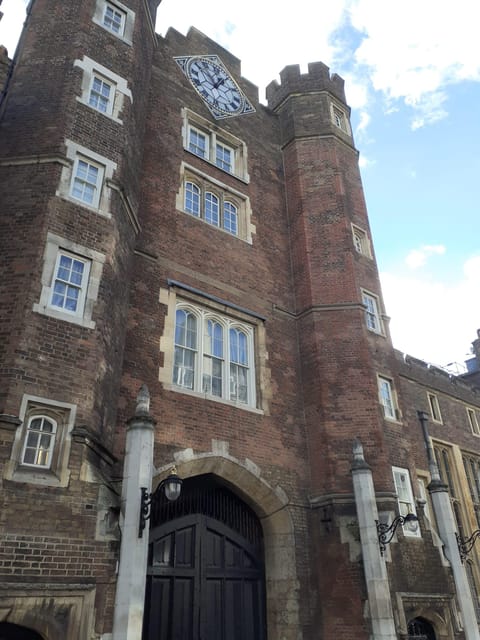
St James’s Palace is one of those places where you can feel layers. The guide keeps it chronological, which helps. You hear that it began as a hunting lodge for Henry VIII, so the palace starts in practicality and sport, not just ceremony.
Then the story sharpens for Charles II. You’re told Charles II was born in the palace to Henrietta Maria and Charles I. The tour also includes a detail that gives you a feel for how people interpreted the sky back then: on the day Charles II was born, a brilliant daytime star appeared. Modern thinking suggested it could have been a supernova, but people at the time saw it as a royal sign.
From there, you shift to his father. The guide explains that Charles I spent his final night in St James’s Palace before his execution. This is where the tour’s tone turns serious. You are learning how power can move from rooms of ceremony to a sentence of death very fast.
And then the political story refuses to stay in the past. During the Commonwealth period under Oliver Cromwell, St James’s Palace was turned into a barracks. I find that transition especially helpful for understanding the Restoration period. It’s a reminder that buildings do not just sit there. They get repurposed when a regime changes.
If you tend to think of history as a sequence of “old stuff,” this stop corrects that. It shows how quickly the English state could change its mind about what a royal building should be used for.
Whitehall and the Royal Banqueting Hall: Healing Rituals and Power in Public
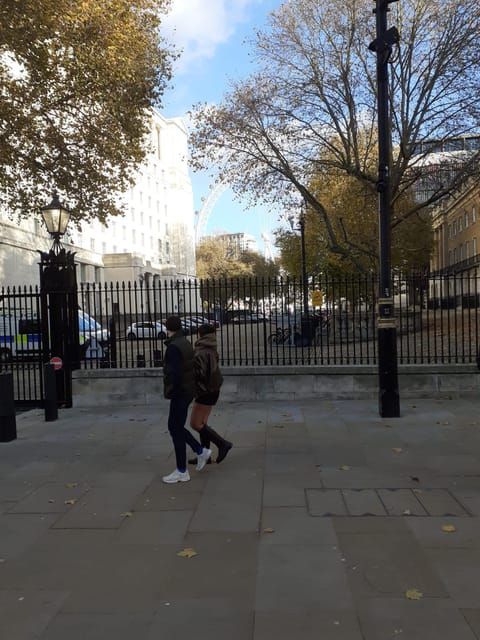
After St James’s Palace, the walk heads into Whitehall, where the government and royal theatre of the era were tightly linked. The highlight here is the Royal Banqueting Hall, built during James I’s reign by Inigo Jones.
The tour keeps the architecture grounded. You get a look at the exterior, with the note that it was originally more colorful than it looks today. You’ll hear about alternating honey-colored and pinkish-brown stone, and decorative elements that used white Portland stone. This is exactly the kind of detail I appreciate on a street-level walk. It helps you see the building as something designed, not just something historic.
But the real payoff is what happened inside the story world. You learn about the Royal Healing Ceremonies attributed to James I, Charles I, and Charles II. That includes accounts of a woman supposedly cured of blindness from the king’s blood, and a man with ulcers and sores who received a blessing from Charles I, with the condition then turned into a medicinal drink.
From a reader point of view, this can feel strange at first. I get it. But the tour’s framing makes it easier to process. The ceremonies weren’t only about health. They were about legitimacy and belief. If people believed the monarch had special power, then the monarchy gained emotional and political authority.
The tour also says Charles II used the Banqueting Hall to touch more than 7,000 sufferers. That number matters. It shows how institutional the practice became, not just a few symbolic gestures.
You also learn about the annual service on January 30 for the king’s death. That kind of ritual timing helps you connect personal grief to political narrative. It was a way to keep the memory of power and its consequences alive year after year.
Also inked in under London
- London: The London Eye Entry Ticket★ 4.6 · 35,875 reviews
- From London: Harry Potter Warner Bros Studio Tour★ 4.7 · 26,588 reviews
- Magical London: Harry Potter Guided Walking Tour★ 4.7 · 22,044 reviews
- London: Madame Tussauds London★ 4.6 · 20,915 reviews
Whitehall Palace and the End of Charles II: Sudden Death, No Heir, More Turmoil
The final phase of the tour focuses on Whitehall Palace, described as having more than 1,500 rooms at the height of its opulence. That figure is hard to picture, and the guide’s job is to make it feel real in a walking format.
Then you get the closing chapter of Charles II’s life. He died very suddenly of a stroke at age 56 in the Palace of Whitehall. The tour emphasizes what that meant for England: no legitimate heir, and a return to turmoil.
This ending hits differently after you’ve heard the healing ceremonies, the political fear around the Popish Plot, and the shifts in how royal buildings were used across regimes. It’s not just a biography finish. It’s a warning about stability and succession.
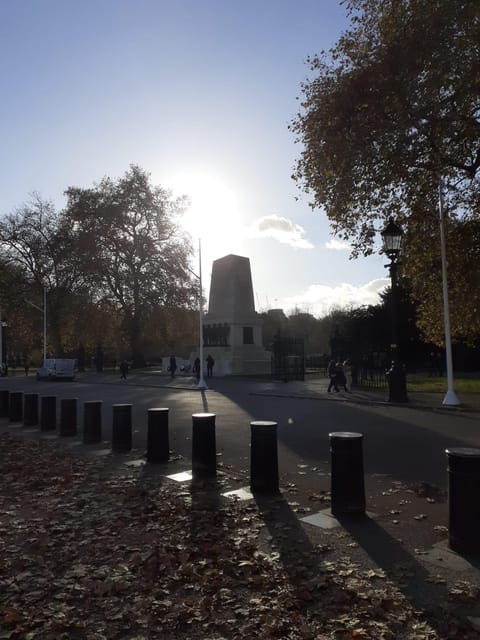
You then end near the Sir Winston Churchill statue. I like finishing near a modern landmark because it helps you reset your bearings. You can step out of the 1600s story and decide what you want to explore next without feeling lost.
Where the Popish Plot Fits: Rumor as a Political Weapon
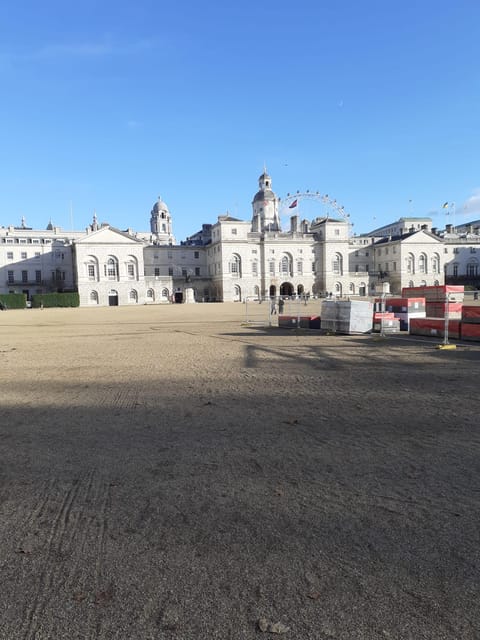
One of the best parts of this tour is that it doesn’t treat the Civil War and Restoration like separate museum rooms. The guide brings in the Popish Plot and explains it as a conspiracy theory that triggered mass hysteria.
Even without going into extreme detail beyond what the tour covers, you get the key takeaway. Rumor helped drive fear. Fear helped push political agendas. And those dynamics shaped how people responded to rulers, courts, and religious power at a time when suspicion traveled fast.
If you want a London tour that gives you more than beautiful buildings, this is a strong match. The Popish Plot material helps you understand the emotional temperature of the era. It also helps you connect it to why England was so ready for dramatic shifts in power, including the return of Charles II.
Price and Value: What $26 Buys You in Westminster
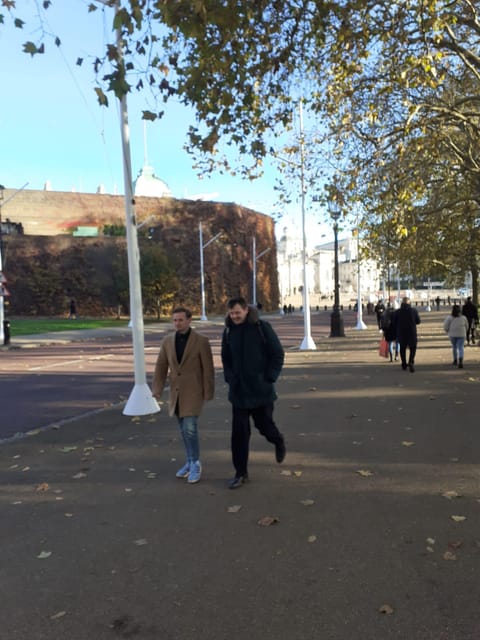
At about $26 per person for roughly 3 hours, the value depends on your priorities, and your expectations should be clear.
This is an outdoors walking tour and it does not include entries to sites. That can actually be a plus. You’re paying for guided context, route-based storytelling, and the chance to see how Royal Parks, St James’s Palace, and the Whitehall area relate to each other in real space. Instead of budgeting time for tickets and lines, you spend your limited morning or afternoon focused on narrative and orientation.
You also get an exclusive style of anecdote, centered on Charles II, his relationships like his connection to Catherine of Braganza, and the way he used the royal landscape. Those small connective points make the tour feel like more than a checklist.
And one practical benefit: photography is allowed. On a tour like this, a photo can be more useful than usual. Take pictures of street-facing architectural details or park views while the guide tells you what to notice. When you look back later, you’ll remember the story thread.
Practical Tips That Make the Walk Work
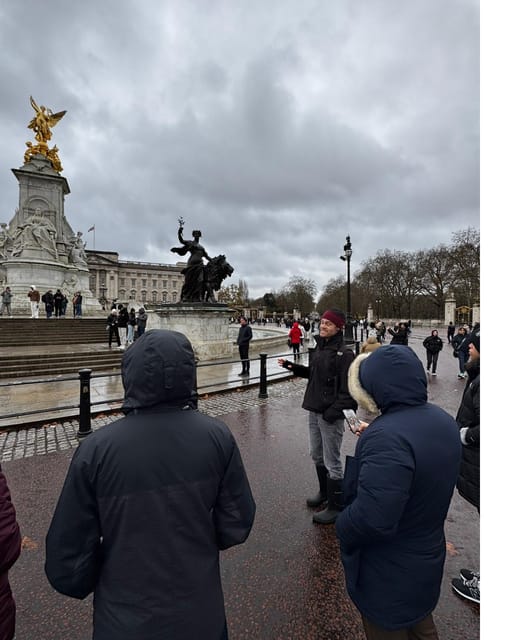
This experience is simple in concept, but it has real-world constraints.
Bring comfortable shoes, a camera if you like photos, and water. You will be walking a lot, and the tour notes it is not suitable for people with mobility impairments or wheelchair users. If you need step-free access, this one likely won’t be friendly.
It’s also good to dress for weather. You are outside, so sun, wind, or rain will matter. Plan on staying flexible. The route moves across central Westminster, so you’ll feel every change of weather.
Also note what is not allowed: bikes, alcohol, and drugs. That helps keep it a respectful, steady walk.
On timing, aim for a tour start where you are ready to walk right away. The meeting point is very specific, right next to the Diana fountain, just as you exit Green Park underground and go into the park. If you show up late, you can lose the story momentum.
Language-wise, you can choose English or Danish with a live guide. The review feedback I’ve seen on this kind of tour style tends to match what you want: a guide who can explain the Restoration and architecture in plain terms, and keep the pacing pleasant.
Who Should Book This Charles II, Civil War, and Westminster Tour?
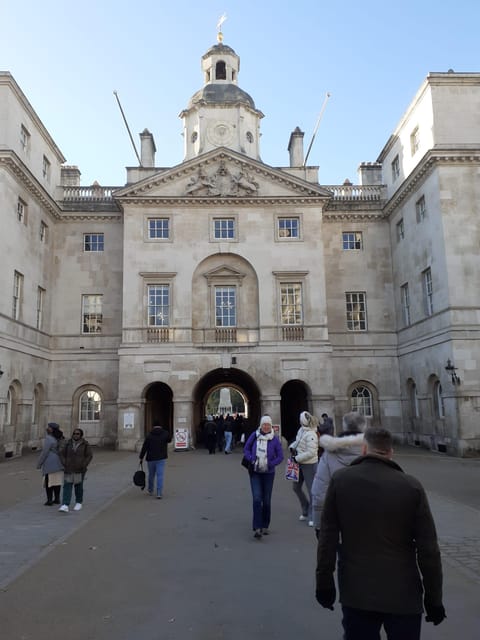
This is a great fit if you want a London walking experience that is political and human, not just decorative. You’ll enjoy it if you like your history connected to real places, and you prefer stories that connect the Civil War, the Restoration, and the daily feel of royal life.
You should also book it if you enjoy architecture and small design details. The Inigo Jones link and the stone color notes give you something visual to look for while you walk.
This tour might feel less satisfying if you are looking for lots of indoor museum time or if you need wheelchair access. The promise here is outdoor pacing and guided storytelling, not ticketed site time.
Should You Book This Charles II and Westminster Walking Tour?
Yes, if your goal is to understand Charles II and the Restoration in a way that makes Westminster geography click. The parks-to-palace-to-Whitehall flow gives you a strong mental map, and the stories about Royal Healing Ceremonies, the Popish Plot, and Charles I’s final night add texture beyond the basics.
Skip it if walking long distances is hard for you, or if you want entry tickets and indoor exhibits. For everyone else, it’s a smart way to spend a half-day in London, especially when you’d rather learn while you move than wait while you stand in lines.
If you’re planning other Westminster sights the same day, this tour can act like the “story backbone” that makes everything you see afterward easier to remember.
FAQ
Is this tour an outdoor walking tour?
Yes. It is an outdoors walking tour, and it does not include entries to sites.
Does the price include entrance fees?
No. Entrance fees to any attractions are not included in the tour price.
Where is the meeting point?
Meet right next to the Constance Fund fountain of Diana, just as you exit Green Park underground and go into the park.
How long does the tour last?
The duration is 3 hours.
What should I bring?
Bring comfortable shoes, a camera, and water.
Is it suitable for wheelchair users or people with mobility impairments?
No. The tour is not suitable for wheelchair users or those with mobility impairments.
Newest entries under London




Westminster & Big Ben Walking Tours, compared.

Westminster to Greenwich River Thames Cruise
Read our review →
Westminster to Tower Bridge River Thames Cruise
Read our review →
Westminster Abbey, Big Ben & Buckingham Guided Tour
Read our review →
Buckingham Palace, Westminster Abbey & Big Ben Tour
Read our review →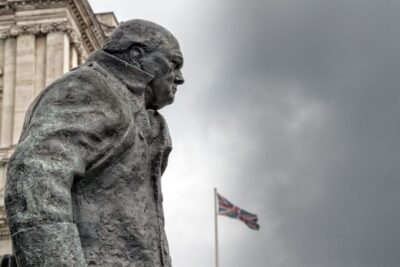
Westminster WW2 Tour & Churchill’s War Rooms Ticket
Read our review →
Westminster Abbey Tour with a Royal Heritage Guide
Read our review →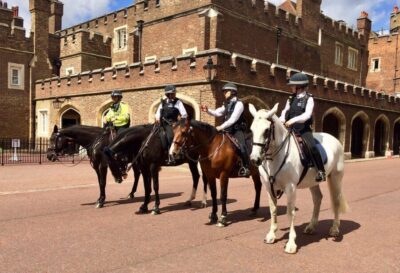
Westminster Tour and Churchill War Rooms Visit
Read our review →Browse the lists this tour appears in