
Reviewed · MUSEUMS
London: Royal Museums Greenwich Day Pass
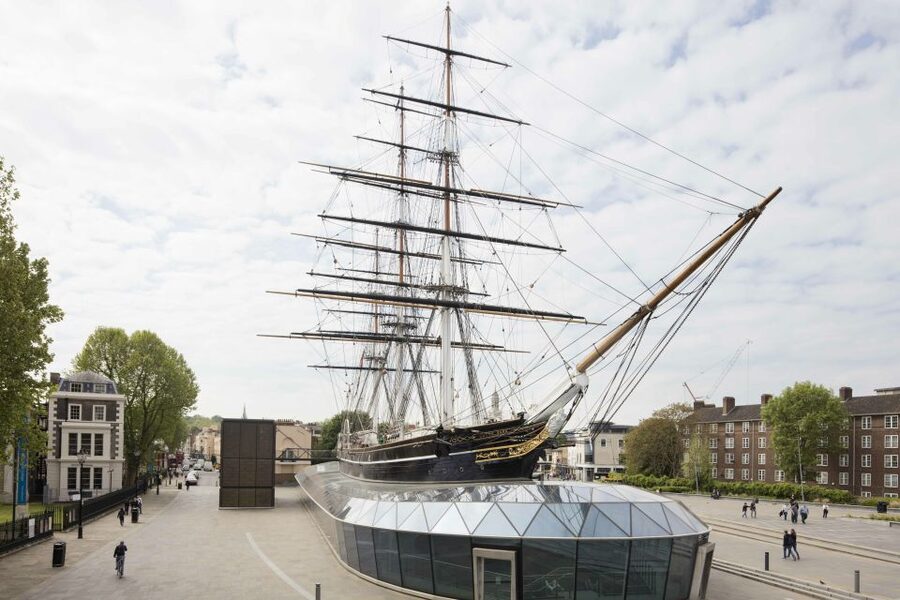
Prime Meridian photos are hard to pass up. The Royal Museums Greenwich day pass stacks Royal Observatory Greenwich and Cutty Sark into one smooth outing, with dramatic views over London and the Thames. The big draw is being right where time is measured, then following the story from clocks to ships to exploration.
What I love most is the signature photo moment, standing with one foot east and one foot west at the Prime Meridian Line in the Meridian Courtyard.
I also really like the way this pass balances science and seafaring. At Cutty Sark, you can go aboard a preserved tea clipper with 11 miles of rigging, then take your turn at the ship’s wheel with Thames views. It is the kind of museum experience where you feel close to the work, not just the facts.
The main drawback is simple: plan for walking and stairs across Greenwich. Even if you are only here for about six hours, you can still feel it, especially if you linger too long in the free stops and miss Cutty Sark admission time.
In This Review
- Key points before you go
- Entering Greenwich Royal Park at the Royal Observatory Greenwich
- Meridian Courtyard: the one-foot-in-two-worlds moment
- Flamsteed House and Wren’s Octagon Room, where timekeeping gets real
- The Time Ball and the onion dome telescope you should plan time for
- From Royal Observatory to Cutty Sark: the tea clipper step you can feel
- Cutty Sark main deck: 11 miles of rigging and taking the helm
- Queen’s House at Inigo Jones: art and a 17th-century royal villa
- National Maritime Museum: the exploration story that adds context
- Price and value for a $40, about-six-hours day
- Walking reality, timing tips, and smart pacing
- Who should book this Royal Museums Greenwich day pass
- Should you book this London Royal Museums Greenwich Day Pass?
Key points before you go

- Stand on the Prime Meridian with one foot in the east and one in the west at GMT’s home.
- Harrison’s clocks and Wren’s Octagon Room make the science galleries feel human and specific.
- Cutty Sark is conservation at eye level, raised over three meters so you can see her elegant lines and structure.
- Take the helm on the Cutty Sark ship’s wheel and use it as your excuse for Thames photo breaks.
- Queen’s House and the National Maritime Museum are included access, and general admission is free unless you choose special exhibitions or guided tours.
- Times matter at 5pm close, with last entry at 4pm, so pace your day.
Entering Greenwich Royal Park at the Royal Observatory Greenwich
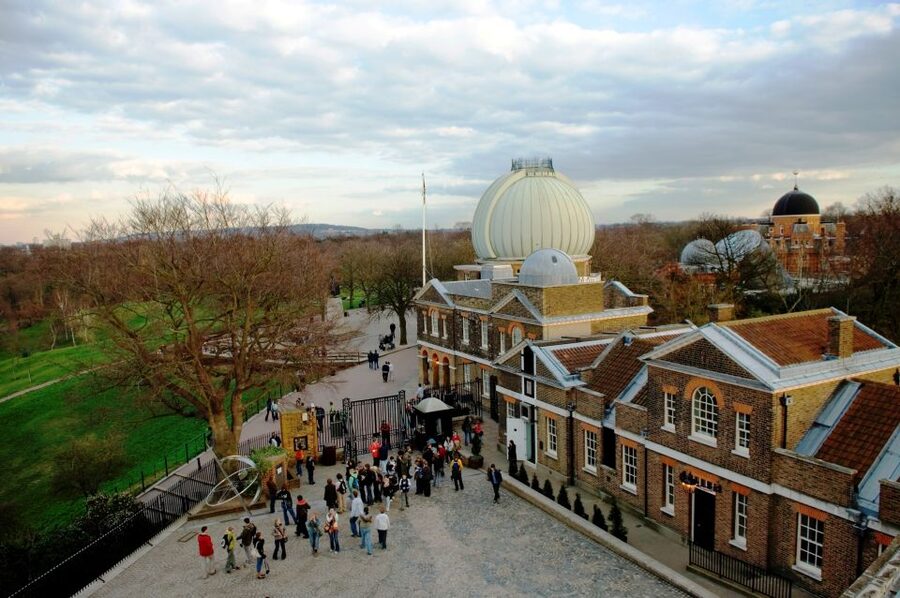
Greenwich is one of those London neighborhoods that feels built for a full day, not a rushed hit-and-run. This day pass starts at Royal Observatory Greenwich, in Greenwich Royal Park, where you get that instantly satisfying mix of museum buildings and wide-open views.
Plan to arrive at the Royal Observatory meeting point area, Blackheath Avenue, London SE10 8XJ. From here, you get big sightlines across London, the City skyline, and the River Thames below. It is not just pretty background. That view helps you understand why Greenwich became a reference point for time and navigation in the first place.
Inside, the visit begins in the Meridian Courtyard. You will pick up an audio guide (ten languages are available) and get yourself oriented fast. I like having an audio guide here because the Royal Observatory is packed with names, inventions, and systems that can blur together if you are reading only at a distance.
One practical note: the audio guide is listed as downloadable and multilingual. A review mentioned phone signal can be spotty in this area, so if your guide relies on your device, download or prep before you start walking around.
More Museum Tours in London
- London: Chelsea Football Club Stadium and Museum Tour
★ 4.8 · 4,576 reviews - London: British Museum Guided Tour
★ 4.3 · 1,182 reviews - London: British Museum Guided Tour with Entrance Tickets
★ 4.9 · 748 reviews
Meridian Courtyard: the one-foot-in-two-worlds moment
This is the stop you plan around. The Prime Meridian Line is a physical line on the ground, and the experience is built for standing on it, with one foot in the east and the other in the west.
You will be right at the home of Greenwich Mean Time (GMT), which is a concept that can sound abstract until you see it marked in place. It also gives you a clear “anchor point” for photos, so you do not end up hunting for the best angles later.
After your Meridian moment, you move through key rooms tied to astronomy, timekeeping, and the people who refined how humans measure the sky. The tour route gives you a story arc, from observing and experimenting to public time signals that regular people could rely on.
Flamsteed House and Wren’s Octagon Room, where timekeeping gets real
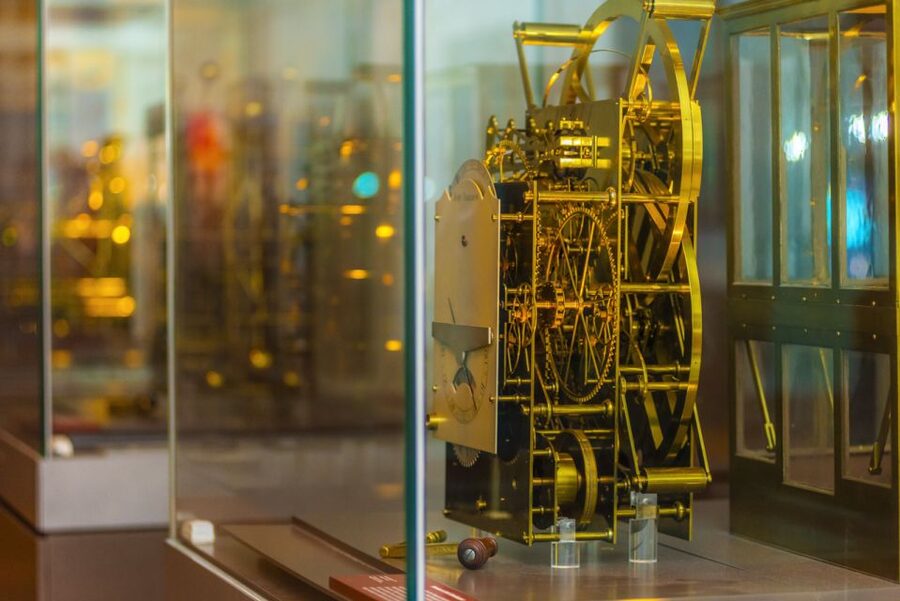
Next up is Flamsteed House. This is where you walk in the footsteps of the Astronomers Royal. That phrasing matters because it frames the museum like a workplace, not just a display case. You are seeing how scientific work accumulated over time.
One highlight is the Harrison’s clocks section. John Harrison is often brought up as a milestone, but here you can connect the “changed the world” claim to the actual objects and ideas. You get a sense of why accurate timekeeping mattered so much for navigation and global travel.
You also have a real-world clock marker outside: the Shepherd Gate Clock mounted outside the complex. It is described as the first clock to show Greenwich Mean Time to the public. Even if you are not a hardcore history buff, this is the kind of detail that makes the science feel social. It is a reminder that timekeeping became public infrastructure, not just an academic interest.
Inside, do not miss the Octagon Room designed by Sir Christopher Wren. It is one of the best preserved Wren interiors in London. Wren’s design adds a sense of scale and order to the experience. It helps the exhibitions land with more impact because the room itself feels intentional.
The Time Ball and the onion dome telescope you should plan time for

Timekeeping at the Royal Observatory goes beyond clocks. The bright red Time Ball on top of Flamsteed House is one of the world’s earliest public time signals, first used in 1833, and it still operates today.
This is a great moment to pause and look up. The Time Ball is simple, but it is powerful because it connects scientific measurement to everyday routines. People needed a standard they could trust, and Greenwich was building that credibility.
Then comes the big iconic dome. The Great Equatorial Telescope sits inside a huge onion dome. It is the kind of structure you want to see even if astronomy is not your main interest. The museum frames it as giving astronomers new views of the universe over 100 years ago, so it acts like a bridge between the timekeeping galleries and the larger goal of understanding what is out there.
Also keep an eye out for the list of scientists and inventors associated with the Royal Observatory, including Newton, Halley, Bradley, Maunder, Airy, and Einstein. Names alone can feel like a school report. But in this setting, those references help you connect inventions to institutions, not just individual breakthroughs.
More gallery rooms between showers:
- London: Tour of the British Museum★ 4.1 · 678 reviews
- Afternoon Tea at the British Museum★ 4.2 · 511 reviews
- London: Paradox Museum Entry Ticket★ 3.9 · 441 reviews
- London: National Gallery Guided Tour with Art Expert Guide★ 4.7 · 440 reviews
From Royal Observatory to Cutty Sark: the tea clipper step you can feel

Once you finish the Observatory side, head down toward Cutty Sark. Cutty Sark is the world’s sole surviving tea clipper, and it is one of the most popular stops in this whole pass for a reason. It is not just a ship behind glass. It is a museum that lets you walk through the reality of the vessel.
Your Cutty Sark meeting point is King William Walk, London SE10 9HT. The area is part of the Greenwich experience, so you will likely pass through grounds with views over the river as you make your way there.
Cutty Sark began life for the China tea trade and launched in 1869. The museum experience emphasizes preservation details too, including meticulously conserved original wooden planks and iron frames.
Here is one feature that is easy to overlook until you understand what it means: during an ambitious six-year conservation project, the ship was raised over three meters. That gives you a unique viewing position, letting you stand directly underneath and see the elegant lines and ground-breaking design more clearly than you would in a shipwreck-style setup.
Cutty Sark main deck: 11 miles of rigging and taking the helm
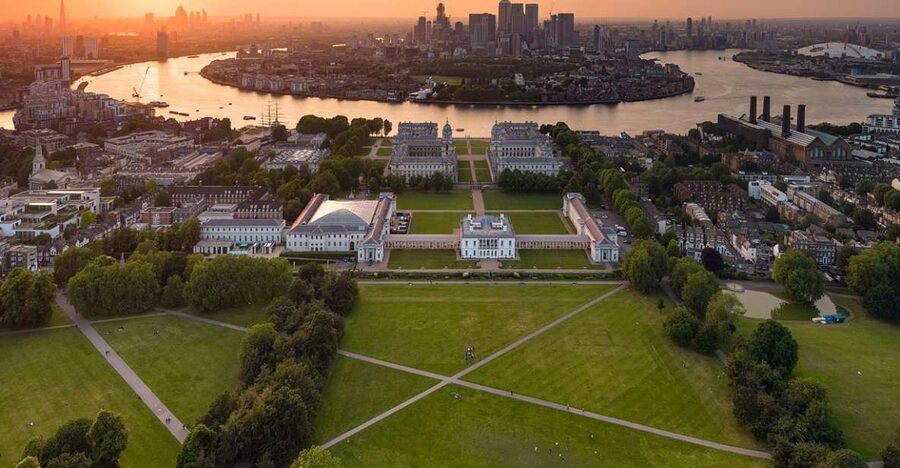
When you go aboard, plan to slow down on the main deck. The ship’s 11 miles of rigging is mentioned in the highlights for a reason. Once you start looking closely, you see how much work and engineering go into making a sailing ship actually function.
You can also explore sailors’ quarters, which adds a human scale to all the rigging talk. This is where the museum shifts from “engineering pride” to “what daily life felt like.”
Then there is the ship’s wheel. Taking the helm is one of the most memorable parts of this day pass because it is interactive in a physical way. Even if you know you cannot actually steer, standing at the wheel makes the Thames views feel tied to the ship’s purpose.
This is also where you should be careful with timing. The Royal Museums Greenwich sites open at 10am and close at 5pm, with last entry at 4pm. If you treat Queen’s House and the Maritime Museum as an afterthought and arrive late at Cutty Sark, you may not get in.
If you are trying to fit everything, I would do Cutty Sark before settling into the free art and museum floors.
Queen’s House at Inigo Jones: art and a 17th-century royal villa
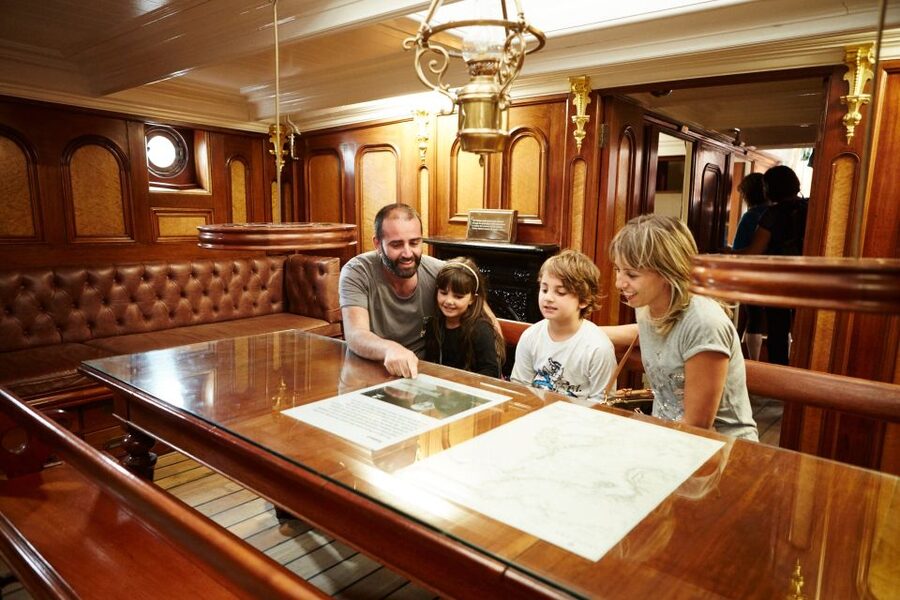
After Cutty Sark, you can head to Queen’s House, a 17th-century royal villa designed by Inigo Jones. The big value here is that Queen’s House is not just architecture. It is described as having art, architecture, and history, so you get multiple angles on a single stop.
Entry to Queen’s House is free of charge unless you choose special exhibitions or guided tours. That means this day pass gives you access without forcing you into paid add-ons. It is a smart way to expand your day if you still have energy after Cutty Sark.
In practice, I like Queen’s House for a slower pace. You can treat it like a mental reset from ship rigging and clock galleries. If you rush, you miss the point. If you have time, it is a place to sit with a view and let the day breathe.
National Maritime Museum: the exploration story that adds context
The National Maritime Museum is included in the access for this pass. It is described as the largest museum of its type in the world, and the focus is epic stories of exploration and endeavour that helped shape the world.
General entry is free, except for special exhibitions or guided tours. So again, you are not paying twice just to get in. The day pass helps you secure a smooth entry plan and keeps the itinerary from getting complicated.
This museum is where the day clicks together. Cutty Sark is about a working ship and the tea trade. The Royal Observatory is about measuring time and tracking the sky. Put those side by side, and you get a more complete picture of how reliable navigation and standardized time supported global movement.
If you only have a tight time window, do not feel guilty about choosing the sections you care about most. With last entry at 4pm and a 5pm closing time, you are better off seeing fewer galleries well than sprinting through every floor.
Price and value for a $40, about-six-hours day
At around $40 per person for a roughly six-hour experience, this pass is best viewed as paying for the paid anchors and using the free additions as bonus time.
Your included admission covers the Royal Observatory and Cutty Sark. Meanwhile, The Queen’s House and the National Maritime Museum are free except for special exhibitions or guided tours. That makes the value equation straightforward: you are paying to skip the hassle of piecing together paid entries for the two headline sites, then getting access to the rest so you can fill out your day.
If you are the type who likes a planned day but hates scheduling stress, this format helps. The itinerary is built around sites close to each other, so you spend more of your day inside exhibitions and less of it moving around.
The other value is emotional, not just mathematical. Standing on the Prime Meridian line, then moving from clocks to a real sailing ship, creates a day that feels like a coherent theme. It is not random sightseeing, which is why it tends to stick.
Walking reality, timing tips, and smart pacing
The biggest practical theme here is walking. Greenwich Royal Park has hills and your route naturally involves going down toward Cutty Sark and then back up or across depending on how you finish the free museums.
One review-style takeaway you can use right away is this: treat it as a full day excursion. If you go in assuming it is a quick visit, you will likely feel rushed and you can also run out of Cutty Sark time.
Timing matters because everything closes at 5pm, with last entry at 4pm. I suggest you keep your day anchored like this:
- Do the Royal Observatory early so you have time for Meridian Courtyard and the main interior rooms.
- Aim to reach Cutty Sark with enough time to enjoy the main deck and the ship’s wheel without rushing.
- Save Queen’s House and the Maritime Museum for after you know you are safely in time for Cutty Sark.
If you are traveling with kids, keep expectations realistic. There may not be enough hands-on tasks for younger visitors, so bring patience and look for visual moments like the Meridian line photo and the ship wheel.
Who should book this Royal Museums Greenwich day pass
This pass is a good fit if you:
- Want the signature Prime Meridian photo and the GMT story without turning it into a multi-day plan.
- Like maritime history but also appreciate the science behind navigation and timekeeping.
- Prefer a structured day with major anchors, then flexible free-time at Queen’s House and the National Maritime Museum.
It is also worth it for first-time visitors who want Greenwich without having to decide what to prioritize three weeks in advance.
Should you book this London Royal Museums Greenwich Day Pass?
If you like hands-on museum moments, this is an easy yes. The Royal Observatory highlights (Meridian Courtyard, Harrison’s clocks, Wren’s Octagon Room, Time Ball, and the Great Equatorial Telescope) are unusually direct and memorable, and Cutty Sark is the kind of place where you feel the ship’s scale, thanks to the conservation work and your ability to stand directly underneath.
I would book it if you can comfortably handle walking across Greenwich and you can start earlier in the day so you do not squeeze Cutty Sark at the end. If you want a no-stress day with minimal walking or you are very sensitive to hills, you may need to plan shorter time inside the free museums so you do not feel behind.
If you want a coherent day built around time, ships, and exploration, this pass gives you a strong core experience for the price and saves you from the scheduling puzzle.
Newest entries under London





Museums, compared.
Tower of London and Crown Jewels Exhibition Ticket
Read our review →
Liverpool Football Club Museum and Stadium Tour
Read our review →
Chelsea Football Club Stadium and Museum Tour
Read our review →

British Museum Guided Tour with Entrance Tickets
Read our review →Browse the lists this tour appears in