
Reviewed · MUSEUMS
London: Official Natural History Museum Tour – Architecture
London’s stonework tells stories. This 1-hour Natural History Museum architecture tour shows you how the building itself becomes a kind of exhibit, with gargoyles, carved animals, and ceiling details that most people walk past.
What I like most is that you do more than admire from a distance. You get a guided sweep that connects the late-1800s design to nature-themed ornament, including a Darwin-related carving that’s easy to miss on your own. One drawback to plan for: you only have an hour, so you’ll get the main architecture beats, not a slow, full museum read of every gallery.
In This Review
- Key highlights to notice on the tour
- Romanesque stonework you’ll actually understand in 60 minutes
- Where the tour starts on Exhibition Road, and why it matters
- The museum’s exterior mood: nature made into stone
- Gargoyles, carved ceilings, and the “read the stonework” approach
- The terracotta menagerie, including the monkey-like Darwin clue
- Late-1800s plans to modern additions, using the guide’s visual clues
- A clear, engaging guide experience you can hear over crowds
- Skip the ticket line and get general entry, but know what isn’t included
- Practical timing: how to fit this into a London day
- Price and value: $20 for a guided architecture lens
- Who should book this architecture tour?
- Who might want a different plan
- Should you book the Natural History Museum architecture tour?
- FAQ
- How long is the Natural History Museum architecture tour?
- What is the meeting point for the tour?
- Where does the tour end?
- Is the tour in English?
- How big is the group?
- What’s included in the price?
- Are temporary exhibitions included?
- Is there an audio guide included?
- Is it wheelchair accessible and is it suitable for young children?
- Can I cancel or pay later?
Key highlights to notice on the tour
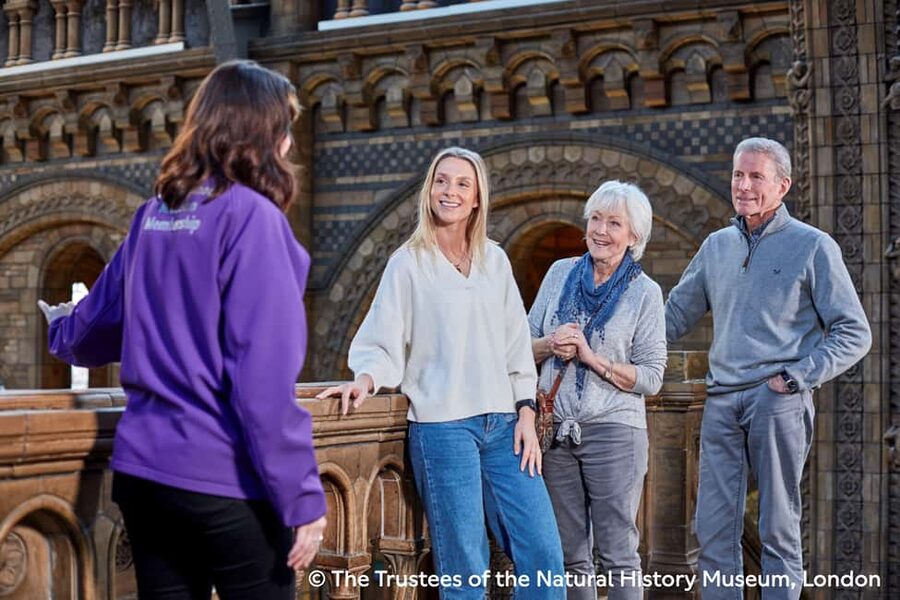
- Small group, limited to 7 people, which makes it easier to hear and ask questions
- Skip the ticket line, plus general entry into the museum
- Stonework first approach, from gargoyles and carved ceilings to terracotta animals
- Darwin connection in the details, including a monkey-like carving with a human face
- Digital copies of original sketches and plans, showing how the building came together
- Tour ends inside the Darwin Centre, so your last stops feel like a modern chapter
Romanesque stonework you’ll actually understand in 60 minutes
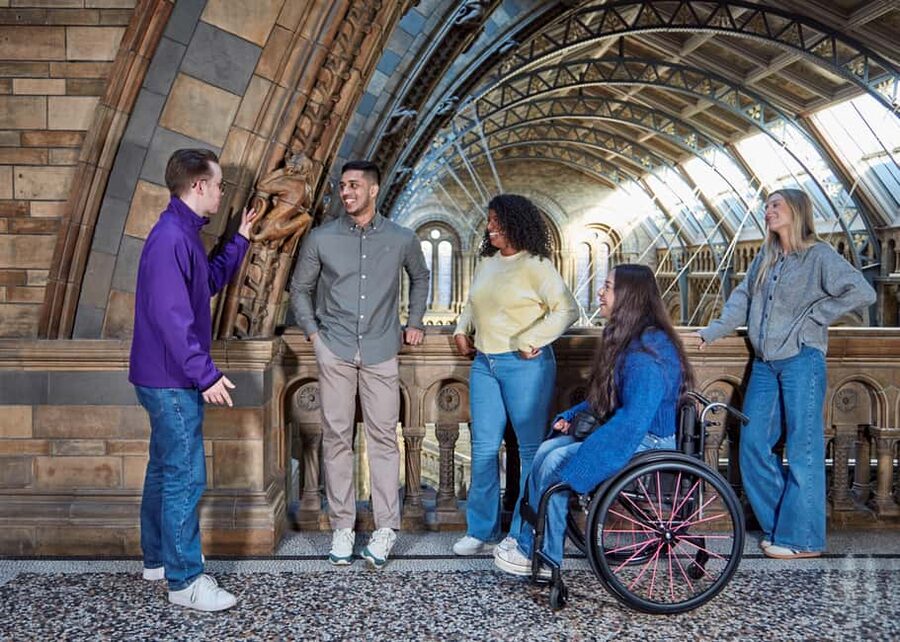
If you’ve ever looked at a historic building and thought, Great, impressive, what now? this tour is built for that moment. The Natural History Museum is famous for collections, yes. But the architecture is doing its own talking, with Romanesque styling that leans heavy on arches, texture, and theatrical ornament.
You’ll focus on the parts that usually get ignored because they are not behind glass. Think high ceilings, intricate carvings, and the playful menace of stone figures like gargoyles. The guide-led format matters here, because the tour is designed to help you see patterns and symbolism, not just notice pretty surfaces.
More Museum Tours in London
- London: Chelsea Football Club Stadium and Museum Tour
★ 4.8 · 4,576 reviews - London: British Museum Guided Tour
★ 4.3 · 1,182 reviews - London: British Museum Guided Tour with Entrance Tickets
★ 4.9 · 748 reviews
Where the tour starts on Exhibition Road, and why it matters
This one begins outside the Natural History Museum staff/Flett theatre entrance on Exhibition Road. It’s opposite the Victoria and Albert Museum, near the public entrance on Exhibition Road, but it is not the main Cromwell Road entrance that you reach through the gardens.
That detail is more important than it sounds. If you arrive at the wrong entry, you can waste time in London crowds before the tour even starts. Use the meeting point reference on the map in your booking app, and try to arrive a few minutes early so you can get your bearings fast.
The museum’s exterior mood: nature made into stone
Right away, the tour frames the building as a nature tribute. The museum, built in the late 1800s, is one of Britain’s striking Romanesque examples. You’ll hear how the design choices were meant to echo the natural world, not just house it.
What makes this fun is that you’re learning a visual language. Once you know what to look for, you start spotting repeated themes in carvings and stone features. The guide helps you connect the architecture to the museum’s purpose, so the building stops feeling like a random backdrop and starts feeling like part of the collection.
Gargoyles, carved ceilings, and the “read the stonework” approach
Many museum architecture tours skim big features only. This one slows down for the small stuff that adds up to the big effect. You’ll be pointed toward imposing gargoyles, intricate stonework, and decorative ceilings that give the whole interior a sense of pageantry.
Here’s the practical value: you’ll learn where to stand and what angles reveal details. Even if you’ve visited before, you’ll likely notice new things because the guide points out visual clues that are hard to notice when you’re trying to map your way through the galleries.
And because the group is small, the tour pace stays human. You can pause, look closely, and not feel rushed every time someone asks what a carving means.
More gallery rooms between showers:
- London: Tour of the British Museum★ 4.1 · 678 reviews
- Afternoon Tea at the British Museum★ 4.2 · 511 reviews
- London: Paradox Museum Entry Ticket★ 3.9 · 441 reviews
- London: National Gallery Guided Tour with Art Expert Guide★ 4.7 · 440 reviews
The terracotta menagerie, including the monkey-like Darwin clue
One of the most memorable parts is the “look beyond the specimens” message. The guide steers your attention to the stonework and terracotta animals integrated into the building’s design.
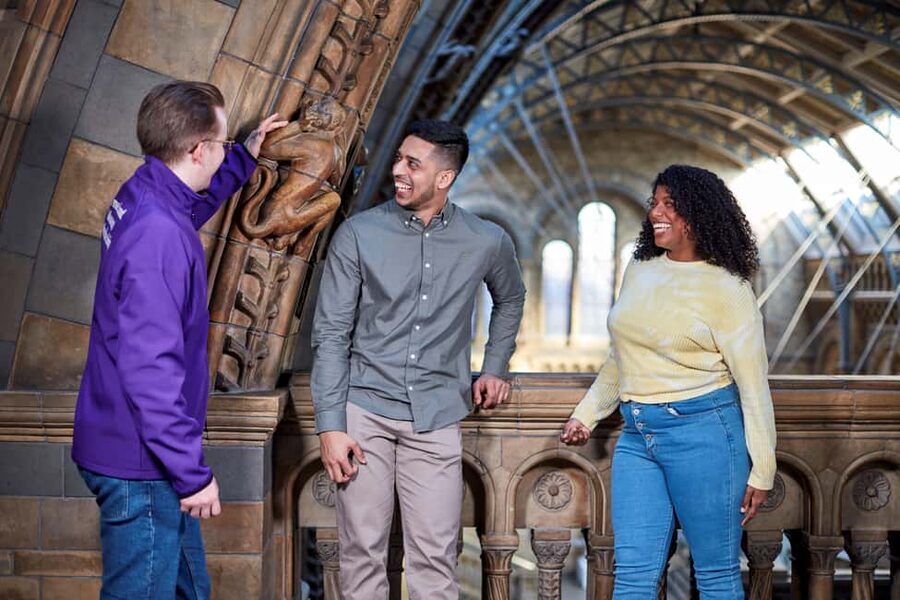
You’ll hear about a whole menagerie of terracotta animals, and the story gets specific enough to stick. One highlight is a carved monkey with a human face, noted for bearing a striking resemblance to Charles Darwin. That’s the kind of detail that becomes a souvenir in your mind, because it explains how Victorian designers loved to hide nods to famous figures inside natural-themed ornament.
It also changes the way you see “decorations.” Instead of feeling like filler, the carvings feel like intentional storytelling, with nature and science sharing the same space.
Late-1800s plans to modern additions, using the guide’s visual clues
A clever part of the tour is that it doesn’t just talk history in broad strokes. You get to see digital copies of original sketches, detailed drawings, and building plans from the late 1800s. That’s valuable if you like understanding how a structure was actually designed, line by line, not just admiring what ended up standing.
This also helps explain why the museum feels so deliberate. When you see design intent, the building’s layout and decoration make more sense. You’re less likely to feel lost or “just wandering” through a famous landmark.
Then you move into the next chapter: the guide introduces twenty-first-century additions. This balance matters. You’re not trapped in the past, and you’re not left with modern changes that feel disconnected. The tour connects continuity, showing how the museum evolved while keeping its nature-themed architectural identity.
A clear, engaging guide experience you can hear over crowds
The format is simple: you’re with a live guide, in English, for about an hour. But the reviews add an important quality marker: communication.
In particular, I’m glad the guide is described as very clear, with speech that stays understandable even when background noise is present. One reviewer also highlights that the guide, Glenn Harper, guided with visible passion and showed details that would be impossible to catch without help.
That matters for your enjoyment. In a museum as busy as this one, you want to trust that the person leading you knows what to point out and can keep the pace steady. A tour like this succeeds when you feel informed, not confused.
Skip the ticket line and get general entry, but know what isn’t included
This is not a “limited access” tour where you only see a corridor. You get general museum entry alongside the architecture tour. That means after the guiding part, you can keep exploring on your own.
Do note what’s not included: paid temporary exhibitions are not part of this ticket. The museum has changing shows, so if you’re counting on a specific temporary exhibit, you’ll need a separate plan. Also, there is no audio guide included, so the value is very much tied to the live guide and the architectural route.
During peak hours, headsets are provided. That’s another small detail that makes a big difference in how easy it is to follow along. You’ll spend less energy trying to hear and more time actually looking.
Practical timing: how to fit this into a London day
The tour lasts 1 hour. For London sightseeing, that’s a sweet spot. It’s long enough to cover the key architectural beats and the Darwin Centre finish, but short enough that you can pair it with a museum gallery session afterward.
Because the meeting point is on Exhibition Road and not through the Cromwell Road gardens, it’s also easier to integrate into a day that already includes other South Kensington stops. Think of it as a focused “architecture primer,” then use your remaining time for collections that match your mood.
If you tend to enjoy museums in layers, this tour helps you build that layer structure. First you understand the building, then you move into the specimens with a better sense of context.
Price and value: $20 for a guided architecture lens
At about $20 per person for a 1-hour, small-group guided experience with general entry and skip-the-ticket-line included, the value comes from what you’re buying.
You’re paying for three things that are hard to replicate on your own:
- Interpretation of architecture as a nature-themed design story
- Time efficiency, because someone else already knows which details matter
- A small-group listening setup, including headsets at peak hours
If you like architecture, symbolism, and hidden details, this cost can feel very fair. You’re also not paying extra just to enter the museum, since entry is part of the package.
If you only want a quick walk-through and you don’t care about stone carvings or historical design intent, you might feel the guide time is less necessary. But if you’re curious about how this building became a legend, the money is working for you.
Who should book this architecture tour?
This tour is a great match if you:
- Enjoy architecture more than you expect to
- Want a guided way to spot carvings and design motifs
- Like history that explains how things were built, not just when
- Appreciate Darwin-era science connections and visual references
It’s also worth it even if you’ve been to the Natural History Museum before. The reason is simple: the architecture details you’ll be pointed toward are not the same as the museum routes people usually follow.
If you’re visiting with a group that includes someone who loves “design and details” more than “one-gallery-after-another,” this tour can become the shared happy middle.
Who might want a different plan
One consideration is the time limit. At just 1 hour, you’ll see the best highlights, not every corner. If you’re the type who wants to stop for long photo sessions, sketch, or read every plaque, you may feel slightly compressed.
Also, children under 4 are not suitable for this tour. For families with older kids, it could still work, but the tour is shaped for an architecture and design focus.
Should you book the Natural History Museum architecture tour?
Yes, if you want your visit to feel more intentional. This tour is a smart way to get value from a famous building by learning how its Romanesque style and nature-themed stonework are connected. The small group size, skip-the-line entry, and the guide-led focus on details make it an efficient use of time.
Book it especially if you’re the person who likes noticing gargoyles, carved ceilings, and terracotta animal figures after the fact. You’ll leave with a clearer picture of why this museum looks the way it does, and your next look around the building will feel more like reading than wandering.
FAQ
How long is the Natural History Museum architecture tour?
It lasts 1 hour.
What is the meeting point for the tour?
Meet outside the Natural History Museum staff/Flett theatre entrance on Exhibition Road, opposite the Victoria and Albert Museum, next to the public museum entrance on Exhibition Road. It is not the main Cromwell Road entrance accessed through the gardens.
Where does the tour end?
The tour finishes inside the museum’s newest part of the building, the Darwin Centre.
Is the tour in English?
Yes, the tour is offered in English.
How big is the group?
It is a small group limited to 7 participants.
What’s included in the price?
You get a guide-led tour in English, general museum entry, skip the ticket line, and headsets during peak visitor hours.
Are temporary exhibitions included?
No, paid temporary exhibitions are not included.
Is there an audio guide included?
No, an audio guide is not included.
Is it wheelchair accessible and is it suitable for young children?
It is wheelchair accessible. Children under 4 years are not suitable.
Can I cancel or pay later?
Free cancellation is offered up to 24 hours in advance for a full refund. You can also reserve now and pay later.
Centuries in an Afternoon
- London: Historic Pubs of Central London Walking Tour
★ 4.9 · 1,065 reviews - London: Soho Music and Historic Pubs Walking Tour
★ 4.9 · 836 reviews - London: Rock ‘n’ Roll History Tour
★ 4.6 · 645 reviews - London: Westminster Abbey Tour with a Royal Heritage Guide
★ 4.7 · 614 reviews
Newest entries under London





Museums, compared.
Tower of London and Crown Jewels Exhibition Ticket
Read our review →
Liverpool Football Club Museum and Stadium Tour
Read our review →
Chelsea Football Club Stadium and Museum Tour
Read our review →

British Museum Guided Tour with Entrance Tickets
Read our review →Browse the lists this tour appears in