
Reviewed · MUSEUMS
London Natural History Museum – Private Tour with Expert
Touch real fossils before you step inside. That is the magic of this London Natural History Museum private tour, where a scientist guide helps you switch from staring at displays to actually thinking like an evolution nerd. I love the hands-on moment with real specimens, and I love that you can choose a theme that matches what you care about, from dinosaurs to human evolution. One thing to consider, it is not suitable for children under 7, so the science and pacing may feel like a stretch for younger kids.
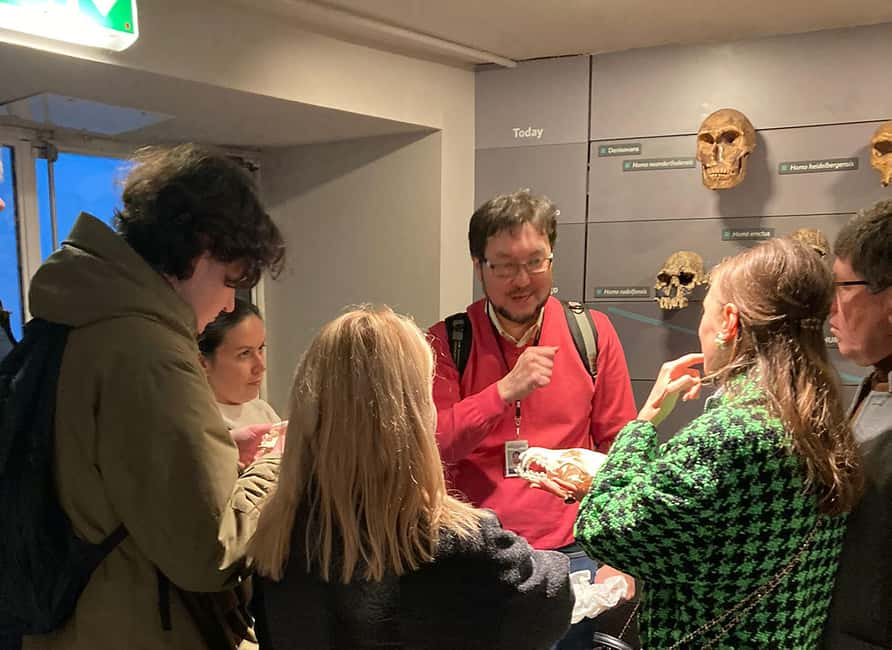
Your guide is Dr Arkhat Abzhanov, a researcher at the Natural History Museum who specializes in evolutionary genetics at Imperial College London. He brings over 20 years of scientific experience across the US and UK, and he runs the tour in English or Russian, depending on your group. You get a true private format, plus an efficient museum flow that keeps the 2-hour window from turning into aimless wandering.
You meet at the main entrance on Cromwell Road, right in front of the steps where you have to cross the museum’s Evolution Garden to get inside. Then the tour uses timed museum entry and express security, so you spend more time looking and less time waiting. The day runs on a simple rhythm: a round-table discussion at the educational centre, a hands-on preview with real fossils or minerals, then the matching galleries across the museum.
In This Review
- Key things that make this tour worth your time
- Meeting at Cromwell Road, and getting oriented fast
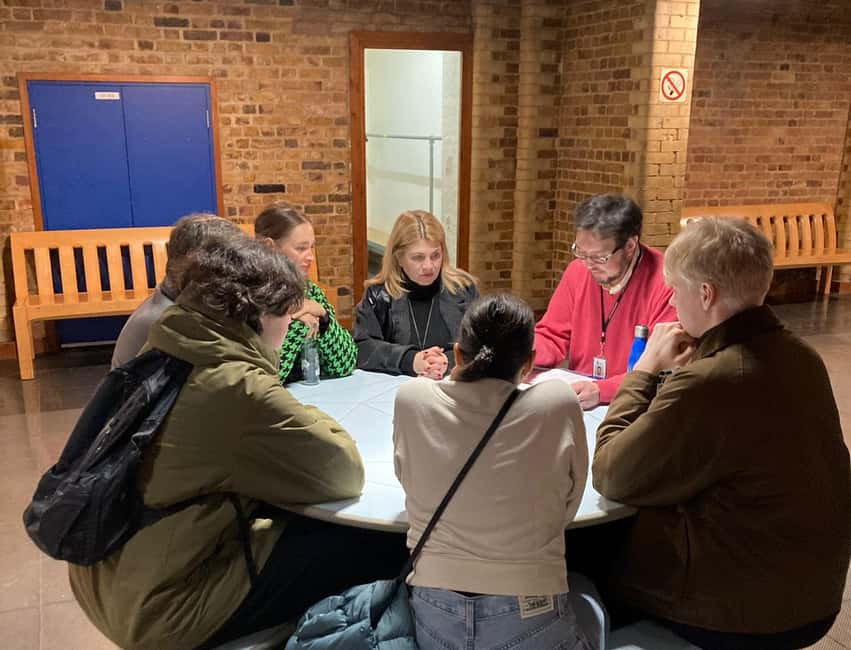
- The round table at the educational centre, where you learn to look
- Theme 1: Dinosaurs and ancient marine reptiles, from fossil clues to prehistoric worlds
- Theme 2: Mammals with fur, horns, claws, and hooves in the Mammal Hall
- Theme 3: Human evolution and species origins, plus Sophia and the blue whale finale
- Theme 5: Volcanoes, earthquakes, and minerals, learning the Earth from the inside out
- Theme 6: How evolution happens, divergence and convergence you can see
- How the 2-hour format stays focused in a massive museum
- Price and value for $364 per group (up to 9 people)
- Who should book, and who should skip
- Should you book this private Natural History Museum tour?
- FAQ
- Who is the guide for this Natural History Museum private tour?
- How long is the tour?
- How much does it cost?
- What themes are available?
- Is the tour in English or Russian?
- Do you get to use the museum faster?
Key things that make this tour worth your time
- A real science guide with evolutionary genetics experience (Dr Arkhat Abzhanov)
- Round-table pre-talk at the educational centre, so the galleries make instant sense
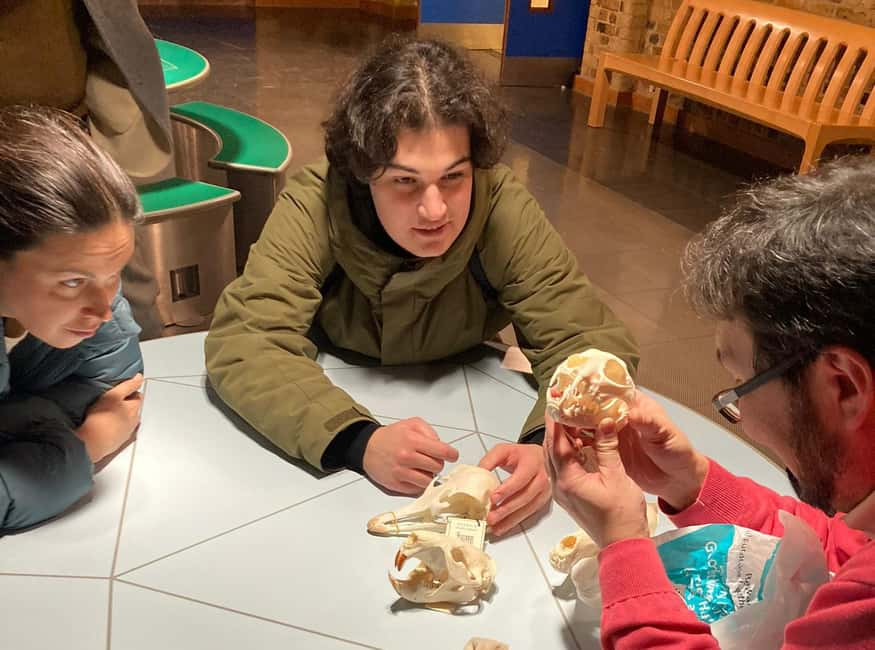
- Real fossils, minerals, and bones you can view and touch before heading upstairs
- Theme-first planning that sends you to the right exhibits in a logical order
- 2 hours that actually fit the Natural History Museum’s size, using timed tickets and express security
- Private group flexibility, up to 9 people, for families who want control over their pace
Meeting at Cromwell Road, and getting oriented fast
The tour starts at the Natural History Museum’s main entrance on Cromwell Road. You’ll meet your guide in front of the steps, inside the museum gates, after crossing the Evolution Garden. This small detail matters, because the museum is huge, and you want your head in the right place before you enter the first gallery.
From the start, the private format helps. Instead of joining a big group and hoping the guide notices your questions, you can ask what you actually want to understand. The tour is also wheelchair accessible, which is a big plus if your group includes someone who needs a smoother route through the museum.
More Museum Tours in London
- London: Chelsea Football Club Stadium and Museum Tour
★ 4.8 · 4,576 reviews - London: British Museum Guided Tour
★ 4.3 · 1,182 reviews - London: British Museum Guided Tour with Entrance Tickets
★ 4.9 · 748 reviews
The round table at the educational centre, where you learn to look
Before you go gallery-to-gallery, you get a prior discussion at the educational centre. It’s set up like a round table, not a lecture hall. This is the part I like most, because it teaches you what to notice once the museum gets visual.
You also get access to real specimens during the discussion phase, including fossils or minerals, and in some themes, real bones. That means when you hit the cases later, you’re not just reading labels. You’re comparing shapes, thinking about adaptation, and connecting a concept to something physical you’ve already handled.
One practical advantage is pacing. The Natural History Museum can feel like information overload, even when you’re excited. Here, you arrive already framed. Your brain is ready to sort facts into patterns instead of collecting them like random bookmarks.
Theme 1: Dinosaurs and ancient marine reptiles, from fossil clues to prehistoric worlds
If your group loves the idea that Earth used to look totally different, this is a great theme. The pre-tour discussion focuses on evolution using prehistoric monsters as the example: dinosaurs plus ancient marine reptiles.
In the education centre, you begin with a hands-on fossil hunt activity. Each child searches for fossils of a particular dinosaur while holding a model of that dinosaur. Then you view and touch real dinosaur fossils, including dinosaur teeth, before you head into the museum galleries.
What makes this work well is the sequence. You get the tactile part first, then you use it to read the exhibits smarter. Instead of just spotting a skull or skeleton and moving on, you can connect features to how these animals lived and evolved.
In the galleries, expect your guide to tie what you see back to big-picture evolution ideas, like what Earth looked like during the dinosaurs’ time and what major types existed. The goal is not only wonder. It’s understanding why the variety matters.
Theme 2: Mammals with fur, horns, claws, and hooves in the Mammal Hall
This theme is built for people who want evolution to feel modern and familiar, even when you’re talking about deep time. The discussion covers who mammals are, how and when they appeared on Earth, and the types of mammals you’ll recognize.
Your route through the museum includes a long mammal gallery and the recently renovated Mammal Hall. That renovation detail matters, because it gives you a more organized way to see mammal diversity and history without feeling like you’re constantly fighting for context.
In the round-table portion, you talk about the origin of mammals from reptiles. Then your guide brings it forward into examples you can picture easily: how elephants, horses, and whales became what they are today. Expect comparisons of body design and lifestyle, since those animals are especially useful for connecting evolution to the real world.
If you’re traveling with kids, this theme is often a good choice because mammals have obvious traits. Fur, teeth types, claws, hooves. You can see adaptation without needing a science degree.
More gallery rooms between showers:
- London: Tour of the British Museum★ 4.1 · 678 reviews
- Afternoon Tea at the British Museum★ 4.2 · 511 reviews
- London: Paradox Museum Entry Ticket★ 3.9 · 441 reviews
- London: National Gallery Guided Tour with Art Expert Guide★ 4.7 · 440 reviews
Theme 3: Human evolution and species origins, plus Sophia and the blue whale finale
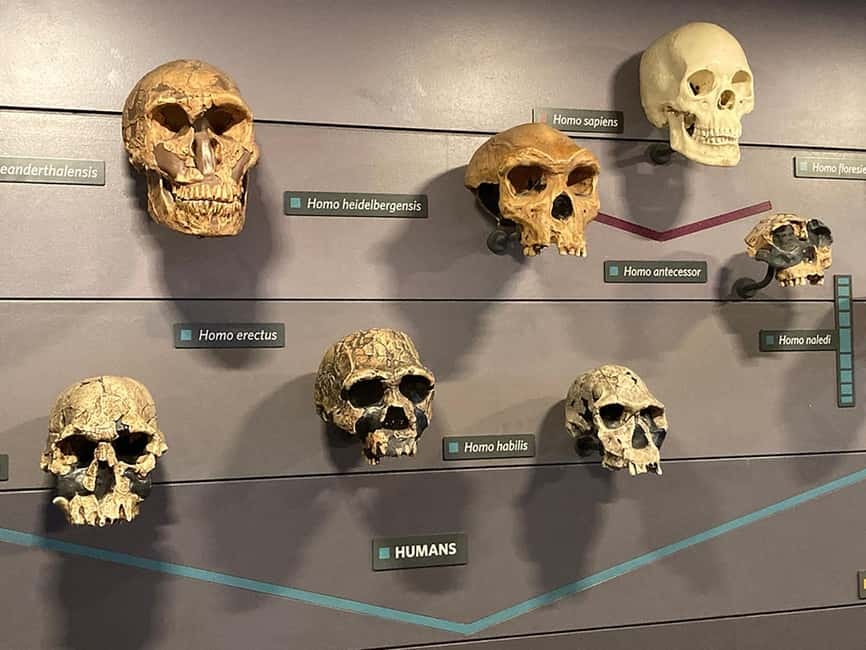
This is the theme for visitors who want the science to connect to life on Earth today, including humans. The tour begins with an exhibition dedicated to human evolution. Then it expands into birds, marine reptiles, and ends under a blue whale, which makes a strong visual punctuation mark at the end of the 2 hours.
Along the way, you discuss key evolutionary concepts your guide will explain in plain terms: the emergence of new species, adaptive evolution, natural selection, and extinction processes. That set of ideas is the backbone of how biologists talk about why living things change.
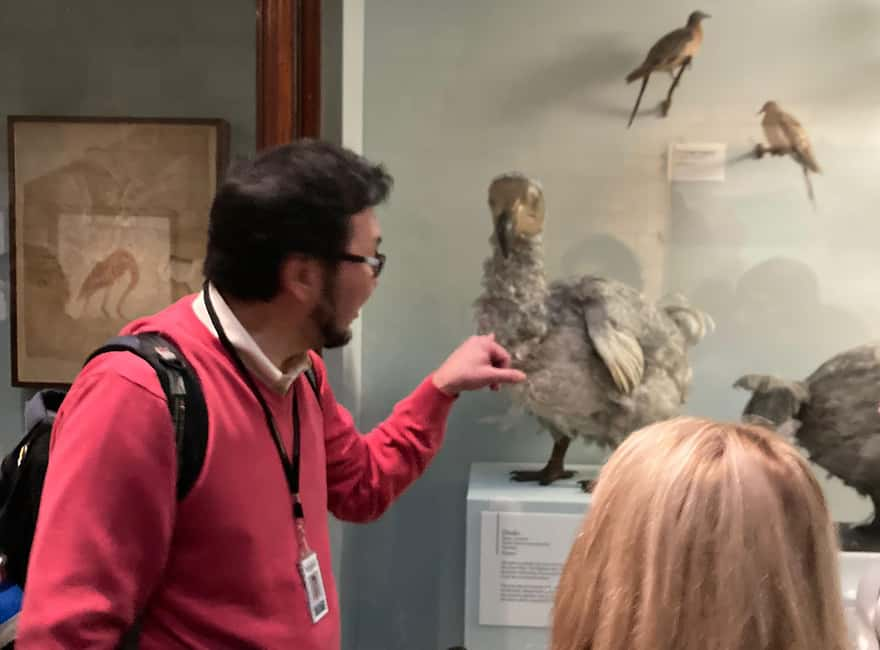
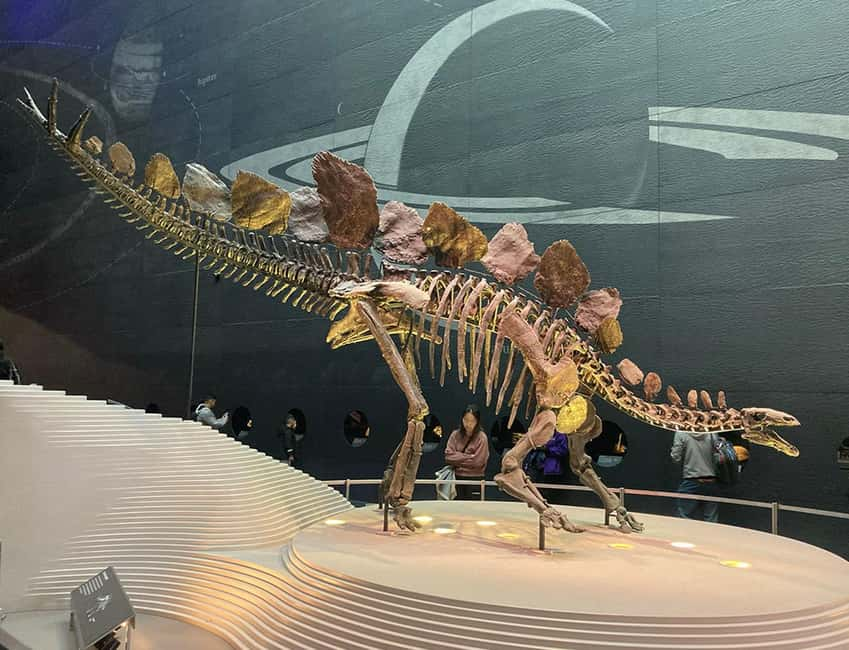
You also get specific exhibit moments, including stegosaurus Sophia. It’s a recognizable anchor in the museum, and your guide will help you connect it to the bigger evolutionary story. You’ll also pay attention to and compare heads and limbs of animals to see how those body parts changed for very different environments.
If you like a tour that feels like a guided storyline, this one often clicks. It takes you from human evolution to birds and then into marine reptiles, so you get a sense of how adaptation repeats across unrelated lineages. The blue whale ending is the payoff, a reminder that evolution scales from tiny changes to giants.
Theme 5: Volcanoes, earthquakes, and minerals, learning the Earth from the inside out
Not every Natural History Museum tour is about biology. This theme flips to geology, and it gives you a way to understand Earth as an active system, not just a planet with pretty rocks.
In the education centre discussion, your guide explains how the Earth looks on the inside, what volcanoes are, and how earthquakes occur. Then you move into rocks and minerals and learn how they form, from volcanic lava or deep underground processes.
During the talk, you compare rock types, including sedimentary, volcanic, and metamorphic. That classification is useful because it helps you stop seeing rocks as random. Instead, you start thinking about origin, pressure, heat, and time.
You also get a hands-on element with beautiful minerals from your guide’s own collection. Then the museum galleries guide you through Earth planet history and into a gallery about minerals and crystals, including precious gems. This isn’t just show-and-tell. It’s a framework for understanding why certain minerals look the way they do.
If you have ever stared at a crystal and wondered where it actually comes from, this theme answers that question in a way you can carry outside the museum.
Theme 6: How evolution happens, divergence and convergence you can see
This is the theme for people who want to understand the mechanics behind the diversity. The pre-tour discussion sets the stage by focusing on adaptation and the evolutionary ideas of divergence and convergence.
Divergence is when lineages move in different directions. Convergence is when unrelated animals end up with similar solutions because they face similar pressures. Your guide uses these concepts to connect what you see in the museum to the logic of evolution.
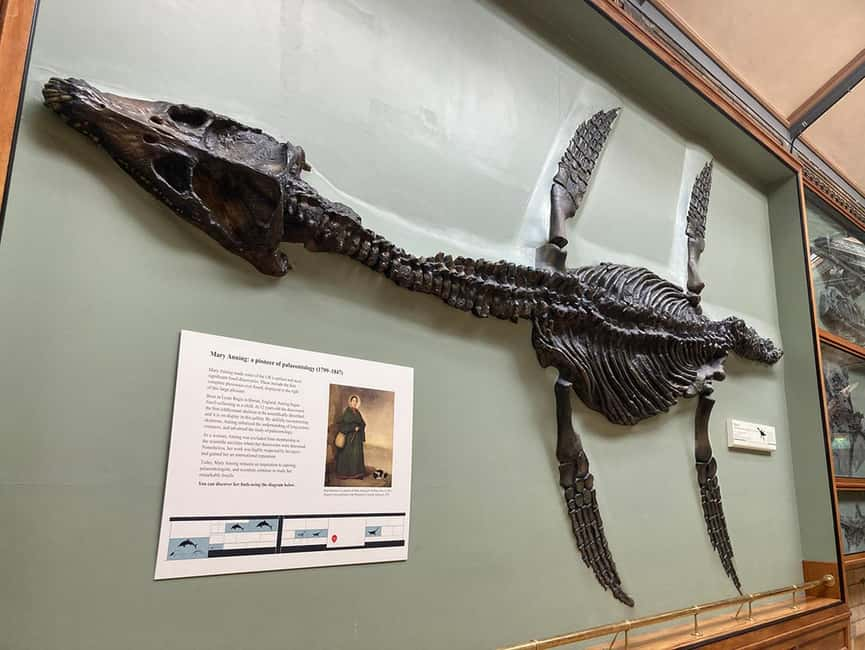
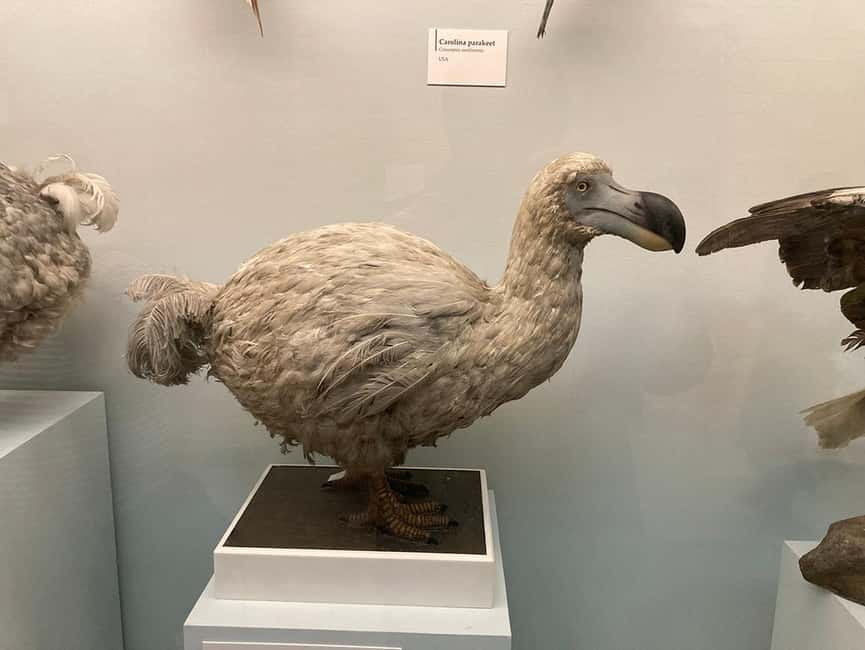
In the museum, the bird collection gives you examples of adaptation and divergence. You’ll also see convergence in the Hall of Marine Reptiles, specifically with ichthyosaurs. Your guide explains how ichthyosaurs show convergence with sharks and dolphins, since they share body-form solutions for life in the sea.
This theme is especially good if you want a tour that teaches you how to interpret exhibits, not just learn facts. You’ll leave with a mental model for spotting patterns across very different species.
How the 2-hour format stays focused in a massive museum
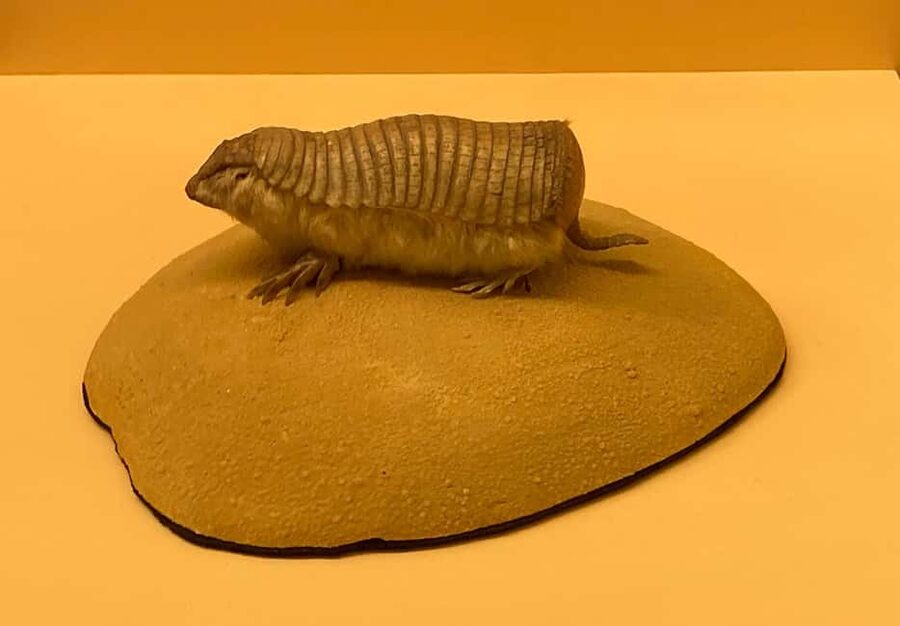
Two hours is short for a museum this size. The way this tour uses timed tickets and express security helps a lot. You skip the line through an express security check, then you move into the galleries with fewer delays. That matters because time is the real currency here.
The pre-tour discussion also does heavy lifting. By setting your theme and your questions before you start walking, it reduces the chaos factor. You’re not starting at zero in a sea of skeletons. You’re starting with a purpose.
You should still expect some walking, because the museum’s highlights are spread out. But the route is built around your chosen theme, which keeps the focus tight even when your group is bouncing between biology and geology or back again.
Price and value for $364 per group (up to 9 people)
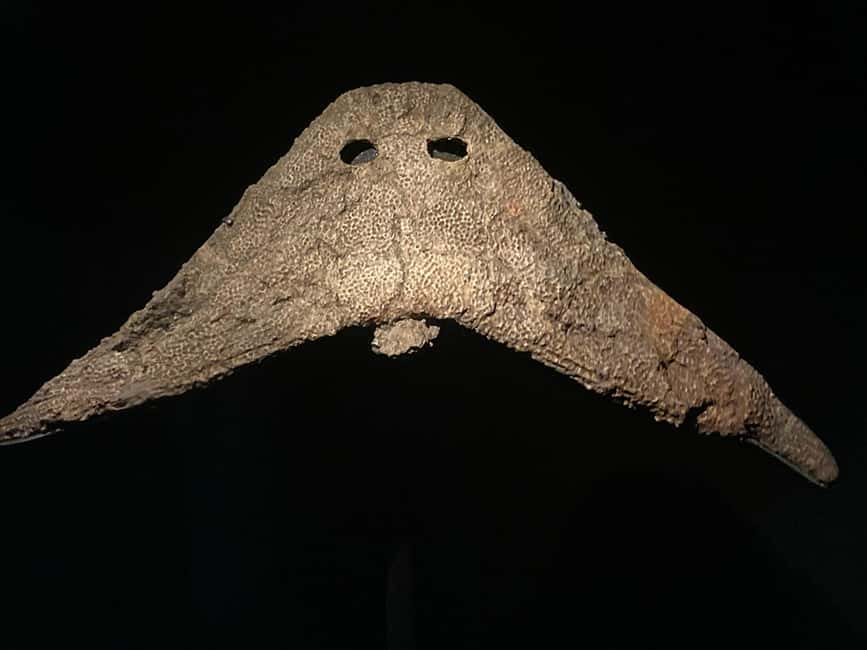
The price is $364 per group for a 2-hour private tour, for up to 9 people. That can look steep if you’re comparing it to buying museum tickets. But it is easier to judge value if you think in per-person terms based on your group size.
At the maximum group size of 9, you’re paying about $40 per person. If you come as a smaller family, the cost per person rises, so it’s best when you have a few adults or multiple kids. The private element means you can ask questions and get tailored explanations without waiting for a large group to catch up.
Another value point is the specific expertise. You’re not getting a generic museum guide script. You’re getting Dr Arkhat Abzhanov, a researcher and evolutionary genetics specialist. Plus you get the added structure of a round-table pre-discussion and hands-on specimen access during that talk.
If you’re visiting during a busy time and want to avoid losing hours to security and wandering, the express security and timed tickets are part of the value too. For groups who want real learning and not just photos, this format tends to pay off fast.
Who should book, and who should skip
This tour fits best for families and small groups who want a guided experience with real interpretation, not just a list of exhibits. It is also a strong choice if you want to focus on one theme rather than trying to see everything.
Kids should be at least 7 years old. The hands-on fossil and minerals activities are clearly designed to involve children, but the content depends on the science framing from the educational centre. If your kids are younger than 7, you might find the pacing and discussion style hard to match.
You can choose English or Russian, which is helpful if your family prefers a specific language. And because it is wheelchair accessible, it works well for groups that need an accessible plan through the museum.
If your group just wants a quick, low-effort look at the most famous sights, a guided tour might be too structured for your style. But if you like explanations you can test with your own eyes and hands, this is a smart match.
Should you book this private Natural History Museum tour?
I would book it if you want your Natural History Museum visit to feel like science made understandable. The biggest reason is the structure: round-table discussion first, real fossils or minerals you can touch next, then galleries with timed entry. It turns the museum from a collection of objects into a guided chain of ideas.
I’d also book it if your group has a clear theme. Dinosaurs, mammals, human evolution, volcanoes and minerals, or the mechanics of evolution each have their own focus and exhibit sequence. That theme choice keeps the 2 hours from feeling scattered.
One caution before you decide: check that your kids meet the age suitability and that your group is ready for a science-led approach. If that fits, this private tour is strong value for a small group, and you’ll leave with a much clearer way to read what you saw.
FAQ
Who is the guide for this Natural History Museum private tour?
The tour is provided by Dr Arkhat Abzhanov, a researcher at the Natural History Museum and a specialist in evolutionary genetics at Imperial College London.
How long is the tour?
The tour duration is 2 hours.
How much does it cost?
It costs $364 per group, for groups of up to 9 people.
What themes are available?
You can choose themes such as Dinosaurs and ancient marine reptiles, Beasts (mammals), Origin of animal species including humans, Volcanoes, earthquakes and minerals, and How evolution happens.
Is the tour in English or Russian?
Yes, the tour is available in English or Russian.
Do you get to use the museum faster?
Yes. The tour includes express security access, and you also get timed museum tickets for the gallery visits.
Centuries in an Afternoon
- London: Historic Pubs of Central London Walking Tour
★ 4.9 · 1,065 reviews - London: Soho Music and Historic Pubs Walking Tour
★ 4.9 · 836 reviews - London: Rock ‘n’ Roll History Tour
★ 4.6 · 645 reviews - London: Westminster Abbey Tour with a Royal Heritage Guide
★ 4.7 · 614 reviews
Newest entries under London


Museums, compared.
Tower of London and Crown Jewels Exhibition Ticket
Read our review →
Liverpool Football Club Museum and Stadium Tour
Read our review →
Chelsea Football Club Stadium and Museum Tour
Read our review →

British Museum Guided Tour with Entrance Tickets
Read our review →Browse the lists this tour appears in