
Reviewed · MUSEUMS
London: National Portrait Gallery Guided Tour
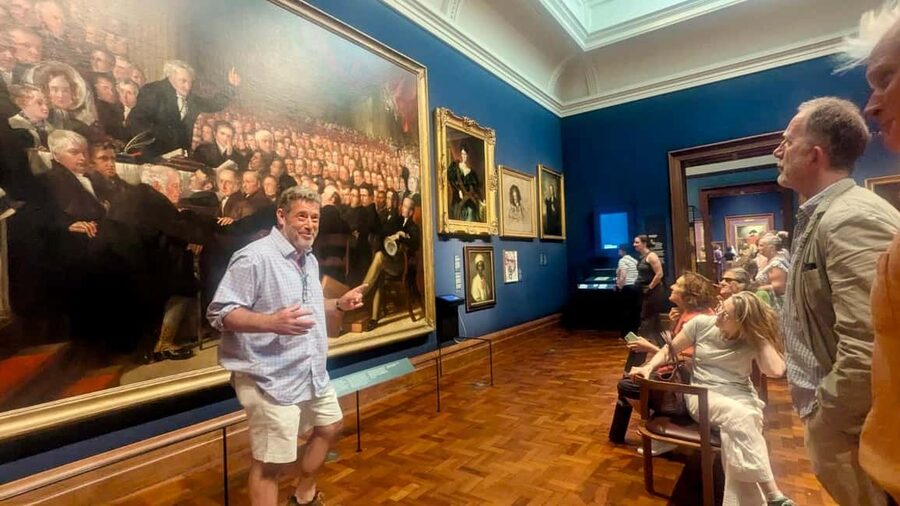
A guide turns portrait gazing into real history. This is a smart, story-led walk through the National Portrait Gallery using faces to explain how London changed from Tudor times to the early 1900s.
I especially like how the tour follows connections between portraits instead of treating them like separate artworks. I also love the range of characters you meet, from kings and queens to politicians, poets, social reformers, architects, and engineers.
One thing to consider is physical access. It is wheelchair accessible in general, but there are some stairs and an escalator, so plan for a few tricky spots even on a smooth route.
In This Review
- Key things I’d watch for on this National Portrait Gallery tour
- Meet at Ross Place, then get your bearings fast
- How portraits explain London’s social and political changes
- Tudor courts and the power story behind the portraits
- Beyond royalty: politicians, poets, and social reformers
- Architects and engineers: how progress shows up in portrait stories
- What it feels like with Patrick and a small group pace
- Price and value: why $26 can feel fair
- Practical tips before you go (and what could trip you up)
- Who this London portrait tour is best for
- Should you book this National Portrait Gallery guided tour?
- FAQ
- Where do I meet the guide for the National Portrait Gallery tour?
- How long is the guided tour?
- What is the price per person?
- Is the tour wheelchair accessible?
- What language is the tour guide speaking?
- Can I cancel for a refund?
Key things I’d watch for on this National Portrait Gallery tour
- Portraits as a timeline: you follow the city’s social and political shifts from Tudor England to the early 20th century
- A guide who links the people: the best part is the way the story connects one face to the next, creating a clear thread
- Big cast, not just royals: you hear about kings, queens, politicians, poets, social reformers, plus architects and engineers
- English language tour: the live guide keeps everything moving in English
- A good history primer: basic background on British history helps, but it is still built for people who are curious
Meet at Ross Place, then get your bearings fast
You meet the guide at the main reception area of the National Portrait Gallery, right after security, at the main entrance on Ross Place. That matters more than it sounds. Museums are easy to get turned around in, and arriving with a plan makes the 1.5 hours feel generous instead of rushed.
The tour is designed as a focused, guided circuit through the gallery. You’ll stay with your guide throughout, with a live explanation and built-in pacing. This is also a good length for people who want context without committing to a half day of museum time.
Price is listed at $26 per person for the guided portion. For that money, you are paying for interpretation, not just access to the building. The value here is the way the guide helps you read the portraits as evidence of power, politics, ideas, and public life.
More Museum Tours in London
- London: Chelsea Football Club Stadium and Museum Tour
★ 4.8 · 4,576 reviews - London: British Museum Guided Tour
★ 4.3 · 1,182 reviews - London: British Museum Guided Tour with Entrance Tickets
★ 4.9 · 748 reviews
How portraits explain London’s social and political changes
This tour’s core idea is simple: portraits are not just art. They are records of status, influence, and what society chose to honor. In this guided format, you use the museum like a classroom, with each portrait acting like a clue to how London evolved.
The guide frames London’s story from Tudor times onward, then carries it forward through later periods up to the early 20th century. That means you are not stuck in one era. You get a sense of how different groups gained influence, how politics shaped everyday life, and how public figures became symbols.
I like that the story keeps widening beyond the usual royal spotlight. The tour includes politicians and writers, but it also reaches into social reformers and even people connected to building and engineering. That wider cast makes modern Britain feel less like an abstract concept and more like something built by many types of people.
If you like your museum visits with a point, this is a solid match. You walk in expecting to look at portraits, and you walk out understanding why those faces mattered.
Tudor courts and the power story behind the portraits
The tour begins with the earlier part of the timeline, starting from Tudor times. That opening is important because it sets the baseline for everything that follows. When you see how authority worked early on, later political shifts make more sense.
In practical terms, your guide uses portraits to talk about social structure and political life. You learn not only who was shown, but also what those images were doing for their subjects and for the public. It’s the kind of lesson where you start noticing patterns: who gets framed as important, and how the presentation connects to power.
A helpful angle here is the idea of continuity. One review praised Patrick for weaving a continuum through the portraits, and you can feel the benefit of that approach on the ground. Instead of jumping from portrait to portrait with no thread, the guide helps you connect eras through themes like leadership, influence, and public image.
Beyond royalty: politicians, poets, and social reformers
One of the strongest parts of this experience is the variety of people included. You are not only looking at kings and queens. You’re also meeting politicians and poets, plus social reformers and other figures who shaped public life.
This matters because Britain did not change through royal decisions alone. The social and political history of London involves people who argued, legislated, wrote, organized, and challenged the status quo. When those roles show up in the portrait stories, the city starts to feel more human and less like a textbook.
You also get to experience the British Empire connection in the way the guide explains the development of modern Britain and how global power and local politics tangled together. Even if empire history is not your favorite topic, the guided focus gives you a clearer line of thought, not just a list of facts.
More gallery rooms between showers:
- London: Tour of the British Museum★ 4.1 · 678 reviews
- Afternoon Tea at the British Museum★ 4.2 · 511 reviews
- London: Paradox Museum Entry Ticket★ 3.9 · 441 reviews
- London: National Gallery Guided Tour with Art Expert Guide★ 4.7 · 440 reviews
Architects and engineers: how progress shows up in portrait stories
A lot of history tours lean heavily on politics and literature. This one adds a different flavor by including people tied to architecture and engineering. That choice is genuinely useful.
Why? Because it broadens what you think history is. London’s story is not only about speeches and crowns. It is also about the built environment and the technical minds behind change. When a tour brings those kinds of figures into the portrait lineup, you get a better sense of how the city developed physically and institutionally over time.
You’ll likely find this section especially rewarding if you enjoy the “how did that happen” side of history. Even without any engineering background, the guided explanations make these figures legible as part of the same social and political story.
What it feels like with Patrick and a small group pace
The name that comes up in the reviews is Patrick, and that’s a good sign. Multiple comments highlight his professionalism and friendly manner, plus the way he keeps things relevant. One review specifically notes how he connects the portraits into a continuum, and that is exactly what you want from a guided gallery tour.
Small details matter here. A live guide helps you stop at the right places, hear what makes each person meaningful, and avoid the dead time where you are just scanning wall labels. The best guided tours compress context into a way you can carry with you.
Group size is also worth noting. The tour offers private or small groups, so you can get a more personal pace and less crowd pressure than on big bus-style formats. If you prefer conversation and a clear run of the story, small groups are a plus.
One more practical point: bring comfortable shoes. You are walking through a museum, and the tour is built for staying on your feet for the duration.
Price and value: why $26 can feel fair
Let’s talk money in real terms. $26 for a 1.5-hour guided tour is not a bargain you can ignore, but it also is not inflated. The question is whether you benefit from a guide for this museum.
Here you do, because the tour is explicitly about making sense of portraits as history. If you go in on your own, you might spend the time reading labels and still miss the big thread that connects Tudor politics to later eras. With a guide, the information is organized for you.
So if you want a museum visit with structure, this price feels reasonable for what you get: a live guide, a clear historical arc, and a set of themes that carry across multiple types of portraits. It turns the collection into a story you can actually retell later.
Practical tips before you go (and what could trip you up)
Here are the most useful “don’t get stuck” tips from the details provided:
- Wear comfortable shoes. You’ll be on your feet for the full 1.5 hours.
- Aim for a light mental warmup. Basic knowledge of British history helps you catch references faster.
- Plan for access hurdles. Wheelchair access is generally available, but there are some stairs and an escalator, so you might need extra caution and patience.
- Respect the age limit. It is not suitable for children under 15, so plan accordingly if you’re traveling with younger kids.
Also, the meeting point is after security in the main entrance area. That means you should factor in a little extra time to get through security so you do not start late.
Who this London portrait tour is best for
This is ideal if you like history but do not want a lecture that runs too long. It is also a strong choice if you enjoy biography. The tour’s “cast of characters” approach keeps it personal, with kings, queens, writers, politicians, reformers, architects, and engineers all contributing to the story.
You’ll likely enjoy it most if:
- you want a clear timeline from Tudor times to the early 20th century
- you like the idea of learning through portraits instead of only reading wall text
- you prefer a guided route with story pacing
- you travel with a group that wants shared talking points afterward
If you are the type who likes museums with no agenda at all, you might prefer self-guided time. But if you want direction and historical interpretation in a tight timeframe, this one fits.
Should you book this National Portrait Gallery guided tour?
Yes, if you want your National Portrait Gallery visit to feel like a guided story with a strong connection between people and time periods. The best reason to book is the guide approach, especially the way Patrick is described as weaving a continuum and staying relevant while connecting many portraits into one understandable thread.
Skip it only if you need completely step-free access, or if you want to wander with zero structure. Otherwise, this is a smart 1.5-hour way to learn how London’s social and political world evolved, using portraits as your anchor.
FAQ
Where do I meet the guide for the National Portrait Gallery tour?
Meet in the main reception after the security check at the main entrance in Ross Place.
How long is the guided tour?
The duration is 1.5 hours.
What is the price per person?
The price is $26 per person.
Is the tour wheelchair accessible?
Wheelchair access is generally available, but there are some stairs and an escalator.
What language is the tour guide speaking?
The live tour guide speaks English.
Can I cancel for a refund?
Yes. Free cancellation is available up to 24 hours in advance for a full refund.
Newest entries under London




Museums, compared.
Tower of London and Crown Jewels Exhibition Ticket
Read our review →
Liverpool Football Club Museum and Stadium Tour
Read our review →
Chelsea Football Club Stadium and Museum Tour
Read our review →

British Museum Guided Tour with Entrance Tickets
Read our review →Browse the lists this tour appears in