
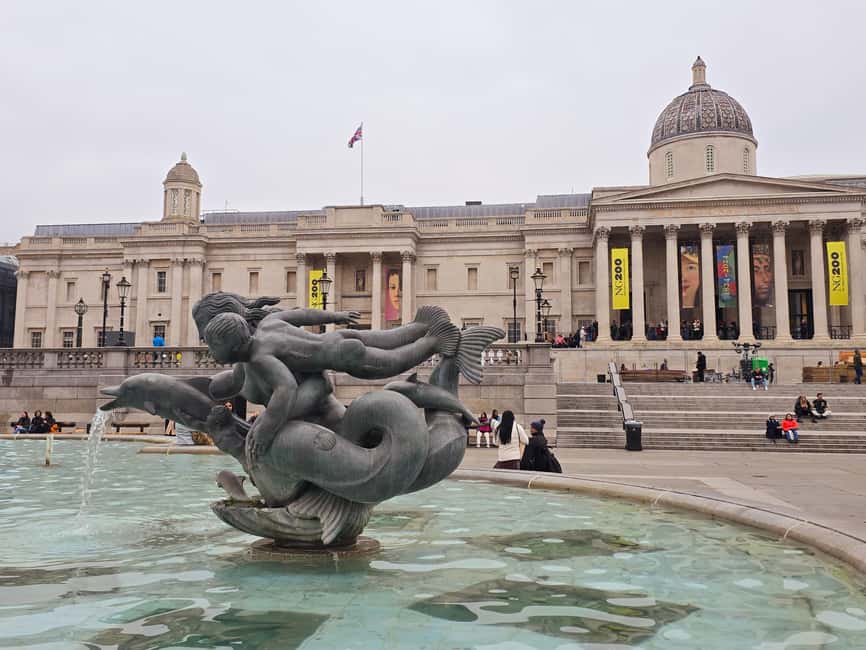
Reviewed · MUSEUMS
London: National Gallery Guided Tour with Priority Entrance
A good art plan starts at the right door. This National Gallery guided tour uses a small-group format plus priority entrance, so you spend less time stuck in security and more time looking closely at major works. Guides like Tara, Antonio, Giovanni, and Tony are especially praised for making paintings feel clear, not confusing, even if you are new to art.
I love the way the tour is paced like a story across centuries. You move from Leonardo da Vinci and Michelangelo’s Renaissance ideas, to Turner’s industrial-age drama, then through Monet and Seurat, and finally to Van Gogh’s emotional brushwork. One drawback to plan around, this tour is not suitable for people with mobility impairments and it runs on a set schedule, so wear comfortable shoes and be ready to keep moving.
In This Review
- Key highlights
- Getting In Quickly: Sainsbury Wing and the Yellow Flag
- A Two-Hour Tour That Actually Covers the Right Works
- Renaissance Spotlight: Leonardo da Vinci and Michelangelo’s Lasting Impact
- Industrial-Age Energy: Turner’s Rain, Steam and Speed
- Monet and Seurat: Color, Light, and Looking Differently
- Van Gogh Closing Chapter: Everyday Scenes With High Emotion
- How the Guide Turns Paintings Into Stories You Can Repeat
- Practical Stuff That Makes or Breaks the Day
- Priority Entrance Value: $21 Worth It, If You Care About Context
- Who Should Book This National Gallery Tour
- Should You Book This National Gallery Guided Tour?
- FAQ
- Where do I meet the guide for the National Gallery tour?
- How long is the guided tour?
- Is flash photography allowed?
- How big is the group?
- Is the tour suitable for people with mobility impairments?
- What is a safe arrival time before the tour?
Key highlights
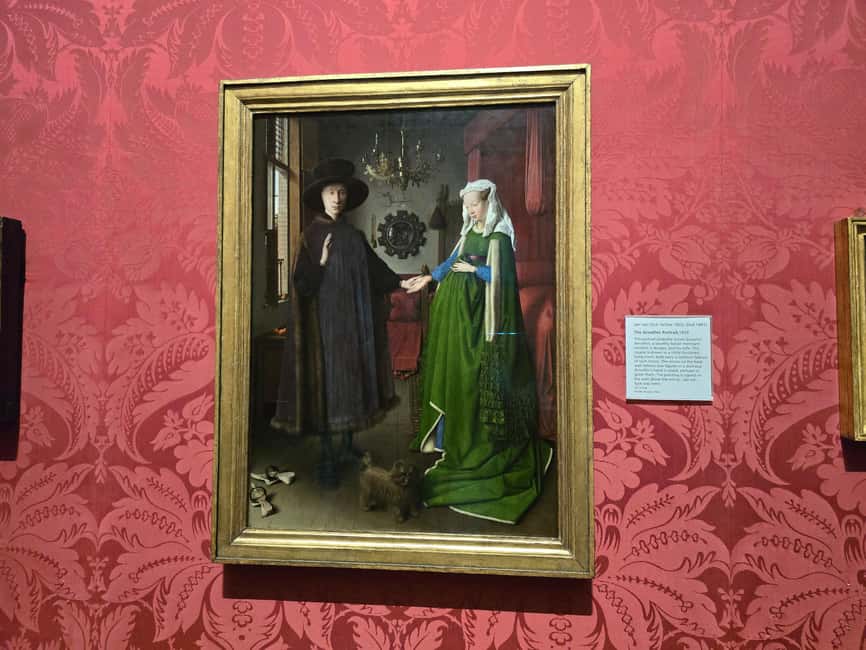
- Priority entrance via Sainsbury Wing, with meeting after security so you get moving faster
- Small group up to 10 participants, keeping questions in the conversation
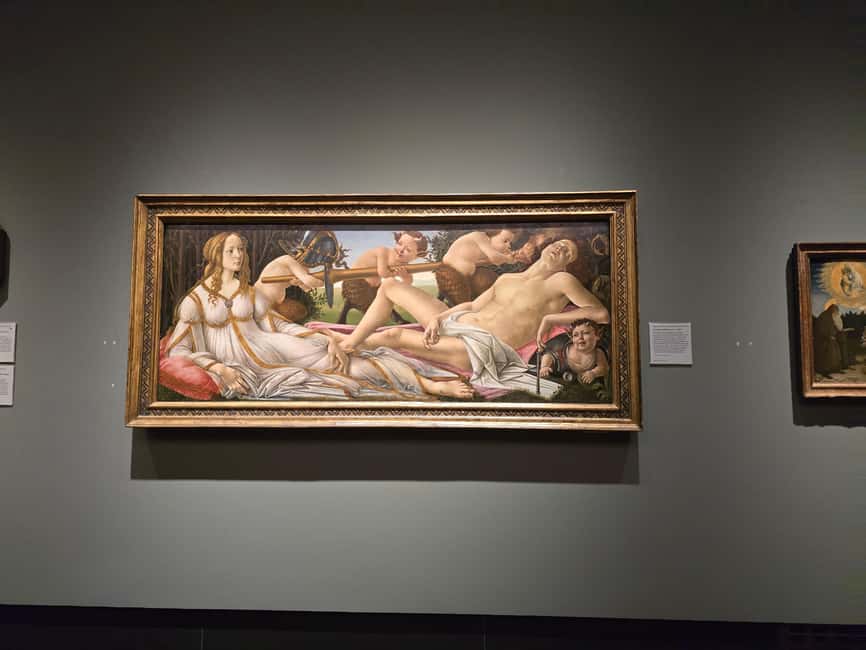
- A chronological hit list from Leonardo da Vinci to Michelangelo, Turner, Monet, Seurat, and Van Gogh
- Technique plus symbolism, so you understand choices in color, light, and realism
- Guides with strong presence including humor and a knack for pointing out details
Getting In Quickly: Sainsbury Wing and the Yellow Flag
The tour starts at the National Gallery, and you will want to enter through the Sainsbury Wing. Your meeting point comes after security, on the right-hand side by the glass wall. Look for your guide 5-10 minutes early holding a yellow flag, then follow them as the group settles in.
This is not a tour that waits for late arrivals. The session starts on time, and you will not be able to join late, so I recommend arriving about 15 minutes early just to absorb the pre-tour setup time. It is a simple trick that saves stress, especially in busy central London where security lines can be unpredictable.
Also, plan for museum comfort. Expect you will do a lot of standing and looking up close, so bring comfortable shoes and pace yourself. If you are sensitive to crowds, the priority entrance is a real advantage because it helps you get inside and start the art sooner.
More Museum Tours in London
- London: Chelsea Football Club Stadium and Museum Tour
★ 4.8 · 4,576 reviews - London: British Museum Guided Tour
★ 4.3 · 1,182 reviews - London: British Museum Guided Tour with Entrance Tickets
★ 4.9 · 748 reviews
A Two-Hour Tour That Actually Covers the Right Works
A 2-hour guided visit sounds short, but that is kind of the point here. The National Gallery is huge, and self-guided wandering can turn into a lot of random looking with no connections. This tour does the organizing for you, grouping works by era and theme so you can compare how artists thought and how audiences expected art to function.
You will travel through key moments in European art rather than trying to cover everything. That includes Renaissance shifts toward more convincing realism, the way the Industrial Revolution changes what artists want to show, and the Impressionists’ new focus on light and everyday life. Then you end with Van Gogh, where expression becomes the main subject.
The small group size matters. With limited to 10 participants, you are more likely to get direct answers when you ask questions. In real terms, that means you are not just listening, you are learning how to look. It also helps the guide keep the pace tight so you do not lose time recalibrating every time the group stops.
Renaissance Spotlight: Leonardo da Vinci and Michelangelo’s Lasting Impact
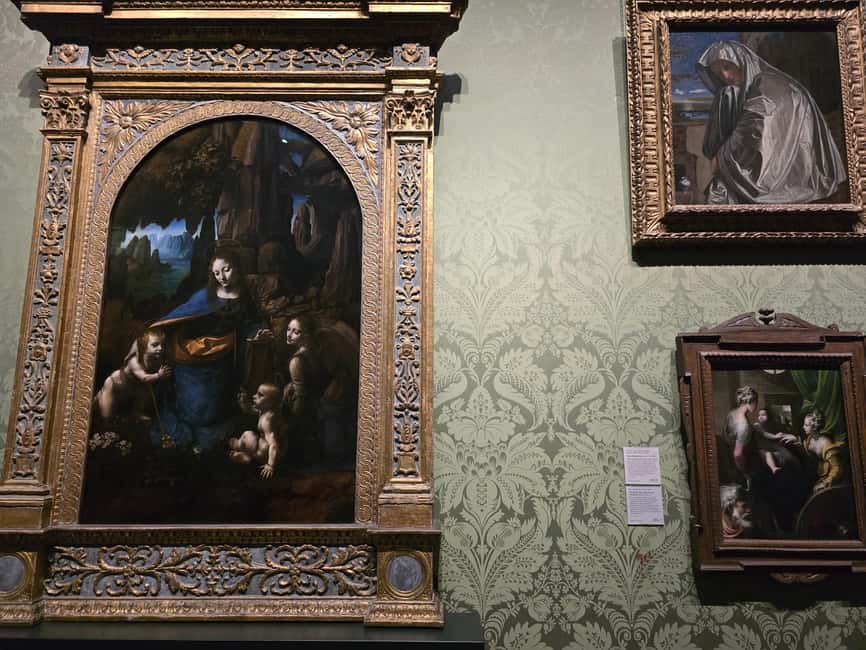
The tour’s Renaissance section is where the basics of artistic change start to click. You begin with Leonardo da Vinci’s The Virgin of the Rocks, a work famous for its atmosphere and complex visual storytelling. Your guide will point out how composition and symbolism work together, so the painting is not just a pretty religious scene.
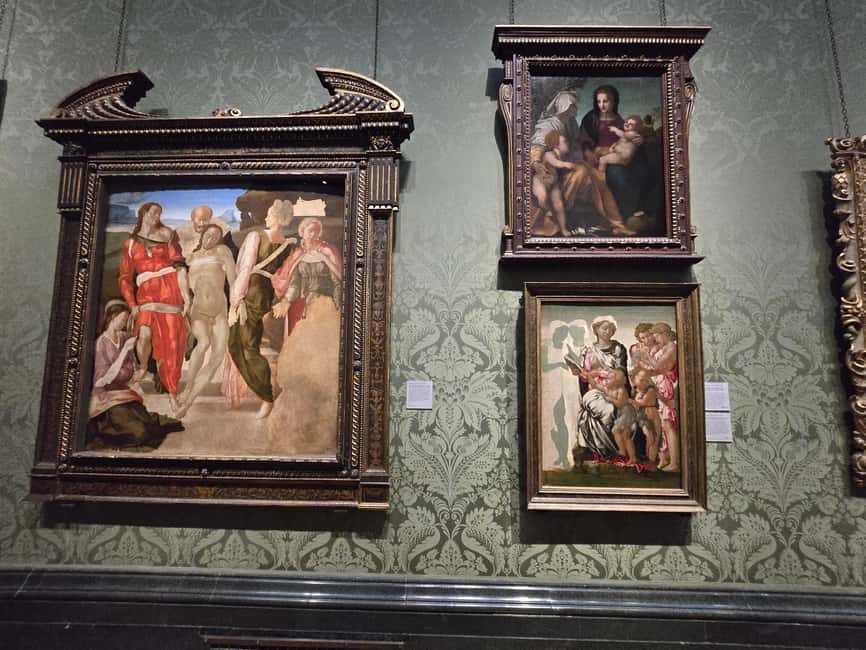
Then you move to Michelangelo’s only surviving easel painting, The Entombment. This is a powerful anchor for the Renaissance story because it shows how human figures can carry emotion and weight without needing a huge cast or a theatrical stage. The guide also helps you interpret how Renaissance masters approached realism in religious subjects, where the goal was to make the spiritual feel present.
Here is what I like about this Renaissance pairing: it gives you contrast. Leonardo brings layered meaning and careful structure, while Michelangelo brings intensity and physical presence. When you are taught to compare the two, you start noticing choices like how faces are shaped, how bodies are arranged, and how space is implied.
A practical note, if you are the type who wants to take your time with a single masterpiece, this section might feel fast. The tour is designed for breadth, not long sittings in one spot. Still, you leave knowing what to look for next time you return.
Industrial-Age Energy: Turner’s Rain, Steam and Speed
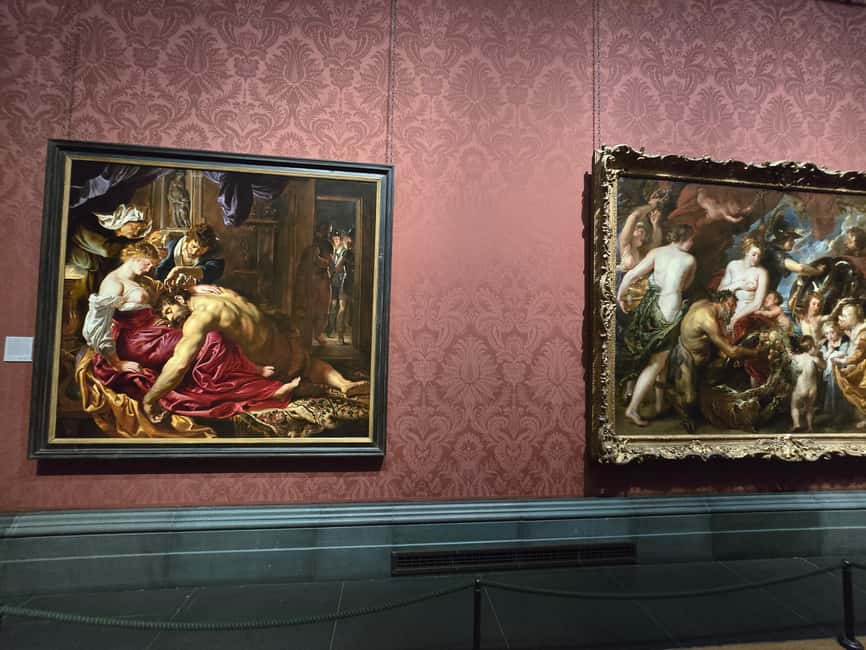
Next comes J.M.W. Turner and the Industrial Revolution, with Rain, Steam and Speed. This is the era where the National Gallery begins to feel less like a museum of old rules and more like a lab for new ideas. Turner’s subject is movement and power, and the painting’s energy is exactly why it lands so well in a guided format.
Your guide will explain the techniques and the symbolism so the painting stops feeling like chaos. When you understand what you are seeing, you can appreciate how Turner uses light and atmosphere to suggest speed and modern force. The point is not just that the train looks dramatic, it is that art is responding to a changing world.
I also like that this part is positioned between the Renaissance and the Impressionists. It acts like a bridge in your mental timeline. You can feel the shift from art aiming for structured realism to art experimenting with effects, perception, and the sensation of modern life.
If you are expecting this tour to focus only on the most famous paintings, the inclusion of Turner is a smart reminder. It is famous for a reason, but it is also a turning point in what artists choose to paint and how viewers learn to read those choices.
More gallery rooms between showers:
- London: Tour of the British Museum★ 4.1 · 678 reviews
- Afternoon Tea at the British Museum★ 4.2 · 511 reviews
- London: Paradox Museum Entry Ticket★ 3.9 · 441 reviews
- London: National Gallery Guided Tour with Art Expert Guide★ 4.7 · 440 reviews
Monet and Seurat: Color, Light, and Looking Differently
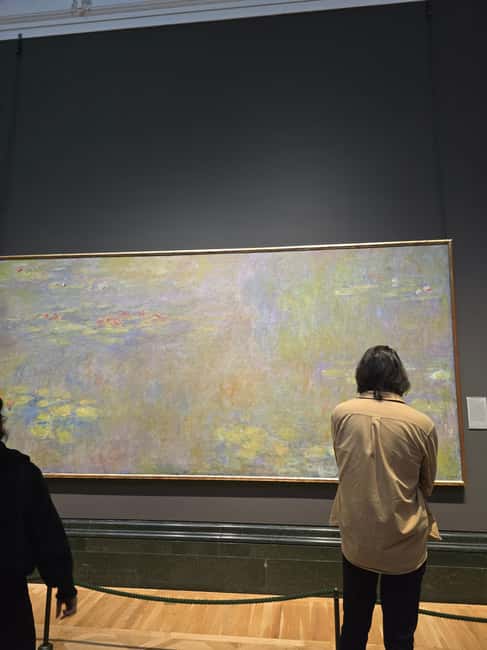
When the tour moves into the Impressionist period, you start seeing why brushwork and color became the message. You will view Claude Monet’s The Water-Lily Pond and Georges Seurat’s Bathers at Asnières. These are not just popular titles, they are teaching tools for how different artists break from older conventions.
Monet is where you learn how light can become a subject. The Water-Lily Pond invites you to notice how the surface changes, how reflections move, and how the painting can feel like you are standing near water rather than looking at a distant scene. The guide’s commentary helps you understand how technique supports mood, so you can see beyond the obvious flowers and lilies.
Then Seurat brings a different kind of innovation. Bathers at Asnières is a great example of controlled experimentation, where the painting’s effect depends on how color is built up. When you learn about the idea behind the technique, the image becomes more than a snapshot. It becomes a system for producing a particular kind of visual experience.
This pairing works because it teaches comparison without making you feel tested. You are looking at two artists responding to everyday life in two very different ways. By the end, you are not just impressed, you have a clearer idea of what changed from earlier eras.
Van Gogh Closing Chapter: Everyday Scenes With High Emotion
The tour finishes with Vincent van Gogh, where expression takes the front seat. The guide will walk you through how his brushstrokes and vivid color create depth and intensity in scenes that might otherwise feel ordinary. This is a good ending because it pulls together what you learned earlier about technique and symbolism, then turns it into feeling.
Van Gogh is also the part where you tend to notice your own reactions more. You start asking why the sky looks the way it does, why the movement in the paint feels urgent, and how the artist’s choices shape your emotions. That is exactly what the guide encourages, questions and shared interpretations.
I like that the ending does not treat Van Gogh as a final exam. It treats him as a creative turning point, showing how new ways of making paint can change how you see real life. If you came to the National Gallery thinking it was all about formal religious or historical scenes, this finale helps you understand how personal vision became part of the art’s power.
If you are short on time in London, this kind of closing works because it gives you a lasting memory, not just a list of names.
How the Guide Turns Paintings Into Stories You Can Repeat
What makes this tour worth your time is the way the guide connects technique to meaning. You are not just told facts, you learn how artists achieved effects and why those effects mattered. The tour is designed to be interactive, and the guide encourages questions and interpretation, so you can test your ideas while you are still in front of the painting.
The best moments, based on how guides such as Tara, Antonio, Giovanni, and Tony are described, are often the ones that get you past the first glance. For example, the guide style emphasizes noticing hidden details and mood, not just memorizing the title. That is how you leave the gallery feeling smarter, not just entertained.
You also get a clear chronological line. The guide organizes the highlights in a way that helps you see how each era responds to the last. Renaissance realism shapes how later artists think about people and space. Industrial-era subjects shift the focus toward modern sensation. Impressionists push how light gets recorded. Van Gogh then uses all that knowledge to express an inner world.
This matters because the National Gallery can overwhelm you if you show up with zero strategy. After a good guided run, you can return later and recognize the building blocks you just learned. In other words, you get a map, not just a snapshot.
Practical Stuff That Makes or Breaks the Day
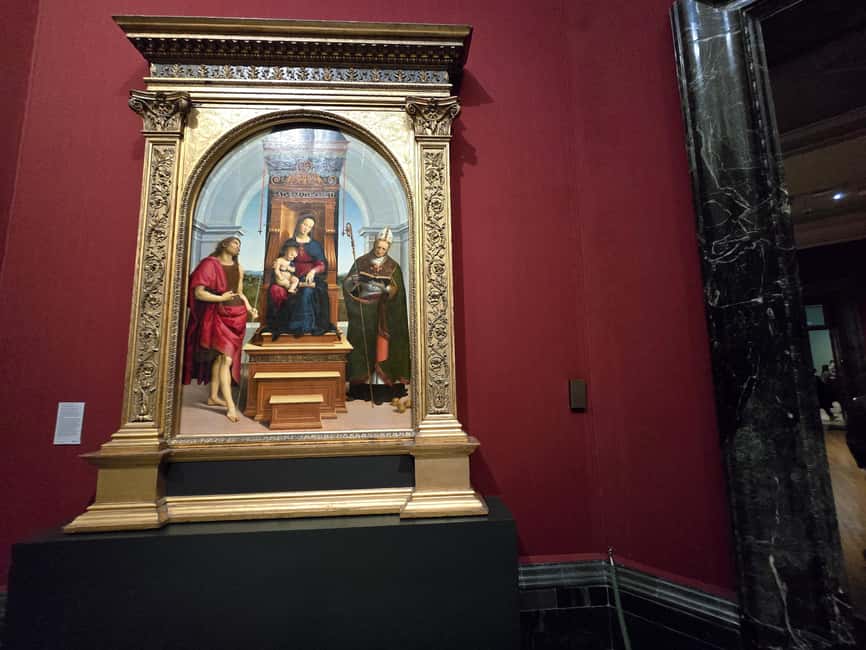
A few rules make this tour smoother. Flash photography is not allowed, so plan to enjoy the art without trying to capture everything on your phone. The guide will keep you moving, so bring patience for short transfers between rooms.
Comfort is worth taking seriously. You will cover a lot in 2 hours, and you will do better if your shoes are supportive. If you have mobility needs, remember the tour is not suitable for people with mobility impairments. That is not a minor note, it is the key decision point.
Timing is also simple and firm. The guide arrives 5-10 minutes early, but you should aim to get there at least 15 minutes early for security and settling in. Since the tour starts on time and you cannot join later, late arrival is the easiest way to ruin the experience.
Finally, the tour runs in English. If you need another language, this is a mismatch based on the information provided, so plan accordingly.
Priority Entrance Value: $21 Worth It, If You Care About Context
At $21 per person, you are paying for three things that are hard to replicate well on your own: priority entrance, expert commentary, and a small-group pace focused on major highlights. The priority entrance is especially valuable because it helps you skip the main security slowdown via an express security check.
The expert commentary is the bigger value driver. The National Gallery is famous, but fame alone does not teach you how to see. When a guide explains the techniques and symbolism, you gain a framework for understanding what you are looking at. That is what turns famous paintings into something you can describe and remember.
The small group format adds practical value too. With up to 10 people, the guide can keep an eye on attention, answer questions, and manage timing without rushing everybody through a checklist. It also reduces the chance you spend the tour standing awkwardly behind tall people with no chance to ask a thing.
Here is my balanced take on value: if you only want background music and casual looking, self-guided tickets might feel cheaper. But if you want the story behind the brushwork and you like asking questions, $21 starts to feel like a smart way to buy time and clarity in one package.
Who Should Book This National Gallery Tour
I think this tour is a great fit for you if you want a guided path through the most influential works without losing half a day wandering. It is also ideal if you are art-curious but do not know where to start. The tour explains techniques and symbolism in plain terms, which helps first-timers feel confident.
It is especially good if you like comparisons. Renaissance realism, Turner’s industrial drama, Impressionist light, and Van Gogh’s expressive color are all different ways of seeing. A guide helps you connect those dots quickly.
You might want to skip it if you need accessibility support, since it is not suitable for people with mobility impairments. If you prefer long slow viewing of one painting, a 2-hour highlight tour may feel too scheduled.
Should You Book This National Gallery Guided Tour?
Book it if you want a fast, focused route through iconic works with priority entry and a guide who helps you understand what you are seeing. It is also a solid choice if you will feel lost in a big museum and you want a plan that makes your time feel efficient.
Skip it if mobility is an issue or if you hate structured tours where you have to keep up. Also consider bringing a little curiosity, because the tour rewards your questions and your willingness to look beyond the obvious.
If you are only doing one guided experience at the National Gallery, this is one of the better ways to get real meaning out of your limited time.
FAQ
Where do I meet the guide for the National Gallery tour?
Enter via the Sainsbury Wing. After security, your meeting point is on the right hand side by the glass wall. The guide will be there 5-10 minutes before the tour starts holding a yellow flag.
How long is the guided tour?
The tour duration is 2 hours.
Is flash photography allowed?
No. Flash photography is not allowed during the tour.
How big is the group?
The group is small, limited to 10 participants.
Is the tour suitable for people with mobility impairments?
No. The tour is not suitable for people with mobility impairments.
What is a safe arrival time before the tour?
Arrive about 15 minutes prior to the activity to allow enough time for security. The tour starts on time and you cannot join later.
Newest entries under London






Museums, compared.
Tower of London and Crown Jewels Exhibition Ticket
Read our review →
Liverpool Football Club Museum and Stadium Tour
Read our review →
Chelsea Football Club Stadium and Museum Tour
Read our review →

British Museum Guided Tour with Entrance Tickets
Read our review →Browse the lists this tour appears in