
Reviewed · MUSEUMS
London: British Museum Private Tour with Art Specialist
The British Museum overwhelms on day one. This private, Blue Badge tour keeps the visit tight, starting at the Rosetta Stone and steering you to the parts you care about most. I love the way Richard Palus explains the big pieces like gods, heroes, and faith, and I love that the headsets make every story clear even when galleries get busy. The tradeoff is simple: in about 2 to 2.5 hours, you cannot see everything, so you will be choosing a direction.
You meet the guide at Montague Place, in front of the group entry, holding a MyLondonGuide sign, and you enter through a separate entrance to help you skip the main lines. It is a private group, so questions do not get lost, and the guide adjusts the second half around your interests.
I also like the tour’s themed approach, connecting changing beauty standards, belief, ancient magic, and destiny, with surprising links to Star Wars. Expect live guiding in English or Polish, plus the option to focus on ancient Egypt, Assyria, Greece, Rome, or medieval England.
In This Review
- Key highlights you should know before you go
- Meeting at Montague Place, then getting in without the headache
- How the 2-hour private format keeps the museum from feeling impossible
- Rosetta Stone to Ramesses II: the ancient world, explained in human terms
- Khorsabad winged bulls and Lion Hunt reliefs, then into Egyptian mummies
- Shiva Nataraja and the Parthenon Marbles: when art starts telling philosophy
- Choose your focus: ancient Egypt, Assyria, Greece, Rome, or medieval England
- Headsets and question time, especially if you travel with teens or kids
- Rules to know right away: selfie sticks and flash photography
- Value check: does a $65 private museum tour make sense?
- Should you book this British Museum private tour?
- FAQ
- How long is the British Museum private tour?
- Is the tour private?
- What are the main things we will see?
- What languages are available for the guide?
- Are headsets included?
- Where do we meet the guide?
- Is transportation or food included?
- Is the tour suitable for people with mobility impairments?
Key highlights you should know before you go
- A Blue Badge guide who tells art history, not just trivia
- Headsets included, so you hear the guide clearly as you move
- A focused 2-hour route hitting the museum’s most famous anchor pieces
- Your choice matters, since the guide tailors the remaining time to your interests
- Story themes connect across cultures, including beauty ideals and belief systems
- Skip-the-line entry via a separate entrance at Montague Place
Meeting at Montague Place, then getting in without the headache
This is the kind of tour that starts off feeling organized, which matters at the British Museum. You meet the guide at the group entry on Montague Place, they are holding a sign for MyLondonGuide, and then you enter with them. You do get a skip-the-line style entrance, which saves time that you can spend looking at actual objects instead of queuing.
Plan to handle your own trip to the museum. Transportation to the British Museum is not included, and food and drinks are not included either, so bring your own plan for a snack if you need one. The good news is the tour itself is only about 2 to 2.5 hours, so you are not locking yourself into a half day.
If you are traveling with kids or teens, this setup helps a lot. It is easier to manage attention when you have a guide who can answer questions right away and keep the group moving at a pace that works.
More Museum Tours in London
- London: Chelsea Football Club Stadium and Museum Tour
★ 4.8 · 4,576 reviews - London: British Museum Guided Tour
★ 4.3 · 1,182 reviews - London: British Museum Guided Tour with Entrance Tickets
★ 4.9 · 748 reviews
How the 2-hour private format keeps the museum from feeling impossible
The British Museum is massive. Even with a map, you can end up wandering with no sense of what you are looking at. This private tour avoids that problem by using a clear structure: you start with the museum’s iconic anchors, then you spend the rest of the time on what you care about most.
The private group format is key. You do not have to match your pace to strangers. If you want a slower look at a specific artwork, you can ask. If you want more context or comparisons, you can ask that too. This is also why the headsets help. They cut through the museum noise so you are not fighting for audio while standing shoulder to shoulder with other visitors.
The main consideration is timing. In a 2 to 2.5 hour visit, you will not see the full museum. That is not a bad thing if you treat this as a targeted introduction, then plan to return later if a certain culture pulls you in.
Also note: the tour is not suitable for people with mobility impairments, so if accessibility is a concern, you will want to look for an alternative format.
Rosetta Stone to Ramesses II: the ancient world, explained in human terms
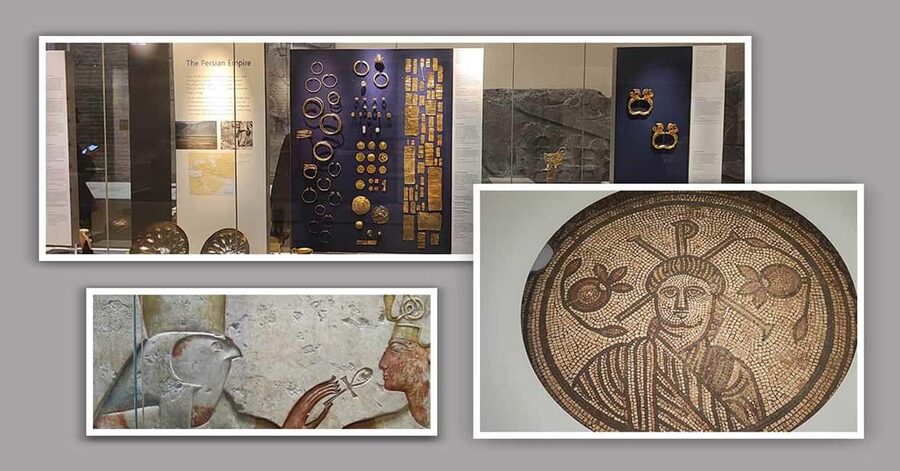
Your visit begins with the British Museum’s headline pieces. You will stand before the Rosetta Stone, and this is where the tour often clicks for first-timers. The Rosetta Stone is famous because it helped unlock how Egyptian writing could be read, and your guide will connect it to bigger ideas about power, language, and how cultures communicate.
From there, you will move through major Egyptian highlights, including Ramesses II. You will not just be shown a ruler’s likeness. You get the meaning behind the imagery, why rulers commissioned specific styles, and how public art worked like political messaging.
Even if you do not know anything about Egypt going in, you will leave with a mental framework. You start to understand what you are seeing, and why the British Museum collected these works in the first place, and how Egyptian beliefs shaped the art.
This section also tends to fit well with the tour’s thematic approach. For many people, it becomes less about names and more about the big themes: belief systems, what was considered beautiful, and why certain symbols mattered.
Khorsabad winged bulls and Lion Hunt reliefs, then into Egyptian mummies
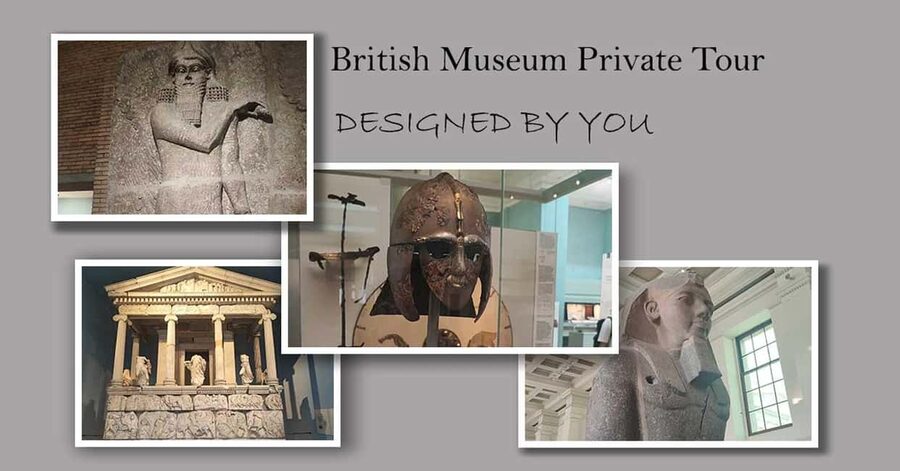
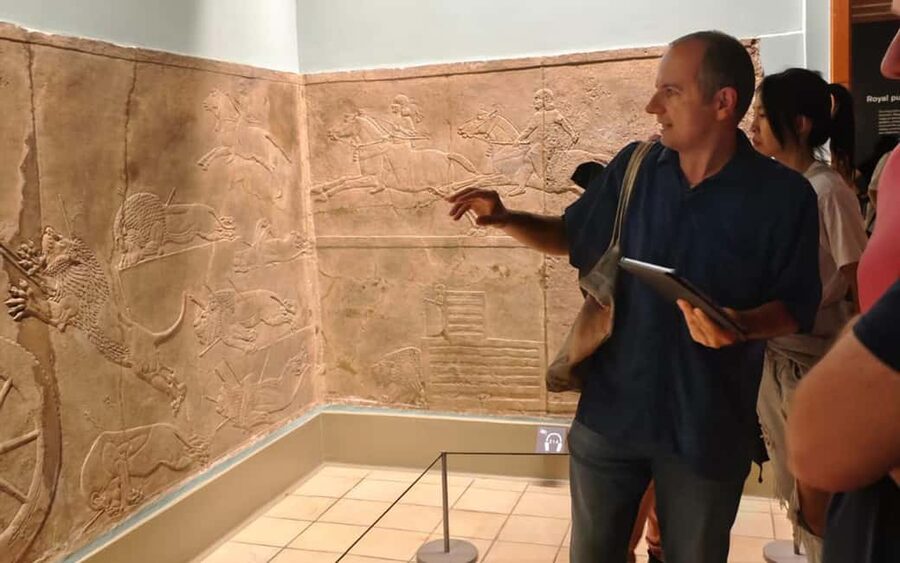
After the Egyptian anchors, you will encounter Assyrian and Egyptian material in a sequence that helps the stories stick. You will see the mighty Winged Bulls of Khorsabad, and you get more than a dramatic first impression. The guide will explain how Assyrian art used scale and symbolism to communicate authority, protection, and divine backing.
Next come the Lion Hunt reliefs. These scenes might look like action work, but your guide will frame them as a statement of kingship. A hunt is never only about hunting when it is carved for display. You start picking up how the composition communicates strength, control, and a kind of destiny the ruler represents.
Then the tour moves into the realm of Egyptian mummies. This is where belief becomes tangible. Even if you keep it respectful and quick, you will hear the logic of mummification and what it was meant to preserve. Your guide also helps you connect the emotional weight of the subject to the museum setting, so it does not feel like shock value. It is history, explained.
A practical tip: if you tend to get overwhelmed in museums, this route helps because the scenes change, but the themes stay linked. Gods and faith turn into kingship and storytelling across time.
More gallery rooms between showers:
- London: Tour of the British Museum★ 4.1 · 678 reviews
- Afternoon Tea at the British Museum★ 4.2 · 511 reviews
- London: Paradox Museum Entry Ticket★ 3.9 · 441 reviews
- London: National Gallery Guided Tour with Art Expert Guide★ 4.7 · 440 reviews
Shiva Nataraja and the Parthenon Marbles: when art starts telling philosophy
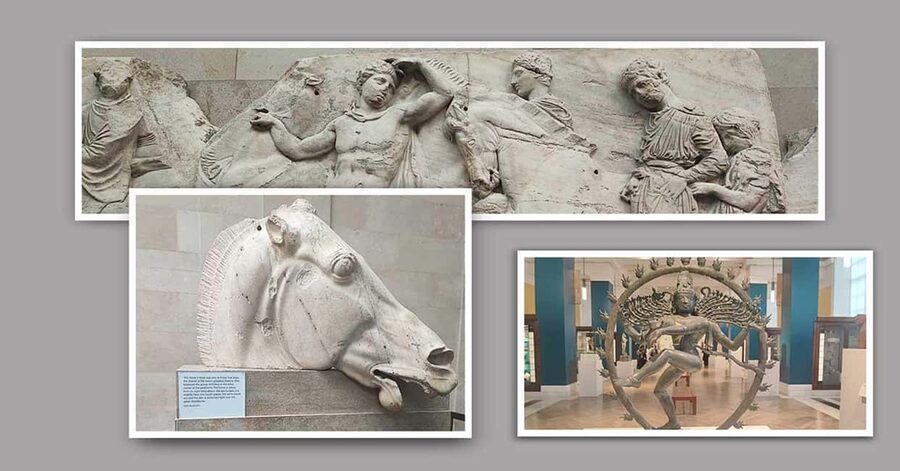
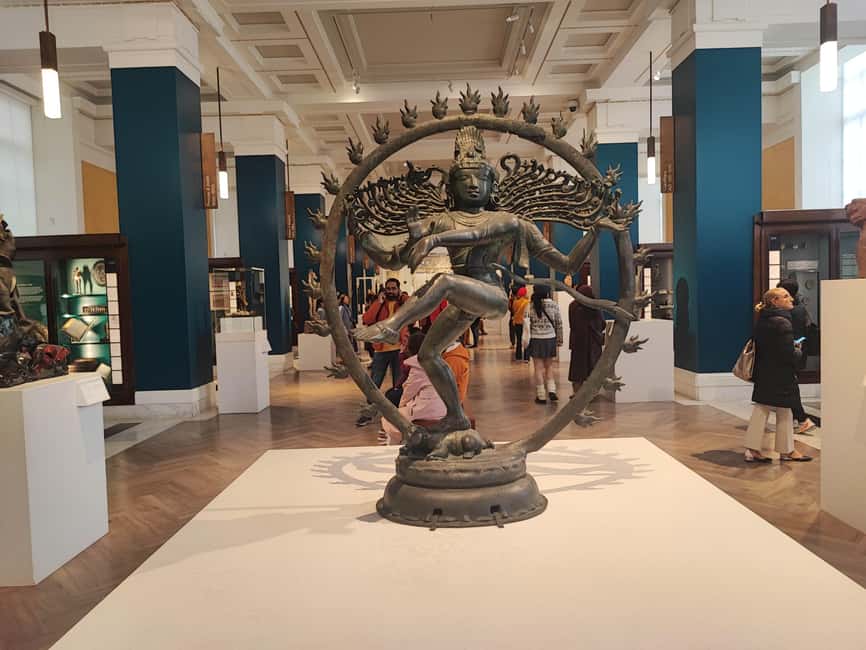
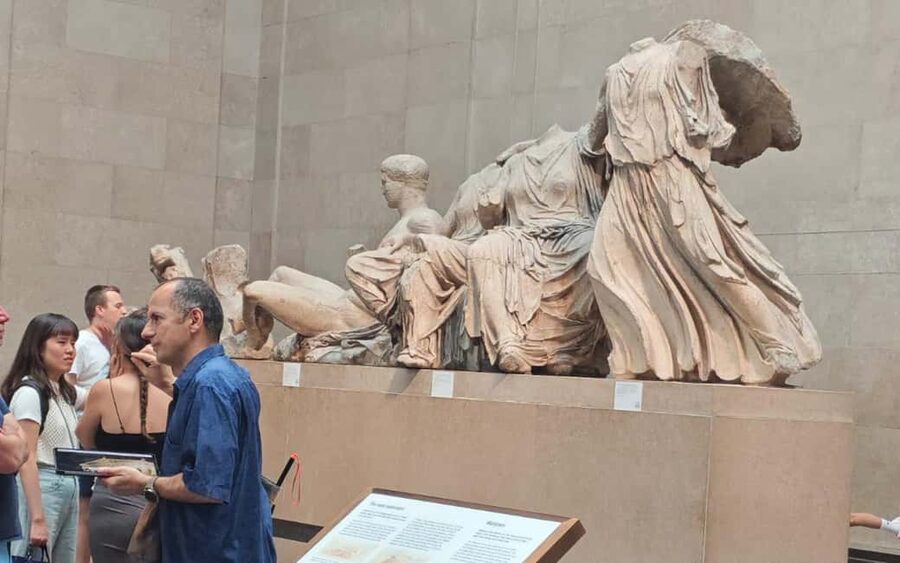
If you have only time for one museum highlight, the Parthenon Marbles are often the best payoff. On this tour, you get there with context, so it lands harder. You will also see Shiva Nataraja before that, which shifts the lens from Western classical art to a different world of symbolism and movement.
For the Shiva Nataraja stop, the guide can explain what you are seeing through belief and representation. It is a chance to understand how religious meaning can be expressed through form, pose, and gesture. You are not learning it as a distant academic topic. You are learning it as visual language.
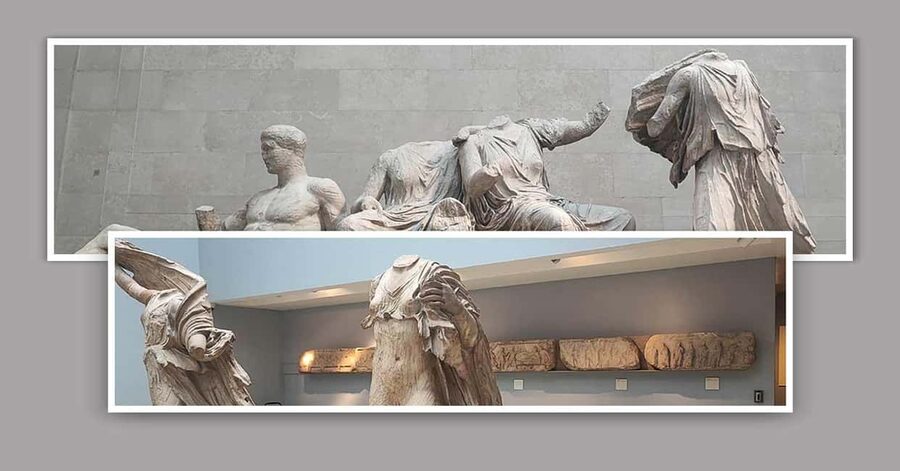
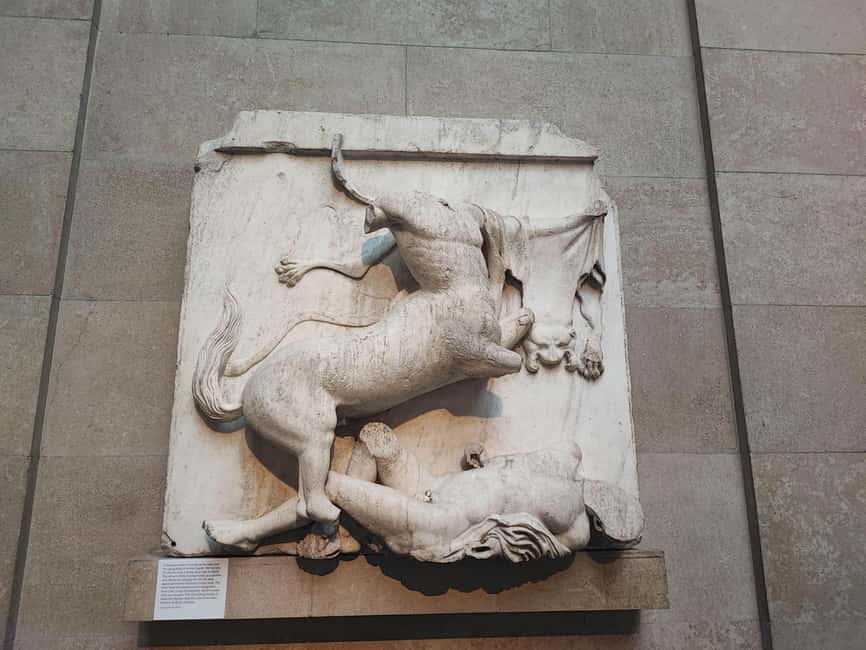
Then you reach the Parthenon Marbles. The key here is pacing and framing. You are not just looking at famous fragments. You are hearing stories of gods, heroes, and faith across cultures, and your guide draws connections that make Greek art feel less like museum dust and more like a living idea system.
One reason this tour consistently earns top marks is that the guide can make this section feel personal. For example, many people call out the Parthenon as the best part, because it is the moment everything starts making sense: myth, civic identity, beauty ideals, and the way art carries messages through centuries.
Choose your focus: ancient Egypt, Assyria, Greece, Rome, or medieval England
After the highlights, the guide tailors the rest of the visit to one area you choose. The options are ancient Egypt, ancient Assyria, ancient Greece, ancient Rome, or medieval England.
Here is how to make that choice work in your favor. Pick the era that matches your curiosity style:
- If you like writing, symbolic power, and transformations in daily life, Egypt can be a great pick.
- If you are drawn to rulers, conquest stories, and dramatic royal imagery, Assyria often clicks.
- If you want myth, civic values, and how gods and heroes shape stories, Greece is strong.
- If you are into architecture, empire, and how Rome adapted earlier cultures, Rome can feel like a narrative upgrade.
- If you are interested in how European culture evolved over time, medieval England gives you a different timeline feel.
You can tell the guide what you want early, and they use your questions to steer the route. This is the biggest value of a private tour. You are not stuck with a one-size-fits-all path.
Headsets and question time, especially if you travel with teens or kids
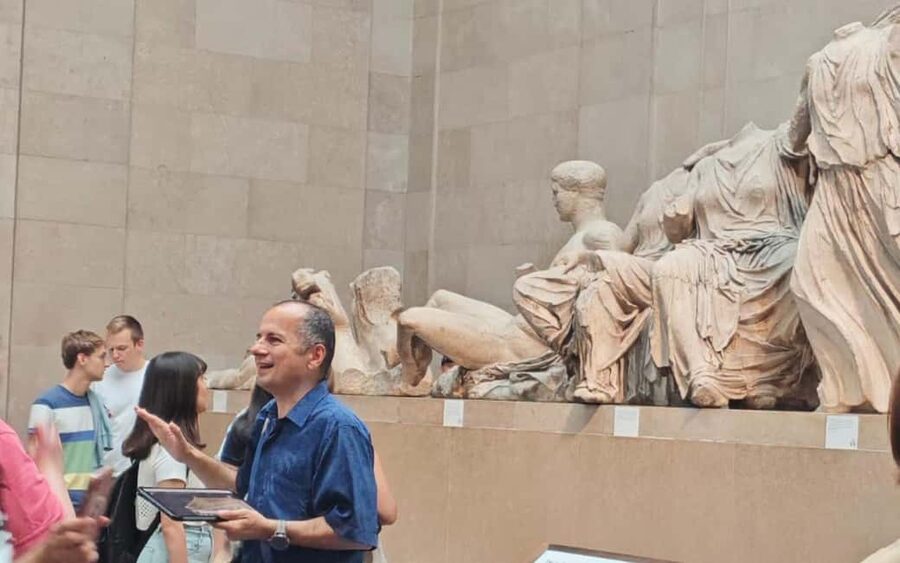
I like private tours that respect attention spans. This one does, thanks to the headsets and the guide’s approach. You get headsets included, so you can focus on the story instead of trying to read lips over museum noise.
Richard Palus, a guide associated with this experience, has a reputation for being prepared and clear. One booking described how he used visual guides to help explain stories and connect them to modern references for teens, which is exactly what you want when you are trying to keep younger minds engaged.
He also has a track record of being patient with children’s questions. That matters, because kids tend to ask the best questions, and a good guide does not treat those questions like interruptions.
If you want a tour that supports back-and-forth conversation, this setup works well. You are encouraged to ask anything, and the visit stays shaped by what you bring to it.
Rules to know right away: selfie sticks and flash photography
Before you arrive, be aware of the museum rules included with this tour experience. Selfie sticks are not allowed, and flash photography is not allowed.
These rules are easy to follow, but they can affect your plans if you love taking lots of photos. If photography matters, plan to shoot without flash and keep your setup simple.
Also remember you will be walking between gallery stops for the full experience. Wear comfortable shoes. Museums look flat on a map, but you will cover real ground in a short time.
Value check: does a $65 private museum tour make sense?
At $65 per person for a private, 2-hour experience, the question is not whether you paid for access. The question is whether you paid for meaning.
Here you do get meaning. You are working with a certified Blue Badge Guide trained in art history, and you get structured highlights plus guided tailoring. You also skip the main lines through a separate entrance, and you get headsets included. Those practical touches are not fluff. They protect your time and your ability to hear and understand.
This tour is especially good value if you are:
- A first-time museum visitor who wants a structured path
- A history lover who likes context and expert insight
- Traveling with people who want a plan, not an open-ended sprint through galleries
It might be less of a fit if you prefer to roam freely with no guide, or if you are the type who wants to spend half a day in one room. In that case, you might choose a museum ticket and spend your time at your own rhythm.
But if your goal is to leave with real understanding, not just photos, this price starts to look fair.
Should you book this British Museum private tour?
Book it if you want the British Museum to feel readable. You will get a smart starter route, expert storytelling, and a chance to focus on the era that genuinely interests you. I also think it is a strong choice if you are traveling with kids or teens, because the guide is set up to handle questions and explain things in a way that makes sense.
Skip it or consider alternatives if mobility access is a concern, or if you know you want to spend much longer than 2 to 2.5 hours.
If you are on the fence, pick your top 1 focus area before you go. Then ask for the route that matches that interest. With this tour format, your preferences are the point.
FAQ
How long is the British Museum private tour?
The tour lasts about 2 to 2.5 hours.
Is the tour private?
Yes. It is a private group.
What are the main things we will see?
You will see major highlights such as the Rosetta Stone, Ramesses II, the Winged Bulls of Khorsabad, the Lion Hunt reliefs, Egyptian mummies, Shiva Nataraja, and the Parthenon Marbles. The rest of the visit is tailored to your interests.
What languages are available for the guide?
The live tour guide offers English and Polish.
Are headsets included?
Yes. Headsets are included so you can hear the guide clearly.
Where do we meet the guide?
The meeting point is in front of the group entry to the British Museum on Montague Place. The guide will be holding a sign that says MyLondonGuide.
Is transportation or food included?
No. Transportation to the museum and food and drinks are not included.
Is the tour suitable for people with mobility impairments?
No. It is not suitable for people with mobility impairments.
Newest entries under London






Museums, compared.
Tower of London and Crown Jewels Exhibition Ticket
Read our review →
Liverpool Football Club Museum and Stadium Tour
Read our review →
Chelsea Football Club Stadium and Museum Tour
Read our review →

British Museum Guided Tour with Entrance Tickets
Read our review →Browse the lists this tour appears in