
Reviewed · MUSEUMS
London: British Museum + Guided Tour + Priority Entry
You can learn a lot fast here. This 80-minute British Museum tour uses priority entry and a live English guide to hit the museum’s biggest ancient-story highlights without you wandering aimlessly.
I especially like how the tour connects artifacts to real human lives, from mummies and afterlife beliefs to royal Assyrian power. You also get a clear, step-by-step route that starts at the Rosetta Stone and moves through Egypt, Greece, Assyria, and Viking-era Scotland.
One thing to keep in mind: the British Museum is huge, so this is a smart overview, not a full museum takeover. If you want deep, room-by-room exploring, plan extra time after the tour.
In This Review
- Key highlights at a glance
- Why an 80-minute British Museum highlights tour makes sense
- Finding the Montague Place meeting point quickly
- The Rosetta Stone start: how writing turns into understanding
- Ancient Egypt focus: mummies, coffins, and afterlife beliefs
- Greek stop: Parthenon sculptures and myth in stone
- Assyria in relief: lion hunt power and royal messaging
- Lewis Chessmen: a medieval Viking link
- Pacing, priority entry, and what to do after 80 minutes
- How wheelchair access works in real life here
- Who should book this tour, and who might prefer solo exploring
- Value check: is $33 a good deal for this museum time?
- The kind of guides you’ll likely get
- Should you book this British Museum guided tour with priority entry?
- FAQ
- How long is the British Museum guided tour?
- Where do we meet for the tour?
- Is the tour wheelchair accessible?
- What language is the live guide?
- Does this experience include priority entry?
- Can I take photos during the tour?
- Are food and drinks allowed in the exhibition rooms?
- Is there free cancellation?
- Do I have to pay immediately to reserve?
- Who provides the tour?
Key highlights at a glance
- Priority entry helps you start sooner and avoid some of the worst waiting
- A live English guide keeps the tour moving and answers questions in plain language
- Big-hitter stops like the Rosetta Stone and Elgin Marbles
- A focused sweep through Egypt, Greece, Assyria, and the Lewis Chessmen
- A good pace for families and first-timers, without making you sprint
- You finish with time to browse the museum after the tour at your own speed
Why an 80-minute British Museum highlights tour makes sense
The British Museum can feel like a city inside a building. There are so many galleries that your first instinct is to panic, then to accidentally walk past the one thing you came for.
This tour fixes that. You get a guided route that points you to the objects that most people associate with the museum. The timing matters too, because 80 minutes is long enough to learn the stories behind key artifacts, but short enough that you still have energy left to explore on your own after.
I also like the structure. Instead of listing dates, the guide uses each object as a stepping stone to the next civilization. You end up with a cleaner mental map: language systems and writing (Rosetta Stone), life after death (mummies and coffins), Greek myth in sculpture (Parthenon works), imperial intimidation (Assyrian lion hunt reliefs), and a surprise Viking connection (Lewis Chessmen).
The one possible drawback is obvious once you think about it. The tour covers a handful of famous areas, not everything. If you love one topic and want to linger, you will probably want additional time on your own.
More Museum Tours in London
- London: Chelsea Football Club Stadium and Museum Tour
★ 4.8 · 4,576 reviews - London: British Museum Guided Tour
★ 4.3 · 1,182 reviews - London: British Museum Guided Tour with Entrance Tickets
★ 4.9 · 748 reviews
Finding the Montague Place meeting point quickly
You’ll meet outside the British Museum at the Montague Place entrance, by the two stone lions. There are two entrances to the museum, so this detail is worth treating like a checklist item, not a suggestion.
This matters because the museum sits in a busy area and several lines of people can look similar from the street. If you show up a little early, you get time to confirm you’re at the right lions and not drifting toward the wrong side.
Practical tip: if you’re arriving by transit, leave yourself a buffer for the last few minutes on foot. Once you’re at the right entrance, the tour experience becomes much smoother.
The Rosetta Stone start: how writing turns into understanding
Your tour starts with one of the museum’s best-known anchors, the Rosetta Stone. This is a smart opening because it gives you a topic you can actually feel: how scholars learned to read Egyptian hieroglyphs again and again, rather than treating them like mysterious symbols.
What I like about starting here is that the guide can explain the impact without turning it into a lecture. The Rosetta Stone isn’t just an ancient object. It’s a bridge between worlds, and the story makes the rest of the museum feel connected instead of random.
Expect to spend real time looking, not just glancing. You’ll also get context for why this object changed how people interpreted ancient Egypt, which makes later Egyptian displays much easier to appreciate.
Also, photography is allowed, but flash is prohibited. So if you want a memory shot for the Rosetta Stone, plan for lighting that works without flash and keep your phone or camera steady.
Ancient Egypt focus: mummies, coffins, and afterlife beliefs
After the Rosetta Stone, the tour shifts into ancient Egypt’s worldview. You’ll see the museum’s collection of mummies and coffins, and the guide explains the beliefs around life after death.
This section is the emotional core for many visitors. Egypt isn’t just about tomb objects. It’s about how people planned for what came after death, including the rituals and techniques tied to mummification.
What you’ll likely remember from this part is the logic of the belief system. Instead of treating mummies as spooky props, you get a human reason behind the work: preparing a body for an expected afterlife. If you’ve ever wondered why this civilization invested so much effort into burial practices, this is where the tour answers it.
One practical reminder: the museum rules say no food and drinks inside the exhibition rooms. So if you need a snack, handle it before you enter the galleries. Bring a bottle for outside, but expect the indoor areas to be strict.
More gallery rooms between showers:
- London: Tour of the British Museum★ 4.1 · 678 reviews
- Afternoon Tea at the British Museum★ 4.2 · 511 reviews
- London: Paradox Museum Entry Ticket★ 3.9 · 441 reviews
- London: National Gallery Guided Tour with Art Expert Guide★ 4.7 · 440 reviews
Greek stop: Parthenon sculptures and myth in stone
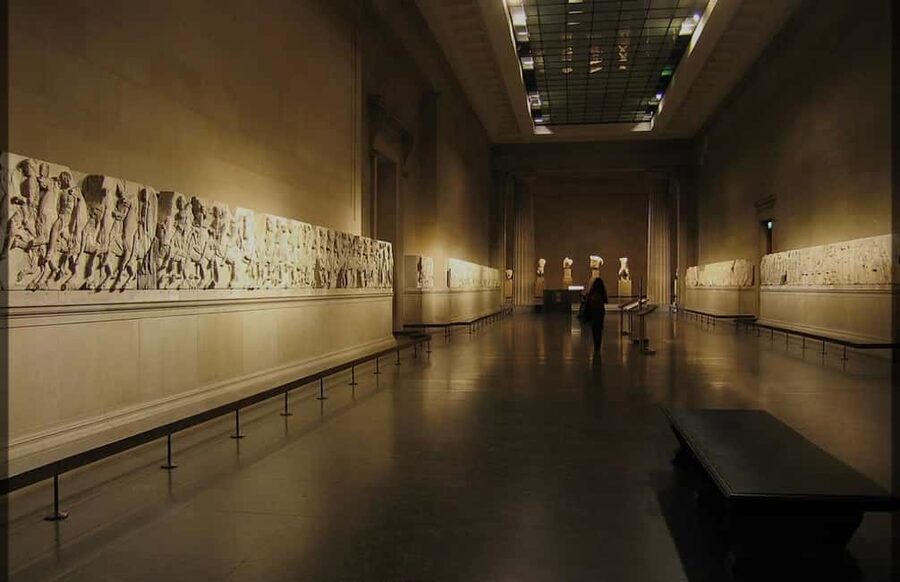
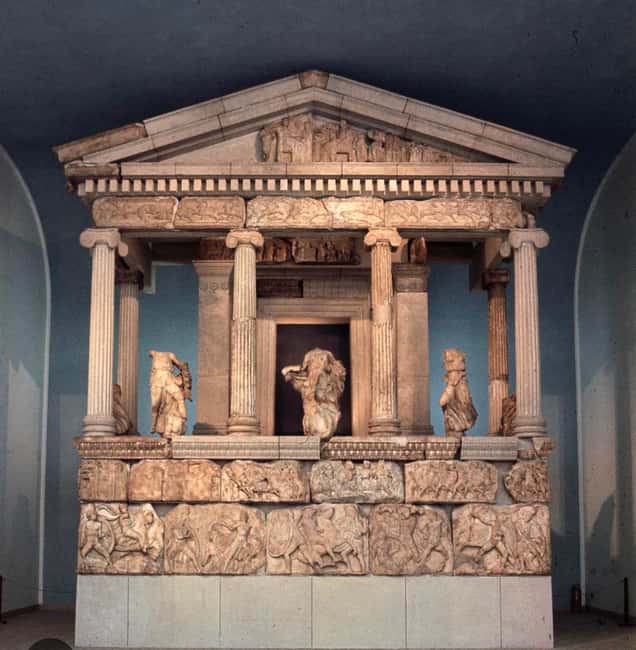
Next, you’ll move to Greek art, including the Parthenon sculptures, often called the Elgin Marbles. The guide points out that these works date back to the 5th century BCE and relate to scenes from Greek mythology.
This stop is valuable because it connects art to storytelling. Sculpture can feel distant if you treat it like decoration. With a guide, you see it as narrative and political messaging at the same time: myth, power, and cultural identity carved into stone.
Look for how the guide describes what you’re seeing and why these figures matter. The museum has more Greek material than any one tour can cover, but focusing on the Parthenon works gives you a strong starting point. Even if Greek mythology isn’t your usual hobby, the guide’s explanation helps you follow what’s happening in the scenes.
Also remember: the tour stays within a workable loop. You won’t be zig-zagging endlessly across the museum. That’s one reason an 80-minute format works.
Assyria in relief: lion hunt power and royal messaging
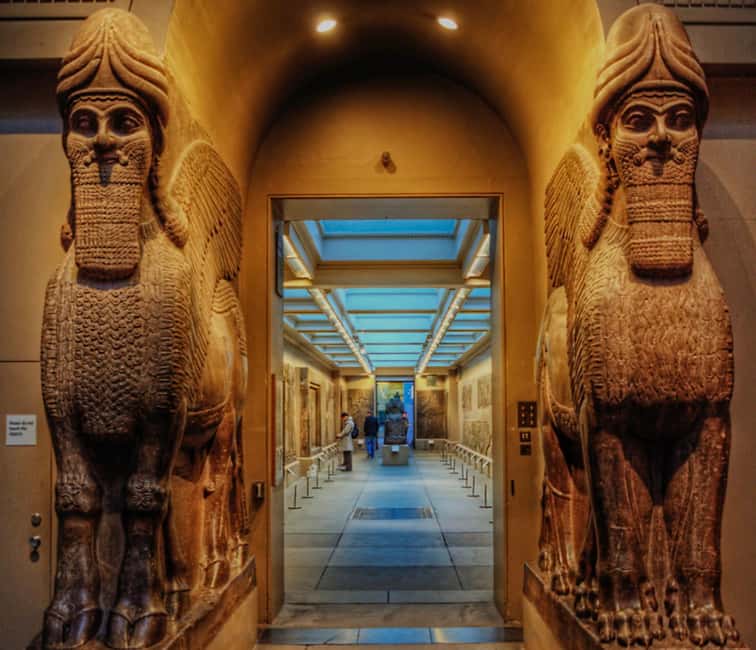
Then comes Assyria, with a highlight in the form of lion hunt reliefs. These carvings are detailed, dramatic, and clearly made for intimidation as much as art.
I like this section because it adds contrast to Egypt and Greece. You’re not only seeing religious belief. You’re seeing rule, military imagery, and the idea of dominance made visible.
The guide explains how the scenes reflect royal power and artistry. When you look closely, you start noticing patterns that you might miss alone, like how bodies are posed and how action is framed to make the hunt feel unstoppable.
If you like visual storytelling, Assyria is a great middle stop. By this point, you’ve already learned how objects can carry big meaning. The lion hunt reliefs show that power can be communicated through stone as well as through written text.
Lewis Chessmen: a medieval Viking link
One of the more surprising stops in the tour is the Lewis Chessmen. These are intricately carved chess pieces discovered on the Isle of Lewis in Scotland.
This is where the tour broadens your timeline beyond the strictly ancient civilizations many people expect from the British Museum. The guide explains their medieval craftsmanship and the significance tied to Viking culture.
What makes this stop memorable is how ordinary the concept seems. Chess is a familiar game, but these pieces connect it to a specific historical moment and place. So you get history you can actually picture.
Even if chess isn’t your passion, you should still enjoy the object because it shows how everyday culture and elite art can overlap. A guide also helps you understand how something small like a chess piece can carry a big cultural story.
Pacing, priority entry, and what to do after 80 minutes
This tour is designed so you can keep moving, but not so fast that you lose the plot. The experience feels like a guided selection of rooms and objects, with a focus on the museum’s most recognizable stories.
Priority entry is where practical value really shows. The British Museum can have heavy foot traffic, especially at peak hours. Priority entry helps you get inside and begin sooner, which matters because your time inside is limited to this 80-minute arc.
Once the tour ends, take advantage of the fact that you’re leaving with better bearings. You’ll understand what to look for next, not just where the next room is. Many people choose to return to one of the sections they saw and spend longer on details that the tour could only touch briefly.
If you want a souvenir, the museum gift shop is a natural follow-up. You’ll likely find books, small souvenirs, and replicas related to the objects you just saw, which is a nice way to turn a short visit into a longer-lasting memory.
How wheelchair access works in real life here
The tour is wheelchair accessible, which is excellent. At the same time, the museum notes that some areas may be challenging to navigate.
So here’s the honest approach: assume you’ll be able to participate, but plan for slower movement in tighter spaces or sections with tricky layouts. If your mobility needs are specific, give yourself extra time to move between galleries and positions where you can stop for viewing without blocking others.
Your best bet is to ask the guide early if there’s any section where the route might be difficult. A good guide will help you understand how the group is moving and where you’ll get the best viewing positions.
Who should book this tour, and who might prefer solo exploring
This tour works best if you fit one of these scenarios:
- You’re short on time but want the museum’s major storylines
- You’re visiting for the first time and want a map of where to focus
- You like seeing famous objects explained in plain language
- You’re traveling with kids or teens and want a pace they can handle
It might not be the best fit if you want to spend a long afternoon in one collection, reading labels and comparing works within the same gallery. In that case, a solo plan, or a longer specialized tour, would probably suit you better.
It’s also helpful for history fans who sometimes get overwhelmed by scale. A focused route keeps the brain engaged instead of stuck in scanning mode.
Value check: is $33 a good deal for this museum time?
At about $33 per person for an 80-minute guided experience, the value depends on one big factor: what you would do instead.
If you plan to wander without a guide, you might see a lot but understand less. The museum holds massive collections, and without help, you often miss the stories that make objects click. For a first visit, paying for a guided highlight pass can save you frustration and time.
If you already know you want only a few must-sees, the tour can be a cost-effective way to get context quickly. You also get priority entry, which can matter when you’re fighting crowds and trying to stick to a tight schedule.
One more note: the tour is about guided interpretation of selected highlights. It is not priced like a full day of museum staffing or a private deep dive. So treat it like a focused introduction, then use your extra time afterward to go deeper where you care most.
The kind of guides you’ll likely get
The experience provider listed is Strabo, and the guide name shows up often in confirmed bookings. The guide style that stands out across the experience is calm, patient, and question-friendly.
You might also see other guides, such as Martina, who has been praised for energetic explanations and keeping the tour engaging for families. If you care about a tour that feels more conversational than scripted, this format seems to suit that style well.
Some comments also highlight that the tour can feel more personal, with no headset feel. That usually means the guide stays close enough to interact easily, and you can raise questions when something clicks or when curiosity strikes.
Should you book this British Museum guided tour with priority entry?
If you’re planning a short London window and you want the British Museum to feel meaningful instead of overwhelming, I think you should book it. The combination of priority entry, a tight 80-minute structure, and the focus on major objects like the Rosetta Stone, Parthenon sculptures, Assyrian lion hunt reliefs, and the Lewis Chessmen is a strong way to get real insight without spending the whole day lost in galleries.
Book it if you want a guided route, a clear sense of themes across civilizations, and a smooth start at the Montague Place entrance by the two stone lions. You can always extend your day afterward and explore the parts that grabbed you most.
Skip it only if you’re the type who already has a detailed plan and you’re committed to long, self-guided wandering with extra time for label reading. In that case, you might prefer a longer tour or pure solo exploring.
FAQ
How long is the British Museum guided tour?
The tour lasts 80 minutes.
Where do we meet for the tour?
Meet outside the British Museum at the Montague Place entrance by the two stone lions.
Is the tour wheelchair accessible?
Yes, it is wheelchair accessible, but some areas may be challenging to navigate.
What language is the live guide?
The live tour guide is in English.
Does this experience include priority entry?
Yes, this tour is listed with priority entry.
Can I take photos during the tour?
Photography is allowed, but flash photography is prohibited.
Are food and drinks allowed in the exhibition rooms?
No. Food and drinks are not allowed inside the exhibition rooms.
Is there free cancellation?
Yes, you can cancel up to 24 hours in advance for a full refund.
Do I have to pay immediately to reserve?
You can reserve now and pay later, so you can keep plans flexible.
Who provides the tour?
The experience provider listed is Strabo, with a live English tour guide included.
Newest entries under London






Museums, compared.

Tower of London and Crown Jewels Exhibition Ticket
Read our review →
Liverpool Football Club Museum and Stadium Tour
Read our review →
Chelsea Football Club Stadium and Museum Tour
Read our review →


British Museum Guided Tour with Entrance Tickets
Read our review →Browse the lists this tour appears in