

Reviewed · JACK THE RIPPER WALKING TOURS
Jack the Ripper. Walking tour in London in Spanish
A masked Jack tells London’s darkest trail. This 2-hour Whitechapel walk is theatrical and unsettling, but it stays rooted in specific streets and names, with Spanish narration and the unmistakable persona of Jack the Ripper leading the way.
I love two things most. First, the guide’s performance style, with a mask and a red umbrella, keeps you alert and laughing at the right moments. Second, the route is built around real locations that matter, like Goulston Street, Mitre Square, and the final stop at The Ten Bells.
One thing to consider: the tour is intentionally scary and macabre, focused on crimes from 1888, and it is only suitable for ages 14 and up.
In This Review
- Key highlights you will feel on the street
- Starting at Tower Hill sundial, meeting the red umbrella
- Goulston Street and Mitre Square, where the story tightens
- The Roman Wall of Londinium, past and present in the same breath
- Algate Church, Chamberlain, and the everyday world behind the crimes
- Artillery Passage, lively street energy with a dark corner
- Old Spitalfields Market and Lilian’s Building, city life around 1888
- Ten Bells, the last-night atmosphere where the walk ends
- Price and pace: is $20 for 2 hours good value?
- Respectful terror: choosing the right mood for this Jack the Ripper walk
- Who should book this Spanish Jack tour
- Should you book Jack the Ripper in Spanish?
- FAQ
- Where does the tour start?
- What is the meeting point like?
- How long is the Jack the Ripper walking tour?
- What does it cost?
- Is the tour in Spanish?
- Where does the tour end?
- Is the tour wheelchair accessible?
- Is it suitable for children?
- Is the tour fiction or factual?
- What if my plans change?
Key highlights you will feel on the street
- Red umbrella, mask, and Jack’s spirit guide: a performance format that makes the city feel like a stage.
- No fiction, truthful framing: the tour stresses facts and insists the story is presented as truth, not made-up drama.
- Whitechapel street names you can point to: you move between locations tied to the 1888 murders.
- Historic contrasts in one walk: you pass from Roman-era walls to 17th-century market streets.
- A dramatic finish at The Ten Bells: the end point is tied to the last-night atmosphere of the case.
Starting at Tower Hill sundial, meeting the red umbrella
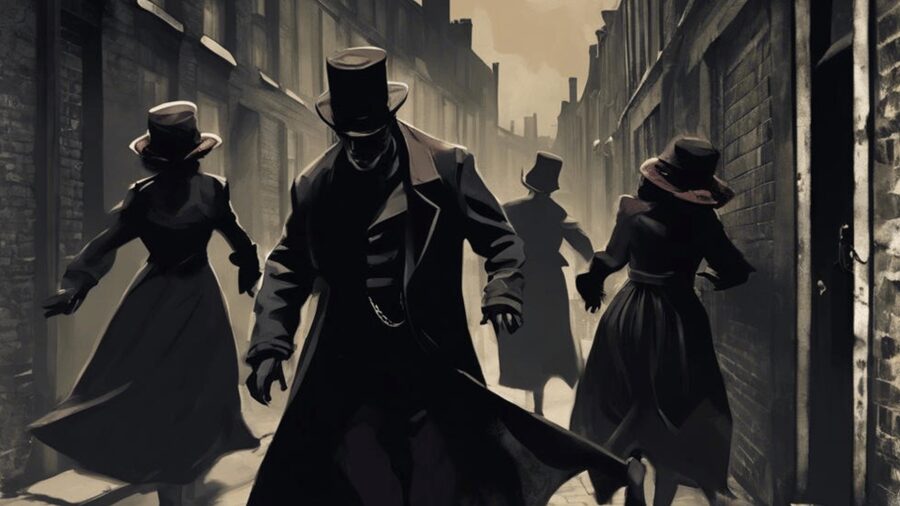
The tour kicks off outside Tower Hill Station, right by the sundial. You will see the medieval castle view from there, which is a great way to open the story: you start with a big, real, older London scene, not a dark room. From the first minutes, you are primed for 1888 Whitechapel, but grounded in the fact that this is a city of layers.
Your guide shows up in character. Expect an unmistakable mask and a red umbrella waiting near the sundial. It helps that the meeting point is close to the station exit, just a few meters away, so you are not wandering around trying to guess where the group is.
This is a Spanish live tour, with the important note that some content may appear in its original language. Practically, that means you should go in with comfort listening to bits that might not be fully translated word for word. If you are strong in Spanish but not perfect, it still works, because the guide ties everything to what you can see on the street.
Finally, keep the tone in mind. The tour is described as theatrical, sarcastic, and terror-tinged. You are not just getting facts, you are getting a mood, and it moves quickly.
More Guided Walking Tours in London
- Magical London: Harry Potter Guided Walking Tour
★ 4.7 · 22,044 reviews - London: The Original Jack the Ripper Walking Tour
★ 4.7 · 7,833 reviews - London: Harry Potter Movies Walking Tour (Kids Go Free)
★ 4.7 · 3,071 reviews
Goulston Street and Mitre Square, where the story tightens
After you leave Tower Hill, you get pulled into the part of London people often imagine but rarely see clearly: the working streets of Whitechapel. One of the first named stops is Goulston Street, described as the heart of Whitechapel. That matters, because it turns the case from an abstract “history lesson” into a walk where you can look left and right and realize how close everything is.
What I like about starting with Goulston Street is that it sets the geography. You start to understand why these crimes became so notorious so fast. You also learn to notice the scale of the area, how streets feed into one another, and how easy it would be for a moment to become a mystery when information is limited.
Then comes Mitre Square, highlighted as a double event spot. Even if you know the broad outline of Jack the Ripper, this kind of stop-by-stop route is what makes the story stick. You are not only hearing that events happened. You are being shown a place where events clustered, which changes how you picture the timeline.
At this stage, the guide’s character work is doing real work for you. The sarcasm and theatrical edge are not just for entertainment. They push you to listen harder, and they keep the pacing moving through heavy subject matter. It is the kind of balance where you stay engaged without the tour turning into a movie script.
The Roman Wall of Londinium, past and present in the same breath
One of the itinerary stops is the Roman Wall of Londinium. This is a smart move, because it widens your lens. You are following a case from the 1800s, but you are standing in London that existed long before anyone could imagine 1888.
This stop can be the emotional reset of the tour. The murders in Whitechapel are grim, but the city itself is not only about that moment. Roman London reminds you that the streets have always been used, rebuilt, and repurposed. Even if your guide keeps the focus on the Ripper story, you still get a sense of continuity.
And that continuity is useful for you as a traveler. When you see Roman remains inside a modern city walk, you start to think about the shape of London itself, not just the sensational part of the legend. It is easier to track details when you understand that you are moving through real urban space, not a historical theme park.
Algate Church, Chamberlain, and the everyday world behind the crimes
Beyond the named stops, the route includes other key reference points that help you understand who lived in this area and why it mattered. Two examples that the tour specifically highlights are Algate Church and Chamberlain.
Algate Church is described as a favorite spot for prostitutes in the 19th century. Chamberlain is noted as a Ripperologists favorite spot. Those notes tell you the tour is not only centered on streets where the events occurred, it also references the surrounding social reality.
That is important, because it keeps the story from feeling like it exists in a vacuum. You begin to understand how people in the neighborhood would have moved through the streets, where certain groups gathered, and how a neighborhood can become both close-knit and dangerous at the same time.
If you are the kind of traveler who likes mystery stories but hates when they turn into fantasy, the “true information, no fiction” framing will likely click with you. You are guided to think in terms of real people and real circumstances, including the lives of the victims, presented from Jack’s spirit perspective.
More Whitechapel streets after the lamps:
- London: Jack the Ripper Small Group Tour★ 4.7 · 3,159 reviews
- London: Jack the Ripper Tour with Immersive Ripper Vision★ 4.5 · 1,840 reviews
- German Language : Original Jack the Ripper Tour★ 4.6 · 1,805 reviews
- London: Jack the Ripper Evening Walking Tour★ 4.9 · 1,449 reviews
Artillery Passage, lively street energy with a dark corner
Next up is Artillery Passage, described as a lively street with a dark corner. That phrase is doing a lot of work. Whitechapel is not one mood. Even during the 1888 setting, it would have included ordinary movement: errands, voices, trades, and passing time.
So when the tour points out a dark corner, it encourages you to think like a detective. Where would someone hide, where would someone lose sight of another person, and how does the built environment change what people can see?
This is also where the guide’s tone pays off. Sarcasm and theatrical delivery can easily turn a walking tour into pure gimmick. Here, it helps you tolerate the subject while the guide keeps bringing you back to the street-level logic of the story.
For you, it means you are not only learning names. You are learning how to interpret what you see, even if you are walking in daylight and the fear is only in the narration.
Old Spitalfields Market and Lilian’s Building, city life around 1888
The route continues into Old Spitalfields Market, described as an old 17th-century silk market. Even with the murder focus, this stop is valuable because it shows another side of Whitechapel: commerce and everyday work.
Market streets also help you visualize timing. Markets bring crowds and movement. Crowds create witnesses and confusion at the same time. That tension is part of why cases like this become mysteries, not just tragedies.
The tour also includes Lilian’s Building, described as an old night shelter. Again, this makes the story more grounded. Night shelters connect the case to survival, not spectacle. You are reminded that people were living rough, seeking warmth, seeking safety, and doing what they could to get through the night.
This pairing, market by day energy and shelter by night needs, gives you a fuller picture of how the neighborhood functioned. It is also a practical gift for you. It keeps the tour from becoming a straight line of crime points, and it helps you remember the area as a place that contained real life, not only headlines.
Ten Bells, the last-night atmosphere where the walk ends
The tour finishes at The Ten Bells pub, described as the pub of the last night. Ending there is more than a dramatic “final scene.” It is a way to lock in the atmosphere tied to the story’s most infamous moment.
In practical terms, it is also a smart travel design. You end at a real, recognizable place in a neighborhood that can be hard to navigate from memory. Once you stop walking, you can grab a drink or a meal nearby and keep the conversation going with your own notes and questions.
If you are worried about the tour getting too intense at the end, it helps to know the last leg is built to land the mood, then release you. That matters if you have plans afterward.
Price and pace: is $20 for 2 hours good value?
At $20 per person for a 2-hour guided walking tour, the value is strongest if you want story plus place, not just a lecture. You get live Spanish narration, a themed, character-led guide, and a walking route that names multiple stops across Whitechapel.
For the price, you are also buying something harder to measure: engagement. The guide, Javier, is specifically praised for being passionate, for explaining in detail, and for interacting a lot with people during the walk. That kind of energy changes what you remember afterward.
Pace-wise, it is short enough that it will not derail your day, but long enough to cover several key locations. Wear comfortable shoes, because you are walking between streets. Also note the tour is described as wheelchair accessible, so it is designed to be doable for visitors who need that level of access.
Two other practical constraints matter. The tour is not suitable for children under 14, and the content is intentionally terror-themed. If your comfort level with dark history is low, this might be the wrong kind of London afternoon.
Respectful terror: choosing the right mood for this Jack the Ripper walk
The tour leans into theatricality: theatrical, sarcastic, and terror. But it is not presented as horror entertainment alone. It insists on truthful information and frames the story through Jack’s spirit perspective, including the victims’ lives.
That framing can be either a strong fit or a hard no, depending on what you want from a mystery tour. If you want facts, location clues, and a tight connection to 1888 streets, this structure makes sense. If you want a light, spooky walk with no dark edge, you will probably find it too intense.
My advice is simple. Read the subject matter description carefully, and decide if you want to hear it in a way that is direct and themed. The guide makes it clear you should be sure you want truthful information and no fiction. Go in aligned with that, and you will likely leave feeling you actually understood the neighborhood, not just the legend.
Also, because the guide is a performer in a mask, expect character-driven pacing. You should be ready to listen closely, especially since it is Spanish and some elements may show in original language.
Who should book this Spanish Jack tour
This is a great match if you:
- enjoy true crime mysteries tied to real street locations
- want Spanish live guiding and not a self-guided audio version
- like interactive performance, with a guide who engages the group
- can handle a grim subject in a theatrical delivery
It might not be the right match if you:
- want a kid-friendly history stop (it is not suitable for under 14)
- prefer light sightseeing only
- get uncomfortable with terror-toned storytelling
If you are traveling with Spanish-speaking friends, it also works well as a shared experience because the guide’s interaction style helps everyone stay involved.
Should you book Jack the Ripper in Spanish?
If your goal is London atmosphere paired with place-based mystery, I think you should. For $20 and 2 hours, you get a focused Whitechapel route, Spanish narration, and a very character-driven guide, Javier, who is praised for passion and for explaining with detail. Ending at The Ten Bells gives you a clean finish point, and the route includes everything from Roman remains to 17th-century market streets, so you see more than just “Ripper stops.”
My main caution is the tone. This is meant to be scary and sarcastic, and it focuses on the 1888 murders. If you are comfortable with that, you will likely enjoy a memorable, street-level way of understanding the story.
FAQ
Where does the tour start?
The tour starts outside Tower Hill Station, at the sundial. Your guide waits on the right-hand side by the sundial, just a few meters from the station exit.
What is the meeting point like?
Your guide is waiting with a mask and a red umbrella near the sundial at Tower Hill.
How long is the Jack the Ripper walking tour?
The tour lasts 2 hours.
What does it cost?
The price is $20 per person.
Is the tour in Spanish?
Yes, it is a live tour guided in Spanish. Some content may be shown in its original language.
Where does the tour end?
The tour ends at The Ten Bells.
Is the tour wheelchair accessible?
Yes, the tour is wheelchair accessible.
Is it suitable for children?
No, it is not suitable for children under 14.
Is the tour fiction or factual?
The tour is presented as truthful information with no fiction.
What if my plans change?
You can cancel up to 24 hours in advance for a full refund, and you can reserve now and pay later.
Streets at Boot Pace
- London: The Great British Rock and Roll Music Walking Tour
★ 4.9 · 1,783 reviews - London: Harry Potter Walking Tour in German
★ 4.8 · 1,505 reviews - London: Street Art and Graffiti Guided Walking Tour
★ 4.9 · 1,354 reviews - London: Ghost Walk and River Thames Boat Ride
★ 4.5 · 1,251 reviews
Newest entries under London





Jack the Ripper Walking Tours, compared.
Jack the Ripper Tour with Immersive Ripper Vision
Read our review →
German Language : Original Jack the Ripper Tour
Read our review →
French Language : Original Jack the Ripper Tour
Read our review →
Browse the lists this tour appears in