
Reviewed · MUSEUMS
Explore History: British Museum’s Rosetta, Mummies & More
Big museum, big stories, in two hours. I like the way this tour starts in the Great Court and quickly moves to the Rosetta Stone, so you get real scale and meaning right away, but the route is fast, and you will not have long to soak in every gallery detail.
The best part is the guide style. I love when a guide like Joe explains the artifacts clearly, with enough context to make tough topics feel understandable.
You cover Egyptian mummies, the Parthenon sculptures called the Elgin Marbles, and even treasures from Anglo-Saxon England and Assyria, all on foot. Expect a group tour that is not private, and bring comfortable shoes.
In This Review
- Key highlights you should care about
- Great Russell Street to the Great Court, your quick start at the British Museum
- Rosetta Stone: the three-script story that makes Egyptian writing feel possible
- Parthenon sculptures and the Elgin Marbles debate you cannot ignore
- Ancient Egyptian mummies: burial practice meets belief
- Sutton Hoo treasures and Khorsabad winged bulls, a wide lens on ancient power
- What 2 hours feels like, plus walking tips that actually help
- Is the $88 price good value for this British Museum highlights tour?
- Should you book this Rosetta, mummies, and more tour?
- FAQ
- What is the duration of the British Museum history tour?
- How much does this tour cost?
- Where do I meet the guide?
- What time should I arrive before the tour starts?
- Is the tour private?
- What language is the live tour guide?
- Is transfer included in the price?
- What should I bring with me?
- What happens if my chosen time slot is not available?
- Is the tour suitable for wheelchair users?
- Can I cancel for a full refund?
- Is there a reserve now, pay later option?
Key highlights you should care about
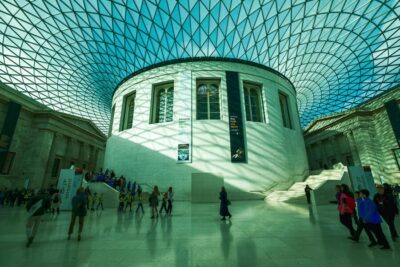
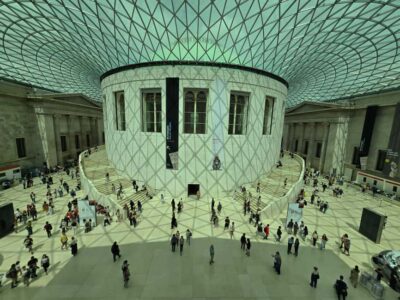
- Great Court orientation: Norman Foster’s glass-and-steel roof gives you a dramatic start before you even pick a gallery.
- Rosetta Stone focus: you get the story of its 1799 discovery and why the three-script text mattered so much.
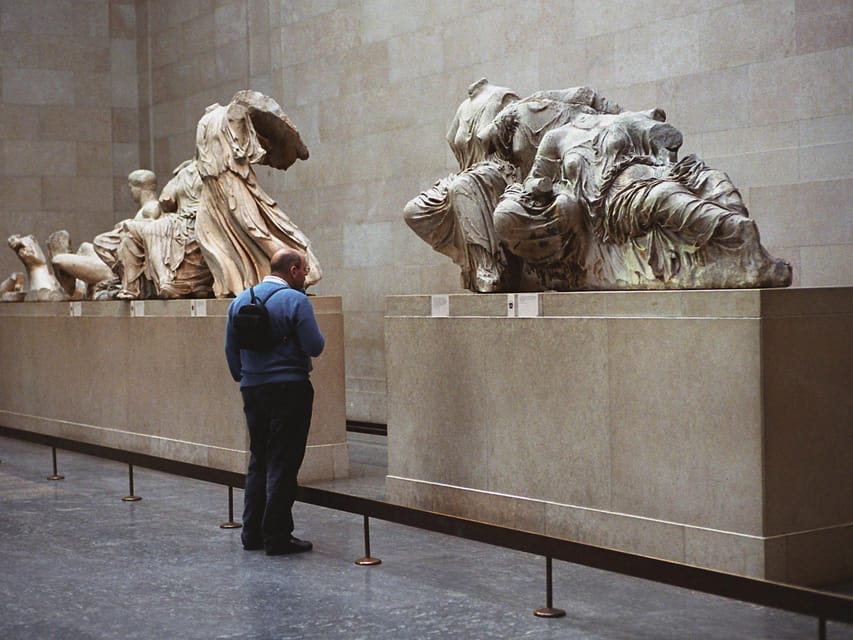
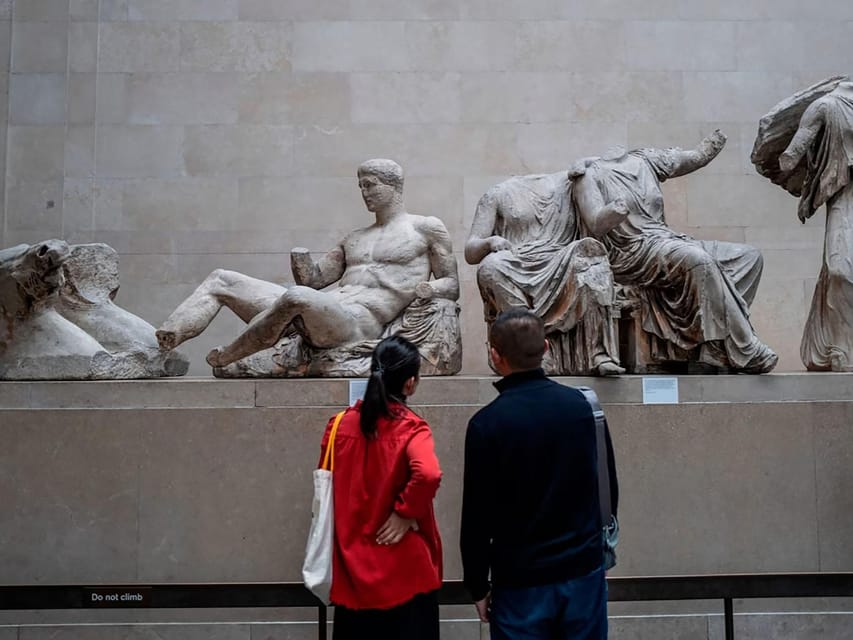
- Parthenon sculptures with context: the Elgin Marbles come with the history and the ongoing debate about their rightful home.
- Ancient Egyptian mummies: preserved figures and burial artifacts connect burial practices to beliefs about life, death, and the afterlife.
- Sutton Hoo and Khorsabad in one route: you see Anglo-Saxon burial treasure and Assyrian power in the winged bulls.
Great Russell Street to the Great Court, your quick start at the British Museum
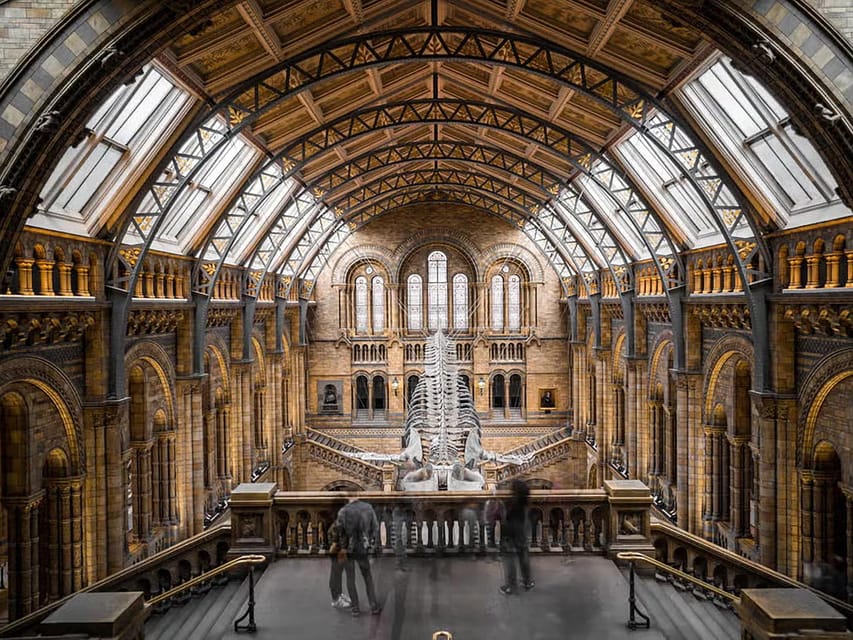
The tour meets at the main entrance on Great Russell Street, after security checks. You then head to the Great Court, the museum’s stunning atrium with a glass-and-steel roof. Designed by Norman Foster, it creates that wow moment that helps you understand just how enormous the British Museum is, without you getting instantly lost.
This is more than a pretty place to start. The Great Court works like a visual orientation. You get your bearings fast, then your guide points you toward the museum’s most famous objects in a logical order. Even if you have been to the museum before, this kind of start can still help, because it forces you to think about how the building connects to the collections.
One practical note: the tour is on foot and not private. That means you are moving with other people at a steady pace. The upside is you get momentum. The downside is you cannot wander off to investigate every side room you spot. Still, with a 2-hour window, this focused approach is exactly what most people want.
If you are worried about timing, you are right to be. The meet-up requires showing up early. Plan to arrive at the museum entrance at least 15 minutes before your scheduled time. That gives you breathing room for security and finding the right stairs.
More Museum Tours in London
- London: Chelsea Football Club Stadium and Museum Tour
★ 4.8 · 4,576 reviews - London: British Museum Guided Tour
★ 4.3 · 1,182 reviews - London: British Museum Guided Tour with Entrance Tickets
★ 4.9 · 748 reviews
Rosetta Stone: the three-script story that makes Egyptian writing feel possible
After the Great Court, the tour hits the most recognizable name in the museum: the Rosetta Stone. Discovered in 1799, it is the object that many people come to see, and for good reason. Your guide explains how the stone’s inscriptions include text in three different scripts, and why that mattered for understanding Egyptian writing.
What I like about this stop is the way it becomes a starting point, not a random display. Instead of treating the Rosetta Stone like a lonely celebrity, you learn the reason the stone changed how scholars approached the past. Even if you do not remember details about scripts later, you will remember the big idea: one artifact helped crack a long-standing puzzle.
Your viewing also benefits from having a guide right there. The Rosetta Stone can look like just a stone slab until someone gives you the right context. With a knowledgeable presenter, you see the stone as a historical tool that connected languages and eras.
The only consideration is pace again. Since the tour is only 2 hours, you will not spend a long time standing and reading everything on your own. If you love to study inscriptions slowly, you might want to pair this tour with a second visit later, when you can linger.
Parthenon sculptures and the Elgin Marbles debate you cannot ignore

Next up, the Parthenon sculptures, commonly called the Elgin Marbles. These are marble statues and friezes that were once part of the Parthenon in Athens. Your guide walks you through the history of how they left Greece, including the role of Lord Elgin, the British ambassador to the Ottoman Empire in the early 19th century.
Then comes the part that makes this stop feel real: the controversy about their rightful home. Your guide shares the ongoing debate, so you are not just admiring art. You are also learning how politics, empire, and cultural ownership can shape what ends up in a major museum.
This is where a tour adds value that self-guided browsing often misses. Without context, you can end up treating the sculptures as purely aesthetic objects. With the debate explained, you start noticing details with a different lens. You are not only asking what you see, you are also asking what it means that you see it here.
If you are sensitive to modern ethical questions around artifacts, plan for that. The Elgin Marbles stop is not a neutral detour. It is part of the point. Still, the experience stays balanced by focusing on both historical context and the dispute about where these pieces belong.
A good way to handle this emotionally is simple: take your time with what you can control. Look at the figures and friezes as art first, then let the debate change your interpretation. That two-step approach keeps the conversation grounded.
Ancient Egyptian mummies: burial practice meets belief
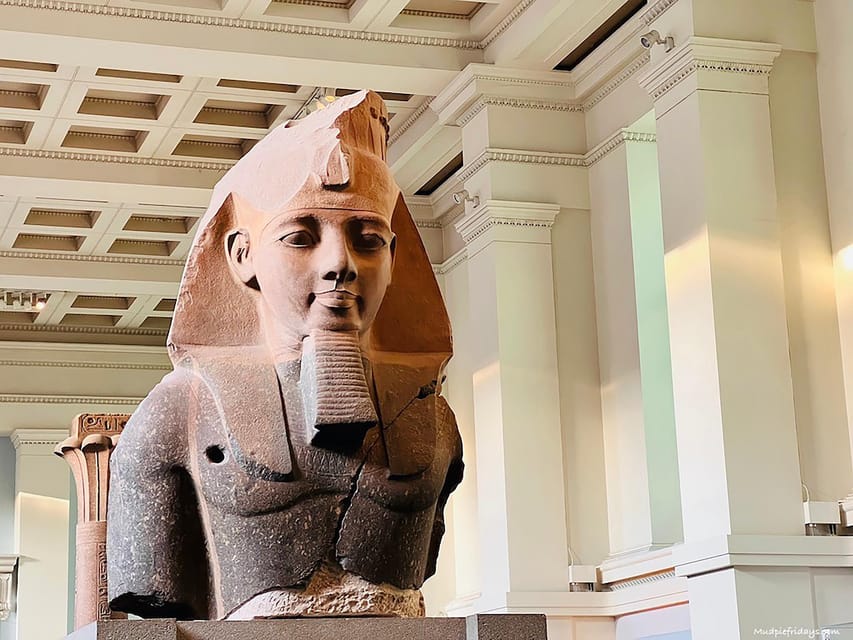
After the Greek sculptures, the route shifts to the Ancient Egyptian galleries, where the highlights include mummies and burial artifacts. This is one of the most powerful segments of the museum, not because it is spooky, but because it shows how carefully ancient people prepared for what came next.
You will stand close to preserved figures and learn about burial practices and beliefs connected to life, death, and the afterlife. The tour focuses on how the burial process allowed mummies and related items to endure through millennia. It also highlights that the story is not just about one person, but about a whole worldview, including noble pharaohs and sacred animals.
What I like here is that you are not only looking at bodies. You are learning why those bodies were prepared, and how that preparation reflected belief systems. Once that clicks, the mummies stop feeling like an odd museum attraction and start feeling like evidence of real rituals and real planning.
The main consideration is emotional pacing. Mummies can be intense. If you prefer a lighter tone, this segment may feel heavier than the art stops. You can still enjoy it, but you might want to give yourself permission to move on quickly after each viewing rather than forcing long stares.
And because the tour is on foot, you will likely move between exhibits at a consistent pace. Wear comfortable shoes so your body does not slow your attention down at the exact moments you want to focus.
More gallery rooms between showers:
- London: Tour of the British Museum★ 4.1 · 678 reviews
- Afternoon Tea at the British Museum★ 4.2 · 511 reviews
- London: Paradox Museum Entry Ticket★ 3.9 · 441 reviews
- London: National Gallery Guided Tour with Art Expert Guide★ 4.7 · 440 reviews
Sutton Hoo treasures and Khorsabad winged bulls, a wide lens on ancient power
The tour does something smart with its selection: it does not chain you to one culture. You will see Sutton Hoo burial treasures from Anglo-Saxon England, and then the winged bulls from Khorsabad, symbols of Assyrian power.
Sutton Hoo was discovered in 1939, and your guide explains why it is one of the most significant archaeological finds of the 20th century. Even if you are not deeply into Anglo-Saxon history, the burial setting and the idea of such major discovery in the modern era makes the past feel closer. It also connects to a key theme you have already seen: how people used burial to communicate identity, status, and belief.
Then you move to the Khorsabad winged bulls, which your guide frames as symbols of Assyrian power. If the mummies remind you that belief shaped how people handled death, the winged bulls show how belief and authority could be expressed through monumental imagery. Standing between these different objects within a single guided route gives you a quick education in how ancient power looked across regions.
This is also where the tour’s 2-hour format earns its keep. You get a sweep of civilizations, not just a list of famous items. The result is a broader mental map of the museum’s global collections, without requiring a full day of wandering.
What 2 hours feels like, plus walking tips that actually help
This is a short tour, 2 hours, and it packs major stops into one route. That can be a blessing if you want the highlights with context, and it can be frustrating if you love slow museum time. Either way, you should plan your expectations around the pace.
Because you are on foot, comfortable shoes matter. The British Museum is huge, and even with a guided route, you will be doing a lot of walking. If you dress for comfort, you can spend your attention on the objects instead of your feet.
Also, you are in a group, not a private tour. So the route follows a schedule. Your guide keeps everyone together, which means your best strategy is to listen first, look second. Let the guide set up what you are seeing, then do your own quick visual checks before moving on.
A final small detail: bring a passport or ID card. That is required. It is a small thing, but forgetting it is the kind of issue that can turn a smooth museum morning into stress.
Is the $88 price good value for this British Museum highlights tour?
For $88 per person, you are paying for a licensed guided experience that takes you through several top-tier museum icons in about 2 hours. That includes a strong start in the Great Court, the Rosetta Stone, the Parthenon sculptures, Ancient Egyptian mummies, Sutton Hoo treasures, and the Assyrian winged bulls.
Here is how I judge value on a tour like this. You are not just paying for access to the objects, you are paying for the “why.” The guide’s job is to connect each artifact to the stories that make it matter, including controversial context like the Elgin Marbles. When that context is clear and well paced, the price starts to feel reasonable, because you are compressing a lot of museum learning into a short time.
You also get online support at the time of boarding. That can help you feel organized before you arrive.
What is not included is transfer. So if you need to get to the museum from elsewhere, you will handle that on your own. It is not unusual, but it affects the true total cost if you are coming from far away.
Overall, I think this is a good value choice if you want the museum’s biggest talking points and you like having someone explain what you are looking at in real time. If you prefer independent browsing with no structure, you may get better value by skipping the tour and doing a self-guided route.
Should you book this Rosetta, mummies, and more tour?
Book it if:
- You want a guided hit list of major British Museum stars in 2 hours.
- You appreciate context, especially around complicated topics like the Elgin Marbles.
- You like seeing how different ancient cultures expressed ideas about power and burial.
Skip it if:
- You want to linger for long periods in one gallery.
- You need an accessible route, since the tour is not suitable for wheelchair users.
If you do book, show up early, wear comfortable shoes, and plan to move with the group. The payoff is that you leave with a clearer sense of how these famous objects connect to the big stories of history, not just what they look like. And if you land a guide with that clear, patient explanation style like Joe, the time can feel like it flies.
FAQ
What is the duration of the British Museum history tour?
The tour lasts 2 hours.
How much does this tour cost?
The price is $88 per person.
Where do I meet the guide?
Meet your guide on the stairs at the main entrance of the British Museum, after security checks.
What time should I arrive before the tour starts?
Arrive at the museum entrance at least 15 minutes before your scheduled tour time.
Is the tour private?
No, the tour is not private.
What language is the live tour guide?
The live tour guide provides the tour in English.
Is transfer included in the price?
No, transfer is not included.
What should I bring with me?
Bring a passport or ID card.
What happens if my chosen time slot is not available?
If your time choice is not available, you will be transferred to another time on the same day. For example, a 10:00 slot may be moved to the first available time such as 14:00.
Is the tour suitable for wheelchair users?
No, the tour is not suitable for wheelchair users.
Can I cancel for a full refund?
Yes, you can cancel up to 24 hours in advance for a full refund.
Is there a reserve now, pay later option?
Yes. You can reserve your spot and pay nothing today.
Centuries in an Afternoon
- London: Historic Pubs of Central London Walking Tour
★ 4.9 · 1,065 reviews - London: Soho Music and Historic Pubs Walking Tour
★ 4.9 · 836 reviews - London: Rock ‘n’ Roll History Tour
★ 4.6 · 645 reviews - London: Westminster Abbey Tour with a Royal Heritage Guide
★ 4.7 · 614 reviews
Newest entries under London






Museums, compared.
Tower of London and Crown Jewels Exhibition Ticket
Read our review →
Liverpool Football Club Museum and Stadium Tour
Read our review →
Chelsea Football Club Stadium and Museum Tour
Read our review →

British Museum Guided Tour with Entrance Tickets
Read our review →Browse the lists this tour appears in