
Reviewed · MUSEUMS
British Museum Highlights: Parthenon, Rosetta and Sutton Hoo
Rosetta, Parthenon, Sutton Hoo in two hours. This British Museum highlights tour uses a licensed guide to connect big stories across continents, and I especially like starting under the Great Court glass roof and then hitting the Rosetta Stone with the context that makes it click.
The best part is the arc from ancient Egypt to ancient Greece, then on to Anglo-Saxon England and Assyria, so you are not just looking at objects, you are getting the why behind them. One consideration, though, is that this is a fast, on-foot route inside a huge museum, so comfortable shoes and some patience for crowds are a must.
In This Review
- Key Highlights That Matter
- Great Court Start: Norman Foster’s Glass Roof and a Smart First Move
- Rosetta Stone and Ancient Egyptian Galleries: Why the Writing Problem Was Finally Solved
- Parthenon Sculptures (Elgin Marbles): Marble Masterpieces With a Cultural Heritage Warning Label
- Mummies, Sarcophagi, and the Afterlife: What These Burial Objects Are Trying to Tell You
- Sutton Hoo Anglo-Saxon Treasures: Wealth, Power, and Craft in a Ship Burial
- Winged Bulls From Khorsabad: Assyria’s Scale in Human Detail
- Price and Time Management: Is $84 Worth Two Hours?
- Who Should Book This British Museum Highlights Tour?
- Should You Book It?
- FAQ
- Where does the tour start and meet the guide?
- How long is the tour?
- What is included in the price?
- Is transfer included?
- Is the tour private?
- What language is the live guide?
- Do I need an ID or passport?
- Who is the tour not suitable for?
- FAQ
- What is the cancellation policy?
- Can I reserve now and pay later?
- What happens if my chosen time is not available?
- What happens with last minute bookings if there are no seats?
Key Highlights That Matter
- Great Court by Norman Foster: the airy glass roof sets the tone before you even reach the galleries.
- Rosetta Stone deciphering story: you get the significance of its 1799 discovery and why scholars could finally read Egyptian hieroglyphs.
- Parthenon sculptures (Elgin Marbles): you see what the carvings depict, plus the controversy around cultural heritage and ownership.
- Mummies and burial artifacts: you get a real sense of Egyptian beliefs about death and the afterlife.
- Sutton Hoo ship burial treasures: you see what an early medieval burial reveals about wealth, power, and craftsmanship.
Great Court Start: Norman Foster’s Glass Roof and a Smart First Move
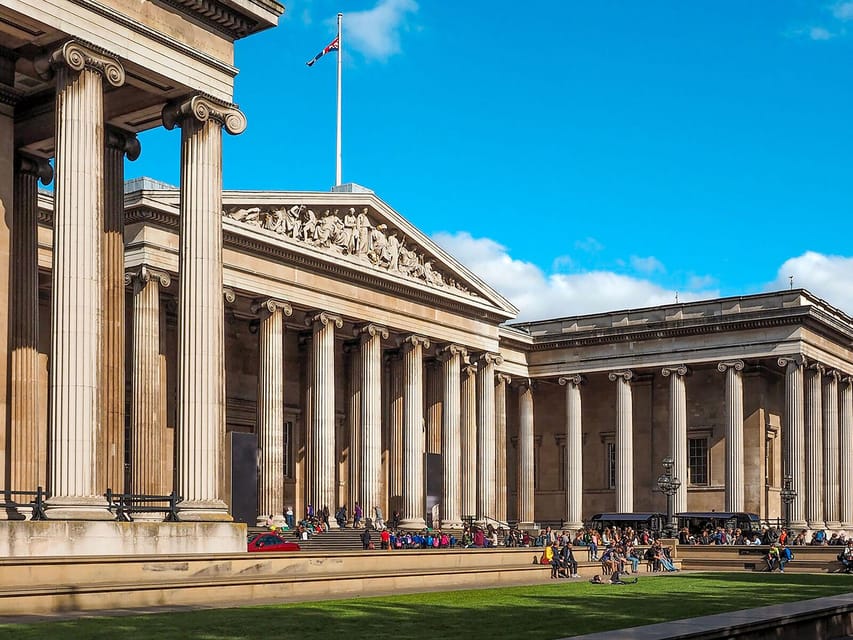
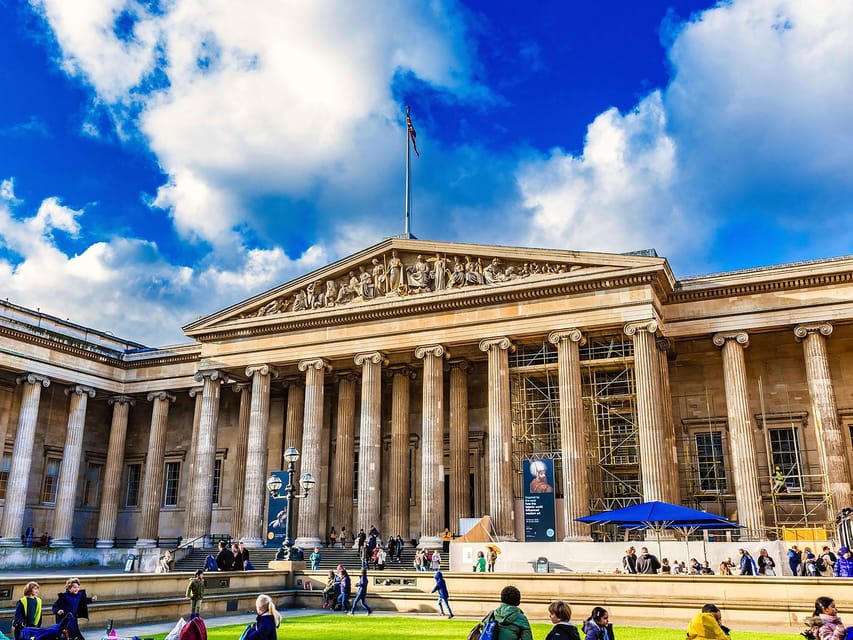
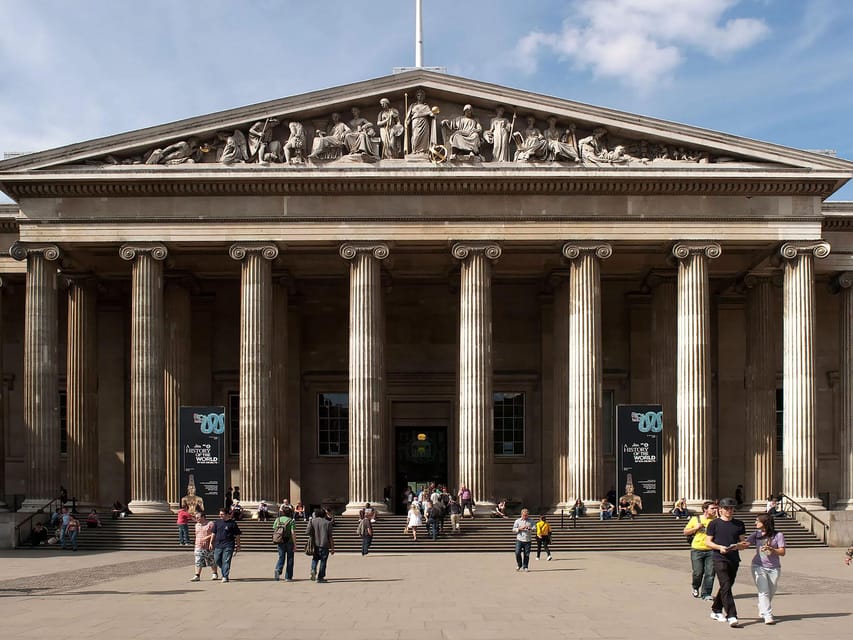
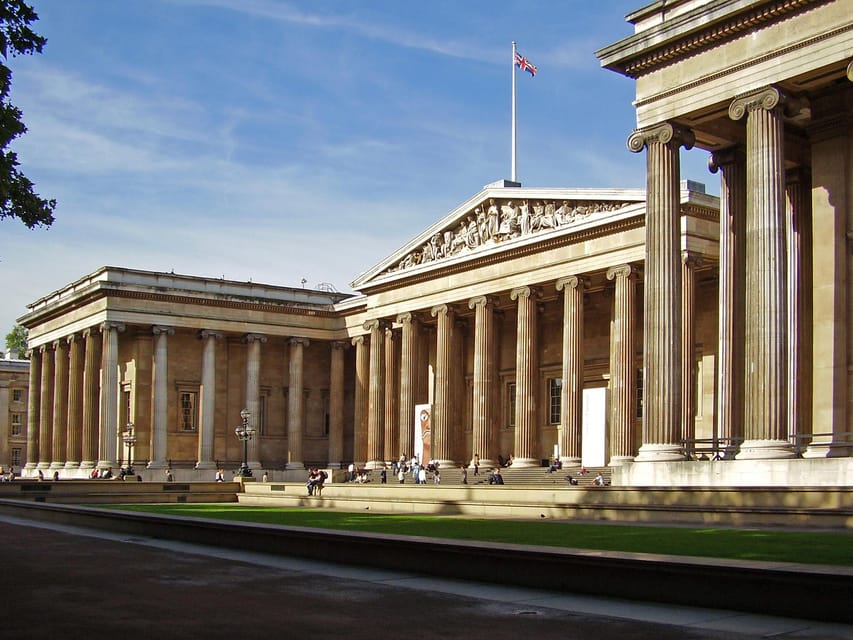
Your tour begins at Great Russell Street, meeting your guide at the main entrance steps, after security checks. It is a simple start, but it sets you up for success. The British Museum is enormous, and going in without a plan usually means you end up doing the museum equivalent of guesswork. This tour gives you a path, and you feel it from the first moment.
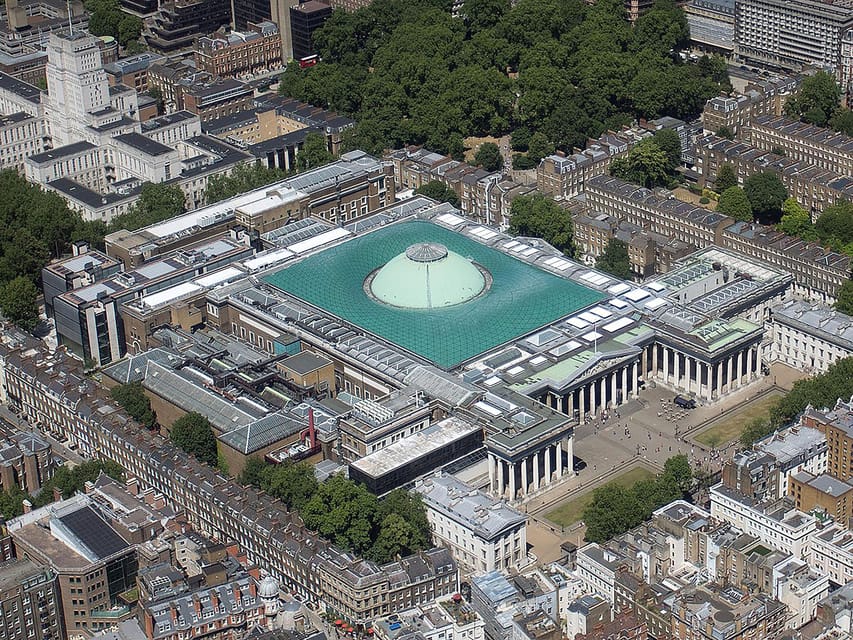
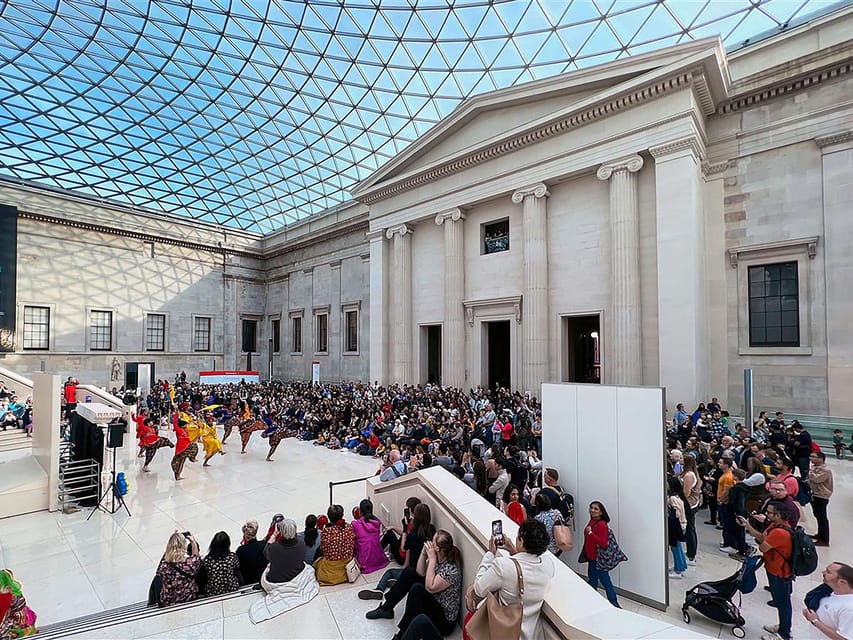
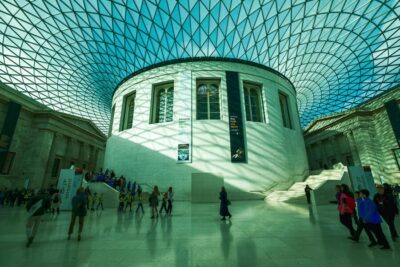
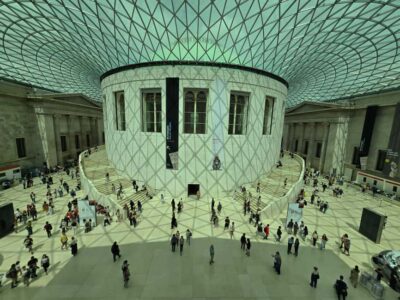
Before the artifacts, you get the spectacle: the museum’s Great Court. The space is covered by a glass roof designed by Norman Foster, and it has that big, bright “you can breathe” feeling even while you are surrounded by crowds. I like how the architecture matters here. It helps you get your bearings fast, and it signals that you are about to see works collected from very far back in time, across very different cultures.
After you soak in that first wow moment, your guide turns the page to the actual objects you came for. That transition is where guided tours pay off. In a museum this big, the staff and experts do more than point. They connect. They explain what to notice, how an object was used, and why that object is famous for a reason.
Practical tip: arrive early and build in time for security. You are asked to show up at least 15 minutes before your scheduled time, and that is not “just for formality.” A museum entry delay can squeeze your experience fast, since the tour is only 2 hours.
More Museum Tours in London
- London: Chelsea Football Club Stadium and Museum Tour
★ 4.8 · 4,576 reviews - London: British Museum Guided Tour
★ 4.3 · 1,182 reviews - London: British Museum Guided Tour with Entrance Tickets
★ 4.9 · 748 reviews
Rosetta Stone and Ancient Egyptian Galleries: Why the Writing Problem Was Finally Solved
From the Great Court, the route quickly shifts into ancient Egypt, and the Rosetta Stone is the star. This is the artifact most people recognize by name, but the power of a guided visit is the context around it.
You learn why the Rosetta Stone is so central to deciphering hieroglyphs. It was discovered in 1799, and it provided the key that helped scholars unlock Egyptian writing. Even if you do not know hieroglyphs yourself, you can still appreciate what this discovery represents: a human breakthrough based on careful comparison and interpretation.
In the Egyptian galleries, the tour does not stop at a single famous object. You also encounter mummies and burial artifacts from thousands of years ago. That is important because Egypt is not just about scripts and monuments. It is also about rituals, beliefs, and the way people prepared for what came after death. Seeing mummies and related burial items gives you a more human scale to the period, even when the subject matter is undeniably eerie.
What I like about this stop is that it balances the scientific and the cultural. Rosetta Stone is the “how we read it” moment. The mummies and burial goods are the “what it meant to live it” moment. Together, you get the sense that decoding a civilization is not only about translation, it is about understanding worldview.
One note for your expectations: the museum is huge, and Egyptian artifacts are spread through multiple areas. In a short tour, you are not going to see everything. You are getting the highlights that connect in a logical story line.
Parthenon Sculptures (Elgin Marbles): Marble Masterpieces With a Cultural Heritage Warning Label
Next comes the Parthenon sculptures, often called the Elgin Marbles. These are some of the most recognizable works in the museum, and they are also among the most debated.
The tour frames them in two ways, both worth your attention. First, you see the artistic side: marble carvings originally from the Parthenon in Athens, depicting scenes of gods, heroes, and mythical creatures from ancient Greek culture. Even in a short viewing window, you can usually spot the energy in the scenes. It is not passive decoration, it is storytelling in stone.
Second, you get the controversy. The acquisition by Lord Elgin, a former British ambassador to the Ottoman Empire, remains a topic of intense debate. You are encouraged to think about cultural heritage and ownership, not just aesthetics.
This is where the guided element really earns its fee. A self-guided visit might focus only on the artistry, which is still great. But the tour helps you hold two ideas at once: the beauty of the work, and the messy realities of how collections end up where they are.
Practical expectation: this stop can feel emotionally heavy for some people because the issues are complex and ongoing. If you tend to prefer purely factual viewing, you may find the debate portion a bit intense. If you like thinking through ethics alongside art, this is one of the most rewarding parts of the experience.
Mummies, Sarcophagi, and the Afterlife: What These Burial Objects Are Trying to Tell You
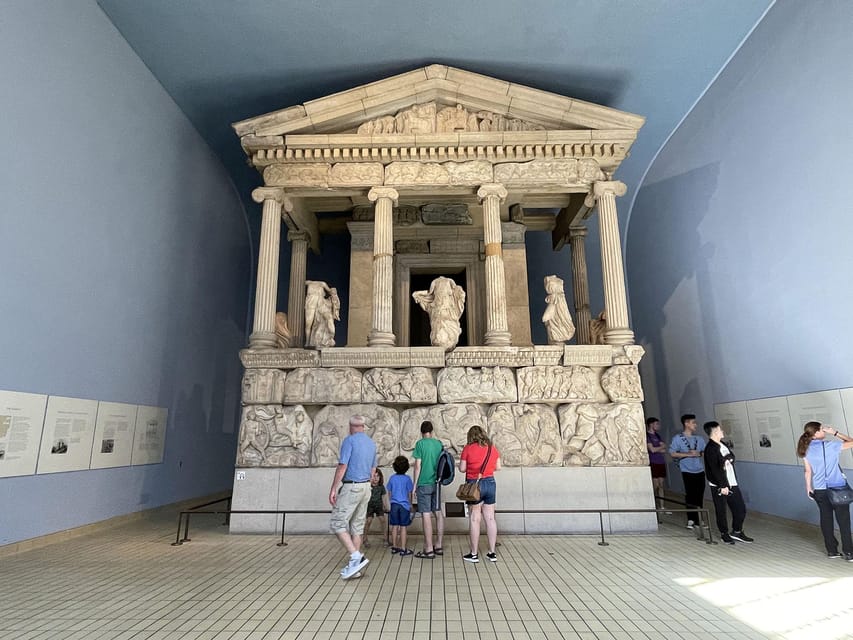
After the Rosetta Stone and the Parthenon sculptures, the tour returns to Egypt, but with a more intimate focus. You explore Egyptian burial culture through mummies and related artifacts, including items connected to sarcophagi and preparations for death.
The key point is the beliefs behind the objects. Egyptian burial items were not just about storing remains. They were part of a worldview that treated the afterlife as something shaped by ritual and care. Standing in front of preserved remains and burial goods from thousands of years ago can hit harder than you expect, because it collapses time. You are looking at personal lives, not just categories of history.
The tour’s value here is its clarity. It does not drown you in details you cannot keep straight. Instead, you get enough story to understand what you are seeing and why it matters. That makes your visit feel more like learning and less like wandering from case to case.
If you are sensitive to death-related displays, plan your pace. Mummies are handled with careful presentation in museums, but they are still mummies. You can take short breaks, read slowly, and let the guide’s explanations steer the meaning rather than the shock.
And remember, this is a 2 hour highlights tour. The Egyptian galleries will feel like a highlight reel. If you want to spend long hours reading every label, you will need more time in the museum on your own later.
More gallery rooms between showers:
- London: Tour of the British Museum★ 4.1 · 678 reviews
- Afternoon Tea at the British Museum★ 4.2 · 511 reviews
- London: Paradox Museum Entry Ticket★ 3.9 · 441 reviews
- London: National Gallery Guided Tour with Art Expert Guide★ 4.7 · 440 reviews
Sutton Hoo Anglo-Saxon Treasures: Wealth, Power, and Craft in a Ship Burial

Then the story shifts from ancient worlds to early medieval England with Sutton Hoo treasures. This is a rare chance to connect archaeology with artistry. The Sutton Hoo site was discovered in the 20th century, and it delivered extraordinary finds tied to an Anglo-Saxon burial.
The tour highlights the most impressive element: a ship burial. Inside were grave goods that included intricate jewelry, weapons, and other objects placed with the person buried there. The point is not just that the objects are beautiful. It is what they reveal. Sutton Hoo suggests wealth, power, and a society capable of high-level craftsmanship.
I like how this stop widens your idea of what the museum is doing. The British Museum is often associated with ancient Egypt and Greece, but Sutton Hoo brings the story into the British Isles and shows early medieval sophistication.
If you enjoy archaeology, you will appreciate this part because it is archaeology as evidence. These objects are not only art. They are clues. They help you picture status, trade connections, and how a community understood honor and burial.
One small reality check: for people who love Anglo-Saxon history, Sutton Hoo can feel like it deserves more time than a short stop allows. Still, as a highlights tour, it gives you the big ideas and the “wow” artifacts without burning your whole day.
Winged Bulls From Khorsabad: Assyria’s Scale in Human Detail
The final major stop in the tour is a dramatic set of sculptures from ancient Assyria: the Winged Bulls from Khorsabad. These colossal figures are famous for a reason. They are guardians tied to an ancient palace setting, and the style is unmistakably Assyrian.
You see the blend of features that makes them so striking: human heads, lion bodies, and eagle wings. They are not decorative fantasy. They are visual language for power. In Assyria’s art, these creatures communicate protection, authority, and the grand scale of imperial architecture.
This is one of those moments where the guide’s framing matters. Without context, you might just think, big sculptures, impressive. With context, you start to understand why these forms were chosen and how they fit into a palace environment.
Practical note: in a short tour, the focus tends to be on comprehension, not deep architectural reconstruction. If you want to study Assyrian palace layouts for hours, you will need extra time later. But for two hours, this is an excellent “end strong” stop because it lands with visual impact.
Price and Time Management: Is $84 Worth Two Hours?
At $84 per person for a 2 hour guided highlights tour, the value comes down to time and focus. The British Museum is famous for its scale, with over eight million artifacts. That number is hard to even picture. The real-world effect is simple: without a guide, you can easily spend a big chunk of your day moving between far-flung galleries and still feel like you only skimmed.
This tour tackles that by picking iconic, story-rich objects:
- Rosetta Stone for language and discovery
- Parthenon sculptures for art and the ethics of collection
- mummies and burial goods for beliefs and rituals
- Sutton Hoo for Anglo-Saxon identity and status
- Winged Bulls for Assyrian power and palace symbolism
What you pay for is not only access to objects. You pay for the ability to understand why each object is famous and how it connects to bigger themes.
What might make it less appealing for some people is the pace and the walking. You are on foot, and the museum is huge. This tour is also not private, so you are sharing the experience in a group setting. And it is not suitable for wheelchair users, based on the tour format.
My advice: if you have limited time in London and want a guided hit of the museum’s most important highlights, this price makes sense. If you have all day and love reading every label, you might get more out of slower self-guided exploring.
Who Should Book This British Museum Highlights Tour?
I think this works best for you if:
- You want a guided path through the museum rather than a random walk
- You are excited by “big names” like Rosetta Stone, Parthenon sculptures, and Sutton Hoo
- You like short, focused explanations that connect objects to history, ethics, and belief systems
It may not be the best fit if:
- You need wheelchair accessibility, since the tour is not suitable for wheelchair users
- You prefer a slow pace and lots of free time at each gallery
- You want to see a huge range of objects beyond the highlights named for this tour
Also, bring an attention-friendly mindset. Two hours inside a massive museum means you will be selective. The good news is this tour is selective in a smart way.
Should You Book It?
If your schedule is tight, I would book it. This is the kind of tour that helps you get the museum’s most famous stories without losing your day to logistics and wandering. The combination of Great Court architecture, the Rosetta Stone, the Parthenon sculptures, Egyptian mummies, Sutton Hoo treasures, and the Winged Bulls gives you a cross-continental timeline with clear themes.
If you want something purely flexible, or if you know you will want deep time with one collection, you might prefer to plan a longer museum visit on your own. But for many people, $84 and two hours is a very reasonable way to turn a “must see” museum into a set of meaningful moments.
FAQ
Where does the tour start and meet the guide?
Meet your guide on the stairs at the main entrance, after security checks, at the Great Russell Street area. You should arrive at the museum entrance at least 15 minutes before your scheduled time.
How long is the tour?
The duration is 2 hours.
What is included in the price?
It includes a British Museum guided tour and online support at the time of boarding the tour.
Is transfer included?
No. Transfer is not included.
Is the tour private?
No, the tour is not private.
What language is the live guide?
The live tour guide is in English.
Do I need an ID or passport?
Yes, you should bring a passport or ID card.
Who is the tour not suitable for?
It is not suitable for wheelchair users.
FAQ
What is the cancellation policy?
Free cancellation is available up to 24 hours in advance for a full refund.
Can I reserve now and pay later?
Yes. You can reserve your spot and pay later to keep plans flexible.
What happens if my chosen time is not available?
If the time you choose is not available, you will be transferred to another time on the same day. The change does not depend on the provider, and you are warned that it may happen.
What happens with last minute bookings if there are no seats?
If there are not enough seats, you will be placed on the day following the booked date.
Newest entries under London






Museums, compared.

Tower of London and Crown Jewels Exhibition Ticket
Read our review →
Liverpool Football Club Museum and Stadium Tour
Read our review →
Chelsea Football Club Stadium and Museum Tour
Read our review →

British Museum Guided Tour with Entrance Tickets
Read our review →Browse the lists this tour appears in