
Reviewed · TICKETS
Shrewsbury Prison: Entry Ticket
Prisons feel real when you walk the corridors. Shrewsbury Prison is a 1-day, self-guided ticket that lets you peek behind Victorian walls with a visitor guide, map, and sound boxes built into the experience. You’ll move through real spaces and eras, learning how punishment and daily prison life changed over time.
I like the route because it’s laid out like an actual prison visit, not just a display. You get a visitor guide and map, plus lots of stops that explain reception processing, healthcare, visits, segregation, and final days in a condemned cell area. The day also has extra layers, like Cellfie points (including pillories and height board mugshots) and a museum with artifacts found within the prison walls.
One drawback to plan for: the experience is largely reading-and-looking, even with the sound boxes. If you expect high-tech interaction or perfectly matched theatrical reconstructions, you might feel some displays are a little uneven. The site is big, so give yourself enough time to follow the signs and not rush from wing to wing.
In This Review
- Key highlights worth your time
- Shrewsbury Prison, really: a self-guided step through punishment
- Getting in: visitor centre, map, and where to begin
- Reception and the two prison wings with nearly 200 cells
- Healthcare: what medical support looked like behind bars
- Visits, exercise yards, and how daily routines shaped prison life
- Segregation and the execution side: the executioner’s bedroom and condemned cell
- Museum, gift shop, and an on-site meal to reset the mood
- Price and 1-day value: what $20 buys in practice
- Timing, pacing, and how to structure your route
- Who should book and who might want a different plan
- Should you book Shrewsbury Prison entry tickets?
- FAQ
- How long is the Shrewsbury Prison entry ticket valid for?
- Is this visit self-guided or guided?
- What do I get when I arrive?
- What learning tools are included during the visit?
- What parts of the prison can I visit?
- Is there a place to eat on site?
- Is there a museum and gift shop?
- What language is available?
- Can I cancel for a refund or pay later?
Key highlights worth your time

- Sound boxes plus boards that explain prison life as you walk, so you’re not stuck guessing what you’re seeing
- Nearly 200 cells across two prison wings, making it feel like a real functioning complex
- A route through visits yards to segregation, including two exercise yards for fresh air
- Albert Pierrepoint connection, with the executioner’s bedroom area included in the walk
- Cellfie photo spots such as pillories and height board mugshots
- All-day restaurant, museum, and gift shop so you can extend the day without leaving the grounds
Shrewsbury Prison, really: a self-guided step through punishment

This is the kind of attraction where the setting does half the work for you. Shrewsbury Prison is a large indoor and outdoor venue, and you explore at your own pace with a guide and map. That freedom matters here because the place is dense, with lots of rooms and corners to read.
What makes it compelling is the mix of eras and uses. You’re not just looking at one slice of time. You’re led through spaces connected to different periods, from the Georgian era to more modern-day references, and the story is told as you move from processing to healthcare to daily routines and toward the execution side of the prison.
I also like how the experience feels practical, not overly staged. It’s set up so you can stop, read, listen via the sound boxes, and then continue your route when you’re ready. If you prefer a visit where you control the pace, this fits well.
Also inked in under London
- London: The London Eye Entry Ticket
★ 4.6 · 35,875 reviews - London: Tower Bridge Entry Ticket
★ 4.7 · 15,560 reviews - London: St Paul’s Cathedral Entry Ticket
★ 4.7 · 9,813 reviews
Getting in: visitor centre, map, and where to begin
Your starting point is straightforward. When you arrive, look for the big sign that reads Welcome to Shrewsbury Prison to the left of the main entrance. Go through the large metal gates into the visitor centre, where staff welcome you and hand over a map and visitor materials.
You’ll also be directed to your starting point, and the staff are available if you get stuck or want clarification. That matters in a prison setting because signage can make all the difference between a smooth route and a frustrating maze. Come in with a simple plan, even if it’s just, follow the map first, then follow your curiosity.
One good thing here is that your materials are built for a self-guided format. You’re not relying on a single guide voice. You can take your time with the information boards and use the sound boxes when the room atmosphere makes it easier to understand what you’re looking at.
Reception and the two prison wings with nearly 200 cells

The route begins at reception, where prisoners were processed. This is a smart first step because it frames what comes next. Before you reach the cell blocks, you get context for how control and intake worked, which makes the later spaces feel more meaningful.
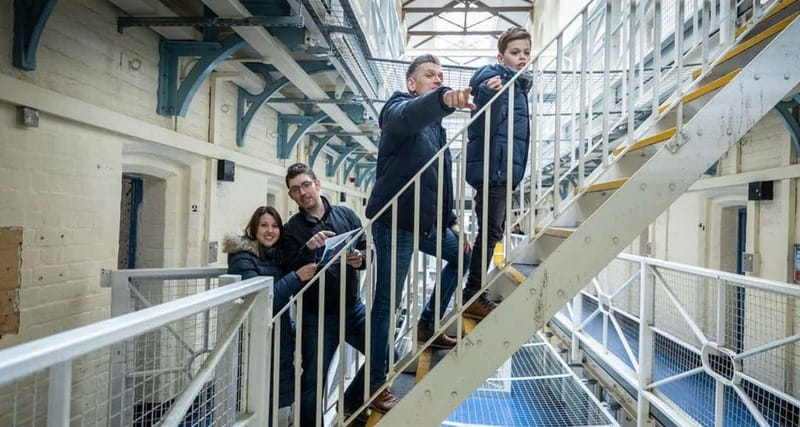
From there, you move into two prison wings. Each wing holds nearly 200 cells in total across the complex, and that sheer number does something to your brain. You start to grasp how repetitive daily life could be, even if you only see portions of the real layout.
The experience also includes lots of cell-level photo moments. Expect Cellfie points placed around the site, including pillories and height board mugshot opportunities. Even if you’re not a big photo person, those spots help break up the heavy atmosphere and give you a quick way to mark what you saw.
A practical note: because it’s self-guided and the site is large, your energy management counts. I’d plan to visit the wings with a slow tempo. Sit briefly at the information boards and use the sound boxes when they cue you to facts that are easier to remember while you’re standing in the right place.
Healthcare: what medical support looked like behind bars

Next comes healthcare, where the prison met medical needs of prisoners. This section is valuable because it adds a human angle to the story. Punishment often gets the spotlight, but healthcare shows how the system still had to manage bodies, illness, and day-to-day emergencies.
You’ll want to linger here a little longer than you think, mostly because medical care can be easy to skip when you’re rushing for the more dramatic areas. Take the time to read what’s presented, then use the sound boxes if they’re available for the sections you’re in.
If you’re visiting with teens or family, this can be a good checkpoint. It transitions from cells and confinement into the practical realities of prison operations. It’s also a reminder that the prison was a whole institution, not just a place where people waited.
A page further on, still in London:
- From London: Harry Potter Warner Bros Studio Tour★ 4.7 · 26,588 reviews
- London: Westminster to Greenwich River Thames Cruise★ 4.5 · 22,836 reviews
- Magical London: Harry Potter Guided Walking Tour★ 4.7 · 22,044 reviews
- London: Madame Tussauds London★ 4.6 · 20,915 reviews
Visits, exercise yards, and how daily routines shaped prison life

One of the most important parts of the route is visits. This is the only place within the prison walls where prisoners could meet with people from outside. It’s a strong stop because it highlights a contrast that the rest of the site won’t fully capture: communication and contact versus isolation.
From there, you walk through two exercise yards where prisoners could go for daily exercise and fresh air. These yards are powerful because they show the limits of freedom. You’re seeing space built for movement, but it’s still inside a controlled system.
I like this portion of the route because it gives you a timeline feel. You start with processing and confinement, then you reach a structured part of the day where visitors and exercise routines broke up the stillness. Even if you don’t get every detail from every board, the overall flow helps you understand how time was organized.
Segregation and the execution side: the executioner’s bedroom and condemned cell

The tone shifts as you head into segregation. Here, prisoners would be isolated from the rest of the prison population. This is one of the most direct stops for understanding how punishment could become psychological and social, not just physical.
Then you reach the executioner’s bedroom. This is specifically where Albert Pierrepoint would have slept the night before, tying a real historical name to the space. That kind of detail changes your perspective, because it forces you to connect the room to actual events rather than treating it as generic prison theatre.
After that comes the condemned man’s cell, where someone would have spent the last days before being hanged next to the execution room. This is also described as one of the darkest places within the prison due to its previous usage. Even if you’re not sensitive to dark atmosphere, this stop works because the surrounding context is clear and the route has been building toward it.
If you want to make this portion easier to process, pace yourself. The prison side of this experience gets heavy. Take one or two breaks to read the boards and absorb what’s being explained. Don’t rush straight through, because the story lands better when you give your brain time.
Museum, gift shop, and an on-site meal to reset the mood
After the cell blocks and execution side, you finish with a museum and gift shop. The museum includes artifacts found within the prison walls from before the jail was decommissioned. That’s a smart finishing touch, because it shifts you from visiting spaces to understanding the physical leftovers of the prison’s working life.
The gift shop also makes practical sense. If the story stayed with you during the walk, you’ll likely want a memento that feels connected to the place rather than a generic souvenir. The shop is described as having a huge range of Shrewsbury Prison memorabilia, so it’s easy to leave with something that matches your interest level.
And yes, there’s an all-day restaurant on site. This is a big deal for a self-guided day, because you don’t have to plan off-site meals. You can break the visit with homemade cakes and fresh coffee, or go for a fuller meal. One item highlighted is a full sized Lifers Burger, plus snacks and bites.
I recommend treating the meal like a reset, not an afterthought. You’ll likely walk a lot, and the prison theme can weigh on you if you keep going with no pause. Coffee and cake midway can make the second half feel more manageable.
Price and 1-day value: what $20 buys in practice

The ticket price is listed as $20 per person for a 1-day valid visit. For many attractions, that would be a simple “pay for entry.” Here, it’s closer to paying for a full route through a real, multi-part site.
You’re getting more than one exhibit. You’re getting a visitor guide and map, sound boxes, and access to multiple prison sections, including reception, two wings with nearly 200 cells, healthcare, visits, segregation, the executioner’s bedroom connected to Albert Pierrepoint, and the condemned man’s cell near the execution room area. Add in the museum and gift shop access, and it starts to look like a full-day plan, not a quick stop.
Also, the on-site restaurant option adds value. It helps you avoid the common problem of running out of food options before you’re done exploring. If you want to build a relaxed itinerary, you can stay on the grounds for most or all of your day.
The main value risk is the “self-guided, read-and-look” feel. If you strongly prefer interactive experiences with active storytelling, you might find parts of the visit less engaging. If you’re okay taking in the facts via boards and sound boxes, the time here can feel like it stretches in the best way.
Timing, pacing, and how to structure your route
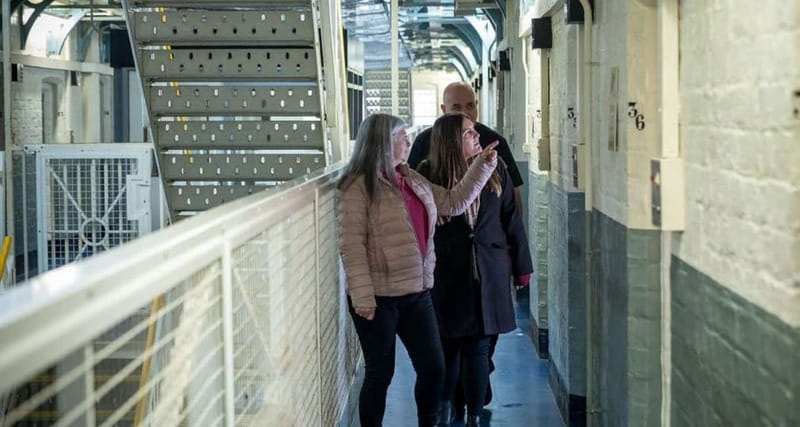
Because this is valid for 1 day and you explore at leisure, the key is pacing. Start with reception and the wings so you build the basic understanding early. Then move into healthcare, then visits and exercise yards, because those middle sections explain routines and human realities.
Finally, save segregation and the executioner’s bedroom and condemned cell for later in the day. The route is designed in that direction, and it helps your brain connect cause and effect. Ending in darker spaces after you’ve learned the wider system tends to make the story land better.
If you want to keep it smooth, aim to spend extra time where the sound boxes are available and where the information boards are clearly doing the heavy lifting. Those are the points where you’re most likely to remember details later, like the historical name connected to the executioner’s bedroom.
Also, don’t ignore the Cellfie points. They’re not just for photos. They help you locate the stop you just walked through and give you a tangible memory trigger.
Who should book and who might want a different plan
Shrewsbury Prison entry ticket is a good fit if you like real places and self-guided exploring. If you enjoy walking through historically used spaces, reading interpretive boards, and using audio facts while you’re in the room, you’ll probably find it worth your time.
It’s also a solid option for families in the sense that it’s described as suitable for all ages and includes an onsite activity booklet. That said, it is still a prison experience with dark material near the end of the route. If you’re deciding for younger kids, I’d think about how they handle heavy themes and how long they can stand and read in indoor spaces.
If you want high energy entertainment or heavy interaction, you may find it leans more museum-like than game-like. One practical approach is to treat the visit like a history walk with stops, not like a theatrical ride. If that matches your style, you’ll likely enjoy the day more.
Should you book Shrewsbury Prison entry tickets?
Book it if you want a real prison setting with a structured self-guided route, sound boxes, and a museum finish. The combination of wings with nearly 200 cells, the visits and exercise yards, and the executioner’s bedroom tied to Albert Pierrepoint gives the day a clear arc.
I’d hesitate if you need lots of hands-on interaction or you’re very sensitive to mismatched interpretation and props, because the experience is fundamentally based on signs, boards, and listening. If you’re fine slowing down, reading carefully, and letting the place tell its story, this is one of those days that sticks with you long after you leave.
FAQ
How long is the Shrewsbury Prison entry ticket valid for?
Your entry ticket is valid for 1 day.
Is this visit self-guided or guided?
This experience is described as exploring at your leisure, with a visitor guide and map provided for your route.
What do I get when I arrive?
At the visitor centre, you are supplied with a map, visitor guide, and activity booklets, and staff will direct you to your starting point.
What learning tools are included during the visit?
You can use sound boxes around the site to learn facts and history, and there are information boards throughout the prison.
What parts of the prison can I visit?
The route includes reception, two prison wings with nearly 200 cells, healthcare, visits, two exercise yards, segregation, the executioner’s bedroom (connected to Albert Pierrepoint), and the condemned man’s cell near the execution room.
Is there a place to eat on site?
Yes. There is a restaurant open all day every day, with options like homemade cakes and fresh coffee, snacks and bites, and a full sized Lifers Burger.
Is there a museum and gift shop?
Yes. You’ll have access to the museum and gift shop, with museum artifacts found within the prison walls.
What language is available?
The host or greeter is listed as English.
Can I cancel for a refund or pay later?
Free cancellation is available up to 24 hours in advance for a full refund. You can also reserve now and pay later.
Newest entries under London






Tickets, compared.
Tower of London and Crown Jewels Exhibition Ticket
Read our review →




Buckingham Palace: The State Rooms Entrance Ticket
Read our review →