

Reviewed · WALKING TOURS
Secrets of Central London Walking Tour
London hides stories in plain sight. This 2-hour guided walk connects Central London history from the 1500s to today with what actually moves people through the city, from the first public transport route on the Thames to the tunnels under Holborn. I especially like the way it turns everyday streets into a living map of London’s transport secrets hidden in plain view.
What I liked most is the tour’s hands-on, engineering-minded approach. You’ll hear about major projects like the Piccadilly line and the Kingsway Tram Tunnel, plus why trains seem to run even when you step into quieter spaces like the Embankment Gardens. One drawback to plan for: the narration is in English and may be delivered quickly, including while you’re walking, so if you need a slower pace, keep your questions ready.
In This Review
- Quick hits before you go
- Why Theatreland, Covent Garden, and Kingsway feel like a transport story
- Starting outside London Transport Museum, Covent Garden Piazza
- Theatreland, the early theater scene, and how streets steer movement
- Covent Garden, Convent Garden, and the oldest shop story
- Police, the city’s priorities, and why order matters for transport
- Kingsway and the Tram Tunnel, plus where the Piccadilly line fits
- Holborn’s underground tunnels, and why the ground feels more complex
- Embankment Gardens, tranquil space, and the trains you hear anyway
- The Thames as the first public transport thoroughfare
- Price, time, and whether this is good value for $26
- Who this walking tour suits best
- Book it or skip it: my practical take
- FAQ
- How long is the Secrets of Central London Walking Tour?
- Where is the meeting point?
- Is entry to London Transport Museum included?
- Does the tour visit disused tube stations or underground spaces?
- What should I bring?
- Is the tour wheelchair accessible?
Quick hits before you go
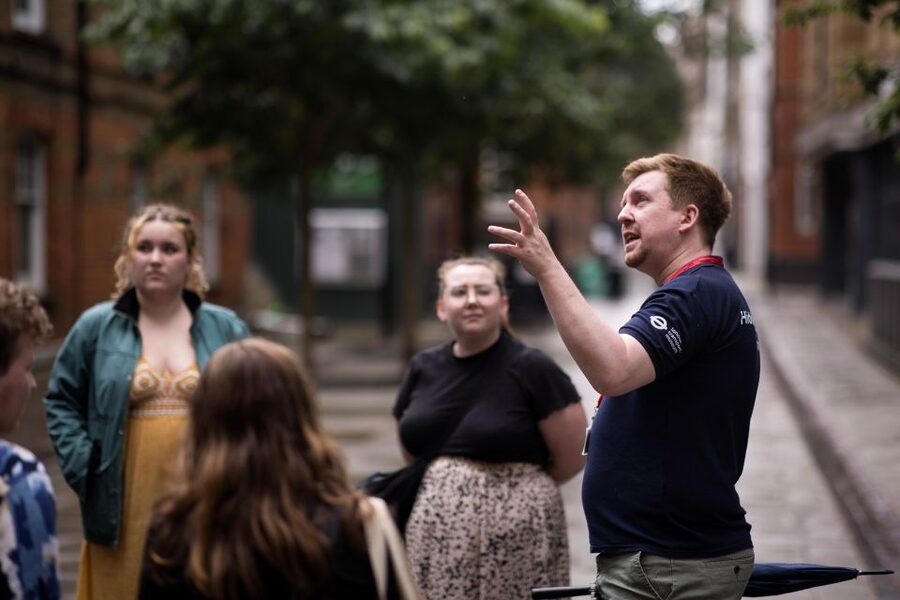
- Meet at London Transport Museum in Covent Garden Piazza, then learn without needing museum entry
- Transport history across centuries, from the 1500s to modern works
- Engineering stories in the streets, including the Piccadilly line and Kingsway Tram Tunnel
- Holborn’s tunnel talk, focused on why the area feels layered underground
- Embankment Gardens train sounds, explained through the city’s real workings
- The Thames as a transport corridor, not just a scenic river
Why Theatreland, Covent Garden, and Kingsway feel like a transport story

If you think Central London is just famous landmarks, this tour nudges you to look closer. The magic trick is simple: you walk through Theatreland, Covent Garden, Kingsway, and the Embankment, then you learn how those same streets shaped modern transportation. That framing matters because you stop seeing the city as a static postcard and start seeing it as a system that keeps evolving.
I also like that the tour covers more than one era. You’re not stuck in one theme, like only Victorian London or only underground engineering. Instead, it links older street life to later infrastructure choices, including what got built, what changed, and what you can still notice today.
And because it’s a walking tour, you get the most practical kind of learning. You hear why certain routes exist, then you physically move through the same corridors, the same junctions, the same crossings. You leave with a mental model of where London channels people, not just a pile of facts.
More Guided Walking Tours in London
- Magical London: Harry Potter Guided Walking Tour
★ 4.7 · 22,044 reviews - London: The Original Jack the Ripper Walking Tour
★ 4.7 · 7,833 reviews - London: Harry Potter Movies Walking Tour (Kids Go Free)
★ 4.7 · 3,071 reviews
Starting outside London Transport Museum, Covent Garden Piazza
The experience kicks off outside the main entrance of London Transport Museum on Covent Garden Piazza (WC2E 7BB). You’ll want to arrive early, because a team member meets you about 15 minutes before the scheduled start.
Even though museum entry is not included, starting here is smart. The London Transport Museum is the obvious anchor for the theme, and you begin with the right mindset: London’s transport is not an afterthought. It’s built into the city’s identity.
What to expect at the start:
- A straightforward, English-speaking guided walk
- Time spent outside, moving through busy areas
- A guide who uses the streets as the “exhibits,” instead of sending you underground to disused spaces
A practical note: there’s no cloakroom, and luggage or large bags are not allowed. If you’re trying to do this after shopping or with a daypack full of bulky stuff, keep it light.
Theatreland, the early theater scene, and how streets steer movement

The route is anchored in Theatreland, and that’s more useful than it sounds. Theater districts tend to generate intense, predictable crowds. That pressure shapes local streets, timing, and transportation options. During the walk, you’ll hear about the first theatres that opened in the area and how this specific part of London grew into a major draw.
You also get the “small but important” street stories that help you understand later transport choices. The tour doesn’t treat streets as flat background. It treats them like design constraints. When people gather in one place, planners and engineers eventually respond. You’ll start noticing how London’s layout nudges you toward certain routes, entrances, and connections.
This is also a good moment to set expectations about pacing. The walk is up to two hours, including uneven ground and road crossings. Wear sturdy shoes. If you’re the type who likes to stop for photos often, you might need to be efficient, because the guide is moving you from stop to stop.
Covent Garden, Convent Garden, and the oldest shop story
Covent Garden is one of those districts where the present looks so complete that it’s easy to forget it used to be something else. Here, you get a detail that makes the whole area feel less polished and more human: the tour explains how Covent Garden was originally known as Convent Garden.
You’ll also get a look at how well-known street patterns influenced transportation systems. Even if you never plan to analyze urban design, you’ll feel the difference between “random streets” and “streets that were designed for flow.” That’s the key takeaway you can carry around afterward.
One standout included stop is the story of the oldest shop in the city. It sounds like a fun fact, but it works better than that. It helps you connect economic history to street history. Shops and foot traffic create the demand that transportation systems later support.
More British streets at boot pace:
- London: The Great British Rock and Roll Music Walking Tour★ 4.9 · 1,783 reviews
- London: Harry Potter Walking Tour in German★ 4.8 · 1,505 reviews
- London: Jack the Ripper Evening Walking Tour★ 4.9 · 1,449 reviews
- London: Street Art and Graffiti Guided Walking Tour★ 4.9 · 1,354 reviews
Police, the city’s priorities, and why order matters for transport
Another surprising angle in the walk is the connection between the area and the birth of London’s first professional police. The tour brings this up as part of how the city organized itself. That matters for transport because large public spaces, crowds, and busy routes require control and coordination.
So rather than learning policing as a separate subject, you get it as a practical ingredient in city life. When people move through a district for work, entertainment, and commerce, someone has to keep things from turning chaotic. That same need for order shows up in how transport runs, how crowds are managed, and how public spaces function.
If you like history that explains the present, this is one of the more rewarding themes. It’s not just dates. It’s systems.
Kingsway and the Tram Tunnel, plus where the Piccadilly line fits
Kingsway is where the tour becomes very engineering-minded. You’ll hear about the Kingsway Tram Tunnel, and you’ll also get an explanation of how streets shaped the construction and evolution of rail and tram lines.
This is where I think the tour offers strong value for the price. At $26 per person for about two hours, you’re essentially paying for a guided tour plus a crash course in how London’s transport network developed. You get to hear about specific projects, not only general trends.
The Piccadilly line story also shows up here. Instead of treating the Tube as a single object, the guide frames it as something built in response to real needs, with streets acting like the “wiring” around which decisions got made.
What to watch for as you walk:
- Signs of big infrastructure choices in how streets meet and funnel people
- Moments where the geometry of the area seems to make more sense after you hear the construction story
- A chance to connect modern transit routes with older transport experiments like tram systems
If the guide’s English pace feels fast, this is the part where you might want to focus hardest. These are the most technical topics, and understanding them gives you the best payoff for the whole walk.
Holborn’s underground tunnels, and why the ground feels more complex
In the Holborn area, the tour shifts from visible streets to what lies underneath. You’ll hear about the multitude of tunnels underground there, and that detail changes how you interpret everything above.
London is famous for its layers, but you typically only notice them when you’re actively looking, like at stations. This tour does the opposite. It makes you aware of underground complexity while you’re still on street level. That helps you understand why so many infrastructure projects require careful planning and why parts of central London feel like they were built around existing underground constraints.
This is also a great topic for photos. Even if you cannot see the tunnels, you can capture the street corners, facades, and junctions where the guide connects past construction decisions to present-day layouts.
Just be sure you’re comfortable with walking on mixed surfaces. The tour involves uneven ground, and you’ll be crossing busy roads. This is not a sit-and-listen tour.
Embankment Gardens, tranquil space, and the trains you hear anyway
One of the most memorable promised highlights is the explanation of why you hear trains running even while you’re walking in tranquil Embankment Gardens. On paper, that sounds like a fun mystery. On the street, it becomes a lesson in how London’s transport infrastructure works at different depths and distances from where you expect it.
This part of the tour is useful because it teaches you how to read a city by sound as well as sight. When you hear trains in an area that feels calm, it means the transport system is close enough, powerful enough, or routed in a way that affects the soundscape. That insight sticks, and you’ll likely notice similar patterns later in your trip.
It’s also a nice mood shift near the end of the walk. Gardens offer a breather. Even if you’re still moving, you’re not just in urban corridors. You’re getting a small reset before the tour wraps up.
The Thames as the first public transport thoroughfare

The Thames is discussed as the first public transport thoroughfare of London. That theme matters because it changes how you picture river history. Instead of thinking of the Thames as only a boundary or scenery, you start thinking of it as a transit engine.
You’ll likely connect this to what you already know about London’s growth along the river. But the tour’s twist is making you treat the river as part of the same transport logic as streets and tunnels. It helps you see the city as a set of linked routes, not separate attractions.
This also sets up a bigger understanding of central London. When you get people moving by water first, then by street and rail later, it creates a layered network where different transport modes overlap over time.
That’s the kind of idea that makes future walks more interesting. You stop asking only what a place looks like, and you start asking how it functions.
Price, time, and whether this is good value for $26
At $26 per person for about 2 hours, this tour is priced like a practical add-on to a day in central London. You are not paying for a museum ticket inside. You are paying for guided interpretation of the city’s transport history, delivered while you walk through the exact spaces where the stories happened.
So what makes it good value?
- You get specific transport topics tied to real locations, not vague “history of London” narration
- You cover multiple themes in one route: streets, engineering, underground tunnels, and transport evolution
- You get to learn without needing to manage a lot of ticketing during the walk
What could make it feel less like value?
- If you struggle with fast English narration, or you dislike walking and road crossings, you may not get the full benefit
- If you already know a lot about London transport, you might find some parts feel like a recap rather than a discovery
Who this walking tour suits best
This one is a strong fit if you:
- Like city history that explains how the present got built
- Enjoy transport and engineering details, even if you are not a technical person
- Want a focused 2-hour activity that fits neatly into a Covent Garden day
It may not be the best fit if you:
- Need very slow pacing or you have difficulty following English while moving
- Are traveling with small children, because it is not suitable for children under 9
- Have mobility limitations, because although it is described as wheelchair accessible, the tour also notes uneven ground and busy road crossings
- Plan to bring luggage, because luggage or large bags are not allowed
Book it or skip it: my practical take
I’d book this if you want London transport history with a real-world payoff. The tour’s best ingredient is how it connects facts to the street plan you can see and walk. You also get a satisfying mix, from Convent Garden to tunnel talk in Holborn to the explanation of trains you hear in Embankment Gardens.
I’d think twice if English narration pace is a concern for you, or if you dislike longer stretches of walking and road crossings. Also, since it does not visit disused Tube stations or underground spaces, it is not for people hoping for a literal “underground tour.”
If you like learning by moving, this is a smart way to spend two hours in the center.
FAQ
How long is the Secrets of Central London Walking Tour?
It runs for about 2 hours.
Where is the meeting point?
Meet outside the main entrance of London Transport Museum, Covent Garden Piazza, WC2E 7BB. A Hidden London team member meets you about 15 minutes before the start time.
Is entry to London Transport Museum included?
No. Entry to London Transport Museum is not included.
Does the tour visit disused tube stations or underground spaces?
No. This tour does not visit any disused tube stations or spaces.
What should I bring?
Bring a passport or ID card.
Is the tour wheelchair accessible?
It is described as wheelchair accessible, but it also involves uneven ground and busy areas with road crossings, so it may not suit everyone with mobility impairments.
Newest entries under London





Walking Tours, compared.

Magical London: Harry Potter Guided Walking Tour
Read our review →

University and City Walking Tour with Alumni Guide
Read our review →
Harry Potter Movies Walking Tour (Kids Go Free)
Read our review →
The Great British Rock and Roll Music Walking Tour
Read our review →

Harry Potter Walking Tour Including New College
Read our review →Browse the lists this tour appears in