
Reviewed · WALKING TOURS
Secret Old London Walking Tour
Old London feels close when you walk it. This short tour strings together medieval streets, St Bartholomew the Great, and the darker corners of City history in a way that’s easy to follow. I especially love the way the guide turns quiet stone and empty space into a real sense of place.
You’ll also get a strong dose of atmosphere at the bombed-out church shell and around Smithfield, where you can picture what last moments must have looked like. The one thing to think about is pacing and weather, since it is only 1.5 hours and you will be on your feet, so bring warm layers in winter and plan for damp sidewalks when it rains.
In This Review
- Key highlights to look for
- Starting at Barbican and walking into old London’s shadow
- Charterhouse Square and the Black Death ground under your feet
- Smithfield: medieval jousts, executions, and the cost of power
- St Bartholomew the Great: a churchyard you can actually picture
- Blitz scars: seeing the shell of a church in plain view
- Hidden memorials and heroic self-sacrifice stories
- Finding the Roman amphitheatre perimeter in the modern City
- Guides, pacing, and how this 1.5-hour format keeps moving
- Price and value: why $26 for old London can feel fair
- Who should book this Secret Old London walk, and who should skip
- FAQ
- How long is the Secret Old London Walking Tour?
- Where do we meet?
- How much does it cost?
- What language is the tour guide?
- What should I bring and wear?
- Is it suitable for kids, and are there any pet rules?
Key highlights to look for
- Barbican meeting point with a fast start and a clear route into the old City of London
- Charterhouse Square atmosphere that hides the Black Death story behind calm open space
- Smithfield area stops tied to medieval jousts and famous executions linked to William Wallace
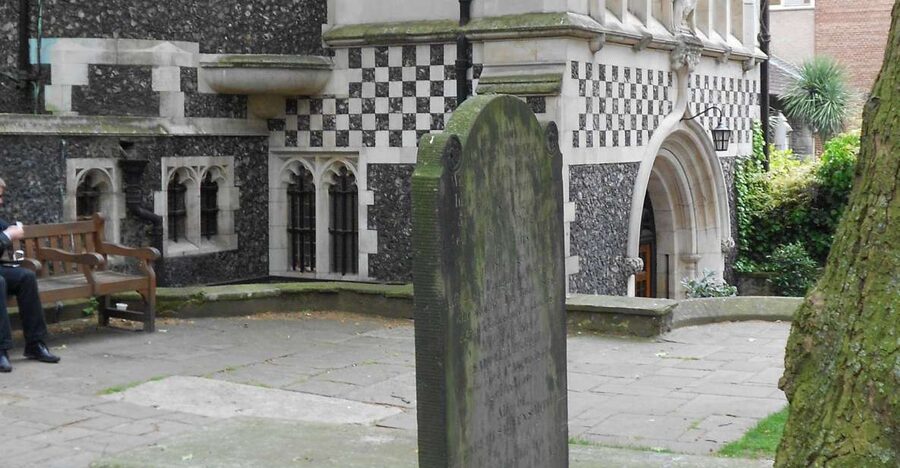
- St Bartholomew the Great churchyard mood with a movie-famous setting and Tudor-era gravitas
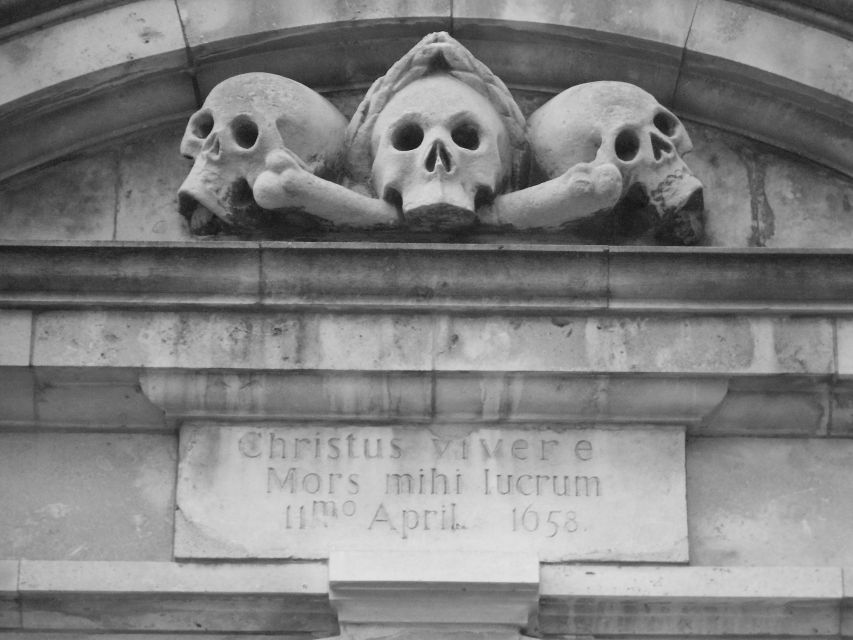
- Blitz scars in plain sight when you see the shell of a church destroyed in the bombing campaign
- Roman amphitheatre perimeter spotting plus a touching memorial linked to heroic self-sacrifice
Starting at Barbican and walking into old London’s shadow
The tour starts outside Barbican Underground Station, and that matters more than you’d think. It’s one of those meeting points where you can actually find your way fast, and then the walk quickly shifts from modern London into the older grid of streets around the City. The whole experience is built for short attention spans and tight timing, which I love. You are not stuck in a long lecture, but you also get enough story to make each location feel connected.
You’ll move through areas where the medieval and Tudor past still shapes the surroundings. Even when the buildings look new, the street directions and the open squares give you clues. That’s the tour’s rhythm: you look at what’s in front of you, then the guide gives you the “how did this become London?” answer, in plain language.
One reason this works so well is that the guide style tends to be lively and human. In past groups, names like Rosie, Pepe, Jess, and Jeremy have been mentioned for making the old City feel vivid, even for people who know London fairly well. The tone is passionate without being preachy, and the route gives you room to absorb things before the next stop.
More Guided Walking Tours in London
- Magical London: Harry Potter Guided Walking Tour
★ 4.7 · 22,044 reviews - London: The Original Jack the Ripper Walking Tour
★ 4.7 · 7,833 reviews - London: Harry Potter Movies Walking Tour (Kids Go Free)
★ 4.7 · 3,071 reviews
Charterhouse Square and the Black Death ground under your feet
Your first real “wait, what happened here?” moment comes at Charterhouse Square. Right now, it feels calm and ordered, a place where you could easily walk through without thinking too hard. But the story is dark: about 600 years ago, it was linked to the dumping ground during the Black Death.
This is where the tour does its best trick. It takes something you often read about in textbooks and gives it a physical location. You’re not just hearing that the plague changed London. You’re standing somewhere that helps you understand what “changed” can mean when it’s about bodies, fear, and overwhelmed systems. The guide’s job is to connect those facts to the feel of the space, and on this tour, it usually lands well.
If you like history that has stakes and consequences, this stop is your anchor. It’s also a good checkpoint mentally: after Barbican’s intensity, Charterhouse Square gives your feet and your brain a chance to slow down for a moment and take in the contrast.
Smithfield: medieval jousts, executions, and the cost of power
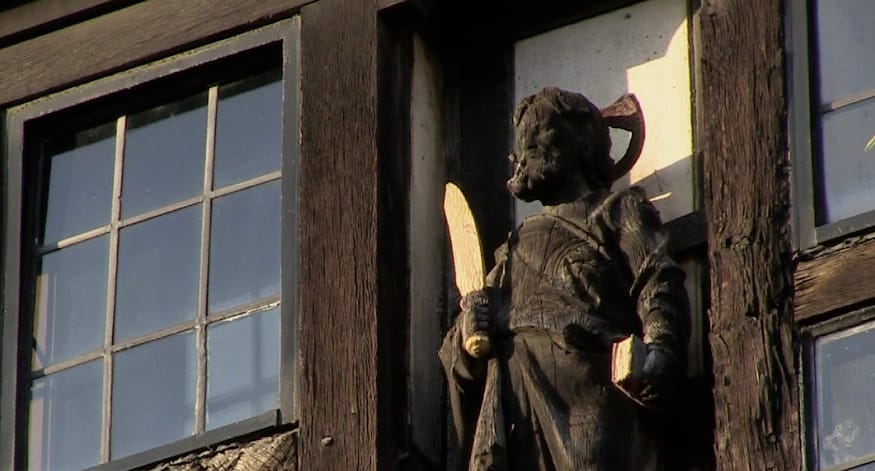
Then you head toward Smithfield, one of London’s most important crossroads for dramatic events. Historically, this area ties to medieval jousts and it also became associated with grisly public executions. The tour leans into atmosphere here, asking you to imagine the noise, the fear, and the crowd energy that must have hung over the place when punishments were meant to be seen.
William Wallace comes up in the story. Even if you know him from pop culture, it hits differently when the guide frames his name in connection with a specific part of the City. It’s not about gore for its own sake. It’s about how public punishment worked as information, warning, and political theater all at once.
A practical note: the Smithfield portion can feel emotionally intense because you’re dealing with real executions. If you prefer lighter storytelling, you might want to mentally pace yourself at this stage and treat it like a history lesson rather than a thrill ride. But if you’re the kind of person who likes the truth behind old streets, this is a core reason to book.
Also, this is where the “watch the details” skill pays off. One review complaint pointed out that William Wallace was not mentioned during one run. That’s not something you can control as a solo traveler, but it’s a reminder that guides may emphasize pieces differently. Still, the broader Smithfield story and the execution-site atmosphere are the heart of this section.
St Bartholomew the Great: a churchyard you can actually picture
Between Charterhouse Square and Smithfield, the tour highlights St Bartholomew the Great, a major medieval church that’s also shown up in films like Four Weddings and a Funeral and Sherlock Holmes. In person, the churchyard atmosphere does a lot of the work for you. You feel the age in the structure and the space, and you can stand back and look at it long enough to start imagining centuries layered on top of each other.
I like this stop because it’s not just “look at the building.” It’s also about how churches shaped daily life, community memory, and public events. A medieval and Tudor church in the City is like a time machine that doesn’t need a screen. The guide adds context that helps you understand why a place like this became a landmark for both faith and storytelling.
If you care about architecture, you’ll appreciate how the guide talks about the setting and the gravitas of the churchyard. If you care about movies, you’ll enjoy spotting that sense of cinematic familiarity. If you care about both, you get the best blend: real history with pop-culture proof that these places have always been visually powerful.
More British streets at boot pace:
- London: The Great British Rock and Roll Music Walking Tour★ 4.9 · 1,783 reviews
- London: Harry Potter Walking Tour in German★ 4.8 · 1,505 reviews
- London: Jack the Ripper Evening Walking Tour★ 4.9 · 1,449 reviews
- London: Street Art and Graffiti Guided Walking Tour★ 4.9 · 1,354 reviews
Blitz scars: seeing the shell of a church in plain view
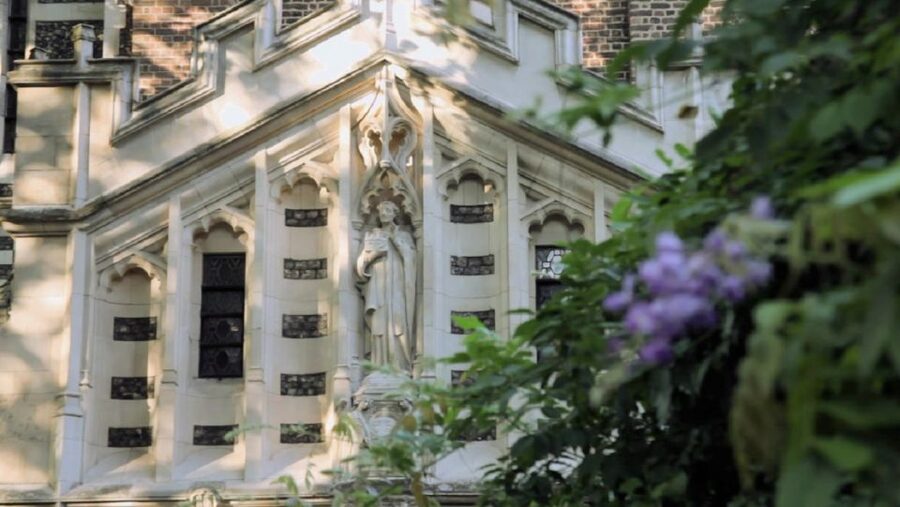
One of the tour’s most striking visual moments is the shell of a church destroyed in the Blitz. You don’t need to be a war-history expert to feel the impact. A bombed-out shell changes how a street reads. It interrupts the normal timeline of a neighborhood and makes you aware that London’s layers include not just medieval centuries, but also 20th-century trauma.
This is where the tour’s short format becomes a strength. In many bigger tours, you might get war history diluted across multiple neighborhoods. Here, the Blitz scar is treated as a turning point, a reminder that London’s past is not only far away. You can stand there, take it in, and move on with the story still attached to the space.
Because this is an atmosphere-heavy stop, it’s also where the guide’s delivery matters. Some guides on these tours are especially good at keeping the conversation flowing, so you’re not left with long silent moments unless you want them. If you prefer more commentary and less standing still, this is a good place to pay attention to the guide’s pacing.
A small consideration: one review mentioned that spending too long on pictures can reduce how much movement you get, which can make a winter afternoon feel colder. If you run cold easily, plan to wear layers and bring gloves if you think you’ll need them.
Hidden memorials and heroic self-sacrifice stories
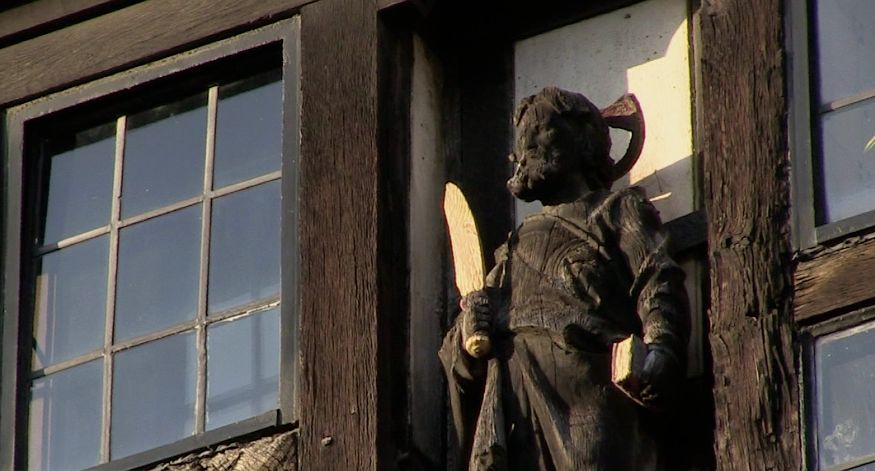
The highlights mention a hidden memorial to heroic self-sacrifice, and that’s exactly the type of thing that makes this tour feel different from the standard “big sights only” approach. Instead of just chasing famous landmarks, you’re looking for smaller markers that don’t always get attention from people rushing to photos.
Memorials like this matter because they teach you what a community decided to remember. They shift the focus from rulers and dates to individual acts, sometimes in places that feel unexpectedly quiet. When the guide connects a memorial to the emotion behind it, the City stops being a list of places and becomes a map of choices and consequences.
This is also one of the stops that can feel personal, even if you don’t share the same background. The City’s history can be intimidating in scale, but memorial stories are usually easier to hold onto. They give you a human thread to keep pulling through the wider timeline.
Finding the Roman amphitheatre perimeter in the modern City
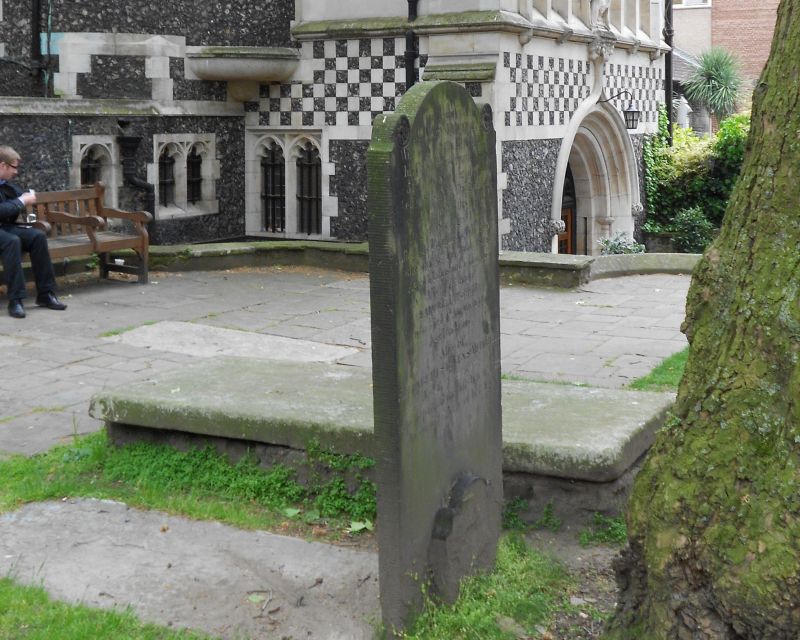
Another standout is locating the perimeter of a Roman amphitheatre. This is one of those experiences where you might feel a little skeptical at first, because Roman London doesn’t always advertise itself in big dramatic ruins. But that’s part of the thrill. You’re learning to see the evidence inside a modern neighborhood.
The guide approach here is key. You are not expected to find giant uncovered walls on your own. Instead, you’re guided to the spots where the outline and implications of the amphitheatre show up in the surrounding geography. Once you learn what to look for, the area makes more sense. It’s a practical skill, and it’s also a fun way to travel with your eyes open.
If you enjoy “how the old city fits inside the new one” thinking, this stop will keep you engaged. It also gives the walk a nice variety after the heavier medieval and wartime themes. Roman London sits underneath it all, a reminder that the City has always been a living stage.
Guides, pacing, and how this 1.5-hour format keeps moving
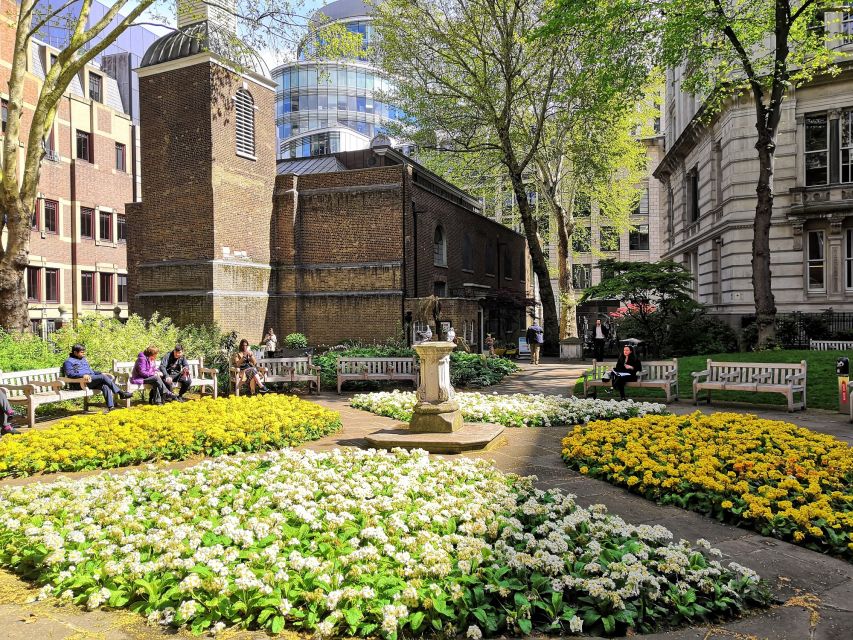
The tour lasts 1.5 hours, which is short enough to fit into a weekend plan, but long enough to build a storyline. You get a live English-speaking guide, and most of the praise you’ll see for this tour centers on the people telling the stories. Names like Rosie, Pepe, Jess, and Jeremy have come up again and again for being passionate and in-depth, with a delivery style that makes facts stick.
Pacing is also repeatedly praised. Many comments describe the walk as going at a good speed, with time to take things in without stalling. One small critique is that some runs spend a bit too much time looking at pictures rather than moving, which can be annoying if you’re cold. The good news is that even with that occasional slowdown, you still cover multiple high-impact stops in a tight loop.
What you should bring is simple: comfortable shoes. Because this is a walking tour with frequent stop-and-start, you’ll feel it in your feet if you’re in anything stiff or stylish but not supportive. And since refreshments are not included, you’ll likely want water on hand, especially if you’re out in warm weather or you’re the type who needs a break to keep your energy steady.
Price and value: why $26 for old London can feel fair
At $26 per person for a 1.5-hour, guided walk, I think the value comes from three things: access to specific locations, a guide who can connect them into a narrative, and a pace that fits into real travel schedules. You’re paying for interpretation, not just a map. The sites are scattered around the City, and the tour format helps you stand in the right spots while someone explains what you might otherwise miss.
Also, this is one of those tours where the guide can matter more than the topic. The best moments tend to be when a guide like Rosie or Pepe makes the past feel like it belongs to the street you’re standing on. You’re not only seeing monuments. You’re learning the logic behind why the City grew the way it did, why punishment and plague mattered, and why Roman layers still show up.
So if you are the kind of traveler who likes to squeeze history into limited time, this price point is reasonable. If you want a lot of quiet time on benches or you expect refreshments and long indoor stops, you might find it a bit more demanding than a sightseeing bus ride. But for an active history hit, $26 feels like a solid deal.
Who should book this Secret Old London walk, and who should skip
This tour is a good fit for you if you want authentic atmosphere and stories tied to specific places. It’s also great for people who have lived in London for a while and thought they knew the area, because the route is built to find corners that don’t always show up in quick guidebook plans.
It’s also a strong choice for families with older kids, since it’s suitable for ages over 12, and the structure is manageable for a shorter walking window. It works for solo travelers and couples too, because the route gives clear stops and the guide helps keep everyone oriented.
I would consider skipping it if you’re sensitive to discussions of executions and public punishment. The tour is factual and designed to make you understand how history happened, but the theme is not gentle.
One more match check: there are rules against pets, luggage or large bags, and video recording. If you’re traveling with a large day bag or your hands are full, plan to travel light so you can focus on the walk.
FAQ
How long is the Secret Old London Walking Tour?
The tour lasts 1.5 hours.
Where do we meet?
Meet outside Barbican Underground Station.
How much does it cost?
It costs $26 per person.
What language is the tour guide?
The tour is in English.
What should I bring and wear?
Wear comfortable shoes.
Is it suitable for kids, and are there any pet rules?
It is suitable for all persons over 12. Pets are not allowed, and dogs are not permitted except guide dogs.
Newest entries under London






Walking Tours, compared.

Magical London: Harry Potter Guided Walking Tour
Read our review →

University and City Walking Tour with Alumni Guide
Read our review →
Harry Potter Movies Walking Tour (Kids Go Free)
Read our review →
The Great British Rock and Roll Music Walking Tour
Read our review →
Harry Potter Walking Tour Including New College
Read our review →Browse the lists this tour appears in