
Reviewed · HISTORICAL TOURS
Roman Ruins to Blitz Bombings: London’s Fiery History
London’s history has layers, and this walk shows them. You’ll trace the City’s rise from Londinium to wartime survival, using real streets and monuments you can actually stand beside. It’s a fast timeline that stays human, with jokes, sharp explanations, and plenty of time to ask questions.
I especially love two things: first, the chance to see Roman ruins in the ancient heart of London without needing a museum ticket. Second, the guiding style, clear and friendly, with a mix of trivia and harder facts that keeps the story moving. One drawback to plan for is the pace, it is a 2-hour walk with short stops, so you will get the highlights rather than deep museum-style detail.
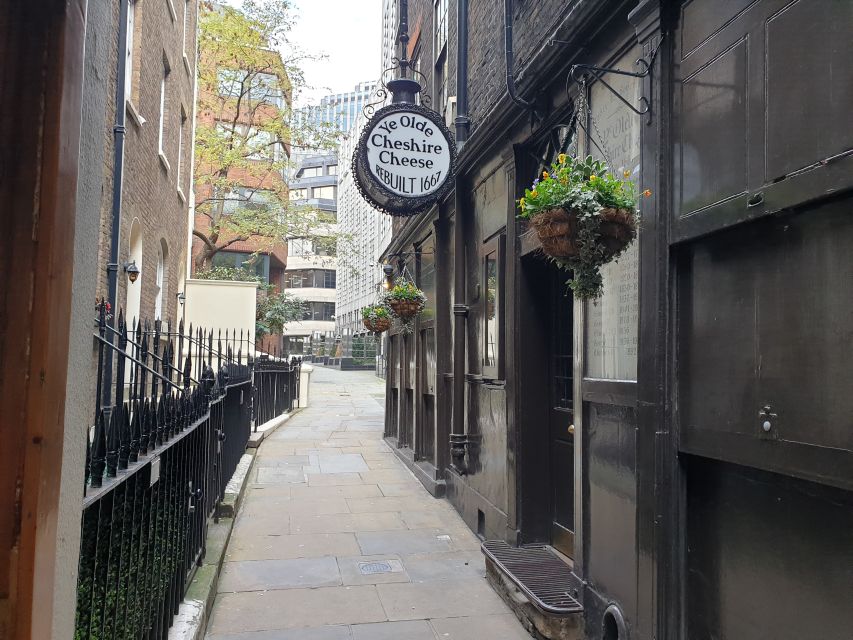
If you want a walk that connects Roman London, medieval power, and later shocks from fire and war into one coherent route, this is a smart way to do it. The tour runs about 2.5 miles total, keeps groups small (15 people), and starts at Tower Hill Station before ending near Blackfriars Station at Ye Olde Cheshire Cheese.
In This Review
- Key points to know before you go
- Tower Hill start: the simple route that turns into a timeline
- Roman Wall of Londinium: seeing Londinium without leaving the pavement
- Tower of London: power, executions, and why the stories linger
- Saint Dunstan in the East Church Garden: the quiet pause with big meaning
- The Monument to the Great Fire and London Stone’s surviving chunk
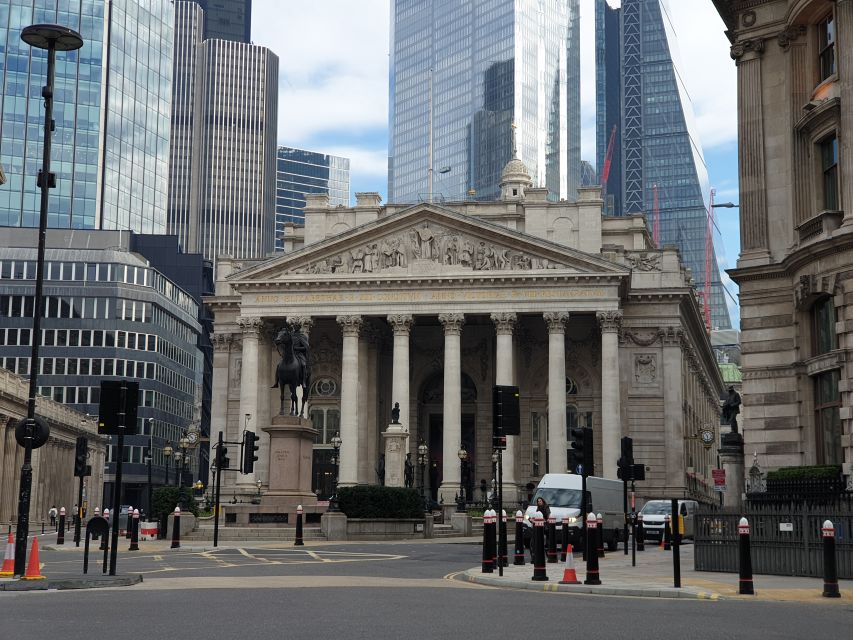
- Bank of England: the vault-tunnel legend and why money became power
- Guildhall, St Paul’s, and the finish at Ye Olde Cheshire Cheese
- Price, value, and what you truly get for $26
- Who should book, and who might want to skip it
- Should you book Roman Ruins to Blitz Bombings?
Key points to know before you go
- Roman Londinium remnants on public streets, not hidden exhibits
- Tower of London dark stories, including the famous ghostly angle
- Great Fire and London Stone sights that explain how the City rebuilt itself
- Bank of England vault legends told as a real part of the City’s myth-and-money world
- A small-group pace, about 2 hours over 2.5 miles, good for first-timers and history fans
Tower Hill start: the simple route that turns into a timeline
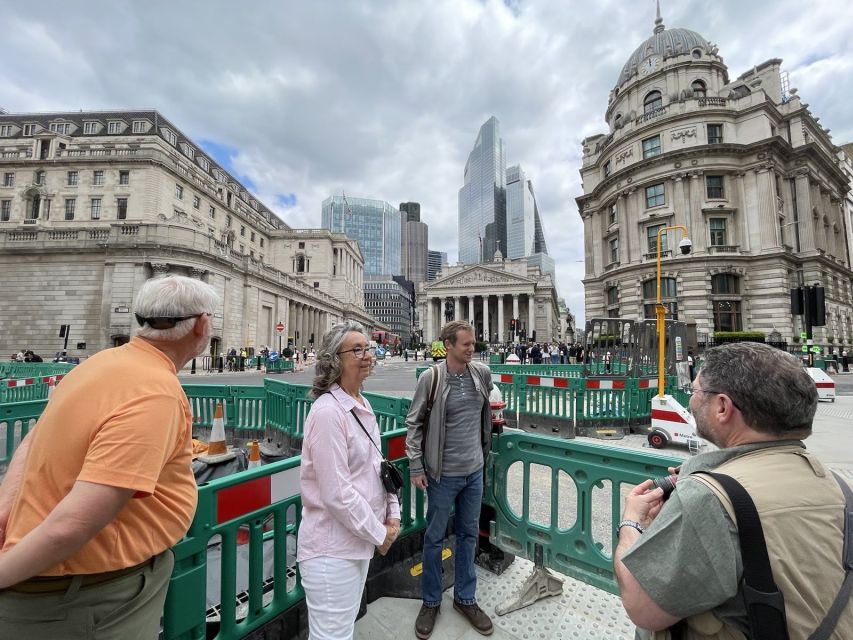
This tour is built for people who like history but do not want to spend half a day wrestling museum lines. You begin at the exit of Tower Hill Station, and your guide stands at the base of the steps leading up to the sundial, holding an Historic London Tours sign. From the first minute, you are moving, not waiting around.
The whole experience takes about 2 hours, with roughly 2.5 miles of walking. Stops are brief, often around a few minutes each, so you do not get tired with long speeches at every corner. Instead, you get a story arc that keeps returning to one idea: London survives, reshapes, and reuses its own ground.
Because it is limited to 15 attendees, you also get better interaction. I like that, on a tour like this, small groups matter. You can ask questions without feeling like you are shouting over the crowd, and the guide can keep the pace while still answering you.
If you are the kind of traveler who likes to look at a street sign and feel you understand why it is there, you will enjoy this format a lot. Just bring comfortable shoes and plan for a steady walk. You will cover several major sights, but you will do it without long museum breaks.
More centuries walked in an afternoon:
- London: Historic Pubs of Central London Walking Tour
★ 4.9 · 1,065 reviews - London: Soho Music and Historic Pubs Walking Tour
★ 4.9 · 836 reviews - London: Rock ‘n’ Roll History Tour
★ 4.6 · 645 reviews
Roman Wall of Londinium: seeing Londinium without leaving the pavement
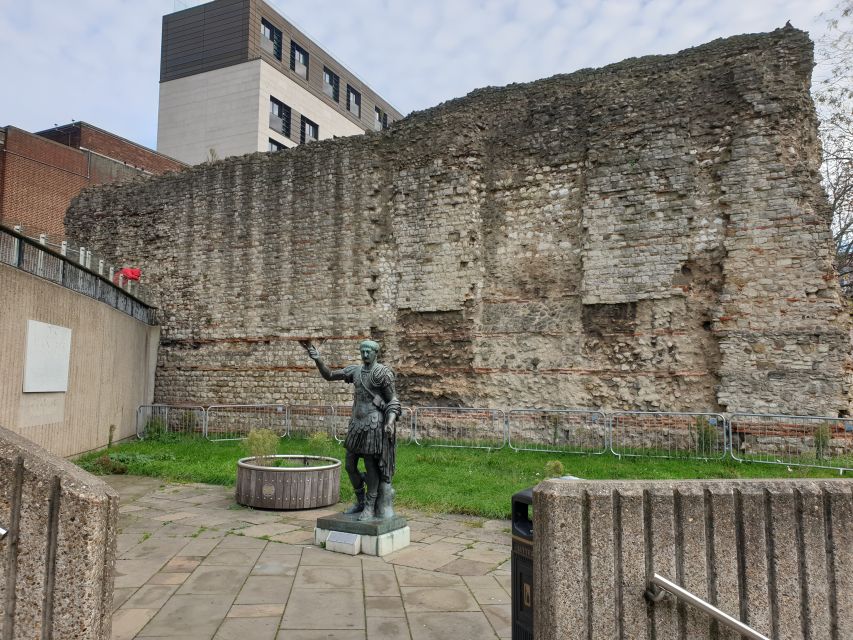
London’s Roman past can feel distant, like it belongs in textbooks. This tour changes that fast. Early on, you get to a Roman wall area connected to Londinium, the city the Romans founded. The point is not just that Rome existed here, it is how their footprint shows up in the modern City.
What I like about this stop is the way it sets the rules for the rest of the tour. You start in the ancient layers, then you can compare what comes next: medieval power, church authority, wealth, and the City’s repeated rebuilding after disaster. It gives you a mental map, so when you later pass a medieval landmark or a polished modern institution, you understand it as part of a much longer story.
You will also notice how “ruins” in London often mean partial remains, reused walls, and hints you would miss if you were walking straight through. A guide matters here. Without help, you can easily see a stone stretch and assume it is random old masonry. With the tour, those stones become specific and meaningful.
This is also where you get a first taste of the tour’s style. Expect clear explanations that are short, specific, and connected to the bigger theme of survival through fire and war. If you want Roman London that feels walkable and real, this stop delivers.
Tower of London: power, executions, and why the stories linger
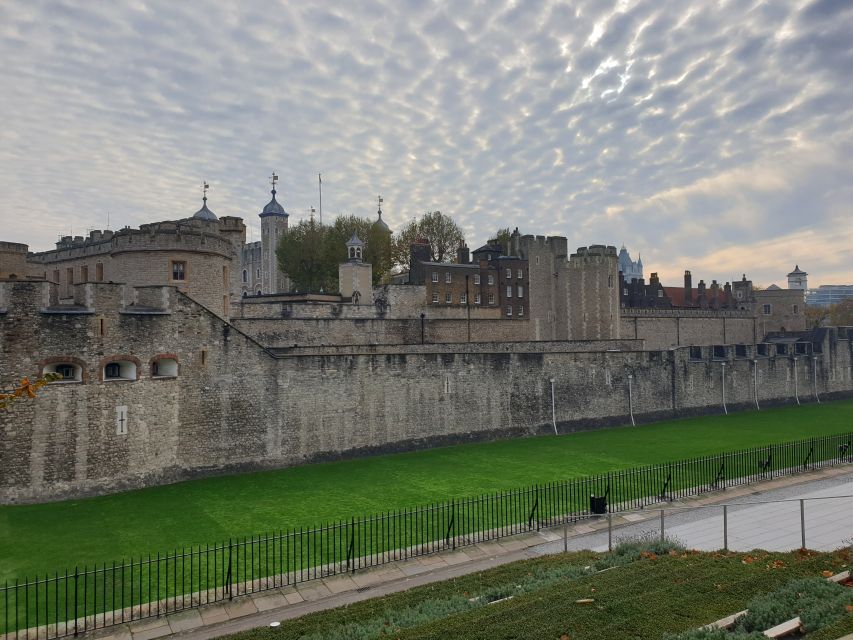
Next comes the Tower of London, and the tour does not soften the edges. This is where you hear the sinister and bloody past that made the Tower famous, and why it still feels like a place where history has teeth.
The Tower is not just one story. It is a web of rule, fear, politics, and punishment, and the guide ties that into the larger timeline you are building. You also get the ghost element in the background of this area’s legend, including the haunting association connected to Anne Boleyn. Even if you do not think of yourself as a ghost-tour person, it helps to hear how Tudor-era drama shaped what people later believed about the Tower.
What’s useful for you, as a traveler, is that the Tower stop makes later stops make sense. When you reach civic buildings and financial institutions, you start seeing how London’s governance and money grew from control, security, and the need for authority.
Here is one practical consideration: the Tower of London area can be busy around peak times. Since the tour keeps stops short, you will get the core story without trying to squeeze into a long queue moment. Still, keep your pace steady and do not plan to linger for extra sightseeing during the guided moment. That is not how this tour is designed.
If you like dramatic history with a clear explanation, this is the emotional high point of the walk.
Saint Dunstan in the East Church Garden: the quiet pause with big meaning
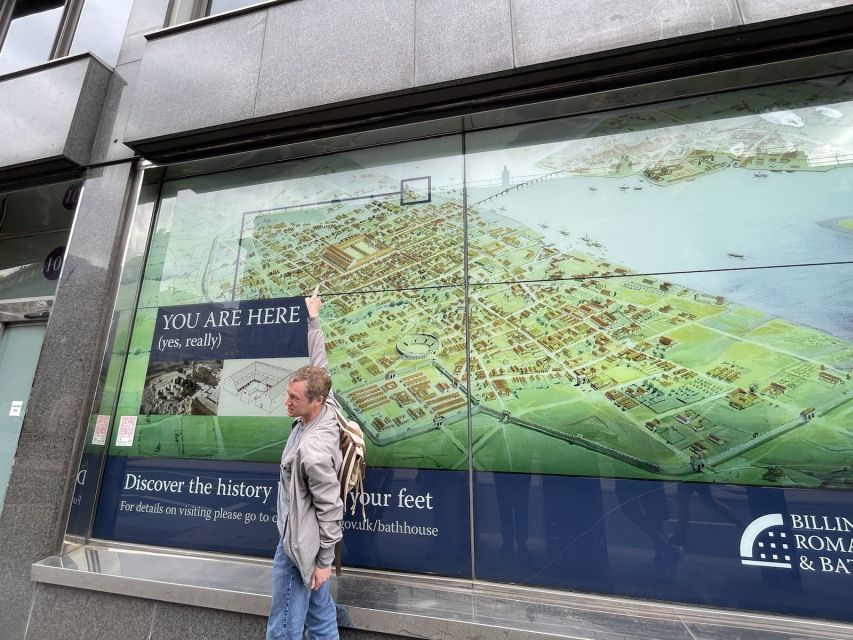
Then you shift to Saint Dunstan in the East Church Garden, a calmer pocket that helps the tour breathe. This is a good kind of contrast. The Tower is loud in theme and emotion. The church garden is quieter, and it reminds you that London history is also about everyday structures, faith, and local community life.
This stop matters because it shows how the City’s identity was not only shaped by kings and battles. Over centuries, churches, courts, and civic spaces all played roles in how people lived and how power was expressed. A garden setting makes that easier to absorb, even when the guide is moving fast through the story.
I like this stop because it also gives you a small reset. After a heavy landmark, a slower-feeling space helps you keep the history straight. You are walking through a timeline, but your brain needs room to file the information.
You may also find the storytelling here blends “hard history” with the sort of legends people repeated, the kind that later writers and storytellers picked up. That matters, because London history often lives in both categories: documented facts and cultural memory.
If you are traveling with people who get bored when every stop is dark, this garden stop can keep things balanced. It gives them a different texture, not just more drama.
Also inked in under London
- London: The London Eye Entry Ticket★ 4.6 · 35,875 reviews
- From London: Harry Potter Warner Bros Studio Tour★ 4.7 · 26,588 reviews
- London: Westminster to Greenwich River Thames Cruise★ 4.5 · 22,836 reviews
- Magical London: Harry Potter Guided Walking Tour★ 4.7 · 22,044 reviews
The Monument to the Great Fire and London Stone’s surviving chunk
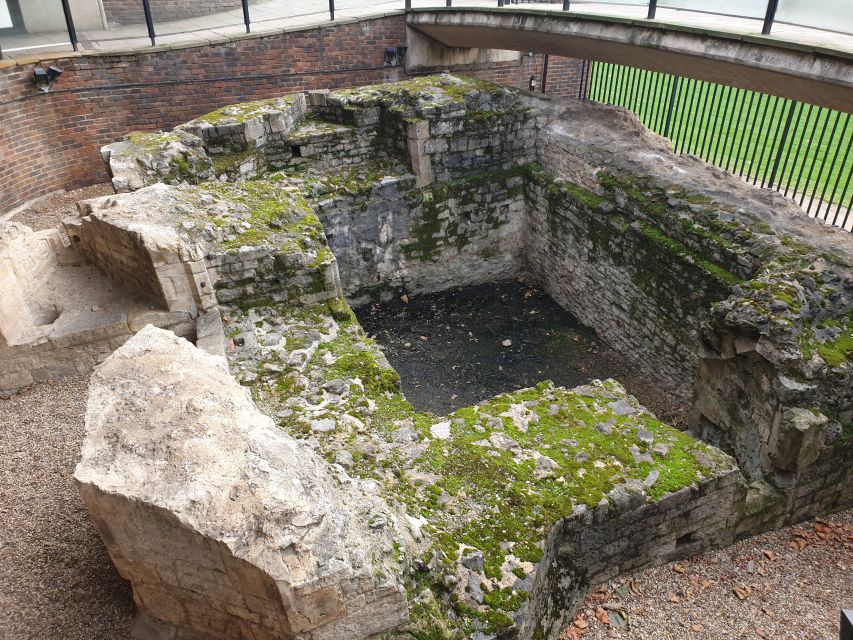
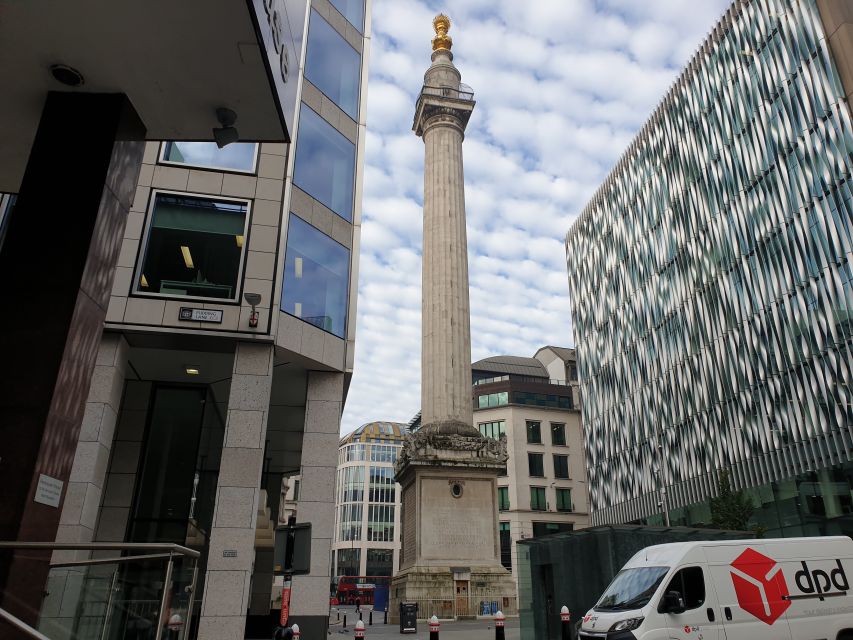
From there, you hit two icons of London that explain how the City changed after catastrophe. First, the Monument to the Great Fire of London. Then, London Stone, the remaining part that still signals how old the City really is.
The Monument stop is valuable because it turns an old event into a practical lesson. Great Fire stories are often repeated as legend, but this tour connects the fire to what came afterward, survival and rebuilding. Even if you already know the basics, hearing the event placed in the broader timeline of London’s resilience makes it click.
Then London Stone does something different. It gives you a small physical anchor for the City’s identity. You can stand near it and feel the odd power of a surviving remnant. London Stone is the kind of thing you would not necessarily seek out on your own, yet it becomes a key piece in understanding how the City defined itself over time.
This combo is especially good for first-timers. It gives you:
- a major disaster landmark (the Monument)
- a small but symbolic relic (London Stone)
Together, they show how London’s history is both dramatic and administrative.
One watch-out: this area is also central, so be ready for pedestrians. The tour pace helps you move through without getting stuck, but do keep an eye on footing and crossing the street safely.
Bank of England: the vault-tunnel legend and why money became power
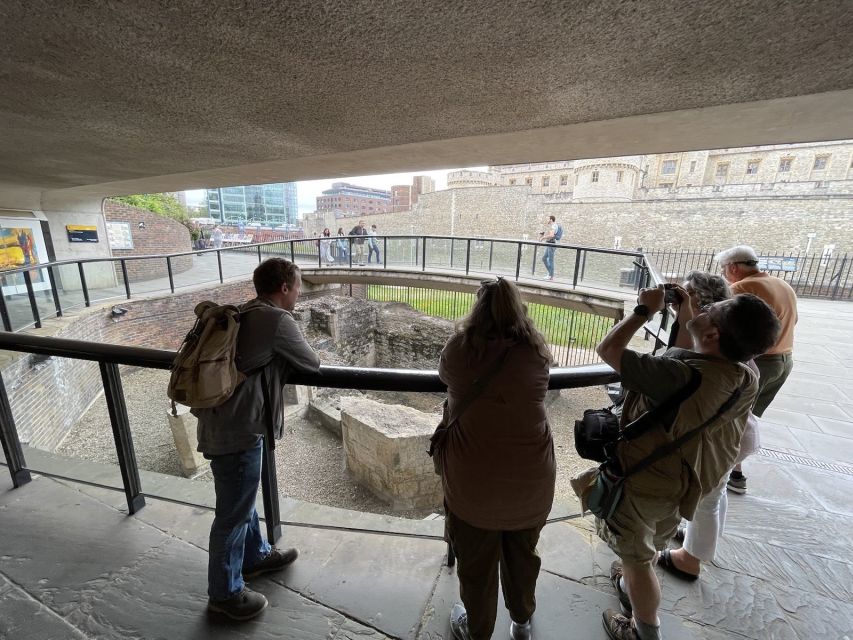
Now for one of the tour’s most playful highlights: learning the easiest way to tunnel into the Bank of England’s vaults. The wording is fun, but the point is serious. London’s financial power has always been tied to protection, secrecy, and control.
This is where the tour’s style shines. You are not just hearing that the Bank exists. You are hearing how the City’s institutions developed, and how people used myths and stories to make sense of wealth. When the guide points out the relevant context, it turns the modern Bank into a character in your timeline, not just a backdrop.
If you like history that connects to everyday places, this is one of the best stops. You probably walk past financial buildings on other trips and do not think much about their deeper role. Here, you learn why the City cared about secure storage and authority, and how those themes connect back to older power structures you saw earlier.
You may also get a pop-culture connection later in the tour thread, so keep your attention here. The guide builds links across centuries, so the “heist-like” vault story becomes part of the bigger theme of London as a master at reusing space and meaning.
As for drawbacks, the Bank stop can feel less visually dramatic than the Tower or the Monument. That is why a good guide matters. You are there for interpretation, not just scenery. Luckily, the guiding on this tour is built around clear explanations and humor that does not distract from the facts.
Guildhall, St Paul’s, and the finish at Ye Olde Cheshire Cheese
After the Bank comes the civic layer, where London shows its governance side. Guildhall is one of the key City institutions in this part of the walk, and you get a quick guided look at why it matters. This is not the grand museum route, it is the working-city route, which makes the history feel more grounded.
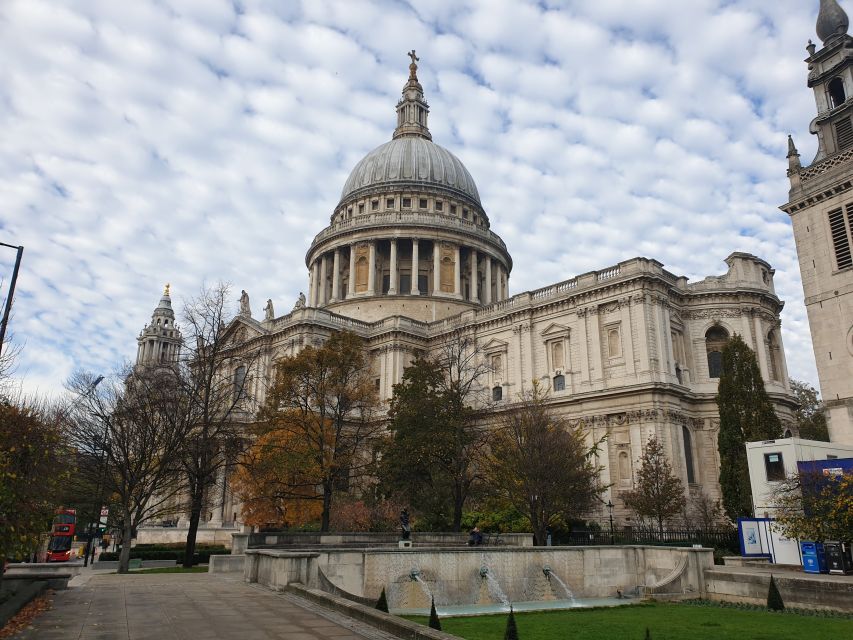
Then you move toward St Paul’s Cathedral. Even if you have seen photos, being in the area helps you understand the scale and the way St Paul’s sits in the London skyline as a symbol of rebuilding and authority. In a tour that also covers the City’s survival through fire and war, St Paul’s fits naturally. It acts like a visual summary, a place where London’s endurance becomes visible.
Finally, you end at Ye Olde Cheshire Cheese. This is a practical and satisfying finish. You get to stop walking and grab a drink or snack in a place famous for its long association with writers and London lore. It is also a good “wrap” because the tour ends near Blackfriars Station, so you can keep your day flowing easily.
I like endings like this for two reasons. First, it gives you an easy location to regroup if you are with friends. Second, it lets you turn the last guided stories into your own short conversation. You leave with scenes in your head, not just names.
One thing to consider: since this is a walking tour with short stops, you may want to revisit one or two sites on your own afterward. If any location really grabs you, this tour works as a doorway, not as a final stop.
Price, value, and what you truly get for $26
At $26 per person for about 2 hours and around 2.5 miles of guided walking, this is good value if you care about interpretation. You get a local guide, you get multiple major landmarks, and you do it in a way that helps you understand how London’s eras connect.
The best value part is that no museum entry is required. You are not paying extra for ticketed galleries to get your history fix. Instead, you use street-level sights, relics, and landmark context. That is ideal if you are planning a short London stay and you want momentum.
The main “cost” is time and walking comfort. You are signing up for movement. If you want lots of indoor breaks or museum time, this is not built for that. If you want a guided route that compresses centuries into one coherent walk, it fits.
Also, the small group size means you are more likely to get your questions answered. That matters because in history, the details often come from your personal curiosity, not just the guide’s script. When the guide has the space to respond, you learn more than the standard script.
Who should book, and who might want to skip it
I think this tour is a great fit for:
- first-time visitors who want Roman-to-modern context quickly
- history lovers who like a story you can follow on foot
- groups that want variety, Tower drama plus Roman remnants plus Great Fire landmarks
- travelers who appreciate clear speaking and humor, and who like to ask questions
It may be less ideal if:
- you only enjoy museum interiors and timed exhibits
- you need long seated breaks every stop
- you want slow, deep coverage of one era without moving around
The pace is friendly for most people with decent walking stamina, but it is still a real city walk. Comfortable shoes are a must.
Should you book Roman Ruins to Blitz Bombings?
Yes, if you want a high-value London history walk that connects eras instead of treating each landmark like a separate postcard. The mix of Roman remains, Tower of London drama, Great Fire landmarks, and a tour thread that reaches into wartime survival makes this feel like a guided timeline you can carry with you.
Book it if you like:
- small-group guiding (15 people)
- short stops that still explain the why
- a route that ends with an easy, real-world place to regroup at Ye Olde Cheshire Cheese
Skip it only if you want museum tickets, long dwell times, or slow pacing. This is designed for momentum, and that is part of its strength.
If you are deciding between a random self-guided stroll and a structured explanation, this is the better bet. You will leave with London’s layers feeling connected, not just listed.
Newest entries under London






Historical Tours, compared.




Westminster Abbey Tour with a Royal Heritage Guide
Read our review →

Browse the lists this tour appears in