
Reviewed · OXFORD TOURS & EXPERIENCES
Oxford: The Original Uncomfortable Oxford™ Tour
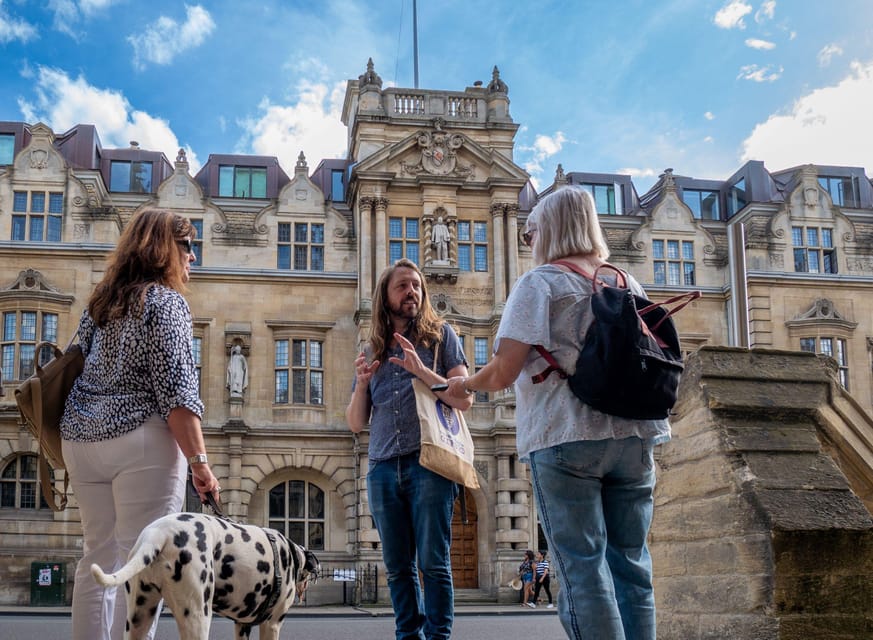
Oxford has teeth, and this tour shows it. I like the University researcher-led format and the way you’re pulled into evidence-based discussions about class, race, and gender, not just dates and buildings. The one caution: the experience can feel a bit structured, and if you’re hard of hearing, you may need to position yourself well, since some groups say the sound can be tough without a microphone.
You’ll cover around 2 kilometers on city-centre streets, with cobbles and crossings, in about 1.5 hours. It runs rain or shine, does not take you inside any colleges, and it’s wheelchair accessible, which matters because Oxford’s streets can be a challenge.
After the walk, you get a University-expert reading list and a free Uncomfortable Oxford sticker. And yes, on one recent outing, the guide named Jonathan was patient and clearly tuned in to the group’s questions, which is exactly the kind of delivery you want for this topic.
In This Review
- Key things I’d plan around before you go
- Oxford’s “uncomfortable” angle: why this tour feels different
- The 1.5-hour route, what you’ll actually see, and what it means
- Carfax Tower and the first “why does Oxford look like this?” moment
- St Mary the Virgin: Oxford’s religious roots and institutional control
- Oriel College and All Souls: prestige, who it excludes, and why that lingers
- The Bodleian Library and Weston Library: knowledge, gatekeeping, and global reach
- Sheldonian Theatre: architecture as authority
- Balliol College and the Faculty of History: shifting from past to present
- Bonn Square and the Rhodes statue moment: consequences in the public square
- Price and value: $29 for 1.5 hours, what you get for the money
- Comfort, timing, and how to make the experience work for you
- Who should book this Oxford walking tour
- Should you book Oxford: The Original Uncomfortable Oxford Tour?
- FAQ
- Where does the tour start?
- How long is the Oxford Uncomfortable Tour?
- Will we go inside colleges?
- Is the tour wheelchair accessible?
- What should I bring for the walk?
- How much walking is involved?
- Is cancellation free?
Key things I’d plan around before you go
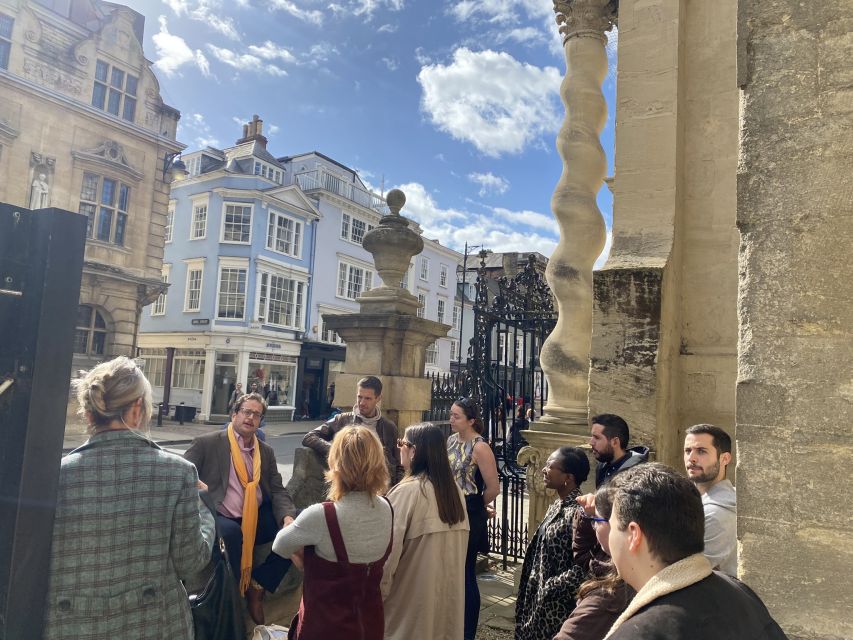
- University-trained guide style: You’re guided by experts who’ve completed Uncomfortable Oxford training, so the tone stays thoughtful and grounded.
- Town-and-gown tensions, explained for real life today: You’ll connect historic friction between the University and the city to modern conversations.
- Empire and institutional power, not just big names: Expect discussion of Oxford’s links to Empire and how those ties shaped who had access and influence.
- Iconic Oxford landmarks on one tight route: Carfax Tower, St Mary the Virgin, All Souls, the Bodleian area (including the Weston Library), the Sheldonian Theatre, and more.
- Walking-friendly but not totally flat: Around 2 kilometers, cobblestones, and street crossings mean proper shoes are not optional.
- Interactive moments depend on the group: Some people love the Q&A format, while others found it more scripted, so small-group settings often feel better.
Oxford’s “uncomfortable” angle: why this tour feels different
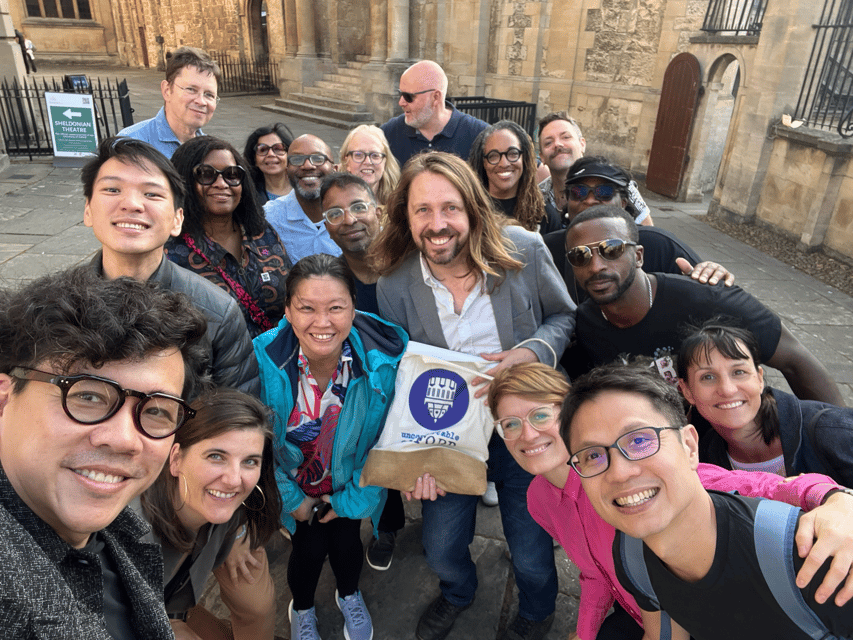
Oxford is a place people treat like a postcard. This tour nudges you off the glossy surface and toward the messy question underneath: who benefited from the University’s rise, and who paid the price?
You’ll hear about how Oxford gained power locally and globally. That means not only talking about scholarship and architecture, but also looking at power systems, rules, and networks. The tour explicitly aims to cover themes like empire, race, class, and gender, and it ties those topics to how they still shape the modern world.
The most praised part, in my view, is the delivery. One guide named Jonathan stood out for being patient and knowledgeable, and multiple accounts describe a format where the researcher doesn’t just lecture. Instead, they ask questions and invite discussion, which can make the experience feel like a guided conversation rather than a walk with a headset full of trivia.
The possible downside is also worth knowing upfront. A couple of accounts describe the tour as too scripted, with long standing moments and sound issues in larger groups. If you know you get impatient with rigid pacing, or you rely on clear audio, you may want to choose a small-group option.
Also inked in under Oxford
- Oxford: University and City Walking Tour with Alumni Guide
★ 4.7 · 4,429 reviews - Oxford: City and University Tour, including college entry
★ 4.5 · 2,243 reviews - Oxford: Harry Potter Walking Tour Including New College
★ 4.6 · 1,446 reviews
The 1.5-hour route, what you’ll actually see, and what it means
This tour is built like a short, focused walk through Oxford’s city-centre landmarks. You move stop to stop at a steady pace, with a guide giving context at each site. The official route can vary slightly depending on timing and the guide, but the core stops are consistent.
You start near Carfax Tower. For one starting option, you meet at Fantastea (teas around the world), then walk to the Carfax Tower area for a brief guided introduction.
From there, you’ll work through a sequence of Oxford icons that are also loaded with meaning. The guide ties each place to the tour’s bigger themes, so the stops don’t feel random. They feel like a storyline, told from the edges as much as from the center.
Also important: you’re not going inside college buildings. Even though colleges are a major part of Oxford’s identity, this particular tour keeps the access simple and exterior-based. That can be a positive if you want a smooth 90-minute city walk without bottlenecks.
Carfax Tower and the first “why does Oxford look like this?” moment
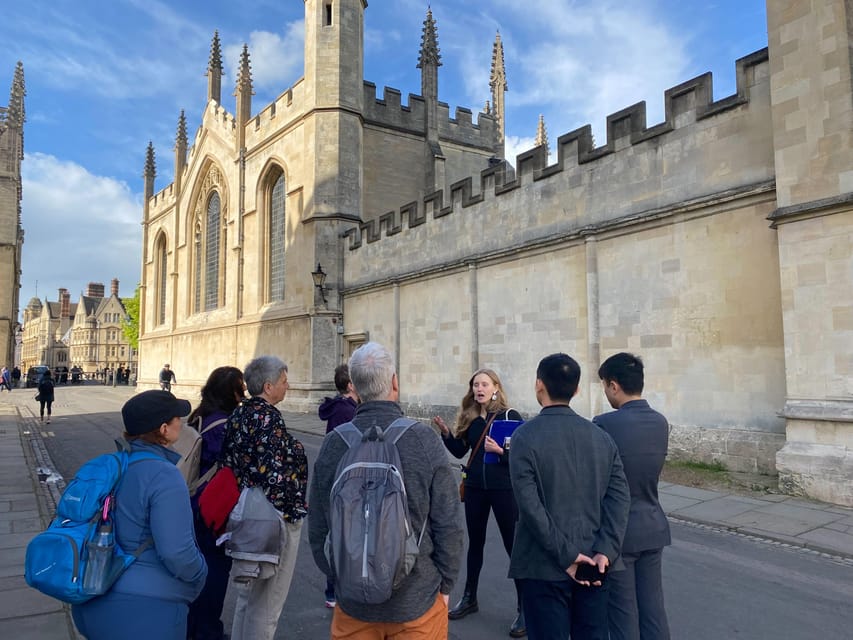
Carfax Tower is the kind of landmark you recognize quickly, even if you’ve never been to Oxford. It’s a natural starting point because it anchors the city’s layout and helps you orient yourself from the jump.
Right away, the tour sets up the tension between Oxford as an institution and Oxford as a lived-in city. That’s the theme you’ll keep seeing in different forms. It’s not just about the University existing near the town, it’s about power and boundaries, who gets to define the rules, and how the city pushes back.
If you’re arriving early, you can use the first stop to get oriented. Get your bearings fast while you’re still fresh, because the walking route is compact and you’ll want to follow the guide’s line of thought.
St Mary the Virgin: Oxford’s religious roots and institutional control
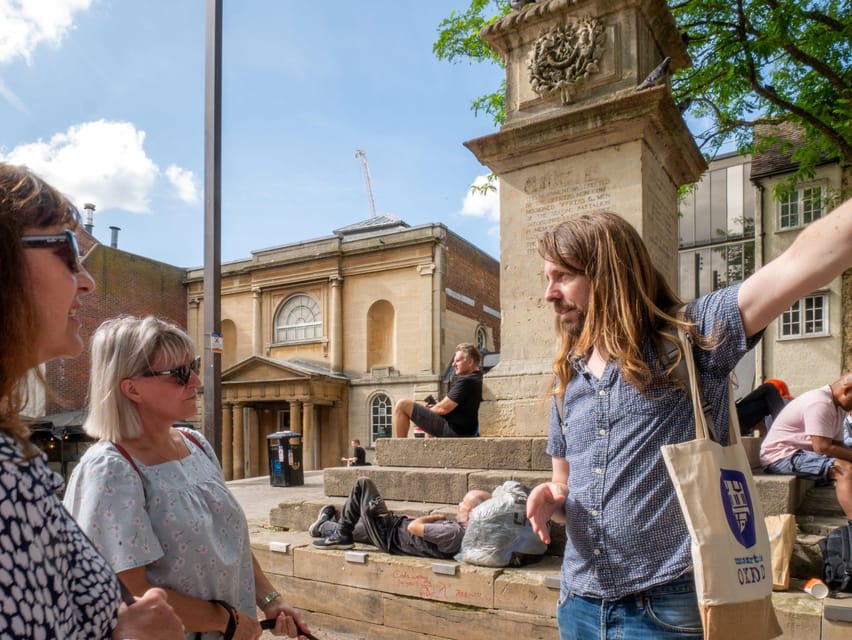
Next comes the University Church of St Mary the Virgin. Even if you don’t consider yourself a church person, this stop helps explain why Oxford’s authority didn’t begin in a boardroom. It grew from institutions that shaped daily life, education, and moral legitimacy.
You’ll likely hear it framed as part of the University’s broader rise. Places like this matter because they show how universities grow by intertwining with existing civic and spiritual power.
The value here is balance. The tour isn’t only about student life or famous scholars. It’s about how systems of learning and governance formed, and how those systems affected who had access.
Practical note: this is a “listen and stand” kind of stop. Wear shoes you can stand in for a few minutes without getting annoyed.
A page further on, still in Oxford:
- Oxford: Guided Sightseeing River Cruise★ 4.6 · 935 reviews
- Oxford: University Walking Tour with Christ Church Visit★ 4.6 · 820 reviews
- Oxford: Harry Potter Insights Divinity School Group Tour★ 4.6 · 783 reviews
- Morse, Lewis and Endeavour Walking Tour of Oxford★ 4.8 · 710 reviews
Oriel College and All Souls: prestige, who it excludes, and why that lingers

You’ll then reach Oriel College for a guided stop and later All Souls College.
These are not just pretty facades. In the tour’s framing, they become evidence of how prestige works. Who is invited in, who is funded, and who gets to shape knowledge are the quiet mechanisms behind the famous name.
This is where the tour’s themes of class and gender often feel most tangible. Oxford’s traditions can sound neutral until you ask who those traditions historically served. The “uncomfortable” label is basically a reminder that neutrality is a choice.
All Souls is especially compelling because it’s so famously associated with elite scholarship. The tour uses that reputation as a starting point, then turns the question to power and exclusion. That is where you get a cleaner understanding of the “town and gown” tension too, since these institutions weren’t simply neighbors, they were authorities.
The Bodleian Library and Weston Library: knowledge, gatekeeping, and global reach
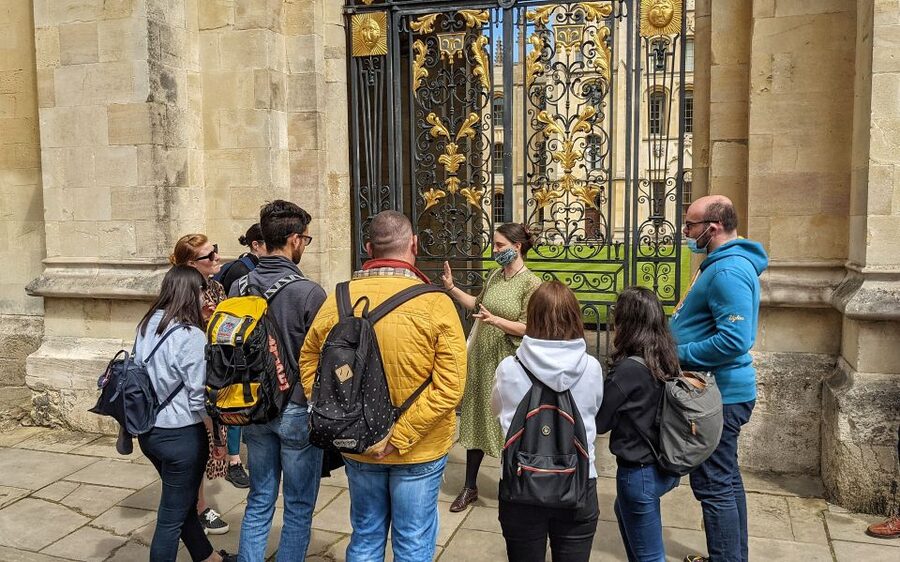
Then comes the Bodleian Library stop. This is one of the most iconic places on the route, and it’s also one of the best chances to understand the University’s global connections.
Oxford’s link to Empire can be a hard topic to talk about on the street, because you can’t point at a single building and say, here is the whole story. The tour solves that by focusing on how institutions collect, fund, and transmit knowledge, and how those systems often grew alongside empire and extraction.
The Weston Library connection is part of this stop’s highlight list, so you’ll get discussion that brings those library spaces into the tour’s larger themes. Even if you’ve seen photos of Oxford libraries before, hearing the context makes them feel less like museum pieces and more like working parts of a power system.
This is also a good stop for listeners who like evidence. The guide style described in multiple accounts is “ask, then explain,” not “say, then move on.” If you want the discussion moments, pay attention here.
Sheldonian Theatre: architecture as authority
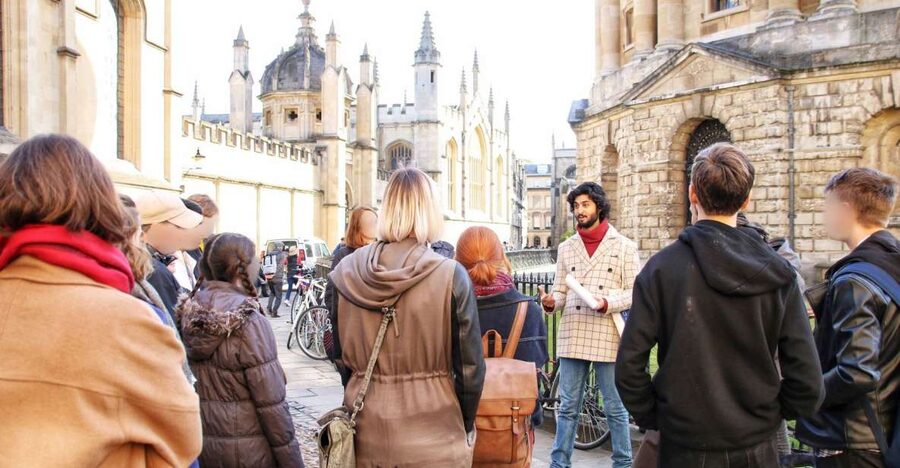
The Sheldonian Theatre is your next big-name landmark. Theatre buildings often feel purely cultural, but the tour treats them as symbols of authority.
Think about why Oxford built spaces for public performance and ceremonies. That’s not only about art. It’s about visibility, status, and control over public life. In a city like Oxford, where institutions have long shadows, architecture becomes a form of messaging.
This is another standing-and-listening segment, so if sound is a concern for you, take a position where you can clearly hear the guide. Some accounts mention microphone or audio issues, so don’t assume you’ll hear perfectly from the back.
Balliol College and the Faculty of History: shifting from past to present

Next are Balliol College and then the Faculty of History, University of Oxford.
I like this part of the route because it helps you go from “Oxford as something old” to “Oxford as something active.” The guide’s job here is to connect historical power to today’s research, language, and public impact.
The Faculty of History stop makes the theme feel more direct. You’re not just seeing how Oxford became powerful, you’re also watching how academic fields interpret, revisit, and debate their own institutional legacy.
This is also where the tour’s “stories of empire, race, class, and gender” framing can land hardest. Instead of keeping these topics in the past tense, the tour points to how they show up in modern institutions and public life.
Bonn Square and the Rhodes statue moment: consequences in the public square
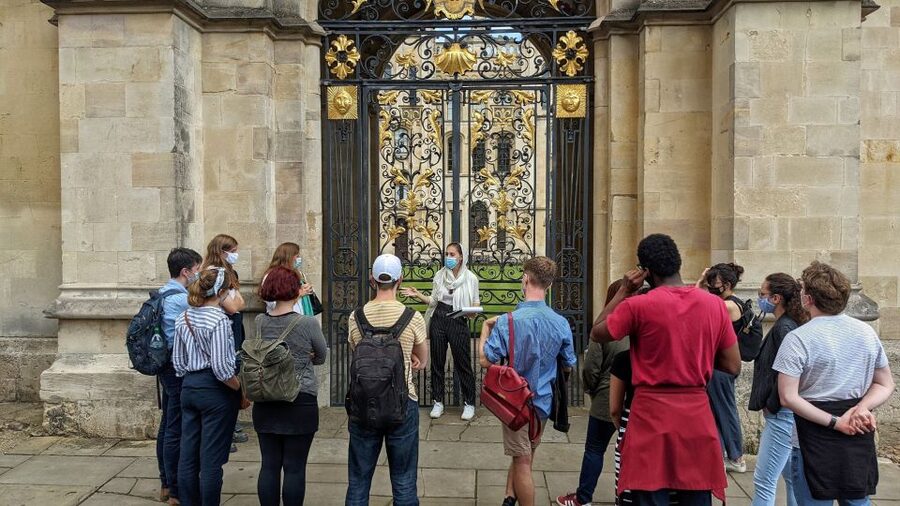
You finish at Bonn Square, and along the way you’ll see highlights like the Rhodes Statue.
This is one of the tour’s clever choices. Public statues are where history stops being an academic exercise and starts becoming public policy, public memory, and public emotion. The tour’s approach helps you connect why those monuments are controversial and how the University ties into the broader story of empire.
Even if you already know a little about Rhodes, the benefit is in the method: the guide uses the statue as a starting point to talk about Oxford’s connections to Empire and the institutional systems that supported global power.
By the time you reach Bonn Square, the tour feels like a full circle. You’ve walked past famous Oxford sights, but you’re leaving with a clearer idea of how those sights were shaped by power, not just taste.
Price and value: $29 for 1.5 hours, what you get for the money
At $29 per person for about 1.5 hours, you’re paying for two things: guided interpretation and a specific educational lens.
This is not a “quick overview of Oxford highlights.” The tour explicitly aims to cover uncomfortable subjects and uses University-trained researchers to do it. That’s a different product than a general sightseeing walk, even though the route uses the same iconic scenery you might see on other tours.
Value also comes from the extras. You get a reading list compiled by University experts after the tour. You also get a free Uncomfortable Oxford souvenir sticker. Those small touches turn a short walk into something you can keep using later, especially if you’re the type who likes to check claims and follow up.
If you’re visiting Oxford for only a day, or you want a strong introduction that goes beyond the usual postcard narrative, this can be a smart use of time. If your goal is purely photo spots and quick facts, you might prefer a more traditional sightseeing tour.
Comfort, timing, and how to make the experience work for you
This tour runs rain or shine, covers about 2 kilometers, and includes street crossings and cobblestones. That affects enjoyment more than people expect. If you hate uneven surfaces, choose sturdier shoes and take your time on the cobbled sections.
Also, expect a lot of brief stops and standing periods. One account specifically noted long standing spells and difficulty hearing for some group members. You’ll probably be fine if you like walking and listening, but if you need a more seated, low-noise style experience, a private or smaller group is worth considering.
Group discussion is part of the tour’s pitch. Some accounts praised the Q&A format, and you’ll get the best value if you’re willing to ask a question or respond when the guide prompts you.
One more practical point: a real scheduling mix-up showed up in at least one account, where the date didn’t match and the guide call came late. That kind of thing is rare, but it’s a good reminder to confirm your exact start time and meeting location on the day, especially if Oxford is one stop on a tightly packed itinerary.
Who should book this Oxford walking tour
You’ll likely love this tour if you:
- Want Oxford’s story through power and social change, not just famous buildings
- Appreciate discussion-based historical interpretation
- Are curious about how Oxford’s global links connect to present-day issues
- Want a family-friendly option suitable for ages 12 and up
It may not be your best fit if you:
- Prefer pure storytelling with minimal structure
- Really struggle with audio in groups
- Want college interiors, since this tour does not take you inside colleges
Should you book Oxford: The Original Uncomfortable Oxford Tour?
If you’re the kind of traveler who likes history with consequences, I’d book it. The combination of University researcher guidance, tight landmark coverage, and the focus on empire, race, class, and gender gives you a version of Oxford that feels more honest and more useful.
It’s also a good value use of time. For $29, you get iconic sights, guided context, and a follow-up reading list that can extend your visit beyond the walk itself.
Just go in with the right expectations: it’s a standing and walking city route, it runs in typical English weather swings, and it can feel structured. If that fits how you like to travel, this tour will make Oxford make more sense, even when the story gets uncomfortable.
FAQ
Where does the tour start?
You can choose one of two starting options, either Carfax Tower or Fantastea (Teas around the world). The exact meeting point may vary depending on the option booked.
How long is the Oxford Uncomfortable Tour?
The tour lasts about 1.5 hours.
Will we go inside colleges?
No. The tour does not take you inside any colleges.
Is the tour wheelchair accessible?
Yes, it is wheelchair accessible, and the guide team has accessibility training and can adapt content and itineraries as needed.
What should I bring for the walk?
Wear comfortable shoes and bring weather-appropriate clothing, since the tour runs rain or shine.
How much walking is involved?
The tour covers around 2 kilometers, with some street crossings and sections with cobblestones.
Is cancellation free?
Yes. Free cancellation is available up to 24 hours in advance for a full refund.
Newest entries under Oxford






Oxford Tours & Experiences, compared.
University and City Walking Tour with Alumni Guide
Read our review →
City and University Tour, including college entry
Read our review →
Harry Potter Walking Tour Including New College
Read our review →

University Walking Tour with Christ Church Visit
Read our review →
Harry Potter Insights Divinity School Group Tour
Read our review →
Morse, Lewis and Endeavour Walking Tour of Oxford
Read our review →
Browse the lists this tour appears in