
Reviewed · HISTORICAL TOURS
Oxford: History of Medicine Tour – by Uncomfortable Oxford™
Medicine in Oxford has teeth.
This 1.5 hour walk through Oxford’s health past is more than old buildings and big names. You start at the Hertford Bridge, then work your way past university landmarks while a university researcher guide connects epidemic disease, dissection, anatomy, and even early penicillin trials to the city you can still see today. I like the way it zooms in on medical ethics and health equity, not just dates. I also like that guides are university researchers trained by Uncomfortable Oxford, so the explanations stay sharp and human, not canned. One possible drawback: the tone leans into uncomfortable conversations about bias, race, class, gender, and public health versus individual rights, so if you want a purely sites-and-facts medicine tour, you may feel a bit out of sync.
You’ll cover about 2 km at a steady walking pace, with places to sit, and you do not go inside colleges or libraries. It runs in all weather, so plan on being outdoors in Oxford’s mood swings, and wear grippy shoes if you get rain. If you want a tour that treats medicine as a social story, with real moral questions attached, this one fits.
In This Review
- Key points to know before you go
- Where medicine, rights, and Oxford architecture collide
- Meeting under the Hertford Bridge, then stepping into the story
- New College and the university setting for anatomy and control
- The Bodleian quadrangle area, where knowledge and power overlap
- Clarendon Building and the argument between public health and rights
- Oxford University Museum of Natural History: from disease to bodies
- The Kings Arms Pub moment: history with a human pulse
- War Memorial Garden and the long shadow of medicine
- Radcliffe Observatory Quarter to St Luke’s Chapel: finishing on a moral note
- What you’ll actually learn, and how the tour holds it together
- Price, time, and what $29 buys you in Oxford
- Who this tour suits best, and who should think twice
- Practical tips before you set out
- Should you book this Oxford history of medicine tour?
- FAQ
- Where is the meeting point?
- How long is the Oxford History of Medicine Tour?
- How much does the tour cost?
- What topics does the tour cover?
- Does the tour go inside colleges or libraries?
- Is the tour wheelchair accessible?
- How far do you walk?
- What is the walking pace like, and are there places to sit?
- Is the tour suitable for children?
- Does it run in bad weather?
Key points to know before you go
- University researcher guides: you’re walking with someone trained by Uncomfortable Oxford, not a script-reader.
- Built environment as evidence: the tour uses Oxford’s stone, streets, and institutions to explain how health control worked.
- Uncomfortable themes, clearly handled: public health versus individual rights, plus the long reach of inequity.
- Anatomy and dissection in the university era: you’ll connect medical study to ethical tensions, not just technique.
- Medieval epidemics to penicillin trials: the scope is wide, but the walk stays concrete.
- No inside-access needed: you see major landmarks without going into colleges or libraries.
Where medicine, rights, and Oxford architecture collide
Oxford’s medical story is not tidy. It’s messy, slow, political, and personal, because every step in medicine involves choices about who gets protected and who gets used. That’s why this tour feels different from a traditional “great discoveries” walk.
You’ll hear how epidemic disease shaped medieval Oxford, and how that pressure pushed institutions toward stronger control. But the tour also insists on the other side of the argument. You’ll talk about the friction between public health needs and individual rights, because people rarely experience health policy as neutral.
The guides frame medicine as something humans built, with all the power imbalances that come with universities, class, gender roles, and empire. That matters because the past echoes forward. You’ll leave with a better sense of why modern debates about health access and fairness feel so stubborn.
More centuries walked in an afternoon:
- Oxford: Private City Tour & University Historical Highlights
★ 4.9 · 14 reviews - Oxford: Historic Pubs & Taverns Guided Walking Tour
★ 4.6 · 5 reviews - Oxford: Architectural & Historical Highlights (90 mins)
★ 5.0 · 1 review
Meeting under the Hertford Bridge, then stepping into the story
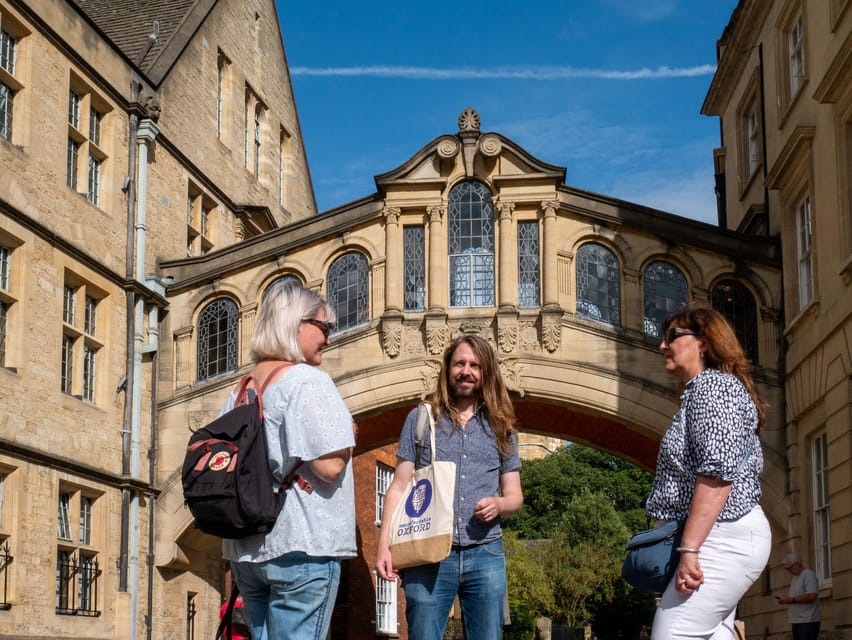
The tour starts under the Bridge of Sighs, also called the Hertford Bridge. This is a smart starting point because the location instantly signals confinement and movement through institutions. Even before the details begin, you’re in the right mindset: medicine and the law of power have always been tangled.
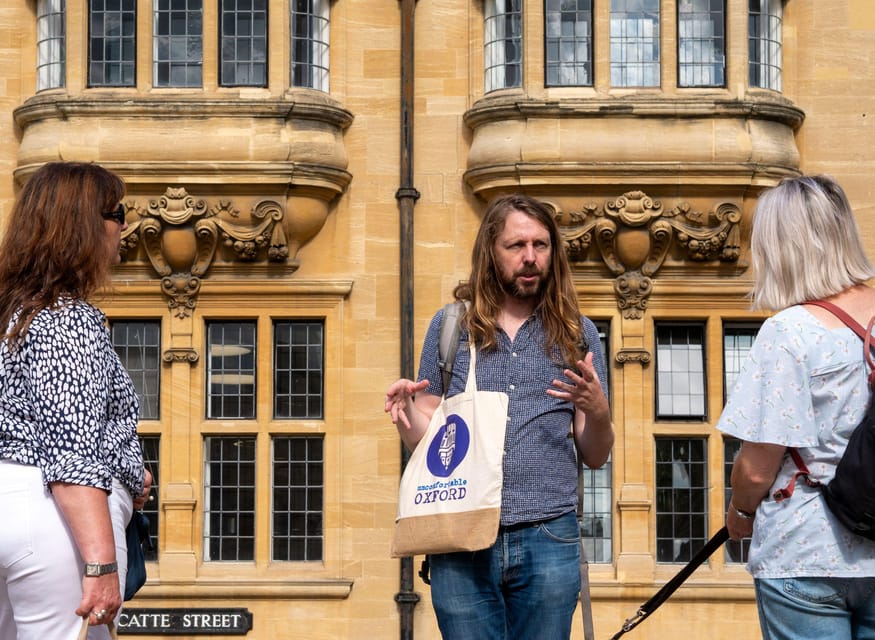
Your guide meets you in a bright blue vest, holding an Uncomfortable Oxford tote bag. That makes it easy to spot them quickly, even when the crowd is doing its Oxford thing, which can be surprisingly chaotic.
From there, you move on foot through key landmarks. The overall route works well if you like learning in motion, because each stop reframes what you just heard. It’s not a museum lecture where you sit and forget. You’re constantly looking outward, then listening to what the guide points out in plain language.
New College and the university setting for anatomy and control

Your next stop is New College. You do not go inside, but you get close enough to read the space like a text. University buildings in Oxford have always carried authority, and that authority shows up in medicine too.
In this part of the tour, you’ll connect how the University’s study of bodies became part of the medical pipeline. The tour doesn’t treat anatomy as a clean technical breakthrough. It brings up the ethical tensions around dissection and the question of who consented, who was studied, and who benefited.
This is one of the tour’s strengths: it keeps the focus on lived conflict. Medicine may sound like an orderly march forward, but the reality is more like negotiation and sometimes coercion.
If you’re the kind of person who likes to understand why people resisted certain public health efforts, this stop gives you useful context. It also helps you notice how institutional trust gets built and broken over time.
The Bodleian quadrangle area, where knowledge and power overlap
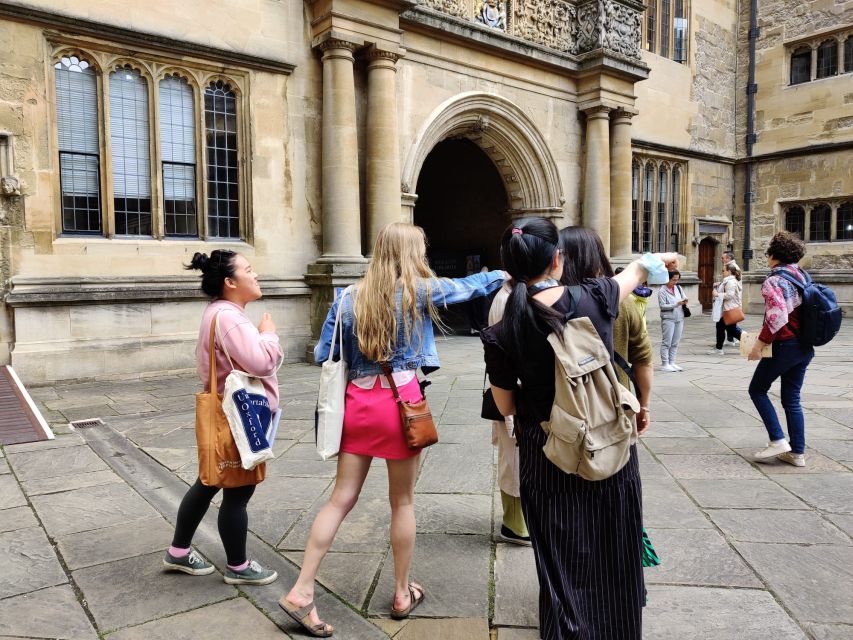
Next you head toward the Bodleian area, often described as the Bodleian quadrangle. Again, no inside access here, but you still get the full effect of the University as a knowledge machine.
The Bodleian setting works because it forces a key question: if the University is where knowledge is produced, who gets included in that production? The tour uses Oxford’s learning spaces to show that medical progress has always depended on systems of power.
This is where you start to see the tour’s bigger theme more clearly. It’s not only about disease. It’s about how knowledge gets controlled, who gets believed, and how ethical boundaries are set or ignored.
Also, if you’re a visual learner, this section helps. You can point at buildings and then map them to the story the guide is telling. That simple trick makes the whole experience stick.
Also inked in under Oxford
- Oxford: University and City Walking Tour with Alumni Guide★ 4.7 · 4,429 reviews
- Oxford: City and University Tour, including college entry★ 4.5 · 2,243 reviews
- Oxford: Harry Potter Walking Tour Including New College★ 4.6 · 1,446 reviews
- Oxford: Guided Sightseeing River Cruise★ 4.6 · 935 reviews
Clarendon Building and the argument between public health and rights
After the Bodleian area, you move to the Clarendon Building. This stop is another anchor for the idea that institutions shape health outcomes, sometimes on purpose and sometimes as a side effect of how authority works.
The tour here leans into tensions between public health and individual rights. That can be heavy, but the guide keeps it grounded in the Oxford setting and in real ethical dilemmas that still feel current.
If you worry that ethics lectures turn abstract, this format helps. You’re outside, surrounded by the places where policy and power used to operate. That changes the feel of the conversation.
A small practical tip: if the weather is damp, bring a layer you can pull on quickly. This section keeps you moving and listening, and it’s easier when you’re not shivering.
Oxford University Museum of Natural History: from disease to bodies

Then you head to the Oxford University Museum of Natural History. This is a valuable stop because it helps bridge two ideas that often get separated: the natural world and the human body.
In the tour’s frame, medicine is never just a lab story. It’s also about how people studied anatomy, how institutions pursued evidence, and how epidemic pressure shaped scientific urgency.
The guide connects these themes to the University’s role in dissection and anatomy study. You should be prepared for the discomfort. The tour is called Uncomfortable Oxford for a reason, and the discomfort isn’t there to shock you. It’s there to remind you that science sits on moral ground, not above it.
If you like tours that explain the why behind the research, this stop delivers. You’ll understand that progress often came with ethical blind spots, and that those blind spots had consequences for real people.
The Kings Arms Pub moment: history with a human pulse
You also pause at the Kings Arms Pub. This isn’t random. Pub stops in a walking tour can be a good way to reset the pace and keep the story tied to everyday life.
Here, the tour’s theme of power and equity stays in the conversation, but with more breathing room. It’s a place where people talk, negotiate, and share beliefs, and that makes it a fitting setting to discuss resistance and public health tension.
The timing can vary slightly depending on the guide and the schedule, so keep an open mind. But the purpose stays consistent: you come back to how people experienced health decisions, not only how institutions explained them.
If you want a moment to catch your breath, this is a good one. It’s also a good chance to ask the guide a question while you’re still mentally switched on.
War Memorial Garden and the long shadow of medicine

From there, you reach the War Memorial Garden. This stop adds a different angle: the way medicine connects to conflict and collective sacrifice.
Even when the conversation returns to medieval epidemics and the University’s medical study, the emotional backdrop of a memorial space changes how you listen. It reinforces that health and survival have always been tied to larger events, not isolated hospital moments.
This is also where you can absorb the tour’s larger claim: the narratives of empire, race, class, and gender are not just footnotes. They shape who benefits, who gets studied, and how bodies are treated as public resources.
If you’re paying attention, you’ll notice how the guide uses transitions between centuries without losing the thread. That’s a craft move, and it helps you stay oriented.
Radcliffe Observatory Quarter to St Luke’s Chapel: finishing on a moral note
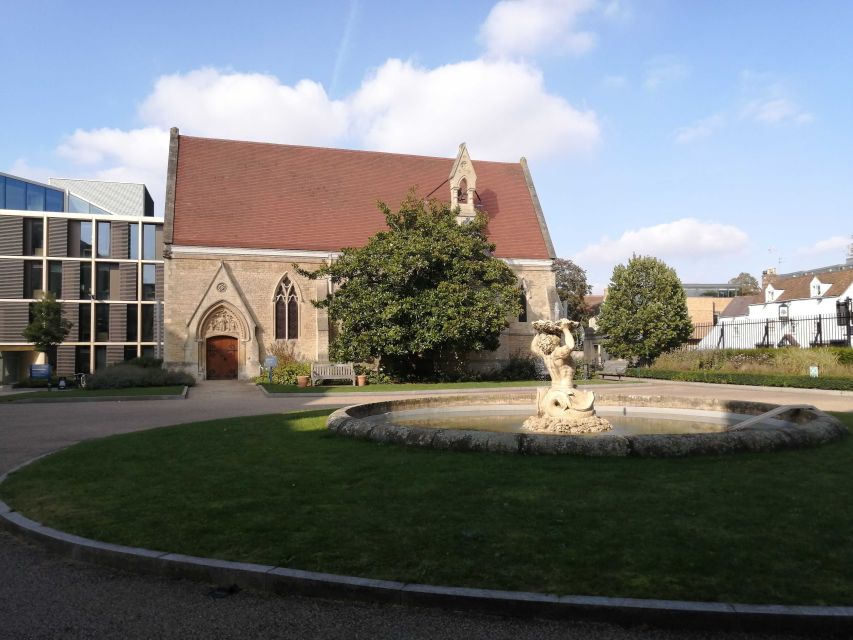
Your last leg leads to the Radcliffe Observatory Quarter and finishes at St Luke’s Chapel. Ending here works because chapels and observatories both represent institutional purpose, just in different forms. Oxford loves a building with symbolism.
By the time you reach the finish, you’ll have covered a wide arc: from medieval epidemic disease, to dissection and anatomy, to the complexities of public health policy, and even to early penicillin trials. It’s a lot for 90 minutes, but the walk keeps the information tied to physical locations.
The final effect is reflective. You’re not just learning history. You’re noticing how medicine grew from arguments about authority, who counts, and how society decides when to override consent.
If you want to remember one takeaway, make it this: medical progress is never only about curing. It’s also about power, ethics, and access.
What you’ll actually learn, and how the tour holds it together
Here’s the core learning arc, in plain terms.
You start with epidemic disease in medieval Oxford. Then you move into the University’s medical study, including the role of anatomy and dissection. After that, you zoom out to discuss public health policy and the friction between collective safety and individual rights.
The tour also highlights how medicine in Oxford connects to wider histories of empire, race, class, and gender. Those themes matter because they explain why medical outcomes were not distributed evenly.
One more detail that I appreciated is the tour’s refusal to treat medicine as a straight line. Penicillin gets mentioned as part of the story, but not as a neat victory lap. Instead, it’s presented as a turning point that still sits inside ethical and equity questions. That approach makes the topic feel honest, not glorified.
Also, the format works because it stays interactive. You’re meant to talk back in your head and sometimes in the conversation. I found that keeps you from zoning out, especially when the subject matter gets uncomfortable.
Price, time, and what $29 buys you in Oxford
At $29 per person for 1.5 hours, this tour is priced like a value walk, not a premium museum-style production. The best part is what’s included: an expert Uncomfortable Oxford guide, delivered by university researchers trained through their program.
You also get a lot of topic density per mile. You cover multiple major Oxford landmarks while talking about anatomy study, dissection ethics, public health debates, and early penicillin trials. For the cost, the educational payoff per minute can feel high.
That said, there’s a trade-off. This is not an inside-access experience. You won’t go into colleges or libraries, so if your idea of value is entering famous rooms and reading plaques at your own pace, you might feel like you’re only seeing the outside of things.
My practical advice: treat this as an ideas tour, not a sightseeing checklist. If that matches your mood, $29 feels fair. If you want a calmer, more traditional medicine highlights tour, you may want to look elsewhere.
Who this tour suits best, and who should think twice
This is a good fit for you if you like history that connects to ethics and real social questions. If you’re the type who enjoys asking why people resisted public health efforts, you’ll probably enjoy the framework.
It’s also a strong choice for families with teens. The tour is recommended for ages 12 and older, and the pacing keeps you moving through meaningful stops rather than sitting for long stretches.
You should think twice if your vacation goal is light, scenic, and low-content. One guide conversation can run heavy, and this one intentionally centers uncomfortable topics like bias and inequity. If you were expecting a medicine tour focused mostly on iconic discoveries, you may find the emphasis shifts toward moral arguments and fairness debates.
Practical tips before you set out
Oxford walking tours reward preparation. You’ll be outside most of the time, so dress for all weather. Bring water if you think you’ll want it, and plan for a steady 2 km route.
For your feet, expect some mild uneven cobblestones and busy streets, especially on weekends. The good news is that the tour is wheelchair accessible, and there are places to sit. If you need mobility assistance, ask the guide at the start to help you plan breaks around the busiest crossings.
Finally, keep your expectations aligned with the structure. This is a guided conversation using landmark backdrops. No inside entrances, no long waiting for tickets, just a focused walk with a trained guide.
Should you book this Oxford history of medicine tour?
Book it if you want Oxford medicine as a human story, where ethics, equity, and public health decisions are part of the lesson. The combination of university researcher guidance, landmark-based storytelling, and a clear focus on anatomy, epidemics, and penicillin makes it a memorable 90 minutes.
Skip it if you want a purely factual “great discoveries” tour with minimal discomfort. The subject matter is designed to be unsettling, and the emphasis on rights, bias, race, class, and gender may not match every travel mood.
If you’re curious and willing to think, you’ll leave with more than trivia. You’ll come away with a better sense of how medical progress has always been tied to power.
FAQ
Where is the meeting point?
Meet your guide under the Bridge of Sighs, also called the Hertford Bridge. The guide will be wearing a bright blue vest and holding an Uncomfortable Oxford branded tote bag.
How long is the Oxford History of Medicine Tour?
The tour lasts about 1.5 hours.
How much does the tour cost?
The price is $29 per person.
What topics does the tour cover?
It covers the history of epidemic disease in medieval Oxford, dissection and the study of anatomy at the University, tensions between public health and individual rights, and a broader look at Oxford’s long medical history, including early penicillin trials.
Does the tour go inside colleges or libraries?
No. The tour does not go inside any colleges or libraries.
Is the tour wheelchair accessible?
Yes, it is wheelchair accessible. The tour includes mild uneven cobblestones and busy streets on weekends.
How far do you walk?
The tour covers about 2 km and lasts 1.5 hours.
What is the walking pace like, and are there places to sit?
You’ll have places to sit throughout the route, and the tour is designed to fit within the 1.5 hour timeframe.
Is the tour suitable for children?
It is recommended for ages 12 and older.
Does it run in bad weather?
The tour runs in all weather, so you should dress accordingly. It can help to bring water if you need it.
Newest entries under Oxford





Historical Tours, compared.






Westminster Abbey Tour with a Royal Heritage Guide
Read our review →

Browse the lists this tour appears in