
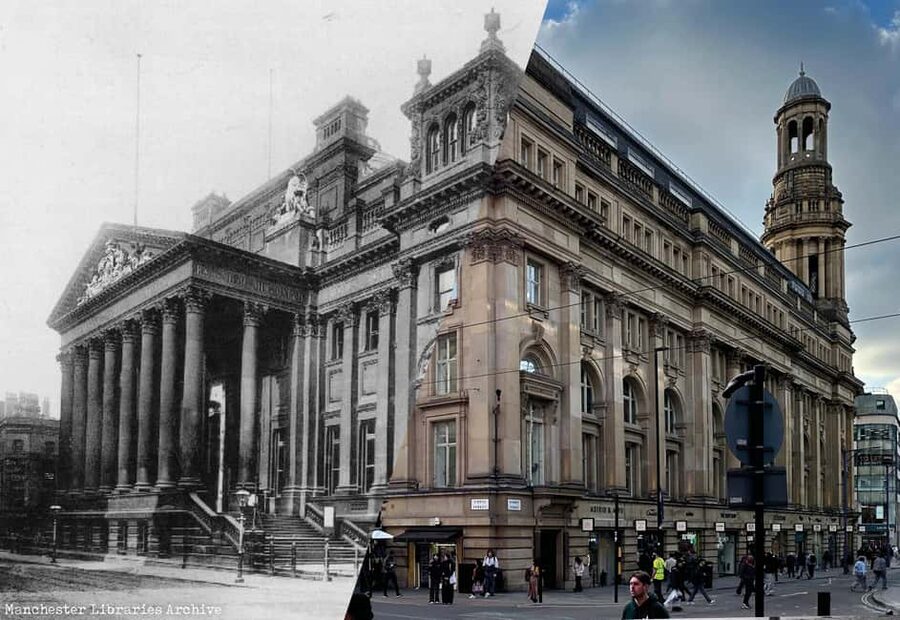
Reviewed · WALKING TOURS
Manchester’s Medieval Quarter | a walking tour
Old Manchester reads like a living map. This walking tour through the Medieval Quarter uses archival photos and maps alongside the streets in front of you, so you can spot what changed and why it mattered. I also like the fact it is led by a qualified architect in a small group, which makes the history feel practical instead of preachy.
One thing to consider is the effort level. You will walk about 2 km over roughly two hours, so plan on moderate stamina and a comfortable walking pace.
In This Review
- Key Things That Make This Tour Click
- A Medieval Quarter Walk That Uses Maps, Not Guesswork
- Starting at New Cathedral Street, Then Shifting to the Past
- Chetham’s Library: Medieval Roots and the Medieval-to-Victorian Contrast
- Manchester Cathedral: Centuries of Change in the City’s Center
- Hanging Bridge: Why This Late-Medieval Survivor Feels So Special
- Shambles Square and the Market Place: Where Trading Life Laid the Foundations
- Royal Exchange Theatre: Cotton Trade, Marble Halls, and Resilience
- Price and Value: What $26 Buys You in Real Terms
- How the Tour Feels on the Ground (Including for Families)
- Who Should Book This, and Who Might Not
- Should You Book the Manchester Medieval Quarter Tour?
- FAQ
- How long is the Manchester Medieval Quarter walking tour?
- What does it cost?
- How far will I walk?
- Where do I meet the guide?
- Who leads the tour?
- What is included in the tour?
- Is the tour in English, and what are the booking options?
Key Things That Make This Tour Click
Archival visuals matched to where you stand** so the past stops being abstract
Architect-led explanations with an urban-planning lens, not just dates and dynasties
Chetham’s Library as the medieval starting point for a real sense of where the city began
Hanging Bridge’s rarity (one of only two late-medieval structures left)
Royal Exchange and the cotton trade story told through buildings, not lectures
A resilient city narrative that includes how bombing and tragedy reshaped the streets and people
A Medieval Quarter Walk That Uses Maps, Not Guesswork
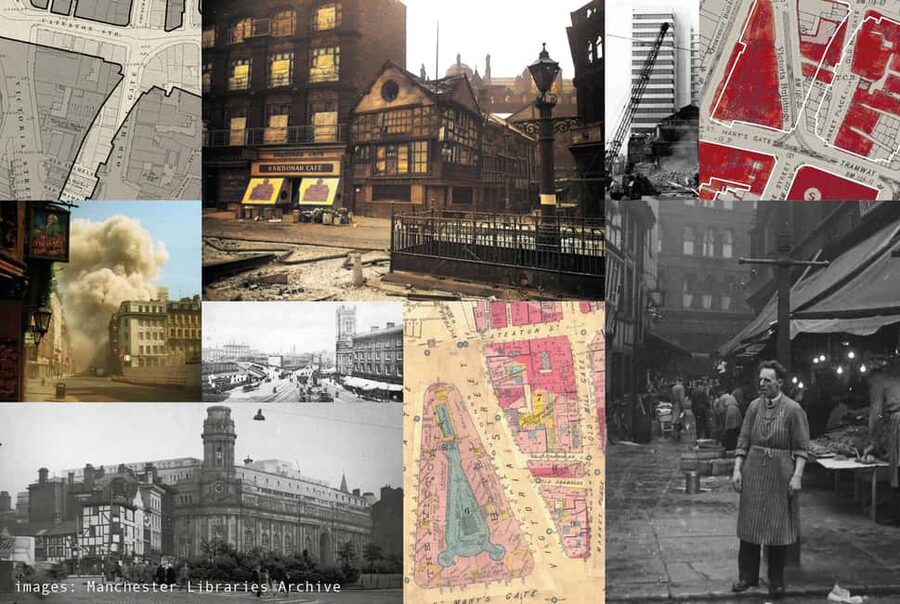
Manchester’s city center can look like a jumble. Trams, towers, modern storefronts, and stitched-together streets can make it hard to see a single story. This tour solves that problem with a simple trick: it pairs the old with the present. You look at archival photos, maps, and diagrams, then you compare them to the exact spot you are standing in right now.
That visual method is the main reason I recommend this experience. It helps you build an internal map fast. You stop thinking only about what is there today, and you start noticing the decisions that shaped the streets. Those choices show up in things like the angles of routes, the “leftover” spaces around major buildings, and the way trade hubs evolved over time.
A second strong point is the format. It is guided and interactive, and you are in a small group. That matters because you will likely want to ask, not just listen. With an architect leading, you get answers that connect buildings to how people moved, worked, and rebuilt after disruption.
More Guided Walking Tours in Manchester
- Manchester City Highlights Walking Tour
★ 4.8 · 299 reviews - Manchester: Media City & The Quays Guided Walking Tour
★ 5.0 · 165 reviews - Manchester: Music-Themed City Walking Tour
★ 4.4 · 109 reviews
Starting at New Cathedral Street, Then Shifting to the Past
You meet on New Cathedral Street, on the terraced area outside Harvey Nichols, opposite Shambles Square. It is a smart meeting spot because you are already near the layers of the city you will be walking through next. It also makes the tour feel like a focused route through the core, not a loose wander.
From that starting point, the tour immediately sets expectations in a way I appreciate. The goal is not to collect random facts. It is to use today’s streets as a reference system for a longer story, one that includes trade, reinvention, and resilience.
As you begin, you will also get used to the tour’s signature approach. You will see archival imagery and then translate it into what you are seeing now. Once that clicks, the rest of the walk gets easier to follow, even if you have never studied Manchester before.
Chetham’s Library: Medieval Roots and the Medieval-to-Victorian Contrast
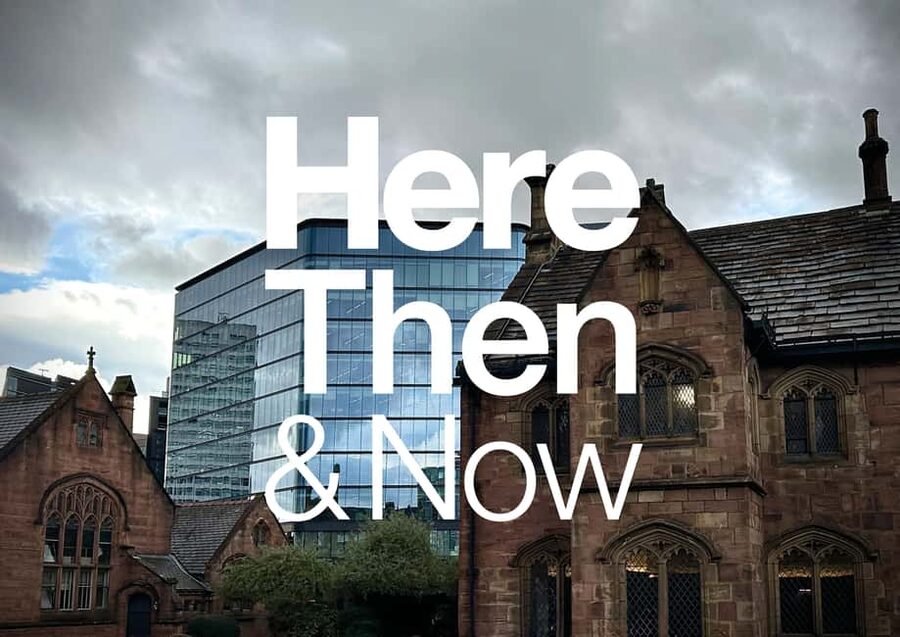
The tour starts beside Chetham’s, in the medieval complex area where the medieval story is not just mentioned, it is physically present. This is one of those stops where the setting does some of the teaching. You are not just hearing about “old Manchester,” you are starting the walk at a medieval survivor.
What I like here is the way the tour frames heritage as contrast, not museum glass. The Palatine Building and Chetham’s Library give you a chance to think in two timelines at once. Even if you do not get lost in architectural jargon, you can still grasp the basic idea: the city accumulated layers. Some changes reflected growth and stability, while others reflected different eras’ tastes and priorities.
Chetham’s becomes a kind of launch pad. After this stop, Manchester Cathedral and the surrounding area stop feeling like separate landmarks. They feel like parts of a larger core that kept being reshaped as the city’s identity shifted.
Potential drawback? If you want your history to be 100 percent narrative and light on structure, this is the most “building-focused” moment early on. But if you like understanding why places look the way they do, it will land.
Manchester Cathedral: Centuries of Change in the City’s Center
Next up is Manchester Cathedral, with a guided visit. The tour’s framing is simple and effective: this is the kind of place that has witnessed change in the heart of the city, not on the edge. That center-of-it-all positioning is why cathedral stops often work well on walking tours.
Here, the value is in perspective. The tour helps you see how a major civic or religious landmark sits inside a living urban system. Streets, markets, and commercial buildings all orbit around these landmarks in real time. Over centuries, that orbit changes as trade patterns change and as the city grows and rebuilds.
You will also use the archival photo approach in spirit, even when the visuals are not always the headline. The guide’s job is to show you that the cathedral area is not frozen. It is an evolving space, repeatedly adjusted by the city around it.
More British streets at boot pace:
- Manchester: Food and Drinks Walking Tour★ 4.9 · 70 reviews
- Manchester: Afternoon walking tour★ 4.8 · 66 reviews
- Manchester: ‘5 Quarters’ Guided Walking Tour★ 4.9 · 29 reviews
- Manchester: City Walking Tour & Exploration Game★ 3.6 · 9 reviews
Hanging Bridge: Why This Late-Medieval Survivor Feels So Special
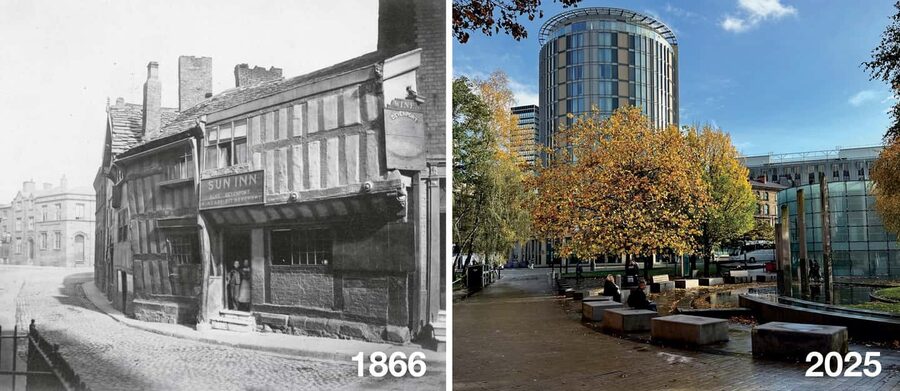
Hanging Bridge is next, and it is a standout for a very specific reason: it is one of only two remaining late-medieval structures. That rarity changes how you look at it. You are not just admiring an old feature, you are seeing evidence that the city did not entirely erase its medieval layer.
In a tour like this, the bridge also works as a teaching tool. The guide can point out how certain structures survive while others do not, which naturally leads to a bigger conversation about development pressure, rebuilding choices, and what communities chose to keep.
A nice touch is that the tour gives you the “why” behind the “wow.” So instead of thinking, simply, that it is old, you start thinking about what made it possible for this part of the city to remain when so much else changed.
Shambles Square and the Market Place: Where Trading Life Laid the Foundations
Shambles Square is described as part of the original Market Place story, the hub of trading life that helped set up Manchester’s rise. This stop is where you shift from buildings to behavior. You start to imagine not just the architecture, but the daily motion of commerce.
This is also where the tour’s theme of reinvention becomes concrete. Trade attracts people. People create demand. Demand reshapes spaces. Over time, what began as a trading hub becomes the foundation for civic growth, and that growth leaves physical traces.
I appreciate that the guide treats the market area as a central engine of the city. You are not just looking at a square, you are learning why the city’s center originally made sense, then how later changes did too.
If you like “big city stories told through small spaces,” Shambles Square is one of the most satisfying parts of the whole walk. The space is compact, and the tour helps you see how a compact place could have outsized influence.
Royal Exchange Theatre: Cotton Trade, Marble Halls, and Resilience
The final stretch centers on the Royal Exchange, now experienced through the Royal Exchange Theatre. This is where the tour ties earlier stops to a global-looking story. The Royal Exchange is linked to Manchester’s growth through its cotton trade, and it is one of the best places to understand why the city’s fortunes rose fast.
What I like is that the tour keeps the story anchored to the building. You will get a sense of how commerce shaped the architecture, and how that architecture, in turn, symbolized confidence and reach. The tour also draws attention to the idea of reinvention, because cities do not just grow, they adapt.
Another reason this stop hits is the emotional honesty in the tour narrative. You will talk about how bombing and tragedies scarred the streets, but also how people rebuilt and continued life close to the center. That adds weight to the “resilience” message. It is not a slogan. It is tied to the physical city.
By the time you finish at the Royal Exchange Theatre, the walk has done something important for your own visit. You stop seeing landmarks as isolated stops. You start seeing a chain reaction: medieval trade patterns feed later commercial power, then modern change and rebuilding reshape what you see today.
Price and Value: What $26 Buys You in Real Terms
At about $26 per person for roughly two hours, this tour is priced like a city-center experience, not a museum ticket. The value comes from what is included, not the headline cost.
You get:
- A guided walk led by a qualified architect
- Use of archival maps, photos, and diagrams during the tour
- Insights into Manchester’s architectural and urban evolution
- A small group size for an interactive experience
- Follow-up details with key references and recommended reading
In practical terms, you are paying for pattern recognition. Manchester is complicated, and trying to piece it together alone usually takes more time than you think. Here, you get a prepared framework that helps you connect spots like Chetham’s, the cathedral area, Hanging Bridge, Shambles Square, and the Royal Exchange without getting lost.
If you are the kind of traveler who likes to return from a trip with actual names, not just vibes, the follow-up reading list is a solid bonus. It turns the tour into a useful reference tool for the rest of your time in the city.
How the Tour Feels on the Ground (Including for Families)
The best feedback for this experience is how engaging it is in real life, not just on paper. Several people highlight the way the guide uses visuals and compares past to present in a clear, step-by-step way. A screen and carefully chosen images are part of the magic, especially when the guide lines them up with your exact viewpoint.
Also, the guide approach seems to balance warmth with structure. People describe Rick as friendly, enthusiastic, and passionate about Manchester, with a teaching style that keeps attention without being overwhelming.
That matters if you are traveling with kids. One review specifically notes that young boys loved the tour. If your children enjoy seeing pictures and hearing stories tied to places, this could be easier than a classic lecture-heavy walking tour.
Who Should Book This, and Who Might Not
This is a great fit if you want:
- Architecture and city planning explained in plain language
- A guided walk that uses visuals so you can actually “see” history
- A compact route that covers the medieval to cotton-trade to modern layers
It might be less ideal if:
- You dislike walking for two hours, even at a moderate pace
- You want long stops and lots of free time, because the structure is focused on movement and comparison
Should You Book the Manchester Medieval Quarter Tour?
Yes, you should book it if you want Manchester to make sense quickly. The strongest reasons are practical: the archival maps and photos turn confusing streets into a coherent story, and the architect-led guidance helps you connect the dots between buildings and trade.
If you only have a day or two in Manchester, this is one of the best ways to get context before you start wandering on your own. You will leave with an internal map and an appreciation for how resilience, commerce, and reinvention are written into the city.
If you are on the fence, go for it on a day when you can comfortably handle about 2 km of walking. Otherwise, the content is exactly the kind that rewards attention, and it is hard to recreate solo without spending extra time researching on your own.
FAQ
How long is the Manchester Medieval Quarter walking tour?
The tour lasts 2 hours.
What does it cost?
The price is $26 per person.
How far will I walk?
It covers around 2 km, so a moderate level of fitness is required.
Where do I meet the guide?
You meet on the terraced area outside Harvey Nichols on New Cathedral Street, opposite Shambles Square.
Who leads the tour?
A qualified architect leads the guided walking tour.
What is included in the tour?
You get the guided walking tour, use of archival maps and photos during the walk, architectural and urban evolution insights, a small group experience, and follow-up details with key references and recommended reading.
Is the tour in English, and what are the booking options?
The tour is live in English. You can also reserve now and pay later, and there is free cancellation up to 24 hours in advance for a full refund.
Newest entries under Manchester





Walking Tours, compared.

Magical London: Harry Potter Guided Walking Tour
Read our review →
University and City Walking Tour with Alumni Guide
Read our review →
Harry Potter Movies Walking Tour (Kids Go Free)
Read our review →
The Great British Rock and Roll Music Walking Tour
Read our review →

Harry Potter Walking Tour Including New College
Read our review →Browse the lists this tour appears in