
Reviewed · WALKING TOURS
London Soho District – Guided Walking Tour 12 guests 2,5h
Soho changes fast, but this tour keeps it organized and story-driven. You’ll move from Piccadilly Circus into a tight web of streets where music, activism, and everyday London collide, with a very human pace for photos and questions.
I especially liked two things: first, the guide is a professional art historian, so the facts connect, not just list. Second, you get a strong mix of themes, from LGBT landmarks to women’s suffrage, then you end in Chinatown with time to eat.
One thing to keep in mind: this is a walking tour through busy streets and storefronts, so if you expect everything to feel like a preserved 1960s museum, you might feel slightly let down at spots that are now mostly retail.
In This Review
- Key moments I’d put on your must-not-miss list
- Soho in 2.5 Hours: why this walk feels better than a random wander
- Meeting at Criterion Theatre on Piccadilly: start point and what it means for your day
- Piccadilly Circus to Golden Square: from lights and noise to real activism
- London Palladium and Carnaby Street: music legends, plus a reality check
- Broadwick and Broad Street: John Snow’s cholera story on a modern street
- Berwick Street Market, Meard Street, and Dean Street: the small-street magic
- Soho Square and Old Compton Street: where the district’s social life comes through
- Greek Street and the Marx connection: why the guide includes the weird links
- Chinatown finale: dumplings, decompression, and a good reset for your evening
- Timed entry to Buckingham Palace after your guided tour: how to use the timing smartly
- Price and value: is $61 per person a fair deal for what you get?
- Who this Soho walking tour suits best
- Should you book this tour?
- FAQ
- Where do I meet the guide?
- How long is the Soho walking tour?
- Is this a small group or a larger group?
- What language is the tour guide?
- Is food included in the price?
- Do I need to bring identification?
- Can I bring luggage or large bags?
- Is the tour wheelchair accessible?
- Are attractions visited from inside?
- Is the timed entry to Buckingham Palace part of this tour?
Key moments I’d put on your must-not-miss list
- Piccadilly Circus photo start to lock in your bearings before the side streets swallow you.
- Golden Square and women’s suffrage stories that explain how political change actually lived in these streets.
- Music history stops tied to famous recordings and performances, not vague name-dropping.
- John Snow’s cholera link on Broadwick and Broad Street, turning London’s public health history into a walkable story.
- Chinatown finish with time to grab dumplings before heading onward for nightlife.
Soho in 2.5 Hours: why this walk feels better than a random wander
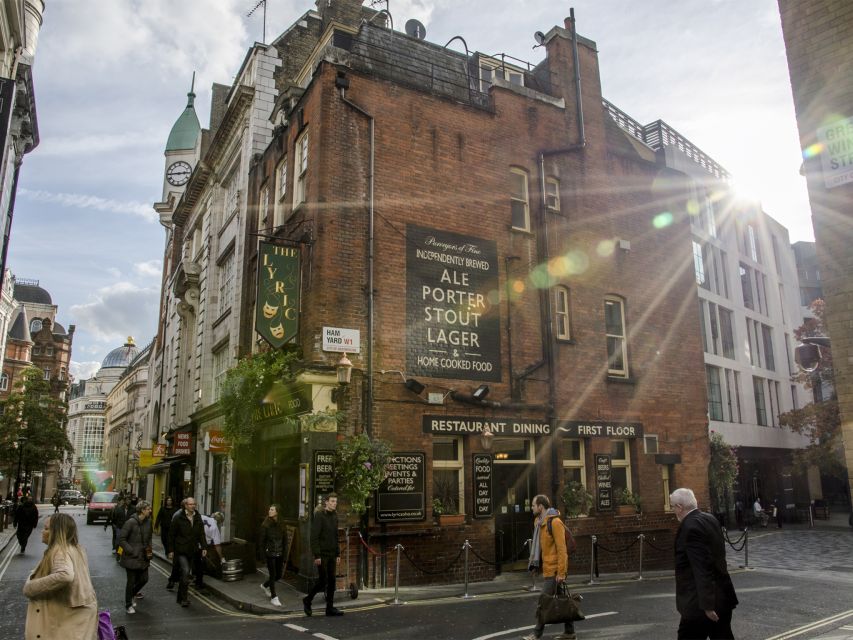
A Soho walking tour works when it does two jobs at once: it orients you in the maze, and it gives you a reason to look up from your phone. This one does both, and fast.
At 2.5 hours, you’re not trying to cover all of London. You’re focusing on one district’s “why,” which is what makes the neighborhoods stick. Soho has layers. You’ll see the modern energy, but you’ll also learn what pushed culture forward here: music scenes, activism movements, and public debates that shaped the city.
The group size helps. This tour runs as a group of up to 12, with a smaller semi-private option (up to 8). That’s big enough to feel lively, small enough that you can hear the guide and still move at a human pace.
More Guided Walking Tours in London
- Magical London: Harry Potter Guided Walking Tour
★ 4.7 · 22,044 reviews - London: The Original Jack the Ripper Walking Tour
★ 4.7 · 7,833 reviews - London: Harry Potter Movies Walking Tour (Kids Go Free)
★ 4.7 · 3,071 reviews
Meeting at Criterion Theatre on Piccadilly: start point and what it means for your day
You meet by the Criterion Theatre entrance on Piccadilly, opposite the famous screens at Piccadilly Circus. The exact address area is 218 to 223 Piccadilly, so it’s hard to miss once you’re there.
Why this matters: you’re starting at a place everyone recognizes, which reduces that awkward 20 minutes of hunting in tourist crowds. After that, the tour deliberately leaves the big landmark behind and gets into the side streets.
Plan to show up ready to walk. The tour involves a small amount of walking, and the route moves through areas where space is tight. Comfortable shoes matter more than you think, because Soho streets can feel like a sprint even when the group is calm.
You also need valid photo ID with you. And skip large bags. The tour notes that luggage or large bags aren’t allowed, which keeps the route smoother in crowded sections.
Piccadilly Circus to Golden Square: from lights and noise to real activism
The first stop is Piccadilly Circus, with a short photo moment and guided orientation. It’s a classic start for a reason. Soho can feel chaotic, so this step helps you build a mental map before you get turned around.
Then you move to Golden Square for another photo stop and guided talk. This is one of the tour’s strongest “learning” moments because it connects architecture and street life to a major historical movement. You’ll discuss the women’s suffrage movement here, and you’ll get the sense that activism was not some abstract concept. It played out in real places where people could gather, argue, and push for change.
This is also where the guide’s art history background shows up in how the stories are told. You’re not just learning dates. You’re learning why certain buildings and squares mattered, and how the district shaped who had access and influence.
London Palladium and Carnaby Street: music legends, plus a reality check
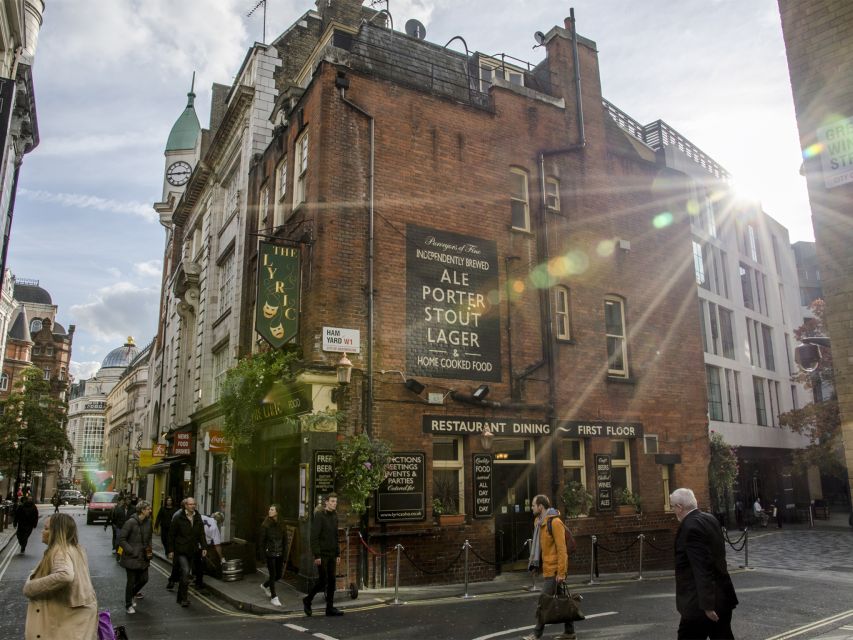
Next comes the London Palladium for another photo stop and a guided walk-by. The Palladium is a landmark name in its own right, but the better part is what the guide does with it: tying Soho to the performance world where pop culture turned into something bigger.
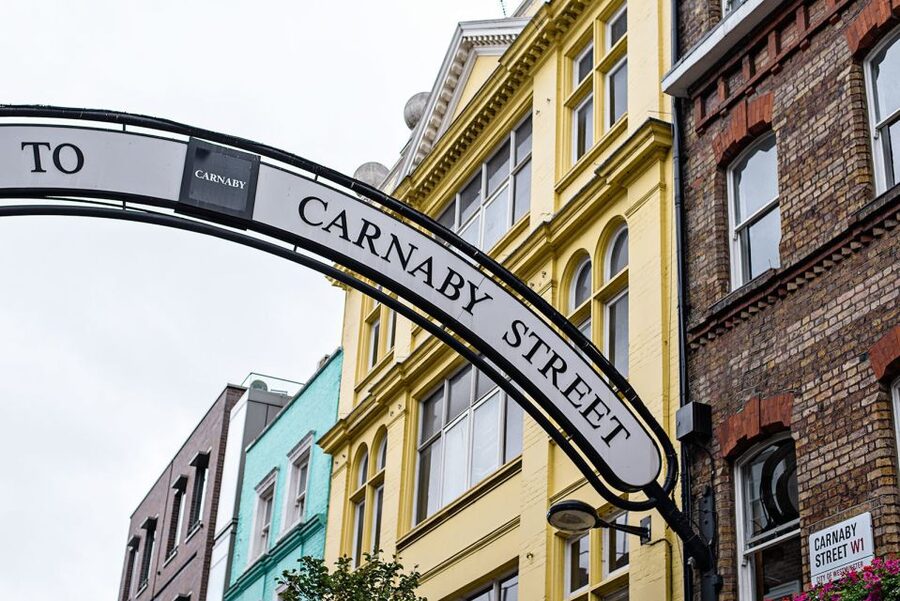
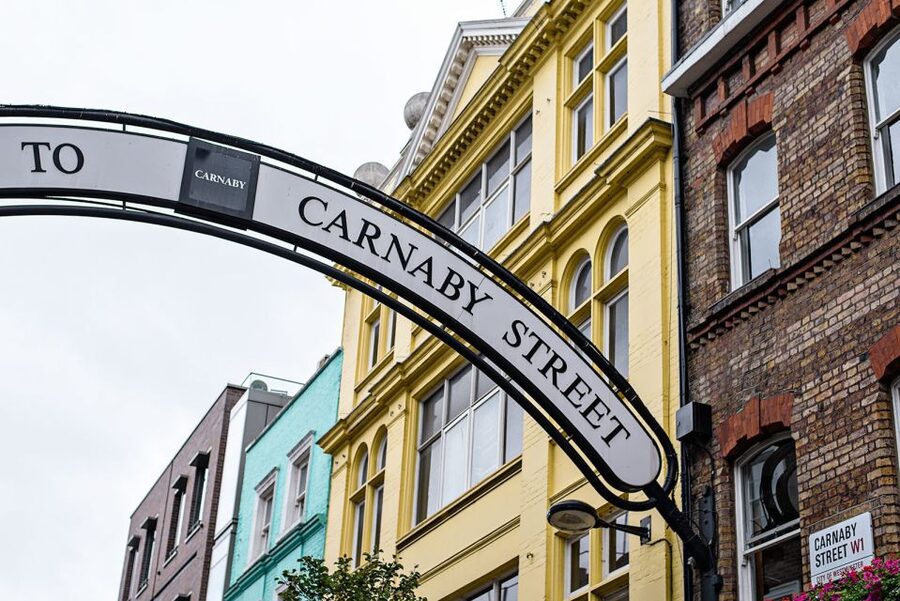
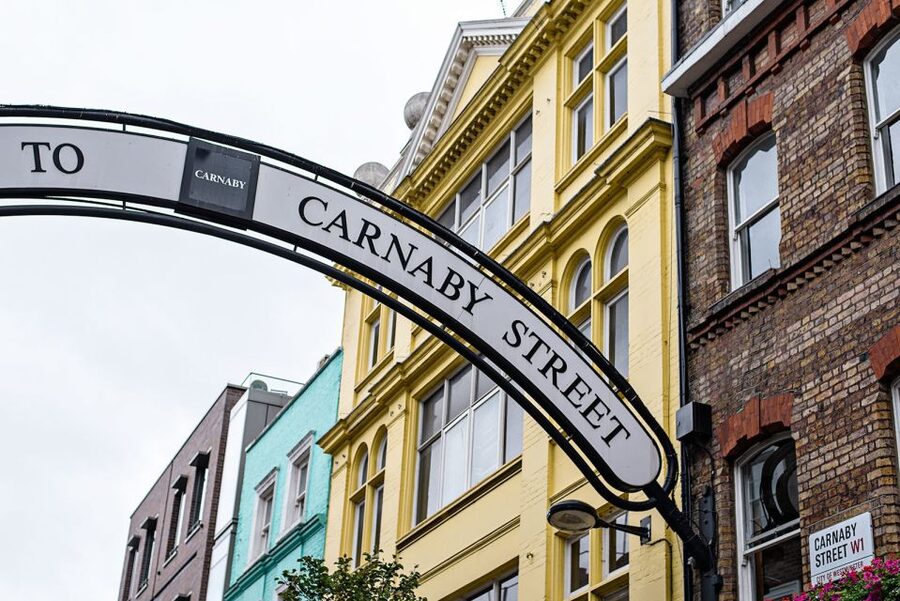
From there you head toward Carnaby Street. If you love 1960s style, you’ll like the symbolism. Carnaby is part of why people associate Soho with fashion and creative rebellion.
Still, here’s the reality check: Carnaby Street today can feel like a short, retail-heavy strip. That can make it harder to “see” the 60s just by looking. This is exactly the moment where a good guide earns their fee. You’ll want to treat it like a scavenger hunt. Look for the clues the guide points out, then let the story do the rest.
If you go in expecting preserved 1960s storefronts, you may end up wishing for more. If you go in expecting living street culture with historical context attached, you’ll probably leave happier.
More British streets at boot pace:
- London: The Great British Rock and Roll Music Walking Tour★ 4.9 · 1,783 reviews
- London: Harry Potter Walking Tour in German★ 4.8 · 1,505 reviews
- London: Jack the Ripper Evening Walking Tour★ 4.9 · 1,449 reviews
- London: Street Art and Graffiti Guided Walking Tour★ 4.9 · 1,354 reviews
Broadwick and Broad Street: John Snow’s cholera story on a modern street
Broadwick Street and Broad Street are where the tour becomes unexpectedly serious. The topic is a cholera outbreak, and you’ll hear about the original John Snow.
This is valuable even if you think you already know the basics of John Snow. The difference on a walking tour is location. By putting the story in front of you, the connection between disease, streets, and public health becomes concrete instead of textbook.
Practically, it also breaks up the tour’s tone. After music and shopping, shifting to a public health story gives your brain a new lane. And it makes Soho feel less like a theme park and more like a real city that went through real crises.
Berwick Street Market, Meard Street, and Dean Street: the small-street magic
Now the tour gets into what makes Soho feel like Soho: the short hops and changing atmospheres. You’ll stop at Berwick Street Market, then move past Meard Street and Dean Street with photo stops and guided commentary.
These sections matter because you’re seeing the district as a lived-in place, not just the big names. Markets and side streets tell you what people actually did between the headline events. They also help you understand why certain communities formed here in the first place.
A practical note: these areas can be busy. The tour route can be affected by national celebrations, and when that happens you’ll be rerouted to still hit the highlights. That’s normal in London. The key point for you is to stay flexible and keep your group pace. The tour is designed to be efficient, not leisurely.
Soho Square and Old Compton Street: where the district’s social life comes through
At Soho Square, you’ll learn about some of the district’s earliest nobility, and you’ll also hear about how today’s tenants can overshadow the earlier story. The contrast is part of the point.
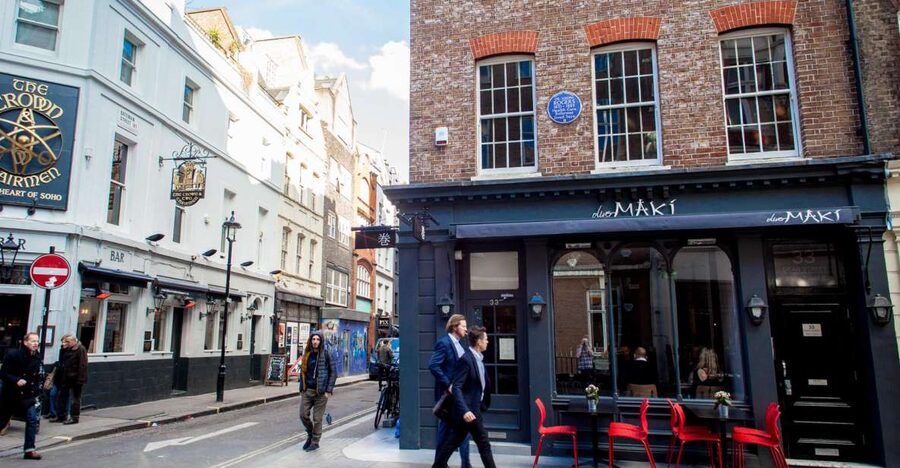
Then you’ll connect that history to the local LGBT community and the bars where people gather. This isn’t presented as a single landmark you can frame and walk away from. It’s explained as an ongoing part of Soho’s identity, with spaces where community and nightlife overlap.
After that comes Old Compton Street, another photo stop with guided walking. This part of the tour is where you start to see Soho as a network. Streets connect, and the stories reinforce each other. You come out with the feeling that Soho didn’t become what it is by accident. People built scenes, fought for rights, and used the streets for culture and change.
Greek Street and the Marx connection: why the guide includes the weird links
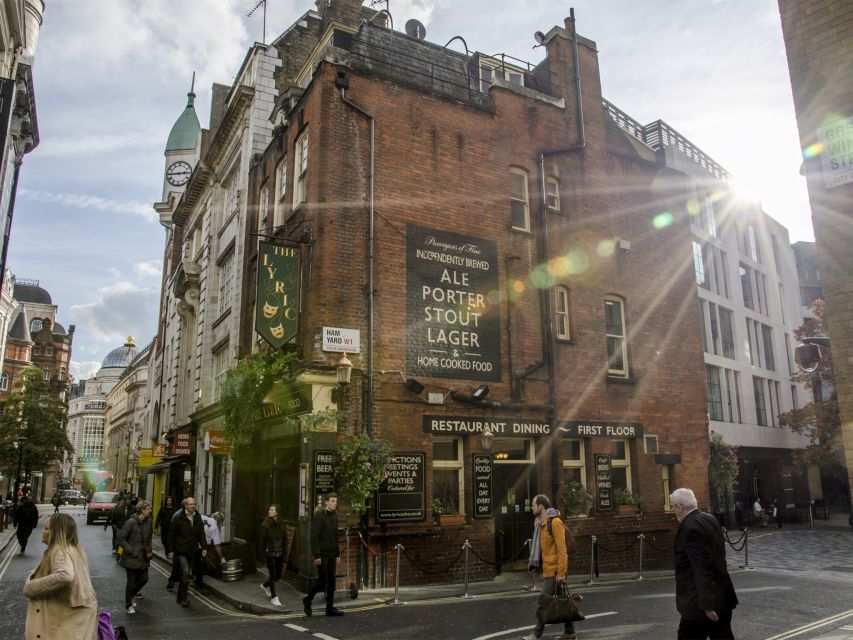
Greek Street is where the tour shares a less obvious clue: how Soho influenced former residence of Karl Marx. The tour uses this kind of connection intentionally, because it teaches you how cities work. People move, ideas travel, and a district can matter even if you only associate it with one topic.
If you like history, this is fun. If you prefer pure vibes, it can still work because the story is short and placed where you’re walking. You aren’t getting a lecture. You’re getting context while you’re surrounded by the same street shapes that helped shape the conversations of the time.
Chinatown finale: dumplings, decompression, and a good reset for your evening
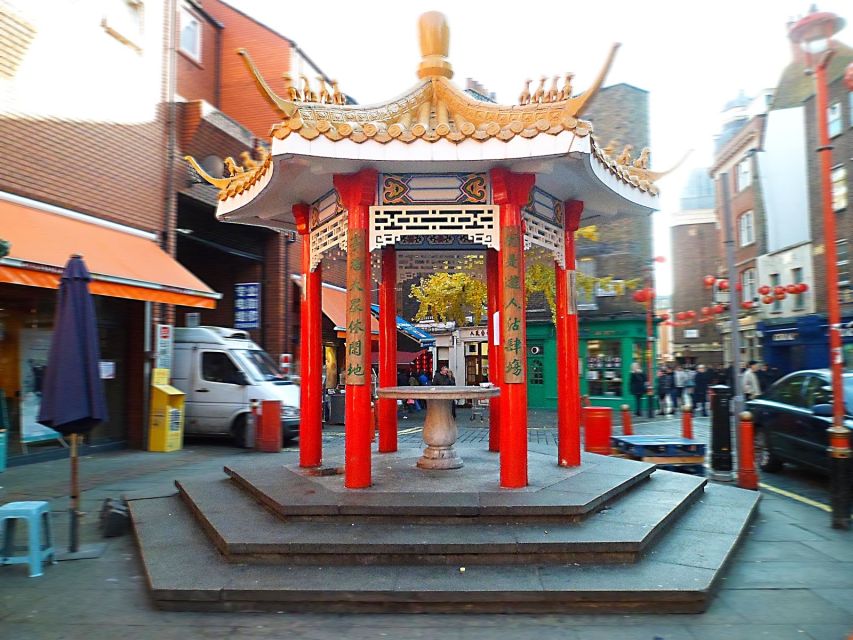
The tour ends in Chinatown with a photo stop and guided walk-through. Then you get time to relax over food.
Important detail: food isn’t included in the ticket price. But the timing and the location make it easy. You can order dumplings and other basics without scrambling for a restaurant after your tour.
This is a good end point because it’s a “reset moment.” Soho can be loud and fast. Chinatown gives you a change of pace and a strong payoff for the stories you just absorbed.
If you’re hungry, this is where you’ll feel grateful you wore comfortable shoes.
Timed entry to Buckingham Palace after your guided tour: how to use the timing smartly
One of the highlights is timed entry to Buckingham Palace after your guided tour. That can be a big value-add because it saves you from one of London’s most annoying planning headaches: lining up and guessing when you’ll get in.
Two tips for making this work:
- Keep your belongings minimal during Soho. The no large bags rule is there for comfort, and it helps you move quickly afterward.
- Don’t plan a long sit-down meal right after Chinatown unless you’re sure you still have time. Timed entry means you’re on the clock.
Also, security checks at attractions can limit what you can see from the inside. The tour notes that some places can’t be visited from the inside due to security measures, so treat the experience as a guided look plus context, not a full inside tour of every stop.
Price and value: is $61 per person a fair deal for what you get?
$61 for about 2.5 hours is not cheap, but it can be fair, especially because you’re paying for a professional art historian guide and a structured storyline through several major Soho touchpoints.
Here’s what you’re really buying with your time:
- A guided interpretation of Soho’s culture and activism, not just photos.
- Stops tied to music milestones and major historical themes like cholera and suffrage.
- A practical end that lines up with Chinatown food.
- And potentially, a timed Buckingham Palace entry after the walk, which can add real value if you were planning to go anyway.
The biggest cost that isn’t in the price is what you choose to spend for food. Drinks and meals aren’t provided, so you’ll need to budget for what you order in Chinatown. That’s normal, but it can change how “good value” feels for you if you’re expecting food to be included.
If your goal is a relaxed walk with historical context and a smooth handoff to a palace visit, the price makes sense. If you’re mostly chasing photos for social media and already know all the Soho lore, you might feel like you could do it cheaper on your own.
Who this Soho walking tour suits best
I’d point you toward this tour if:
- You want a guided way to understand Soho beyond nightlife headlines.
- You care about how art, music, and politics overlap in real city spaces.
- You like short stops with enough time to ask questions and take photos.
- You want an efficient plan that can connect to a later attraction.
It might be less ideal if you:
- Hate walking in crowds, even a little.
- Expect every stop to be a living 60s replica rather than a modern street with history layered underneath.
- Need a fully wheelchair accessible route. The tour information says the standard route isn’t suitable for wheelchair users, though wheelchair accessible tours are available by request only, so you’d need to ask first.
Should you book this tour?
If you’re planning a first trip to London and you want Soho to make sense fast, this is a smart buy. The guide background, the mixed themes, and the structured route help you get more out of a short window than you would on a self-guided stroll. Add the timed Buckingham Palace entry after, and it becomes a day plan you can actually count on.
If you’re mainly shopping and you already know all the big Soho stories, you may find parts feel more like modern retail streets than historical sets. But if you like learning while you walk, you’ll probably leave with Soho feeling sharper, not just louder.
FAQ
Where do I meet the guide?
Meet at the Criterion Theatre entrance in Piccadilly Circus, opposite the Piccadilly Circus screens, outside the main entrance of the Criterion Theater.
How long is the Soho walking tour?
The tour lasts about 2.5 hours.
Is this a small group or a larger group?
It runs for about 12 guests, and there are semi-private options with a maximum of 8 guests. Private group options are also available.
What language is the tour guide?
The live tour guide speaks English.
Is food included in the price?
No. Food and drinks are not provided, though the tour ends in Chinatown where you can eat.
Do I need to bring identification?
Yes. You should bring valid photo ID, such as a passport or ID card.
Can I bring luggage or large bags?
No. Luggage or large bags are not allowed.
Is the tour wheelchair accessible?
The standard tour is noted as not suitable for wheelchair users, but wheelchair accessible tours are available by request only.
Are attractions visited from inside?
Some attractions may not be accessed from the inside due to security measures, so you should expect mostly guided viewing and explanations.
Is the timed entry to Buckingham Palace part of this tour?
The information says there is timed entry to Buckingham Palace after your guided tour, as one of the highlights.
Newest entries under London


Walking Tours, compared.
Magical London: Harry Potter Guided Walking Tour
Read our review →
University and City Walking Tour with Alumni Guide
Read our review →
Harry Potter Movies Walking Tour (Kids Go Free)
Read our review →
The Great British Rock and Roll Music Walking Tour
Read our review →
Harry Potter Walking Tour Including New College
Read our review →Browse the lists this tour appears in