
Reviewed · HISTORICAL TOURS
London: Medieval History Walking Tour from The Tower
Two hours, a dozen centuries, and great views. This guided Thames walk strings together London’s medieval story from Tower Hill to St Paul’s Cathedral, using big landmarks and lesser-seen corners to explain how the city actually worked.
I especially like the way the route connects places to the bigger picture. You’ll hear politics, religion, and daily life explained in plain language, not just dates. And I love that the guide keeps it interactive, with answers that go beyond surface facts, plus humor when it helps the story land.
One drawback to plan for: you’re on your feet in all weather for about two hours. If you hate standing and walking outdoors, bring the right shoes and expect the pace to be steady.
In This Review
- Quick reasons this walk is a strong value
- Tower Hill start: getting your bearings fast
- Tower of London: power, fear, and everyday stakes
- Tower Bridge crossing: learning the mechanics of a landmark
- HMS Belfast and London Bridge: war memory on the river
- Borough Market and Southwark Cathedral: trade meets belief
- Golden Hinde and Winchester Palace: medieval connections beyond the postcard
- Shakespeare’s Globe along the Thames: history with a stage presence
- Millennium Bridge to St Paul’s: a dramatic ending with real scale
- Price and pace: why $24 can feel like more than a quick walk
- Should you book this Medieval History Walking Tour?
Quick reasons this walk is a strong value
- Tower of London first stop that sets the medieval context fast
- Tower Bridge crossing with real clues about how it was built
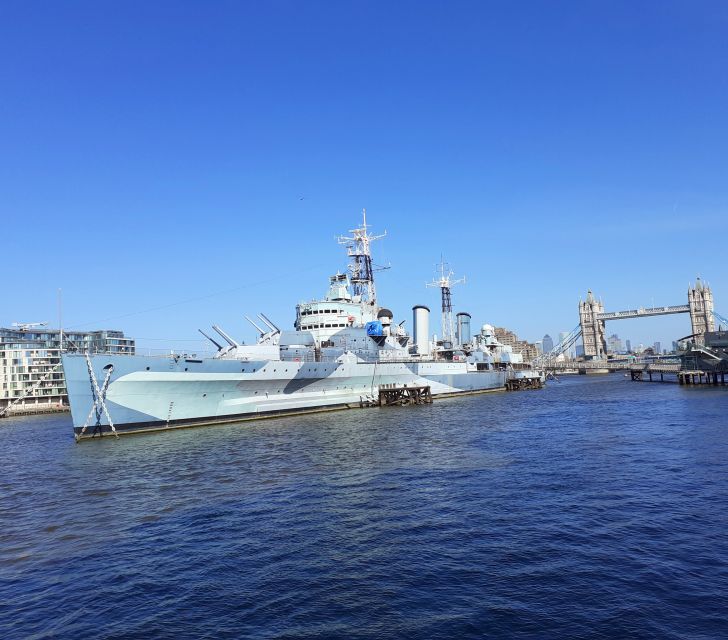
- HMS Belfast adds a 20th-century layer tied to the D-Day story
- South Bank stops like Borough Market and Southwark Cathedral that many short tours skip
- Winchester Palace + Winchester-area history for medieval London beyond the usual headlines
- St Paul’s finish for a dramatic, high-impact ending
Tower Hill start: getting your bearings fast
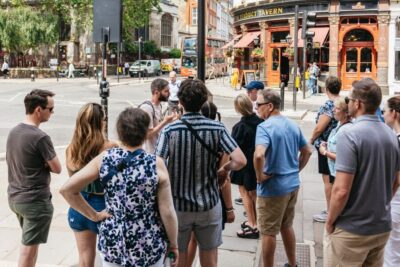
You’ll meet outside the western exit of Tower Hill tube station, near Trinity Square, by the Citizen M Hotel and the Tower Hill Tram burger van. Look for your guide holding a flagpole with a flag flying from it, which makes the meet-up way easier than trying to guess a person’s hat in a crowd.
From the first minutes, the guide frames the river as the city’s main street. That matters, because London’s story makes more sense when you see how everything clusters around the Thames: defense, trade, religion, and movement.
If you like history with a sense of location, this tour works well. The walk is short enough to stay energetic, but long enough to feel like you’ve gone somewhere.
And because the group moves together, you avoid the usual problem of wandering from one famous building to the next without understanding why any of it connects.
More Guided Walking Tours in London
- Magical London: Harry Potter Guided Walking Tour
★ 4.7 · 22,044 reviews - London: The Original Jack the Ripper Walking Tour
★ 4.7 · 7,833 reviews - London: Harry Potter Movies Walking Tour (Kids Go Free)
★ 4.7 · 3,071 reviews
Tower of London: power, fear, and everyday stakes
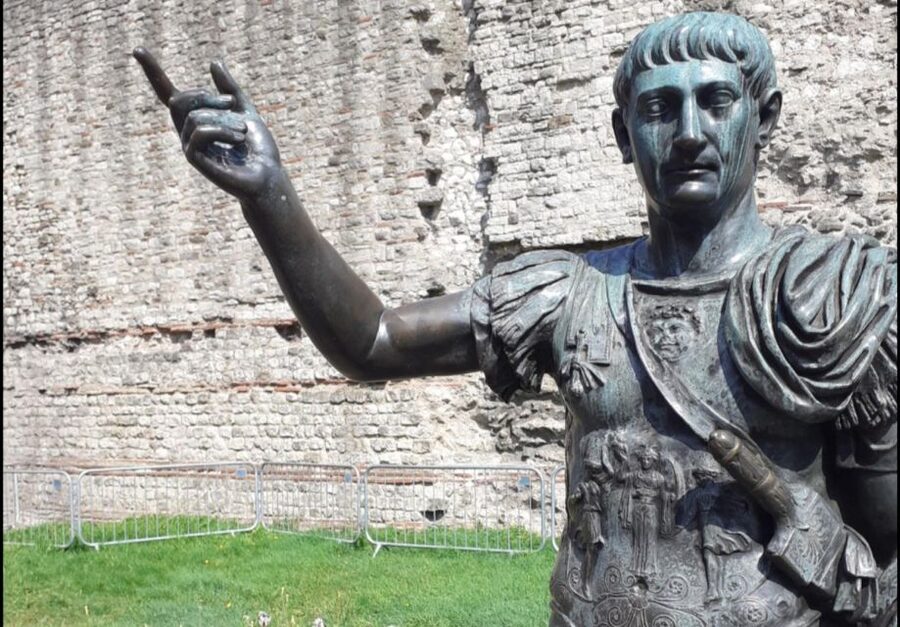
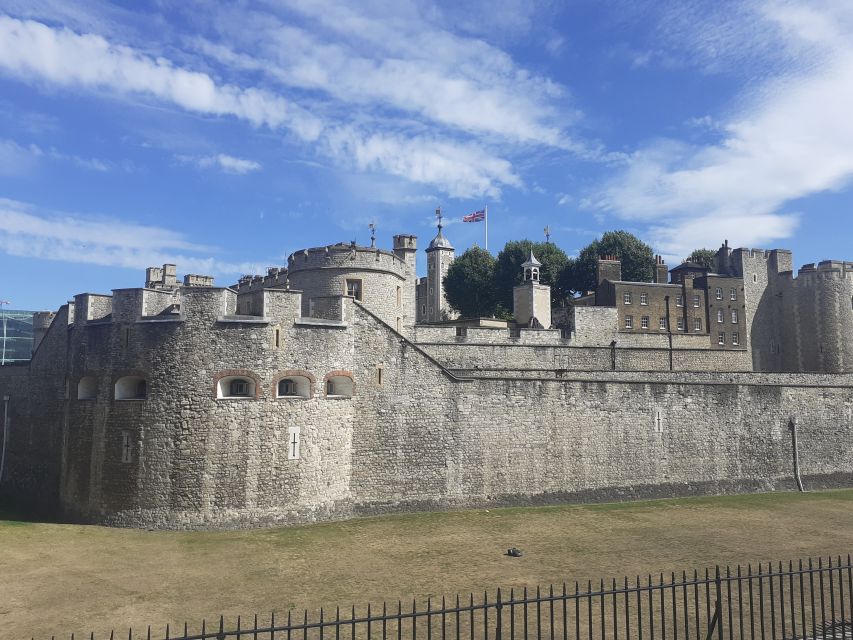
Starting at the Tower of London is a smart move because it’s a medieval anchor that still looks like authority. You’ll pass the fortress and hear its roughly 1000-year role in London’s power struggles, not just the obvious headlines.
The best part is how the guide turns the Tower into a working explanation of politics. You learn how rulers used the Tower as a tool, and how the city’s safety and reputation were tied to what happened inside.
Even if you’ve seen photos, you still need a human guide to explain the layers. Walls, positions, and river proximity all matter, and the narration helps you see those details instead of just glancing at stone.
One thing to consider: the Tower area can get busy. If you’re the type who wants long, quiet photo pauses, you’ll need to plan those quickly and then keep moving with the group.
Tower Bridge crossing: learning the mechanics of a landmark
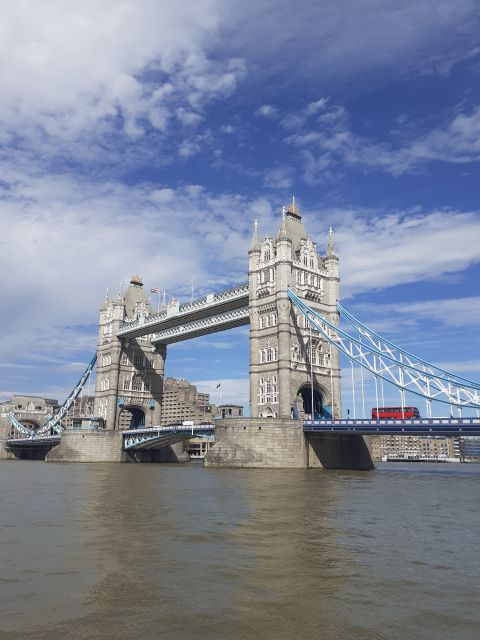
Next comes the Tower Bridge crossing, and it’s more than a scenic walk. The guide explains how the bridge was built and why it became such an iconic part of the river skyline.
I like this stop because it shifts history from people to engineering. You get a sense of how London kept growing and needed new ways to manage river traffic while still projecting strength.
On a day tour, it’s easy to treat a bridge as a picture spot only. Here, you learn what you’re looking at, so your photos feel earned, not accidental.
If the wind is strong on the bridge, don’t ignore it. This walk keeps you moving, but your coat and layers matter up high over the Thames.
HMS Belfast and London Bridge: war memory on the river
The tour then adds a powerful modern layer with HMS Belfast, a ship linked with the D-Day landings in World War II. It’s a reminder that the Thames is not only medieval London, it’s also the stage for more recent history that still shaped national identity.
After that, you continue through the London Bridge area. The guide uses the shift in time to show how the same geography served different eras.
This part of the route works well if you want contrast. One moment you’re thinking medieval power, the next you’re thinking war readiness, and the river is the common thread.
Potential drawback: museum-style stops often mean you’ll want a slower pace, but this tour is built to stay moving and cover multiple highlights. If you’re hoping for a long, deep look inside every stop, save extra time for follow-up visits later.
More British streets at boot pace:
- London: The Great British Rock and Roll Music Walking Tour★ 4.9 · 1,783 reviews
- London: Harry Potter Walking Tour in German★ 4.8 · 1,505 reviews
- London: Jack the Ripper Evening Walking Tour★ 4.9 · 1,449 reviews
- London: Street Art and Graffiti Guided Walking Tour★ 4.9 · 1,354 reviews
Borough Market and Southwark Cathedral: trade meets belief
One of my favorite “why this tour is different” moments is the South Bank focus. You pass through Borough Market, where food and commerce historically mattered, and you get a sense of how the river-fed city connected workers, traders, and daily needs.
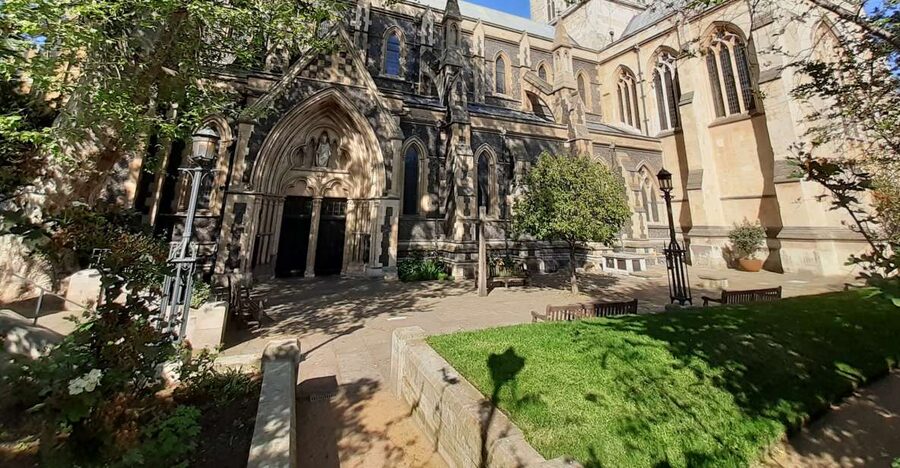
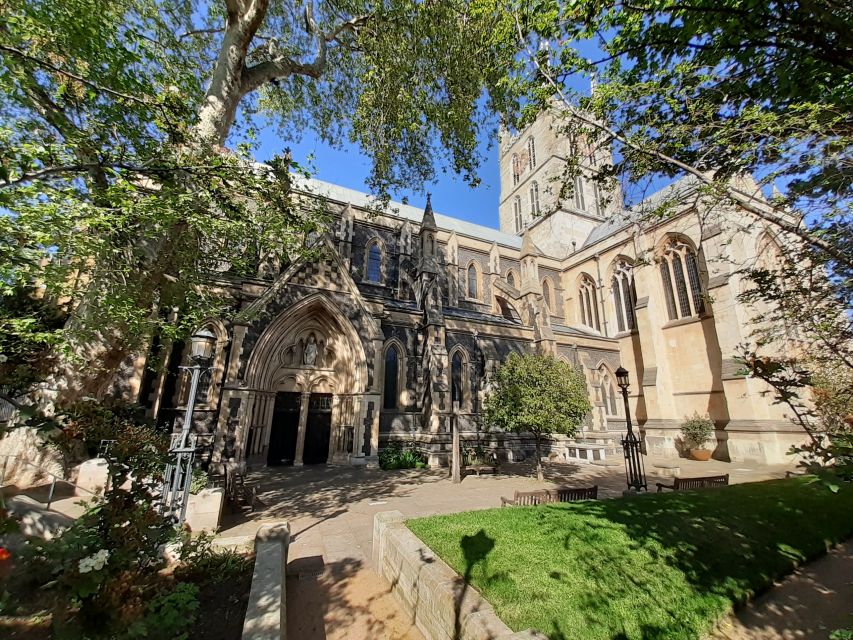
Then you head toward Southwark Cathedral, described as 15th-century. Hearing about the church here adds texture because it shows religion as more than a distant idea. It’s part of how communities gathered, argued, and built social order.
This pair, market then cathedral, helps you understand the human rhythm of the area. It isn’t just rulers and battles. It’s the stuff that kept London running.
If you’re visiting when it’s crowded, be ready for short bursts of focus and quick movement. The guide’s pacing matters in busy areas, and the narration helps you keep your attention even when foot traffic slows you down.
Golden Hinde and Winchester Palace: medieval connections beyond the postcard
You’ll also see the Golden Hinde area, which includes a reference to an exact replica tied to Sir Francis Drake. This stop helps you connect London’s medieval energy to the long arc of navigation, power, and maritime ambition.
Next is Winchester Palace, described as 12th-century. I like this part because it pulls you away from only the most famous names. You’ll hear what made the site important and how it fits into the medieval pattern of London, where institutions and authority sat close to the river.
The guide’s storytelling style makes these stops easier to grasp. When the narration connects politics, religion, and daily life, a place you might otherwise walk past becomes understandable.
One consideration: Winchester Palace can be easier to miss if you don’t slow down at the right moment. Stay with the group and listen closely at each stop. The guide points out what matters.
Shakespeare’s Globe along the Thames: history with a stage presence
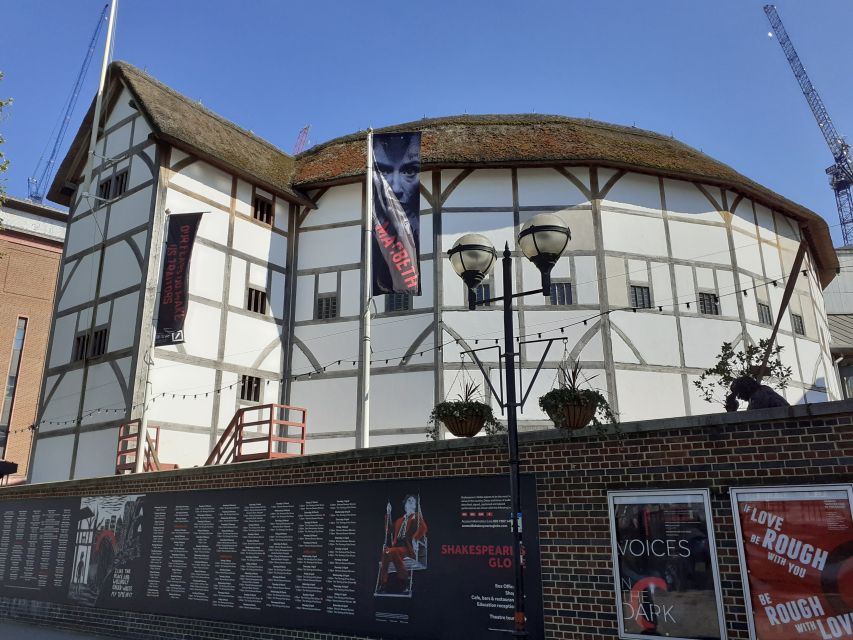
When the tour reaches Shakespeare’s riverside Globe theatre, it feels like London switches from fortress-and-cathedral thinking to culture and performance. You’ll walk in Shakespeare’s footsteps area, with the Thames as the backdrop that made this kind of public life possible.
This is a great stop for anyone who wants history to include art and entertainment, not only big political events. The guide ties the setting to the city’s rhythms, which makes the theatre feel like a location with logic, not just a landmark with a gift shop.
And since you’re outside and moving, you get the best kind of theatre context: the street-level perspective. You can see why the Globe belongs to this river walk.
The only trade-off: you might want more time here than two hours allows. If you’re a Shakespeare fan, use this stop as your cue to add extra time for a separate visit after the tour.
Millennium Bridge to St Paul’s: a dramatic ending with real scale
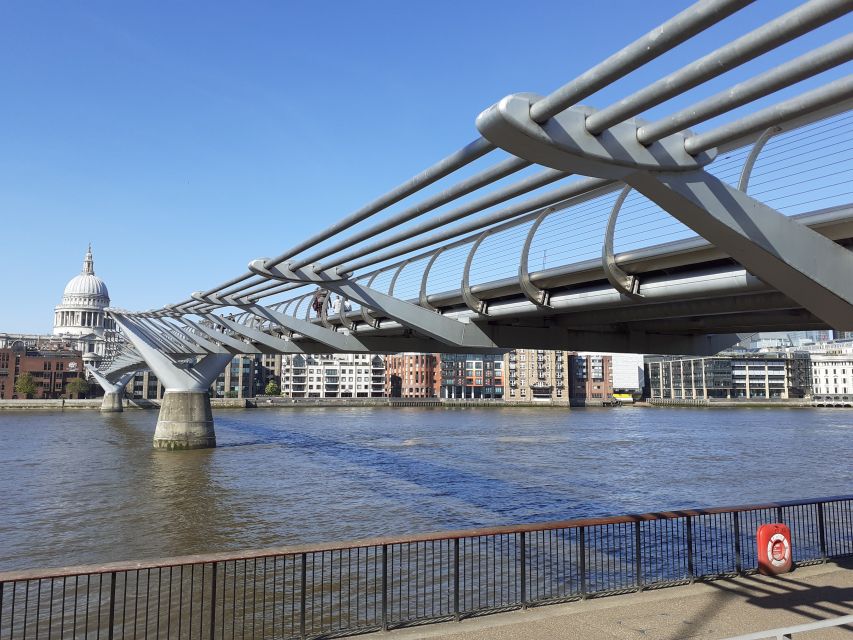
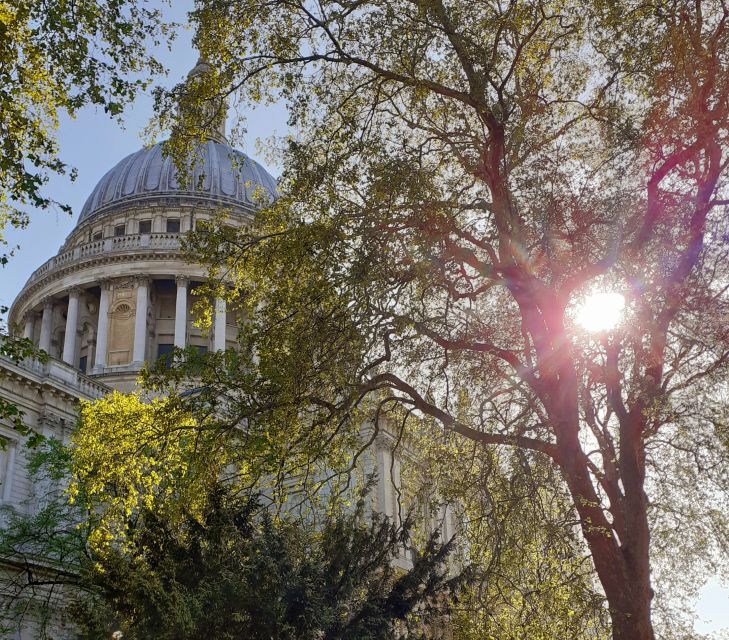
The final stretch uses the Millennium Bridge, then finishes at St Paul’s Cathedral at EC4M 8AD. This ending is strong because it gives you a sense of how London’s skyline evolved while still keeping the Thames as the organizing spine.
At St Paul’s, the guide’s framing helps the cathedral feel tied to the story instead of feeling isolated. You’re not just looking at a famous building, you’re reaching the last chapter of the walk’s theme, how faith, power, and public life shaped the city.
I also like that the ending is near a major landmark. It makes it easy to transition into your next plan, whether you want a meal, another stroll, or a museum stop.
Practical tip: even though the tour ends after two hours, your legs might disagree. If you plan a longer day after, build in a rest moment.
Price and pace: why $24 can feel like more than a quick walk
At about $24 per person for a 2-hour walk, the value comes from three things: expert guidance, lots of stops, and the way the route adds context.
A short bus tour gives you time-savers, but it often trades away detail. This tour does the opposite. You cover famous names like Tower Bridge and St Paul’s, plus adds in spots many quick itineraries skip. You’ll hear how medieval London worked, from politics and religion to day-to-day life.
Pacing is also a big part of the value. People consistently describe it as well paced, with the guide adjusting speed so everyone can keep up. That matters because two hours can feel long if you’re rushing or stuck waiting in crowded spots.
You should also know this is not a sit-down lecture. It’s a walking tour, with standing and outdoor time, and it runs in rain or shine. If you dress for the weather and bring good shoes, you’ll get more out of every minute.
This tour fits best if you:
- want an efficient introduction to medieval London along the Thames
- like asking questions and getting direct answers
- want a guided walk that adds meaning to famous landmarks
Should you book this Medieval History Walking Tour?
Book it if you want a smart, story-driven Thames walk that connects major landmarks and “in-between” places into one clear picture. You’ll leave with a better sense of why London’s power shifted over centuries, how the river shaped it, and how culture and conflict both used the same geography.
Skip it or plan differently if you need lots of indoor time at each stop, or if walking in outdoor weather is a deal-breaker for you. This is a two-hour route, so it’s built for movement and explanation, not slow museum-style browsing.
If you’re deciding between this and a generic sightseeing loop, I’d choose this. The guide style and stop selection make it feel like London’s medieval story has a spine, not a pile of unrelated attractions.
Centuries in an Afternoon
- London: Historic Pubs of Central London Walking Tour
★ 4.9 · 1,065 reviews - London: Soho Music and Historic Pubs Walking Tour
★ 4.9 · 836 reviews - London: Rock ‘n’ Roll History Tour
★ 4.6 · 645 reviews - London: Westminster Abbey Tour with a Royal Heritage Guide
★ 4.7 · 614 reviews
Newest entries under London





Historical Tours, compared.

Westminster Abbey Tour with a Royal Heritage Guide
Read our review →

Browse the lists this tour appears in