
Reviewed · HISTORICAL TOURS
London: Historic Spitalfields Walk
Spitalfields tells stories in brick and stone. On this Historic Spitalfields Walk, you get old-time London scenery while the City skyscrapers loom overhead, and your guide connects the dots between immigration, work, and faith.
I especially like how the tour spotlights the Huguenot silk-weaver houses, where centuries-old craft traditions shaped daily life in the East End. A good heads-up: it is a light walking route, so comfortable shoes still matter if you are sensitive to uneven sidewalks.
In This Review
- Key Points at a Glance
- First Steps in Spitalfields: Starting at Liverpool Street
- Why This Walk Feels Different From Typical London Tours
- Huguenot Houses and Silk Workshops: 300 Years of Craft Life
- The Charnel House Remains: An 800-Year-Old Reminder of Overcrowding
- Churches, Synagogues, and Mosques: Faiths in a Compact Neighborhood
- Jewish Soup Kitchen and Street Art: Daily Life Then and Now
- The 2-Hour Pace: Private Group Comfort and What to Bring
- Meeting Point and Ending Spot: Easy Start, Food Nearby
- Tips to Get More Out of Your Historic Walk
- Should You Book This Spitalfields Walk?
Key Points at a Glance

- 300-year-old Huguenot silk weaver houses and the attic workshops they once held
- Remains of an 800-year-old charnel house, tied to an overflowing graveyard
- Blue Badge Tour Guide storytelling, in English and German
- A layered mix of faiths and communities in one compact area
- Street art plus historic stops, ending near Old Spitalfields Market for lunch
First Steps in Spitalfields: Starting at Liverpool Street
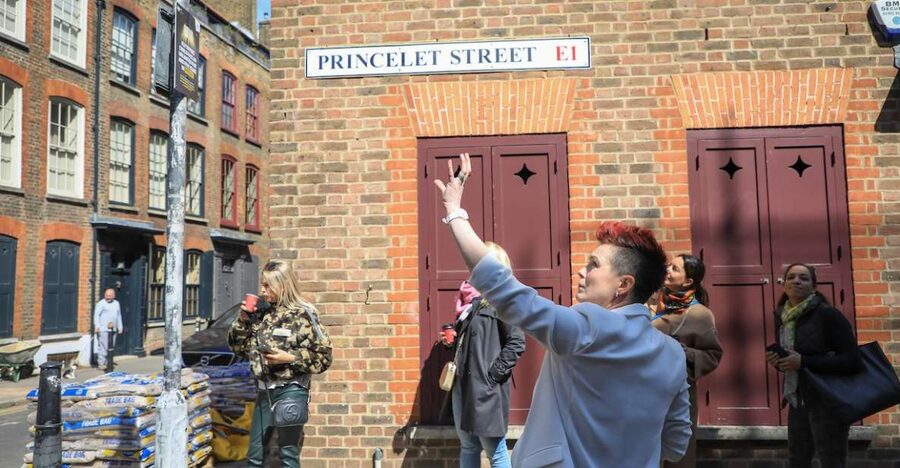
You begin right in the buzz of the transport grid at Liverpool Street Station, at the Bishopsgate exit. It is easy to find because the meeting spot is close to Eataly London, and you meet at the top of the stairs or escalators. From there, your guide leads you into Spitalfields, where the feel changes fast from modern commuter flow to narrower streets and older buildings.
What makes this start work is the contrast. As you walk, you are in the East End, but London’s towers hover above the neighborhood. That visual mix helps you understand something the guide focuses on: this area has always been a receiving place, where new arrivals fit into an existing city fabric.
You can also expect a circular route. That matters because you are not just walking out and back. You end in a practical spot for food, near Old Spitalfields Market, which is handy if you want lunch with minimal transit hassle.
And yes, this is a rain or shine kind of plan. The walking is described as light, but London weather can change your comfort level quickly, so plan like you would for an outdoor stroll anywhere in the city.
More Guided Walking Tours in London
- Magical London: Harry Potter Guided Walking Tour
★ 4.7 · 22,044 reviews - London: The Original Jack the Ripper Walking Tour
★ 4.7 · 7,833 reviews - London: Harry Potter Movies Walking Tour (Kids Go Free)
★ 4.7 · 3,071 reviews
Why This Walk Feels Different From Typical London Tours
If you have done the classic London checklist and you still want a deeper sense of place, this is built for that. The tour focuses on immigration stories and everyday settings rather than the usual scripted tourist route.
I like the way the guide pulls you away from the big-name East End themes and points you to quieter corners where history shows up in the buildings. One review I saw called it off the beaten track, away from Jack the Ripper style stops, which matches what you are actually getting here: not a chase for famous scenes, but a walk through working homes, small community institutions, and the traces they left behind.
Another reason this works is that it is a private group experience. Up to 8 people is small enough to keep questions in the conversation instead of losing them in the crowd. That means you can ask for clarity when something feels specific, like how a neighborhood’s religious mix formed over time.
The tone also matters. The tour is led by a Blue Badge Tour Guide, so you can expect organized storytelling and clear explanations as you go. That is a big value point because you are not left to guess what you are looking at when you reach older structures.
Huguenot Houses and Silk Workshops: 300 Years of Craft Life

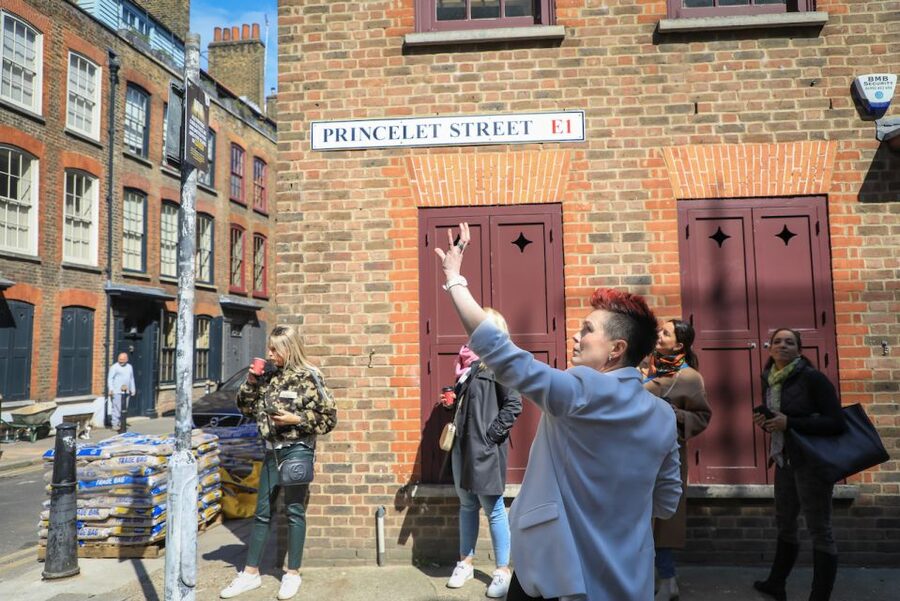
The center of the walk’s “time travel” feeling is the group of 300-year-old houses tied to the Huguenot silk weavers. These were not decorative buildings. They were homes and workplaces, often with production happening in upstairs spaces.
What I find compelling is that you are looking at architecture with a job. The tour points out how attic workshops made sense for weaving, and how families could live and work within the same walls. When you stand in or near these older structures, you start to understand why the neighborhood earned its reputation as a craft hub.
Your guide also connects the dots between craft skill and why people settled in Spitalfields. Huguenots were Protestants, and many arrived after persecution in France. On this walk, that immigration thread is not just mentioned. It is used to explain why specific communities ended up where they did, and how their trades influenced London’s growth.
Even if you are not a history buff, the silk angle gives you an immediate hook. You can picture the work happening overhead while life carried on below, and that makes the past feel practical rather than distant.
Practical note: because this is a walking tour with close-up looks at older buildings, you may spend time lingering near house fronts or passageways. Wear shoes you trust, and keep a water bottle handy even if the route is described as light.
The Charnel House Remains: An 800-Year-Old Reminder of Overcrowding
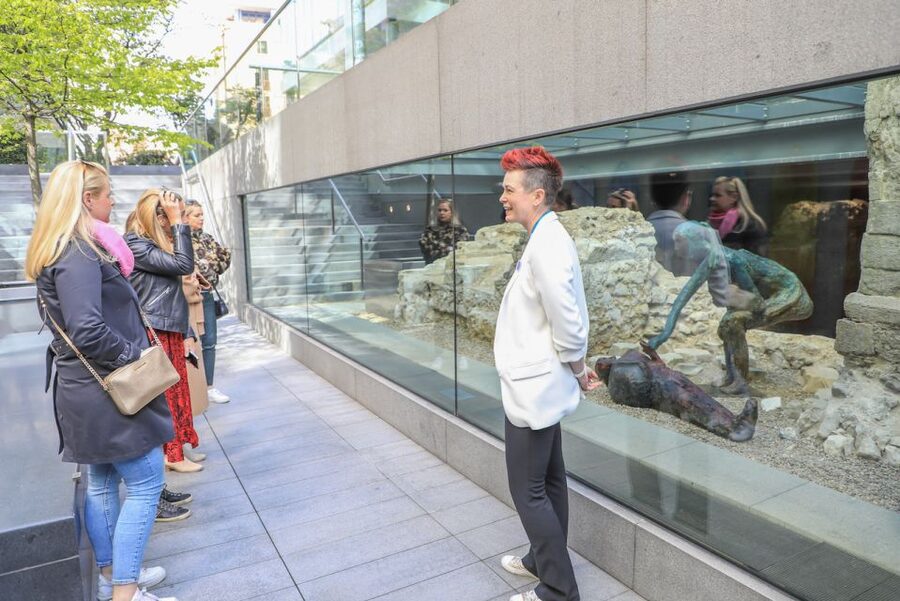
One of the most unusual highlights is the remains of an 800-year-old charnel house. Your guide ties it to a graveyard that overflowed, and to the storage of bones from the dead.
This is the kind of stop that changes your mood, in a good way. It is not “scary for thrills.” It is a real, physical sign of how communities handled death when space ran out. When you understand that context, the building becomes more than a curiosity. It becomes evidence of how people lived through hard limits, then moved on.
Because the tour focuses on places tied to real life, you will likely find that this stop lands with extra weight. You are not just learning dates. You are learning the problem the city faced, and how people tried to solve it with the tools they had.
If you are sensitive to grim topics, you might want to mentally prepare for a heavier moment. The tour is generally positioned as historic and educational, but this charnel house component is unavoidably serious.
On the flip side, if you appreciate the honest side of old neighborhoods, this is exactly the sort of detail that makes Spitalfields feel different from more polished tourist districts.
More British streets at boot pace:
- London: The Great British Rock and Roll Music Walking Tour★ 4.9 · 1,783 reviews
- London: Harry Potter Walking Tour in German★ 4.8 · 1,505 reviews
- London: Jack the Ripper Evening Walking Tour★ 4.9 · 1,449 reviews
- London: Street Art and Graffiti Guided Walking Tour★ 4.9 · 1,354 reviews
Churches, Synagogues, and Mosques: Faiths in a Compact Neighborhood
Spitalfields is known for layers, and the walk is designed to show you those layers up close. As you move along the circular route, your guide takes you past places that reflect a mix of faiths, including churches, synagogues, and mosques.
This is where the tour’s immigration theme becomes concrete. The guide explains why Protestants, Jews, Catholics, and Muslims ended up in the area, and how each community left traces in buildings and institutions. It is not just a list of religions. It is about migration pressure and tolerance shifts that changed where people could safely live.
One review I read singled out how the guide connected stories to why Europeans fled persecution, including pogroms in Russia and religious intolerance in France. That kind of framing helps you understand why a neighborhood could become a multi-faith meeting point without anyone calling it a destination.
Even if you are not religious, you will probably enjoy this part because it explains city formation. People move. Institutions form around them. Over time, those institutions shape the streets, and the streets keep the memory.
The balance here is important. This tour is not just about surviving hardship. It is also about how communities built lives, worked, worshipped, and supported each other in the East End.
Jewish Soup Kitchen and Street Art: Daily Life Then and Now
After the older religious and craft-focused stops, you also get a sense of day-to-day community support. The walk includes an old Jewish soup kitchen that was in use until the 1990s. That is a surprisingly recent marker when you think about how old some of the other sites are.
I like this contrast. It shows that the neighborhood’s social fabric did not disappear when older buildings aged. It kept doing practical work for decades, reflecting needs as they changed.
Then you mix that with modern Spitalfields street art. The East End is famous for it, and this tour makes sure you see plenty as you walk. That helps you bridge the time gap. You go from what communities needed and built in earlier centuries to what people express and comment on today.
If you are the type who likes your history with a pulse, this section is a win. You are not only studying artifacts. You are seeing how the area is still active, still layered, and still communicating in the language of the street.
The 2-Hour Pace: Private Group Comfort and What to Bring
The tour runs for 2 hours with light walking. That timing is ideal if you want something meaningful without eating half a day. It is long enough for multiple stops and context, and short enough that you can pair it with another plan, like an afternoon market meal near the finish.
Since it is a private group, you will typically get more of the guide’s attention than you would on a larger group departure. Up to 8 people also keeps the route flexible, which matters on a neighborhood walk with turns, street corners, and moments where the guide wants you to look closely.
Price is $458 per group up to 8. That is not “cheap,” but it is not trying to be. The value comes from the combination of a Blue Badge guide plus a private format. If you fill the group, you are looking at roughly $58 per person. If your group is smaller, your per-person cost rises, so this one tends to make more sense for couples, small families, or friends traveling together.
You can also expect wheelchair accessibility. The walking is described as light, which usually translates to fewer steep stretches, though you should still plan for typical London sidewalk surfaces.
What to bring is simple: comfortable shoes, a layer for changing weather, and a way to stay hydrated. If it is raining, bring a compact umbrella or a light rain jacket, because the tour runs rain or shine.
Meeting Point and Ending Spot: Easy Start, Food Nearby
You meet outside Liverpool Street Station at the Bishopsgate exit, by the top of the stairs or escalators and close to Eataly London. I like that kind of meeting point. It is a well-known landmark, and it reduces the stress of hunting for a random street corner.
The tour ends just around the corner from Old Spitalfields Market. That is practical because you can grab lunch without needing to plan transport right after. It also gives you an optional “keep going” moment if you want to wander through market stalls after the guide drops you off.
If you are pairing this with other East London plans, the location helps. Spitalfields sits close enough to many central connections that you can pivot quickly once the walk is done.
Tips to Get More Out of Your Historic Walk
This tour works best when you treat it like a guided neighborhood walk, not a museum checklist. Look up as you move. The whole point is noticing how older buildings coexist with modern London. When you see a facade, ask yourself what kind of life would have happened behind it.
Also, pay attention when the guide shifts from one theme to the next. Silk weaving, faith communities, social support, street art. The power of Spitalfields is that these topics overlap in the same small area.
If you want to maximize the experience, come ready with one question in mind. For example: why trades cluster in specific neighborhoods, or how faith communities organize when they are new to a city. Your Blue Badge guide can connect the local details to the bigger forces like persecution, migration, and community building.
Finally, if you are tempted to multitask on your phone during the walk, resist it for the older stops. These buildings make more sense when you are fully present and can compare what you see street-level with what the guide explains.
Should You Book This Spitalfields Walk?
I think you should book this Historic Spitalfields Walk if you want London East End history with real neighborhood texture. It is a strong fit for people who like off-the-beaten-track areas, appreciate immigration and faith stories, and want a guide who can explain what you are seeing as you walk.
You might skip it if you only want famous landmarks or you are looking for a quick photo stop with minimal reading or context. This is an educational, story-driven walk, and you will get the most from it if you enjoy that pace.
If your group is up to 8, the private format makes it a solid value. And with the finish near Old Spitalfields Market, it is easy to turn the tour into a full East London afternoon without adding complicated logistics.
Centuries in an Afternoon
- London: Historic Pubs of Central London Walking Tour
★ 4.9 · 1,065 reviews - London: Soho Music and Historic Pubs Walking Tour
★ 4.9 · 836 reviews - London: Rock ‘n’ Roll History Tour
★ 4.6 · 645 reviews - London: Westminster Abbey Tour with a Royal Heritage Guide
★ 4.7 · 614 reviews
Newest entries under London






Historical Tours, compared.




Westminster Abbey Tour with a Royal Heritage Guide
Read our review →

Browse the lists this tour appears in