Reviewed · LONDON TOURS & EXPERIENCES
London: Hidden Tube Tour – Green Park Station
London’s Tube has a second life underground, one that most people never see. This Hidden Tube Tour at Green Park Station gives you access to areas that stay closed most days, including Dover Street Station passageways and lift landings that date back to the early 1900s. You also get the kind of transport-history storytelling that makes the station feel like a living machine, not just a stop on the map.
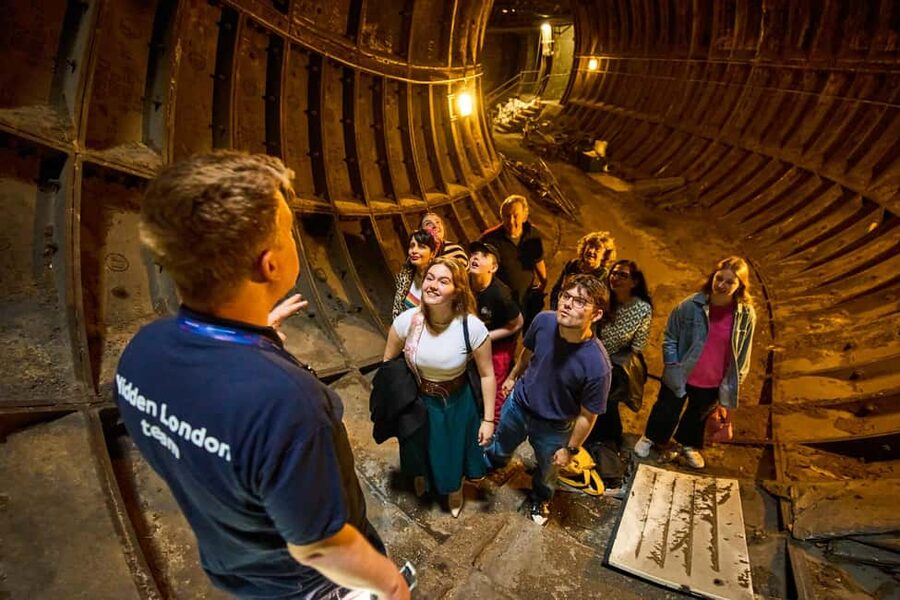
Two things I especially like about this experience are the range of what you see and how the guides manage the group. The tour isn’t only about facts, it shows physical details like original signs and tiles that passengers stopped noticing decades ago. And from the London Transport Museum team’s guidance style, you can expect a lively pace plus real attention to keeping everyone together while you move through behind-the-scenes spaces.
One drawback to plan around is that this is a lot of walking, including stairs and uneven, low-lit areas underground. It’s also described as very dirty in parts, and there are no elevators, so it is not the right fit if you want a smooth, accessible stroll.
In This Review
- Key things you’ll notice on this Hidden Tube tour
- Green Park Station’s second layer: Dover Street, built for multiple railways
- Where to meet at Green Park, and how to pace your 80 minutes
- Dover Street passageways and lift landings: seeing old circulation patterns
- The station details that survive: original signs, tiles, and quiet design cues
- World War II stories: where transport leadership hid during air raids
- Green Park expansion in the 1960s and 1970s: Victoria and Jubilee line growth
- Ventilation tunnels behind the platforms: the Tube’s hidden cooling system
- What you should pack and watch for before going underground
- Who this tour is best for, and who should skip it
- Value check: is $62 worth it for 80 minutes?
- Final call: should you book the Green Park Hidden Tube tour?
- FAQ
- Where is the meeting point for the Green Park Hidden Tube tour?
- What is the tour duration?
- How much does the tour cost?
- What is included in the tour price?
- Is transportation included to and from the station?
- Can I bring food or drinks on the tour?
- What should I wear and bring?
- Is the tour suitable for children?
- Is the tour accessible for people with mobility impairments?
- Can I take photos?
Key things you’ll notice on this Hidden Tube tour
- Dover Street Station access to closed passageways and lift landings, tied to the Great Northern, Piccadilly, and Brompton Railway
- WW2 station stories, including the London Transport Executive Board meeting during air raids
- Vintage signage and tiled wall details that reflect what passengers saw in the early 20th century
- Ventilation tunnels behind the platforms that help cool the Victoria and Jubilee lines
- A secret ventilation shaft viewpoint where you can peer down at trains in a normally closed area
Green Park Station’s second layer: Dover Street, built for multiple railways
Green Park on the surface feels calm and polished, but the tour is really about what sits underneath it. Dover Street Station was built to serve the Great Northern, Piccadilly, and Brompton Railway, and the hidden areas you visit carry that older layout and design language. It helps you understand why London’s Underground grew the way it did, with separate projects and lines overlapping in the same city block.
What makes this portion more than a fun detour is that you’re not only hearing timelines. You’re seeing the built form of that history. The tour focuses on early 20th-century former passageways and the lift landings from the days when Dover Street had public-facing movement patterns. If you like history that has a physical footprint, you’ll probably enjoy how the space teaches you as you walk through it.
There’s also a practical lesson here for modern transit fans. Today’s Tube lines feel like one system, but the hidden spaces remind you that it was assembled through phases, expansions, and wartime problem solving. That context makes later stops, like ventilation and line growth, feel connected rather than random.
Also inked in under London
- London: The London Eye Entry Ticket
★ 4.6 · 35,875 reviews - From London: Harry Potter Warner Bros Studio Tour
★ 4.7 · 26,588 reviews - London: Westminster to Greenwich River Thames Cruise
★ 4.5 · 22,836 reviews
Where to meet at Green Park, and how to pace your 80 minutes
You start outside the Buckingham Palace/Green Park exit at Green Park station, by the Diana Fountain. A member of the Hidden London team meets you on arrival, and the guidance is to show up 15 minutes early. If you’re even slightly late, you can slow the whole group down, because the route is designed for a set flow through small, enclosed areas.
The total tour time is 80 minutes, which sounds short until you factor in stairs, uneven ground, low lighting, and turns through corridors. I like that the schedule is compact, because you get a strong hit of unusual access without losing half a day. But you should still treat this like an active experience, not a quick photo stop.
Bring comfortable shoes and plan for temperatures underground that can vary. You’re also told to bring water, which is good advice for any underground walk, especially if you end up sweating in warmer pockets while moving between cooler sections.
Dover Street passageways and lift landings: seeing old circulation patterns
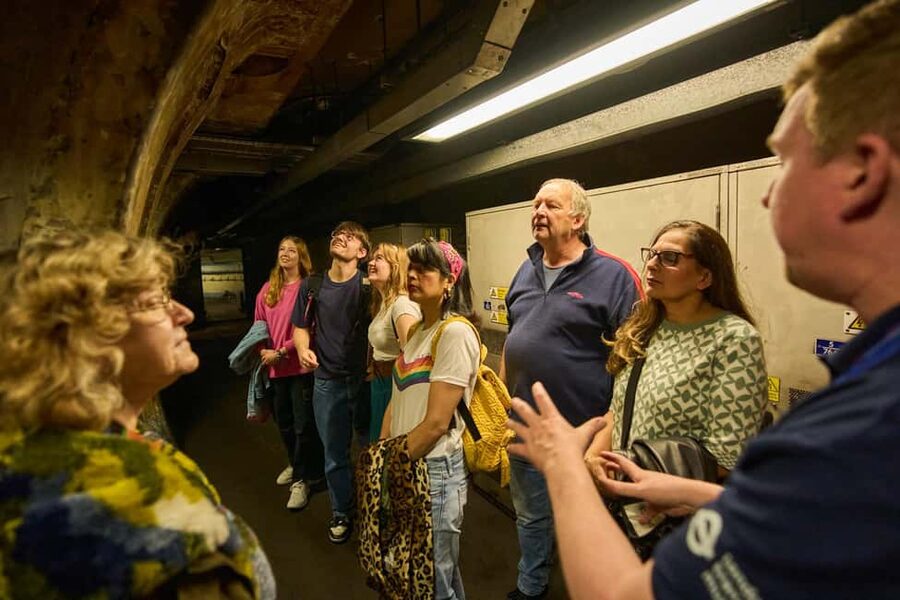
One of the most memorable aspects is the sense of being inside a forgotten station network. You’ll explore the former passageways and lift landings connected to Dover Street Station, in areas that are closed to the public. This is the kind of access that works best when you stop trying to imagine it from online photos and just let the space show you the purpose.
Lift landings matter here because they’re not just decorative remnants. They reflect how people moved vertically in earlier Underground layouts, and they hint at the engineering priorities of the time. You get to understand old station design decisions in a way that reading alone cannot do.
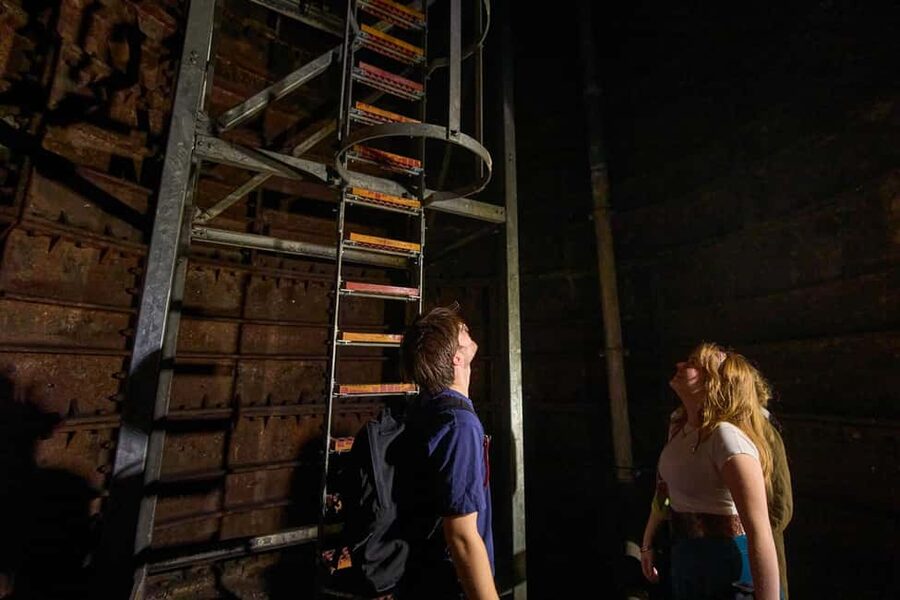
This portion comes with a realistic consideration: the environment is described as dirty in at least one firsthand account, and the route includes uneven ground plus stairs. Low lighting also means you will be watching your footing more than you might in a typical city walk. If you’re prone to slipping or you prefer a bright, easy route, this is something you should weigh before booking.
The station details that survive: original signs, tiles, and quiet design cues
The tour’s visual payoff is the chance to spot what still remains. You’re looking for original vintage signs and tiles on walls in these older sections. The important detail is that these are the kinds of features that were last seen by the traveling public in the 1930s, which gives you a time anchor while you’re standing in place.
I like that this is not a generic photo moment. The signs and tiles are small clues to how the station was communicated to riders back then. Even if you don’t read everything at close range, you can tell this was built with wayfinding and passenger flow in mind. It gives you a more human understanding of how people navigated Underground spaces before today’s modern signage.
There’s also a photography note that affects your planning. Photography is allowed, but flash photography is not permitted in certain areas. If you want crisp shots, plan on normal light and phone camera settings that work in dim spaces.
A page further on, still in London:
- Magical London: Harry Potter Guided Walking Tour★ 4.7 · 22,044 reviews
- London: Madame Tussauds London★ 4.6 · 20,915 reviews
- London: Warner Bros. Studio Harry Potter Tour & Branded Bus★ 4.7 · 19,194 reviews
- London: Tower Bridge Entry Ticket★ 4.7 · 15,560 reviews
World War II stories: where transport leadership hid during air raids
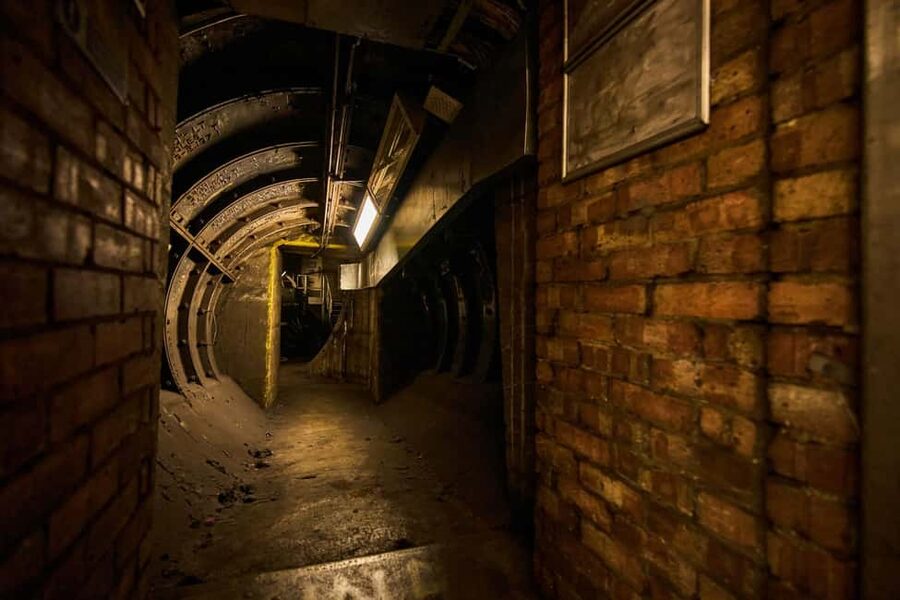
This is where the tour turns from cool architecture to real stakes. You hear how Dover Street played a role during the Second World War, including being used for safe meetings by the London Transport Executive Board during air raids. The point is simple but powerful: Underground operations were a lifeline, and leadership needed a protected place to make decisions when the city was under threat.
Another striking detail is about Lord Ashfield, then chairman of the London Passenger Transport Board. His bedroom was secretly fitted at the heart of the station, which adds a personal layer to the story. It’s not a museum-lesson fact meant to sound dramatic. It helps you picture what “nearby” meant when the city was disrupted and leaders had to remain close to the system.
A balanced takeaway for you: this isn’t just about war as an event. It’s about how logistics and infrastructure planning shape survival. If you care about how cities function under stress, these stories are likely to be the highlight.
Green Park expansion in the 1960s and 1970s: Victoria and Jubilee line growth
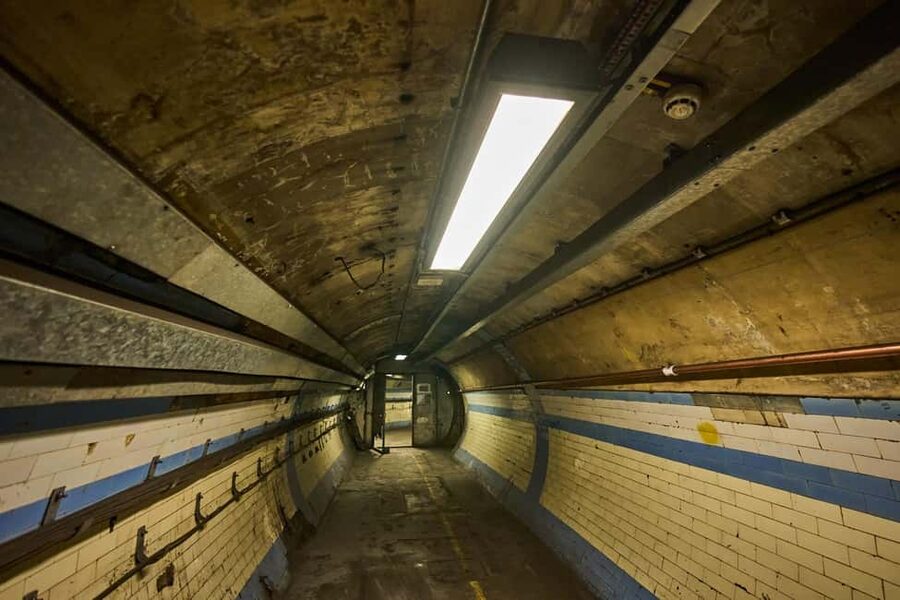
After you move through the older Dover Street spaces, the tour connects that past to what came next. In the 1960s and 1970s, Green Park expanded to accommodate two post-war lines: the Victoria and Jubilee lines. You hear how the station’s underground spaces were shaped to support a growing, modernizing London transport system during the post-war economic boom.
This matters because it explains why the Underground you ride today feels different from early Tube designs. It’s not only that new trains arrived, the physical station had to adjust too. Seeing older passageways and then learning about later line expansion gives you a “generation to generation” view of infrastructure change.
If you’re the type who enjoys connecting streets to systems, this part can make you look at the station platform level differently afterward. You’re no longer just thinking about departures. You start seeing how expansion is literally carved into the city’s underground layers.
Ventilation tunnels behind the platforms: the Tube’s hidden cooling system
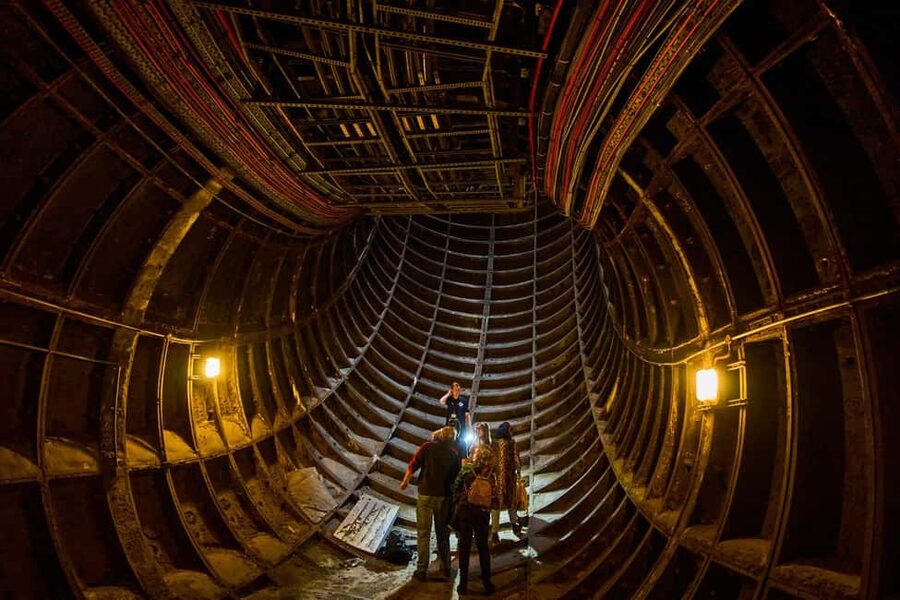
The tour saves a lot of its wow factor for the ventilation story. You step into large ventilation tunnels behind Green Park’s platforms, where air cooling helps support the Victoria and Jubilee lines. It’s one of those behind-the-scenes engineering realities that most people never think about while they’re waiting for a train.
The spaces are described as impressive, and that makes sense. Ventilation infrastructure has to be big enough to do real work, so it often creates dramatic volumes underground. Even if you’re not an engineering person, you’ll probably appreciate how practical design creates this hidden world of corridors and airflow paths.
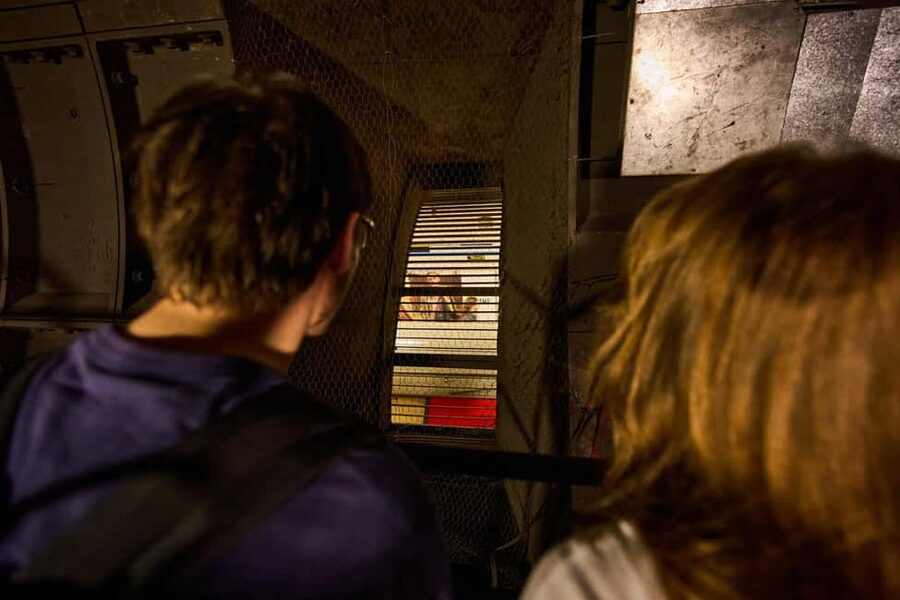
The tour also includes a viewpoint into a secret ventilation shaft, where you can peer down at Tube trains through an area that is normally closed. That kind of angle is hard to replicate elsewhere. It also gives you an odd feeling in a good way, like you’re watching the Underground from its maintenance perspective rather than a rider’s perspective.
What you should pack and watch for before going underground
This tour is very specific about what helps you have a good time, and it’s worth respecting. You’re advised to bring passport or ID, comfortable shoes, and water. You should also expect varying temperatures underground, so dressing in layers is a smart move.
Open-toed shoes are not allowed. Food and drinks are also not allowed. Luggage or large bags are not allowed, which keeps the tour flowing since you are moving through constrained spaces.
One other note that matters for your comfort: the route includes low lighting, stairs, and uneven ground, and there are no elevators. If you struggle with stairs or uneven footing in general, you’ll likely find this tour tiring, even if you can physically walk it.
Who this tour is best for, and who should skip it
This experience is a great fit if you want authentic, physical history tied to how London’s transit works. It suits adults and older teens who are comfortable exploring constrained underground spaces and enjoy wartime and infrastructure stories.
It is not suitable for:
- Children under 10
- People with mobility impairments
- Wheelchair users
- People with claustrophobia
- People with respiratory issues
There’s also a child-to-adult ratio limit: a maximum of four children aged 10 to 15 per adult. So if you’re bringing teens, plan around that cap.
If you’re unsure about claustrophobia or breathing comfort, treat this as a serious consideration. “Hidden” usually means tight and closed off, and this tour explicitly includes stairs, low lighting, and underground passageways.
Value check: is $62 worth it for 80 minutes?
At $62 per person for 80 minutes, the value depends on what you care about. If you want a standard guided walk with photos on famous streets, this might feel expensive for the time. But if you want access to closed station spaces, that price starts to make sense quickly.
You’re paying for:
- Guided access to Dover Street station areas that are normally closed
- Time inside lift landings and passageways
- Wartime stories that connect infrastructure to decision-making during air raids
- Original vintage signs and tiles
- Access to ventilation tunnels plus a secret ventilation shaft viewpoint
It’s also a guided experience run by the London Transport Museum, and the tone described by recent guests focuses on keeping you engaged and organized while navigating behind the scenes. That kind of human guidance matters in low-lit, stair-heavy spaces, because it keeps the experience smooth and safe.
Final call: should you book the Green Park Hidden Tube tour?
Book this tour if you enjoy real infrastructure history, you’re comfortable with stairs and uneven, dim underground spaces, and you want to see details like vintage signage, tiles, and the ventilation system that riders never notice.
Skip it if you need step-free access, you get anxious in enclosed spaces, or you know respiratory conditions make underground air quality and tight areas a problem. Also skip it if you don’t like dirty, gritty underground environments, since parts of the route are described that way.
If you’re trying to choose between seeing London’s surface sights and stepping into the Tube’s backstage layers, this one leans hard toward backstage access. And when it clicks, it makes Green Park feel like a whole different place.
FAQ
Where is the meeting point for the Green Park Hidden Tube tour?
You meet outside the Buckingham Palace/Green Park exit at Green Park station, by the Diana Fountain.
What is the tour duration?
The tour lasts about 80 minutes.
How much does the tour cost?
The price is $62 per person.
What is included in the tour price?
You get a guided tour of Dover Street station, access to closed passageways and lift landings, wartime stories and historical insights, and views of secret ventilation shafts and corridors.
Is transportation included to and from the station?
No, transportation to and from the station is not included.
Can I bring food or drinks on the tour?
No, food and drinks are not allowed.
What should I wear and bring?
Wear comfortable shoes, and bring passport or ID and water. Open-toed shoes are not allowed.
Is the tour suitable for children?
It is not suitable for children under 10. There is a limit of four children aged 10 to 15 per adult.
Is the tour accessible for people with mobility impairments?
No. It is not suitable for people with mobility impairments, wheelchair users, or those who need elevators, since there are no elevators.
Can I take photos?
Photography is allowed, but flash photography is not permitted in certain areas.
Newest entries under London





London Tours & Experiences, compared.
Westminster to Greenwich River Thames Cruise
Read our review →
Magical London: Harry Potter Guided Walking Tour
Read our review →
Warner Bros. Studio Harry Potter Tour & Branded Bus
Read our review →