
Reviewed · WALKING TOURS
London Canary Wharf Walking Tour: Homelessness Revisited
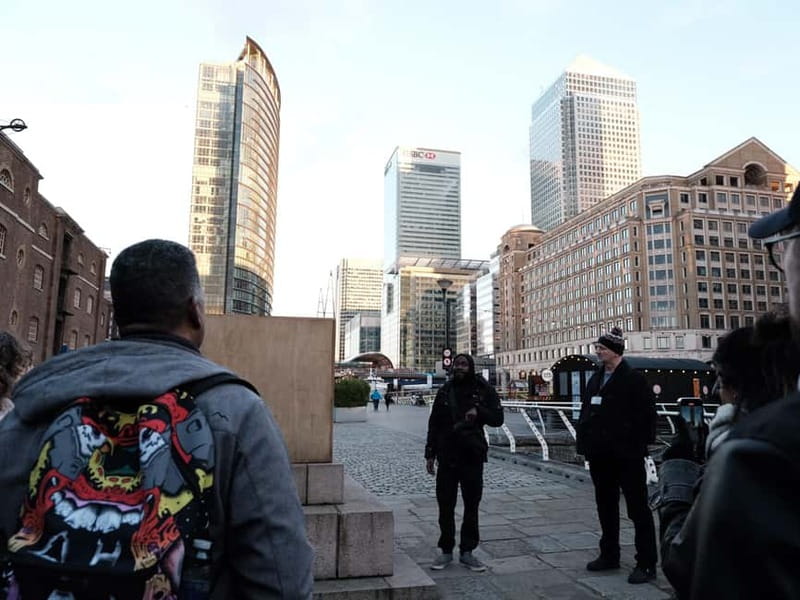
Canary Wharf has a human story hiding in plain sight. This 1.5-hour walking tour with Stefan takes you through Canary Wharf and West India Quay, where dockland trade, workers and masters, and homelessness all connect to the London skyline you see today.
I love two things right away. First, the way you get the docklands story in real locations, including how West India Quay got its name and why the area became London’s business hub. Second, Stefan brings the conversation down to earth with his own experience of homelessness, so you’re not just learning terms, you’re understanding conditions.
One consideration: this tour deals with heavy topics, so if you want a purely light photo-walk, you may find the mood more serious than expected. Bring comfortable shoes and expect some emotion.
In This Review
- Key things I’d put on your radar
- Canary Wharf from Street Level, Not Boardroom Talk
- How West India Quay Got Its Name, and Why It Matters
- The Transatlantic Slave Trade, and the Docklands Economy Behind It
- Old Warehouses, Dock Lodgings, and the Shape of Power
- Workers, Masters, and the Unequal Reality of Contract Work
- Stefan’s Story: Homelessness Revisited, in Human Terms
- Price and Value: Why $29 Feels Fair Here
- Timing, Pace, and What to Wear (You’ll Thank Yourself Later)
- Who This Tour Is For (and Who Might Prefer Something Else)
- Should You Book This Canary Wharf and West India Quay Tour?
- FAQ
- How long is the London Canary Wharf walking tour?
- How much does the tour cost?
- Is the tour in English?
- What areas does the tour cover?
- Does Stefan share personal experience related to homelessness?
- Is the tour wheelchair accessible?
- Is the tour pet friendly?
- What should I bring to the tour?
- Is smoking allowed during the tour?
- Can I book and cancel with flexibility?
Key things I’d put on your radar
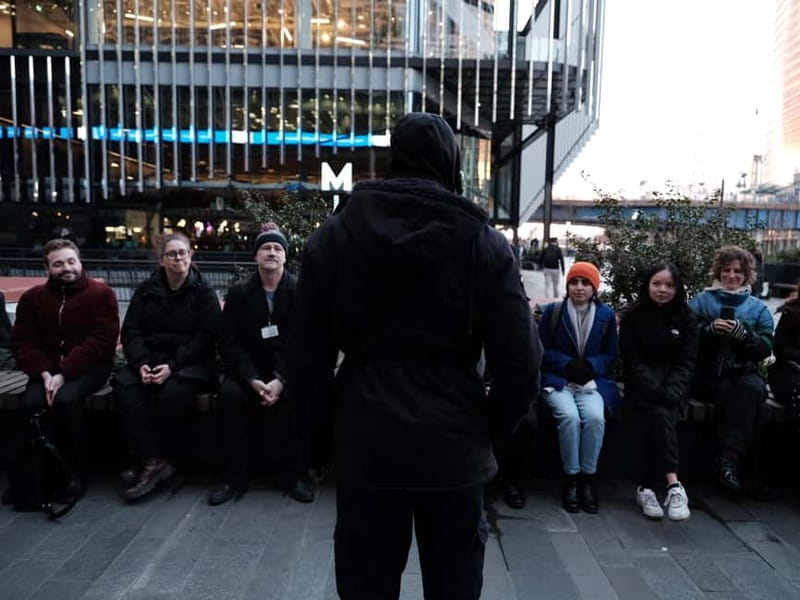
- Stefan’s personal lens on homelessness: he connects dock work and contract work to the reality of temporary housing.
- West India Quay, explained in context: you learn why it got its name and what trade routes shaped the area.
- Transatlantic slave trade in London’s building story: the tour shows how this trade helped fund and shape the docklands economy.
- Workers versus masters, made visible: you walk away with a sharper sense of unequal living and working conditions.
- You’re supporting a social mission: Unseen Tours is not-for-profit, and ticket income helps train and empower guides with lived experience of homelessness.
Canary Wharf from Street Level, Not Boardroom Talk
Canary Wharf today looks like a straight line of glass towers and sleek plazas. This tour flips that viewpoint and gives you a different kind of landmark: the docks and the trade that built the area, plus the people whose lives were shaped by the system.
What makes this work so well is the pairing of place and story. You’re not stuck in facts floating above street level. Instead, you’re walking between older industrial spaces, dock-adjacent buildings, and the kinds of sites where global commerce happened. That physical walk matters because it helps you understand how London’s economic power was created, piece by piece, block by block.
If you’re the type of traveler who thinks history is more than plaques, you’ll likely enjoy the pace. It’s structured enough to stay focused, but it also leaves room for questions and extra context. And Stefan makes the experience feel personal without turning it into a performance.
More Guided Walking Tours in London
- Magical London: Harry Potter Guided Walking Tour
★ 4.7 · 22,044 reviews - London: The Original Jack the Ripper Walking Tour
★ 4.7 · 7,833 reviews - London: Harry Potter Movies Walking Tour (Kids Go Free)
★ 4.7 · 3,071 reviews
How West India Quay Got Its Name, and Why It Matters
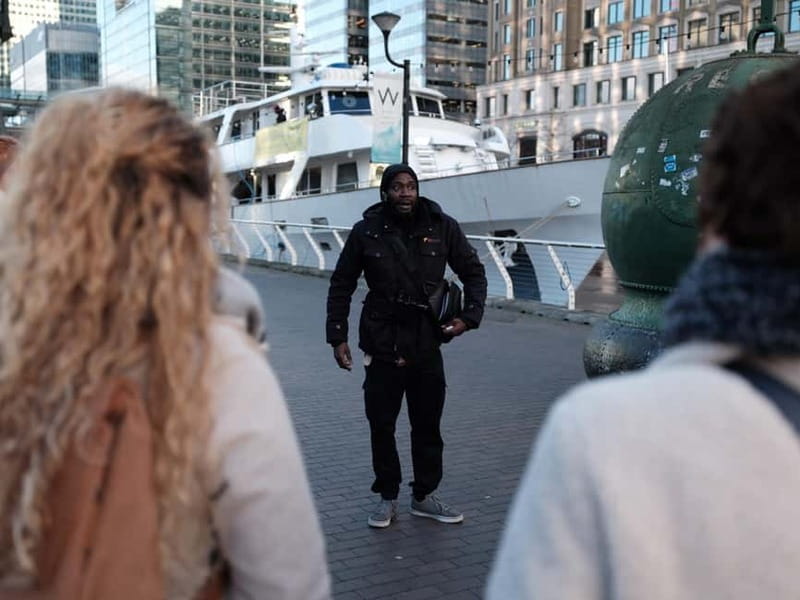
One of the first “wait, that makes sense” moments comes when you learn about the origins of West India Quay. The name points to trade connections, and the tour links that naming to how the docks functioned as London’s link to global routes.
That might sound like trivia, but it’s not. Names often act like shortcuts through the past. On this walk, the name becomes a clue to the kind of commerce that fed the docklands economy and, ultimately, the wider city. You start to see how the area’s identity was shaped by the flow of goods, money, and power.
And because you’re walking the waterfront and dock-adjacent streets, the story feels grounded. You can look at the spaces where activity clustered and picture how the trade system worked, especially once the tour starts talking about who lived near the docks and who controlled the work.
The Transatlantic Slave Trade, and the Docklands Economy Behind It
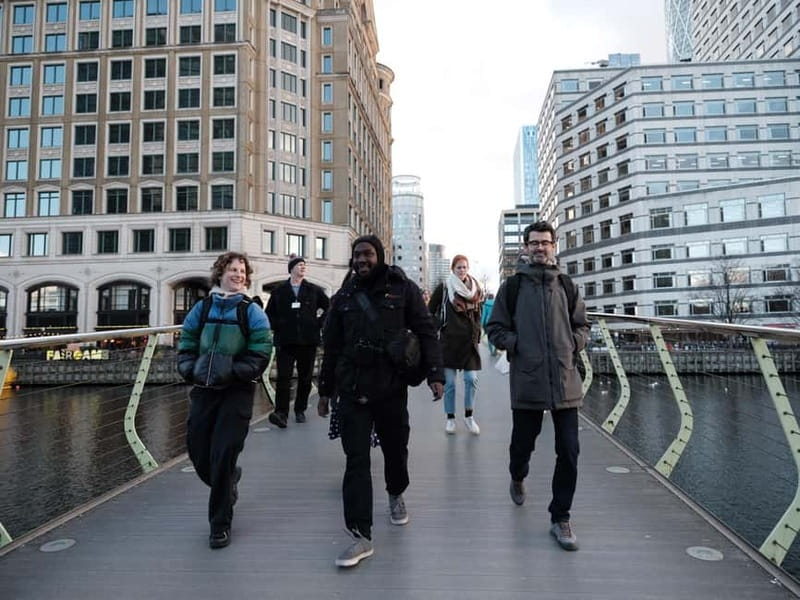
This is the part of the tour that you should mentally prepare for. The tour addresses the transatlantic slave trade and explains how it played a significant role in building London.
The value here is not just knowing it happened, but seeing how it connects to local development. The tour frames the docklands as part of a wider commercial machine. That machine created wealth, and that wealth was tied to the infrastructure and capital that shaped parts of London, including the trade-heavy areas you’re walking through.
I appreciate that the tour doesn’t treat this as an isolated topic. It stays connected to the docks, warehouses, and labor system. You leave with a clearer sense of how historical harm can be part of a city’s visible growth, even when the present-day skyline feels clean and corporate.
Old Warehouses, Dock Lodgings, and the Shape of Power
One reason Canary Wharf can feel so “new” is how aggressively it markets modern business life. This tour counters that by steering you toward what’s older and what still hints at the former dock world.
You’ll hear about old warehouses used for industrial global trade. You’ll also learn about the lodgings of dockworkers and their masters, and how the contrast in living conditions was built into the dock system.
In practical terms, it changes how you look around. Instead of seeing blank walls or leftover industrial edges, you’re more likely to notice the logic of separation. Who had proximity to work? Who had better access? Who had stability, and who had uncertainty?
The tour also points out walled remains of a blazing fire. That detail helps you understand the area as something that wasn’t always orderly. Fires, risk, and harsh working conditions were part of dock life. When you connect those realities to global trade, you get a fuller picture of how high-stakes commerce shaped everyday human experience.
More British streets at boot pace:
- London: The Great British Rock and Roll Music Walking Tour★ 4.9 · 1,783 reviews
- London: Harry Potter Walking Tour in German★ 4.8 · 1,505 reviews
- London: Jack the Ripper Evening Walking Tour★ 4.9 · 1,449 reviews
- London: Street Art and Graffiti Guided Walking Tour★ 4.9 · 1,354 reviews
Workers, Masters, and the Unequal Reality of Contract Work
As the walk continues, the story shifts from trade and structures to people and systems. The tour explores the contrasting conditions of workers and dockmasters, which makes the dock world feel less abstract.
Then Stefan adds another layer: he brings in insight into homelessness as part of the reality facing people tied to precarious work. The tour doesn’t just mention homelessness as a headline issue. It frames it alongside the difficulties of contract work and the hidden nature of temporary housing.
That pairing is powerful because it helps you understand homelessness as something that can be shaped by employment instability, not just a personal failure. You start to see how someone can lose stability gradually, bounce between options, and still remain unseen by those who only notice the polished parts of the city.
If you’ve ever wondered why some people are visible in public but not “in the system,” this tour offers a way to think about that. It’s not a tidy story. It’s a set of pressures that can stack up until housing security collapses.
Stefan’s Story: Homelessness Revisited, in Human Terms
The heart of this experience is Stefan himself. He’s a local guide, born in Lambeth and raised in Peckham, and he represents people on the autism spectrum. He also became interested in Canary Wharf and West India Quay through a competition hosted by Theatreship where he spoke about the Docklands.
Those details matter because they explain why the tour feels personal. Stefan isn’t presenting a generic script. He’s talking about streets he knows and a history that still affects how people move through London.
Most importantly, he recounts his own experience of homelessness. That means the tour can talk about different types of homelessness and living conditions, instead of sticking to one stereotype. You’ll also hear about the barriers involved in temporary housing and poor living conditions.
This is the part where you should go in with an open heart and a steady head. The content is emotionally heavy, but it’s also practical. It helps you understand what people face day to day, and it pushes the conversation away from judgment and toward awareness.
It also stays engaging in a real human way. In conversation, Stefan answers questions and happily expands on topics. If you’re the type who likes asking “why” and “how did that work,” you’ll probably enjoy the back-and-forth.
Price and Value: Why $29 Feels Fair Here
The tour costs $29 per person for about 1.5 hours. For central London, that’s not a bargain bus fare, but it’s also not “pay for a view” money. Here, you’re paying for three things at once:
- A guided walk that connects Canary Wharf, West India Quay, and dockland history in place.
- A personal story about homelessness that adds context you won’t get from a standard walking tour.
- A social mission that supports vulnerable people who want to become guides.
Unseen Tours is a not-for-profit social enterprise. Their mission is to support and empower individuals with experience of homelessness by training them to guide and giving them a platform to speak with authority. The tour ticket helps guides earn a living, and the majority of sales go directly back to them.
On top of that, donations added at checkout help train more vulnerable people to become tour guides and challenge stigma around homelessness. In other words, your money doesn’t just fund narration. It supports the people delivering the narration.
If you care about value that does something, this is one of those tours where “fair price” makes sense.
Timing, Pace, and What to Wear (You’ll Thank Yourself Later)
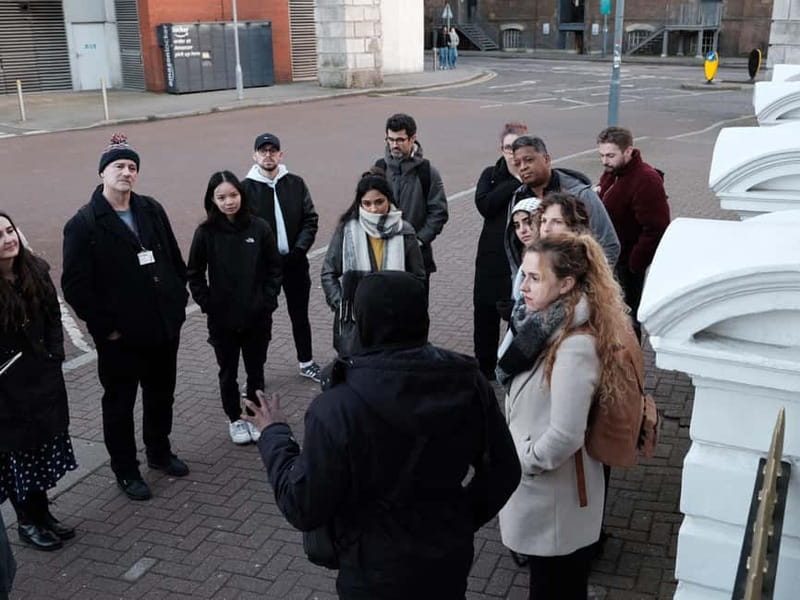
This is a 1.5-hour walk, in English, led live. That length is a sweet spot: long enough to connect dots across the docks story, short enough that you can still keep the rest of your day flexible.
You’ll want comfortable walking shoes. Dock-adjacent paths can be uneven, and you’ll likely pause for explanations and photographs. It’s also all-weather. London loves plot twists, so pack accordingly.
Bring water, and bring a camera if you like history-through-architecture shots. The tour focuses on old structures and what remains, so you might want to capture details rather than just skyline selfies.
One small rule: smoking is not allowed. Easy to follow, but it’s good to know upfront.
Accessibility is also part of the planning. The tour is wheelchair accessible upon request, and a wheelchair or mobility scooter can be accommodated if arranged.
If you’re traveling with a pet, the tour is pet friendly as well.
Who This Tour Is For (and Who Might Prefer Something Else)
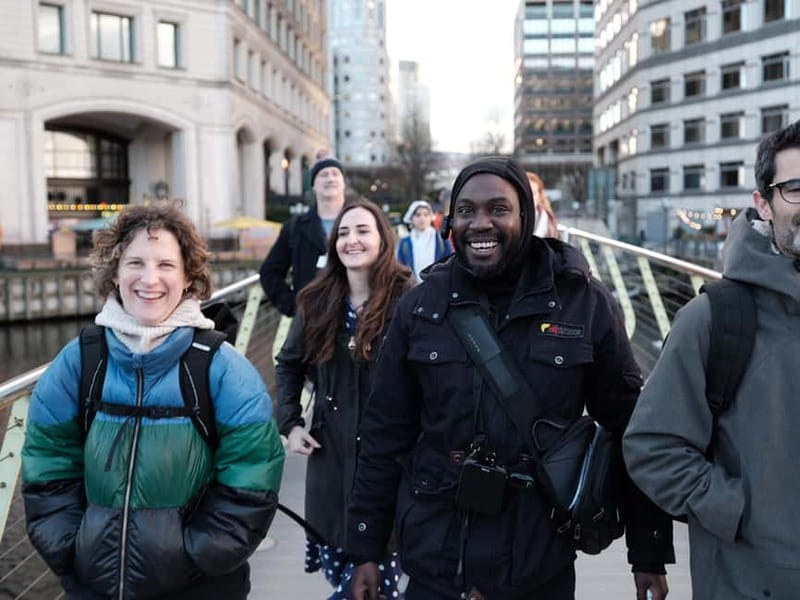
This is a great match if you want London that goes beyond office towers. You’ll likely enjoy it if you like:
- Place-based history tied to real streets
- Stories about labor, power, and inequality
- Human-scale discussions about homelessness that go past headlines
It’s less ideal if you’re hoping for a purely scenic, cheerful stroll with minimal emotion. The topic of homelessness is central, and the transatlantic slave trade is addressed directly. If those subjects make you shut down, you might find the tone heavy.
But if you want to understand the city as it actually is, including the parts shaped by trade, workers, and unequal living conditions, this tour has a lot to offer.
Should You Book This Canary Wharf and West India Quay Tour?
Yes, if you want a guide-led walk that connects Canary Wharf’s rise to dockland trade, unequal labor, and the realities of homelessness. Stefan’s personal story gives the historical material weight, and the setting makes the lessons stick.
Book it especially if you like tours where your questions matter and the guide can explain more when you ask. And if you care about spending money that supports a not-for-profit mission, this is one of the cleaner value stories in London.
Skip it only if you strongly prefer light, non-emotional sightseeing. Otherwise, come with comfortable shoes, a willingness to listen, and the mindset that London’s most important stories are sometimes hiding in plain sight, just a few streets from the glass.
FAQ
How long is the London Canary Wharf walking tour?
It lasts about 1.5 hours.
How much does the tour cost?
The price is $29 per person.
Is the tour in English?
Yes, the live tour guide speaks English.
What areas does the tour cover?
You’ll explore Canary Wharf and West India Quay, including the docks and dockside history.
Does Stefan share personal experience related to homelessness?
Yes. Stefan recounts his own experience of homelessness and shares insight into different types of homelessness and living conditions.
Is the tour wheelchair accessible?
It is wheelchair accessible upon request.
Is the tour pet friendly?
Yes, it is pet friendly.
What should I bring to the tour?
Bring comfortable walking shoes, a camera, water, and weather-appropriate clothing.
Is smoking allowed during the tour?
No, smoking is not allowed.
Can I book and cancel with flexibility?
You can reserve now and pay later, and you can cancel up to 24 hours in advance for a full refund.
Newest entries under London





Walking Tours, compared.
Magical London: Harry Potter Guided Walking Tour
Read our review →

University and City Walking Tour with Alumni Guide
Read our review →
Harry Potter Movies Walking Tour (Kids Go Free)
Read our review →
The Great British Rock and Roll Music Walking Tour
Read our review →

Harry Potter Walking Tour Including New College
Read our review →Browse the lists this tour appears in