
Reviewed · HISTORICAL TOURS
Liverpool: Theatrical History Tour and The Dead House
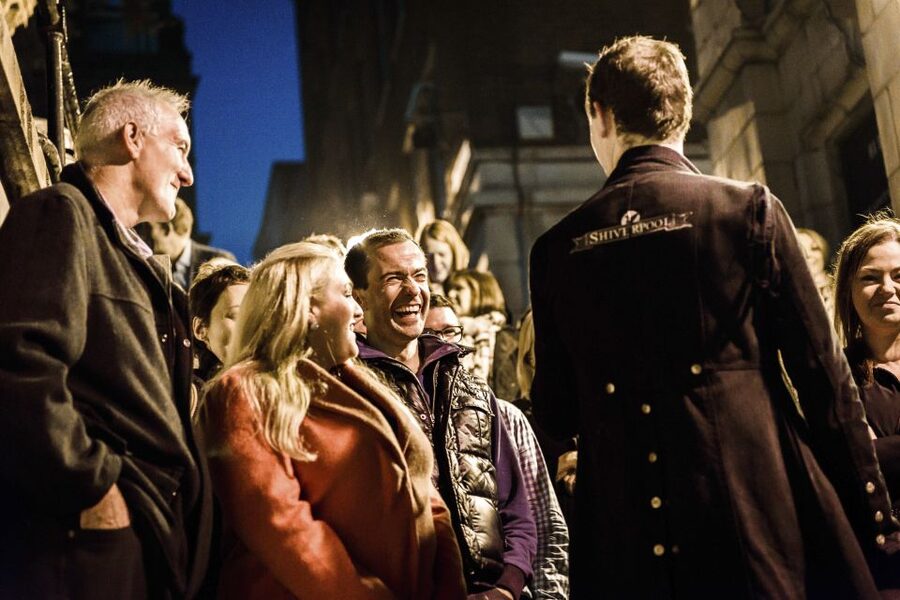
Liverpool has a talent for turning the creepy into comedy, and this tour leans hard into that mix. I love the way the guides use theatrical street-staging to make the city feel like a living set, not a textbook. I also love the payoff at the end, when you get exclusive access to the underground morgue called the Liverpool Dead House.
One big consideration: this experience is not for everyone. If you have limited mobility, vision concerns, or you are easily upset, you may want to skip it since the underground part is not wheelchair accessible and is not designed for delicate dispositions.
In This Review
- What makes this tour worth the $26 price tag
- Key highlights you will actually feel during the walk
- Starting at Queen Victoria Monument, Derby Square, and what to do right away
- Liverpool Town Hall and Nelson Monument: where the drama starts to take shape
- Castle Street banking halls and the “seven streets” feeling
- Crooked alleys, lamp-lit lanes, and the commercial district shift
- The medieval garden boundary and the Gothic spire trapdoor moment
- Entering The Dead House morgue: Melville’s name and the iron grates
- Guide style, humor, and how to get the most out of the performance
- What is included, what you must bring, and what it costs in real terms
- Where the tour ends: 5 Old Churchyard and your next move
- Who should book, and who should skip this Dead House style night
- The quick decision guide: should you book this tour?
- FAQ
- Where is the meeting point for the Liverpool Theatrical History Tour and The Dead House?
- How long is the tour?
- What is the tour price?
- What does the tour include?
- What should I bring with me?
- What is the tour language?
- Is the tour suitable for wheelchair users?
- Are unaccompanied minors allowed?
- Are guide dogs allowed?
- Can I cancel and get a refund?
What makes this tour worth the $26 price tag
At $26 per person for about 1.5 hours, you are paying for more than walking and facts. You’re buying a scripted, character-led performance plus time in a closed-for-over-a-century underground space, which is a rare kind of access in Liverpool.
The tour also starts right where the city feels most alive, at the Queen Victoria Monument in Derby Square. Then you move through a mix of grandeur and grime, from the soaring Town Hall vibes to tighter lanes that feel like they were built for whispering secrets.
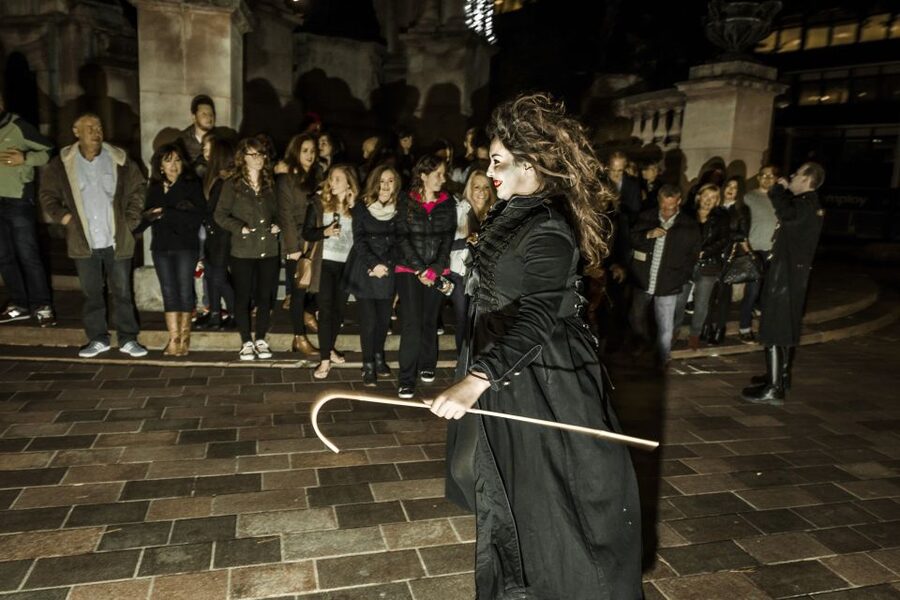
And yes, there is plenty of humor along the way. In the best moments, you can feel the guides pulling you into the story, including audience participation and a classic two-person double act style, with one guide named Jo showing up in multiple accounts as a standout performer.
Key highlights you will actually feel during the walk
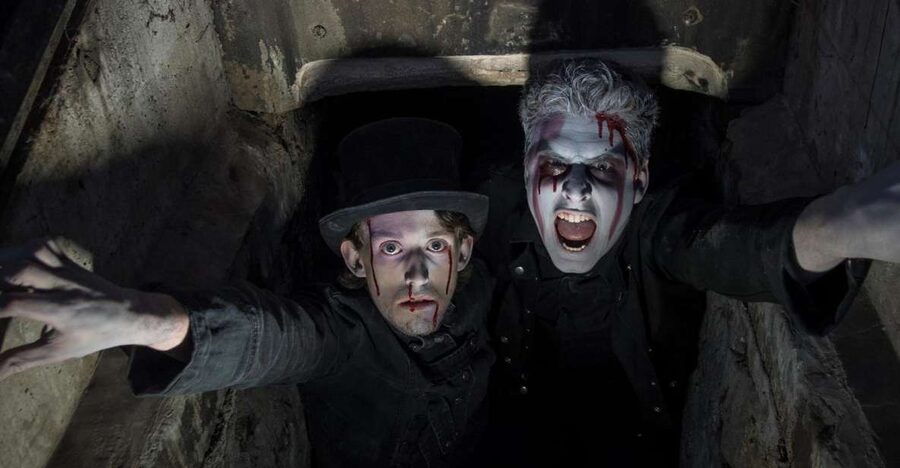
- Exclusive entry to The Dead House, including a trapdoor descent into the underground morgue setting
- Original street route energy, built around Liverpool’s early street layout and memorable stops like Castle Street area banking halls
- Theatrical storytelling with audience involvement, not just passive standing and listening
- Two-tone sightseeing, moving from big civic buildings like the Town Hall to darker, narrower back alleys
- A strong finale at the medieval garden boundary, under a Gothic spire area at the end of the experience
- A photo-friendly cast moment, especially around the Dead House atmosphere near the end
More centuries walked in an afternoon:
- Liverpool: Haunted History Guided City Tour
★ 4.9 · 404 reviews - Liverpool: A Walk Through Time: Full History Walking Tour
★ 4.8 · 184 reviews - Liverpool: St James’ Cemetery Historical Ghost Tour
★ 4.9 · 169 reviews
Starting at Queen Victoria Monument, Derby Square, and what to do right away
The tour meets at Queen Victoria Monument, Derby Square. I like this because it is central, easy to find, and it gives you a quick orientation before the guides steer you into the older, darker streets.
You are on a timed walking route right from the start, with short guided walks before your first major landmark stop. That means you should show up ready to move and be present. If you are the type who waits until the third stop to get your bearings, this tour may feel like it is already building momentum without you.
Also, plan for low-light moments later. The tour does not provide torches, so if you forget yours, you will have a problem. Bring a torch that works and that you can hold comfortably, since you will need it for the underground scene.
Liverpool Town Hall and Nelson Monument: where the drama starts to take shape
One of the smartest things this tour does is open the story with big, recognizable civic architecture before it heads into the grim stuff.
You get a guided stop at Liverpool Town Hall, which is described as regal and opulent. This matters because it creates contrast. When your guide later points out crooked lanes and darker corners, it lands harder because you have already seen the city at its showy best.
You also visit the Nelson Monument. It is a quick stop in the flow, but it helps anchor you in Liverpool’s public identity, the side of town that looks confident and permanent. Then the guide shifts tone, and you start sensing why the city is so good at ghost stories that are still grounded in real places.
Short walks between stops keep it snappy. If you want a slow, reflective stroll where you read every plaque, this may feel a bit too staged and paced for you. The tradeoff is that you are kept moving, and the story beats keep landing on time.
Castle Street banking halls and the “seven streets” feeling
A key part of the experience is exploring Liverpool’s original street layout, often framed around the first seven streets. This is where you start seeing why the city developed the way it did, and why certain buildings feel like they are watching the street.
You also get mention of the lofty banking halls of Castle Street, which adds a sharp economic edge to what might otherwise feel like a purely spooky show. You are not only learning about death. You are learning about power, money, and how ordinary people moved through the city in earlier centuries.
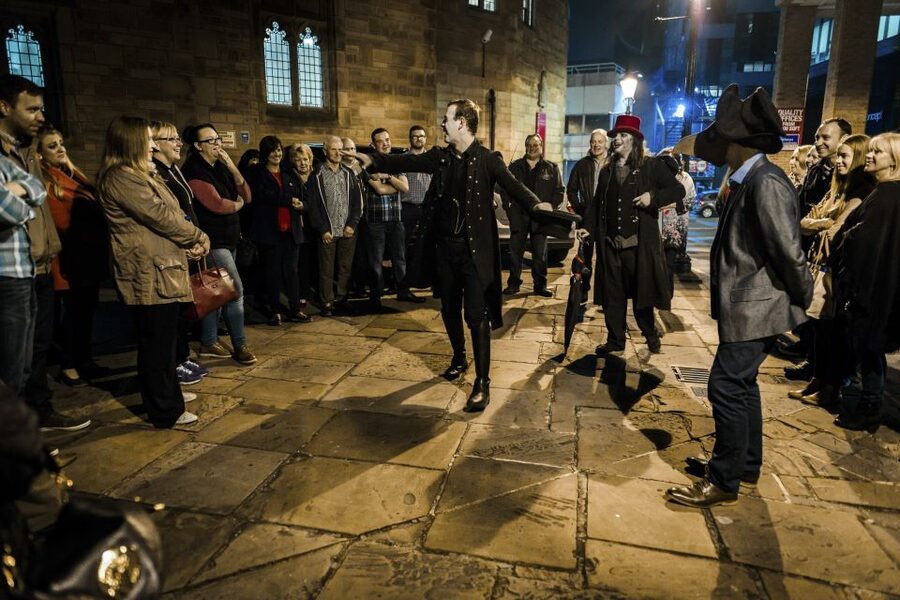
This section is also where the guide’s street theater technique really matters. The city’s streets are narrow enough that performance reads well. Your brain naturally connects the corners, shadows, and facades. The result is a route that feels cinematic without needing special sets.
Also inked in under Liverpool
- Liverpool: Liverpool Football Club Museum and Stadium Tour★ 4.8 · 10,764 reviews
- Liverpool: City & Beatles Tour with Live Guide & Live Music★ 4.7 · 5,944 reviews
- Liverpool: The Beatles Story Ticket★ 4.7 · 4,197 reviews
- Liverpool: Sightseeing River Cruise on the Mersey River★ 4.4 · 4,153 reviews
Crooked alleys, lamp-lit lanes, and the commercial district shift
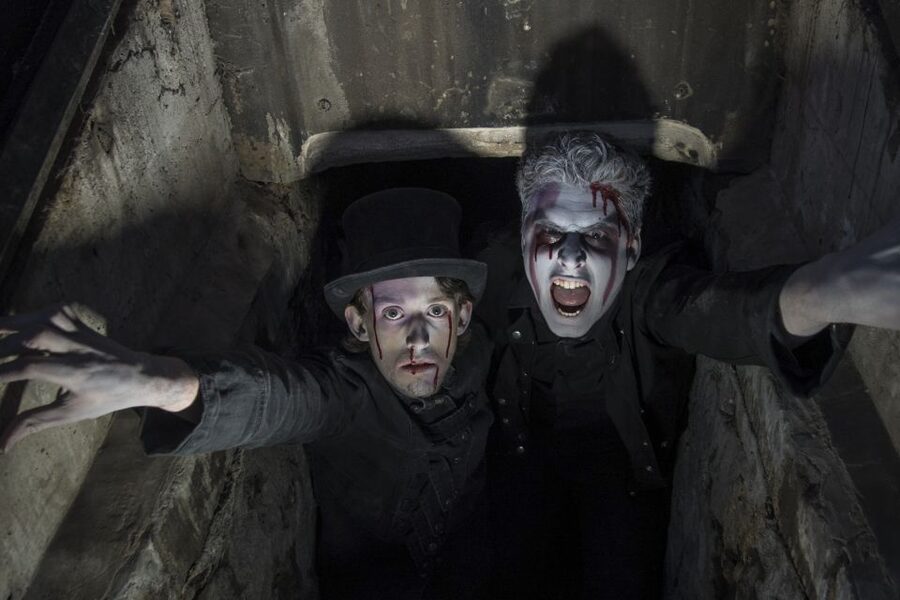
After the big landmarks, the tour transitions into crooked back alleys and lamp-lit lanes in the commercial district area. I like this because it changes the emotional temperature of the walk.
The guide uses the city’s layout like a script. Wider squares and proud buildings set up the tone, then you get squeezed into narrower lanes where the stories feel closer and more personal. It is the classic storytelling trick: make the route tighter, and the audience feels the tension.
At this point, expect the performance to pick up energy. Even the route itself becomes part of the staging. You will likely notice how quickly Liverpool’s older streets change in character from one block to the next, and that is the whole point of this tour format.
The medieval garden boundary and the Gothic spire trapdoor moment
The finale location is described as ending within the boundary of a medieval garden, hidden beneath a Gothic spire. Here is where the tone goes from eerie walking tale to something more physical, because the Dead House entry involves steps down into an underground space.
The entrance is through a trapdoor, and that is the kind of staging detail that turns the story from talk into event. You are not just hearing about the place. You are moving into it.
One more practical note: the underground location is not open to the public, and participants enter at their own risk. That means you should take the instructions seriously, use your torch where required, and listen if the guide points out how to move safely. If you are hoping for a relaxed, casual stroll here, this segment will feel more intense than the street sections.
Entering The Dead House morgue: Melville’s name and the iron grates
The Liverpool Dead House was named by American author Hermann Melville, and that fact sets a literary tone before you even reach the underground room. The name isn’t just spooky branding, it signals how grim this site has been considered for a long time.
Inside, you learn what the space was used for historically, including a temporary police station during World War II. That detail is useful because it grounds the setting. It is not only about death as spectacle. It is also about real civic function tied to difficult times.
You also hear how, in the 18th and 19th centuries, locals would come to peer through grim iron grates and look at the faces of the deceased. This is one of the most unsettling ideas on the tour, and it is also why this is not a gentle experience.
Then there is the physical atmosphere. Multiple accounts point to the build-up and the sense of ceremony as the cast guides you down and into the space. If you are looking for a pure ghost story with no realism, you might find the framing too fact-forward. If you like your spooky stories tied to real sites, you will probably enjoy how the guide makes the setting feel believable.
Guide style, humor, and how to get the most out of the performance
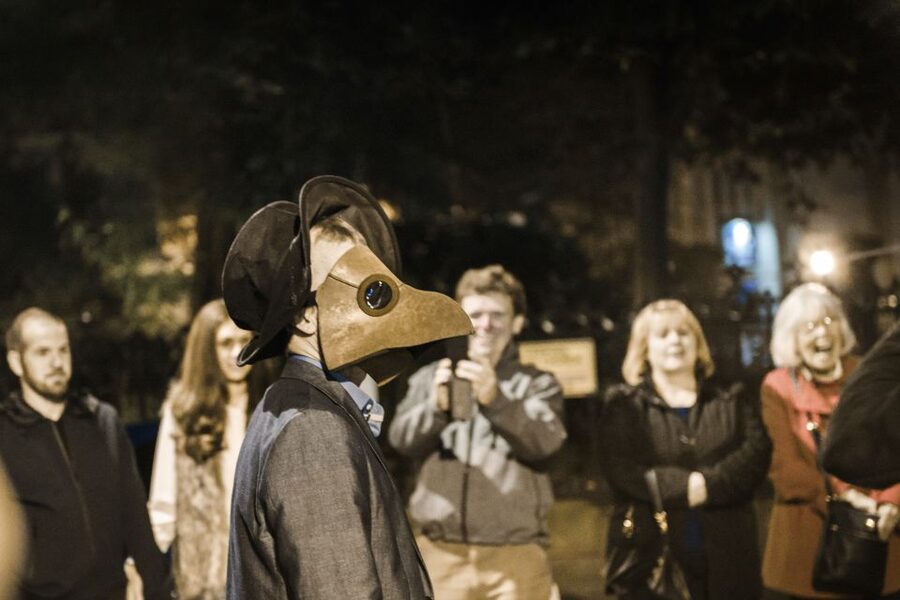
The most praised aspect across accounts is the guide performance itself. People consistently highlight theatrical, funny, and friendly hosting, with audience participation that feels more like playful involvement than a hard sell.
One reason this tour works is the pacing of the “story beats.” You get enough walking to keep your body moving, and enough stops to keep the show structured. The guides also seem to use character humor to soften the darker material, which is why the tour lands as entertaining instead of purely frightening.
If you want to maximize your experience, go in with a light attitude. This is not a museum lecture. It is street theater using real streets as staging. When your guide invites participation, lean into it. If you hang back and assume you are only there to watch, you will miss some of the fun.
Also, if you are traveling as a group, this format often plays well. People laugh together, photos happen near the finale, and the shared reaction makes the darker parts feel less heavy.
What is included, what you must bring, and what it costs in real terms
Included:
- Theatrical walking tour
- Exclusive access to The Dead House
Not included:
- Refreshments
- Torches
- Coffins
Now, about value. Yes, $26 can look like a lot for a walking tour until you remember the big-ticket element: exclusive access to an underground morgue that has been closed to the public for over a century. The price makes more sense when you treat this as a ticket to a staged experience plus limited access.
Duration is 1.5 hours, which is a good length for a night out. It is long enough to get a full arc, from civic grandeur to underground gloom, but short enough that you can still carry on afterward.
Also, it helps to know what you are stepping into. You will be on your feet for multiple guided walking segments, and you will go underground. If you are hungry, plan ahead, since refreshments are not included.
Where the tour ends: 5 Old Churchyard and your next move
The tour finishes at 5 Old Churchyard, Liverpool L2 8GW. That end point matters because it is not just a random drop-off. It puts you right near where you can keep the night going.
One popular suggestion from accounts is using the ending area to relive the vibe with live music. Since the finish is at the Old Churchyard address tied to a well-known pub stop, it is an easy next step without needing a taxi or complicated navigation.
If you want something practical, plan a short buffer after the tour. Underground entrances can take a moment to exit comfortably, and you will probably want time to regroup, especially if the story left a few nerves on high.
Who should book, and who should skip this Dead House style night
This tour is a strong fit if you:
- Like walking tours that feel like theater, not slideshows
- Enjoy Liverpool’s street character and want to see lesser-known, darker corners
- Want a night with humor and a real dose of eerie atmosphere
- Travel with friends who will laugh with you during the performance beats
It is not a good fit if you:
- Use a wheelchair or need full wheelchair accessibility (it is not wheelchair accessible)
- Have limited mobility or rely on easy routes through accessible spaces
- Have vision limitations, since it is not recommended for the visually impaired
- Prefer light, gentle entertainment only, since it is not recommended for those of a delicate disposition
If you are traveling with kids, it can be family-friendly, but all children must be accompanied by an adult, and unaccompanied minors are not allowed. That combination is important. Keep your group plan tight so you do not slow down the tour.
The quick decision guide: should you book this tour?
Book it if you want an evening where Liverpool’s streets become part of the show, and you specifically want the exclusive Dead House experience. The $26 price feels fair when you compare it to what you get: guided theater, multiple landmark moments, and underground access that most visitors never see.
Skip it if accessibility needs are an issue for your group, or if you would rather avoid underground spaces and dark material. This is not a mild ghost walk. It is a staged, fact-tied descent into a grim site, and it expects you to be comfortable following guidance.
If you do book, bring your own torch, arrive on time at Queen Victoria Monument, and show up ready for a guided performance where laughter is part of the rhythm.
FAQ
Where is the meeting point for the Liverpool Theatrical History Tour and The Dead House?
The meeting point is Queen Victoria Monument, Derby Square, Liverpool.
How long is the tour?
The tour duration is 1.5 hours.
What is the tour price?
The price is $26 per person.
What does the tour include?
It includes a theatrical walking tour and exclusive access to The Dead House.
What should I bring with me?
You must bring your own torch. Refreshments, torches, and coffins are not included.
What is the tour language?
The live tour guide language is English.
Is the tour suitable for wheelchair users?
No. The tour is not wheelchair accessible.
Are unaccompanied minors allowed?
No. Unaccompanied minors are not allowed.
Are guide dogs allowed?
Yes. Strictly Guide Dogs Only is the policy.
Can I cancel and get a refund?
Yes. Free cancellation is available if you cancel up to 24 hours in advance for a full refund.
Newest entries under Liverpool



Historical Tours, compared.

Westminster Abbey Tour with a Royal Heritage Guide
Read our review →
Browse the lists this tour appears in