Reviewed · LONDON TOURS & EXPERIENCES
Legal London: The Royal Courts of Justice and Inns of Court
Legal London has a strange pull. It takes you from Temple Church to the Royal Courts of Justice and explains how English common law still shapes daily life far beyond the UK. I especially like how the tour connects famous names to the exact streets and halls where they studied or argued, and I like the mix of big ideas with very specific traditions. The one thing to plan for is that this is a walking tour outdoors, so you need solid shoes and good weather clothes.
You’ll also get a guide who can pitch the day at your level. In small groups, that matters, because the stop-by-stop stories land better when you can ask questions. Still, it is not for everyone, since the format is not suitable for people with mobility impairments, and it is not pitched for younger kids.
In This Review
- Key takeaways before you go
- Why Temple and the Inns of Court still matter
- Starting at Temple Bar and getting your bearings
- Temple Church and the Magna Carta connection
- Inns of Court life: wigs, 70 dinners, and rowing to Westminster
- Middle Temple Hall: the Elizabethan legal power you can see from the outside
- Inner Temple Hall and Gardens, plus Shakespeare’s legal street theater
- Royal Courts of Justice: Queen Victoria’s Gothic Revival, and courts in session
- Lincoln’s Inn: prime ministers, Bleak House, and Tudor timber details
- Gray’s Inn, Staple Inn, and the corruption statue story
- Other Inns and churches that flesh out the legal map
- A few smart ways to get more out of the day
- Should you book this Inns of Court and Royal Courts of Justice tour?
- FAQ
- How long is the Legal London tour?
- Where do I meet the guide?
- Where does the tour end?
- How big is the group?
- Is the Royal Courts of Justice visit inside?
- Is Temple Church included, and can I go inside?
- Are food and drinks included?
- What should I bring?
- Is this tour suitable for people with mobility impairments or young children?
Key takeaways before you go
- Common law, traced street by street so the history feels practical, not abstract
- The Inns of Court setting where major legal careers actually took shape
- Temple Church and Magna Carta links shown through real medieval fabric
- Royal Courts of Justice in action where you can see courts at work
- Training traditions, with real-world details like wigs and the 70 dinners story
- A strong sense of London that is not the usual sights starting near Temple and ending at Chancery Lane
Why Temple and the Inns of Court still matter
If you think of law as paper and arguments, this tour gives you the missing layer: place. In and around Temple, the English legal system grew into something exportable. You hear how that common law spread across the world, with connections to the United States, India, Pakistan, Africa, Australia, and more. That global reach is the headline, but the real value is how it’s explained through buildings and routines.
The Inns of Court are the other big idea. These weren’t just fancy schools. They were training communities where influential people studied, worked, and built professional networks. You’ll see why the Inns became a hub for legal culture, not just a backdrop for famous judges.
Also inked in under London
- London: The London Eye Entry Ticket
★ 4.6 · 35,875 reviews - From London: Harry Potter Warner Bros Studio Tour
★ 4.7 · 26,588 reviews - London: Westminster to Greenwich River Thames Cruise
★ 4.5 · 22,836 reviews
Starting at Temple Bar and getting your bearings
The tour meets at Temple Underground in the Temple area, by Temple Bar Cafe near the station entrance. From there, you get moving quickly, with a short on-foot start before the guided portions. It helps to arrive a few minutes early, since you want to settle your shoes, camera, and water before the group tightens up.
This is priced at about $33 for a roughly three-hour walk, and the value comes from how much you cover for that time. You are not just seeing one building. You are moving through a cluster of historic legal sites and getting an explanation that ties them together, with a small group size limited to eight people. That small number makes a difference when you want clarity, not just facts dumped quickly.
Bring comfortable shoes and dress for the weather. The tour is outdoors and it is a lot of walking. If you struggle with long stretches on foot, this format is not the right match.
Temple Church and the Magna Carta connection
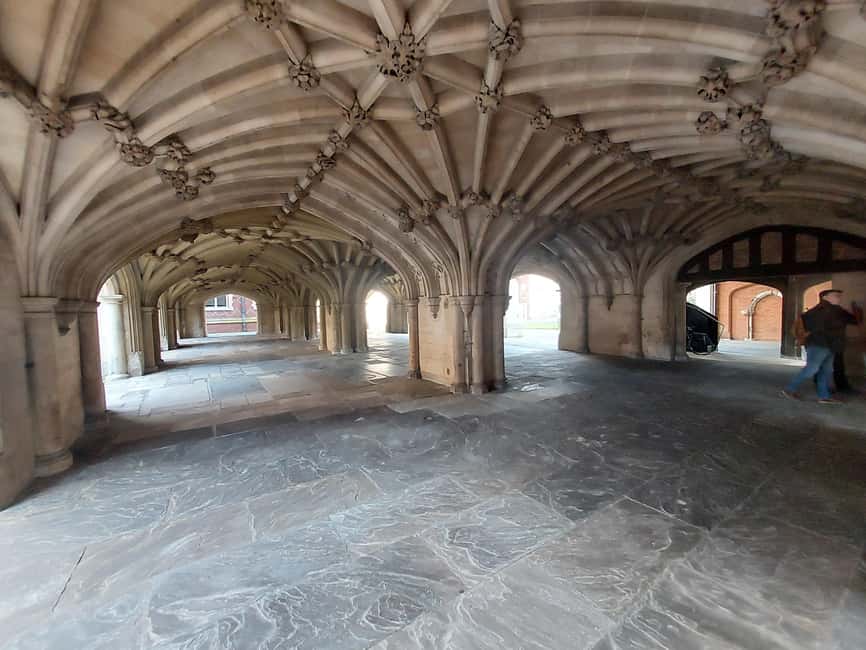
Temple Church is one of those stops that makes you slow down. It was built in 1162 and consecrated in 1185, and it carries deep medieval importance. The tour links it to King John during the Magna Carta negotiations, which instantly raises the stakes. This is not law as a modern concept. It’s law tangled with power, diplomacy, and the reality of medieval England.
What I like here is the way the guide uses the building to anchor the story. Instead of only hearing dates, you see a place that survived centuries of change. Even if you are not a legal-history person, the sheer age and continuity do the heavy lifting for you.
Temple Church is described as an outside visit during the main tour, with the option to visit afterward for a separate fee. That matters if you like to go inside places. If you want interiors, plan your timing so you have enough day left to add it.
Inns of Court life: wigs, 70 dinners, and rowing to Westminster
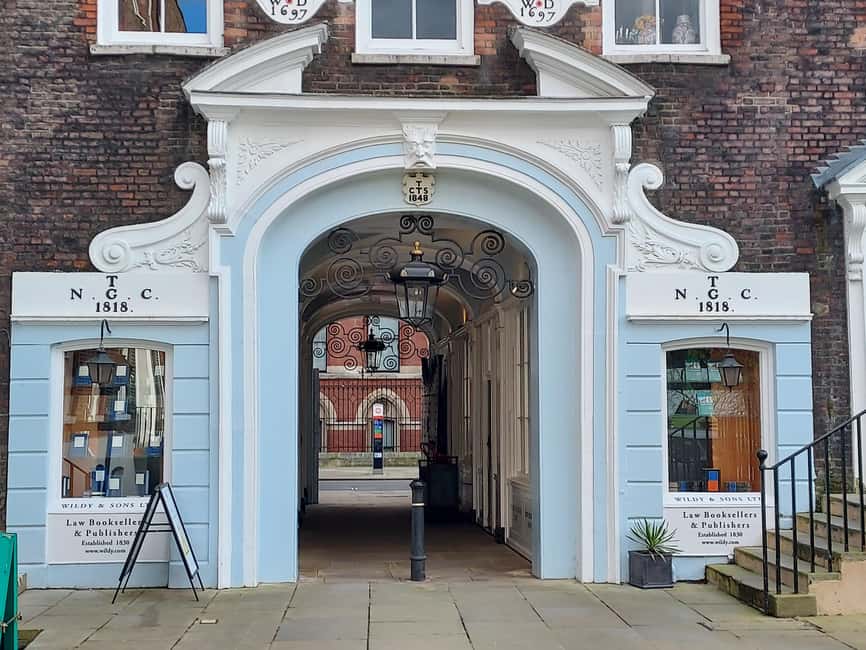
The tour’s humor is not random. It’s used to explain real traditions. Lawyers wearing wigs gets treated as more than a costume detail. You hear why the profession developed visible symbols and routines, and how those cues reinforced professional identity.
Then comes the 70 dinners story, tied to training requirements and the challenges faced by those trying to qualify. Helena Normanton is specifically mentioned in the tour material, including her misstep connected to the Middle Temple hall tradition and the need for those ceremonial dinners. It’s a sharp reminder that legal training was not always open in ways that match modern expectations.
Another tradition gives you a vivid sense of daily logistics: for about seven hundred years, lawyers traveled from this area in rowing boats, and later via steam ferries, to reach the courts at Westminster. That detail makes the whole area feel like a working system, not a museum district.
A page further on, still in London:
- Magical London: Harry Potter Guided Walking Tour★ 4.7 · 22,044 reviews
- London: Madame Tussauds London★ 4.6 · 20,915 reviews
- London: Warner Bros. Studio Harry Potter Tour & Branded Bus★ 4.7 · 19,194 reviews
- London: Tower Bridge Entry Ticket★ 4.7 · 15,560 reviews
Middle Temple Hall: the Elizabethan legal power you can see from the outside
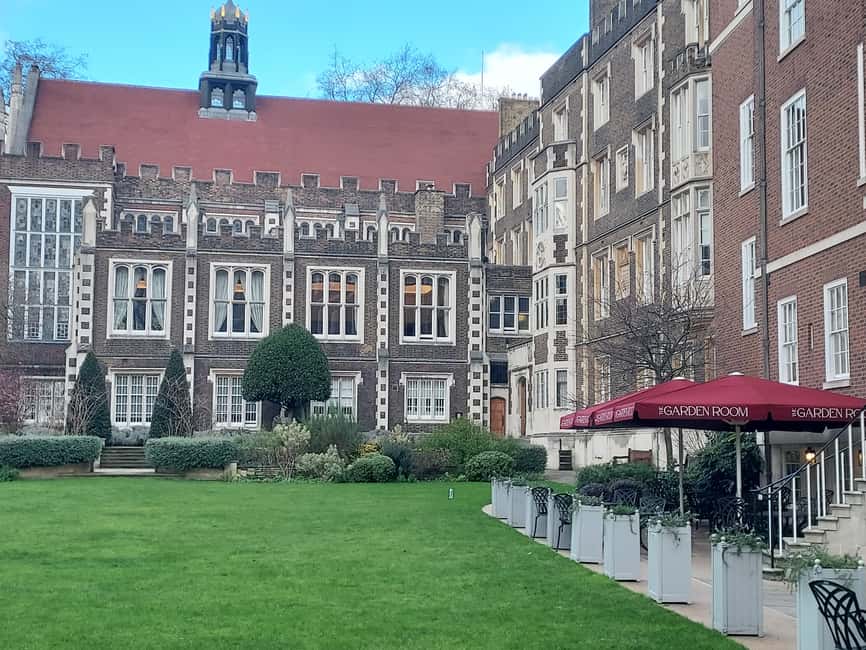
Middle Temple is the kind of stop that makes you realize how much authority can hide in plain sight. You see the Middle Temple gates and the hall area from outside. Middle Temple Hall dates to 1573, and it is described as the most perfect example of an Elizabethan building remaining in Central London.
That description is more than bragging. It’s the clue to what you’re looking for: a surviving piece of a specific architectural era, right in the heart of the city. When a building like this remains, it keeps the legal story grounded. You’re not just imagining what training looked like. You are standing in the shadow of it.
This is also where you get more of the training culture, including the dinner tradition referenced earlier. The point is not the food itself. It’s the gatekeeping, the rituals that signaled belonging, and the way halls created community and status at the same time.
Inner Temple Hall and Gardens, plus Shakespeare’s legal street theater
Next is the Inner Temple side: the hall and the gardens area, also mainly an outside look. The gardens stop is where literature gets practical. The tour connects Temple Gardens to Shakespeare’s Henry VI Part 1, which suggests the War of the Roses may have originated with the picking of red and white roses in the gardens. Even if you’re not chasing Shakespeare citations, it’s a fun way to connect the legal quarter to the creative world that flourished in London.
The Inns also link to performance history. You hear that Shakespeare’s company, the Lord Chamberlain’s Men, performed his plays in the Inns of Court. In one case, the performance supposedly provoked a riot. That’s the kind of detail that changes your mental picture. These places were about law, yes, but they were also public enough for drama, crowds, and trouble.
Royal Courts of Justice: Queen Victoria’s Gothic Revival, and courts in session
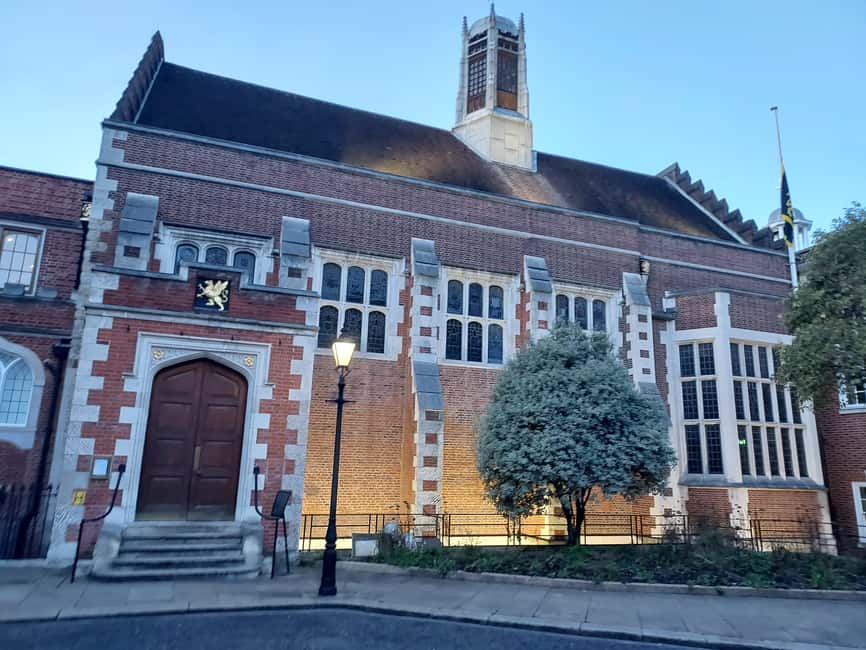
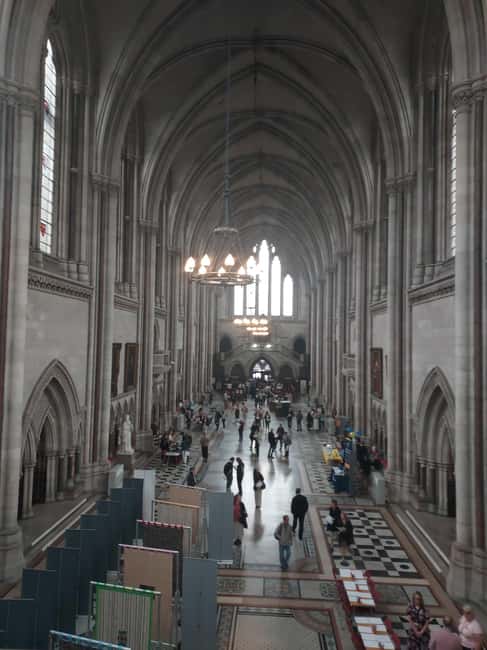
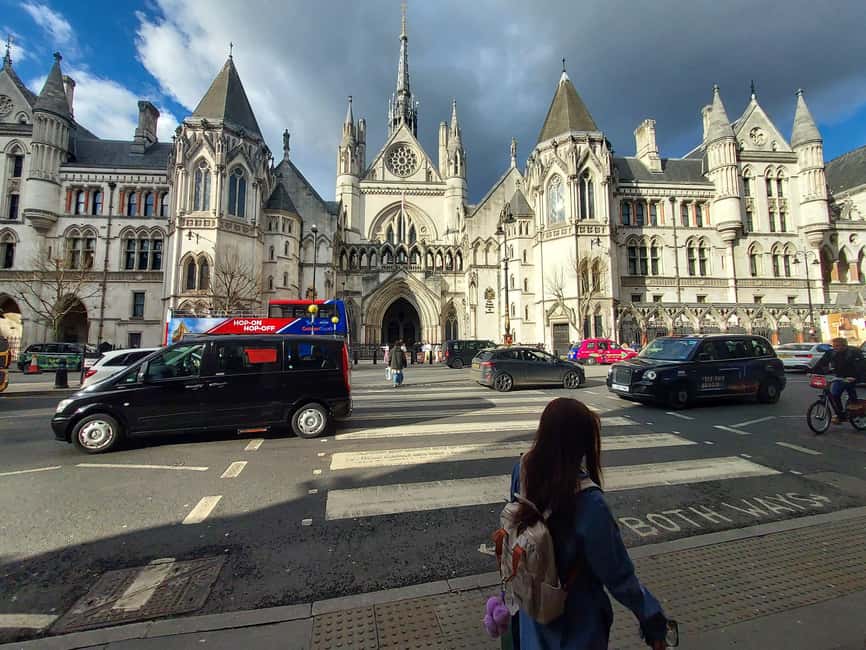
The Royal Courts of Justice is the big visual payoff. The building opened in 1882 by Queen Victoria, and it was originally designed to house 19 courts. Today it has around a hundred, which is a helpful reality check. One grand building can grow into a complex legal machine.
This stop is also different because you go inside, and you can see courts in action. That is a rare chance on a walking tour. You’re not only looking at history. You’re seeing the modern system working in a space built to project weight and authority.
If you like architecture, this is where your eyes will do extra work. The Gothic Revival look is not subtle, and the interior court feel matches the exterior ambition. If you’re less into architecture, you still benefit, because the guide ties the building’s design and scale to how legal work expanded over time.
Lincoln’s Inn: prime ministers, Bleak House, and Tudor timber details
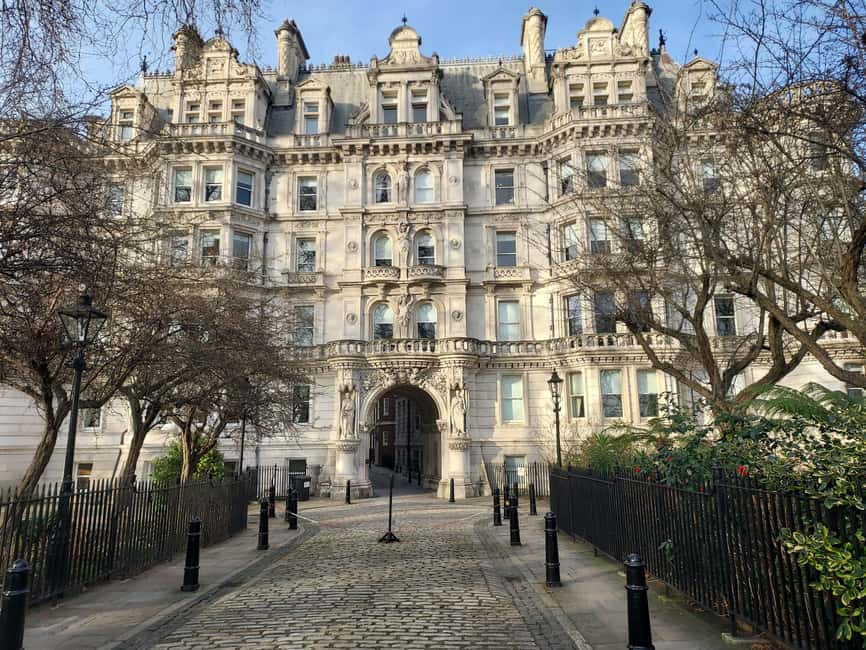
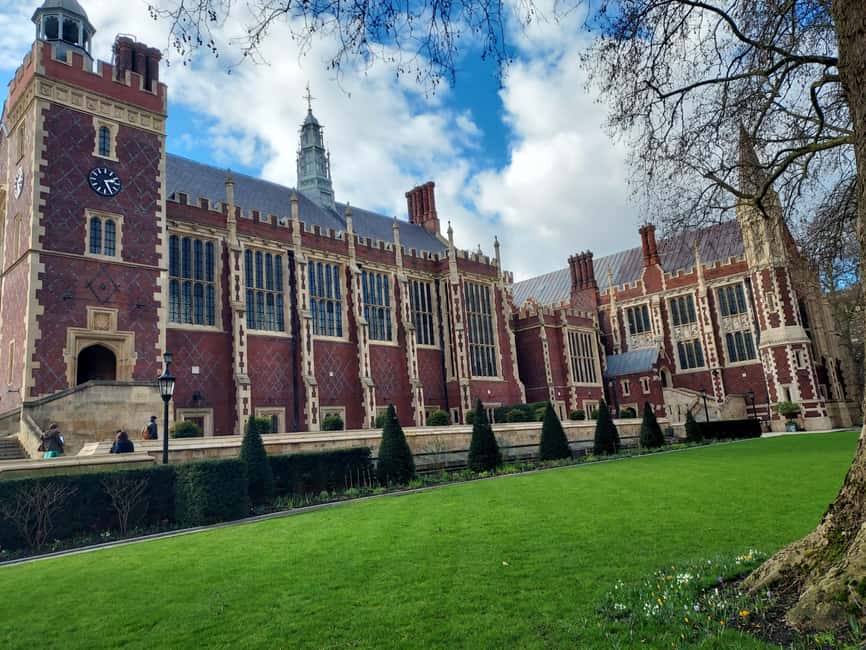
Lincoln’s Inn is another “big story in a specific location” stop. You hear it produced 15 prime ministers, including names like Tony Blair, Margaret Thatcher, Gladstone, and Disraeli. That kind of list helps you understand why Inns mattered politically, not only professionally.
The Old Hall is described as built around 1490, and it was used as a Court by the Lord Chancellor. The tour connects that setting to Charles Dickens’ Bleak House, which makes the site feel alive in literature, not just in law.
There’s also an architectural note: a leading architectural historian describes a Tudor timber framed building here as the best example in London. In plain terms, this is your chance to spot a Tudor-era structure without needing to travel outside the city core.
The practical value of this stop is perspective. You start to see how England’s legal system was tied to leadership and public life, not locked away from politics.
Gray’s Inn, Staple Inn, and the corruption statue story
The route continues through more legal-world corners, including Gray’s Inn and Staple Inn. Gray’s Inn’s hall is described as built in 1558, and you hear how the American Bar Association helped restore it after bomb damage. That restoration story adds a modern layer. The buildings aren’t just old. They were damaged and then repaired to keep the tradition going.
Then comes the darker footnote: the tour mentions a most famous former member who, as Lord Chancellor, was convicted of 23 cases of corruption. You also hear why there is a statue to him in the Inn’s central square. It’s a jarring detail, but it’s also the point. Legal history is not only hero tales. It includes failures, consequences, and the uncomfortable question of how public memory works.
The Dickens connection returns too. Charles Dickens worked here as an office boy. So across multiple Inns, Dickens shows up as a thread linking law, London life, and the people who learned their way through the city’s institutions.
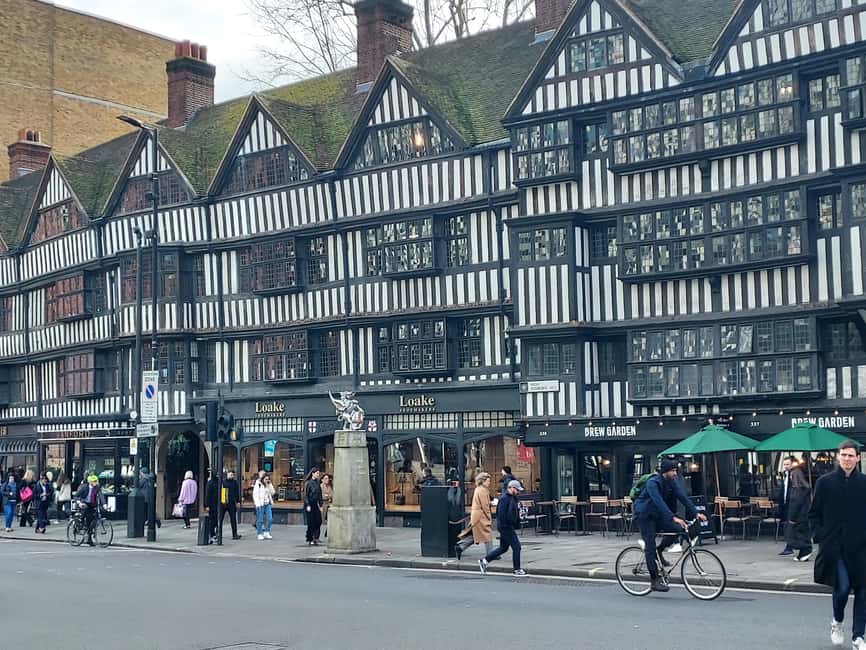
Staple Inn is visited outside, and it helps you round out the idea that these Inns were not isolated. They form a network of legal and civic spaces that evolved over centuries.
Other Inns and churches that flesh out the legal map
Along the way, you also get outside views tied to the legal ecosystem, including El Vino’s and Sergeants’ Inn, plus Clifford’s Inn and St Dunstan’s Church, plus Middle and Inner Temple areas. The tour doesn’t treat these as random extras. They help you understand how dense this legal quarter is, and how many small institutions formed the edges of the legal world.
Even if some stops are outside-only, the guide’s job is to keep them meaningful. The most effective tours do this: every stop answers a question like, Why is it here? Who used it? What did it do?
A few smart ways to get more out of the day
If you want to squeeze extra value from a tour like this, follow the names and the themes. The tour material points to figures such as Muhammad Ali Jinnah, Mahatma Gandhi, Sir Francis Drake, and Sir William Blackstone, plus multiple American Declaration of Independence signatories. You don’t need to memorize them. Just pick one or two and read a short background afterward so the connections feel clearer.
Also, use the tour as your orientation tool. This part of London is quieter than the usual big sights, and it rewards attention. When you know what to look for, you’ll spot legal references elsewhere in the city.
Finally, listen for practical tips from the guide. In the feedback you’ll see that Keith, the guide, shares advice about where to eat and drink and even how to save money while dining in London. That kind of streetwise guidance is part of the value, because it helps you turn the tour into a better day, not just a better lesson.
Should you book this Inns of Court and Royal Courts of Justice tour?
Yes, if you want London law to feel real. The strongest reason to book is the combination of Temple Church’s Magna Carta link plus the chance to see the Royal Courts of Justice and understand why the Inns of Court shaped training, tradition, and legal culture.
Book it especially if you’re curious about common law and how it spread, or if you like walking tours where the guide connects famous people to specific places. The small group size and a guide with the ability to adapt your experience also matter, because legal history can be dry if it is not explained in plain language.
Skip it if you cannot handle a walking, outdoors-heavy format. This is also not a children-first tour based on the provided age limits.
If you are deciding between a generic “London highlights” day and a more focused, thought-provoking legal route, this one wins on authenticity. You leave with a map in your head, not just photos on your phone.
FAQ
How long is the Legal London tour?
It runs for about 3 hours.
Where do I meet the guide?
You meet near Temple Underground in the Temple area, by Temple Bar Cafe next to the exit or entrance to Temple Station.
Where does the tour end?
The tour ends at Chancery Lane Underground Station.
How big is the group?
The group is limited to 8 participants.
Is the Royal Courts of Justice visit inside?
Yes. You visit inside and can see courts in action.
Is Temple Church included, and can I go inside?
Temple Church is included as an outside visit during the tour. It can also be visited after the morning tour for a fee of £5.
Are food and drinks included?
No. Food and drinks are not included.
What should I bring?
Bring comfortable shoes and weather-appropriate clothing, since the tour is outdoors and involves a lot of walking.
Is this tour suitable for people with mobility impairments or young children?
The activity data says it is not suitable for people with mobility impairments. It also lists it as not suitable for children under 14 years and children under 16 years.
Newest entries under London






London Tours & Experiences, compared.

Westminster to Greenwich River Thames Cruise
Read our review →
Magical London: Harry Potter Guided Walking Tour
Read our review →
Warner Bros. Studio Harry Potter Tour & Branded Bus
Read our review →