Reviewed · LONDON TOURS & EXPERIENCES
Hackney, Shoreditch & Spitalfields: politics and culture
This tour helps East London click into place fast. You get politics and culture together, not as a lecture, but as a walk through real neighbourhood landmarks. I particularly love the way Hackney Town Hall and the surrounding streets set a clear mood for working-class, community-minded London, and I also love the market energy on the route, from Broadway Market to Columbia Road. One drawback to plan around: it moves at a steady pace through parks and busy streets, so it may not feel comfortable if your fitness is limited.
If you want context for why the East End looks the way it does, this one does the job. I like how the stops connect everyday life with big themes, like social housing, migration, and local organizing, from the Boundary Estate story to the changing faces of Brick Lane. Just note that it is not suitable for everyone, including people with visual or hearing impairments, so check that before booking.
In This Review
- Key highlights you will feel on the walk
- Hackney Town Hall: the Art Deco starting line for politics and culture
- London Fields: from Smithfield pasture to a community park with real purpose
- Broadway Market on Saturday: food stalls, crafts, and the rare shop stop
- Regent’s Canal and the City Farm: where the pace slows and the city feels human
- Columbia Road on Sunday: Victorian terraces, flowers, and independent stalls
- Arnold Circus and the Boundary Estate: social housing history you can see
- Brick Lane finale: cultures meeting through food, fashion, and street art
- Price, pace, and who this 2-hour walk is best for
- Should you book this Hackney, Shoreditch, and Spitalfields walk?
Key highlights you will feel on the walk
- Hackney Town Hall and Hackney Empire frame the area’s cultural and entertainment roots
- London Fields links old pasture land, squatter history, and today’s community park life
- Broadway Market brings together Victorian roots with Saturday food and independent shops
- Regent’s Canal plus a City Farm gives you calm water views and animal-sounds right inside the city
- Columbia Road Flower Market turns Victorian terraces into a fragrant Sunday browse
- Arnold Circus and the Boundary Estate show social housing design in action, then you roll into Brick Lane
Hackney Town Hall: the Art Deco starting line for politics and culture
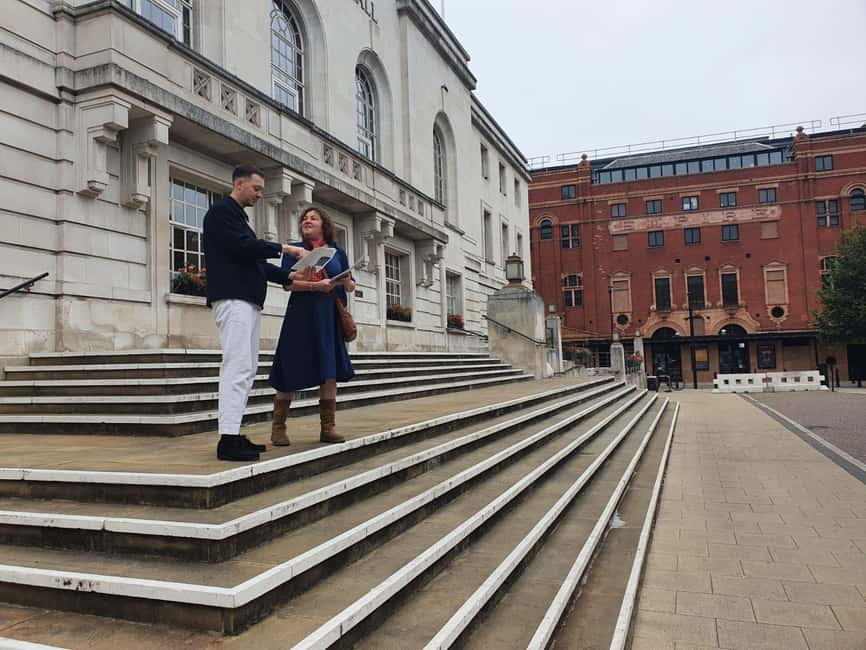
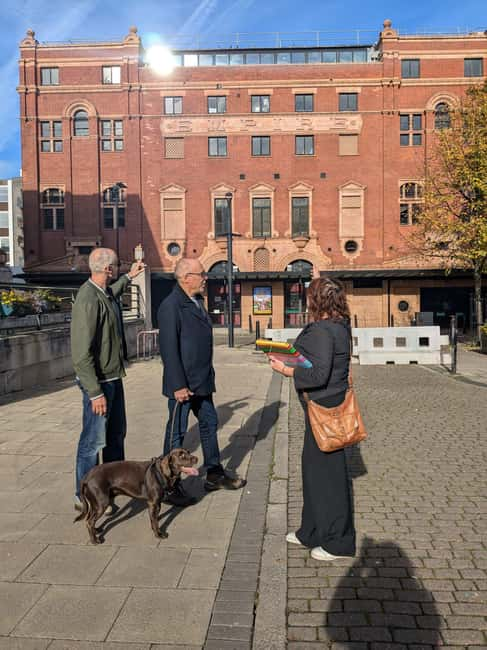
Most London walking tours start with a famous building and then forget why it matters. Here, I like how you begin at Hackney Town Hall, a striking Art Deco landmark from the 1930s, so you immediately get the idea that this area has always been about local power. The building is used for weddings, events, and even film shoots, which means you are looking at something alive, not stuck behind glass.
Right next door is the Hackney Empire, with roots tied to major names like Charlie Chaplin and Marie Lloyd. That pairing is smart for your mental map: civic buildings and stage buildings sit side by side, so you can see how entertainment and local government sit in the same neighbourhood story. It also helps if you like your history grounded. You can picture local people showing up for ceremonies, shows, and community events, not just tourists sightseeing.
Practical tip: meet on the steps of the town hall and look for your guide in a red beret. If you are meeting late, that red beret makes it easier to spot the group quickly.
Also inked in under London
- London: The London Eye Entry Ticket
★ 4.6 · 35,875 reviews - From London: Harry Potter Warner Bros Studio Tour
★ 4.7 · 26,588 reviews - London: Westminster to Greenwich River Thames Cruise
★ 4.5 · 22,836 reviews
London Fields: from Smithfield pasture to a community park with real purpose
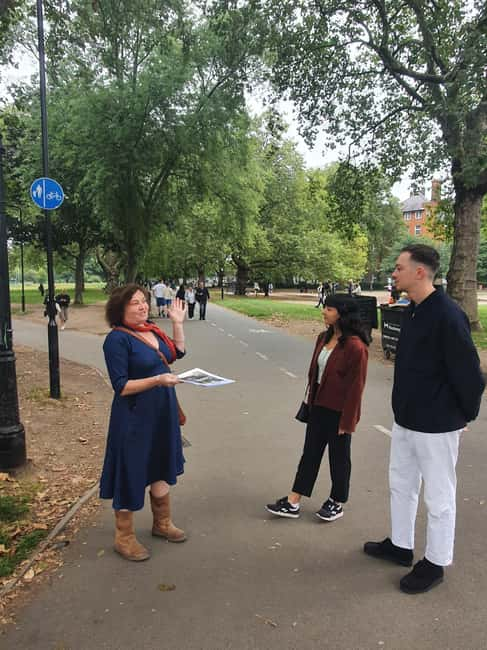
The first real “breathing space” moment comes at London Fields, which is one of Hackney’s oldest green spaces. You get a lot more than a pretty park stop here. The history matters because the park has had different jobs over time, and that is how you understand East London. It was once pasture land for animals resting on the way to market at Smithfield, so you can almost feel the earlier rhythm of the city.
Later, London Fields became a gathering place for the squatters’ movement. That might sound like a niche detail until you connect it to today’s scene. Now it is a lively park with its lido, weekend markets, and community festivals. In other words, the “community claim” on the space did not disappear. It just changed forms.
You also get a classic London view frame: the park is surrounded by handsome Georgian houses. That contrast is part of the lesson. East London can be both elegant and grassroots. One does not cancel out the other.
What you should watch for on the ground: street-level park life. This is where you start seeing how people use public space day to day, which is exactly the kind of everyday context that makes the later history stops feel less abstract.
Broadway Market on Saturday: food stalls, crafts, and the rare shop stop
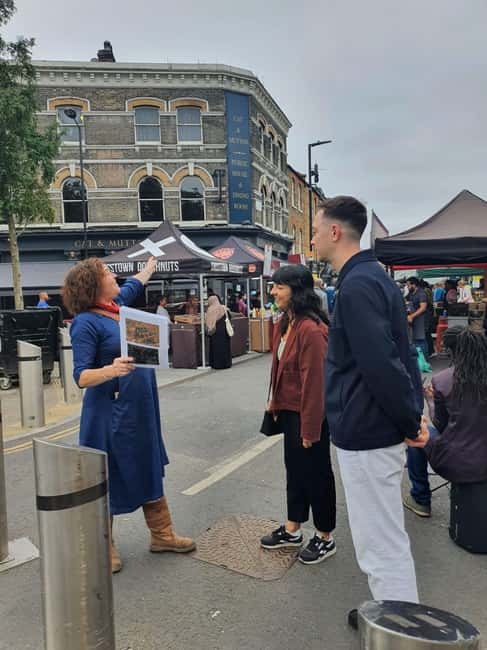
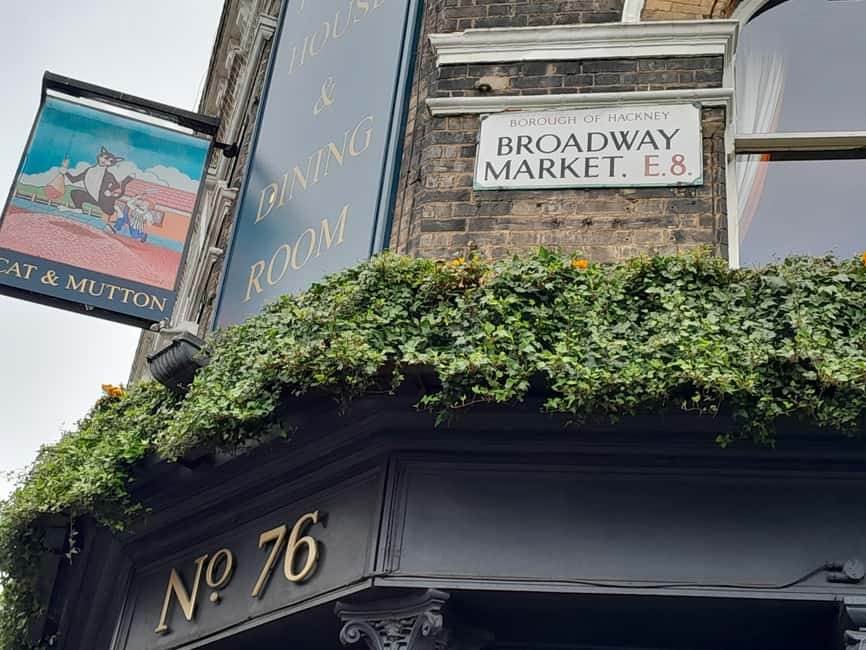
From London Fields, you stroll onto Broadway Market, one of those streets that locals treat like a weekly habit. It has been a hub since Victorian times, and on the right day, it feels like the neighbourhood is doing its own version of a town festival.
If you are on Saturday, the market comes with food stalls, crafts, and independent shops. This is where you might pause for a quick snack, but the best part is watching people move through it. You will pick up on the practical side of “politics and culture” here, because markets like this are where small businesses, makers, and regular residents keep the local economy stitched together.
A key stop on the route is a traditional Pie and Mash shop. It is a listed building and it is working as an optician now, which is a detail I really appreciate. Buildings do not just get replaced, they get repurposed, and that is often how neighbourhood change happens in slow motion.
You also get that East End photo and people-watching angle. This is the kind of place where the street vibe is the attraction, not just one sign or façade. The market mix can include handmade goods and traders who clearly know how to draw a crowd, so arrive with your curiosity switched on.
One consideration: Broadway Market can be busy, so if you do not love crowds, plan to move with the group and keep your pace comfortable.
Regent’s Canal and the City Farm: where the pace slows and the city feels human
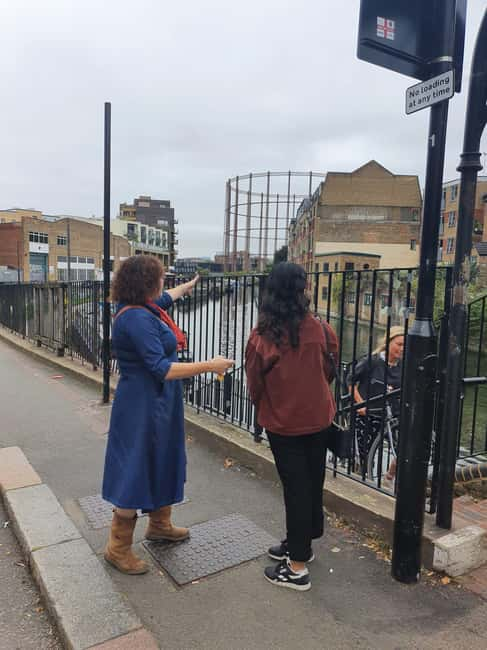
After market energy, the walk shifts toward the Regent’s Canal. This stretch is calmer, and the water does some real work for your perspective. The canal reflects the sky, and the old gasworks form striking silhouettes in the background. It is a reminder that industry left scars and shapes, and London keeps those shapes visible.
Then the walk turns into one of those unexpected East End moments that you do not forget: a genuine City Farm. You will see goats, sheep, chickens, and community gardens. The point is not just animals. It is the idea that land can be used for care and education, right inside a dense city. It is charming, and it is sensory too. You get the hay smell and the clucking, and for a moment, it feels like the city quietly stepped aside.
Opposite the farm, you pass an old children’s hospital with a distinctive façade and period details. That contrast is valuable for your understanding of the area. You are looking at both community nurture and older institutional architecture, both shaping what residents see every day.
If you like “why this matters” walking, this canal-to-farm sequence delivers. It changes the rhythm so the later market streets do not feel like a blur.
A page further on, still in London:
- Magical London: Harry Potter Guided Walking Tour★ 4.7 · 22,044 reviews
- London: Madame Tussauds London★ 4.6 · 20,915 reviews
- London: Warner Bros. Studio Harry Potter Tour & Branded Bus★ 4.7 · 19,194 reviews
- London: Tower Bridge Entry Ticket★ 4.7 · 15,560 reviews
Columbia Road on Sunday: Victorian terraces, flowers, and independent stalls
Next up is Columbia Road Flower Market, and the timing is the whole deal. It comes alive on Sundays, when the Victorian terraces get heavy with colour and fragrance. This is one of the best settings in London for people who love seasonal plants and gift browsing without a formal shopping mall vibe.
You can expect buckets of flowers and plants, including tulips, roses, houseplants, herbs, and succulents. The street becomes a guided sensory experience even if you are not buying anything. It is also where you get the feeling that locals and visitors share the same enthusiasm.
Beyond flowers, you will also see independent boutiques and stalls selling ceramics, prints, shellfish, clothes, jewellery, and sweet treats. That lineup is part of the culture lesson. These are not anonymous products. They are small businesses with a point of view, and the street lets them exist side by side.
Practical tip: if you want photos, go early in the market hours and keep your camera ready at turn points and shop doorways. The street is picture-friendly, but it gets crowded as the morning goes on.
This is also a good moment to slow down and connect dots. You started with civic buildings and park history. Now you are seeing how creativity and everyday commerce merge into a street festival that happens on a regular schedule.
Arnold Circus and the Boundary Estate: social housing history you can see
After Columbia Road, the walk takes you to the Boundary Estate around Arnold Circus. This area is instantly recognisable thanks to the warm red-brick mansion block style, with buildings curving around a central bandstand. The design gives the space an almost village-like calm, even though it sits right in the heart of the city.
This stop carries political weight. The Boundary Estate is the first social housing in Europe built on the old Jago slum. That fact turns the architecture into more than a view. It tells you how cities respond to overcrowding and poverty, and how redevelopment decisions change daily life for real people.
I like this part because you get to see a policy outcome physically. Many tours talk about social housing in abstract terms. Here, you stand in the place where the housing story plays out, and you can look at the layout, the scale, and the shared public space.
If you are the kind of traveller who likes design and society in the same frame, this is a standout moment. You also get an emotional shift, because the area feels peaceful in a way that contradicts the heavy subject matter.
Brick Lane finale: cultures meeting through food, fashion, and street art
The last stretch leads you onto Bethnal Green Road and into Brick Lane, one of East London’s most famous streets. The point is not just that it is famous. The point is that it shows the East End as a place of continuing change, where cultures, flavours, and creativity overlap.
You will notice street art, markets, food, fashion, and music in the same area. It is a living street scene with layers. The history runs deep: Brick Lane was once home to Huguenot silk weavers, then Jewish immigrants, and now it has a strong Bangladeshi community. That sequence matters because it explains why you see a mix of cuisines, shops, and community signals rather than one single identity.
If you want a warm, satisfying finale, there is a chance to grab a salt beef bagel from a legendary Jewish bakery near the top of the lane. It is the kind of food stop that feels like a practical reward at the end of a walk, not a forced tourist snack.
One more thing I like about ending here: Brick Lane is where people often start to connect the whole route. London Fields told you about community space. Broadway told you about local commerce. Columbia Road showed creativity and independent selling. The Boundary Estate gave you social housing context. Brick Lane turns all of that into street-level variety.
Price, pace, and who this 2-hour walk is best for
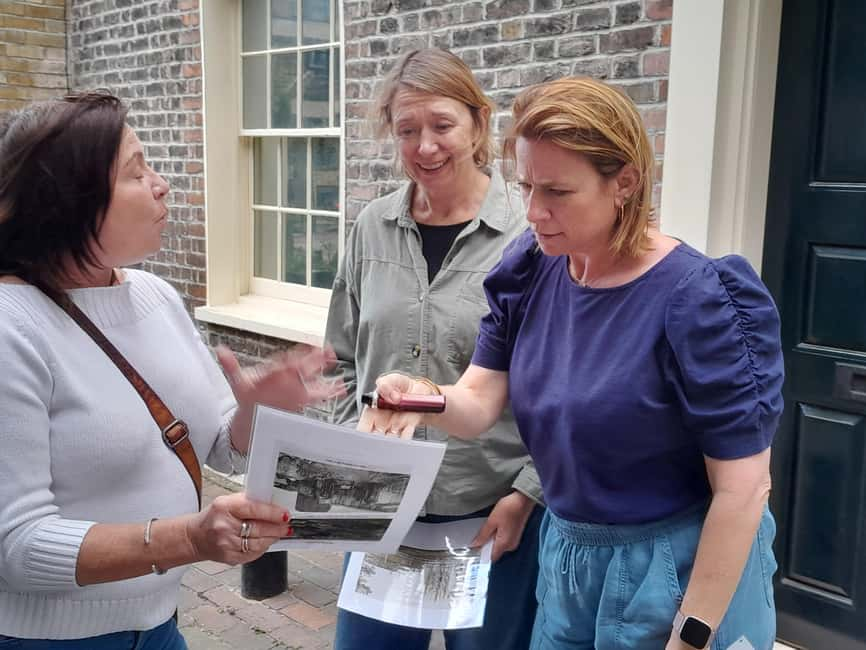
At $32 per person for a 2-hour guided walk, this is good value for people who want more meaning than a standard “look at this street, then that street” stroll. You are paying for live commentary and for a route that packs multiple major neighbourhood themes into one compact time frame.
Also, there are no extra charges during the tour itself. You might pass coffee shops and you will pass market areas where you can buy things if you want, but nothing is pushed onto you as a ticketed add-on.
The pace is active enough that you should think about your comfort on foot. The tour is wheelchair accessible, which is great, but it is not suitable for people with low level of fitness. It is also listed as not suitable for visually impaired people and hearing-impaired people, and it is not suitable for people over 95.
So, who is this for? It is a strong fit for you if you like:
- neighbourhood history explained in plain language
- market culture, especially Saturday and Sunday street scenes
- political and community context, not just landmarks
- a route that feels like East London life, not a museum schedule
Should you book this Hackney, Shoreditch, and Spitalfields walk?
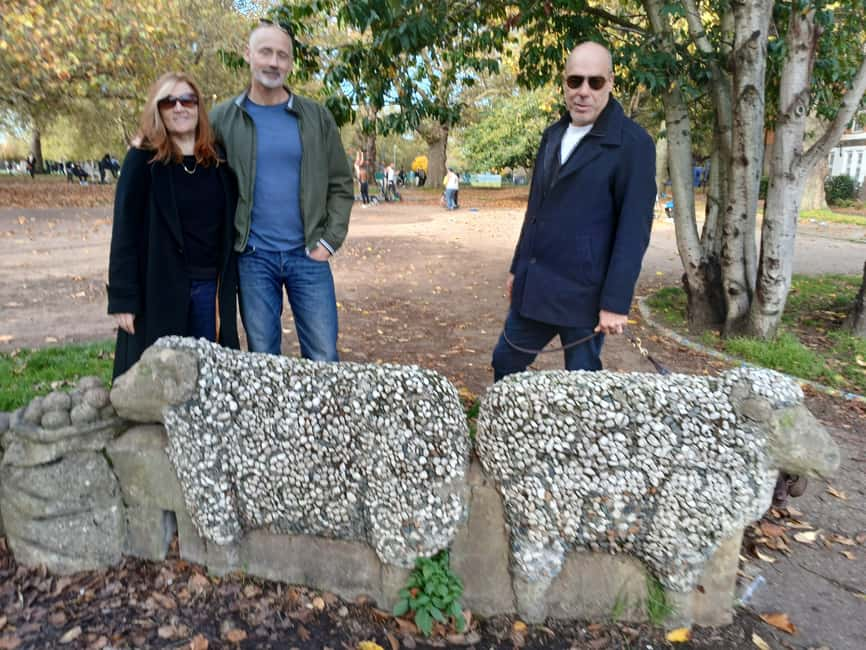
If you are planning a short stay and you want one guided route that connects politics, culture, and everyday life, I think you should book this. The route hits big emotional beats, from civic Art Deco buildings to a park shaped by community movements, from a canal pause to animal-filled farm quiet, then into two of London’s most personality-heavy market streets.
If your priority is only famous sights with minimal walking, this might feel like more effort than payoff. And if you rely on accommodations for visual or hearing needs, check suitability carefully first.
But if you want East London to feel like a coherent story by the end of two hours, this walk has a very practical advantage. You will leave with a better sense of how public space, markets, migration, and housing policy show up in the streets you can actually stand on.
Newest entries under London



London Tours & Experiences, compared.
Westminster to Greenwich River Thames Cruise
Read our review →
Magical London: Harry Potter Guided Walking Tour
Read our review →
Warner Bros. Studio Harry Potter Tour & Branded Bus
Read our review →