
Reviewed · HIKING & TREKKING
Fort William: Ben Nevis Guided Group Hike
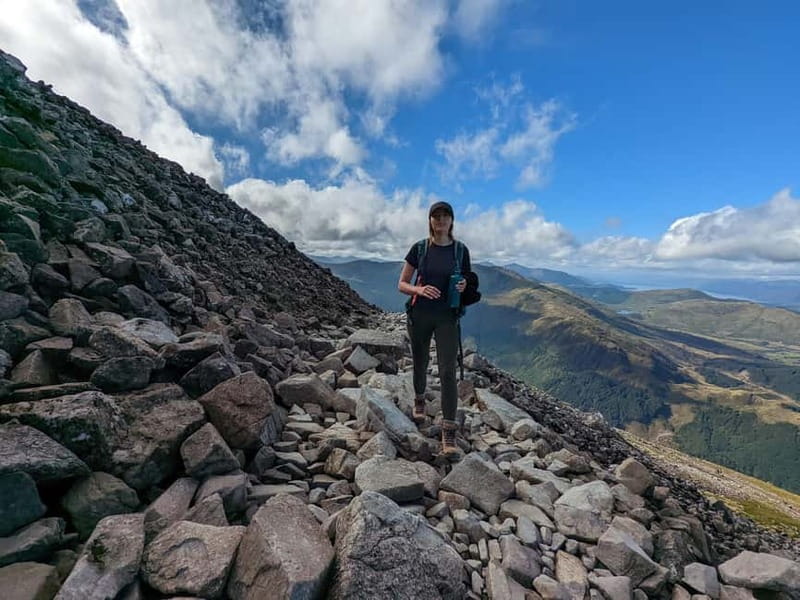
Ben Nevis has a way of turning nerves into pride. This guided group hike takes you up the Pony Track to the UK’s highest summit, with a leader who helps you read the mountain as you go. I also love the built-in focus on the views and the local stories that make the day feel more meaningful than just getting steps in.
You’ll be looking at loose, rocky ground and committing to a full day in the mountains. The payoff is huge, but it is not the right outing if you have low fitness or you hate long, steady climbs.
In This Review
- Key things I would plan around
- Getting started at Glen Nevis Visitor Centre and the Pony Track route
- The climb up: what the first four hours really feel like
- Group pace and a leader who keeps you confident
- Summit time: when the views land and why weather is the wildcard
- The descent: same time, different challenge
- What to pack for a rocky full-day climb
- Price and value: is $169 worth it?
- When timing matters: group days and possible winter gear in early May
- Who this Ben Nevis guided hike suits best
- Should you book this Ben Nevis guided group hike?
- FAQ
- Where do I meet the guide for the Ben Nevis hike?
- How long does it take to reach the summit and return?
- What route will we follow up Ben Nevis?
- Is this hike suitable for beginners or low fitness?
- What is included in the price?
- What is not included, and what should I plan to bring?
- How big is the group?
- Are there any seasonal equipment requirements?
Key things I would plan around
- Pony Track is the main route: It is popular for a reason, but it still means a rocky, stamina-testing climb.
- About four hours up and four back: Plan for a full day, not a quick hit.
- A small group (up to 8): More time for questions and less chaos on the hill.
- Weather can change everything fast: Come prepared so you can still enjoy the summit if conditions are good.
- Early May may need winter gear: You might be asked for winter equipment, and hiring is possible in Fort William.
Getting started at Glen Nevis Visitor Centre and the Pony Track route
Your day begins at the visitor centre in Glen Nevis. You’ll meet your guide at the picnic benches in front of the building, then head into the Ben Nevis climb using the Pony Track, the most popular route to the summit.
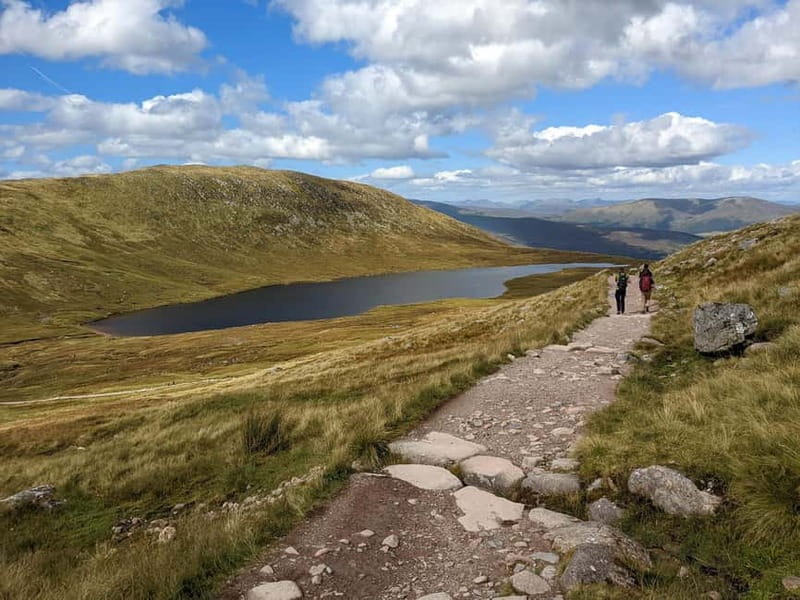
Why that matters: the Pony Track is popular because it is the path most people can follow, which means less guesswork for you. Still, popular does not mean easy. The path is described as loose and rocky, so you should treat it like real mountain walking, not a casual trail hike.
This hike is also set up to teach you while you walk. You get a local, experienced guide, and you will learn about the surrounding area as you ascend. In the best cases, those small lessons make the big views feel earned, not just photographed.
If you want a day that feels structured, this works. You get a plan, a leader, and a group pace. If you are the type who likes to understand where you are and what you are looking at, you’ll likely feel right at home.
Also inked in under Fort William
- From Inverness: Skye Explorer Full-Day Tour with 3 Hikes
★ 4.9 · 215 reviews - From Cardiff: Guided Hike to 8 Waterfalls in Brecon Beacons
★ 4.9 · 67 reviews - Day Hike: The Eight Waterfalls Of The Brecon Beacons
★ 5.0 · 20 reviews
The climb up: what the first four hours really feel like
The hike to the top takes about four hours. That means your body is in work mode for a long stretch, even if you never feel like you are sprinting. The trail is winding, and as you climb you will be moving over loose, rocky ground.
Here’s what that means for how you should approach the climb:
- Pace matters more than speed. With a rocky path, you want stable steps, not rushed steps.
- Your legs do most of the work, but your attention matters too. Loose rock can shift underfoot, so you will benefit from a steady rhythm and good balance.
- Expect the climb to feel different from a smooth woodland walk. This is more like controlled scrambling with your feet.
Your guide is there for more than just keeping you moving. Part of the value is how they manage the day in real time. A strong guide helps you adjust when conditions change and keeps the group safe while still letting you enjoy the hike. One solo traveler’s experience summed it up well: the guide made the whole day feel possible and safe, even when she was worried about doing it alone.
Also, you are not just climbing. You are moving through a working slice of the Scottish Highlands, with mountains and glens changing around you as elevation increases. If the weather is treating you kindly, you’ll start getting wider angles on the scenery before you even hit the top.
Group pace and a leader who keeps you confident
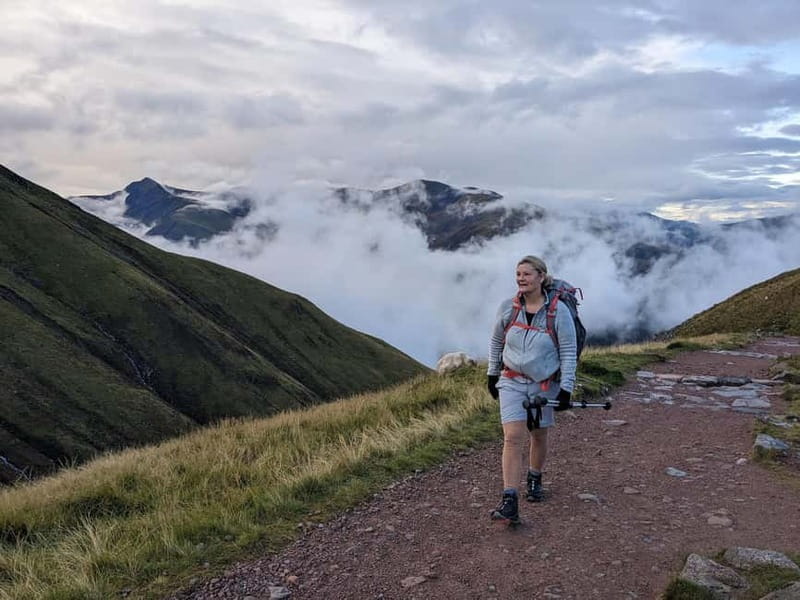
This is a guided group walk limited to eight participants, led in English. That small size matters in practice. You get enough people to avoid the lonely feeling, but not so many that you get stretched out or stuck behind someone slow or fast.
For me, the biggest advantage is confidence. When you are on a high mountain, you want to know you have someone competent with you, especially when conditions are unpredictable. The guide’s role is to lead you to the summit, but also to help you make sense of what you are seeing and where you are within the mountain day.
You’ll also get local context along the way. A recent solo hiker described how the guide shared stories tied to Scottish culture, history, and nature. That kind of talk can turn the walk into a conversation instead of a chore, and it helps you stay engaged when your legs start to complain.
One more practical benefit: if you have questions, this format makes it easier to ask without feeling like you are interrupting a train of people.
Summit time: when the views land and why weather is the wildcard
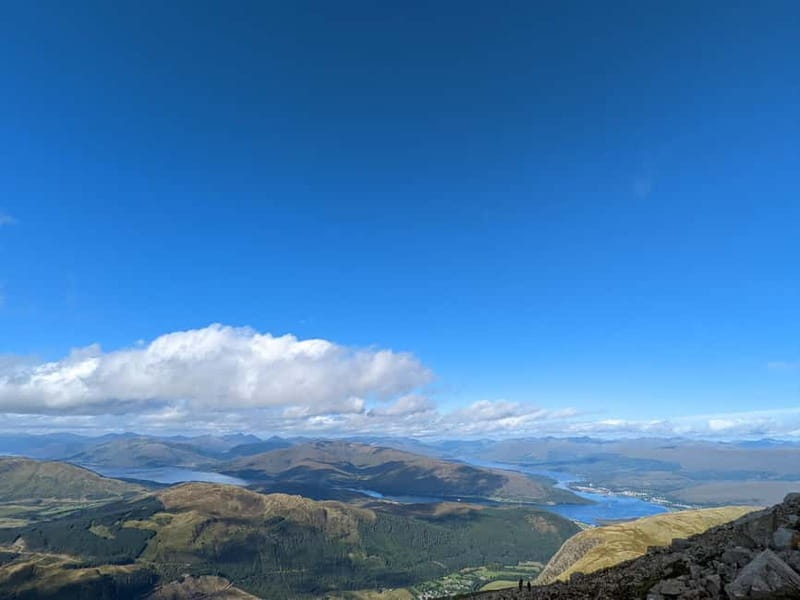
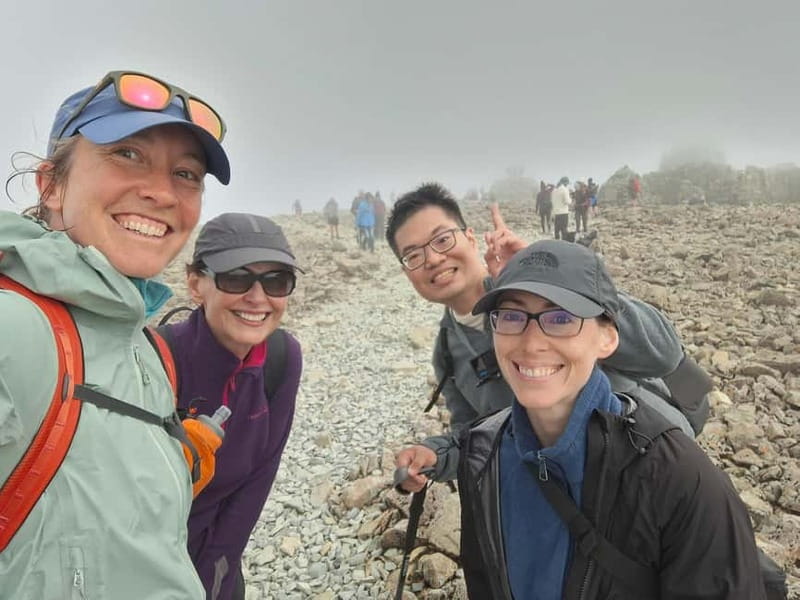
From the summit, if the weather is good, you can enjoy breathtaking panoramic views over the surrounding mountains and glens. That sentence is the dream version. The real takeaway is that summit views depend heavily on conditions.
You should treat the weather as the main variable of the day, not the number of hours. Bring clothing that works for cold wind and sudden shifts. Even if the morning looks fine, mountain weather can turn quickly. The guide’s experience helps you handle those changes without panicking.
When summit conditions are favorable, you’ll likely feel why Ben Nevis is a bucket list peak for so many people. The top is the moment where the day clicks. The climb becomes something you can point to, not just something you endured.
And if conditions are not ideal, the guided format still helps. You have a plan for the ascent and descent, and you’re not alone making decisions on the spot.
The descent: same time, different challenge
The descent also takes about four hours. That symmetry is important for planning because you do not just “walk down and relax.” Loose, rocky sections can be hard on your knees and on your footing when you are tired.
Here’s how to think about it:
- Descending is often mentally easier, but physically it can be more punishing.
- Your legs may feel heavier than you expect near the end.
- You want careful, quiet steps rather than long strides.
Your guide will lead the group back down, keeping you moving safely. This is where a steady pace and good footwear pay off again. If you packed for comfort and stability, your descent will feel like part of the challenge, not a punishment.
One small but meaningful point from the solo traveler review: she described feeling safe start to finish, and that safe feeling matters on the way back. When you know someone is watching the group and the route, you can focus on your footing instead of wondering whether you should be doing something different.
What to pack for a rocky full-day climb
This is an all-day mountain hike, so you need a pack that matches that reality. The basics to bring are clearly spelled out:
- Warm clothing
- Weather-appropriate clothing
- Hiking shoes
- Water
- Snacks
- Trekking gear
Since lunch and drinks are not included, your snacks and water are not optional extras. They are how you keep your energy steady on the climb and the return. If you are the type who forgets to eat until you feel awful, plan to snack earlier than your instincts.
Also, think about layers. Mountain weather can be changeable, and warm clothing matters for wind and cooler conditions on higher ground. If you run hot on climbs, you might still want a layer that you can put on quickly once you stop moving.
Finally, bring the hiking kit you already trust. This is not the day to test new shoes that rub, or new gear that you do not know how to use.
Price and value: is $169 worth it?
At $169 per person for an eight-hour guided hike, the price can feel high if you compare it to a self-guided trail walk. But this is not a simple hike. You are paying for:
- A local, experienced guide
- A guided route to the summit
- Learning about the area while you walk
- A small group setup capped at eight participants
If you are hiking solo, the value jumps. You get companionship, leadership, and reassurance. Even if you are confident outdoors, a guide reduces decision pressure when weather and conditions shift. And it can turn “I climbed a peak” into “I understand what I climbed and what I am seeing.”
What is not included is also part of the value equation. Lunch, snacks, drinks, and equipment are on you. That means you should budget for your own food and water and confirm your gear before the day. For me, the best way to get value here is to show up ready so you can focus on the hike instead of fixing problems mid-route.
If you want a guided experience that mixes summit achievement with genuine context from a real local guide, this price often makes sense. If you prefer to travel entirely on your own schedule and you are already well set up for challenging mountain walking, you might not feel the need for guidance.
When timing matters: group days and possible winter gear in early May
The schedule runs from mid-May until mid-September with group walks on Wednesday and Sunday. Duration is listed as eight hours, and the timing can vary based on availability.
The key seasonal detail is early May. For group walks at the start of May, winter equipment may be required. You will be informed as early as possible, and if needed, equipment can be hired from Ellis Brigham in Fort William.
Practical advice: if you are traveling in that early May window, do not assume your normal hiking kit is enough. Make space in your plans for the possibility of hiring gear, and pack with flexibility in mind.
Who this Ben Nevis guided hike suits best
This tour is described as achievable for most people, but you do need good fitness and stamina. If you struggle with sustained climbs or you do not like long days on your feet, this will feel rough.
It is especially good if:
- You want a summit day but you prefer a guide to manage safety and direction
- You like learning as you hike, not just checking off a viewpoint
- You want a small group experience with room for questions
- You are hiking solo and want support without the stress of planning every detail
It might not be for you if you have low fitness, because the rocky, loose ground plus four hours up and four hours down is a real commitment.
Should you book this Ben Nevis guided group hike?
Book it if you want Ben Nevis to be an achievement you can actually enjoy, not just survive. The best reason is simple: you get a guided climb to the UK’s highest mountain with a small group and a leader who helps you feel safe and understand what you are seeing.
I would especially book this if you are solo or you want less guesswork. A guide makes a difference on a rocky mountain day. Add in the chance of panoramic views at the top, and you have a solid recipe for a memorable Highlands outing.
Skip it if you dislike long days on rocky terrain, or if you know you are not comfortable with a full day out in the mountains. In that case, you might enjoy a lower-intensity walk that matches your pace better.
FAQ
Where do I meet the guide for the Ben Nevis hike?
Meet your guide at the picnic benches in front of the Ben Nevis Visitor Centre in Glen Nevis.
How long does it take to reach the summit and return?
The hike is about four hours up to the summit, and about four hours to return.
What route will we follow up Ben Nevis?
You will follow the Pony Track, which is described as the most popular route to the summit.
Is this hike suitable for beginners or low fitness?
It is not suitable for people with low fitness. The route requires good levels of stamina and fitness due to loose, rocky ground.
What is included in the price?
The price includes a guided group walk to the summit, a local experienced guide, and learning about the surrounding area.
What is not included, and what should I plan to bring?
Lunch and snacks, drinks, and equipment are not included. You should bring warm clothing, snacks, hiking shoes, water, weather-appropriate clothing, and trekking gear.
How big is the group?
The group is limited to a small group size, with up to 8 participants.
Are there any seasonal equipment requirements?
For group walks at the start of May, winter equipment may be required, and you would be informed as early as possible. If needed, equipment can be hired from Ellis Brigham in Fort William.
Newest entries under Fort William
Hiking & Trekking, compared.
Day Hike: The Eight Waterfalls Of The Brecon Beacons
Read our review →
Neath: Canyoning, Gorge Walking & Waterfall Trekking Tour
Read our review →
N. Ireland: Award Winning Guided Scenic Alpaca Trekking
Read our review →
Browse the lists this tour appears in