
Reviewed · BATH TOURS & EXPERIENCES
Explore Bath in Spanish: With Olga, local guide
Bath starts talking the moment you meet Olga. This Spanish guided walk is packed with stories, little-known corners, and expert local context that makes Bath feel personal, not like a checklist. Two things I really like: Olga’s warm, passionate delivery and the way the route connects Roman and Georgian Bath into one clear narrative. One possible drawback: the tour is exclusively in Spanish, so it helps to be comfortable following Spanish in real time.
In just 2.5 hours, you get a smart sampler of the city’s major landmarks, plus practical pointers for what to do next on your own. You also learn what to look for, so you’re not just snapping photos, you’re understanding why each place matters.
One more consideration: it’s a walking tour on uneven ground with some slopes. Olga keeps a relaxed pace, but if mobility is very limited, you might want to compare it to a more accessible option first.
In This Review
- Key highlights you will feel (not just see)
- Why this 2.5-hour Spanish tour is a smart Bath move
- Meeting at Rebecca’s Well: start where Bath’s story begins
- Guildhall and Bath Abbey: learning the language of stone
- The Pump Room and Sally Lunn: Bath through food and water culture
- Abbey Green and the quiet side of Bath
- Roman Baths and Cross Bath: sacred spring to modern spa logic
- Theatre Royal and Queen Square: Austen’s Bath, explained in place
- The Circus and Royal Crescent: design tricks you can spot in real life
- Pulteney Bridge: the perfect closing photo moment
- Price, pacing, and who this tour is for
- Final verdict: should you book Explore Bath in Spanish with Olga?
- FAQ
- Is the tour conducted in Spanish only?
- How long is the walking tour?
- Where do I meet the guide?
- Does the tour run in bad weather?
- Is the tour wheelchair accessible?
- What should I bring, and are there restrictions?
Key highlights you will feel (not just see)
- A Spanish-only tour that still stays friendly, with time for questions as you go.
- Olga’s local storytelling, including the kind of anecdotes other routes tend to skip.
- Roman Baths basics plus modern context, including how the sacred spring ties into what you see today.
- Jane Austen connections in real neighborhoods, from Queen Square to the surrounding landmarks.
- Georgian architecture stops with meaning, like the Circus and Royal Crescent not as random views, but as design ideas you can spot.
- Photo-friendly finish at Pulteney Bridge, with shops along both sides and a classic river moment.
Why this 2.5-hour Spanish tour is a smart Bath move
Bath can swallow a day easily. This tour respects that reality, because it gives you a tight, walkable route that hits the big names while still leaving room in your head for the story behind them.
At $21 per person for about 2.5 hours, the value comes from three things:
- A real local guide, Olga, who knows the city beyond the usual facts.
- A focused route that helps you understand Bath’s layers, Roman water and meaning, Georgian design and social life, and the literary stamp Austen left.
- Guidance that sets you up after the tour, with personalized recommendations for eating, drinking, and visiting.
If your time in Bath is short, this is the kind of tour that helps you spend your remaining hours with more confidence. You’ll know what to prioritize, and you’ll recognize details faster when you walk back through the same streets on your own.
Also inked in under Bath
- Bath: City Walking Tour with Optional Roman Baths Entry
★ 4.7 · 1,401 reviews - Bath: Walking Tour with Qualified Blue Badge Tourist Guide
★ 4.9 · 1,366 reviews - Bath: Guided Ghost Tour
★ 4.8 · 1,036 reviews
Meeting at Rebecca’s Well: start where Bath’s story begins
You meet at Rebecca’s Well, on the north side of Bath Abbey. Olga will be easy to spot with a blue lanyard and a RutasUK identification badge.
A small practical note: there is also a Tootbus Bath starting location listed for the activity. In practice, you should plan around the stated meetup at Rebecca’s Well so you don’t waste time hunting near the abbey.
This start point matters because it puts you immediately in the center of Bath’s “why.” From there, the tour moves outward and upward through time: Roman foundations, medieval and Gothic layers, Georgian elegance, and literary links.
Guildhall and Bath Abbey: learning the language of stone
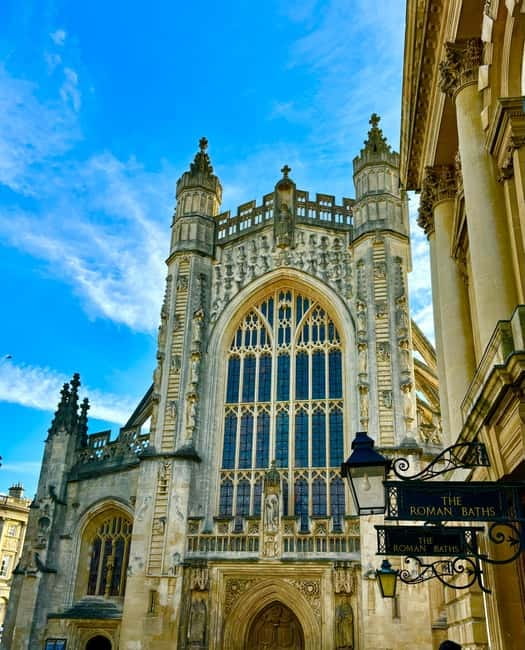
The tour begins at Guildhall, Bath, Bath’s former town hall, next to Rebecca’s Fountain (1861). That fountain is Victorian, inspired by the Bible, and described as a symbol of hospitality. It’s the sort of detail that becomes a clue once Olga explains how Bath used to brand itself with confidence and welcome.
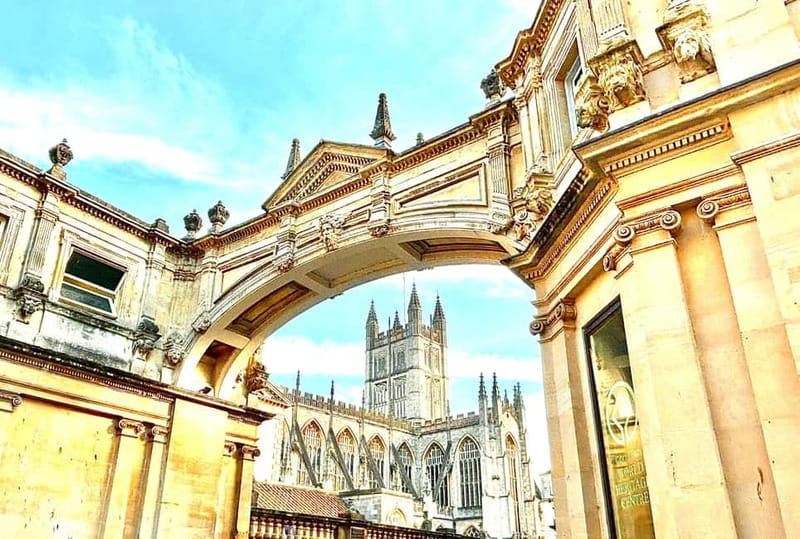
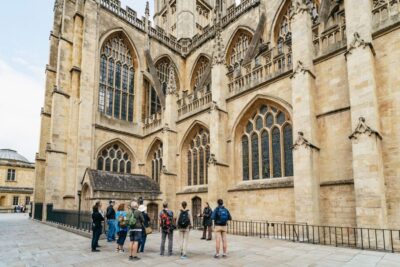
Then it’s opposite Bath Abbey. You’ll hear about its history going back to the 7th century, plus what to notice in the Gothic details. The practical angle here is simple: instead of staring at the building, you’ll know what era you’re looking at and why the design choices feel the way they do.
What to watch for: if you’re the type who likes architecture but hates museum lectures, this is a good fit. The explanations are built for walking pace, and you get just enough context to interpret the façade and key features without feeling lost.
The Pump Room and Sally Lunn: Bath through food and water culture
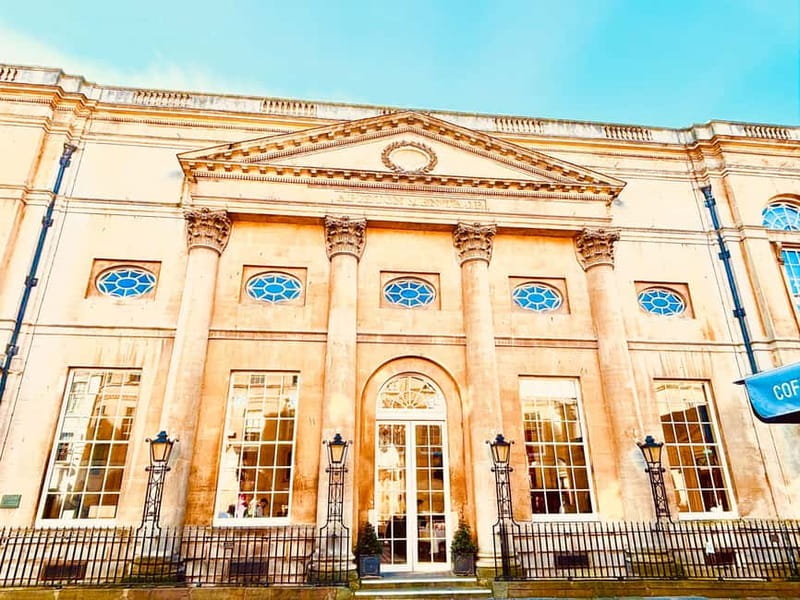
Next comes the Pump Room, an 18th-century Georgian hall tied to the tradition of drinking thermal waters. Olga doesn’t treat it like a backdrop. She connects it to social life and anecdotes, including references to Jane Austen.
That matters because Bath’s thermal water culture is more than a spa story. It’s part of how the city worked, how visitors acted, and how status and health were mixed into daily life.
Then you visit Sally Lunn’s Historic Eating House & Museum, where you can learn about the oldest house in Bath and the story behind the Sally Lunn Bun. The creator’s background is described as a French refugee story, which gives the place a human thread. You’re not just learning about a pastry. You’re learning how strangers and newcomers helped shape Bath.
Why this section is so good: it breaks up the big monuments with something sensory. Even if you don’t eat during the tour, you’ll walk away thinking about Bath as a city of rituals, not just ruins and façades.
A page further on, still in Bath:
- From Bath: Stonehenge & the Cotswolds Day Tour with Entry★ 4.8 · 543 reviews
- Bath: Bridgerton Filming Locations Walking Tour with Music★ 4.7 · 416 reviews
- Bath: Guided City Walking Tour with Entry To The Roman Baths★ 4.8 · 343 reviews
- Bath: Guided Tour of Iconic Bridgerton Filming Locations★ 4.6 · 233 reviews
Abbey Green and the quiet side of Bath
You’ll also stop at Abbey Green, a picturesque cobbled square surrounded by 18th-century houses. Olga’s emphasis here is charm and atmosphere, plus how the area has appeared in films.
This is the part where Bath feels human. It’s easy to rush through pretty streets when you’re on your own. In a guided format, you slow down just enough to notice textures: the stone, the corners, the way the square creates calm.
If you want a practical tip, treat this as your reset. Once you understand the landmarks, a quieter stop helps it all sink in before you jump to the Roman section.
Roman Baths and Cross Bath: sacred spring to modern spa logic
Now you get to the core of Bath: the thermal water and the way people built meaning around it.
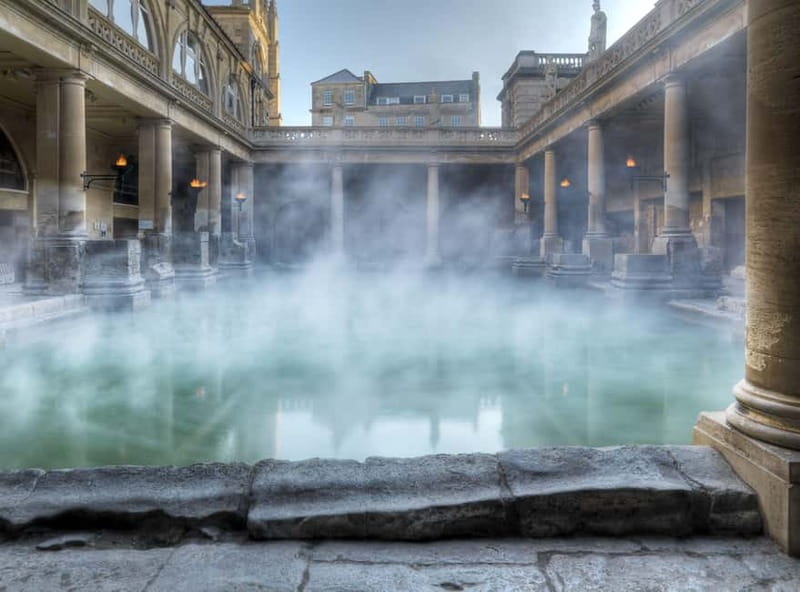
In front of the Roman Baths, Olga explains how the site was built around the sacred spring connected to the goddess Sulis Minerva, and how the baths worked. Even if you’ve seen Roman ruins in other cities, Bath’s story has a distinct angle because the “source” and the “system” feel connected.
This section comes with practical tips for your visit, especially for paid areas like the Roman Baths and general guidance such as using an Abbey map for continuing exploration later.
Then you move to the Cross Bath, described as a smaller but historic spa with natural outdoor thermal waters. Olga covers the origin of these waters, their healing tradition, and how that lineage connects to the modern Thermae Spa.
What you’ll appreciate: the tour doesn’t just point at water. It explains why the water mattered, and why that matters to how Bath has been rebuilt and rebranded over centuries.
Theatre Royal and Queen Square: Austen’s Bath, explained in place
The itinerary continues with Theatre Royal, one of the oldest and most beautiful theaters in the United Kingdom, opened in 1805. Olga walks you through its history and adds curious anecdotes about its more contemporary history.
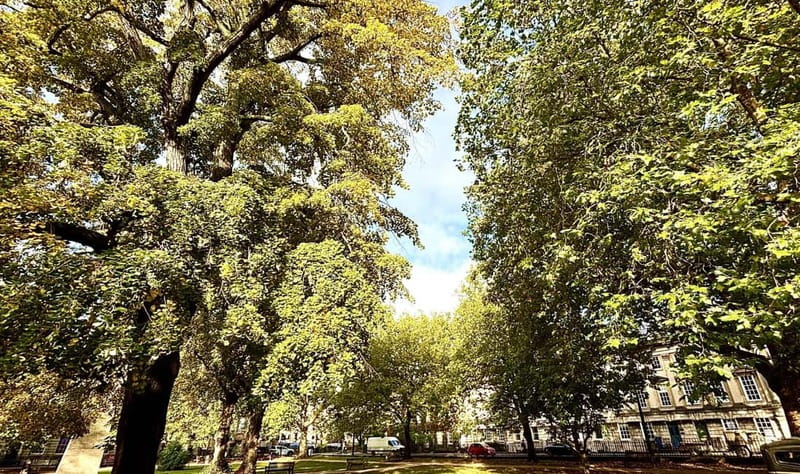
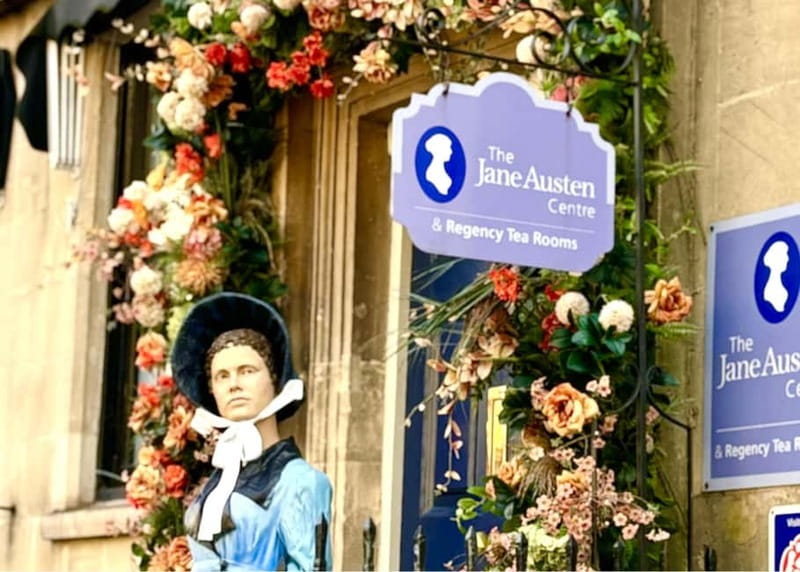
Then you head to Queen Square, surrounded by elegant Georgian buildings and described as the temporary residence of Jane Austen. You’ll also be introduced to the Jane Austen Centre, tied directly to Austen’s life and work.
This is a strong sequence because it links culture to setting. You see where theatrical life sat in Georgian Bath, and then you move into the literary footprint area, not just a generic Austen stop.
If you care about literature: this part is especially satisfying because it doesn’t feel like a trivia hunt. It feels like you’re learning how people lived, walked, and socialized in Austen’s time.
The Circus and Royal Crescent: design tricks you can spot in real life
Next come two of Bath’s biggest Georgian architectural icons.
First is The Circus, a perfect circular arrangement formed by Georgian houses designed by John Wood Sr. Olga also connects it to inspiration from Stonehenge, framing it as a link between nature, history, and art.
Then the tour reaches the Royal Crescent, an iconic Georgian curve with a view over the gardens of Royal Victoria Park. Olga shares interesting facts about former residents, tying the building’s elegance to the people who once called it home.
This is where a guide earns their fee. From street level, Georgian architecture can look like pretty wallpaper. With the context you get on this walk, you start to see intention in the shape, the rhythm, and the planning.
Pulteney Bridge: the perfect closing photo moment
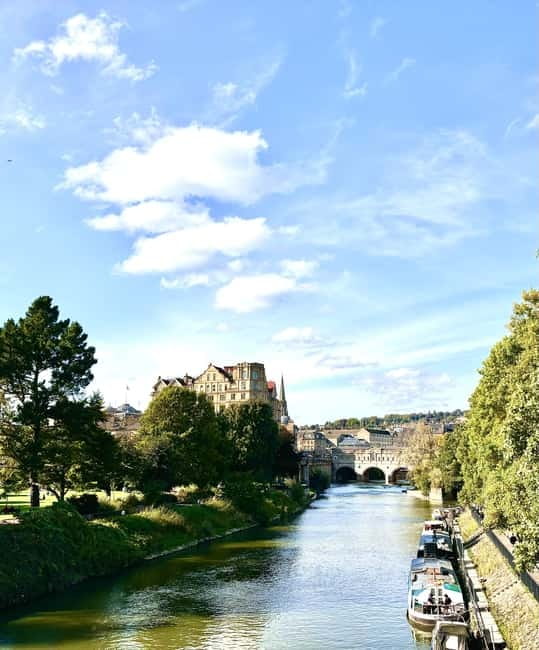
You end at Pulteney Bridge, an 18th-century bridge over the River Avon with shops on both sides. Olga describes it as inspired by Ponte Vecchio in Florence, which helps your brain connect Bath to a broader European design tradition.
This ending works well for two reasons:
- It gives you a natural stopping point after a lot of walking and learning.
- It’s visually satisfying and easy to photograph, so you get a clean mental “finish line.”
Olga also offers personalized recommendations for what to do next. Many visitors get great advice on their own schedule, and it’s smart to have the tour early if you want those tips to shape the rest of your day.
Price, pacing, and who this tour is for
This tour is listed at $21 per person and runs about 2.5 hours. For that price, you’re paying for guided interpretation, not paid entry tickets. The tour includes guidance for paid attractions like the Roman Baths and general practical mapping tips, so you can keep exploring with less guesswork.
Pacing is described as relaxed, and the tour is on foot. Still, it includes slopes and uneven surfaces, so it’s not ideal for people with very limited mobility, even though it is listed as wheelchair accessible.
Language is exclusively Spanish. If your Spanish is strong enough to follow street-level conversation and explanations, this is excellent. If your Spanish is basic, you may still enjoy the visuals, but you may lose the deeper story.
Who will likely love it most:
- People with a short time window in Bath
- Anyone drawn to Roman Britain, Georgian architecture, or Austen-related stops
- Travelers who like anecdotes and hidden-corner style details, not just monuments
Who might want to consider alternatives:
- Anyone who cannot comfortably follow Spanish
- Anyone who needs flat, fully accessible routes with minimal walking
It also helps to know the tour runs even in rain. If weather becomes extreme, you are contacted in advance about rescheduling or cancellation. So pack for damp English conditions and wear shoes you trust.
Final verdict: should you book Explore Bath in Spanish with Olga?
Yes, if you want Bath to feel like a connected story instead of a list of famous stops. Olga’s Spanish delivery gets praise for being excellent, and the tour’s strongest feature is how it ties together Roman water meaning, Georgian social life, and literary landmarks into one easy walking loop.
Book this when:
- You have about half a day
- You want a local guide who can answer questions
- You’d like practical recommendations for what to do after, so your remaining time in Bath feels smarter
Skip it or think twice if:
- Spanish-only tours are a strain
- You need a mostly flat route with minimal walking
FAQ
Is the tour conducted in Spanish only?
Yes. The tour is conducted exclusively in Spanish.
How long is the walking tour?
The duration is approximately 2 hours and 30 minutes.
Where do I meet the guide?
You meet at Rebecca’s Well, located on the north side of Bath Abbey. The guide will wear a blue lanyard with a RutasUK identification badge.
Does the tour run in bad weather?
The tour takes place even in the rain. In extreme conditions, you will be contacted in advance to reschedule or cancel.
Is the tour wheelchair accessible?
It is listed as wheelchair accessible, but it is also on foot with some slopes and uneven surfaces, so it is not recommended for people with very limited mobility.
What should I bring, and are there restrictions?
Wear comfortable shoes and clothes suited to the weather. A bottle of water can be helpful. Alcohol and drugs are not allowed, and audio recording is not allowed. Pets are welcome but must be kept on a leash and supervised.
Newest entries under Bath

Bath Tours & Experiences, compared.
City Walking Tour with Optional Roman Baths Entry
Read our review →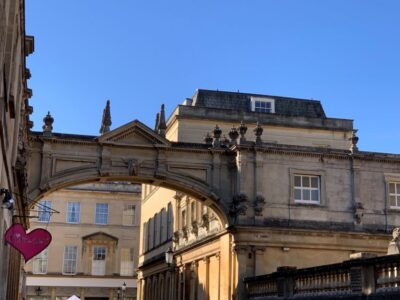
Walking Tour with Qualified Blue Badge Tourist Guide
Read our review →

Stonehenge & the Cotswolds Day Tour with Entry
Read our review →
Bridgerton Filming Locations Walking Tour with Music
Read our review →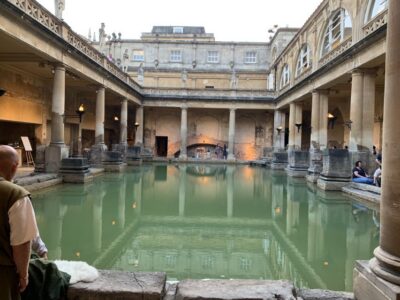
Guided City Walking Tour with Entry To The Roman Baths
Read our review →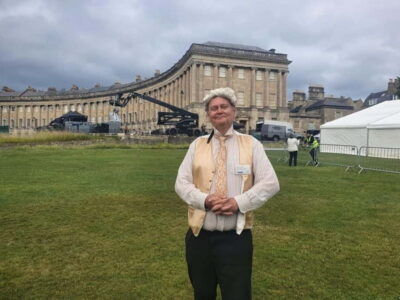
Guided Tour of Iconic Bridgerton Filming Locations
Read our review →
Browse the lists this tour appears in