Reviewed · LONDON TOURS & EXPERIENCES
Disastrous London: Plague, Fire, and Revolution
London gets dark, fast. This walking tour strings together plague, fire, revolution, and the city’s literary past into one tight 2 hours you can actually picture. I like the way you pass plague-pit ground and then move straight into the execution stories, with real locations and a lively guide style, including Andrew Hallett. I also love the Shakespeare Blackfriars stop, where the setting is so specific you feel like you’re stepping into a scene rather than reading a postcard.
There’s one thing to think about up front: this is still a walk through historic sites, so comfortable shoes and water matter, even though it’s only two hours. Also, food and drinks are not included, and the tour rules say alcohol is not allowed, so plan around that when you hit the Shakespeare-area drink stop.
In This Review
- Key points
- Where the tour begins: a priory church that dates back to 1123
- Plague pits and execution sites: London’s dark chapters, told by walking
- 1381 Peasants’ Revolt: poll tax anger and a city that turns on itself
- The Great Fire of 1666 route: pre-fire structures and a last stand at Cock Lane
- Shakespeare’s former Blackfriars home and the cellar pint stop
- The alleyways, street names, and architecture that make the walk feel alive
- Price and pacing: what $26 gets you in 2 hours
- Who this Disastrous London tour is really for
- Quick prep checklist (so the walk stays enjoyable)
- Should you book this tour?
- FAQ
- How long is the tour?
- How much does it cost?
- Where do I meet for the tour?
- What language is the tour guide speaking?
- Is the tour wheelchair accessible?
- What is included in the experience?
- Is food or drinks included?
- What should I bring, and is alcohol allowed?
Key points

- Carthusian priory next to a plague pit, plus London’s oldest priory church dating to 1123
- Execution-site storytelling tied to Protestant martyrs, with pop-culture humor from your guide
- 1381 Peasants’ Revolt location, framed like a battlefield with the poll tax stakes front and center
- Great Fire of 1666 route, including pre-fire structures and the Duke of York and 100 men story
- St. Paul’s as phoenix, seen after the fire chapters so it hits harder
- Shakespeare’s former Blackfriars connection, including a stop at his cellar site
Where the tour begins: a priory church that dates back to 1123
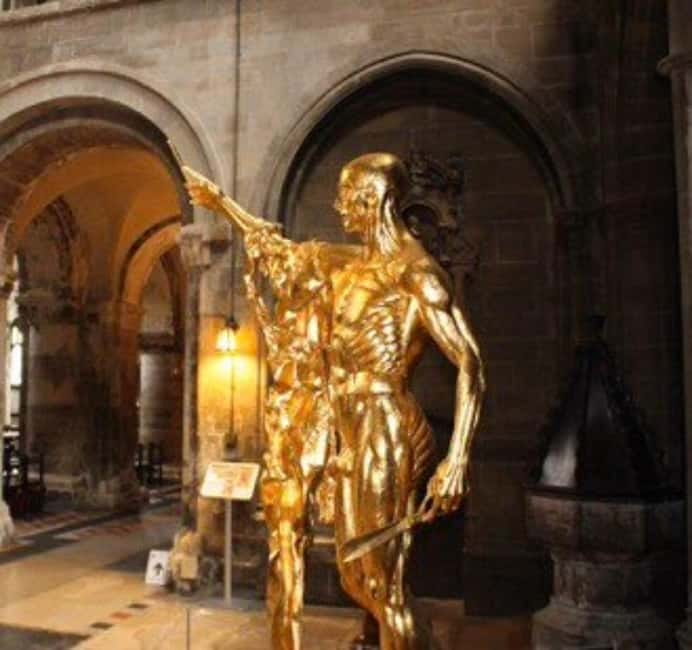
I like tours that start with a place you can’t easily skip, and this one does that immediately. You begin at a former Carthusian priory built right next to a plague pit, where monks once prayed for souls tied to the dead. That single setup gives you the mood fast: London’s worst days are not just “history,” they’re embedded in the ground under your feet.
The priory includes what’s described as the oldest priory church in London, dating to 1123. You’ll likely recognize it because it has shown up in major films and TV over the years, from Four Weddings and a Funeral to Avengers, plus Shakespeare in Love and Sherlock Holmes. The practical value here is that you learn how real architecture becomes a movie set, not in a vague way, but by standing right where it happened.
One small note for your expectations: the tour moves on quickly, so don’t plan on lingering too long at each stop. If you’re the type who loves soaking in stone details for 20 minutes at a time, keep your “slow tourist” pace for later and enjoy the tour’s storytelling rhythm now.
Also inked in under London
- London: The London Eye Entry Ticket
★ 4.6 · 35,875 reviews - From London: Harry Potter Warner Bros Studio Tour
★ 4.7 · 26,588 reviews - London: Westminster to Greenwich River Thames Cruise
★ 4.5 · 22,836 reviews
Plague pits and execution sites: London’s dark chapters, told by walking
The plague part isn’t treated like a generic horror exhibit. You’re taken to the former plague-pit area next to the priory, then guided into the execution-site storytelling that follows. That pairing works because it contrasts fear of death with fear of punishment, both tied to religious and political conflict.
You’ll visit what’s framed as the execution spot, with a focus on Protestant martyrs. Your guide also adds a cheeky wink to pop culture references, including a joke about Mel Gibson and Protestant stories. Even if you don’t care about the film nod, the humor helps you stay engaged while the details stay grim.
This is also the moment where I think you get the best “value per minute.” In two hours, you don’t just learn dates. You learn how London physically organized violence into its public spaces, and how that shaped the way people understood power. If you prefer your history dramatic and location-based, this is where it clicks.
The trade-off is also clear: the subject matter is heavy. The tour is designed for people who can handle stories of violence, mayhem, and executions without needing a softer tone.
1381 Peasants’ Revolt: poll tax anger and a city that turns on itself
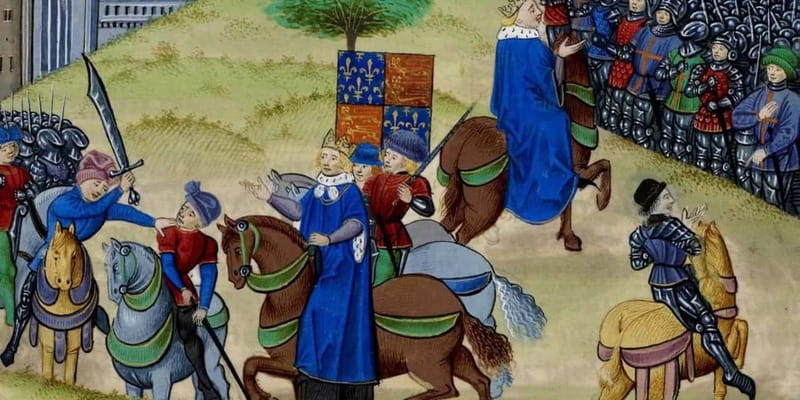
Then you move into the 1381 Peasants’ Revolt, visiting the site connected to that uprising. I like this stop because it’s explained as something closer to a battlefield than a museum exhibit. The context you get focuses on the poll tax and the wider tensions between the city, leadership, and ordinary people.
You also hear how the revolt involved major players of the day, including a Lord Mayor and a king, and how the revolutionary energy is intense, fast, and then ends badly. The guide’s framing matters here. When a tour tells you only what happened, it can feel distant. When it explains who had power, who was pushing back, and how quickly things escalated, you start to understand why the city felt unstable in the first place.
If you’re the kind of traveler who likes cause and effect, you’ll probably enjoy this segment most. You come away with a clearer sense of how taxation and public policy can become a spark, not just a paperwork story.
The Great Fire of 1666 route: pre-fire structures and a last stand at Cock Lane
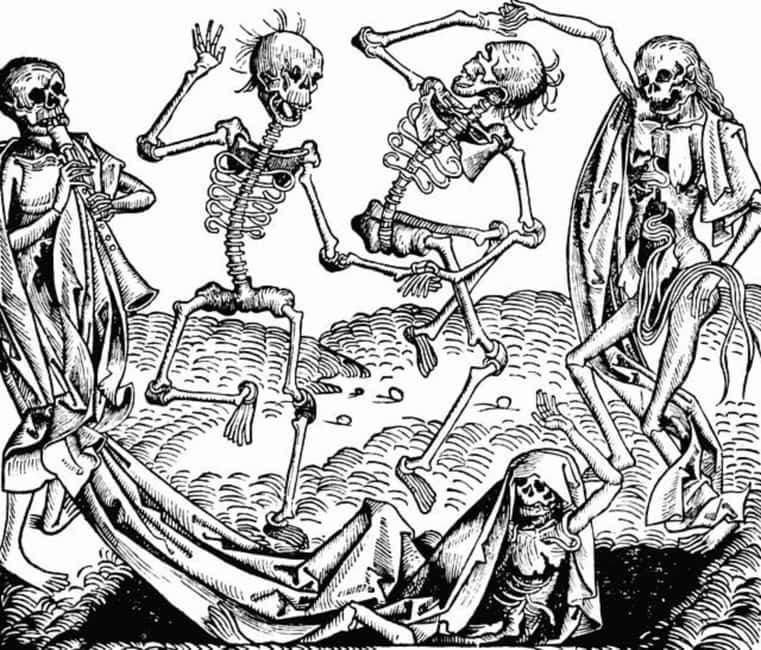
After the revolt, the tour jumps forward to the Great Fire of 1666, and it’s built to make the timeline feel physical. You see several pre-fire structures, which is one of the most effective ways to understand the scale of what happened. When you’re looking at older buildings that survived, the fire stops being a chapter in a textbook. It becomes a before-and-after you can almost read like a diagram.
You also hear the story connecting London’s response to major figures, including the Duke of York and 100 men positioned for what’s described as a last stand. The route includes Cock Lane, which is presented with a straight-to-the-point name and a strong sense of place, so you’re not wandering. You’re marching through “where the story was moving.”
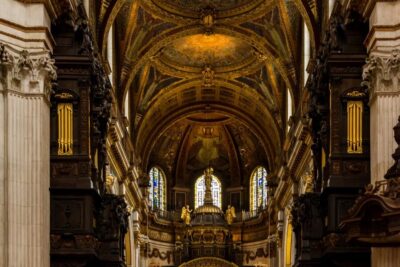
Then, you get to the emotional payoff: St. Paul’s, described as London’s great phoenix, raised from ashes. That matters because you’re not just learning that the cathedral was rebuilt. You’re seeing the fire chapter first, which makes St. Paul’s look like an answer, not just a monument.
The only consideration here is weather. If it’s cold or rainy, you’ll want to keep moving since this is still a walking tour through multiple exposed areas. Bring water and plan to keep your pace steady.
A page further on, still in London:
- Magical London: Harry Potter Guided Walking Tour★ 4.7 · 22,044 reviews
- London: Madame Tussauds London★ 4.6 · 20,915 reviews
- London: Warner Bros. Studio Harry Potter Tour & Branded Bus★ 4.7 · 19,194 reviews
- London: Tower Bridge Entry Ticket★ 4.7 · 15,560 reviews
Shakespeare’s former Blackfriars home and the cellar pint stop
One of the most fun parts of this tour is how it pivots from violence and fire into London’s literary connection. You visit Shakespeare’s former home area, specifically tied to his Blackfriars connection and the former Blackfriars gatehouse. The highlight for this stop is the story that his cellar is still there, so you’re stepping into a space connected to his life in a very concrete way.
The experience description also includes enjoying a pint from Shakespeare’s cellar. Here’s the practical angle: food and drinks are not included, and the tour rules say alcohol is not allowed. That means you should treat the Shakespeare-area drink moment as optional and follow the tour’s instructions on the day. If you want a drink, consider bringing cash and checking what’s permitted at that specific stop.
Even with that caution, the setting is likely to be memorable because it’s about proximity. You’re not just learning that Shakespeare lived and drank somewhere in London. You’re being routed to a specific site, and the guide makes the connection feel real.
If you like London tours that mix the grim with the human, this is a good balancing act. After plague pits and execution stories, you get a chance to laugh, reset, and then head back into another layer of history.
The alleyways, street names, and architecture that make the walk feel alive
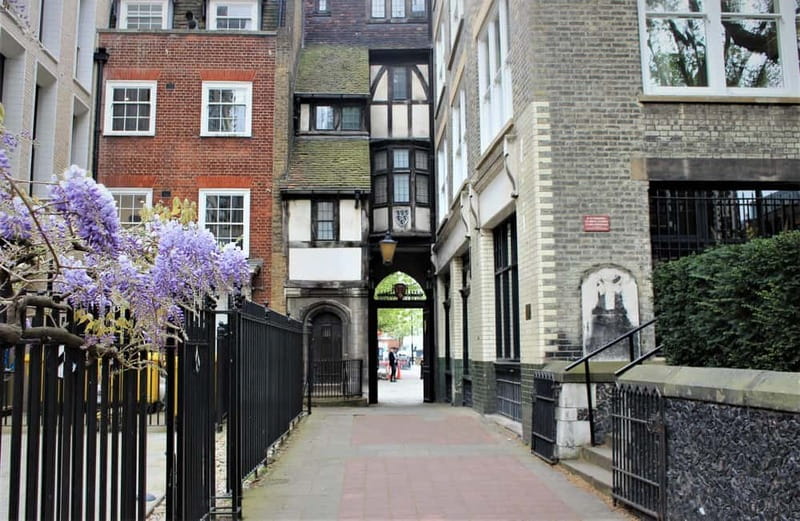
Between the big anchor stops, you’ll walk through historical alleyways and see centuries-old architecture. This part may not sound dramatic on paper, but it’s where the tour starts to feel like London. The guide also works in some cheeky street names, which adds a lightness without taking away from the seriousness of the main themes.
I like these “in-between” moments because they keep you oriented. Two hours can feel like a blur if everything is just landmark after landmark. Here, the route has texture. You learn how the city’s smaller streets connect major events and major locations.
For the best experience, keep your eyes up as you walk. You’re moving through older streets where small details matter, like doorways, street layouts, and how buildings fit together across centuries.
Price and pacing: what $26 gets you in 2 hours
At $26 per person for a 2-hour guided walking tour, the value is mostly about focus and story density. You’re paying for a route that covers major themes in a short time, including plague history, executions, the 1381 revolt, the Great Fire of 1666, and Shakespeare’s Blackfriars connection. That’s a lot for a half-morning or quick afternoon slot.
This kind of pricing usually makes sense when the guide is doing real work, not just reciting facts. In this case, the guide Andrew Hallett is named, and the overall feedback points to enthusiastic, engaging delivery and strong historical command. The tour also encourages questions, so you get more than a one-way lecture.
The trade-off, again, is that it’s walking. It’s not a sit-down museum experience. If you want long stops, slow photo breaks, or indoor shelter from crowds, you might find it a bit fast. On the other hand, if you like high energy and clear stops, you’ll likely feel the time fly.
Also remember: food and drinks are not included. If you plan to eat or you expect a full meal, budget separately.
Who this Disastrous London tour is really for
This tour suits you if you enjoy history that’s dramatic, location-based, and unapologetic about the darker side of the city. You’ll probably get the most out of it if you’re comfortable with stories involving plague, executions, and violent political conflict, even when the guide adds humor to keep it human.
It also works well for first-time London visitors who want a different angle than the usual checklist. You still get big-name London references in the setting, like St. Paul’s and Shakespeare connections, but the route tells a less standard story.
If you travel with someone who likes Shakespeare but is also curious about medieval and early modern London conflict, this can be a great shared hour-and-a-half. The mixture of fire and literature is a nice way to keep different tastes aligned.
If, however, you’re looking for a gentle, family-friendly history walk with no violence and no heavy topics, you might want a different tour style.
Quick prep checklist (so the walk stays enjoyable)
You’ll walk through historic sites, so show up ready. Bring comfortable shoes since the main requirement is steady walking. Pack water, especially if the weather is warm, since two hours is long enough to feel it. Wear comfortable clothes, since old London streets can mean uneven surfaces.
Also, note the tour rules: alcohol and drugs are not allowed. That matters around the Shakespeare cellar stop, so plan around what’s permitted on the day.
Should you book this tour?
I’d book it if you want a fast, story-forward London walk that connects major disasters and uprisings to real places. Andrew Hallett’s approach, which people describe as enthusiastic and engaging, seems built for travelers who like questions answered and a tour that doesn’t feel stiff.
I’d think twice if you need a lighter tone, longer breaks, or you’re not comfortable with walking at an active pace. And because food and drinks are not included, do not plan this as a full refreshment plan.
If your idea of a great London afternoon includes plague pits, revolts, fire, St. Paul’s, and a Shakespeare connection with a fun twist, this one fits the bill.
FAQ
How long is the tour?
The tour lasts 2 hours.
How much does it cost?
It costs $26 per person.
Where do I meet for the tour?
Meet outside the Tube Station next to a Cafe.
What language is the tour guide speaking?
The live tour guide speaks English.
Is the tour wheelchair accessible?
Yes, the tour is listed as wheelchair accessible.
What is included in the experience?
You get a guided walking tour, visits to historical sites, and stories about London’s history.
Is food or drinks included?
No, food and drinks are not included.
What should I bring, and is alcohol allowed?
Bring comfortable shoes, water, and comfortable clothes. Alcohol and drugs are not allowed.
Newest entries under London


London Tours & Experiences, compared.
Westminster to Greenwich River Thames Cruise
Read our review →
Magical London: Harry Potter Guided Walking Tour
Read our review →
Warner Bros. Studio Harry Potter Tour & Branded Bus
Read our review →