
Reviewed · UNITED KINGDOM
Coventry: St Mary’s Guildhall Coventry
Coventry’s medieval rooms feel oddly close. I love standing in the Great Hall where the 500-year-old Coventry Tapestry remains in its original spot, and I also love that you can visit the Medieval Kitchen that was hidden for 100 years.
If you want help turning the space into a story, you can join a daily guided history tour (11am or 2:30pm). If you prefer to move at your pace, the included digital self-guided tablet adds historical characters and room details as you go.
One thing to plan around: entry is for standard daytime visits only, so evening plans need a different option.
In This Review
- Key things I’d focus on before you go
- Entering St Mary’s Guildhall in Coventry city centre
- Why the Great Hall matters so much (and what to look for)
- The Coventry Tapestry: a 500-year still-in-place experience
- Guided history tours at 11am and 2:30pm, plus the tablet option
- The Medieval Kitchen hidden for 100 years
- From the War of the Roses to Mary, Queen of Scots
- Stained glass, paintings, and the feel of a working heritage site
- Price and value: is $11 worth it?
- Timing it with your Coventry day
- Practical rules, what to pack, and what could slow you down
- Who this fits best in your travel style
- Should you book St Mary’s Guildhall in Coventry?
- FAQ
- Where is St Mary’s Guildhall located?
- How much does entry cost?
- How long is the visit?
- What time are the guided tours?
- Are guided tours included, or is it self-guided?
- What is included with my ticket?
- Are evening visits available?
- Is St Mary’s Guildhall wheelchair accessible?
- Can I bring food, drinks, or large bags?
- Is free cancellation available?
Key things I’d focus on before you go
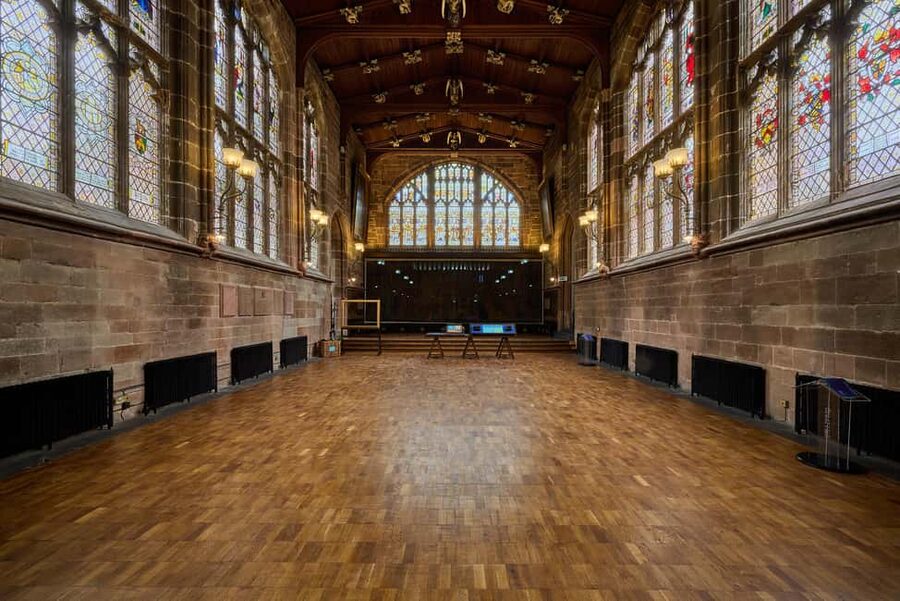
- Coventry Tapestry in situ: art you see in the room it has occupied for centuries
- Great Hall scale: you understand why royal court life needed serious space
- Guided tours at 11:00 and 2:30: live context if you like a human storyteller
- Digital tablet tours: 360 degree images help with rooms that have steps
- The long-hidden Medieval Kitchen: a rare look at everyday medieval food prep
Entering St Mary’s Guildhall in Coventry city centre
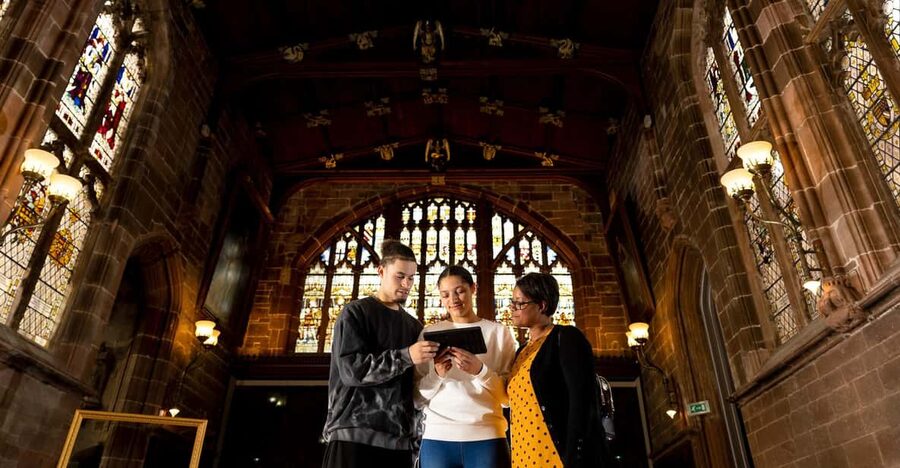
St Mary’s Guildhall sits in a prime spot in Coventry, on Bayley Lane right next to the Coventry Cathedral ruins. That location matters, because you’re not stepping into an isolated museum building. You’re walking into a layer of the city where the old power centre and the later cathedral story sit close together.
When you arrive, make for the entrance area and ticket desk, and have your booking details ready. Once you’re through, you’ll be set up for either a guided route or a digital self-guided one, with the tablet included.
This is one of those places where the building itself tells you what to pay attention to. Look up, note the windows and paintings, and then shift your focus room by room. It’s the easiest way to understand why this place mattered.
Signed into the guestbook for London just ahead of you:
- London: The London Eye Entry Ticket
★ 4.6 · 35,875 reviews - From London: Harry Potter Warner Bros Studio Tour
★ 4.7 · 26,588 reviews - London: Westminster to Greenwich River Thames Cruise
★ 4.5 · 22,836 reviews
Why the Great Hall matters so much (and what to look for)
The Great Hall is the heart of St Mary’s Guildhall, and it’s not just because it sounds impressive. It’s because this is where the royal court would have held sessions, which turns the space into something more than scenery.
In the Great Hall, you’ll find the Coventry Tapestry, famous for its age and for staying put. The key takeaway for you: you’re not seeing a tapestry that was moved for display. You’re seeing one anchored to its original setting, which changes how you read it. Your eyes naturally take in the scale, the room light, and the way people would have stood and looked back then.
Also pay attention to the stained glass windows and paintings in the main rooms. Even if you’re not a “technical art” person, stained glass works best when you see it where it was meant to be seen. The colours and shapes also help you pace yourself, so the hall doesn’t just become one long stare.
A practical tip: give yourself a slow minute before you focus on details. I’d rather you stand still for 30 seconds than sprint for the best photo spot and miss the visual rhythm of the room.
The Coventry Tapestry: a 500-year still-in-place experience
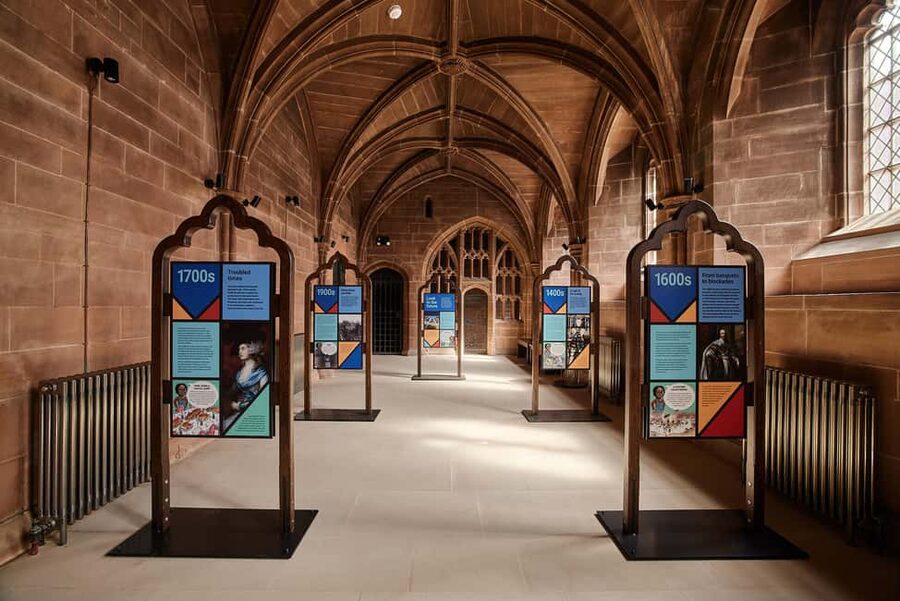
The headline attraction is the Coventry Tapestry, and it earns that status. It’s described as the oldest still in situ, which means it’s still in its original location after centuries. That alone makes the experience different from many heritage sites where the “wow” moment often depends on relocation or replicas.
What I like about seeing it here is the combination of scale and context. A tapestry can look impressive in a frame. It feels more powerful when it’s part of a ceremonial room designed for decision-making and authority.
As you look, think about what you’re standing in. This hall once supported the kind of official life where images and symbolism helped communicate power. Even if you only catch a few references, the room setting helps you understand why the tapestry would have been watched, not just admired.
If you’re the type who likes to read and re-read details, do it slowly. If you want a faster visit, aim for a first pass to absorb the whole scene, then return once you know where to look.
Guided history tours at 11am and 2:30pm, plus the tablet option
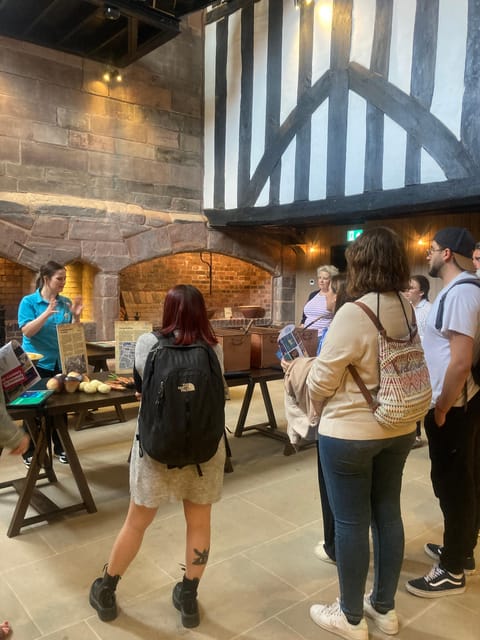
St Mary’s Guildhall gives you two ways to experience the rooms: guided tours or a digital self-guided tour using the tablet you get with entry.
If you choose the guided tours at 11am or 2:30pm, you’ll be with a room guide who can explain what you’re looking at as you walk. That matters because medieval buildings can be visually busy. A good guide helps you sort what’s decoration, what’s symbolism, and what’s practical daily life.
If you choose the digital self-guided option, you’ll still get story and context. The tablet approach can be great when you like control, because you can spend extra time where you’re interested and move on when you’re not. The digital experience also includes 360 degree images for rooms with step access, which is a big plus for anyone who finds steps tough.
Here’s the balanced view: if you learn best from a person, go guided. If you prefer to wander and keep your rhythm, go digital. Both options can work, and both are included once you’re paid in.
A page further on, still in London:
- Magical London: Harry Potter Guided Walking Tour★ 4.7 · 22,044 reviews
- London: Madame Tussauds London★ 4.6 · 20,915 reviews
- London: Warner Bros. Studio Harry Potter Tour & Branded Bus★ 4.7 · 19,194 reviews
- London: Tower Bridge Entry Ticket★ 4.7 · 15,560 reviews
The Medieval Kitchen hidden for 100 years
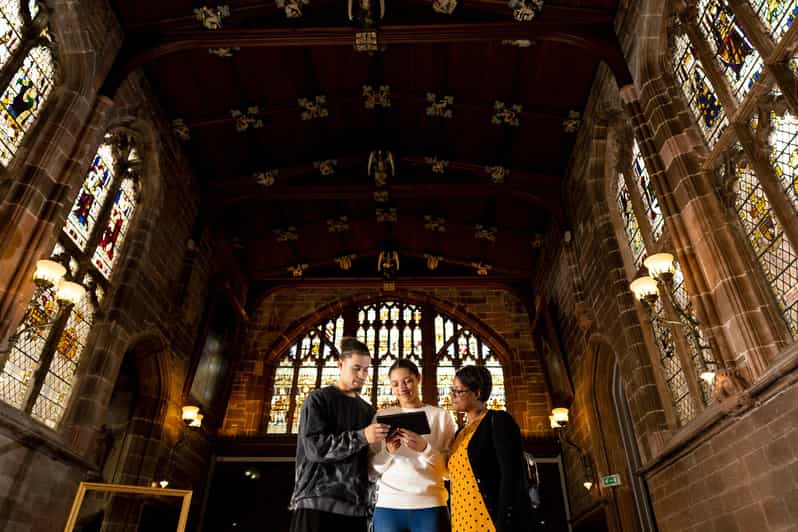
One of the most intriguing parts of St Mary’s Guildhall is the Medieval Kitchen that has been hidden for over a century. That’s not just trivia. It tells you the kitchen is special because it’s harder to find, harder to experience, and therefore more memorable when you finally see it.
When a kitchen is newly uncovered at this scale, you suddenly understand the everyday mechanics behind the grand rooms. The Great Hall represents power and public life. The kitchen represents feeding that power, every day.
I’d treat this stop like a different kind of visit. In a hall, you look up and around. In a kitchen, you look for function: where activity would have happened, how a room would have worked, and how the objects and space support real food preparation.
If you like “how people lived” details, this is the moment where the building shifts from impressive to personal. You’re moving from court and ceremony into the practical side of medieval life.
From the War of the Roses to Mary, Queen of Scots
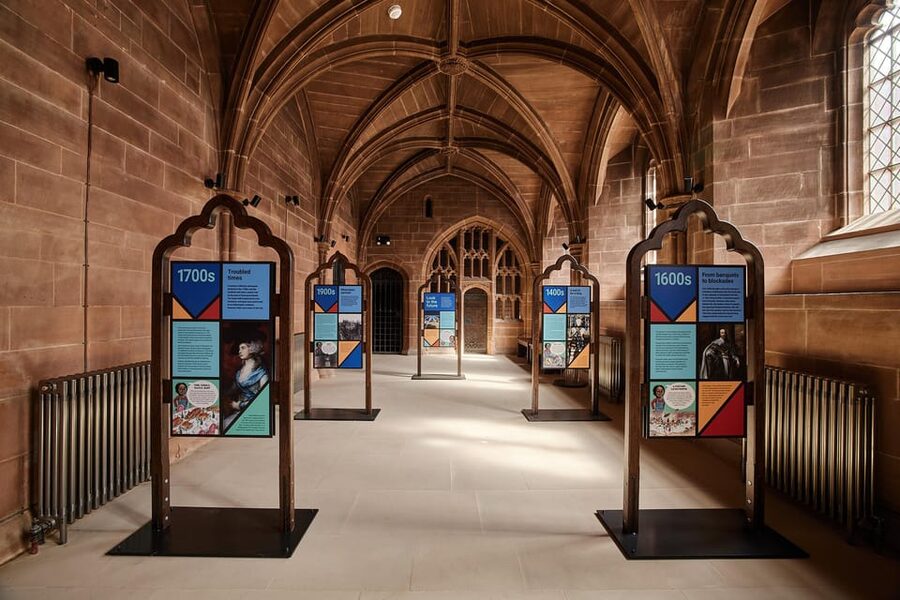
St Mary’s Guildhall wasn’t only pretty. It was used, repeatedly, in high-stakes moments. You’ll hear how it became a centre of power during the War of the Roses, and how it housed the Crown Jewels. That’s the kind of information that changes your body language in the room. You stop treating it like a stage set and start treating it like a workplace for history.
The site also connected to Mary Queen of Scots, when it served as a prison. Again, this is one of those “the building matters” moments. Your imagination does the heavy lifting, but the setting makes it easier. You can stand somewhere and sense the tension without needing to see a dramatized scene.
There’s also a literary layer connected with George Eliot. That detail matters if you like culture and ideas, because it shows the guildhall wasn’t only about royal power. It was also part of the wider intellectual life around Coventry.
If you want to get the most out of these references, don’t try to memorize them all. Pick one thread, like the Crown Jewels, and keep that thread in mind as you move between rooms. Your experience becomes coherent.
Stained glass, paintings, and the feel of a working heritage site
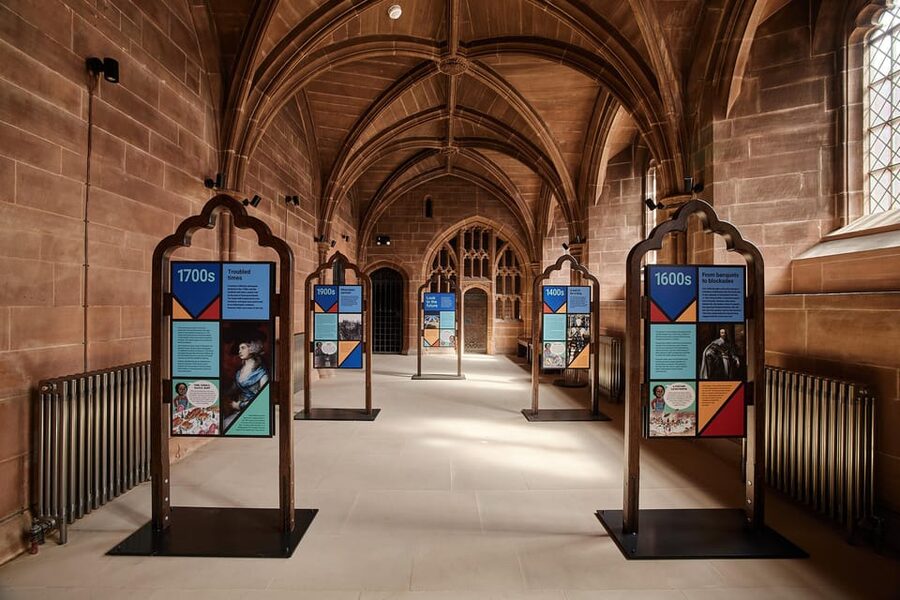
A lot of people expect medieval buildings to feel empty, like they’re only there for photos. St Mary’s Guildhall feels different because the decorative elements and historic storytelling work together.
In the main rooms, you’ll see stained glass windows and paintings, which add a visual layer that supports the narrative. When you pair that with guided explanations or the tablet’s room-by-room prompts, the artwork stops feeling random. It becomes part of why this space functioned the way it did.
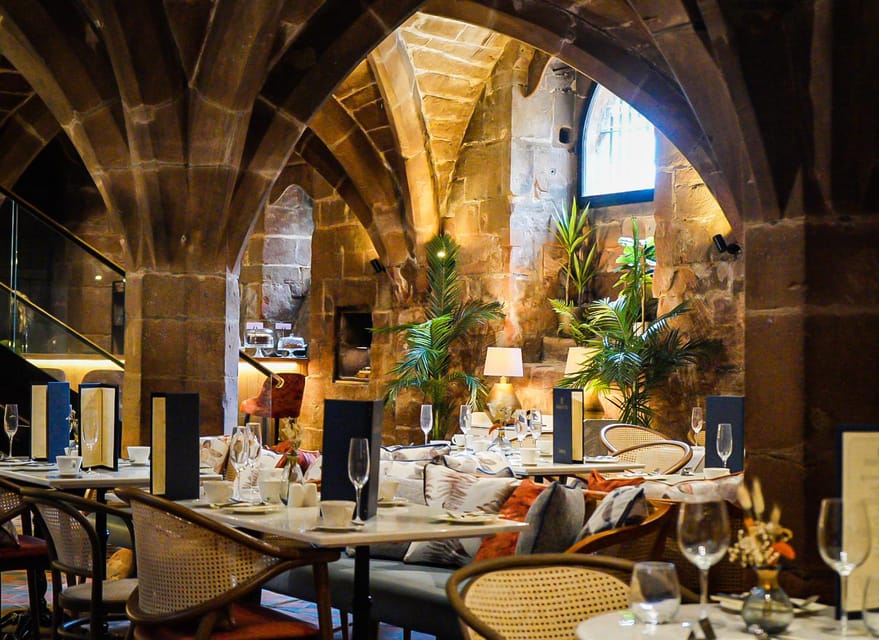
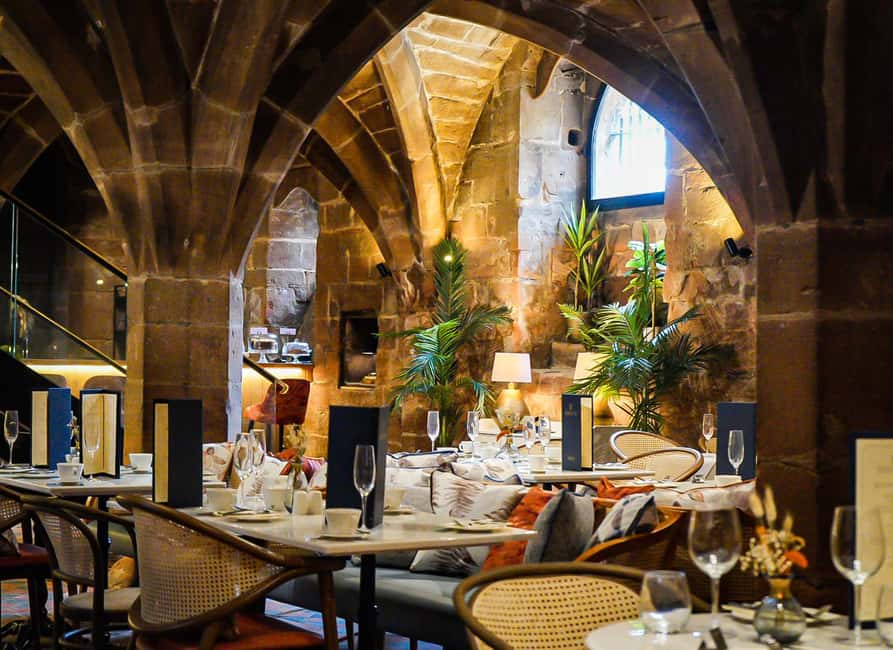
There’s also an undercroft area with a cafe, which is handy if you’re planning to make this more than a quick stop. You can take a breather, reset your energy, and then come back to the rooms with a fresh head.
One practical thing to note: you can’t bring your own food and drinks inside. If you want to eat, plan to use the cafe instead of packing a picnic.
Price and value: is $11 worth it?
At about $11 per person, St Mary’s Guildhall is priced like a small-city treasure, not a luxury “big attraction” day out. The value comes from two things you actually use: entry plus the digital self-guided tablet.
That tablet changes the equation. You’re not paying for a building with no support. You’re paying for a guided-like experience in your own timing, plus optional human-guided tours at set times.
Also, the standout attractions are not the kind that can be replicated easily elsewhere. A 500-year tapestry still in its original position is not a common find. The Medieval Kitchen hidden for 100 years adds a second “wow” that feels genuinely uncommon.
So for value, I’d look at your travel style. If you enjoy heritage with context, this price is strong. If you only like very large-scale sites with lots of outdoor space, this might feel compact. Still, for a city-centre visit, it’s a smart use of your day.
Timing it with your Coventry day
This is built for a daytime visit and is valid for standard daytime entry, not evening or special events. So if you’re touring Coventry with other stops, put St Mary’s Guildhall on your daytime plan, not your post-dinner slot.
The two guided departures at 11am and 2:30pm are easy anchors. If you want the most structure, aim for one of those. If you like flexibility, start when it suits you and let the tablet pace your visit.
Because it’s in the city centre near the cathedral ruins, you can stitch this into a wider walking day. It’s a good pairing with other Coventry landmarks since you’re already in the right zone.
For me, the best plan is to arrive fresh, do the key rooms with attention, and then use the cafe if you need a pause. That keeps you from rushing through the story-heavy parts.
Practical rules, what to pack, and what could slow you down
St Mary’s Guildhall has a clear set of site rules. You can’t bring weapons or sharp objects, and you should leave oversize luggage, bikes, and backpacks at your hotel. Large bags and food and drinks are also not allowed inside.
This matters for your experience because it affects how light you travel. If you show up with a bag that feels too large, you may have extra friction right at the start. So pack light, bring only what you truly need for a walk and some photos.
Smoking is not allowed, and pets are not allowed either, although assistance dogs are permitted. If you’re traveling with any mobility aids, the good news is that the venue is wheelchair accessible, with lifts and 360 degree images on the tablet for rooms that have step access.
If you want the smoothest visit, wear shoes you’re comfortable walking in. You’ll be moving between rooms, and the point of this place is to slow down visually, not to battle uncomfortable footwear.
Who this fits best in your travel style
This is a strong match if you like heritage that feels grounded in real places, not just in abstract facts. It’s especially good for you if you enjoy a mix of big moments and everyday details, because the Great Hall and tapestry give you spectacle, while the Medieval Kitchen brings you back to daily life.
It also fits well if you’re traveling with someone who likes both story and art. Stained glass, paintings, and the tapestry give you visuals to enjoy, while the guided or tablet explanations give you a way to understand what you’re seeing.
If you dislike guided experiences and prefer to control your pace, the digital self-guided route works because it’s built into your visit with the included tablet. If you love a live guide, the 11am and 2:30pm tours are your best bet.
Should you book St Mary’s Guildhall in Coventry?
Yes, I think you should book this if you want a high-value, city-centre heritage visit with two real “signature” stops: the Coventry Tapestry in the Great Hall and the Medieval Kitchen that was hidden for over a century.
Book it if you like context and you want your visit to make sense room by room. The tablet option is also a great safety net if you don’t want to commit to a guided schedule.
Skip it only if your priority is large, outdoor attractions or if you’re hoping for an evening event. This one is firmly a daytime experience, and it works best when you plan it as part of your Coventry touring day.
FAQ
Where is St Mary’s Guildhall located?
It’s located on Bayley Lane in Coventry city centre, next to the Coventry Cathedral ruins.
How much does entry cost?
The price is listed as $11 per person.
How long is the visit?
The duration is listed as 1 day.
What time are the guided tours?
Guided history tours run daily at 11am and 2:30pm.
Are guided tours included, or is it self-guided?
You can choose between guided history tours and a digital self-guided tour. Entry includes a digital self-guided tablet.
What is included with my ticket?
Included items are entry to St Mary’s Guildhall and the digital self-guided tablet.
Are evening visits available?
Tickets are valid for standard daytime entry and are not valid for evening or special events.
Is St Mary’s Guildhall wheelchair accessible?
Yes. The site has a range of lifts, and the tablet includes 360 degree images for rooms with step access.
Can I bring food, drinks, or large bags?
No. Food and drinks are not allowed, and luggage or large bags are also not allowed.
Is free cancellation available?
Yes. You can cancel up to 24 hours in advance for a full refund.