
Reviewed · HISTORICAL TOURS
City of London Historical Walking Tour
The City of London feels like a whole country in miniature. This 2.5-hour walk traces its evolution from Celtic roots through Roman, Saxon, and Norman eras, then lands on why this square mile became the envy of kings and a builder of legal and democratic ideas. I especially love the story-driven way the tour connects the Magna Carta moment to how power worked on the ground, not just on paper.
The second thing I liked a lot is the attention to the City’s identity, including the dragon emblem, and how the story turns in the late 1600s with plague, fire, and revolution still hanging in the air.
One drawback to keep in mind: this is a walking tour with no food stop, so plan for a snack later if you need one. It is also intentionally focused on lesser-seen corners rather than the big, famous photo stops most people expect.
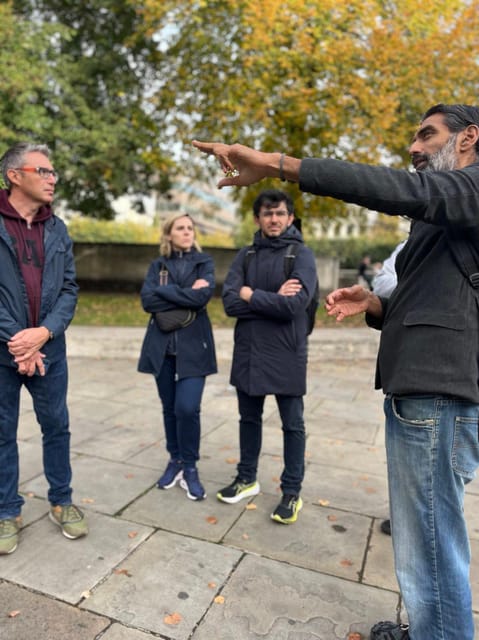
If you want London history with sharp angles and real city-meets-power stories, this is a strong fit. With a small group of up to 8 and a guide you can actually talk with, you get time to ask questions while you move through the square mile.
In This Review
- Key points to know before you go
- Start at Barbie Green and get oriented fast
- The square mile that kept calling its own shots
- Celtic, Roman, Saxon, and Norman, in a way you can picture
- How London defied monarchy and shaped democracy
- Magna Carta, corporate power, and why that connection is shocking
- Salters’ Hall and the civic world behind the myths
- Guildhall to Royal Exchange: where city pride meets power
- The ending at Bank of England, with the 17th-century turning point in view
- The dragon emblem: why one symbol can hold an entire identity
- What it feels like on the ground: pace, group size, and interaction
- Your guide: Arjun’s story-telling style and why it matters
- Price and value: $30 for 2.5 hours of power-plot history
- Who should book this City of London historical walk?
- Should you book Dragon Lore Tours’ City of London Historical Walking Tour?
- FAQ
- Where is the meeting point for the City of London Historical Walking Tour?
- How long is the walking tour, and how long is the experience overall?
- How much does the tour cost?
- Is food included on this tour?
- What languages are available, and is there a live guide?
- Is this tour wheelchair accessible, and how big is the group?
Key points to know before you go
- Celtic to Norman origins, told as a clear timeline rather than random facts
- Defiance of royal authority, with the City’s role in shaping legal and democratic foundations
- Magna Carta meets corporate power, where a corporation helps fuel empire-building
- Dragon emblem identity, and why the dragon became part of London’s self-image after crisis
- A resilience story through plague, fire, and revolution, finishing near the close of the 17th century
- Small group of 8, with multilingual support if you request it in advance
Start at Barbie Green and get oriented fast
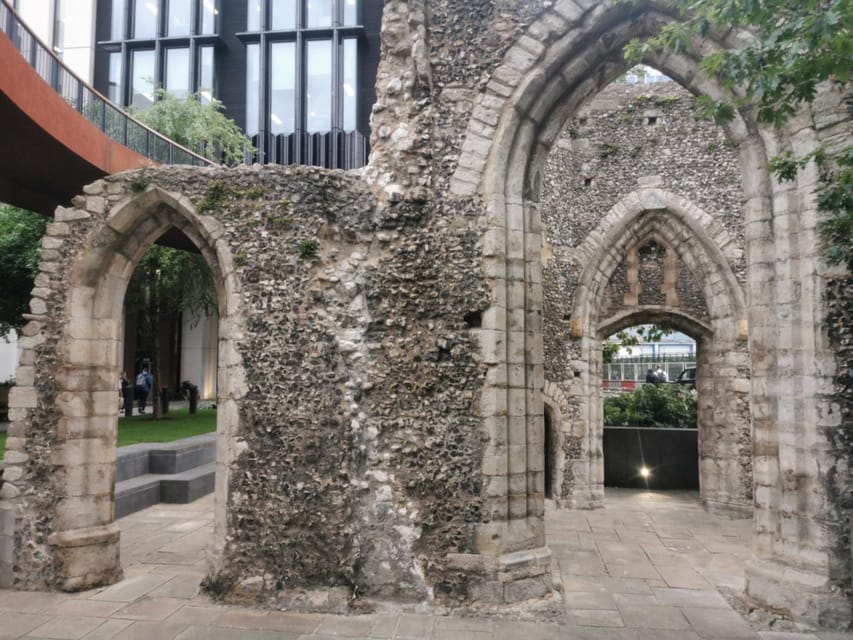
I like starting points that do not feel hidden, and Barbie Green hits that sweet spot. You meet at Barbie Green restaurant, opposite the ruins. The guide is easy to spot: longish hair and beard, plus a felt image of a green dragon on the backpack.
From there, the tour moves in short guided chunks, so the experience stays active instead of turning into a long lecture. You get little resets as you walk, then you hear a bigger theme at the next stop. You are covering one compact area, but it still manages to feel expansive because the stories keep shifting perspective.
More Guided Walking Tours in London
- Magical London: Harry Potter Guided Walking Tour
★ 4.7 · 22,044 reviews - London: The Original Jack the Ripper Walking Tour
★ 4.7 · 7,833 reviews - London: Harry Potter Movies Walking Tour (Kids Go Free)
★ 4.7 · 3,071 reviews
The square mile that kept calling its own shots
The core idea is simple: the City of London was not just another part of London. The tour explains how it developed as a distinct place, separate from nearby Westminster, and why it became known as the envy of kings.
As the route builds, you get a sense of how a city earns leverage. It is not only royal grants or heroic battles. It is also systems, agreements, and institutions that make authority harder to bully. That comes through again and again, especially when the story turns toward monarchy, governance, and rights.
One reason this works is that the tour frames the City as a living thing. You are not just learning dates. You are learning how different peoples and eras shaped the City’s attitude.
Celtic, Roman, Saxon, and Norman, in a way you can picture

A lot of London history tours jump straight to medieval London. This one goes earlier and keeps the timeline readable: Celtic roots, then Roman, Saxon, and Norman layers.
What I like here is the emphasis on evolution, not memorizing. As you walk, the guide builds the origin story so you can connect later developments to earlier identities. Even if your own London knowledge is patchy, the structure helps you catch up quickly.
The tour also uses legends and diverse peoples as part of the explanation, which makes the City feel more human. You start to understand that London did not become powerful by accident. It grew that way, step by step, across changing rulers and cultures.
How London defied monarchy and shaped democracy
This is where the tour gets serious in a satisfying way. You hear how the City of London pushed back against royal authority and took on a big role in shaping England’s democracy and legal foundations.
Instead of treating democracy as a modern topic, the tour ties it to how the City protected rights and privileges. That matters because it reframes what democracy can look like at street level: negotiations, charters, and enforcement, not just elections.
I also found the tone practical. The guide does not just claim the City mattered. The story shows how power was contested and how the City built a reputation for not bending too easily.
More British streets at boot pace:
- London: The Great British Rock and Roll Music Walking Tour★ 4.9 · 1,783 reviews
- London: Harry Potter Walking Tour in German★ 4.8 · 1,505 reviews
- London: Jack the Ripper Evening Walking Tour★ 4.9 · 1,449 reviews
- London: Street Art and Graffiti Guided Walking Tour★ 4.9 · 1,354 reviews
Magna Carta, corporate power, and why that connection is shocking
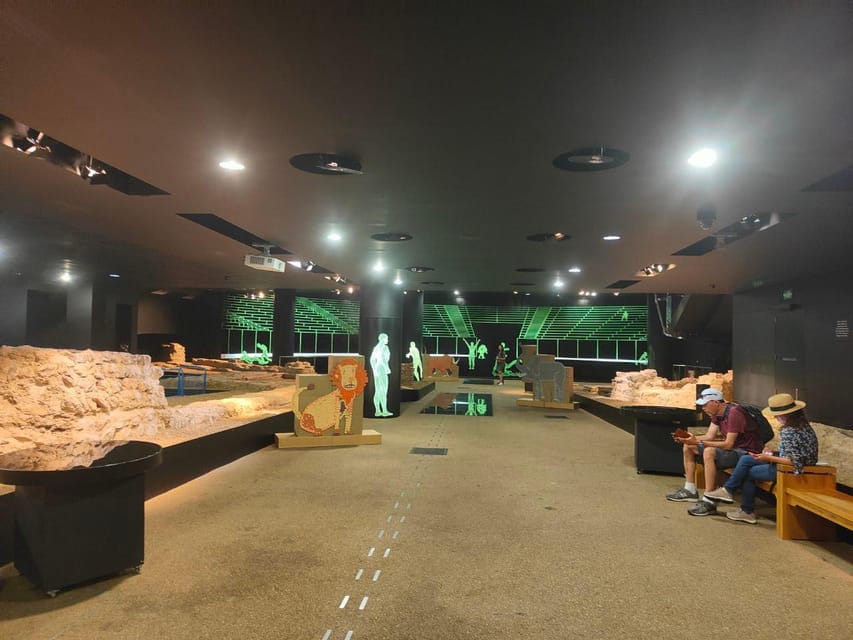
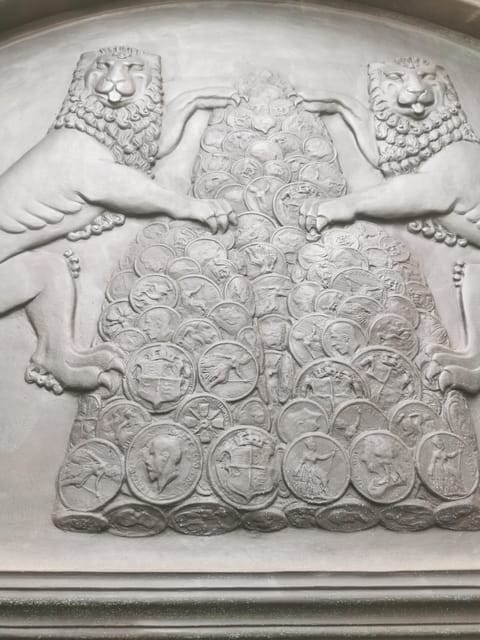
The tour focuses on the birthplace of the Magna Carta, and it treats that landmark as more than a museum highlight. You hear how legal foundations tied into the City’s broader identity, including how commerce and corporate organization helped drive enormous influence.
Here’s the part I did not expect to hit so hard: the idea that a corporation was born, and that this corporate force helped power the rise of a global empire. That theme gives the walk a modern angle. It is not anti-business, it is pro-how-institutions-work.
You leave with a clearer picture of how charters and corporations can reinforce each other. The City’s legal foundations did not exist in a vacuum. They grew in a place where trade, governance, and authority all rubbed shoulders.
Salters’ Hall and the civic world behind the myths
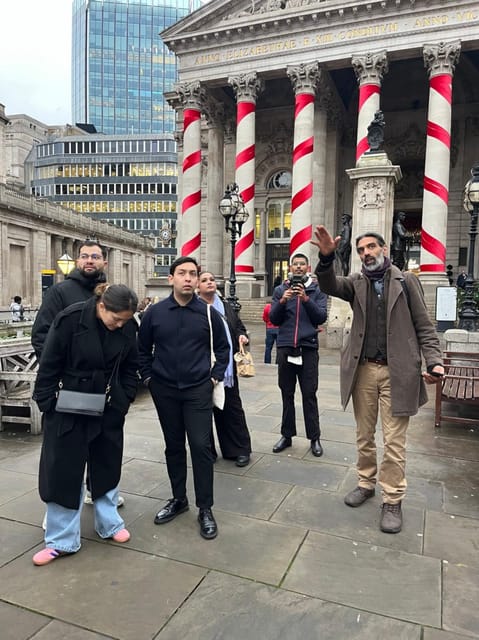
You spend time at Salters’ Hall, and I found it a great anchor stop for the City’s organized side. This is not the kind of place you stumble into as a tourist, which is exactly why I enjoy tours like this. The guide connects institutional life to the larger story about rights, privileges, and governance.
The timing is friendly for history walks: you get about ten minutes of guided focus at this stop, then you keep moving. That keeps you from zoning out. It also helps you remember what you just learned because you immediately see the next piece of the puzzle.
Even if you are not a history buff, you should appreciate this stop because it shows how the City functioned like a system. It is not only kings and battles. It is also halls, agreements, and civic structures that helped the City maintain its footing.
Guildhall to Royal Exchange: where city pride meets power
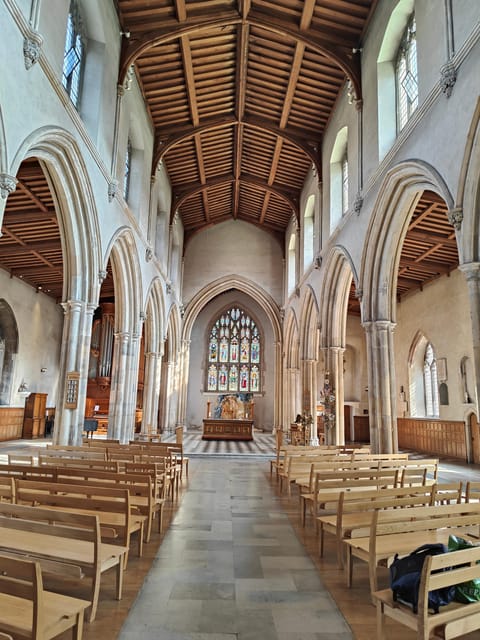
Next up is Guildhall, London, where the guide gives you a longer fifteen-minute block. This is a good chunk of time to slow down and really listen. It is also a place that reinforces the tour’s big message: the City is about institutions and authority, not just scenery.
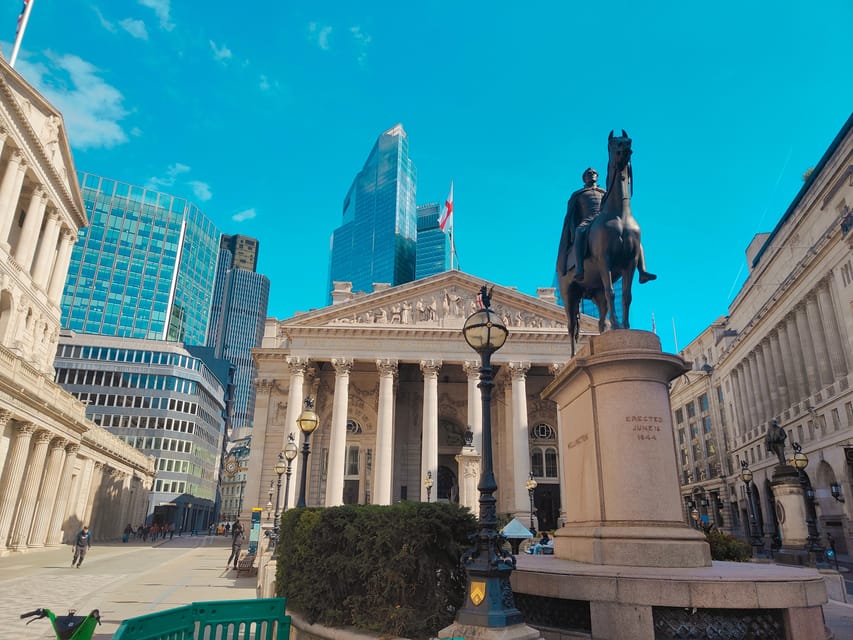
Then you move toward the Royal Exchange, London. This stop is short, about five minutes of guided time, but it still matters because it adds the commerce angle. The route keeps your attention on how the City’s identity was shaped by trade and the networks that trade created.
Right after that, you visit Mansion House for another brief stop. Even with limited time, it helps you understand that the City’s story is not one theme. It is layered, with civic life, governance, and economic influence all part of the same conversation.
The ending at Bank of England, with the 17th-century turning point in view

You finish at the Bank of England, which feels like a fitting last stop because it pulls the story toward modern financial authority. The tour closes with the City’s resilience story as it moves through the late 1600s.
Specifically, the narrative lands at the close of the turbulent 17th century, when fire, plague, and revolution shaped life in the City. You also hear how, against that dramatic backdrop, the City adopted the dragon emblem and rose like a phoenix to secure rights and privileges for generations.
Finishing at Bank of England gives the walk a neat emotional arc. You start with origins, then power struggles, then legal foundations and institutional growth, and you end with a place that represents how influence survives and evolves.
The dragon emblem: why one symbol can hold an entire identity
The dragon theme is not just decorative here. The tour treats the dragon emblem as a key piece of London’s identity, adopted after the crises of the 1600s.
I liked that the guide explains why the symbol matters, not just that it exists. It becomes a shortcut to understanding the City’s mood over time: defiant, resilient, and proud enough to brand itself after surviving chaos.
Also, it makes the whole tour feel cohesive. You see the dragon at the start in the guide’s backpack, then you carry the idea with you as the story moves from monarchy and law into crisis and recovery.
What it feels like on the ground: pace, group size, and interaction
This is a small group tour, limited to 8 participants. That number matters. With fewer people, the guide can answer questions without steamrolling the group, and you are more likely to notice details you might miss on your own.
The tour is wheelchair accessible, which I appreciate because it keeps the experience practical for more people. The walking is still part of the deal, so bring comfortable shoes and expect steady movement.
Timing is also a strength. At about 2.5 hours, it is long enough to build a story from origins to the 17th century, but short enough that you still have energy for an afternoon in central London afterward.
Your guide: Arjun’s story-telling style and why it matters
Dragon Lore Tours runs this walk with a live guide, and the guide experience is clearly a big part of what people remember. Arjun, in particular, is known for making the City’s history feel like an actual place you can stand in.
From the way the tour is described, Arjun uses insight into changing cultures and the quirks of the City across time. He also leans into spots that do not fit the standard London postcard routine. That makes the square mile feel bigger, because you are not stuck only on the most obvious landmarks.
If you like asking questions and trading ideas mid-walk, this format fits well. Small group size plus frequent stops means you can stay engaged without feeling rushed.
Price and value: $30 for 2.5 hours of power-plot history
At around $30 per person for a 2.5-hour guided walk, the value is strong if you enjoy interpretation more than sightseeing checklists. This is not a tour where you spend the whole time just looking at famous exteriors. You get context for why the City’s institutions mattered.
You also get a post-tour PDF overview of the locations and themes. I like having something to refer back to afterward, especially with a topic as tightly tied to institutions and law as this one.
No food is served, so factor that in if you travel with a sensitive hunger schedule. On the plus side, skipping a meal can make the tour feel more focused and keeps the timing clean.
Who should book this City of London historical walk?
I think this tour fits best if you want London history that explains how power works. You will probably enjoy it if you care about the Magna Carta, legal foundations, and the City’s distinctive role in resisting outside control.
It is also a good choice if you already visited major London sights and want something that feels off the main tourist track. The whole point is that the City’s identity is stronger than the typical skyline highlights.
If you are short on time but still want depth, this is a realistic way to cover a lot of conceptual ground in one compact area.
Should you book Dragon Lore Tours’ City of London Historical Walking Tour?
I would book it if you like history with an angle, not just a timeline. The combination of Celtic to Norman origins, the monarchy and democracy themes, the Magna Carta focus, and the dragon emblem story gives the tour a clear payoff arc.
Pass, or at least adjust expectations, if you need a classic sightseeing route with lots of well-known photo stops. This walk is more about institutions and identity than about spotting the most famous London views at every turn.
If that sounds like your kind of London, show up at Barbie Green, bring good walking shoes, and follow the green dragon.
FAQ
Where is the meeting point for the City of London Historical Walking Tour?
You meet at Barbie Green restaurant, opposite the ruins. The guide will be recognizable by longish hair and beard, and a felt image of a green dragon on their backpack.
How long is the walking tour, and how long is the experience overall?
The tour lasts about 2.5 hours.
How much does the tour cost?
The price is $30 per person.
Is food included on this tour?
No. Unfortunately, no food is served on this tour.
What languages are available, and is there a live guide?
The live tour guide is English. The experience also offers multilingual support if you tell the provider your language in advance.
Is this tour wheelchair accessible, and how big is the group?
Yes, it is wheelchair accessible. The group is small, limited to 8 participants.
Centuries in an Afternoon
- London: Historic Pubs of Central London Walking Tour
★ 4.9 · 1,065 reviews - London: Soho Music and Historic Pubs Walking Tour
★ 4.9 · 836 reviews - London: Rock ‘n’ Roll History Tour
★ 4.6 · 645 reviews - London: Westminster Abbey Tour with a Royal Heritage Guide
★ 4.7 · 614 reviews
Newest entries under London






Historical Tours, compared.



Westminster Abbey Tour with a Royal Heritage Guide
Read our review →

Browse the lists this tour appears in