
Reviewed · BIRMINGHAM TOURS & EXPERIENCES
Birmingham: Victorian Canals and Modern-Day Birmingham Tour
Canals turn Birmingham into a living map. I love the way this canal-focused route connects the 1770s canal moment to what you see on the water today, and I love getting the story clearly through the included audio receiver while you’re walking past busy streets. One thing to plan for, it covers about 3 kilometers in roughly two hours, so if you get chilly in wind, dress for it.
This is a compact, smart walk that starts right at the Library of Birmingham in fresh new Centenary Square, then threads into areas where old industry and modern culture sit side by side. You’ll stop at major civic spaces like Oozells, Victoria, and Chamberlain Squares, with public art and architecture doing half the work of telling the story.
Guides lead the pacing and bring the city to life with humor and real city context. The best part is that the tour doesn’t treat Birmingham like a museum. It treats it like a place that keeps reinventing itself, canal by canal, square by square.
In This Review
- Key highlights worth your time
- Starting at the Library of Birmingham and reading Centenary Square art
- International Convention Centre to Symphony Hall: where modern Birmingham flexes
- James Brindley’s 1770s canal: the 3-minute history that changes how you see water
- Rejuvenated waterways and new uses at Brindleyplace
- Victorian ambition: Civic Gospel and the Municipal Revolution explained on the ground
- Oozells, Victoria, and Chamberlain Squares: public art plus architectural variety
- Price and value: what $20 gets you in two hours
- Pacing, distance, and how to make the most of the route
- Who this Birmingham canal walk is best for
- Should you book this Victorian canals and modern Birmingham tour?
- FAQ
- Where does the Birmingham tour start?
- How long is the tour, and how far do you walk?
- What’s included with the ticket?
- Do I need headphones?
- Is the tour available in English?
- What stops are part of the route?
- Can I cancel if my plans change?
Key highlights worth your time
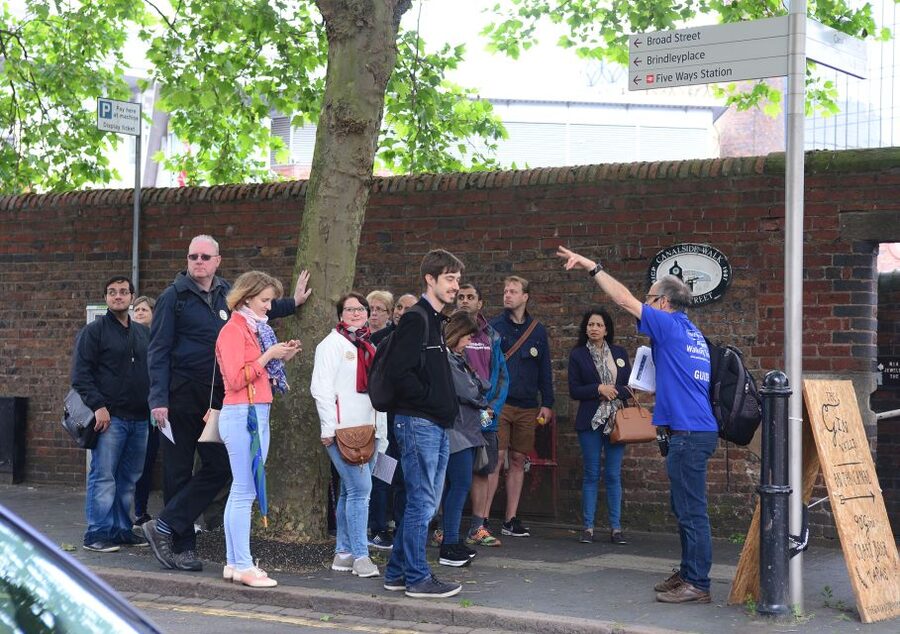
- Centenary Square sets the industrial scene with public art that hints at Birmingham’s rise and ambition
- Audio receivers help you hear the guide even when you’re surrounded by city noise
- Symphony Hall and the International Convention Centre show modern Birmingham, right in the route
- James Brindley’s canal is explained in plain terms and tied to why Birmingham grew
- Brindleyplace shows Victorian effort meeting today’s uses along rejuvenated waterways
- City squares turn into open-air architecture lessons across eras
Starting at the Library of Birmingham and reading Centenary Square art
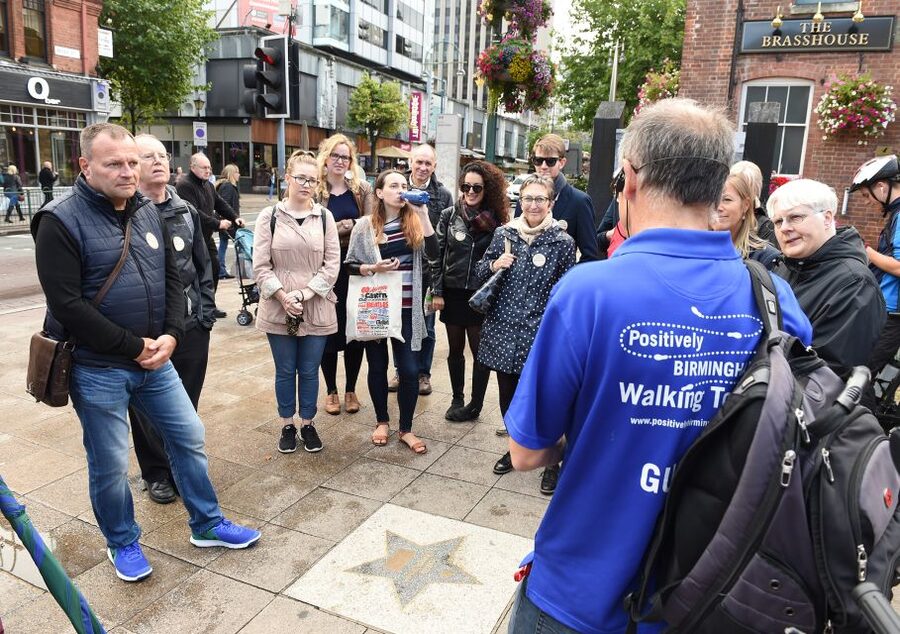
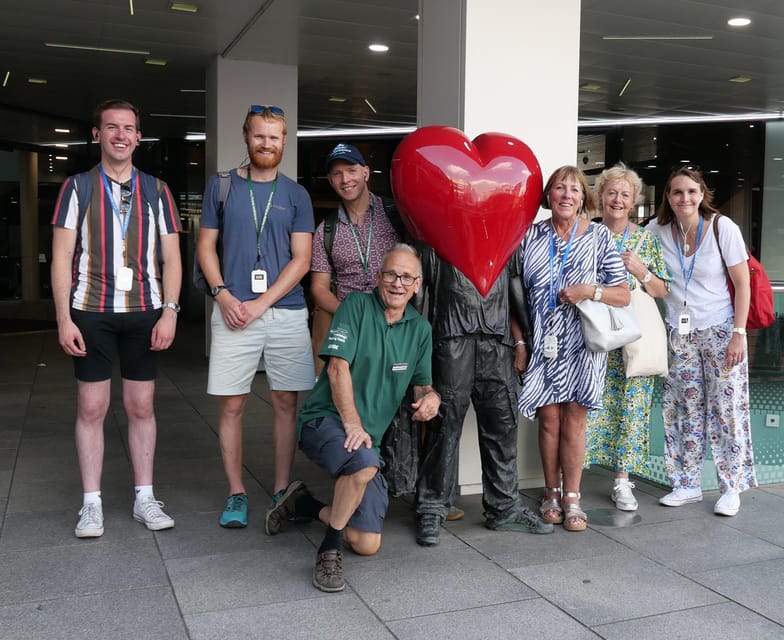
The tour begins at the front entrance of the Library of Birmingham. Look for a small pop-up stand that marks the meeting point, then head toward Centenary Square. This is one of those starts that feels designed to reset your brain. You begin in a modern, central space, and the guide uses it as a launchpad for what comes next.
Centenary Square itself is a clue. The public art here gives you early hints about Birmingham’s past and the Industrial Revolution story you’re about to walk through. Even before you reach the canals, you get an important sense of scale: Birmingham grew fast, rebuilt often, and it still carries the fingerprints of commerce and industry into its civic spaces.
What I like about this start is that it avoids the common “just follow the guide” vibe. You’re actively learning how to read a city. Buildings around the square stop being random backdrops and start becoming part of the narrative, arts on one side, commerce on the other, and public spaces stitching it together.
A practical note: since you’re starting in the city center, this tour is easy to combine with other sightseeing. You’re not traveling far just to begin.
Also inked in under Birmingham
- Birmingham: Cadbury World Entry Ticket
★ 4.4 · 230 reviews - Birmingham: Slogging Gangs Guided Walking Tour
★ 4.2 · 216 reviews - From Birmingham: Cotswolds Full-Day Tour
★ 4.7 · 215 reviews
International Convention Centre to Symphony Hall: where modern Birmingham flexes
From Centenary Square, you head through the International Convention Centre area, then toward Symphony Hall. The walk isn’t just about ticking off a landmark. The guide explains why Symphony Hall is known for some of the best concert-hall acoustics around, and you get a sense of how Birmingham invested in cultural identity alongside industry.
This section matters because it keeps the tour honest. Birmingham is not only Victorian brick and canal cuts. It also runs on modern institutions, conference energy, and the kind of civic spending that turns a working city into a visitor-friendly one.
If you love architecture, you’ll notice how the route moves between styles without much fanfare. That contrast is the point. It trains your eyes to spot how older planning decisions shape modern movement, and how newer buildings borrow street logic rather than erase it.
If you’re not into concert halls, don’t worry. The guide ties what you see to the larger theme, how Birmingham keeps reinventing its public life.
James Brindley’s 1770s canal: the 3-minute history that changes how you see water
Now the tour hits its heart. You’ll hear why the opening of James Brindley’s canal into Birmingham, in the 1770s, was so important for development. This is the moment where the canals stop being background scenery and become the reason Birmingham mattered.
The guide frames it around a simple idea: transport changed everything. Once canals connected the town to wider networks, Birmingham could move goods, raw materials, and products more efficiently. That practical shift is the kind of historical cause-and-effect that sticks, because you can literally walk along where the impact would have played out.
And here’s the clever part. The tour doesn’t treat canal history like a one-time event. It links that 18th-century boost to what you’re seeing now, rejuvenated waterways with newer uses. So even if the canal line is more about today’s footpaths than old cargo barges, you still understand why the line exists.
Rejuvenated waterways and new uses at Brindleyplace
As you move through Brindleyplace, the tour shifts from founding stories to visible change. This is where the canal experience feels most modern. The waterways are rejuvenated, and you can see how people use them now, not only as infrastructure but as part of the city’s public life.
Brindleyplace is a strong stop because it shows a balance Birmingham does well: preserving the bones of industry while reworking the function for current days. You’re not asked to admire canals from a distance. You’re encouraged to look at how the waterfront supports strolling, social space, and everyday city rhythms.
If you’re the kind of traveler who likes photos, this stretch gives you easy compositions. If you’re more practical, it still delivers. You’ll leave understanding why canal restoration can be more than pretty planning, it can change how neighborhoods feel and how people move through a city.
One caution: because this area is more active, keep your headphones ready and listen for the guide’s positioning cues. A good hearing moment can happen quickly at turns and open stretches.
A page further on, still in Birmingham:
- Birmingham: Winterbourne House and Garden Admission Ticket★ 4.7 · 199 reviews
- Birmingham: Guided City Center Walking Tour (10:30am & 2pm)★ 4.8 · 186 reviews
- From Birmingham: Stonehenge & Bath Day Tour★ 4.6 · 158 reviews
- Alton Towers Resort: Entrance Ticket★ 4.2 · 96 reviews
Victorian ambition: Civic Gospel and the Municipal Revolution explained on the ground
The next layer is Victorian. You’ll walk through areas tied to the huge efforts of the Victorians to shape Birmingham as a model for others. This section is more than a general “Victorians built stuff” recap. The guide connects Victorian planning to lived realities, education, clean water, and housing conditions.
You’ll hear about the Civic Gospel and the Municipal Revolution, and you’ll get the meaning in plain terms. Reformers pushed for improvements that weren’t only about morals, they were about systems. They wanted better education, better sanitation, and removal of poor quality housing. It’s a reminder that the city’s industrial success didn’t automatically produce fair living conditions. Birmingham had to fight for them.
This is one of the most valuable parts of the tour for you if you like cities as social systems, not just as skylines. It helps you look at canal development and civic squares with a wider lens. Roads, water, public spaces, and transport networks are all connected.
And yes, architecture still matters here. Victorian building efforts sit next to modern forms, and the guide points out how you can spot those shifts while you’re walking, rather than needing a lecture hall.
Oozells, Victoria, and Chamberlain Squares: public art plus architectural variety
As the route moves through the city squares, you start appreciating the city as an outdoor gallery of planning. You stop at Oozells, Victoria, and Chamberlain Squares, and each pause is tied back to the bigger theme of old and new integration.
This is where the tour becomes a visual scavenger hunt, in a good way. You’ll consider key public art, and you’ll learn how different architectural styles share space without losing their identity. You’re not just looking at buildings. You’re learning how civic design signals what a city values.
Chamberlain Square is particularly useful for grasping Birmingham’s modern civic face. Victoria Square gives you another angle on the layering of streets and public life. And Oozells pulls you back toward the canal-linked story thread.
What I think you’ll enjoy most here is the shift from “history talk” into “how to see.” After these stops, a normal walk through central Birmingham feels easier because you know what to notice, public art, materials, massing, and how streets connect.
Price and value: what $20 gets you in two hours
At about $20 per person for a two-hour guided walking tour, the value comes from three things that actually matter while you’re outside.
First, you get a live guide for the whole walk, and the route is short enough that the storytelling stays focused. You’re not spending half your time in transit.
Second, you get loaned equipment, an audio receiver, which helps you hear the guide clearly even with city background noise. That detail shows up again and again in the feedback, and it’s the kind of practical upgrade that improves your experience immediately.
Third, you get a tourist guide book. Even if you don’t read it cover to cover, it gives you something to take away, and it helps you keep the story straight after the walk.
In other words, you’re paying for interpretive time plus hearing support, not just for someone to lead you down a sidewalk.
Pacing, distance, and how to make the most of the route
The total walk is about 3 kilometers over about two hours. That’s not a marathon pace, but it is steady. You’ll cover ground between stops while the guide builds the story at each location.
This matters for planning. If you’re visiting Birmingham for a short stay, this is a great way to get your bearings fast. It’s also long enough to feel meaningful, but short enough that it won’t wipe out your day.
Because the route is outdoors and you’re walking through open squares and canal edges, come prepared for changeable weather. Several people specifically noted cold and windy conditions, and the guides adjust the experience to keep things moving and comfortable. I recommend you bring layers and comfortable walking shoes, even in mild forecasts.
You’ll also want to bring headphones, since you’re expected to use the audio receiver. (It takes the guesswork out of hearing the guide over the street noise.)
If you like to ask questions, you’ll fit right in. Guides on this route are known for welcoming questions and for adapting to what your group wants to understand better.
Who this Birmingham canal walk is best for
This tour is a strong match if you want an easy first look at central Birmingham without getting lost in guidebook blur.
You’ll likely enjoy it if:
- you like city history that connects directly to places you can still walk
- you enjoy architecture and public art, not only museums
- you want a short guided intro that helps you plan the rest of your day
It’s also a good option for locals who want a different angle. The canal story and the civic reform story tend to change how people see familiar streets.
Should you book this Victorian canals and modern Birmingham tour?
Yes, if you want a compact walking tour that teaches you how Birmingham works, not just what it looks like. The blend of canal history, Victorian civic change, modern cultural landmarks like Symphony Hall, and city squares with public art makes the route feel balanced. Add the included audio receiver and the short 3 kilometer distance, and it’s good value for the time you spend.
I’d think twice only if you strongly dislike outdoor walking in wind or cold. Otherwise, this is the kind of tour that leaves you seeing the city with better eyes, and with a clearer sense of why the canals and civic spaces matter.
FAQ
Where does the Birmingham tour start?
The tour starts at the front entrance of the Library of Birmingham, where there is usually a pop-up stand marking the location.
How long is the tour, and how far do you walk?
The tour lasts about 2 hours and covers a total distance of about 3 kilometers.
What’s included with the ticket?
You get a tour guide, an audio receiver loaned to you during the tour, and a tourist guide book.
Do I need headphones?
Yes, you should bring headphones, since the audio receiver is part of how you hear the live guide.
Is the tour available in English?
Yes, the live tour guide commentary is in English.
What stops are part of the route?
You’ll visit key canal areas and stop around Centenary, Oozells, Victoria, and Chamberlain Squares, along with the Library of Birmingham at the start and end.
Can I cancel if my plans change?
Free cancellation is available up to 24 hours in advance for a full refund.
Newest entries under Birmingham





Birmingham Tours & Experiences, compared.


Guided City Center Walking Tour (10:30am & 2pm)
Read our review →


Browse the lists this tour appears in