
Reviewed · WALKING TOURS
Bath: Best of Bath Walking Tour Ltd, Georgian Tour.
Bath’s Georgian streets make sense fast. This 2-hour walking tour turns the old center into a story you can follow step by step, starting and ending at Bath Abbey. I love the way it links history and architecture to real, walkable landmarks, so you do not just look at buildings, you understand what shaped them.
Two things stand out for me. First, the route hits the major Georgian sights and the big-name thermal spots in one logical loop, so you are not crisscrossing town. Second, the guide, Bob, brings the material to life with humor and clear answers, and he keeps questions flowing even when the group includes a toddler.
One possible drawback is simple: it is still a mostly outdoors walking tour, and it runs in any weather. If you are sensitive to rain or cold, wear proper layers and plan for wet ground.
In This Review
- Key highlights worth planning for
- Where it starts at Bath Abbey and how the route feels
- The hot springs, Roman Baths, and Pump Room in one storyline
- Bath Street to the Cross Bath, then the modern Thermae Baths
- Theatre Royal, old wall, Mineral Water Hospital, and Queen Square
- Jane Austen Centre to Upper Assembly Rooms and the Circus
- Royal Crescent, Royal Victoria Park, Pulteney Bridge, and East Gate
- Why Bob’s guiding style matters more than people expect
- Price and value: what $26 buys you in real time
- Weather and walking comfort, so you enjoy it instead of battling it
- Who this Bath Georgian walking tour suits best
- Should you book this Bath Georgian walking tour?
- FAQ
- How long is the Bath walking tour?
- Where does the tour start and finish?
- What sights does the route cover?
- Does the tour run in bad weather?
- Is the tour guide English-speaking?
- Is the tour wheelchair accessible?
- What is the price?
- Can I cancel if my plans change?
Key highlights worth planning for

- Bath Abbey start and finish: easy meeting point, no transport guesswork.
- Roman Baths to modern Thermae Baths: the tour bridges eras while you stay on foot.
- A tight Georgian route: Queen Square, Assembly Rooms, the Circus, Royal Crescent, and more.
- Lots of named characters and builders: you hear who helped shape Bath, not just what you see.
- Good fun, small-group feel: Bob’s style keeps people engaged and talking.
- Works in most weather: bring clothing for the conditions and enjoy the walk anyway.
Where it starts at Bath Abbey and how the route feels

The tour begins in front of Bath Abbey, then loops back there at the end. That matters more than you might think. You get a clean start point in a city where it is easy to get turned around, and you finish with the same landmark you can orient from later.
Right away, you are walking through the core of Bath, not drifting into the outskirts. You get a steady rhythm: stop, learn, look around, keep moving. It feels like you are building a map in real time, especially if this is your first visit or you already saw the big sights without context.
It also helps that the tour is designed for a broad range of pace. The overall time is about two hours, so it is long enough to connect the dots, but short enough that you are not stuck for half a day. If you are traveling with family, this compact length tends to keep everyone from melting down.
More Guided Walking Tours in Bath
- Bath: City Walking Tour with Optional Roman Baths Entry
★ 4.7 · 1,401 reviews - Bath: Walking Tour with Qualified Blue Badge Tourist Guide
★ 4.9 · 1,366 reviews - Bath: Bridgerton Filming Locations Walking Tour with Music
★ 4.7 · 416 reviews
The hot springs, Roman Baths, and Pump Room in one storyline
A big part of the appeal is that the walk does not treat Bath as only a Georgian postcard. It starts by passing the three hot springs, then goes by the Roman Baths and the Pump Room area.
Even if you have visited Bath before, this section is valuable because it frames what makes Bath, Bath. The hot springs are not a side note here. They are part of why the city developed the way it did, and why so much of the architecture around the center makes sense once you know the context.
You also learn how these spaces relate to each other as you move. Passing the springs and then moving on to the Roman Baths and Pump Room helps you connect the dots without turning the visit into a museum marathon. It is a quick way to orient your brain before you get to the Georgian set pieces.
Bath Street to the Cross Bath, then the modern Thermae Baths
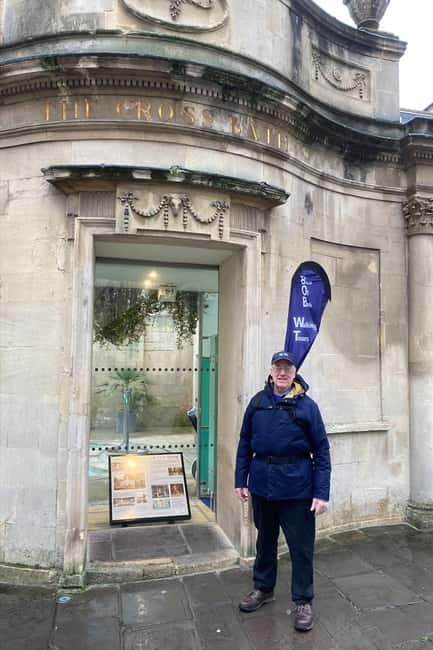
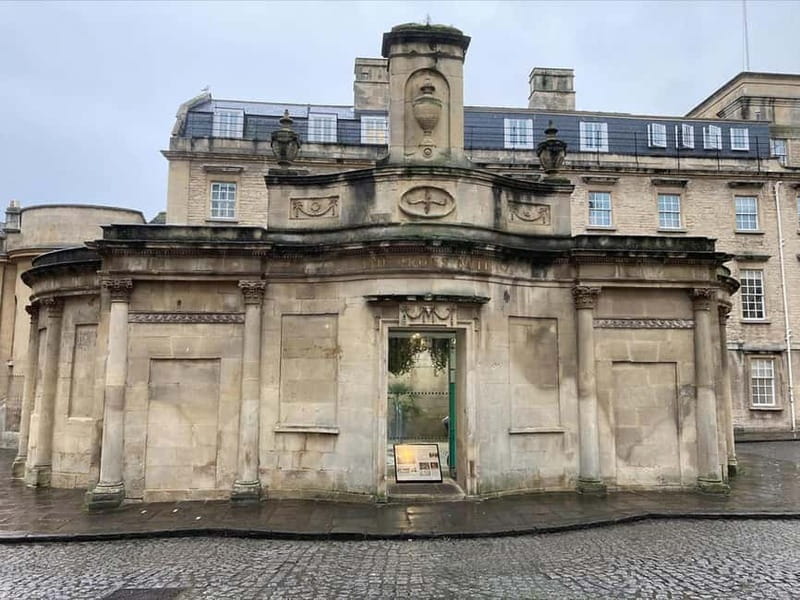
After the first thermal stops, the tour heads through Bath Street toward the Cross Bath. From there, you continue onward to the modern Thermae Baths area.
This is a smart pairing. The Cross Bath keeps the focus on the historical bathing theme, while the Thermae Baths bring you right into the present. Instead of treating Bath as frozen in time, you see continuity: people still come for the waters, just with newer buildings and different ways to use them.
In practice, this section gives you great photo chances too. You are walking through streets with major landmarks close together, so you get the sense of “everything is within reach” rather than “we have to travel for each stop.” That is a big reason the tour feels efficient for the price.
Theatre Royal, old wall, Mineral Water Hospital, and Queen Square
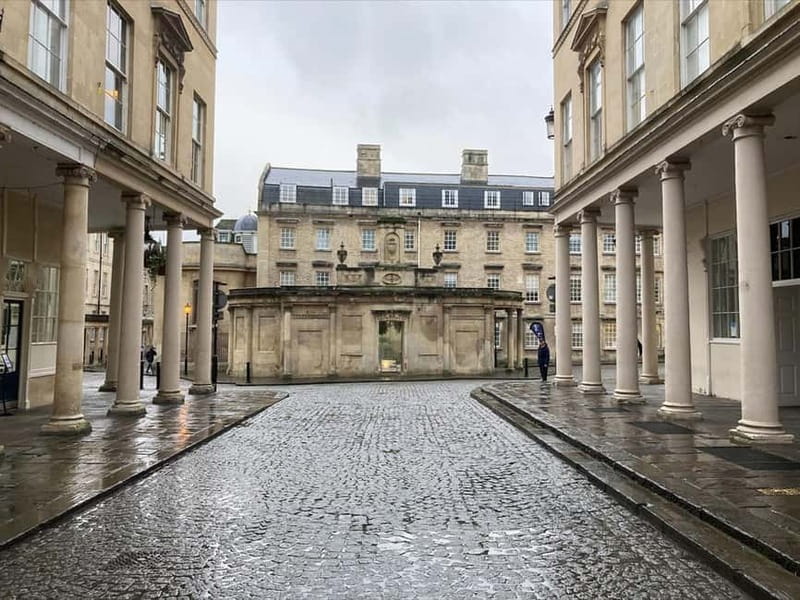
From the thermal zone, the route broadens out. You pass the Theatre Royal, then go past the old wall, and on to the Mineral Water Hospital before reaching Queen Square.
This part of the walk is where Bath starts to feel like a living city plan, not just a collection of pretty buildings. The Theatre Royal gives you a cultural anchor. The old wall hints at earlier boundaries and the way the city grew. The Mineral Water Hospital spot adds another layer, showing how the city’s identity tied to the springs went beyond bathing and entertainment.
Then you arrive at Queen Square, a classic setting that works well for a guided explanation because you can actually look around. It is the kind of place where a conversation helps. You can stand there, compare streets and facades, and start to see why Georgian Bath became famous for its order and elegance.
More British streets at boot pace:
- Bath: Guided City Walking Tour with Entry To The Roman Baths★ 4.8 · 343 reviews
- Bath: The Bad of Bath Walking Tour★ 5.0 · 202 reviews
- Bath: Private Bridgerton Walking Tour for upto 20 people★ 4.9 · 189 reviews
- Bath: Local Pubs & Historic Sights Walking Tour (3h)★ 4.9 · 29 reviews
Jane Austen Centre to Upper Assembly Rooms and the Circus

Next on the path: the tour goes past the Jane Austen Centre, then toward the Upper Assembly Rooms and the Circus.
This section is particularly good if you like social history and the idea of Bath as a place people visited for seasons and gatherings. Even without heavy jargon, the guide can connect how leisure spaces and public rooms fit into the city’s Georgian style.
The Upper Assembly Rooms and the Circus also work as “big visual payoffs.” You can enjoy the shapes and street perspectives, then you get the explanation that makes it feel more than just pretty architecture. That is one of the reasons this tour tends to impress repeat visitors too.
Royal Crescent, Royal Victoria Park, Pulteney Bridge, and East Gate
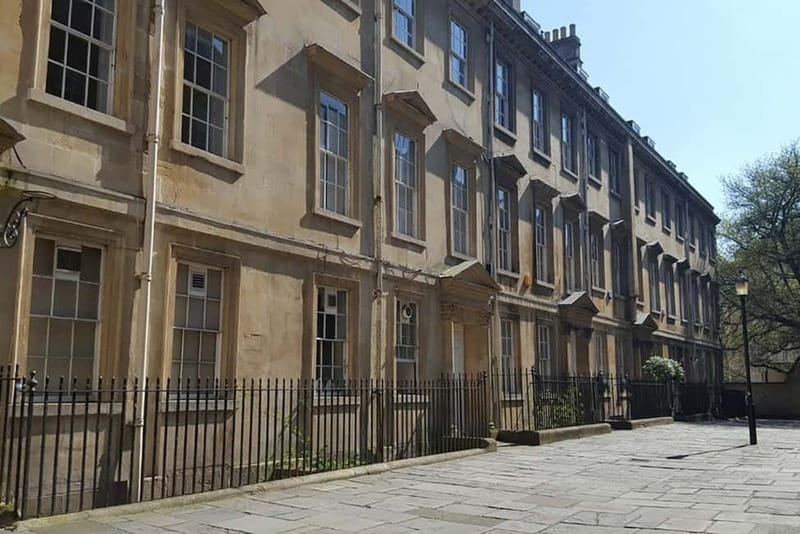
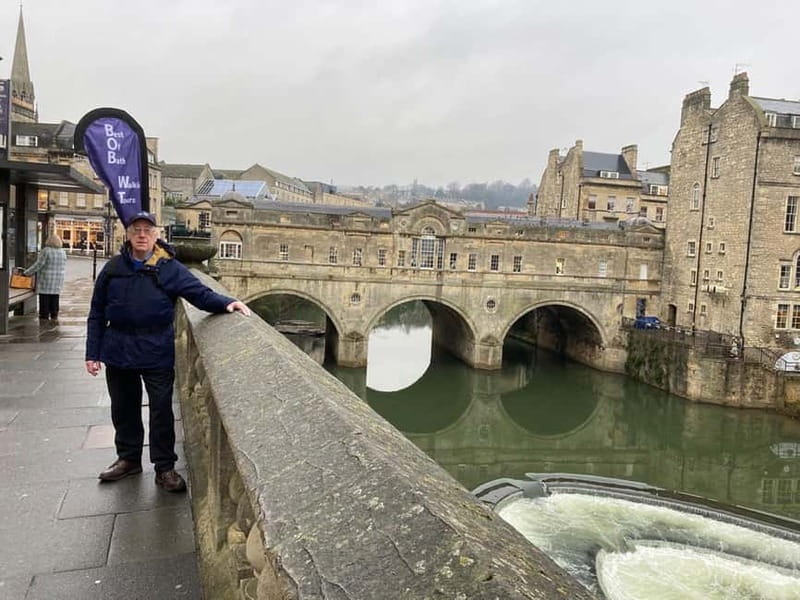
From there, you head into one of the most famous stretches in Bath: the Royal Crescent. The route continues through Royal Victoria Park, then takes in Pulteney Bridge, and finally the old East Gate before returning to Bath Abbey.
This is your architectural finale. Royal Crescent is the headline, the kind of place that makes you pause even if you are not an architecture buff. Royal Victoria Park adds breathing space, which matters because it gives your eyes a break after lots of stone and streets.
Then you reach Pulteney Bridge, a landmark that feels instantly recognizable because the setting is so photogenic. The tour ending through the old East Gate helps you finish with a sense of where the city’s earlier edges and entries might have been, so your mental map feels complete.
By the time you loop back to Bath Abbey, you will likely feel like you have a grasp of the city’s layout rather than a list of sites. That is the main win of doing this as a guided walk.
Why Bob’s guiding style matters more than people expect
The best part of this tour is not a checklist. It is the guide’s tone and how he manages the group experience.
In the feedback I saw, Bob repeatedly comes up for strong knowledge and a fun delivery. People also highlighted that he stays friendly and answers questions without making anyone feel silly. That sounds basic, but on a walking tour it changes everything. If you can ask something and get a clear response, you stop passively watching and start actively understanding.
Bob also seems to work well across different group needs. One family described a personalized feel, including traveling with a toddler. Another group of friends noted that humor helped keep everyone engaged. Even if you come solo, that sort of guiding style helps you feel included rather than shuffled along.
If you want a tour where you can talk, ask, and get context without being overwhelmed, this is exactly the type of experience to choose.
Price and value: what $26 buys you in real time
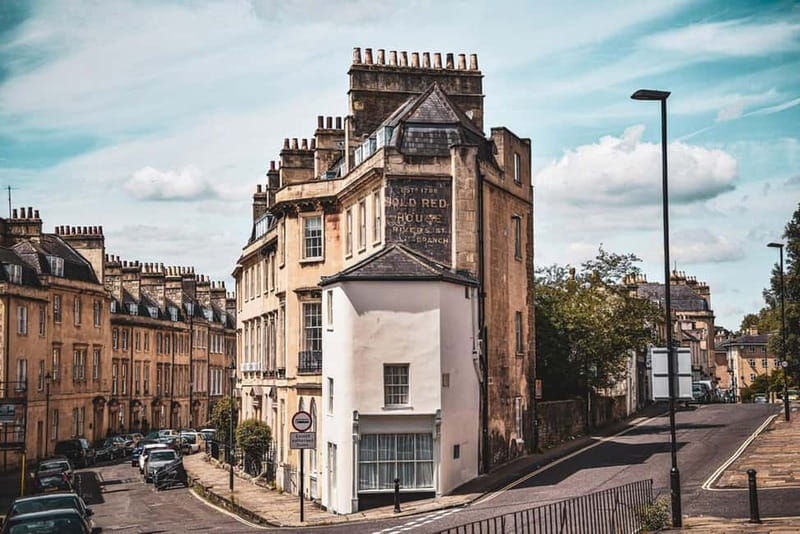
At about $26 per person for two hours, the value comes from how much the route packs in. You cover the main Georgian stops plus the big thermal anchors, all connected by a walking route that makes sense geographically.
A guided hour can be expensive if it feels repetitive. This one avoids that by sequencing landmarks that relate to each other. You start with the springs and major bathing sites, then move into the Georgian public spaces and famous crescents, and finally loop back. You are not just paying for access, you are paying for coherence.
Also, this is a “use your time wisely” style of tour. In a city like Bath, it is easy to spend an entire day moving between far-flung sights. Here, you can get the core of Georgian Bath and the thermal theme without burning half your trip on transit.
Weather and walking comfort, so you enjoy it instead of battling it
The tour runs in any weather. That is good because you are not gambling your plan on a sunny forecast. But it does mean you should prepare like you are going out for a two-hour walk in real conditions.
Wear layers. Use waterproof or at least water-resistant outerwear if rain is likely. Sturdy shoes matter, because wet streets and curb edges can make walking feel longer than expected.
Also, if you are traveling with kids or anyone with limited stamina, this format is still manageable because it is time-bound at two hours. Just plan for breaks if you need them, and pick footwear you trust.
Who this Bath Georgian walking tour suits best
I think this tour fits best if you want the Georgian story without doing hours of independent research. It is also a great choice if you have already visited Bath and feel like you saw the sights but not the connections.
You will especially enjoy it if:
- You like architecture and want a guide to interpret what you see
- You want a friendly group atmosphere that makes it easy to ask questions
- You value efficiency, with major landmarks handled in one loop
- You want Georgian Bath tied to the hot springs and bathing identity
If you are the type who likes to read everything on your own and never wants to follow a route, you might prefer a self-guided plan. But for most people, this is the easiest way to get your bearings and keep moving.
Should you book this Bath Georgian walking tour?
Yes, I would book it if you want a guided walk that connects the dots quickly and keeps the experience fun. With Bob as the guide, the tour has a reputation for strong explanations, humor, and an inviting style that works for different kinds of groups.
Choose this tour if you want Bath Abbey as your anchor, a two-hour route that covers the major Georgian highlights, and a guide who helps you see more than surfaces. Just come prepared for weather, wear comfortable shoes, and bring curiosity. You will get a city map in your head, not just photos on your phone.
FAQ
How long is the Bath walking tour?
The tour lasts about 2 hours.
Where does the tour start and finish?
It starts and finishes at Bath Abbey. The meeting point is in front of the Abbey.
What sights does the route cover?
You pass the three hot springs, the Roman Baths, the Pump Room, Bath Street highlights including the Cross Bath and Thermae Baths, the Theatre Royal, the old wall, the Mineral Water Hospital, Queen Square, the Jane Austen Centre, the Upper Assembly Rooms, the Circus, the Royal Crescent, Royal Victoria Park, Pulteney Bridge, and the old East Gate.
Does the tour run in bad weather?
Yes, the tour goes in any weather.
Is the tour guide English-speaking?
Yes. The live tour guide is English.
Is the tour wheelchair accessible?
Yes, the tour is listed as wheelchair accessible.
What is the price?
The price is $26 per person.
Can I cancel if my plans change?
You can cancel up to 24 hours in advance for a full refund.
Newest entries under Bath





Walking Tours, compared.

Magical London: Harry Potter Guided Walking Tour
Read our review →
University and City Walking Tour with Alumni Guide
Read our review →
Harry Potter Movies Walking Tour (Kids Go Free)
Read our review →
The Great British Rock and Roll Music Walking Tour
Read our review →

Harry Potter Walking Tour Including New College
Read our review →Browse the lists this tour appears in