
Reviewed · HISTORICAL TOURS
Aberdeen’s Ancient Heritage and Folklore Tour
Pictish stones in 7.5 hours. This Aberdeenshire day tour strings together hillfort earthworks and Pictish carved symbols with folklore stories that explain how early communities thought, prayed, and lived. I like that the guide ties what you see to meaning, so stops feel connected instead of random photo spots.
My other favorite part is the small-group pace, limited to 7 people, which makes it easier to ask questions and linger when something catches your eye. One thing to plan for: this is moderate walking on unpaved paths and grassy terrain, with some steep hill sections, so sturdy shoes and a realistic effort level matter.
In This Review
- Key things I’d watch for on this tour
- Starting at Union Terrace, then straight into Pictish country
- Barra Hill Fort: walking earthworks like you can touch time
- Insch and Dunnideer: a tower house built from older walls
- Rhynie and Tap O’Noth: Scotland’s largest hillfort, explained
- Easter Aquhorthies and the Loanhead of Daviot Circles: recumbents you can actually spot
- The Bass and Symbol Stones at Inverurie: when medieval walls meet Pictish art
- Dyce Symbol Stones at St Fergus’ Chapel: the small carvings you’ll remember
- Kildrummy lunch break: keep your energy steady
- Tomnaverie Stone Circle: your panoramic payoff
- Price and logistics: does $134 make sense for what you get?
- What to bring and how hard it really is
- Should you book the Aberdeen Ancient Heritage and Folklore Tour?
- FAQ
- Where is the meeting point?
- How long is the tour?
- Is the tour in English?
- Do I need to buy entry tickets?
- Is food included?
- How much walking is involved?
- What should I bring?
- Is it suitable for mobility impairments?
Key things I’d watch for on this tour
- Small group size (7 max) keeps the experience personal and flexible
- No entry tickets needed, so your cost stays predictable once you book
- Earthworks at Barra Hill Fort help you understand how early settlements used higher ground
- Tap O’Noth and Pictish stones at Rhynie turn symbols into a story, not just carvings
- Recumbent stone circles near Inverurie add a Neolithic to Bronze Age layer
- Tomnaverie Stone Circle views give you a strong payoff for the walking
Starting at Union Terrace, then straight into Pictish country
You meet next to the William Wallace statue by Union Terrace Gardens on Rosemount Viaduct. It’s a good anchor point if you’re arriving by foot or by car, and it also keeps the start simple before you head out into Aberdeenshire.
From there, you’ll be in a van for short stretches between sites. That matters on a tour like this because the monuments are spread out, and you still want time to actually walk the ground, not just look at it through glass.
More centuries walked in an afternoon:
- London: Historic Pubs of Central London Walking Tour
★ 4.9 · 1,065 reviews - Portsmouth: Historic Dockyard Ultimate Explorer Ticket
★ 4.8 · 1,052 reviews - York: Witches and History Old Town Walking Tour
★ 4.7 · 928 reviews
Barra Hill Fort: walking earthworks like you can touch time
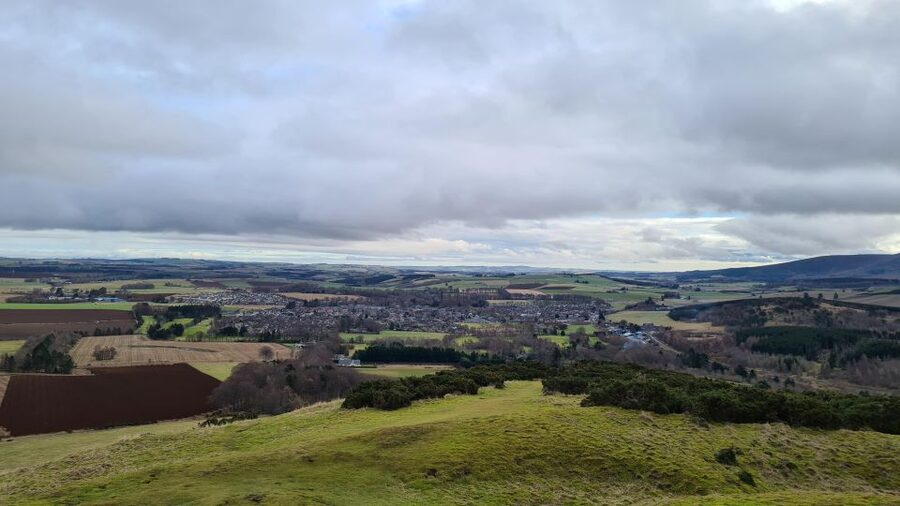
The first real “put your boots on” stop is Barra Hill Fort. Hillforts across Aberdeenshire were often built on higher ground, with wooden or stone enclosures creating a working settlement area. Here, you’ll walk along earthworks and foundations, which is the fastest way to grasp how the place was designed to hold people, animals, and daily life.
Do expect a bit of terrain. You’ll be walking through fields and off-road paths, so this is not a sit-down arrival. If the weather is damp, the ground can get slippery, and this is where good traction pays off. If you like history that you can map onto real space, this is a highlight.
Insch and Dunnideer: a tower house built from older walls
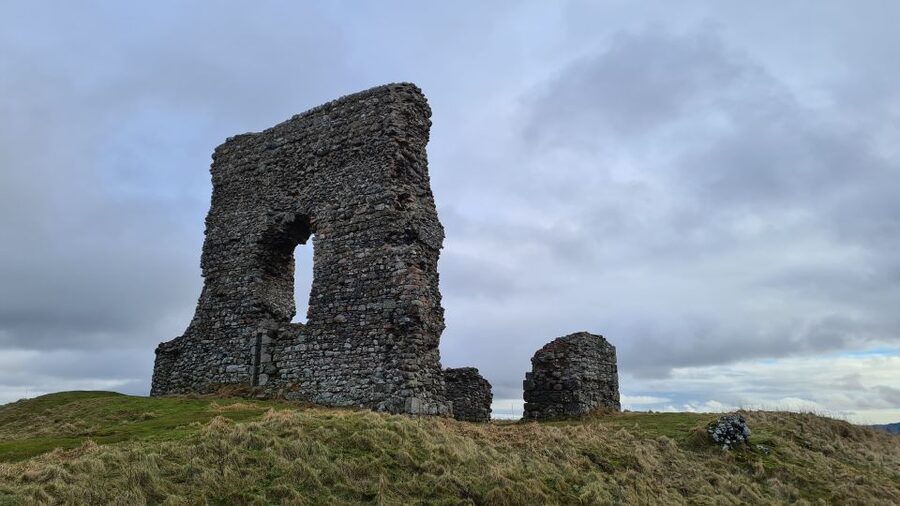
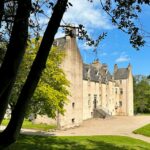
Next comes the Insch area, with time for a photo stop at Dunnideer Castle. The key detail is the timeline: the castle is a tower house built around c. 1260, and it partially made use of remains from an earlier vitrified hillfort on the same site.
That “old stone reused” idea is a big theme in Scotland, and Dunnideer makes it tangible. A short distance away are remaining stones from the Dunnideer Stone Circle, so you get two eras close together: the circle’s older spiritual footprint and the castle’s later defensive footprint. The time here is brief, but it’s the kind of stop that rewards quick, observant wandering.
Rhynie and Tap O’Noth: Scotland’s largest hillfort, explained
Rhynie is where the tour shifts into full-on Pictish stronghold mode. You’ll be in the Tap O’Noth area, which is described as Scotland’s largest hillfort. At its peak, it’s believed to have rivaled the largest post-Roman settlements in Europe, with researchers estimating a community of over 5,000 residents.
What I like about this stop is that the guide doesn’t treat it like a single monument. You’ll hear about the Pictish stronghold feel of the area and how carved stones fit into the story. There’s also a focus on symbols and their meanings, so you can look at carvings with questions in mind instead of just guessing.
You’ll also hear the tale of the Crawstane, a lone standing stone once at the center of a settlement with trade across the Mediterranean and notable wealth. And then the tour connects political and cultural change: how the King of the Scots reshaped the cultural landscape of Scotland, a shift that helped lead to the downfall of the Picts.
Even if you only have 40 minutes here, it can feel like a lot because the meaning is the point, not just the view.
Also inked in under Aberdeen
- Loch Ness and the Highlands 1-Day Tour from Aberdeen★ 4.8 · 340 reviews
- From Aberdeen: Dunnottar Castle and Cairngorms Day Trip★ 4.8 · 329 reviews
- From Aberdeen: Balmoral Estate & Royal Deeside Tour★ 4.9 · 243 reviews
- From Aberdeen: Coastal Villages of Aberdeenshire Tour★ 4.9 · 149 reviews
Easter Aquhorthies and the Loanhead of Daviot Circles: recumbents you can actually spot

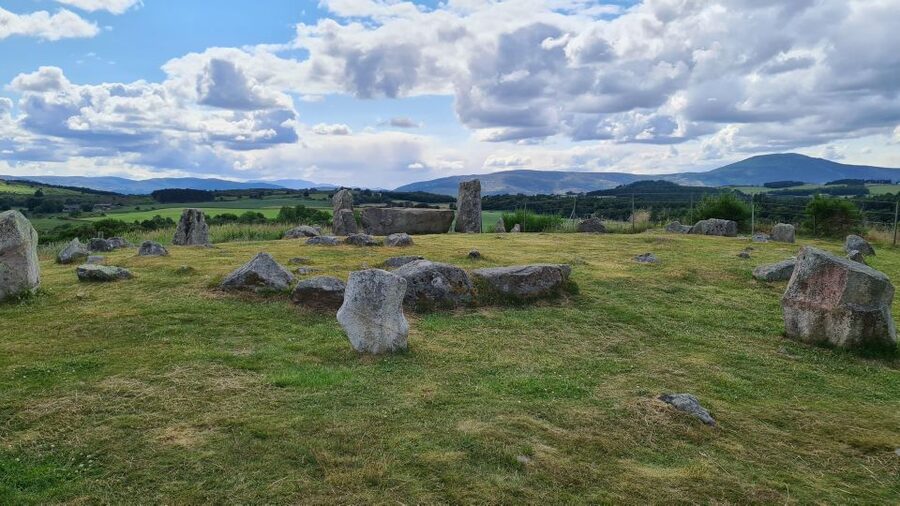
When the day goes to Easter Aquhorthies and Loanhead of Daviot Circles, you’re looking at one of Scotland’s best-preserved recumbent stone circles. The site dates to over 4,000 years, late Neolithic into early Bronze Age.
The form is the giveaway. Recumbent circles are known for a large stone lying down on one side, flanked by two tall standing stones, with a ring of smaller stones around. If you can follow the guide’s orientation and take a minute to step back for scale, the design starts to click fast.
This stop is valuable because it adds an older layer before the Pictish-era carvings take center stage. In other words, you’re not only seeing “Picts,” you’re seeing a longer pattern of people shaping sacred and social space in this part of Aberdeenshire.
The Bass and Symbol Stones at Inverurie: when medieval walls meet Pictish art
Near Inverurie, you’ll also encounter Inverurie’s Bass and Symbol Stones, and this is a satisfying pairing.
First, there’s the Bass, a motte and bailey mound. It’s a natural mound about 15 meters high, scarped into a classic medieval motte by the Earls of Garioch in the 12th century. The adjoining Little Bass forms the bailey. In practical terms, this is a “power” site, built to control land and people.
Then you get the Pictish artistic layer: four Class I Pictish stones sheltered in a glass case between the Bass and Little Bass. That’s important for two reasons. One, it lets you see stones up close without worrying about weather damage. Two, it shows how different cultures reused or repurposed the same general ground over centuries.
If you like seeing how history overlaps, this section is where the tour feels especially well assembled.
Dyce Symbol Stones at St Fergus’ Chapel: the small carvings you’ll remember
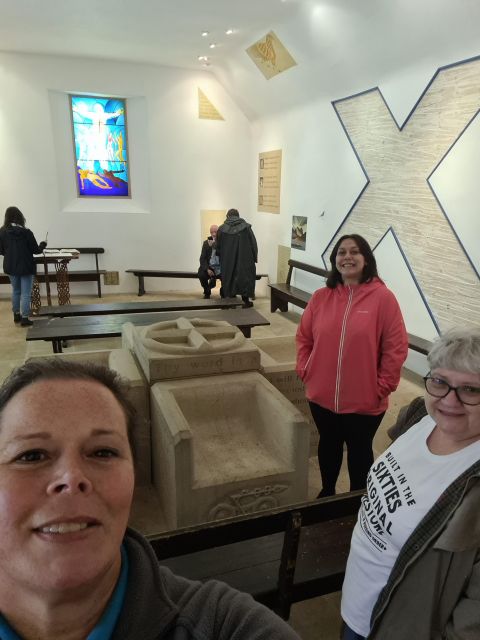
One of the more intimate stops is at Dyce Symbol Stones, located in the old churchyard of St Fergus’ Chapel near Aberdeen. These are two remarkable Pictish stones dated around the 6th to 8th centuries.
What makes them memorable is the variety of motifs, including symbols you might otherwise miss entirely. You’ll see carvings like a mirror and comb, double-disc, a crescent, and animal figures. These aren’t just decorative. They’re part of the visual language of the period, and the guide helps you interpret how symbols were used and why they mattered to identity and belief.
Also, because the setting is a churchyard, it can feel more grounded and less “archaeology museum” than some sites. It’s still outdoors, still stone, but with a different vibe.
Kildrummy lunch break: keep your energy steady

You’ll stop at Kildrummy for lunch with about 40 minutes on the clock. Lunch is not included, so plan on buying something at the break stop or bringing your own plan if that’s easier for you.
This matters because the tour includes multiple walking moments across uneven ground. If you skip a proper meal, the later circle stop can feel harder than it needs to be. I’d treat the lunch break as part of your pacing, not just a pause.
Tomnaverie Stone Circle: your panoramic payoff
Toward the end of the day you’ll reach Tomnaverie Stone Circle. You’ll have a photo stop and then time to walk around, about 35 minutes.
The big draw here is the viewpoint. One of the best-noted moments is the panoramic view, which makes the circle feel connected to the wider area rather than dropped into a random field. Recumbent circles are designed with sightlines in mind, and Tomnaverie gives you enough room to find that feeling.
If you’ve been taking in symbols all day, this is a nice shift. You’re looking not only at carvings but also at how the monument sits within the open space.
Price and logistics: does $134 make sense for what you get?
At $134 per person for a 7.5-hour outing, the value is tied to three things.
First, you get a live English guide plus meaningful time at multiple heritage locations, not just quick pull-ups. Second, you’re in a small group of 7 people, which keeps the pace from feeling rushed and makes the storytelling easier to follow. Third, no additional entry tickets are required, so you avoid surprise costs that can add up quickly on attraction-heavy days.
The tradeoff is that you’re doing a lot of ground over one day, and food is not included. If you’re the type who likes to buy snacks as you go, you’ll probably spend a bit extra at lunch. Still, for a guided circuit that mixes hillfort earthworks, Pictish stones, recumbent circles, and medieval earthworks, it’s a fair deal.
What to bring and how hard it really is
Bring comfortable shoes (ideally hiking shoes), plus water and outdoor clothing for the weather. The tour includes unpaved paths and grassy terrain, and there are steep sections on some hills.
Good news: you’re not forced to do every walk. You can sit a portion out if you need to. For anyone using poles, there may be a few walking poles available on the day, though you should still consider bringing your own if you rely on them.
Also note the fit: this is not suitable for people with mobility impairments and it’s aimed at people with a moderate level of fitness.
Should you book the Aberdeen Ancient Heritage and Folklore Tour?
Book it if you want a guided day that goes beyond sightseeing and into the “why” behind the stones. This tour is especially good for history lovers who like symbolism and stories, and for people who enjoy walking short to medium stretches on country paths.
Skip it if you want an easy, mostly flat day or if uneven ground would be a problem for you. Also, if you hate being outdoors in changeable weather, you might feel the day more than you’d like.
If you’re ready to trade a few comfy-city minutes for hillfort earthworks, Pictish carvings, and stone circle views, this is the kind of Aberdeenshire experience that sticks.
FAQ
Where is the meeting point?
You meet next to the William Wallace statue by Union Terrace Gardens on Rosemount Viaduct.
How long is the tour?
The duration is 7.5 hours.
Is the tour in English?
Yes, the live guide speaks English.
Do I need to buy entry tickets?
No, there are no additional entry tickets required.
Is food included?
No. The tour includes a lunch stop, but food and refreshments are not included.
How much walking is involved?
There is a moderate amount of walking. Expect unpaved paths, grassy terrain, and some steep hill sections.
What should I bring?
Wear comfortable or hiking shoes, bring water, and dress in comfortable outdoor clothes for the weather.
Is it suitable for mobility impairments?
No. The tour is not suitable for people with mobility impairments, and it is also not recommended for low-level fitness.
Newest entries under Aberdeen



Historical Tours, compared.



Westminster Abbey Tour with a Royal Heritage Guide
Read our review →

Browse the lists this tour appears in